Three Hard Verses, Understood

I’m an ordained Bible teacher. I’ve developed study resources and was a teacher at the Alaska Bible Institute for years. I served as an evangelist in San Francisco and worked as a missionary to Mexico. I’ve have been a pastor serving in Alaska. 

And yet there are many verses that I really don’t understand. I may have taught them, but I still haven’t fully grasped them.  Here are three that I’m starting to work through.

“Be not overly righteous, and do not make yourself too wise. Why should you destroy yourself?” 

How can you be overly righteous? Isn’t being righteous a good thing, after all, isn’t that God really wants from us?

But in this verse, it seems that there exists a form of destruction that comes when we try too hard to please God.

The best I can come up with is that this verse speaks of “self-righteousness.” I suppose this attitude comes from a desire to achieve and excel outside of the righteousness of Jesus. Reflecting on this dynamic of self-effort I can see how offensive it is to God. To strive to approach God by my personal goodness is utterly impossible. 

“Verily I say unto you, this generation shall not pass till all these things be fulfilled.” 

Basically, the apostles will see the end times entirely on their lifespan. Before they physically die, Jesus will return. This is disturbing because it never happened like I thought it should. Why didn’t He return? 

Again, what is Jesus talking about? Are the end times contingent on this sign? And if so, are we deceived by a “non-returning” fake messiah? 

They’re maybe a better translation and meaning. Perhaps Jesus was speaking of the destruction of the Temple in 70 AD, about 40 years after Jesus spoke these words. Jesus was acting like a prophet and spoke of the destruction of the Temple within the lifespan of the apostles. 

“Truly, truly, I say to you, whoever believes in me will also do the works that I do; and greater works than these will he do, because I am going to the Father.” 

How in the world are we going to do more miracles what Jesus did? Was Jesus overstating things and promising something that could never happen; or maybe our faith deficient? As I read of the miracles that Jesus did. There is no way I can achieve this.

But maybe I’m really misinterpreting things? Maybe my works will never be as sensational as Jesus did; but there will be something of a magnitude about them. Jesus set in motion the kingdom of God on earth. It was like a rock thrown into a still pond. The waves will stretch out and reach the uttermost.  

I may never raise the dead or walk on water. But if I share the gospel with my neighbor the kingdom advances. From my home it’s about 6,000 miles to Jerusalem. I’m practically on the other side of the earth.  But, His kingdom advances.

There are other verses or passages that are hard and difficult to interpret. Ask the Holy Spirit to guide you, humbly turn to your church elders. Buy a good commentary.  (Contact me if you need guidance.)

And if you find that you encounter something that totally mystifies you, (and you will,) I counsel you to approach it with faith, knowing that the Holy Spirit will teach you. That is what He does. 

“But the Helper, the Holy Spirit, whom the Father will send in my name, He will teach you all things and bring to your remembrance all that I have said to you.” 

John 14:26  

When Pain is All You Can Think About

Sometimes we live in darkness. We suffer and it’s hard. We mentally accept God’s grace and His love for us, but in our heart we remain untouched. Pain saturates everything it seems. We seem to go through the motions, but deep down we’re convinced that we’ll never find the light that so many claim to have.

Since I have a disability I realize I learn things others won’t grasp. I’m learning to embrace the waves that push me to the rock–the Rock of ages. I suppose when I meet Him I’ll understand why it had to be so.

My hope is real. Heaven is home. My pain will be healed.

There is a language of heaven spoken, and those who have suffered speak a dialect of that. Just as someone from Georgia communicates English, their dialect is obvious. The same for those who live in pain. We speak the same, but differently.

Pain sometimes saturates our lives.

We live with something that is persistent, and our hope is a day when it’s all over. Psalm 88 becomes our Psalm. Nothing here is sugar-coated. It is raw and unabridged. It puts our pain under a microscope. That Psalm is entirely yours.

Psalm 88:3-4

Charles Spurgeon

All Hail the King!

A Kings Crown and the Crown of Thorns

John 18:36 

Jesus perfectly the extent of His kingdom. Three times in this one verse, Jesus uses the statement, “My kingdom.” Three times. Perhaps there is something here we should look at closer? Maybe? 

First, Jesus affirms to Pilate that he indeed holds the title of king. However, this kingdom does not represent a political adversarial entity; its borders are not defined by physical realms. Instead, they are spiritual in nature, rendering Pilate and the emperor as mere peripheral issues.

Simply put, these 40 words are Jesus’ powerful declarations to Pilate that yes, He was truly a King. But also notice what Jesus says, “My kingdom.” He is the supreme Lord of it.

Jesus’ kingdom was “not of this world,” which He also repeated three times in this one verse! 

No, Jesus was referring to a kingdom that was spiritual, but no less tangible. As a matter of fact, it was more real than the kingdoms of this earth. 

Those who choose to follow King Jesus have boldly rejected the shallow tenets of this world—force, pride, public image, and the lure of power. The arrival of God’s kingdom doesn’t fit neatly into our expectations; it’s revealed through the radical Beatitudes and shocking parables. These committed souls have declared their allegiance to the One who reigns supreme over the entire universe, daring to defy the status quo.

David Guzik 

Brokenness, humility, love, servanthood, and sacrifice are essential pathways through which His kingdom manifests to people. The world’s approaches, including those that are religious and deemed “moral,” fail to align with the reality of His authority.

At times even, they may seem very noble and right; but that simply isn’t the way Jesus’ rule truly comes. 

“Until the will and the affections are brought under the authority of Christ, we have not begun to understand, let alone to accept, His lordship.” 

 Elisabeth Elliot 

I believe the Church, especially here in the western hemisphere, understands Jesus as our Savior, but not really as the King. The idea of a king and lord isn’t automatic for us. We have senators and constitutions, a vote, media outlets and freedom of speech–but that somehow never prepares us for the rule of a true sovereign. 

Jesus is calling us to live out his rule in our lives, and to embrace him as King. He’s much more than our Savior, and we must understand that. If we want to really grow up in him, we must understand his lordship. 

“The lordship of Jesus is not simply a hope of Christians that someday might be realized; it is a truth that has already taken place.” 

R.C. Sproul 

Giving Flowers to Jesus

Ephesians 4:30-32, NLT

Sometimes we understand God’s gift of joy to us, it seems wonderful and truly remarkable. We realize that our lives would be quite hollow without it. But have we ever stopped to consider that we have the ability to give Him grief or joy? Is that really possible?

I believe we can bring Him a bouquet of flowers by just obeying!

I believe that the combination of obedience and worship absolutely thrills Him. This passage points out that when our faithfulness to His Spirit gets combined with our praise it’s a powerful combination.

This passage focuses on our obedience.

Verse 30 explains what happens when we obey (and when we won’t). The Holy Spirit goes into mourning when we make our wrong decisions. Our choices, our way of living, determine His sadness (!) or His happiness.(!) That fact should inform and direct us.

We’re now clearly marked people, given a written guarantee by all who understand, resulting in a definite salvation.

But we must respond properly. We’re called to renounce these sins that grieve Him. We can’t continue to be morally and spiritually ugly to Him, and to others around us.

At least if we don’t want to see His tears because of us.

What’s now open to us is this–-kindness, a tender heart, and forgiveness. The forgiveness angle is one that has a special depth. It’s forgiveness that plunges us into all that we’ve been given ourselves. He’s poured out all the wrath on Jesus, enabling us to walk away from the terrible punishment of our sins. We’re fully forgiven because He has absorbed our penalty.

We’re called to be gracious and loving. No matter what comes our way.

The idea of “get rid” makes these truths possible. A full pail can never receive another drop, and we can’t be filled unless the old one is dumped out. We can only receive it if we’re ready. But that decision is ours to make. (Choose wisely.)

This passage clearly reveals the outrageous grace of God that is focused on us.

If our disobedience in this results in God’s grief, then our obedience must bring Him joy. It seems we now have the freedom to walk godly. In a way we can bring a delivery of a fresh bouquet of flowers right into His throne room. But it’s our choice and our decision.

Ephesians 4:32

Bryan Lowe

God Can Forgive the Worst

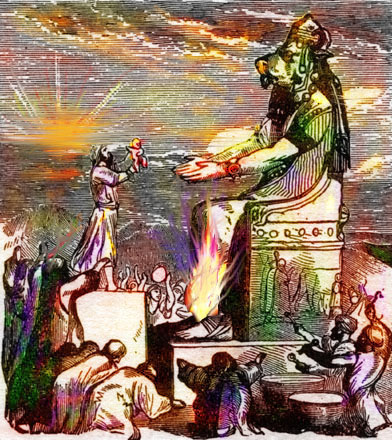
God’s temple was now filled with an evil darkness. King Manasseh made the Lord’s holy place a fountain of sin and filth. Instead of holiness, it was an evil place.

He brought in dark things that were twisted, perverted and clearly forbidden.

“Manasseh led Judah and the inhabitants of Jerusalem astray, to do more evil than the nations whom the Lord destroyed before the people of Israel.”

2 Chronicles 33:9, ESV

His own darkness was now encouraged by others, it became accessible, available and promoted:

  • The high places were rebuilt throughout the land.
  • Altars to Baal rebuilt, using images of wood.
  • In the holy temple, altars to the “starry host,” astrology, plain and simple.
  • Human sacrifice of his own sons to Molech, a false god. Murder.
  • He practiced soothsaying, used witchcraft and sorcery, and consulted mediums and spiritists.

Evil was being encouraged and something wicked was replacing all that was good and true. The analysis of Manasseh’s policies was way beyond disturbing. Of all the kings of Judah, he was the most sinful and the most corrupt. He was at the bottom of the barrel.

The Hebrew word for “led astray” can be translated seduced.

Manasseh was an incredibly immoral man, a king who ruled for 40 years. “He did all he could to pervert the national character, and totally destroy the worship of the true God; and he succeeded.” (Clarke)

It’s believed that he put Isaiah to death by cutting him in two.

Moreover Manasseh shed very much innocent blood, till he had filled Jerusalem from one end to another, besides his sin by which he made Judah sin, in doing evil in the sight of the LORD.

1 Kings 21:16

But then something happened.

And the LORD spoke to Manasseh and his people, but they would not listen. Therefore the LORD brought upon them the captains of the army of the king of Assyria, who took Manasseh with hooks, bound him with bronze fetters, and carried him off to Babylon.

2 Chronicles 33:10-11

Assyria came knocking on Manasseh’s door. I think there was a certain mercy here, but also discipline. Manasseh had “hooks,” inserted through his jaw and out of his mouth. Like a fish he was led to Babylon, a trophy of the power of the army of Babylon.

It was from a dark dungeon that Manasseh cried out to the Lord and repented.

(2 Chronicles 33:12-13.)

There’s a Jewish fable that when Manasseh cried out to God the angels boarded up the windows in heaven. They wanted to block out his prayer so God wouldn’t be able to hear. But God, rich in mercy, bored a hole in front of His throne to hear Manasseh’s desperate cry.

The Lord’s intention was to forever show His kindness and grace given to the most awful repentant sinner.

God is not at a loss when He moves to bring us back to Himself. He can woo or whip. He can draw or drive. He can work rapidly or slowly, as He pleases. In other words, He is free to be God! And in His own way, at His own pace, He brings us back.

     Tom Wells

God is wildly in love with you. Yes, the sin you’ve committed is awful, but the Lord wants you to come back. He may discipline you, but He forgives everything if you’ll turn and repent.

No matter how awful your sin, He forgives and restores. Manasseh is proof of that.

Sources:

2 Chronicles 33:1-20

2 Kings 21:1-18

Enduring Word commentary

alaskabibleteacher.com

What Jesus Wants Us to Know About God

14 After he had spent everything, a severe famine struck that country, and he had nothing. 15 Then he went to work for one of the citizens of that country, who sent him into his fields to feed pigs. 16 He longed to eat his fill from the pods that the pigs were eating, but no one would give him anything. 17 When he came to his senses, he said, ‘How many of my father’s hired workers have more than enough food, and here I am dying of hunger! 18 I’ll get up, go to my father, and say to him, “Father, I have sinned against heaven and in your sight. 19 I’m no longer worthy to be called your son. Make me like one of your hired workers.”’ 

20 So he got up and went to his father. But while the son was still a long way off, his father saw him and was filled with compassion. He ran, threw his arms around his neck, and kissed him. 21 The son said to him, ‘Father, I have sinned against heaven and in your sight. I’m no longer worthy to be called your son.’

22 “But the father told his servants, ‘Quick! Bring out the best robe and put it on him; put a ring on his finger and sandals on his feet. 23 Then bring the fattened calf and slaughter it, and let’s celebrate with a feast, 24 because this son of mine was dead and is alive again; he was lost and is found!’ So they began to celebrate.

Luke 15:14-24

Sometimes, when reading this we diminish this parable to a really nice story, but nothing more. It comforts us. It’s so evocative after all, but somehow it never enters our spiritual hearts like it’s meant to. We may mentally assent but we do not absorb what it really says.

In Luke 15 everything is lost, but is finally found. Luke 15 also has incredible theology, and is meant to jolt us like a spiritual defibrillator.

Luke 15 is magnificent in the deepest sense of the word.

The Parable of the Prodigal Son is Mt. Everest of the Bible. It requires believers to read it often and prayerfully.

Our Father runs to us because He sees our desperate hearts. His joy can’t be explained but only received. It’s just the way He is.

Just perhaps it will take an eternity to understand this simple parable? If so, we should get started now.

There are just three characters here in Luke 15:14-24: there’s the Father, the son, and the elder brother–and each plays an integral part. The prodigal is the main character, yet the father is the main focus. The son is a wastrel, a good-for-nothing rascal who blows his father’s inheritance on parties, booze, and prostitutes. He lives for the moment, he seeks pleasure in those things which will come very close to destroying him.

But haven’t we all done that?

The father represents God, who represents the loving patriarch of the parable. He’s the one who has turned over the prodigal’s portion of the inheritance. To a degree I suppose he has funded the prodigal’s descent into depravity, and yet it was the son who decided to go crazy. The father is certainly not to blame.

But nevertheless, in this story, the father is the main character. Not the prodigal.

His actions are very difficult to grasp. God behaves outrageously, and His character is difficult to understand or fathom. (After all, who acts this way?) Granted we think our earthly fathers might do this for us–but even that may be a stretch for some. Yet this parable describes how God feels about sinners.

  1. God loves sinners who know they are sinners.
  2. He is the only God who runs.
  3. He is extravagant.

Thinking Out Loud About Dying

A dear Christian friend has built his own coffin. He now uses it as a coffee table in his living room until the day he dies. I’m told that Trappist monks next to their monastery an open grave, a constant reminder of the certainty of death. When they file past it, they understand that everyone must die.

Do you see death-smiling as a type of leer or as an evil grin upon the face of an enemy that is about to bring you pain? Or is the smile a gentle one that offers solace at a time when fear may be raging?  

Psalm 90:4-6

In ancient Israel, Psalm 39 served as a “memento mori”—a reminder of human mortality. “Oh LORD, make me know my end and what is the measure of my days; let me know how fleeting I am!” (v. 4). David understood that life is somewhat insignificant in the light of eternity.

Remember that you must die someday. 

Ecclesiastes 8:7-8

Memento mori is a reminder of the inevitability of death. Jesus’s words, “Very truly I tell you, unless a kernel of wheat falls to the ground and dies, it remains only a single seed. But if it dies, it produces many seeds” (John 12:24).

As we adopt the reality of dying we must refuse the worldly ideas of death:

  • Our fear
  • Our doubts
  • Our frustration and cynicism
  • The loneliness
  • Satanic attack

    William Gurnall

In the New Testament, Jesus exhorts his disciples to pick up their crosses daily and to remember their death as they follow him to the Place of the Skull: “If any want to become my followers, let them deny themselves and take up their cross daily and follow me” (Lk 9:23).

As you integrate memento mori into your life, you will find more fruit in the practice if you are able to connect within the community of the Church who are on the same journey. Talk with family and close friends about your journey.

Knowing you’re going to die and face a certain judgement is a bit unnerving. It’s also a definite way of defeating sinful habits. When we understand this, much evil is now avoided and renounced. Yes, you’re barreling into a real encounter with God. That you can be sure.

Our judgement is very much real. But we have a perfect plea. Jesus has paid the price for us. It’s His blood that delivers us and fully redeems us. Standing (or kneeling) we realize the love and mercy He has for us. When we stand before God, we stand complete.

  Helen Keller

There should be no fear of dying.

We’re fully and irrevocably forgiven. You can be sure of that. We can smile at death, knowing that it leads us into a perfect connection. Are you afraid? Yes, I understand. But know, if you’ve accepted Jesus as your Savior and Lord, the payment for all your sins, you’re forgiven.

alaskabibleteacher.com

Finding the Feet of Jesus

A terrific study is finding the people who fell at Jesus’ feet. Tucked in the Gospels you’ll find stories of those who despair. You’ll also see them come to Jesus in brokenness and humility, without any other recourse. I call these the “people of the feet.”

They came to Jesus because they had no hope otherwise. They were people who were hopeless and wretched, they had long ago run out of options. They came to Jesus, falling down in front of Him. They were all people of the feet.

They were men and women who were truly desperate.

There are some common characteristics that feet-finders have:

  • A great need that can’t be met without His touch
  • To understand one’s true condition–humility, brokenness
  • To beg for a healing, for self or family
  • To honor Jesus as the Messiah
  • To be more receptive to His teaching, to understand Him
  • To become a witness to others (although it does seem secondary)

“But immediately a woman whose little daughter had an unclean spirit heard of him and came and fell down at his feet.“

Mark 7:25

“Then people went out to see what had happened, and they came to Jesus and found the man from whom the demons had gone, sitting at the feet of Jesus, clothed and in his right mind.”

Luke 8:35

But there are several other instances where people came to sit at Jesus’ feet:

  • Mark 5:22-23, Jairus, a leader in the local synagogue
  • Luke 7:37-38, a sorrowing mother for her daughter
  • Luke 8:41, also Jairus
  • Luke 10:39, Mary, when Jesus was teaching
  • John 11:32, Mary, meeting Jesus entering Bethany
  • John 12:3, Mary, with her perfume
  • Revelation 1:17, John to express what he was seeing (also 19:10)

In every case we find people consciously coming and kneeling at the feet of the Lord Jesus. It was a deliberate action that came from their hearts. Each had a terrible need, and each was without hope.

It’s the end of religion if you’re a feet-finder. No more facades, no more treadmills. Instead your heart forever changes.

Hardly decent to religious people.

Are you really that desperate yet? Have you seen your need, and do you realize how lost you would be without His healing touch?

I’m convinced only Jesus can make me clean and whole.

But I found my rightful place at His feet. It’s where I belong. I love Him.

I’m not ashamed to be found kneeling.

alaskabiblrteacher.com

Our Miracle in Mexico

What happened was nothing less than a miracle. Let me explain and let you be the judge. Over the years of ministry I’ve heard the Lord speak clearly at different times. He has this tendency to overcome confusion and doubt to make His will super clear.

In 1995 we were sent by our church to Mexico to assist a church/mission station. We would be their first missionaries in Baja California. We knew we were called, and we also understood that it would definitely be challenging (and it was). We made a three year commitment.

We took Spanish at King’s Way Missionary Institute in McAllen, Texas. It was there we met another couple who would be working 40 miles south of where we were going. We agreed that once school was done we would travel together.

Now this is where it gets interesting.

We left south Texas and convoyed to San Diego. When we hit New Mexico the heat got terrible and my car didn’t have AC. The couple we were travelling with was pulling a trailer and couldn’t travel over 45 mph. It was over 100 F., I remember looking at our kids in the backseat and they were sprawled out, they were on the verge of heat stroke.

Now please bear with me.

Then something quite amazing happened!

There are several lanes available at the border crossing–they’re always backed up with 20 cars in each lane. So I pulled into one waiting for my turn to be inspected. Suddenly I heard honking behind me. I looked in my rear view to see what the deal was. It was our friends we had left back in New Mexico. They were in the car directly behind me!

My brain immediately started to calculate the odds.

It was then I heard Him speak to me.

Our three years were very difficult. We lived in a very old and very small “burned out” trailer, with no electricity or running water. We had a 55 gallon drum that was filled occasionally by a water truck. We had to boil it to kill the mosquito larva.

I killed rattlesnakes and battled with black widow spiders, and hundreds of tarantulas that wanted to nest on the property.

To know that God was taking care of us, had led us, and was using us was comforting. When things got very hard that experience at the border would comfort us repeatedly. It gave us confidence in His purposes for us being there. He put us there, and would not leave us.

When we left Mexico I was a little bit discouraged. “Where is the fruit?” About 6 months after returning to the Bay Area, I was in church when one of the elders came up to inform me that one of the leaders in our Mexico church had named their newborn son after me–Bryan Allen Rodriquez!

That news staggered me, it was like a 2×4 up the side of my head. They saw our steadfastness and wanted to name their son after me. That pretty much undid me. I admit that since then, I’ve struggled with this. I guess you can never fully understand your impact on others.

Psalm 40:5, ESV

alaskabibleteacher.com

Ponder the Word

“But his delight is in the law of the Lord, and on his law he meditates day and night.”

Psalm 1:2

In Psalm 1:2 the Hebrew word for meditation is hagah. In this Psalm we have a contrast between the blessed and the “not-so-blessed,” and it commands that as Jesus’ followers that we process the reality of this to become blessed by our Father.

In Psalm 1:1 the word blessed is used, and actually just in the book is Psalms alone blessed is used 51 times. The word has a very simple and concise meaning: “to be happy.” I really don’t think we can minimize how important it is to be happy.

In 1:2 we read hagah or meditate. That Hebrew word is a little bit more complicated and it seems more nuanced than “blessed.”

Hagah, or meditate means:

  • to chew a cud like a cow
  • to growl like a lion who is eating an antelope
  • to moan or groan
  • to talk to oneself, or mutter or whisper
  • finally, it can mean to muse or imagine

Yeah, it’s an interesting word and I suppose all of these meanings are to be factored into meditation [hagah]. It seems that these five definitions shape the different meanings that go into our understanding.

Using the above definitions, this is how it might look:

  1. sometimes I regurgitate the word like a cow chewing its cud
  2. at times I attack it like a lion
  3. I moan and groan as I wrestle with it, seeking for a handhold
  4. thinking about the passage I talk to myself about its meaning
  5. I imagine being there, sometimes it’s like I’m a “fly-on-the-wall”

When we come to God’s words, the Bible, we are required to assimilate all that the Holy Spirit graciously gives. When He gives us something from the Word we must apply it to ourselves. You can do this through any of the 5 definitions I’ve given.

The Holy Spirit is the One who ignites His Word into our hearts. He makes us glow for His glory.

Joshua 1:8, ESV

alaskabibleteacher.com