Our vote matters a lot. Here are some principles a believer should always follow. This list is a good way to function and maybe even see our own hearts in the light of the Gospel, and the direction of the Holy Spirit.
As a believer who is also a citizen this matters so much.
We maybe Republican, Democrat, or independent, but we know that God’s Kingdom rules over all. We must keep our hearts firmly fixed and settled in something that knows our Father’s purpose.
Please read the above list through, as I think it directs us to Him. I guess if I’ve got any insight into this at all I would add prayer and intercession. That wasn’t included, but adding it would enhance this list even more.
“If My people, who are called by My name, shall humble themselves and pray, and seek My face and turn from their wicked ways, then will I hear from heaven, and will forgive their sin and will heal their land.”
“Simon Peter said, “I’m going fishing.” “We’ll come, too,” they all said. So, they went out in the boat, but they caught nothing all night.”
John 21:3
This verse has always got me thinking. I can’t help but wonder why Peter pulled that move. Jesus had put so much effort into His disciples, and still, they just disappeared back to the boat and nets. I guess they just went back to what they knew best—fishing.
I’ve always wondered why. Why return to their lives after Jesus called them from their old lives?
Now there are two views: one suggests Peter acted wisely, while the other sees him as compromised and shaken by his denial and failure as a disciple, buckling under challenge from a servant girl.
So, Simon Peter, and seven others pile in a boat and returned to what Jesus called them from. They revert to their old ways. That’s understandable, but that doesn’t make it right. I think Peter was a little singed when he denied Jesus by the fire.
Peter was about to be restored by Jesus around another fire.
Since Peter had publicly denied Jesus three times, he was now required to respond to three equally public questions. It is noteworthy that this exchange took place openly, reflecting the very nature of his previous denial. Furthermore, it is reasonable to believe that from this moment onward, Peter would lead not from a position of strength, but from a place of profound vulnerability.
Luke 5
In Luke 5, we read of the beginning when they caught absolutely nothing, a moment that embodies the frustration and despair often faced by those who toil without reward. Peter and his crew had fished all night long, diligently casting their nets into the dark waters, yet they had zero to show for it, each failed attempt serving as a reminder of their limitations.
John 21
Pretty much the same thing happened in John 21, where once again the disciples returned to the beach empty-handed after a long night of labor. These stories resonate deeply with us, illustrating the struggles of persistence in the face of apparent failure, while ultimately leading to a greater revelation of hope and fulfillment that follows such trying times.
God’s grace homes in on Peter’s heart.
Both Peter’s calling and Peter’s reinstatement involve a miraculous catch of fish. Luke 5 and John 21 become a fascinating pivot-point for Peter’s walk. Both reveal Jesus’ power and love. Both declare His commitment to Peter.
Man has one desperate need. That is for forgiveness.
Are you frustrated with your discipleship? Are you tempted to return to the things of the past?
Jesus is patiently waiting for you on the beach, full of love and commitment. His promises hold strong and are ever true. Through His own sacrifice and the precious gift of His blood, He has already paid the ransom for you—a deep, unbreakable covenant of love.
He is still your Savior. He knew all your sins, and dark failure. He knew all of this before you were even born.
“Jesus Christ became Incarnate for one purpose, to make a way back to God that man might stand before Him as He was created to do, the friend and lover of God Himself.”
“And do not bring sorrow to God’s Holy Spirit by the way you live. Remember, he has identified you as his own, guaranteeing that you will be saved on the day of redemption.”
“Get rid of all bitterness, rage, anger, harsh words, and slander, as well as all types of evil behavior. 32 Instead, be kind to each other, tenderhearted, forgiving one another, just as God through Christ has forgiven you.”
Ephesians 4:30-32, NLT
Sometimes we understand God’s gift of joy to us, it seems wonderful and truly remarkable. We realize that our lives would be quite hollow without it. But have we ever stopped to consider that we have the ability to give Him grief or joy? Is that really possible?
I believe we can bring Him a bouquet of flowers by just obeying!
I believe that the combination of obedience and worship absolutely thrills Him. This passage points out that when our faithfulness to His Spirit gets combined with our praise it’s a powerful combination.
This passage focuses on our obedience.
Verse 30 explains what happens when we obey (and when we won’t). The Holy Spirit goes into mourning when we make our wrong decisions. Our choices, our way of living, determine His sadness (!) or His happiness.(!) That fact should inform and direct us.
We’re now clearly marked people, given a written guarantee by all who understand, resulting in a definite salvation.
But we must respond properly. We’re called to renounce these sins that grieve Him. We can’t continue to be morally and spiritually ugly to Him, and to others around us.
At least if we don’t want to see His tears because of us.
What’s now open to us is this–-kindness, a tender heart, and forgiveness. The forgiveness angle is one that has a special depth. It’s forgiveness that plunges us into all that we’ve been given ourselves. He’s poured out all the wrath on Jesus, enabling us to walk away from the terrible punishment of our sins. We’re fully forgiven because He has absorbed our penalty.
We’re called to be gracious and loving.No matter whatcomes our way.
The idea of “get rid” makes these truths possible. A full pail can never receive another drop, and we can’t be filled unless the old one is dumped out. We can only receive it if we’re ready. But that decision is ours to make. (Choose wisely.)
This passage clearly reveals the outrageous grace of God that is focused on us.
If our disobedience in this results in God’s grief, then our obedience must bring Him joy. It seems we now have the freedom to walk godly. In a way we can bring a delivery of a fresh bouquet of flowers right into His throne room. But it’s our choice and our decision.
“Forgiving one another, just as God through Christ has forgiven you.”
“With joy you will draw water from the wells of salvation.”
Isaiah 12:3, ESV
One of the clearest explanations of a believer’s salvation is a well of clear sweet water. A well is a combination of effort and grace. A well must be dug, but it’s nothing without water. It’s work but it’s grace. You can dig 1000 feet, but without hitting water it’s all in vain.
The walk of a disciple depends on the Holy Spirit. When we’re filled with Him, our life becomes supernatural. Without the presence, we stagger through the arid desert, and that means desperation. We get terribly thirsty when we can no longer draw from the “wells of salvation.”
And of course, there is a twist when our enemy attacks.
Our wells must be protected. We dare not get complacent. The Word takes us back to when the sworn enemy, the Philistines came against Isaac, but not with spears or chariots. They had a tactic, and it seemed to work surprisingly well.
In Genesis 26, we can read how it all goes down.
“So, the Philistines filled up all of Isaac’s wells with dirt. These were the wells that had been dug by the servants of his father, Abraham.”
Gen. 26:15
Isaac’s wells are filled with dirt. They’re unusable, and the water was no longer available to water his flocks. Now water is everything. Without water, Isaac was forced to move to another location. His flocks needed a well.
A little background:
God had blessed Isaac in the middle of a severe famine. Genesis 26 explains the wealth of Isaac. What he planted he reaped 100-fold. His flocks multiplied, and all because of the Lord’s favor. (Gen. 26:12-14)
The account tells us that the Philistines were envious and jealous. They coveted his wealth. They hated Isaac, and that was filling up the wells of water with dirt. (Some suggest that these wells would be purposefully contaminated with rotting animals.)
The water-rights were constantly being challenged out of jealousy. At least four wells were filled up by the Philistines. Their efforts were disturbing but quite effective.
I’ve been thinking about my own “well.”
I know the enemy hates me; I’m certain of that. He wants to destroy me. My well of salvation is Satan’s target. I guess he works on shutting it down, and even works on contaminating my well.
The last two weeks I’ve started to doubt my salvation. Being 65 now I think about death and standing before the throne and being judged by the Lord. I hear the whispers of the accuser and I get frightened.
But I somehow keep standing.
I then think of God’s promises. And that’s when I break out my shovel and keep my salvation open. I regularly need to do this. I have encouragers who speak into my life, (if I listen).
God’s supernatural power is given, and I discern the enemy. I must keep my salvation open and full of water. I need a good shovel.
The living water of God will never run dry. It fully satisfies my thirsty soul.
“Whoever believes in me, as Scripture has said, rivers of living water will flow from within them.”
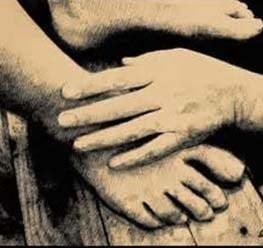
A terrific study is finding the people who fell at Jesus’ feet. Tucked in the Gospels you’ll find stories of those who despair. You’ll also see them come to Jesus in brokenness and humility, without any other recourse. I call these the “people of the feet.”
They came to Jesus because they had no hope otherwise. They were people who were hopeless and wretched, they had long ago run out of options. They came to Jesus, falling down in front of Him. They were all people of the feet.
They were men and women who were truly desperate.
There are some common characteristics that feet-finders have:
A great need that can’t be met without His touch
To understand one’s true condition–humility, brokenness
To beg for a healing, for self or family
To honor Jesus as the Messiah
To be more receptive to His teaching, to understand Him
To become a witness to others (although it does seem secondary)
“But immediately a woman whose little daughter had an unclean spirit heard of him and came and fell down at his feet.“
Mark 7:25
“Then people went out to see what had happened, and they came to Jesus and found the man from whom the demons had gone, sitting at the feet of Jesus, clothed and in his right mind.”
Luke 8:35
But there are several other instances where people came to sit at Jesus’ feet:
Mark 5:22-23, Jairus, a leader in the local synagogue
Luke 7:37-38, a sorrowing mother for her daughter
Luke 8:41, also Jairus
Luke 10:39, Mary, when Jesus was teaching
John 11:32, Mary, meeting Jesus entering Bethany
John 12:3, Mary, with her perfume
Revelation 1:17, John to express what he was seeing (also 19:10)
In every case we find people consciously coming and kneeling at the feet of the Lord Jesus. It was a deliberate action that came from their hearts. Each had a terrible need, and each was without hope.
It’s the end of religion if you’re a feet-finder. No more facades, no more treadmills. Instead your heart forever changes.
Hardly decent to religious people.
Are you really that desperate yet? Have you seen your need, and do you realize how lost you would be without His healing touch?
I’m convinced only Jesus can make me clean and whole.
But I found my rightful place at His feet. It’s where I belong. I love Him.
40 And Jesus answering said to him, “Simon, I have something to say to you.” And he answered, “Say it, Teacher.”
41 “A certain moneylender had two debtors. One owed five hundred denarii, and the other fifty. 42 When they could not pay, he cancelled the debt of both. Now which of them will love him more?” 43 Simon answered, “The one, I suppose, for whom he cancelled the larger debt.” And he said to him, “You have judged rightly.”
Then turning toward the woman he said to Simon, “Do you see this woman? I entered your house; you gave me no water for my feet, but she has wet my feet with her tears and wiped them with her hair. 45 You gave me no kiss, but from the time I came in she has not ceased to kiss my feet. 46 You did not anoint my head with oil, but she has anointed my feet with ointment.
47 Therefore I tell you, her sins, which are many, are forgiven—for she loved much. But he who is forgiven little, loves little.”
I don’t mean to be blunt, but how much do you love Jesus? This parable looks at the heart of the forgiven believer, the person who has been incredibly forgiven for everything–all sins, past, present and future. And it’s here we see a woman whose heart is broken by her sin, and we see that she discovers Jesus’ grace, total forgiveness and tremendous mercy.
Jesus has been invited to Simon’s home.
He’s a Pharisee, “a pure one,” one who kept the Law. So far the Pharisees haven’t banded together to attack Jesus’ ministry. It seems that there were still some Pharisees who were true seekers of truth. But that’s about to change.
The text jumps right in and we see Jesus reclining at a table (the Jewish people didn’t use chairs–pillows were used instead.) At a feast like this people who weren’t officially invited could come in to stand in the back and listen in on the conversation. (How awkward.)
Suddenly a woman bursts into the room.
She’s described as “a woman of the city,” which is a code word for “a sinner, or a harlot.” (Let your imagination roll that one around.) She comes with a purpose, for she brings a jar of expensive perfume with her.
She knows what she must do.
The passage reveals that she’s on her knees, weeping on Jesus’ feet, and rubbing His feet with her hair, and pouring out the perfume. Only a harlot would undo her hair like this. She’s even kissing his feet!
She’s obviously a broken person—yet someone who knows who Jesus is.
Living in deep sin has completely destroyed her.
And at this point Simon is deeply offended, and probably embarrassed by what’s happening. But he also assumes that Jesus isn’t who he’s saying he is. “How dare does this man let an unclean person do this!” But Jesus understands everything. His parable is short and it’s a broadside directed at Simon.
The interpretation is obvious: the man who owes the most will love the most.
Jesus accentuates Simon’s breach of protocol. The Lord deftly explains the entire situation; Simon is busted. He’s put on the spot and Jesus has made his point. It’s all so obvious. The essence of the story is clear.
How much do you love the Master?
Have you really grasped how much of your sin that’s been forgiven, or maybe you’re a Simonite—someone who doesn’t quite accept God’s forgiveness? The Bible tells us repeatedly that no one is righteous. No one, and Scripture has a very low opinion of the righteousness of men.
“But we are all as an unclean thing, and all our righteousnesses are as filthy rags; and we all do fade as a leaf; and our iniquities, like the wind, have taken us away.”
Isaiah 64:6, KJV
The Hebrew word for “filthy” is extremely graphic.
I don’t want to offend, but it literally means “a menstruating cloth or rag.” It was something that a woman used before there was Tampax. How very clear and descriptive. Human righteousness is soiled and vulgar to God.
Will we receive God’s righteousness, or will we still try to walk in our righteous filth?
Forgiveness can come only from Him–there is no hesitation or shortage on His part. Our part is to come with loving submission and brokenness at Jesus’s feet, and to fully accept the forgiveness He offers by faith.
“Christianity happens when men and women accept with unwavering trust that their sins have been not only forgiven, but forgotten, washed away in the blood of the Lamb.”
O Lord, my heart is not lifted up; my eyes are not raised too high; I do not occupy myself with things too great and too marvelous for me. 2 But I have calmed and quieted my soul, like a weaned child with its mother; like a weaned child is my soul within me.
Psalm 131:1-2, ESV
To be humble [Hebrew, anavah] means that we recognize our boundaries. We will not advance by stepping beyond what God has ordained for us. We learn to be content with the present. Humility is not thinking less of yourself, but thinking of yourself less. It puts others first.
In Psalm 131 we begin the walk into “anavah.” We’re brought by God into a place where we understand who we really are. Our lives are not characterized by self-promotion, but rather serving God and advancing others before ourselves.
The image is one of being a weaned child resting on a mother’s chest. We have no agenda, there is nothing that we must do, but just relax on Him.
Seeing a weaned baby is one who no longer needs its mother’s milk. There’s no fussing or grasping for nourishment, rather he’s simply content to rest in his mother’s warm embrace.
To practice true humility, or the Hebrew word “anavah,” it is to renounce ambition in all its insidious forms. As Jesus’ disciples we follow Him with our cross. That cross puts the end of our old life. And we die daily. And it is obvious to all.
“And since I, your Lord and Teacher, have washed your feet, you ought to wash each other’s feet. I have given you an example to follow. Do as I have done to you.”
John 13:14-16
“We had long known the Lord without realizing that meekness and lowliness of heart should be the distinguishing feature of the disciple.”
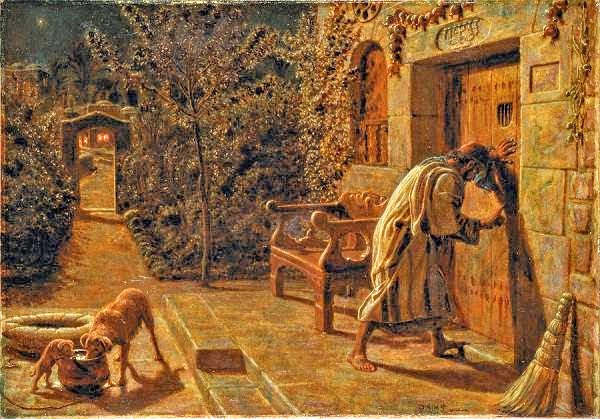
“And He said to them, “Which of you shall have a friend, and go to him at midnight and say to him, ‘Friend, lend me three loaves; for a friend of mine has come to me on his journey, and I have nothing to set before him’; and he will answer from within and say, ‘Do not trouble me; the door is now shut, and my children are with me in bed; I cannot rise and give to you’?
I say to you, though he will not rise and give to him because he is his friend, yet because of his persistence he will rise and give him as many as he needs.”
Luke 11:5-8
This parable is known by some as “the Importunate Neighbor.” That’s an excellent description. Importunate is defined as being persistent, especially to the point of annoyance or intrusion. It’s tenacious and stubborn–not giving up even when being ignored, and that describes what’s happening here.
What immediately proceeds this parable is Luke’s version of the Lord’s prayer, which the disciples requested. They wanted to understand the methods and mechanics of praying–perhaps the Pharisee’s prayers weren’t quite up to snuff–they wanted more; and they insisted that Jesus instruct them.
The disciples wanted to do prayer right.
A typical Jewish home had sleeping quarters (one room!) located on a raised platform. A ladder was used to access that level (which could be crowded, sometimes two to a bed.) Often their livestock were brought inside. And when it was time to get up, everyone got up. That explains the homeowner’s reluctance to give bread to his neighbor. To get up, light a lamp, wasn’t a solitary affair.
He’s obviously unenthusiastic to make that effort.
The word used here to explain the neighbor actions is ἀναίδεια “anaídeia,” which is only used once–it’s translated as impudence, shamelessness, audacity or chutzpah. It’s a Greek word that explains the knocker’s rudeness. He won’t stop. He knocks and pounds until he gets his bread. Not having bread for his guests is unheard of, for it violates all kinds of convention.
The unwritten law of Jewish hospitality demanded action.
This is part of Jesus’ view on prayer. It means we must be inappropriate sometimes–even to the point were we are being rude.
Immediately following this parable (the very next thought) are the following instructions:
“So I say to you, ask, and it will be given to you. Seek, and you will find. Knock, and the door will be opened to you. 10 For everyone who asks receives, and the one who seeks finds, and to the one who knocks, the door will be opened.”
Luke 11:9-10
Perhaps it’s a matter of forcefulness?
We “pray” but don’t insist. We desire but don’t demand. Maybe it takes a certain shamelessness to make prayer work. Jesus emphasizes a necessary attitude to praying God’s way. It’s never automatic, but in this parable we see words that move the Father’s heart, and loosen his hand. In Jesus’ teaching, prayer means effort.
It means spiritual work. He wants us to know this. It is important.
“There is neither encouragement nor room in Bible religion for feeble desires, listless efforts, lazy attitudes; all must be strenuous, urgent, ardent. Flamed desires, impassioned, unwearied insistence delight heaven. God would have His children incorrigibly in earnest and persistently bold in their efforts. Our whole being must be in our praying.”
“And we all, with unveiled faces, beholding the glory of the Lord, are being transformed into the same image from one degree of glory to another. For this comes from the Lord who is the Spirit.”
2 Corinthians 3:18, ESV
“So all of us who have had that veil removed can see and reflect the glory of the Lord. And the Lord—who is the Spirit—makes us more and more like him as we are changed into his glorious image.”
2 Corinthians 3:18, NLT
The above chart is in black/white. I have found out that most things are seldom black/white, and yet every once in a while I find something that helps me think. This is one of them. If it doesn’t help I apologize now. (But yet it just might be a blessing to some.)
God has made every believer holy through our faith in the blood of Jesus. And yet the Father calls His children to a walk where we become more and more like Jesus, becoming holy in every circumstance we encounter. This is called “sanctification,”
Being changed into His likeness is the dream of every Christian believer.
That driving impulse is one of our common denominators. We want this more than anything, and I have come to believe that the Holy Spirit wants it even more than we do. Looking at the above chart, we see that we’re slowly moving in that direction.
Not curious-We’ve all been there, and it’s very often been the prayer of others that has moved us out of our darkness. The Bible says that we are spiritually dead which is not good. Salvation is not in our thinking at this point.
Curious-We begin to search and the Holy Spirit begins to woo us into the love of Christ. Typically we start to become slowly fascinated by Jesus and His words. At this point we begin to question the lies and darkness that we’ve walked in. Going to church becomes a possibility. Starting to read the Bible, and we wonder about its truth.
Believer-We’ve finally accepted, by saving faith and repentance, the lordship of Jesus. Attending a church where the Word is taught is important. We begin to hear the Holy Spirit and respond. We begin to reach out to other Christians. We learn about baptism and the Lord’s Supper. We learn how to pray, worship, and give. The Holy Spirit has made us believers.
Disciple-We’re aligning ourselves to a life of disciplined obedience to the Spirit and the Word. Our faith is maturing and we’re starting to embrace training, (1 Timothy 4:7). We start to understand that the Father Himself has brought us to this place, (Hebrews 12:11). We’re becoming disciplined believers.
Disciple makers-We come to see that this is why we’re brought to Him. Our training is for others, and we serve Him by reaching out to those who aren’t advancing in the faith. We understand Jesus’ call to lead others into discipleship. It’s His command and we must do this. (Matthew 28:19.)
Life long servant-The Bible describes this stage as being a father [or mother] for the younger believers (1 John 2:13-14). We now realize that we totally belong to Him. We walked through the fire, and our confidence is now serving Jesus alone. At this point we realize we serve Him both now, and for eternity.
We often fluctuate between these different stages.
Sometimes we’re making disciples, and we can slip back to being just a believer. Nothing is written in stone. And yet there is a simple wisdom that comes when we realize where we are really at in our walk with Jesus.
Knowing this process liberates and brings us a quiet but sure understanding.
Sanctification is a process, beginning with justification and continuing throughout life. Paul calls it “straining forward” or running a race.
The Holy Spirit is our teacher and ever present guide. Our discipleship is under His control. A proper response is submission and humility. He takes the intricate circumstances and our unique happenings to make us like Him.
“But if anyone has the world’s goods and sees his brother in need, yet closes his heart against him, how does God’s love abide in him?”
“Little children, let us not love in words or talk but in deeds and in truth.”
1 John 3:17-18, ESV
Love is a noble idea, it’s admired and extolled by practically everyone–we see it in our music and poetry, ethics and religion. For the most part it’s a word for something decent and virtuous and honorable. It’s a good thing, but I’m afraid it’s not always scriptural.
You see, Bible love wears work gloves.
It labors and sweats. Bible love has chores to do, and it actively looks and sees what needs to be done. 1 John 3 tells us that we shouldn’t deceive ourselves and only see the world’s definition. That love that a believer has is to be different.
Love, in John’s eyes, is most assuredly “doing.” It burns spiritual calories as it labors to serve our brothers and sisters. Love finds things it can do–it doesn’t just talk but it gets busy. Love sees the need and then gets down to serve.
“You must show sincere love to each other as brothers and sisters. Love each other deeply with all your heart.”
1 Peter 1:22
Working (serving) has nothing to do with our salvation, that is a free gift. We’re saved by grace through the blood of Jesus–that’s a given. And this serving love isn’t drudgery, as a matter of fact, working and serving each other is a joy. The deepest kind of joy there is.
Our words, although important, are really an insufficient way of proving our authenticity. The love we serve another with isn’t “pretty poetry” kind of love. It’s so easy to just shout out truth and never ever show a working, serving kind of love.
That disconnect is a bit disconcerting. When do we suppose we figure out that His love is actually a verb?