Sometimes we live in darkness. We suffer and it’s hard. We mentally accept God’s grace and His love for us, but in our heart we remain untouched. Pain saturates everything it seems. We seem to go through the motions, but deep down we’re convinced that we’ll never find the light that so many claim to have.
Since I have a disability I realize I learn things others won’t grasp. I’m learning to embrace the waves that push me to the rock–the Rock of ages. I suppose when I meet Him I’ll understand why it had to be so.
My hope is real. Heaven is home. My pain will be healed.
There is a language of heaven spoken, and those who have suffered speak a dialect of that. Just as someone from Georgia communicates English, their dialect is obvious. The same for those who live in pain. We speak the same, but differently.
Pain sometimes saturates our lives.
We live with something that is persistent, and our hope is a day when it’s all over. Psalm 88 becomes our Psalm. Nothing here is sugar-coated. It is raw and unabridged. It puts our pain under a microscope. That Psalm is entirely yours.
“For my soul is full of troubles, and my life draws near to Sheol. I am counted among those who go down to the pit; I am a man who has no strength,”
Psalm 88:3-4
“I am certain that I never did grow in grace one-half so much anywhere as I have upon the bed of pain.”
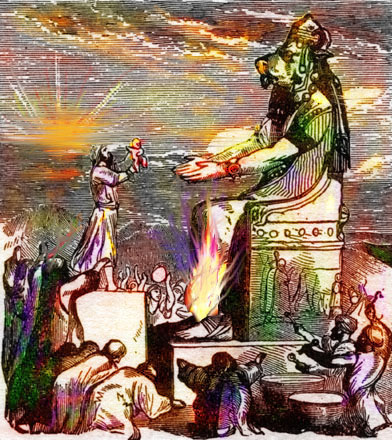
God’s temple was now filled with an evil darkness. King Manasseh made the Lord’s holy place a fountain of sin and filth. Instead of holiness, it was an evil place.
He brought in dark things that were twisted, perverted and clearly forbidden.
“Manasseh led Judah and the inhabitants of Jerusalem astray, to do more evil than the nations whom the Lord destroyed before the people of Israel.”
2 Chronicles 33:9, ESV
His own darkness was now encouraged by others, it became accessible, available and promoted:
The high places were rebuilt throughout the land.
Altars to Baal rebuilt, using images of wood.
In the holy temple, altars to the “starry host,” astrology, plain and simple.
Human sacrifice of his own sons to Molech, a false god. Murder.
He practiced soothsaying, used witchcraft and sorcery, and consulted mediums and spiritists.
Evil was being encouraged and something wicked was replacing all that was good and true. The analysis of Manasseh’s policies was way beyond disturbing. Of all the kings of Judah, he was the most sinful and the most corrupt. He was at the bottom of the barrel.
The Hebrew word for “led astray” can be translated seduced.
Manasseh was an incredibly immoral man, a king who ruled for 40 years. “He did all he could to pervert the national character, and totally destroy the worship of the true God; and he succeeded.” (Clarke)
It’s believed that he put Isaiah to death by cutting him in two.
Moreover Manasseh shed very much innocent blood, till he had filled Jerusalem from one end to another, besides his sin by which he made Judah sin, in doing evil in the sight of the LORD.
1 Kings 21:16
But then something happened.
And the LORD spoke to Manasseh and his people, but they would not listen. Therefore the LORD brought upon them the captains of the army of the king of Assyria, who took Manasseh with hooks, bound him with bronze fetters, and carried him off to Babylon.
2 Chronicles 33:10-11
Assyria came knocking on Manasseh’s door. I think there was a certain mercy here, but also discipline. Manasseh had “hooks,” inserted through his jaw and out of his mouth. Like a fish he was led to Babylon, a trophy of the power of the army of Babylon.
It was from a dark dungeon that Manasseh cried out to the Lord and repented.
There’s a Jewish fable that when Manasseh cried out to God the angels boarded up the windows in heaven. They wanted to block out his prayer so God wouldn’t be able to hear. But God, rich in mercy, bored a hole in front of His throne to hear Manasseh’s desperate cry.
The Lord’s intention was to forever show His kindness and grace given to the most awful repentant sinner.
I believe that Manasseh was the “Prodigal Son” of the Old Testament.
God is not at a loss when He moves to bring us back to Himself. He can woo or whip. He can draw or drive. He can work rapidly or slowly, as He pleases. In other words, He is free to be God! And in His own way, at His own pace, He brings us back.
God is wildly in love with you. Yes, the sin you’ve committed is awful, but the Lord wants you to come back. He may discipline you, but He forgives everything if you’ll turn and repent.
No matter how awful your sin, He forgives and restores. Manasseh is proof of that.
14 After he had spent everything, a severe famine struck that country, and he had nothing. 15 Then he went to work for one of the citizens of that country, who sent him into his fields to feed pigs. 16 He longed to eat his fill from the pods that the pigs were eating, but no one would give him anything. 17 When he came to his senses, he said, ‘How many of my father’s hired workers have more than enough food, and here I am dying of hunger! 18 I’ll get up, go to my father, and say to him, “Father, I have sinned against heaven and in your sight. 19 I’m no longer worthy to be called your son. Make me like one of your hired workers.”’
20 So he got up and went to his father. But while the son was still a long way off, his father saw him and was filled with compassion. He ran, threw his arms around his neck, and kissed him.21 The son said to him, ‘Father, I have sinned against heaven and in your sight. I’m no longer worthy to be called your son.’
22 “But the father told his servants, ‘Quick! Bring out the best robe and put it on him; put a ring on his finger and sandals on his feet. 23 Then bring the fattened calf and slaughter it, and let’s celebrate with a feast, 24 because this son of mine was dead and is alive again; he was lost and is found!’ So they began to celebrate.
Luke 15:14-24
Sometimes, when reading this we diminish this parable to a really nice story, but nothing more. It comforts us. It’s so evocative after all, but somehow it never enters our spiritual hearts like it’s meant to. We may mentally assent but we do not absorb what it really says.
In Luke 15 everything is lost, but is finally found. Luke 15 also has incredible theology, and is meant to jolt us like a spiritual defibrillator.
Luke 15 is magnificent in the deepest sense of the word.
The Parable of the Prodigal Son is Mt. Everest of the Bible. It requires believers to read it often and prayerfully.
Our Father runs to us because He sees our desperate hearts. His joy can’t be explained but only received. It’s just the way He is.
Just perhaps it will take an eternity to understand this simple parable? If so, we should get started now.
There are just three characters here in Luke 15:14-24: there’s the Father, the son, and the elder brother–and each plays an integral part. The prodigal is the main character, yet the father is the main focus. The son is a wastrel, a good-for-nothing rascal who blows his father’s inheritance on parties, booze, and prostitutes. He lives for the moment, he seeks pleasure in those things which will come very close to destroying him.
But haven’t we all done that?
The father represents God, who represents the loving patriarch of the parable. He’s the one who has turned over the prodigal’s portion of the inheritance. To a degree I suppose he has funded the prodigal’s descent into depravity, and yet it was the son who decided to go crazy. The father is certainly not to blame.
But nevertheless, in this story, the father is the main character. Not the prodigal.
His actions are very difficult to grasp. God behaves outrageously, and His character is difficult to understand or fathom. (After all, who acts this way?) Granted we think our earthly fathers might do this for us–but even that may be a stretch for some. Yet this parable describes how God feels about sinners.
A terrific study is finding the people who fell at Jesus’ feet. Tucked in the Gospels you’ll find stories of those who despair. You’ll also see them come to Jesus in brokenness and humility, without any other recourse. I call these the “people of the feet.”
They came to Jesus because they had no hope otherwise. They were people who were hopeless and wretched, they had long ago run out of options. They came to Jesus, falling down in front of Him. They were all people of the feet.
They were men and women who were truly desperate.
There are some common characteristics that feet-finders have:
A great need that can’t be met without His touch
To understand one’s true condition–humility, brokenness
To beg for a healing, for self or family
To honor Jesus as the Messiah
To be more receptive to His teaching, to understand Him
To become a witness to others (although it does seem secondary)
“But immediately a woman whose little daughter had an unclean spirit heard of him and came and fell down at his feet.“
Mark 7:25
“Then people went out to see what had happened, and they came to Jesus and found the man from whom the demons had gone, sitting at the feet of Jesus, clothed and in his right mind.”
Luke 8:35
But there are several other instances where people came to sit at Jesus’ feet:
Mark 5:22-23, Jairus, a leader in the local synagogue
Luke 7:37-38, a sorrowing mother for her daughter
Luke 8:41, also Jairus
Luke 10:39, Mary, when Jesus was teaching
John 11:32, Mary, meeting Jesus entering Bethany
John 12:3, Mary, with her perfume
Revelation 1:17, John to express what he was seeing (also 19:10)
In every case we find people consciously coming and kneeling at the feet of the Lord Jesus. It was a deliberate action that came from their hearts. Each had a terrible need, and each was without hope.
It’s the end of religion if you’re a feet-finder. No more facades, no more treadmills. Instead your heart forever changes.
Hardly decent to religious people.
Are you really that desperate yet? Have you seen your need, and do you realize how lost you would be without His healing touch?
I’m convinced only Jesus can make me clean and whole.
But I found my rightful place at His feet. It’s where I belong. I love Him.
10 Finally, be strong in the Lord and in the strength of His might. 11 Put on the full armor of God, so that you will be able to stand firm against the schemes of the devil.
12 For our struggle is not against flesh and blood, but against the rulers, against the powers, against the world forces of this darkness, against the spiritual forces of wickedness in the heavenly places.
Eph. 6:10-12, NASB
Paul tells us that discerning the cosmic forces of wickedness is now critical. If we choose to ignore his words and make them optional, we will become spiritual toast. We need to hear reality. We want to be told the truth. And the truth is that we’re neck deep in spiritual alligators.
Point blank: We were each born for battle. Every believer must wear armor.
This passage in Ephesians 6 stresses that there is something sinister, an organized force, something evil, a darkness that’s focused directly on us. Verse 12 unveils to us a veritable government of wickedness. Satan leads his demons out with the intention of confusing believers and destroying holiness.
We also need to understand that human beings have a terrible knack of walking in their sin, and also by being manipulated by evil forces. Human history bears this out. We have a lousy track record. Without the Spirit we will be lost and destroyed by our own darkness.
Christians are to see life very differently than others do.
Ephesians 6 teaches us to find strength in being connected with God, which is critical to walk through in this confusing darkness. By prioritizing our relationship with Him, we can draw upon His strength and a sincere faith to navigate through all of this.
Without intimacy there is no obedience and there can be no real victory.
You must come to him humbly and holy, and sit before Him and listen, learn and love. And that is the major step in true holiness. Being controlled by Him means when you need to, you can stand and deliver damage to Satan’s kingdom.
You’ll be leading angels in this terrible battle! They have their swords drawn and are quite capable. Remember that this is a spiritual war–not physical. Your attack must be fought on your knees. And angels, they’re watching and listening to you as you pray. They are God’s messengers to protect you.
Satan presses us hard through redirection and forgetfulness of who we are.
Without the humble intimacy that can only grow on prayer and Bible reading, we will be spiritually destroyed. We need the protection of the Presence. Please don’t forget this; you need Jesus more today than yesterday. You must come closer. He will help you.
You see, your only hope is in Jesus’ strength and intimate love for you.
We must reach for our power and grab upon this intense love. We can only become strong through our intimacy with Jesus. He shields us from the spiritual corruption that swirls all around us. As we draw to Him we become mighty, as we listen closely to the Holy Spirit, we will walk in true discipleship with Jesus.
You will hear Him speak clearly to you, perhaps when you actively push to do His will than your own.
“We are a long time in learning that all our strength and salvation is in God.”
“When he came down from the mountain, great crowds followed him. 2 And behold, a leper came to him and knelt before him, saying, “Lord, if you will, you can make me clean.” 3 And Jesus stretched out his hand and touched him, saying, “I will; be clean.” And immediately his leprosy was cleansed.”
Matthew 8:1-4
It was a wild scene, we can’t forget this. But it’s funny, Jesus through all this sees and hears this leper. He doesn’t respond to the crowd but to the diseased man. The text tells us that the leperous man was on his knees and he was “praying.” His pleas were directed at Jesus.
But remember, the end of the previous verses explains exactly what’s happening. Matthew 7:28-29, (MSG) explains their excitement–
“When Jesus concluded his address, the crowd burst into applause. They had never heard teaching like this. It was apparent that he was living everything he was saying—quite a contrast to their religion teachers! This was the best teaching they had ever heard.“
The crowds responded wildly to the marvelous teaching of Jesus, and that was awesome. We really shouldn’t minimize that. However, in the Gospels, the “crowd” is pretty much a bad term, or at least a neutral one.
I suppose that Jesus seems to ignore the multitude’s extremely positive reaction. He knows it won’t last. The fickle crowd will soon cry out and demand His crucifixion.
But I understand, I’m that leper and He sees me.
Scripture tells me that Jesus now sits in heaven and makes intercession for me. He focuses on just me, I’m the center of His care–but I also know that attention is also on you, and others, and yet I’m assured that He sees me and each of His sheep. This should be a comfort. He concentrates and ministers to the person, and never to the multitude.
Jesus loves you, and He loves me too.
“So he told them this parable: 4 “What man among you, who has a hundred sheep and loses one of them, does not leave the ninety-nine in the open field and go after the lost one until he finds it?5 When he has found it, he joyfully puts it on his shoulders, 6 and coming home, he calls his friends and neighbors together, saying to them, ‘Rejoice with me, because I have found my lost sheep!’”
Life can get out of hand sometimes, becoming hectic and frantic. It seems like we’ve got 1000 ‘irons in the fire.’ The anxiety of doing everything creates fear and worry. We cannot possibly keep up. There isn’t enough hours in the day.
We are not at rest with ourselves, or with the Lord.
And oh my, the news, the internet, and our cell phones create awful issues if we can’t manage them with the Holy Spirit’s direction and purposes. Our computers seem like a pipeline for darkness. Unless they’re “given” to God, they can destroy you.
What causes me anxiety? I’m quite sure you can add your own issues.But here’s a partial list:
ambition, self-promotion, pride, jockeying for position
family issues, marriage and children
my job and career, “keeping up with the Joneses”
religious ‘duties’
finances, bills
politics, media
unrepented sin, separation from God, peace is missing
But I assure you, there is rest.
The Old Testament uses a word, נוח or ‘nuach.’ It’s a Hebrew word. Both Moses and Jesus understood the implications. It means calming, to become quiet or still. To rest quietly.
“And He said, “My Presence will go with you, and I will give you rest.”
(Exodus 33:14)
This promise is given to Moses; frankly, he’s overwhelmed by his burden. In the “tent of the meeting” he battles with God, and it’s in that place Moses insists on the Lord’s active presence on him and on the people. He will not take another step unless God does this.
“Come to Me, all you who labor and are heavy laden, and I will give you rest.“
(Matthew 11:28)
The Lord Jesus calls each of us to rest in Him. It seems we work hard and we carry awful heavy burdens. Jesus uses the word, “Come” which is typically a command or an imperative. (It can be used with an explanation mark!)
Jesus understands our hearts and our effort and “labor.” He fully grasps that we’re “heavy laden” much of the time. His invitation is to come and find the peace of a resting disciple. It is His gift to us, and only Jesus can give it to us.
“‘Come’; he drives none away; he calls them to himself. His favorite word is ‘Come.’ Not, go to Moses – ‘Come unto me.’ To Jesus himself we must come, by a personal trust. Not to doctrine, ordinance, nor ministry are we to come first; but to the personal Saviour.”
“A rule I have had for years is: to treat the Lord Jesus Christ as a personal friend. His is not a creed, a mere doctrine, but it is He Himself we have.”
~D.L. Moody
Friendship with God can be quite liberating for the believer. It releases us from the terrible bondage of religion and ritual with all its negative connotations. Intimacy with our Lord will carry us beyond creed or doctrine to the place of true communion. We fellowship with Him directly in person.
It’s not that the Law is bad, but in the intense light of God’s love, it’s a poor substitute for real discipleship. We often put an undue value on rules and religious effort, but that misses out on grace completely. Doctrine is a good servant, but it’s a poor master.
God’s grace always trumps our legalism. Love truly surpasses rules, without breaking them.
As good evangelicals, we can talk big about “a personal relationship.” That is indeed crucial. But few are the believers that walk in a daily friendship with their Savior, and that is truly a tragedy.
As a teacher of God’s Word, I mourn over my students when they miss out on what is real and true. I’m afraid for them. They haven’t come to the place of being a friend of Jesus.
“No longer do I call you servants, for the servant does not know what his master is doing; but I have called you friends.”
John 15:15, ESV
Friendship with Jesus will bring true guidance. He shares secrets and wisdom with his friends. We are brought into a true knowledge of the Kingdom through companionship with the King. We are not slaves– or drones, slavishly serving out of fear. We are His confidantes.
We’re His friends!
Jesus wants to confide in us; sharing wisdom and truth hidden by time and sin. And his kingdom is chock full of great mysteries! He is looking to bring us into the willingness of daily communion. I believe its only through intimacy with Jesus can we handle what He wants to teach us. (see Psalm 25:14; John 15:15.) We will simply short-circuit if we’re not intimate with Him.
He will heal our wounds, and forgive all our sins. He is truly our Savior as well as our friend.
But that friendship comes with a price. It means we are now tethered to the Lord. That can get old, especially when I want to do my own thing. It seems I will continually have to lay something down and choose to accept being bonded with Him, and to always follow.
But my soul now has a best friend. Or just maybe, Jesus has been my friend all along, and I just didn’t know it.
The subject of “the pool at Bethesda” alludes to the Thorton Wilder play, “The Angel that Troubled the Waters.”
The play tells of a physician who comes to the pool of Bethesda, hoping to see the stir, and then be the first in the water, and healed of his debilitating depression. An angel appears and troubles the water. Everybody at the pool hopes to be the first one in and to be healed of their disability.
An angel appears and blocks a physician at the very moment he is about to step into the pool and be healed.
Angel: “Drawback, physician, this moment is not for you.”
Physician: “Angelic visitor, I pray thee, listen to my prayer.
Angel: “This healing dear physician, is not for you.”
Physician: “Surely, surely, the angels are wise. Surely, O Prince, you are not deceived by my apparent wholeness. Your eyes can see the nets in which my wings are caught; the sin into which all my endeavors sink half-performed, cannot be concealed from you.”
Angel: “I know.”
Physician: “Oh, in such an hour was I born, and doubly fearful to me is the flaw in my heart. Must I drag my shame, Prince and Singer, all my days more bowed than my neighbor?”
“It is your very sadness that makes your low voice tremble into the hearts of men. The very angels themselves, cannot persuade the wretched, and blundering children on earth, as can one human being broken on the wheels of living.
“In Love’s service, only the wounded soldiers can serve. Drawback.”
Later, the person who enters the pool first, and was healed rejoices in his good fortune, then turns to the physician before leaving and says:
“But come with me first, an hour only, to my home. My son is lost in dark thoughts. I — I do not understand him, and only you have ever lifted his mood.”
“Only an hour… my daughter… since her child has died, sits in the shadow. She will not listen to us, but she will listen to you.”
The play pierces me with this line— “Without your wound where would your power be?“ That thought causes me to look at my many weaknesses with an entirely different perspective.
Paul’s teachings offer us a powerful revelation: it is through our weaknesses that we can authentically minister to others, just as Jesus did by going to the cross. This priniple slowly permeates my understanding, and emphasizes the reasons behind my weaknesses.
Paul boldly declares that it is the very things we perceive as weak that have the potential to cultivate strength and truth within us and to others. It is my sincere hope that the ministry of alaskabibleteacher.com will impact lives by declaring this.
I hope so anyway. Please pray for me. I desperately need it.
I first encountered this excerpt in the book, “Abba’s Child: The Cry of the Heart for Intimate Belonging,” by Brennan Manning. The book is a worthy read, and worth finding if you can. The play is based on the biblical verses of John 5:1-4, however, it changes the end of the parable. The play is fictitious.
Behold, you are beautiful, my love! Behold, you are beautiful! You have doves’ eyes.
Song of Solomon 1:15
Doves have a single vision.Because of that they can only see one thing at a time, which makes them unique. They are one of a kind. Doves are also the emblem of the Holy Spirit in scripture, and when they are mentioned we should be alerted that something spiritual is happening.
What the Shepherd is proclaiming is “she only has eyes for me, she sees no one else.” For the true believer, there isn’t anything that can take the place of Him. Political involvement, Eastern mysticism, vain philosophy, or stifling materialism should never take the place of the Lord Jesus. Never, ever.
We need “dove’s eyes.” We must see Jesus only.
There are a lot of noble things we can get involved in. Good things, yes, but not the best, we need to fix our eyes on Jesus. I have personally seen brothers, sisters, and whole churches lose their vision, and focus on something other than their “first love.”
Satan detests our intimacy with our Lord.
Every time we move into direct contact with our Savior the enemy goes crazy. He wants to diminish and erode our number one love. He detests that relationship, and he short-circuits our connection with Jesus. The devil diverts believers to take the good, and leave behind the best.
There are many preachers and teachers in the Church who no longer have “dove’s eyes. Satan has blurred their vision, and they have lost the intimacy they once had with Jesus. Most of the time, they don’t even realize it. This saddens me.
I remember a once blazing church in Pacifica, California that once closed down whole blocks in San Francisco. They worshiped Jesus intensely. They took the Church into the streets and brought with them a passion I’ve seldom seen. They were people on fire. It was a pleasure to work with them, they were in love with Jesus.
Within two years they lost it. They adopted a political stance that was quite commendable, but it diminished their first love for Jesus, and Satan was pleased. The church split in a dozen different ways. This isn’t a new thing, the apostle Paul saw it and was afraid for the church in Corinth.
“For I feel a divine jealousy for you, since I betrothed you to one husband, to present you as a pure virgin to Christ. 3 But I am afraid that as the serpent deceived Eve by his cunning, your thoughts will be led astray from a sincere and pure devotion to Christ.”
2 Corinthians 11:2-3
In the book of Revelation, chapters 2 and 3 emphasize the level of intimacy each Church possesses. “Angels” come and carry the message of repentance and turning to that “first love.” I have to think that “dove’s eyes” come as a result of being filled with God’s Spirit.
We’re finally seeing through the eyes of a dove–the Holy Spirit.
“Return dear one, come back to the Lord Jesus. Let your first love blaze again. Don’t allow Satan to sidetrack you into something that is good, but not the best. Have “dove’s eyes” that only see Jesus.”