God Can Forgive the Worst

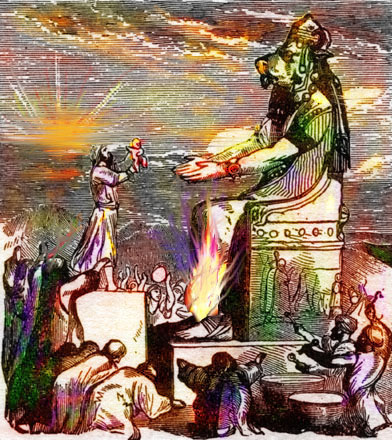
God’s temple was now filled with an evil darkness. King Manasseh made the Lord’s holy place a fountain of sin and filth. Instead of holiness, it was an evil place.

He brought in dark things that were twisted, perverted and clearly forbidden.

“Manasseh led Judah and the inhabitants of Jerusalem astray, to do more evil than the nations whom the Lord destroyed before the people of Israel.”

2 Chronicles 33:9, ESV

His own darkness was now encouraged by others, it became accessible, available and promoted:

  • The high places were rebuilt throughout the land.
  • Altars to Baal rebuilt, using images of wood.
  • In the holy temple, altars to the “starry host,” astrology, plain and simple.
  • Human sacrifice of his own sons to Molech, a false god. Murder.
  • He practiced soothsaying, used witchcraft and sorcery, and consulted mediums and spiritists.

Evil was being encouraged and something wicked was replacing all that was good and true. The analysis of Manasseh’s policies was way beyond disturbing. Of all the kings of Judah, he was the most sinful and the most corrupt. He was at the bottom of the barrel.

The Hebrew word for “led astray” can be translated seduced.

Manasseh was an incredibly immoral man, a king who ruled for 40 years. “He did all he could to pervert the national character, and totally destroy the worship of the true God; and he succeeded.” (Clarke)

It’s believed that he put Isaiah to death by cutting him in two.

Moreover Manasseh shed very much innocent blood, till he had filled Jerusalem from one end to another, besides his sin by which he made Judah sin, in doing evil in the sight of the LORD.

1 Kings 21:16

But then something happened.

And the LORD spoke to Manasseh and his people, but they would not listen. Therefore the LORD brought upon them the captains of the army of the king of Assyria, who took Manasseh with hooks, bound him with bronze fetters, and carried him off to Babylon.

2 Chronicles 33:10-11

Assyria came knocking on Manasseh’s door. I think there was a certain mercy here, but also discipline. Manasseh had “hooks,” inserted through his jaw and out of his mouth. Like a fish he was led to Babylon, a trophy of the power of the army of Babylon.

It was from a dark dungeon that Manasseh cried out to the Lord and repented.

(2 Chronicles 33:12-13.)

There’s a Jewish fable that when Manasseh cried out to God the angels boarded up the windows in heaven. They wanted to block out his prayer so God wouldn’t be able to hear. But God, rich in mercy, bored a hole in front of His throne to hear Manasseh’s desperate cry.

The Lord’s intention was to forever show His kindness and grace given to the most awful repentant sinner.

God is not at a loss when He moves to bring us back to Himself. He can woo or whip. He can draw or drive. He can work rapidly or slowly, as He pleases. In other words, He is free to be God! And in His own way, at His own pace, He brings us back.

     Tom Wells

God is wildly in love with you. Yes, the sin you’ve committed is awful, but the Lord wants you to come back. He may discipline you, but He forgives everything if you’ll turn and repent.

No matter how awful your sin, He forgives and restores. Manasseh is proof of that.

Sources:

2 Chronicles 33:1-20

2 Kings 21:1-18

Enduring Word commentary

alaskabibleteacher.com

Where is the New Song?

There are approximately 7,170 known living languages spoken in the world today. There are single countries like Papua New Guinea that host over 800 distinct tongues. Also I’m told the musicologists have found no human culture or spoken language that lacks a tradition of song or musical expression. Songs pour out from every tongue.

What does the scripture tell us?

Psalm 98:1, “Sing a new song to the Lord, for he has done wonderful deeds. 

Psalm 33:3, “Sing a new song of praise to him; play skillfully on the harp, and sing with joy.” 

Psalm 40:3, “He has given me a new song to sing, a hymn of praise to our God. Many will see what he has done and be amazed. They will put their trust in the Lord.” 

Psalm 96:1, “Sing a new song to the Lord! Let the whole earth sing to the Lord!” 

Psalm 98:1, “Sing a new song to the Lord, for he has done wonderful deeds.” 

Psalm 144:9, “I will sing a new song to you, O God! I will sing your praises with a ten-stringed harp.” 

Psalm 149:1, “Sing to the Lord a new song. Sing his praises in the assembly of the faithful.” 

Isaiah 42:10, “Sing a new song to the Lord”! Sing his praises from the ends of the earth!” 

Rev. 5:9, “And they sang a new song with these words: “You are worthy to take the scroll and break its seals and open it.” 

Rev. 14:3, “This great choir sang a wonderful new song in front of the throne of God.” 

Tell me brother, what is this “new song” that we repeatedly see in scripture? It’s stated in the Word over and over, but what is it, and what does it mean? 

Throughout the history of the Church, new songs are sung. About 200 years ago new songs were compiled and given to the saints. One hymnal has 1,130 songs listed. If we were singing 8-10 a week, it would take over 2 years to finish without ever repeating a hymn. Honestly, this “gift of song” is a significant part of the Church. 

What is a new song? 

We sing out new things that we’ve experienced firsthand. 

When grace is finally understood and received, new songs pour out. Our music is special because it’s present tense, and although the old songs are significant, our active melodies are spontaneous expressions. They are the “now understanding” of what the Father gives. 

We must sing out “new songs.” 

All that He shows in this present moment is singable. It seems that God’s grace on us demands a song, maybe it’s even a requirement. When we receive this constant grace, we should respond in song; we become vocal witnesses of what He has freely given. It’s an active reaction to His love and mercy. 

So where are these new songs? 

Could it be that our generation doesn’t fully get it? Do we grasp His intense grace on us? But where are the new songs? Where are the melodies of grace that should be present? When we sing out, awkwardly and out of tune we honor Him, and I’m pretty sure the Father is pleased. He loves our clumsy and spontaneous songs that come from our hearts.

In some sense there are fresh and new songs coming from groups like Hillsong, Vineyard, Hosanna, and Maranatha. The groups add a “new song” dimension of grace mixed with the song. I’m grateful for them. They’ve given us good things. 

The Church of the Burning Bush

— John Newton, author of “Amazing Grace
We all know a brother or sister who seems to be a target of an undue amount of suffering. It looks like they’re always in the furnace. All we can do really is to shake our heads and then give them double honor for their faith in God’s grace and providence.

Ministering to these sufferers can be a challenge.

What can we say to those who seem to be on “God’s anvil?” How can we bless those who are in pain?

Perhaps a simple word of calm encouragement is the most effective. In the midst of some awful difficulties, I once had a dear brother who gently and carefully quoted Philippians 1:6 to me over and over, whenever we met and whenever we parted:

 “And I am certain that God, who began the good work within you, will continue his work until it is finally finished on the day when Christ Jesus returns.”

Philippians 1:6

It was a precious thing that he did. I didn’t mind it all, as a matter of fact, I grew to like it. At first, I’ll admit it was strange, but my faith began to ‘mix’ with the Word and I began to believe it. It’s now my favorite verse in the Bible.

Fred refused to preach to me.

He had the maturity to see what God was doing and to make himself available to God on my behalf. Perhaps that patience he showed should be for us the method of choice? I look forward to seeing him someday, someway.

“We can rejoice, too, when we run into problems and trials, for we know that they help us develop endurance.”

Romans 5:3

A keyword in this verse is “rejoice.”

Much wisdom is needed in our ministry to disproportionate sufferers. We should have a fear of intruding on the work the Lord is doing. We must be patient and humble in this matter. There is no rushing God, after all, it’s His work. Most importantly we must be very much ‘present’ for our friend.

“But not only that! We even take pride in our problems, because we know that trouble produces endurance”

Romans 5:3

A “word” spoken out of place can cause even more heartache for the sufferer. Let’s be careful. At times it’s better not to say anything, and that’s alright. Job’s friends were best sitting in the ash heap, saying no word.  

“The Lord God gives me
the right words
    to encourage the weary.
Each morning he awakens me
    eager to learn his teaching.”

Isaiah 50:4, CEB

Trust Jesus to show you how to love, and serve those who seem to struggle so very much. Ask the Father to give you the right words–He will if you only ask.

When Pain is All You Can Think About

Sometimes we live in darkness. We suffer and it’s hard. We mentally accept God’s grace and His love for us, but in our heart we remain untouched. Pain saturates everything it seems. We seem to go through the motions, but deep down we’re convinced that we’ll never find the light that so many claim to have.

Are we “cursed?”

Pain fills our life. We live with something that is persistent, and our hope is a day when it’s all over. Psalm 88 is our Psalm. Nothing is sugar-coated. It is raw and unabridged. It’s pain under a microscope. That Psalm is yours.

For my soul is full of troubles,

    and my life draws near to Sheol.

I am counted among those who go down to the pit;

    I am a man who has no strength,

Psalm 88:3-4