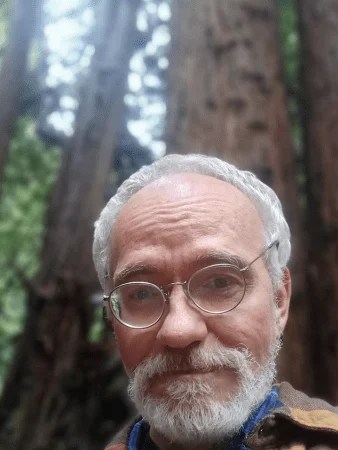
“But I am like a green olive tree in the house of God. I trust in the steadfast love of God forever and ever.”
Psalm 52:8
In Psalm 52 we read of David’s run-in with Doeg, a very bad man, (a mass murderer actually). But David, hearing about the slaughter of 85 innocent priests doesn’t respond in hatred, rather he sits down and writes this song of contemplation which we know as Psalm 52.
It isn’t something written out of wrath and vengeance rather the word that begins his writing is “maskil” which implies– enlightenment, or something reflective, thoughtful, discerning. He sat down and considered Doeg’s awful evil, and by doing this was able to understand own heart as well.
The first is Doeg’s vicious atrocity, and the condemnation that it incurs, (v.v. 1-7). The second was David’s own commitment to following God, and understanding his own place in a very evil world, (v.v. 8-9).
Rather than castigate himself for being discovered in Nob–a circumstance which directly led to the mass murder of these priests (and their families). We find that David does not blame himself. He could have, but he didn’t. Rather he thoughtfully, and carefully, detailed his own “observations” of the whole sordid matter.
David could easily have destroyed himself with guilt and grief. He didn’t.
He chose not to play the losing game of ‘what if.’ He instead would be like a green olive tree rooted himself in the holy temple and into the protective presence of God. David knew he would destroy himself if he didn’t place himself there. It was a deliberate decision.
It would keep himself sane.
It seems to me that trees work heavily into David’s own theology and that this is how he sees his relationship with God. He’s planted and therefore able to survive terrible trials. He shows us how to survive and thrive.
His roots would need to go very deep indeed.
David’s thoughtful imagery is himself as an olive tree planted in God’s presence.
I believe knowing this is the antidote to the poison of guilt. Perhaps we should follow his example?
“They are like trees planted along a riverbank, with roots that reach deep into the water. Such trees are not bothered by the heat or worried by long months of drought. Their leaves stay green, and they never stop producing fruit.”
Sometimes we live in darkness. We suffer and it’s hard. We mentally accept God’s grace and His love for us, but in our heart we remain untouched. Pain saturates everything it seems. We seem to go through the motions, but deep down we’re convinced that we’ll never find the light that so many claim to have.
Since I have a disability I realize I learn things others won’t grasp. I’m learning to embrace the waves that push me to the rock–the Rock of ages. I suppose when I meet Him I’ll understand why it had to be so.
My hope is real. Heaven is home. My pain will be healed.
There is a language of heaven spoken, and those who have suffered speak a dialect of that. Just as someone from Georgia communicates English, their dialect is obvious. The same for those who live in pain. We speak the same, but differently.
Pain sometimes saturates our lives.
We live with something that is persistent, and our hope is a day when it’s all over. Psalm 88 becomes our Psalm. Nothing here is sugar-coated. It is raw and unabridged. It puts our pain under a microscope. That Psalm is entirely yours.
“For my soul is full of troubles, and my life draws near to Sheol. I am counted among those who go down to the pit; I am a man who has no strength,”
Psalm 88:3-4
“I am certain that I never did grow in grace one-half so much anywhere as I have upon the bed of pain.”
“Jesus answered, “Mykingdom is not of this world. If mykingdomwere of this world, my servants would have been fighting, that I might not be delivered over to the Jews. But mykingdomis not from the world.”
John 18:36
Jesus perfectly the extent of His kingdom. Three times in this one verse, Jesus uses the statement, “My kingdom.” Three times. Perhaps there is something here we should look at closer? Maybe?
First, Jesus affirms to Pilate that he indeed holds the title of king. However, this kingdom does not represent a political adversarial entity; its borders are not defined by physical realms. Instead, they are spiritual in nature, rendering Pilate and the emperor as mere peripheral issues.
Simply put, these 40 words are Jesus’ powerful declarations to Pilate that yes, He was truly a King. But also notice what Jesus says, “My kingdom.” He is the supreme Lord of it.
Jesus’ kingdom was “not of this world,” which He also repeated three times in this one verse!
No, Jesus was referring to a kingdom that was spiritual, but no less tangible. As a matter of fact, it was more real than the kingdoms of this earth.
Those who choose to follow King Jesus have boldly rejected the shallow tenets of this world—force, pride, public image, and the lure of power. The arrival of God’s kingdom doesn’t fit neatly into our expectations; it’s revealed through the radical Beatitudes and shocking parables. These committed souls have declared their allegiance to the One who reigns supreme over the entire universe, daring to defy the status quo.
“Romans thought they knew about kingdoms and their might; that armies, navies, swords, and battles measured the strength of kingdoms. What Jesus knew was that His kingdom – though not of this world – was mightier than Rome and would continue to expand and influence when Rome passed away.”
Brokenness, humility, love, servanthood, and sacrifice are essential pathways through which His kingdom manifests to people. The world’s approaches, including those that are religious and deemed “moral,” fail to align with the reality of His authority.
At times even, they may seem very noble and right; but that simply isn’t the way Jesus’ rule truly comes.
“Until the will and the affections are brought under the authority of Christ, we have not begun to understand, let alone to accept, His lordship.”
I believe the Church, especially here in the western hemisphere, understands Jesus as our Savior, but not really as the King. The idea of a king and lord isn’t automatic for us. We have senators and constitutions, a vote, media outlets and freedom of speech–but that somehow never prepares us for the rule of a true sovereign.
Jesus is calling us to live out his rule in our lives, and to embrace him as King. He’s much more than our Savior, and we must understand that. If we want to really grow up in him, we must understand his lordship.
“The lordship of Jesus is not simply a hope of Christians that someday might be realized; it is a truth that has already taken place.”
The definition of idolatry, according to Webster, is “the worship of idols or excessive devotion to, or reverence for some person or thing.” Idolatry is real, and it’s really a challenge to the believer, and it’s seldom mentioned today. In almost 40 years of following Jesus, I honestly can’t remember one real sermon on idolatry. That’s sad.
In fact, one of the first commandments given by God is in Exodus 20:3, “You shall have no other gods before me.” This has never been rescinded. It’s not obsolete or old-fashioned. The unredeemed human heart remains a factory of idolatry. Nothing has changed.
“An idol is anything that replaces the one, true God. The most prevalent form of idolatry in Bible times was the worship of images that were thought to embody the various pagan deities.”
As I looked at the topic of idolatry I was surprised that it was mentioned over 200 times. Most references are in the OT, that is true, but, some are in the NT. For one of these, John, the writer of 1 John ends his epistle, rather abruptly:
“Little children, keep yourselves from idols.”
1 John 5:21
So what is modern idolatry –what does a modern idol look like?
To help clear that up, Nicholas McDonald wrote a letter to you from the perspective of your very own, personal idol. (The last line is definitely a whopper.)
Hello. I am an idol.
Don’t be afraid, it’s just me. I notice you’re turned off by my name: “Idol.”
It’s okay. I get that a lot.
Allow me to rename myself.
I’m your family.
Your bank account.
Your sex life.
The people who accept you.
Your career.
Your self-image.
Your ideal spouse.
Your law-keeping.
I’m whatever you want me to be.
I’m what you think about while you drive on the freeway.
I’m your anxiety when you lay your head on the pillow.
I’m where you turn when you need comfort.
I’m what your future cannot live without.
When you lose me, you’re nothing.
When you have me, you’re the center of existence.
You look up to those who have me.
You look down on those who don’t.
You’re controlled by those who offer me.
You’re furious at those who keep you from me.
When I make a suggestion to you, you’re compelled.
When you cannot gratify me, I consume you.
No—I cannot see you, or hear you, or speak back to you.
But that’s what you like about me.
No—I am never quite what you think I am.
But that’s why you keep coming back.
And no—I don’t love you.
But I’m there for you, whenever you need me.
What am I?
I think you know by now.
You tell me.
To help clear that up, Nicholas McDonald wrote a letter to you from the perspective of your very own, personal idol.
I hope this helps. And I hope God gives you understanding.
“The heart is deceitful above all things And it is extremely sick; Who can understand it fully, and know its secret motives?”
Jeremiah 17:9, Amplified
“The Lord observed the extent of human wickedness on the earth, and he saw that everything they thought or imagined was consistently and totally evil.”
Genesis 6:5
The Bible in its tremendous insight, never once makes humans out to be wonderful creatures. I think we would all volunteer to be that way. But we are not. Rather the opposite is quite true. We are manipulators, rascals, liars and sinners.
There is not a single iota of evidence that we can become exceptionally kind, loving and holy people in any sense of the word.
Somehow we generate a lot of self-deceit.
We trick our own hearts into believing that we are such noble people. We ignore evidence that would convict us otherwise. The prophet spoke to his generation in Jeremiah 17. He would speak directly to people who thought they were true and good. Jeremiah called this a lie, a serious miscalculation, especially when the opposite was true!
This is not the way “to win friends and influence people.” So many pastors, priests, elders, and leaders have a desire deep down to be acceptable and relevant. But God says, we are rascals, tricksters, phonies. Something inside is sick. There can be no human remedy. We simply cannot become religious enough to surmount our profound sin. Pride and selfishness opposes God and harms others.
As a boy living in Northern Wisconsin, on a farm somewhat, we found one of our dogs killing chickens. He was a nice dog, quite friendly and very gentle. But when he started in on the chickens my dad decided to intervene. One of the dead chickens was recovered. My father wired that dead chicken to our dogs neck, nice and tight. That dog wore that rotting chicken for several weeks. Finally the dog laid down, foaming and tongue lolling, eyes rolled back. He was profoundly sick. So Dad cut off the decaying remains.
The SPCA would have a fit. But that dog would never again chase a chicken, or even think of killing one. But even so, our sin is disgusting to God. We just seem to do evil without considering Him or others we effect. It’s all about us, as we think we can just skate through this “problem” without any issues. But Jeremiah tells us we are rotting inside.
We all carry around a dead chicken. I must tell you the truth, you’re terminally ill. You are quite sick, in the most essential part of you.
But Jesus died to free you. He’s the only One who can.
“Our life is full of brokenness – broken relationships, broken promises, broken expectations. How can we live with that brokenness without becoming bitter and resentful except by returning again and again to God’s faithful presence in our lives.”
–Henri Nouwen
We are a broken lot of confused people, and we have never solved the mystery of our own iniquity. In those rare, fleeting times we step into clarity, we are ashamed and disturbed by what we see. Our awful sin needs a wonderful Savior. Jesus does what we could never do.
Jesus died to free us from death. He has come to cut us free from our spiritual evil.
He has died to destroy our sin. But there is much more. He gives us real life–eternal life. His life!
“Come now, let us reason together, says the Lord: though your sins are like scarlet, they shall be as white as snow; though they are red like crimson, they shall become like wool.”
Behold, you are beautiful, my love! Behold, you are beautiful! You have doves’ eyes.
Song of Solomon 1:15
Doves have a single vision.Because of that they can only see one thing at a time, which makes them unique. They are one of a kind. Doves are also the emblem of the Holy Spirit in scripture, and when they are mentioned we should be alerted that something spiritual is happening.
What the Shepherd is proclaiming is “she only has eyes for me, she sees no one else.” For the true believer, there isn’t anything that can take the place of Him. Political involvement, Eastern mysticism, vain philosophy, or stifling materialism should never take the place of the Lord Jesus. Never, ever.
We need “dove’s eyes.” We must see Jesus only.
There are a lot of noble things we can get involved in. Good things, yes, but not the best, we need to fix our eyes on Jesus. I have personally seen brothers, sisters, and whole churches lose their vision, and focus on something other than their “first love.”
Satan detests our intimacy with our Lord.
Every time we move into direct contact with our Savior the enemy goes crazy. He wants to diminish and erode our number one love. He detests that relationship, and he short-circuits our connection with Jesus. The devil diverts believers to take the good, and leave behind the best.
There are many preachers and teachers in the Church who no longer have “dove’s eyes. Satan has blurred their vision, and they have lost the intimacy they once had with Jesus. Most of the time, they don’t even realize it. This saddens me.
I remember a once blazing church in Pacifica, California that once closed down whole blocks in San Francisco. They worshiped Jesus intensely. They took the Church into the streets and brought with them a passion I’ve seldom seen. They were people on fire. It was a pleasure to work with them, they were in love with Jesus.
Within two years they lost it. They adopted a political stance that was quite commendable, but it diminished their first love for Jesus, and Satan was pleased. The church split in a dozen different ways. This isn’t a new thing, the apostle Paul saw it and was afraid for the church in Corinth.
“For I feel a divine jealousy for you, since I betrothed you to one husband, to present you as a pure virgin to Christ. 3 But I am afraid that as the serpent deceived Eve by his cunning, your thoughts will be led astray from a sincere and pure devotion to Christ.”
2 Corinthians 11:2-3
In the book of Revelation, chapters 2 and 3 emphasize the level of intimacy each Church possesses. “Angels” come and carry the message of repentance and turning to that “first love.” I have to think that “dove’s eyes” come as a result of being filled with God’s Spirit.
We’re finally seeing through the eyes of a dove–the Holy Spirit.
“Return dear one, come back to the Lord Jesus. Let your first love blaze again. Don’t allow Satan to sidetrack you into something that is good, but not the best. Have “dove’s eyes” that only see Jesus.”
“One of the criminals who were hanged railed at him, saying, “Are you not the Christ? Save yourself and us!” 40 But the other rebuked him, saying, “Do you not fear God, since you are under the same sentence of condemnation? 41 And we indeed justly, for we are receiving the due reward of our deeds; but this man has done nothing wrong.”
42 “And he said, “Jesus, remember me when you come into your kingdom.” 43 And he said to him, “Truly, I say to you, today you will be with me in paradise.”
The pain was incredible, but I know that deep down I deserved to die. But not like this. Never like this. I was almost out of my mind with fear. What they were doing to me was terrifying.
You must understand that I was a common thief. I had stolen a loaf of bread when I was eight years old and that’s how it all got started for me. It more or else got bigger and easier. I knew how to steal and I was quite good at it. I was Jacob, the master thief!
When I was finally caught, they sentenced me to die. I supposed it was inevitable. I fault no one but myself as I knew what I was getting into. As I dragged my beam up to Golgotha, it was really strange but I suddenly remembered a verse from the scripture and it really did unsettle me.
It’s a terrible thing to die this way. There were three of us, nailed to the wood and lifted up between heaven and earth. Jesus was nailed to the middle cross, not that it really mattered; all three of us were going to die today.
Many hope for an easy death, maybe in their sleep–but that’s not going to happen to us.
The third man could only mock, he was afraid, and I suppose he just echoed those Pharisees who didn’t really understand. But I knew better. I knew who this other man was, I had heard all the stories. Deep down I knew that this man on the center cross was the Messiah.
A crowd had gathered to watch us die. The Romans in their wonderful ingenuity had made a sign that they nailed above Jesus’ head, and it declared to everyone that Jesus was “the king of the Jews.” Even as he was dying, they found a way to malign him and irritate the crowd.
The other man being crucified continued to mock Jesus, and it infuriated me.
Why I defended him I don’t know for sure.
But I understood. Jesus was murdered out of the envy and jealousy of the Pharisees. He didn’t deserve to die like this, but He was hated, and who can confront these religious men without becoming a victim. Jesus had repeatedly crossed the line, so now they were now putting him to death. It seemed evil was really winning today.
I saw the soldiers throwing dice for Jesus’ clothes. He was now being mocked by them as well, even as He was dying on a brutal cross.
But all of a sudden it all made perfect sense.
He really was the Messiah, and these bastards were killing him. Crucifixion was starting to work on me now. I began to choke on my words, and it was getting hard to breathe.
“Jesus… please remember me. When your kingdom comes, please let me be a part of it.”
And as beaten as He was, He managed to turn and look directly at me. They had whipped and brutalized Him, and yet He was still aware. His words were whispered now, but I understood. “I promise that today you will be with me in paradise.”
I was starting to spasm again.
But the horror of death had left me. Some time had passed, and I could hear his breathing stop. But for the first time, I had peace. They used a spear on Jesus, but he was already dead.
The soldiers now came to the two of us, and they were carrying an ax to break our legs. It all had to do with the coming festival, and the Pharisees wanted us dead. When they swung that ax I knew a pain that I could never describe. My own death came quickly after that.
I was suddenly standing in paradise, whole and complete, and loved.
Someone was standing before me. He was shining, and I knew he was powerful; stronger, and He was more glorious than anyone I had ever met. It was crazy but somehow I knew that it was the Lord Jesus. He had come to meet me. It’s funny, but I realized that somehow I really did belong. Me–a dirty rotten thief.
Jesus had promised me, pronouncing me righteous, me of all people. I suddenly had a joy that I could never explain. I really was a part of the Kingdom that was beyond anything I had ever known. I believed him and asked if somehow I could be part of his eternal rule.
I simply asked and He gave me everything.
“I am going to heaven just like the thief on the cross who said in that final last moment: “Lord remember me.”
Billy Graham
alaskabibleteacher.com
Cover Art: “Christ on the Cross between Two Thieves,” by Peter Paul Rubens
“I waited patiently for the Lord to help me, and he turned to me and heard my cry. 2 He lifted me out of the pit of despair, out of the mud and the mire. He set my feet on solid ground and steadied me as I walked along.”
3″He has given me a new song to sing, a hymn of praise to our God. Many will see what he has done and be amazed. They will put their trust in the Lord.”
Psalms 40:1-3, NLT
Psalm 40 is jam packed with great and wonderful truth. It contains freedom for the Christian– a way out for the broken believer. We do well when we use it, and that’s what it’s there for. The deep pit has been used over many centuries as the way God teaches us to sing certain songs. But that doesn’t make it easier, does it?
Verse 1
“I waited patiently for the Lord to help me, and he turned to me and heard my cry.”
Waiting is a critical word, it should not be regarded as trivial. In our daily walk we must be patiently seeking the Lord, that comes first. Admitting you need help is the first step. And guess what? You need help. 😁
The word ‘wait’ is special, it’s kawvah in Hebrew. It can mean ‘to bind together by twisting.‘ It can be used with the idea of braiding strands of rope together. It is never a passive act that just happens. Waiting on God is to be done with intentional purpose.
Remember that the Lord is not some distant deity on a hill far away.
He’s not hiding from you. It’s really quite the opposite. He is closer to you than you think. He is responsive and aware. He hears your cries and wants to act; He is not deaf, but our patience is critical. Waiting on Him is crucial to being free. We must bind and twist our hearts and live our life to His desires.
Verse 2
He lifted me out of the pit of despair, out of the mud and the mire. He set my feet on solid ground and steadied me as I walked along.
The seeable terrain can be awful, with muddy paths and mucky pits. Things that pull you down and suck you in. They’ll trap the traveler. But the Holy Spirit is quite able to lift us out. He picks us up and secures us. He uses the rope of God’s Word.
He is way more willing to save us, than we are to being saved.
Solid ground is where we are meant to be. It’s become a place of firm standing and secure footing. He makes us steady and He keeps us safe. The Holy Spirit now has intimate care over your soul.
Verse 3-4
“He has given me a new song to sing, a hymn of praise to our God.Many will see what he has done and be amazed. They will put their trust in the Lord.“
Some of the greatest songs are the ones that come from those just delivered from the pit. These are ‘pit songs,’ offered to God from sincere and true hearts that have once been trapped. There’s something solid heard from the hearts of those redeemed from disaster.
These songs no longer sound religious or contrived.
“YOU CAN SEE GOD FROM ANYWHERE IF YOUR MIND IS SET TO LOVE AND OBEY HIM.”
AW Tozer
From our deepest pits come our greatest praises.
There is a passionate quality that saturates these ‘pit praises’ that is highly treasured by God, and esteemed and valued by the Church– a sense of authenticity starts to be finally heard. We can finally start to see that our pits become ‘launching pads’ of true songs of deliverance.
“He made my feet like the feet of a deer and set me secure on the heights. 35 He trains my hands for war, so that my arms can bend a bow of bronze.”
2 Samuel 22:34-35
David’s Song of Deliverance
This entire psalm was written after David was delivered from the hand of Saul. David had been a fugitive for years and had experienced extreme difficulties. He had been pushed to the brink many times, yet maintained a close walk with God.
This verse in 2 Samuel has always blessed me. The image of a deer who has been put on a mountaintop through the direct action of the Lord–it’s a place of safety, a position of victory. It comes as a decisive maneuver of the Holy Spirit.
“He made my feet like the feet of a deer and set me secure on the heights.”
Psalm 18:33
David had learned things in the wilderness that he would never have otherwise. At times life got pretty extreme for him. When he struggled it was understandable. He followed the path that God laid out. It wasn’t easy for David, but he walked in faith and not by sight.
Danger surrounded David on every side – physically, spiritually, emotionally, socially. It would come from enemies, and even from his dearest friends.
God’s people are not immune from trials. It’s good to know that these are now orchestrated by our Father, and they’re purposeful and planned.
The prophet Isaiah extends the imagery of a deer in his prophetic ministry, but adds other ideas as well. The lame, mute and the desperately thirsty are descriptive of people who are given a special grace and touch. They’re promised something. They receive the promise of the Lord Jesus Christ.
“Then shall the lame man leap like a deer, and the tongue of the mute sing for joy. For waters break forth in the wilderness, and streams in the desert;”
Isaiah 35:6
“David thought of how deer seem to skip from place to place and never lose their footing. God gave him the same kind of skill in working through the challenges brought by his enemies.”
How much do you love Jesus? This parable looks at the heart of the believer, the person who has been incredibly forgiven of everything–past, present and future. And it’s here we see a woman whose heart is broken by her sin, and she discovers Jesus’ grace, and tremendous mercy.
“A certain moneylender had two debtors. One owed five hundred denarii, and the other fifty. 42 When they could not pay, he cancelled the debt of both. Now which of them will love him more?” 43 Simon answered, “The one, I suppose, for whom he cancelled the larger debt.” And he said to him, “You have judged rightly.”
44 “Then turning toward the woman he said to Simon, “Do you see this woman? I entered your house; you gave me no water for my feet, but she has wet my feet with her tears and wiped them with her hair. 45 You gave me no kiss, but from the time I came in she has not ceased to kiss my feet. 46 You did not anoint my head with oil, but she has anointed my feet with ointment.”
47 “Therefore I tell you, her sins, which are many, are forgiven—for she loved much. But he who is forgiven little, loves little.”
Luke 7:40-47
Jesus has been invited to Simon’s home. He’s a Pharisee, and at this point they haven’t quite banded together to attack Jesus, it seems that there were still some Pharisees who were true seekers.
The text jumps right in and we see Jesus reclining at a table (the Jewish people didn’t use chairs–pillows were used instead.) At a feast like this people who weren’t officially invited could come in to stand in the back and listen in on the conversation. (That seems awkward.)
Suddenly a woman enters the room.
She’s described as “a woman of the city,” which is a code word for “a sinner, or a harlot.” (Let your imagination roll that one around.) She comes with a definite purpose, for she brings a jar of quite expensive perfume with her.
The passage reveals that she’s on her knees, weeping on Jesus’ feet, and rubbing her tears with her hair, and pouring out the perfume. She’s kissing his feet. She’s obviously a broken person—someone who knows who Jesus is, and who understands who she is, and how deep sin has destroyed her.
At this point Simon is deeply offended, and probably embarrassed by what’s happening. But he also assumes that Jesus isn’t who he’s saying he is. “How dare does this man let an unclean person even touch Him!” But Jesus understands everything. His parable is short (just two verses) and it’s directed at Simon; and it’s a no-brainer.
The interpretation is obvious: the man who owes the most will love the most.
Jesus accentuates Simon’s breach of protocol. The Lord deftly explains the entire situation and Simon is busted. He’s put on the spot and Jesus has made his point. It’s all so obvious. The essence of the story is clear. How much do you love the Master?
Do you fully fathom how much sin Jesus has forgiven you?
(Or maybe you’re a Simonite?)
Perhaps you’re someone who doesn’t quite accept what’s real? The Bible tells us repeatedly that no one is righteous. No one. Scripture has a very low opinion of the righteousness of men. (That should shatter your thinking.)
“But we are all as an unclean thing, and all our righteousnesses are as filthy rags; and we all do fade as a leaf; and our iniquities, like the wind, have taken us away.”
Isaiah 64:6, KJV
The Hebrew word for “filthy rags” is extremely graphic–literally it means “a menstruating cloth.” It was something that a woman used before Tampax came along. How very descriptive. Do we even have the slightest idea what that means? Are our good deeds that bad?
Yes they are. Isaiah announces that’s exactly how God sees our best attempts to find acceptance apart from grace. It often seems we try to please Him by doing the best we can, but that isn’t sufficient. We always fall short and mess up.
How does understanding this change our discipleship? I’ll let you be the judge on this on this one.
“He loved us not because we are lovable, but because He is love.”