“But I am like a green olive tree in the house of God. I trust in the steadfast love of God forever and ever.”
Psalm 52:8
In Psalm 52 we read of David’s run-in with Doeg, a very bad man, (a mass murderer actually). But David, hearing about the slaughter of 85 innocent priests doesn’t respond in hatred, rather he sits down and writes this song of contemplation which we know as Psalm 52.
It isn’t something written out of wrath and vengeance rather the word that begins his writing is “maskil” which implies– enlightenment, or something reflective, thoughtful, discerning. He sat down and considered Doeg’s awful evil, and by doing this was able to understand own heart as well.
The first is Doeg’s vicious atrocity, and the condemnation that it incurs, (v.v. 1-7). The second was David’s own commitment to following God, and understanding his own place in a very evil world, (v.v. 8-9).
Rather than castigate himself for being discovered in Nob–a circumstance which directly led to the mass murder of these priests (and their families). We find that David does not blame himself. He could have, but he didn’t. Rather he thoughtfully, and carefully, detailed his own “observations” of the whole sordid matter.
David could easily have destroyed himself with guilt and grief. He didn’t.
He chose not to play the losing game of ‘what if.’ He instead would be like a green olive tree rooted himself in the holy temple and into the protective presence of God. David knew he would destroy himself if he didn’t place himself there. It was a deliberate decision.
It would keep himself sane.
It seems to me that trees work heavily into David’s own theology and that this is how he sees his relationship with God. He’s planted and therefore able to survive terrible trials. He shows us how to survive and thrive.
His roots would need to go very deep indeed.
David’s thoughtful imagery is himself as an olive tree planted in God’s presence.
I believe knowing this is the antidote to the poison of guilt. Perhaps we should follow his example?
“They are like trees planted along a riverbank, with roots that reach deep into the water. Such trees are not bothered by the heat or worried by long months of drought. Their leaves stay green, and they never stop producing fruit.”
“With joy you will draw water from the wells of salvation.”
Isaiah 12:3, ESV
One of the clearest explanations of a believer’s salvation is a well of clear sweet water. A well is a combination of effort and grace. A well must be dug, but it’s nothing without water. It’s work but it’s grace. You can dig 1000 feet, but without hitting water it’s all in vain.
The walk of a disciple depends on the Holy Spirit. When we’re filled with Him, our life becomes supernatural. Without the presence, we stagger through the arid desert, and that means desperation. We get terribly thirsty when we can no longer draw from the “wells of salvation.”
And of course, there is a twist when our enemy attacks.
Our wells must be protected. We dare not get complacent. The Word takes us back to when the sworn enemy, the Philistines came against Isaac, but not with spears or chariots. They had a tactic, and it seemed to work surprisingly well.
In Genesis 26, we can read how it all goes down.
“So, the Philistines filled up all of Isaac’s wells with dirt. These were the wells that had been dug by the servants of his father, Abraham.”
Gen. 26:15
Isaac’s wells are filled with dirt. They’re unusable, and the water was no longer available to water his flocks. Now water is everything. Without water, Isaac was forced to move to another location. His flocks needed a well.
A little background:
God had blessed Isaac in the middle of a severe famine. Genesis 26 explains the wealth of Isaac. What he planted he reaped 100-fold. His flocks multiplied, and all because of the Lord’s favor. (Gen. 26:12-14)
The account tells us that the Philistines were envious and jealous. They coveted his wealth. They hated Isaac, and that was filling up the wells of water with dirt. (Some suggest that these wells would be purposefully contaminated with rotting animals.)
The water-rights were constantly being challenged out of jealousy. At least four wells were filled up by the Philistines. Their efforts were disturbing but quite effective.
I’ve been thinking about my own “well.”
I know the enemy hates me; I’m certain of that. He wants to destroy me. My well of salvation is Satan’s target. I guess he works on shutting it down, and even works on contaminating my well.
The last two weeks I’ve started to doubt my salvation. Being 65 now I think about death and standing before the throne and being judged by the Lord. I hear the whispers of the accuser and I get frightened.
But I somehow keep standing.
I then think of God’s promises. And that’s when I break out my shovel and keep my salvation open. I regularly need to do this. I have encouragers who speak into my life, (if I listen).
God’s supernatural power is given, and I discern the enemy. I must keep my salvation open and full of water. I need a good shovel.
The living water of God will never run dry. It fully satisfies my thirsty soul.
“Whoever believes in me, as Scripture has said, rivers of living water will flow from within them.”
God’s temple was now filled with an evil darkness. King Manasseh made the Lord’s holy place a fountain of sin and filth. Instead of holiness, it was an evil place.
He brought in dark things that were twisted, perverted and clearly forbidden.
“Manasseh led Judah and the inhabitants of Jerusalem astray, to do more evil than the nations whom the Lord destroyed before the people of Israel.”
2 Chronicles 33:9, ESV
His own darkness was now encouraged by others, it became accessible, available and promoted:
The high places were rebuilt throughout the land.
Altars to Baal rebuilt, using images of wood.
In the holy temple, altars to the “starry host,” astrology, plain and simple.
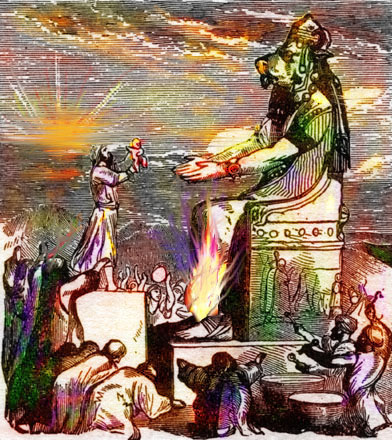
Human sacrifice of his own sons to Molech, a false god. Murder.
He practiced soothsaying, used witchcraft and sorcery, and consulted mediums and spiritists.
Evil was being encouraged and something wicked was replacing all that was good and true. The analysis of Manasseh’s policies was way beyond disturbing. Of all the kings of Judah, he was the most sinful and the most corrupt. He was at the bottom of the barrel.
The Hebrew word for “led astray” can be translated seduced.
Manasseh was an incredibly immoral man, a king who ruled for 40 years. “He did all he could to pervert the national character, and totally destroy the worship of the true God; and he succeeded.” (Clarke)
It’s believed that he put Isaiah to death by cutting him in two.
Moreover Manasseh shed very much innocent blood, till he had filled Jerusalem from one end to another, besides his sin by which he made Judah sin, in doing evil in the sight of the LORD.
1 Kings 21:16
But then something happened.
And the LORD spoke to Manasseh and his people, but they would not listen. Therefore the LORD brought upon them the captains of the army of the king of Assyria, who took Manasseh with hooks, bound him with bronze fetters, and carried him off to Babylon.
2 Chronicles 33:10-11
Assyria came knocking on Manasseh’s door. I think there was a certain mercy here, but also discipline. Manasseh had “hooks,” inserted through his jaw and out of his mouth. Like a fish he was led to Babylon, a trophy of the power of the army of Babylon.
It was from a dark dungeon that Manasseh cried out to the Lord and repented.
There’s a Jewish fable that when Manasseh cried out to God the angels boarded up the windows in heaven. They wanted to block out his prayer so God wouldn’t be able to hear. But God, rich in mercy, bored a hole in front of His throne to hear Manasseh’s desperate cry.
The Lord’s intention was to forever show His kindness and grace given to the most awful repentant sinner.
I believe that Manasseh was the “Prodigal Son” of the Old Testament.
God is not at a loss when He moves to bring us back to Himself. He can woo or whip. He can draw or drive. He can work rapidly or slowly, as He pleases. In other words, He is free to be God! And in His own way, at His own pace, He brings us back.
God is wildly in love with you. Yes, the sin you’ve committed is awful, but the Lord wants you to come back. He may discipline you, but He forgives everything if you’ll turn and repent.
No matter how awful your sin, He forgives and restores. Manasseh is proof of that.
14 After he had spent everything, a severe famine struck that country, and he had nothing. 15 Then he went to work for one of the citizens of that country, who sent him into his fields to feed pigs. 16 He longed to eat his fill from the pods that the pigs were eating, but no one would give him anything. 17 When he came to his senses, he said, ‘How many of my father’s hired workers have more than enough food, and here I am dying of hunger! 18 I’ll get up, go to my father, and say to him, “Father, I have sinned against heaven and in your sight. 19 I’m no longer worthy to be called your son. Make me like one of your hired workers.”’
20 So he got up and went to his father. But while the son was still a long way off, his father saw him and was filled with compassion. He ran, threw his arms around his neck, and kissed him.21 The son said to him, ‘Father, I have sinned against heaven and in your sight. I’m no longer worthy to be called your son.’
22 “But the father told his servants, ‘Quick! Bring out the best robe and put it on him; put a ring on his finger and sandals on his feet. 23 Then bring the fattened calf and slaughter it, and let’s celebrate with a feast, 24 because this son of mine was dead and is alive again; he was lost and is found!’ So they began to celebrate.
Luke 15:14-24
Sometimes, when reading this we diminish this parable to a really nice story, but nothing more. It comforts us. It’s so evocative after all, but somehow it never enters our spiritual hearts like it’s meant to. We may mentally assent but we do not absorb what it really says.
In Luke 15 everything is lost, but is finally found. Luke 15 also has incredible theology, and is meant to jolt us like a spiritual defibrillator.
Luke 15 is magnificent in the deepest sense of the word.
The Parable of the Prodigal Son is Mt. Everest of the Bible. It requires believers to read it often and prayerfully.
Our Father runs to us because He sees our desperate hearts. His joy can’t be explained but only received. It’s just the way He is.
Just perhaps it will take an eternity to understand this simple parable? If so, we should get started now.
There are just three characters here in Luke 15:14-24: there’s the Father, the son, and the elder brother–and each plays an integral part. The prodigal is the main character, yet the father is the main focus. The son is a wastrel, a good-for-nothing rascal who blows his father’s inheritance on parties, booze, and prostitutes. He lives for the moment, he seeks pleasure in those things which will come very close to destroying him.
But haven’t we all done that?
The father represents God, who represents the loving patriarch of the parable. He’s the one who has turned over the prodigal’s portion of the inheritance. To a degree I suppose he has funded the prodigal’s descent into depravity, and yet it was the son who decided to go crazy. The father is certainly not to blame.
But nevertheless, in this story, the father is the main character. Not the prodigal.
His actions are very difficult to grasp. God behaves outrageously, and His character is difficult to understand or fathom. (After all, who acts this way?) Granted we think our earthly fathers might do this for us–but even that may be a stretch for some. Yet this parable describes how God feels about sinners.
God is generous. We owe him an outrageous kind of debt. But what happens when we refuse to forgive another person? Jesus now teaches what happens–it’s frightening.
Matthew 18:22-34
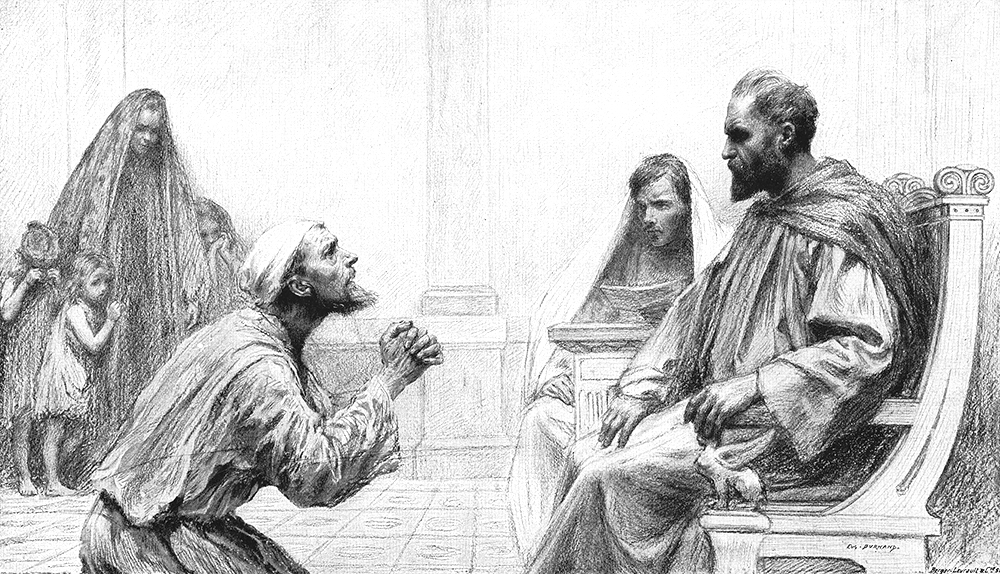
23 “For this reason, the kingdom of heaven can be compared to a king who wanted to settle accounts with his servants. 24 When he began to settle accounts, one who owed ten thousand talents was brought before him. 25 Since he did not have the money to pay it back, his master commanded that he, his wife, his children, and everything he had be sold to pay the debt.
26 “At this, the servant fell facedown before him and said, ‘Be patient with me, and I will pay you everything.’ 27 Then the master of that servant had compassion, released him, and forgave him the loan.
28 “That servant went out and found one of his fellow servants who owed him a hundred denarii. He grabbed him, started choking him, and said, ‘Pay what you owe!’
“‘Shouldn’t you also have had mercy on your fellow servant, as I had mercy on you?’”
“And because he was angry, his master handed him over to the jailers to be tortured until he could pay everything that was owed.”
God is generous. All that he does is grace. It’s also grace when we really meet another. He loves us, and we need to siphon that love to everyone we meet. When we come before the Lord, we don’t get the justice we deserve. He has forgiven us—the ten thousand ones.
God is generous. We owe him an outrageous kind of debt. Commentators list the modern value of 10,000 talents would be $1 billion USD. Granted this is figurative, but that doesn’t mean it’s untrue. Grace is God’s extravagant for scandalous sinners.
That is an insane amount of money. To settle our debt would far, far more than we can repay; but isn’t that the point. God’s grace on us, is a precious thing.
When he gets off his knees, we realize that he really hasn’t changed by grace. His heart is teflon, and the mercy the father gave him doesn’t stick. His heart hasn’t really grasped his lesson in forgiveness. God forgave, the servant didn’t understand. His treatment of another proclaims this.
The parable directly speaks of grace, and ungrace.
The $10,000 guy meets the $100 talent guy and we see our own inability to forgive. We shake down our brother and sister for just small things. Notice verse 28, the text tells us that he actually assaulted him, “he started to choke him.” How bizarre and how disturbing. And yet, God sees, and responds.
Was the $10,000 guy really forgiven? Did he understand the spiritual transaction of what just happened? I don’t think so—and it scares me.
The other servants have seen the issue.
The key word is “distressed,” or lypeō in Greek, the word means “to throw into sorrow, to grieve or offend., to make heavy.” All that the forgiven servant did, was recognizable by others, and they reported what they saw to the master.
His behavior is clearly meant to disturbs us.
He’s called “wicked” in verse 32. What he did was awful, and again he’s brought in. Because of his mistreatment of the other who owed, he was now thrown into prison, owing a billion bucks. He gets what he now deserves. He gets justice instead of mercy. He is turned over the torturers.
“But if you don’t forgive others, your Father will not forgive your offenses.”
Matthew 6:15
What does all of this mean?
I’m pretty sure that God isn’t hammering us over our unforgiveness of others. I suspect it’s our sin that does that. When we consider our sin, how can we understand others who sin against us? We have been forgiven much (very much!) how can we not forgive others for sinning against us?
“Many people ruin their health and their lives by taking the poison of bitterness, resentment and unforgiveness. Matthew 18:23-35 tells us that if we do not forgive people, we get turned over to the torturers.“
“They stand before the throne and before the Lamb, clothed in white robes, with palm branches in their hands,”
Rev. 7:9, ESV
We fail to grasp the essence of grace and its significance.
When we speak about grace, we must define it. First, grace is a free gift and kindness from God that people do not earn or deserve. When we appropriate grace as believers we understand that it gives us the power and gifts to live biblically and faithfully. We see that grace is given for both salvation and service.
Sometimes we forget this. I wonder sometimes if we’re ‘allergic’ to God’s grace.
We fall into the trap of work and legalism! I often lose sight of my true identity before a holy God, as unmerited favor tragically tries to become merited favor. This is not biblical; it is a distortion of the truth!
OK. What about repentance? We must understand that we’re called to renounce our sin and utterly turn from it. You are called to live holy and free. When Jesus met the adulteress who was about to be stoned, He forgave her, but He also commanded her:
“Jesus stood up and said to her, “Woman, where are they? Has no one condemned you?” 11 She said, “No one, Lord.” And Jesus said, “Neither do I condemn you; go, and from now on sin no more.”
John 8:10-11
The whole incident was grace, and this woman was receiving the unmerited favor of Jesus. She deserved death, she should have been stoned. But the first thing after her salvation was to live differently. This was a command to turn away from the sin which was going to destroy her.
I’m amazed by this grace.
Remember the thief hanging on the cross, consider the prodigal son, or the tax man Zaccheus. All three intrigue me as they found favor without meeting our own definition of repentance. Salvation seems to come by grace through faith alone.
Perhaps grace includes both faith and repentance? I must think about this more.
Brennan Manning compassionately comments on God’s grace:
“Because salvation is by grace through faith, I believe that among the countless number of people standing in front of the throne and in front of the Lamb, dressed in white robes and holding palms in their hands.
I shall see the prostitute from the Kit-Kat Ranch in Carson City, Nevada, who tearfully told me that she could find no other employment to support her two-year-old son.
I shall see the woman who had an abortion and is haunted by guilt and remorse but did the best she could faced with grueling alternatives; the businessman besieged with debt who sold his integrity in a series of desperate transactions; the insecure clergyman addicted to being liked, who never challenged his people from the pulpit and longed for unconditional love.
The sexually abused teen molested by his father and now selling his body on the street, who, as he falls asleep each night after his last ‘trick’, whispers the name of the unknown God he learned about in Sunday school.
‘But how?’ We should ask.
Then the voice says, ‘They have washed their robes and have made them white in the blood of the Lamb.’
There they are. There we are – the multitude who so wanted to be faithful, who at times got defeated, soiled by life, and bested by trials, wearing the bloodied garments of life’s tribulations, but through it all clung to faith.
My friends, if this is not good news to you, you have never understood the gospel of grace.”
10 Finally, be strong in the Lord and in the strength of His might. 11 Put on the full armor of God, so that you will be able to stand firm against the schemes of the devil.
12 For our struggle is not against flesh and blood, but against the rulers, against the powers, against the world forces of this darkness, against the spiritual forces of wickedness in the heavenly places.
Eph. 6:10-12, NASB
Paul tells us that discerning the cosmic forces of wickedness is now critical. If we choose to ignore his words and make them optional, we will become spiritual toast. We need to hear reality. We want to be told the truth. And the truth is that we’re neck deep in spiritual alligators.
Point blank: We were each born for battle. Every believer must wear armor.
This passage in Ephesians 6 stresses that there is something sinister, an organized force, something evil, a darkness that’s focused directly on us. Verse 12 unveils to us a veritable government of wickedness. Satan leads his demons out with the intention of confusing believers and destroying holiness.
We also need to understand that human beings have a terrible knack of walking in their sin, and also by being manipulated by evil forces. Human history bears this out. We have a lousy track record. Without the Spirit we will be lost and destroyed by our own darkness.
Christians are to see life very differently than others do.
Ephesians 6 teaches us to find strength in being connected with God, which is critical to walk through in this confusing darkness. By prioritizing our relationship with Him, we can draw upon His strength and a sincere faith to navigate through all of this.
Without intimacy there is no obedience and there can be no real victory.
You must come to him humbly and holy, and sit before Him and listen, learn and love. And that is the major step in true holiness. Being controlled by Him means when you need to, you can stand and deliver damage to Satan’s kingdom.
You’ll be leading angels in this terrible battle! They have their swords drawn and are quite capable. Remember that this is a spiritual war–not physical. Your attack must be fought on your knees. And angels, they’re watching and listening to you as you pray. They are God’s messengers to protect you.
Satan presses us hard through redirection and forgetfulness of who we are.
Without the humble intimacy that can only grow on prayer and Bible reading, we will be spiritually destroyed. We need the protection of the Presence. Please don’t forget this; you need Jesus more today than yesterday. You must come closer. He will help you.
You see, your only hope is in Jesus’ strength and intimate love for you.
We must reach for our power and grab upon this intense love. We can only become strong through our intimacy with Jesus. He shields us from the spiritual corruption that swirls all around us. As we draw to Him we become mighty, as we listen closely to the Holy Spirit, we will walk in true discipleship with Jesus.
You will hear Him speak clearly to you, perhaps when you actively push to do His will than your own.
“We are a long time in learning that all our strength and salvation is in God.”
“And we all, with unveiled faces, beholding the glory of the Lord, are being transformed into the same image from one degree of glory to another. For this comes from the Lord who is the Spirit.”
2 Corinthians 3:18, ESV
“So all of us who have had that veil removed can see and reflect the glory of the Lord. And the Lord—who is the Spirit—makes us more and more like him as we are changed into his glorious image.”
2 Corinthians 3:18, NLT
The above chart is in black/white. I have found out that most things are seldom black/white, and yet every once in a while I find something that helps me think. This is one of them. If it doesn’t help I apologize now. (But yet it just might be a blessing to some.)
God has made every believer holy through our faith in the blood of Jesus. And yet the Father calls His children to a walk where we become more and more like Jesus, becoming holy in every circumstance we encounter. This is called “sanctification,”
Being changed into His likeness is the dream of every Christian believer.
That driving impulse is one of our common denominators. We want this more than anything, and I have come to believe that the Holy Spirit wants it even more than we do. Looking at the above chart, we see that we’re slowly moving in that direction.
Not curious-We’ve all been there, and it’s very often been the prayer of others that has moved us out of our darkness. The Bible says that we are spiritually dead which is not good. Salvation is not in our thinking at this point.
Curious-We begin to search and the Holy Spirit begins to woo us into the love of Christ. Typically we start to become slowly fascinated by Jesus and His words. At this point we begin to question the lies and darkness that we’ve walked in. Going to church becomes a possibility. Starting to read the Bible, and we wonder about its truth.
Believer-We’ve finally accepted, by saving faith and repentance, the lordship of Jesus. Attending a church where the Word is taught is important. We begin to hear the Holy Spirit and respond. We begin to reach out to other Christians. We learn about baptism and the Lord’s Supper. We learn how to pray, worship, and give. The Holy Spirit has made us believers.
Disciple-We’re aligning ourselves to a life of disciplined obedience to the Spirit and the Word. Our faith is maturing and we’re starting to embrace training, (1 Timothy 4:7). We start to understand that the Father Himself has brought us to this place, (Hebrews 12:11). We’re becoming disciplined believers.
Disciple makers-We come to see that this is why we’re brought to Him. Our training is for others, and we serve Him by reaching out to those who aren’t advancing in the faith. We understand Jesus’ call to lead others into discipleship. It’s His command and we must do this. (Matthew 28:19.)
Life long servant-The Bible describes this stage as being a father [or mother] for the younger believers (1 John 2:13-14). We now realize that we totally belong to Him. We walked through the fire, and our confidence is now serving Jesus alone. At this point we realize we serve Him both now, and for eternity.
We often fluctuate between these different stages.
Sometimes we’re making disciples, and we can slip back to being just a believer. Nothing is written in stone. And yet there is a simple wisdom that comes when we realize where we are really at in our walk with Jesus.
Knowing this process liberates and brings us a quiet but sure understanding.
Sanctification is a process, beginning with justification and continuing throughout life. Paul calls it “straining forward” or running a race.
The Holy Spirit is our teacher and ever present guide. Our discipleship is under His control. A proper response is submission and humility. He takes the intricate circumstances and our unique happenings to make us like Him.
“One of the criminals who were hanged railed at him, saying, “Are you not the Christ? Save yourself and us!” 40 But the other rebuked him, saying, “Do you not fear God, since you are under the same sentence of condemnation? 41 And we indeed justly, for we are receiving the due reward of our deeds; but this man has done nothing wrong.”
42 “And he said, “Jesus, remember me when you come into your kingdom.” 43 And he said to him, “Truly, I say to you, today you will be with me in paradise.”
The pain was incredible, but I know that deep down I deserved to die. But not like this. Never like this. I was almost out of my mind with fear. What they were doing to me was terrifying.
You must understand that I was a common thief. I had stolen a loaf of bread when I was eight years old and that’s how it all got started for me. It more or else got bigger and easier. I knew how to steal and I was quite good at it. I was Jacob, the master thief!
When I was finally caught, they sentenced me to die. I supposed it was inevitable. I fault no one but myself as I knew what I was getting into. As I dragged my beam up to Golgotha, it was really strange but I suddenly remembered a verse from the scripture and it really did unsettle me.
It’s a terrible thing to die this way. There were three of us, nailed to the wood and lifted up between heaven and earth. Jesus was nailed to the middle cross, not that it really mattered; all three of us were going to die today.
Many hope for an easy death, maybe in their sleep–but that’s not going to happen to us.
The third man could only mock, he was afraid, and I suppose he just echoed those Pharisees who didn’t really understand. But I knew better. I knew who this other man was, I had heard all the stories. Deep down I knew that this man on the center cross was the Messiah.
A crowd had gathered to watch us die. The Romans in their wonderful ingenuity had made a sign that they nailed above Jesus’ head, and it declared to everyone that Jesus was “the king of the Jews.” Even as he was dying, they found a way to malign him and irritate the crowd.
The other man being crucified continued to mock Jesus, and it infuriated me.
Why I defended him I don’t know for sure.
But I understood. Jesus was murdered out of the envy and jealousy of the Pharisees. He didn’t deserve to die like this, but He was hated, and who can confront these religious men without becoming a victim. Jesus had repeatedly crossed the line, so now they were now putting him to death. It seemed evil was really winning today.
I saw the soldiers throwing dice for Jesus’ clothes. He was now being mocked by them as well, even as He was dying on a brutal cross.
But all of a sudden it all made perfect sense.
He really was the Messiah, and these bastards were killing him. Crucifixion was starting to work on me now. I began to choke on my words, and it was getting hard to breathe.
“Jesus… please remember me. When your kingdom comes, please let me be a part of it.”
And as beaten as He was, He managed to turn and look directly at me. They had whipped and brutalized Him, and yet He was still aware. His words were whispered now, but I understood. “I promise that today you will be with me in paradise.”
I was starting to spasm again.
But the horror of death had left me. Some time had passed, and I could hear his breathing stop. But for the first time, I had peace. They used a spear on Jesus, but he was already dead.
The soldiers now came to the two of us, and they were carrying an ax to break our legs. It all had to do with the coming festival, and the Pharisees wanted us dead. When they swung that ax I knew a pain that I could never describe. My own death came quickly after that.
I was suddenly standing in paradise, whole and complete, and loved.
Someone was standing before me. He was shining, and I knew he was powerful; stronger, and He was more glorious than anyone I had ever met. It was crazy but somehow I knew that it was the Lord Jesus. He had come to meet me. It’s funny, but I realized that somehow I really did belong. Me–a dirty rotten thief.
Jesus had promised me, pronouncing me righteous, me of all people. I suddenly had a joy that I could never explain. I really was a part of the Kingdom that was beyond anything I had ever known. I believed him and asked if somehow I could be part of his eternal rule.
I simply asked and He gave me everything.
“I am going to heaven just like the thief on the cross who said in that final last moment: “Lord remember me.”
Billy Graham
alaskabibleteacher.com
Cover Art: “Christ on the Cross between Two Thieves,” by Peter Paul Rubens
“He went out again beside the sea, and all the crowd was coming to him, and he was teaching them. 14 And as he passed by, he saw Levi the son of Alphaeus sitting at the tax booth, and he said to him, “Follow me.” And he rose and followed him.
“And Levi jumped to his feet and went along.”
Mark 2:13-14, ESV
My name is Levi, and I once collected taxes for Rome. It was a very good living–it’s funny, but my parents chose my name– “Gift of God.” They were pious Jews who dreamed I would be more than I was. I sometimes wonder. Did they understand what Jesus was calling me to become?
As a tax collector, I was considered unclean. A very small step above a leper I guess. The Temple was off-limits for me; so I never had any sacrifice for my many sins. I carried my guilt like a heavy jacket on a hot day–some would say that God turned His back on me. I was seen as a collaborator, a betrayer of my people. I had been excommunicated forever.
Do you know what it’s like to be one of the damned?
My friends were sinners like me. In some dark way we understood each other, for we were all outcasts. Some of us were thieves, drunkards, and whores. Some of us were blind or disabled–all were undesirables. We became the community of those damned to hell.
My tax booth was situated at a crossroads, the ideal spot for collecting taxes. No one carrying goods could get by–they had to pay me first. I soon became wealthy, and unfortunately, very recognizable (which was dangerous). I had Roman guards that protected me.
There were times I wondered if that was all my life was good for, collecting coins for Rome.
Jesus was teaching near my booth one day.
I listened to Him closely. I prided myself as a good judge of character, I knew when someone was lying–my business taught me that. I immediately knew that I had never seen or heard anyone quite like Him.
Jesus quickly turned and stared directly at me. My heart stopped. I felt His eyes searching and I realized that He looked through me. He knew exactly who and what I was all about, and that unnerved me. I wasn’t seeing Him, rather it was He that saw me.
“Come, follow me.”
Suddenly I knew that all I attained in my business was a big pile of nothingness. I can never get over the shock of those words– Jesus, the Messiah wanted me. He had put His call on me, someone who was very much lost.
Why me? Who am I?
To follow wasn’t negotiable. I looked down at the silver and gold and realized they were nothing but piles of dirt. I left the coins on the table and walked away. If anything, I was sickened by my world of money.
I have never questioned that moment. What would you have done in my place but follow Him?
We had a grand going-away party that night. I of course invited all my disreputable friends. The rooms quickly filled up with whores, drunks, and the outcasts. Jesus shared many wonderful things with us. Never had anyone love us like Him.
We had never experienced this before!
“And as he reclined at table in his house, many tax collectors and sinners were reclining with Jesus and his disciples, for there were many who followed him. 16 And the scribes of the Pharisees, when they saw that he was eating with sinners and tax collectors, said to his disciples, “Why does he eat with tax collectors and sinners?”
“And when Jesus heard it, he said to them, “Those who are well have no need of a physician, but those who are sick. I came not to call the righteous, but sinners.”
Mark 2:15-17, ESV
The Pharisees were absolutely livid. They began to verbally rebuke Jesus and His disciples for setting down to eat and fellowship with us. In their minds we were the damned. My home was unclean, my family unclean–we were all filthy.
But that was not the way Jesus saw us. He loved us when nobody else would.