Our Miracle in Mexico

What happened was nothing less than a miracle. Let me explain and let you be the judge. Over the years of ministry I’ve heard the Lord speak clearly at different times. He has this tendency to overcome confusion and doubt to make His will super clear.

In 1995 we were sent by our church to Mexico to assist a church/mission station. We would be their first missionaries in Baja California. We knew we were called, and we also understood that it would definitely be challenging (and it was). We made a three year commitment.

We took Spanish at King’s Way Missionary Institute in McAllen, Texas. It was there we met another couple who would be working 40 miles south of where we were going. We agreed that once school was done we would travel together.

Now this is where it gets interesting.

We left south Texas and convoyed to San Diego. When we hit New Mexico the heat got terrible and my car didn’t have AC. The couple we were travelling with was pulling a trailer and couldn’t travel over 45 mph. It was over 100 F., I remember looking at our kids in the backseat and they were sprawled out, they were on the verge of heat stroke.

Now please bear with me.

Then something quite amazing happened!

There are several lanes available at the border crossing–they’re always backed up with 20 cars in each lane. So I pulled into one waiting for my turn to be inspected. Suddenly I heard honking behind me. I looked in my rear view to see what the deal was. It was our friends we had left back in New Mexico. They were in the car directly behind me!

My brain immediately started to calculate the odds.

It was then I heard Him speak to me.

Our three years were very difficult. We lived in a very old and very small “burned out” trailer, with no electricity or running water. We had a 55 gallon drum that was filled occasionally by a water truck. We had to boil it to kill the mosquito larva.

I killed rattlesnakes and battled with black widow spiders, and hundreds of tarantulas that wanted to nest on the property.

To know that God was taking care of us, had led us, and was using us was comforting. When things got very hard that experience at the border would comfort us repeatedly. It gave us confidence in His purposes for us being there. He put us there, and would not leave us.

When we left Mexico I was a little bit discouraged. “Where is the fruit?” About 6 months after returning to the Bay Area, I was in church when one of the elders came up to inform me that one of the leaders in our Mexico church had named their newborn son after me–Bryan Allen Rodriquez!

That news staggered me, it was like a 2×4 up the side of my head. They saw our steadfastness and wanted to name their son after me. That pretty much undid me. I admit that since then, I’ve struggled with this. I guess you can never fully understand your impact on others.

Psalm 40:5, ESV

alaskabibleteacher.com

Sharp Knife Worship

In biblical hermeneutics, the “Law of First Mention” states that the initial occurrence of a word or concept in scripture determines its subsequent understanding. Obviously the book of Genesis is a main source of these initial mentions.

In Genesis 22, we have the story of Abraham and Isaac on Mt. Moriah.

Abraham has tied his son on an altar to offer him as a sacrifice in obedience to God’s direction (v. 2). His faith is tested to the ultimate extreme. Abraham shows us how to enter into real worship.

Genesis 22:4-5

It sets the singular tone for all the scriptures on this subject. I guess what’s really interesting is that there are no musical instruments involved. There were just these needful things:

  • stones
  • wood
  • rope
  • fire
  • a knife
  • and Isaac, (the would be ‘lamb.’)

When the Hebrew word for ‘worship’ was used for the first time, it was infused with the idea of a sacrifice. Abraham is the first ‘worship leader’ and he has no guitar. No piano, or drums either. No musical instruments whatsoever. No amplifier, no overhead lyrics to speak of.

Just a handmade altar, and a very sharp knife.

In the end, as Abraham raises that knife, and he is suddenly stopped, (to the relief of us all). His faith has withstood the test, and he has genuinely ‘worshiped.’

Gen. 22:11-12

Principle One:

There really can’t be worship without sacrifice.

Sometimes we think that only talented and gifted people should lead worship, and maybe they should. But in reality, we all must worship, regardless of our talents or skills. Let’s remember that worship isn’t about impressing others, but it’s about expressing our devotion and commitment to God. But in the long run, there needs to be a sacrifice of some sort. It may be something small, but it’s always dear.

Principle Two:

The first worshiper didn’t use a guitar, but a knife.

This difference keeps the idea of sacrifice in its definition. I truly believe that there can’t be real worship without sacrifice. The knife thrust he was ready to use wasn’t backed up by drums or piano. Yet Abraham understood worship every step he took to Mt. Moriah with the knife in his belt.

Jesus is my Isaac, my sacrifice. He died so I now live.

We must realize our sacrifice is the Lamb of God. It’s His blood on God’s altar for our sin. As believers, our faith firmly rests in this spiritual fact. It’s a sacrifice, and He did it for us. We of all people have cause to really worship.

    John Piper

Breaking Down the Door

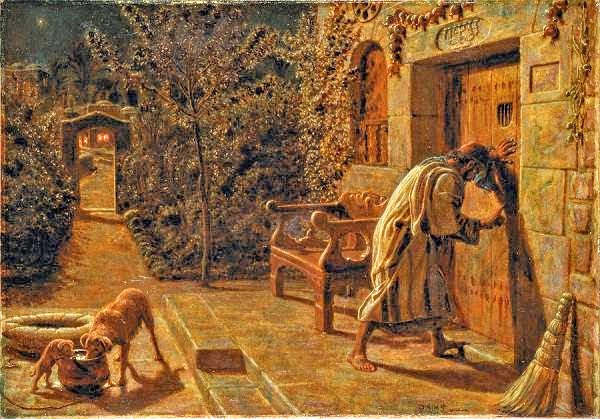
Luke 11:5-8

This parable is known by some as “the Importunate Neighbor.” That’s an excellent description. Importunate is defined as being persistent, especially to the point of annoyance or intrusion. It’s tenacious and stubborn–not giving up even when being ignored, and that describes what’s happening here.

What immediately proceeds this parable is Luke’s version of the Lord’s prayer, which the disciples requested. They wanted to understand the methods and mechanics of praying–perhaps the Pharisee’s prayers weren’t quite up to snuff–they wanted more; and they insisted that Jesus instruct them.

The disciples wanted to do prayer right.

A typical Jewish home had sleeping quarters (one room!) located on a raised platform. A ladder was used to access that level (which could be crowded, sometimes two to a bed.) Often their livestock were brought inside. And when it was time to get up, everyone got up. That explains the homeowner’s reluctance to give bread to his neighbor. To get up, light a lamp, wasn’t a solitary affair.

He’s obviously unenthusiastic to make that effort.

The word used here to explain the neighbor actions is ἀναίδεια “anaídeia,” which is only used once–it’s translated as impudence, shamelessness, audacity or chutzpah. It’s a Greek word that explains the knocker’s rudeness. He won’t stop. He knocks and pounds until he gets his bread. Not having bread for his guests is unheard of, for it violates all kinds of convention.

The unwritten law of Jewish hospitality demanded action. 

This is part of Jesus’ view on prayer. It means we must be inappropriate sometimes–even to the point were we are being rude.

Immediately following this parable (the very next thought) are the following instructions:

“So I say to you, ask, and it will be given to you. Seek, and you will find. Knock, and the door will be opened to you. 10 For everyone who asks receives, and the one who seeks finds, and to the one who knocks, the door will be opened.”

Luke 11:9-10

Perhaps it’s a matter of forcefulness?

We “pray” but don’t insist. We desire but don’t demand. Maybe it takes a certain shamelessness to make prayer work. Jesus emphasizes a necessary attitude to praying God’s way. It’s never automatic, but in this parable we see words that move the Father’s heart, and loosen his hand. In Jesus’ teaching, prayer means effort.

It means spiritual work. He wants us to know this. It is important.

“There is neither encouragement nor room in Bible religion for feeble desires, listless efforts, lazy attitudes; all must be strenuous, urgent, ardent. Flamed desires, impassioned, unwearied insistence delight heaven. God would have His children incorrigibly in earnest and persistently bold in their efforts. Our whole being must be in our praying.”

    E.M. Bounds

f

Love Wears Work Gloves

 “But if anyone has the world’s goods and sees his brother in need, yet closes his heart against him, how does God’s love abide in him?”

“Little children, let us not love in words or talk but in deeds and in truth.”

1 John 3:17-18, ESV

Love is a noble idea, it’s admired and extolled by practically everyone–we see it in our music and poetry, ethics and religion. For the most part it’s a word for something decent and virtuous and honorable. It’s a good thing, but I’m afraid it’s not always scriptural.

You see, Bible love wears work gloves.

It labors and sweats. Bible love has chores to do, and it actively looks and sees what needs to be done. 1 John 3 tells us that we shouldn’t deceive ourselves and only see the world’s definition. That love that a believer has is to be different.

Love, in John’s eyes, is most assuredly “doing.” It burns spiritual calories as it labors to serve our brothers and sisters. Love finds things it can do–it doesn’t just talk but it gets busy. Love sees the need and then gets down to serve.

“You must show sincere love to each other as brothers and sisters. Love each other deeply with all your heart.”

1 Peter 1:22

Working (serving) has nothing to do with our salvation, that is a free gift. We’re saved by grace through the blood of Jesus–that’s a given. And this serving love isn’t drudgery, as a matter of fact, working and serving each other is a joy. The deepest kind of joy there is.

Our words, although important, are really an insufficient way of proving our authenticity.  The love we serve another with isn’t “pretty poetry” kind of love. It’s so easy to just shout out truth and never ever show a working, serving kind of love. 

That disconnect is a bit disconcerting. When do we suppose we figure out that His love is actually a verb?


Follow Him

There can be no resurrection power without crucifixion weakness. There can be no power unless you die to self, taking up your personal cross. Many are frustrated by this. This teaching is not fully understood or really preached.

Mark 8:34; Matthew 16:24

Crosses hurt, for they are a way of dying to self, plain and simple. Every spirit-filled believer must die to his agenda. If you want a resurrected life, overcoming sin and death, you must carry your cross. Death comes first, and then is resurrection. There is freedom to all who obey.

Simply put, there’s no other way for you to be holy but a cross.

Whether you’re struggling with a physical ailment (think pain), or a mental illness (also pain), you still must carry a cross. Our issues can be formidable, I understand, but you’re not exempt from the terms of discipleship. All must follow Jesus.

“He that hath no cross deserves no crown.”

    Francis Quarles

Jesus fully understands Calvary. He recognizes agony. His pain was real. I believe that He knows this intimately. I also think Jesus understands our weakness and confusion. His grace meets every believer. No matter if they struggle and stumble. The Spirit teaches us. All who really come are redeemed.

I think He understands our reluctance and hesitation.

I want to follow Him. I’m pretty sure that you do too (you’re reading this which tells me something). So what cross are you called to carry? They seem to be custom made–designed uniquely for you. But it’s also true that others have been tempted, just like you.

It’s often a path of brokenness and humility. It may involve shame and pain–a reproach to those who can’t understand. But if you take it up you can expect the world to belittle you. If they abused Jesus, you can count on them belittling you.

Avoiding your cross means you have been conformed to what the world thinks, and that’s an awful place to be. You really can diminish your cross without doing harm to your spiritual walk. Honestly, there is not another way.

His resurrection power is given to those who have already expired. Struggles with sin and doubt often evaporate when He abides in you. He’s the power given to overcome. He’s the only one who can give it to you.

“To take up the cross of Christ is no great action done once for all; it consists in the continual practice of small duties which are distasteful to us.”

    John Henry Newman

Crushed Grapes

2 Corinthians 1:8

     David Wilkerson

The word is in New Testament Greek is θλῖψις, or thlipsis. It means affliction, trouble, or pressure. It’s used 45 times in the NT and it seems to be used in a negative sense. Personally I think “pressure” is the most intriguing.

To write anything on suffering and pain is a bit of a fool’s errand.

It’s a broad subject and it will vary from person-to-person.

And I’ve no special insight to give. I know this. Perhaps though, something will come of this. Personally, I have had several traumatic (and dramatic) brushes with pain and suffering. Almost all of them have come as a believer–(I hope that doesn’t mess with your theology).

Looking at the Apostle Paul we can see suffering clearly. Often his ministry was extremely hard. He wrestled repeatedly over his churches and his own sin. When we look at the totality of his work we start to realize that being crushed was part of calling. He understood the challenge of himself and his message.

I write this first to remind you that to minister true grace in any real capacity will mean difficulty. But I also want to encourage you to see that God will always bring life when we remain obedient to Him.

That’s how it works. (At least I think so.)

    Alan Redpath

Straining at Your Oars

“He saw the disciples straining at the oars because the wind was against them.”

Mark 6:48

It’s good to know that Jesus sees our labor and effort.  He truly understands all that concerns us, and He perceives every issue that matters most to us.  Attentive and keenly aware He comes to our boat.  It’s quite common for us to think that he isn’t aware, and we may feel that He’ll pass us by without a word.  But that is not the case at all.

The Greek word for “against them” is ἐναντίος, and it means “opposed as an adversary, hostile, antagonistic.” I suppose that explains much to a believer who sees the wind doing awful things; that which is savage and difficult and contrary.

But Jesus watches over us, all the time. He is completely aware of you. 

He knows all about our battle, the fight we have with our flesh, the difficulty we have with the challenging people in our lives. I often struggle to steer my boat. Jesus knows when and why I labor like I do.  And He doesn’t condemn me.

The disciples were straining very hard to keep the boat afloat. 

Every oar was being used and every man had his seat.  They must work together.  Some were frantically bailing, and a couple gripped the tiller. Considerable effort was being expended but to no avail.  The wind pushed harder against them.  This is perplexing.  If you remember, they’re simply trying to obey the command of Jesus to cross the sea. 

Why do things have to be so difficult?

I’m intrigued by believers who expect sunshine, blue sky, and red roses because they are doing God’s will.  They don’t seem to think through the issues of conflict and challenge, weakness and weariness.

“It is necessary to go through many hardships to enter the kingdom of God.”

Acts 14:22

To do God’s will often means that there will be a headwind directly at us.


The seas will become impossible, and we may even be driven back.  But special comfort comes when we realize we’re being watched.  Jesus is doing constant surveillance on us, and He sees our toil on the oars. He comes to us, walking on the water.

Even in our storm, our hearts can rejoice.

“Lo, I am with you always, even to the end of the age”

Matthew 28:20

The Eight-Cow Wife

A long time ago there lived a young islander named Johnny Lingo.  He lived on Nurabandi, not far from the island Kiniwata in the Pacific.  Johnny was one of the brightest strongest and richest men in the islands, but people shook their heads and smiled about a business deal he had made with a man on Kiniwata.  He had paid the unheard-of-price of eight cows for a wife, who was by any standards unattractive. As one fellow explained, “It would be kindness to call her plain.  She was skinny.  She walked with her shoulders hunched and her head ducked.  She was scared of her own shadow.” 

The amazing fact was in those days, two or three cows could buy an average wife, and four or five a highly satisfactory one.  Why would Johnny pay eight?  Everyone figured Sarita’s father, Sam Karoo, had taken young Johnny for a ride, and that’s why they smiled whenever they discussed the deal. 

The teller of the story finally met Johnny for herself and inquired about his eight-cow purchase of Sarita.  She assumed he had done it for his own vanity and reputation—at least she thought that until she saw Sarita:  “She was the most beautiful woman I have ever seen.  The lift of her shoulders, the tilt of her chin, the sparkle of her eyes all spelled a pride to which no one could deny her the right.”  Sarita was not the plain girl she had expected, and the explanation lay with Johnny Lingo.

“Do you ever think,” he asked, “what it must mean to a woman to know that her husband settled on the lowest price for which she can be bought?  And then later, when the women talk, they boast of what their husbands paid for them.  One says four cows, another maybe six.  How does she feel, the woman who was sold for one or two?  This could not happen to my Sarita.” 

“Then you did this just to make your wife happy?”

“I wanted Sarita to be happy, yes.  But I wanted more than that.  This is true.  Many things can change a woman.  Things that happen inside, things that happen outside.  But the thing that matters most is what she thinks about herself.  In Kiniwata, Sarita believed she was worth nothing.  Now she knows she is worth more than any other woman in the islands.” 

“Then you wanted—“

“I wanted to marry Sarita.  I loved her and no other woman.”

“But—she said, close to understanding.

“She is more precious than jewels, and nothing you desire can compare with her.”

Proverbs 3:15

Thinking Out Hard Things

To follow Him can be really hard. There doesn’t seem to be any contingency plans for any who are looking to escape such a drastic call. Jesus either is, or He isn’t our Lord. “Do you also want to leave?” This is a question that will be asked to every disciple–sometimes0once, and sometimes repeatedly.

There are these crystalline moments when I must make a decision. Will I take up my cross and go with Him? There doesn’t seem to be any room in Jesus’ band for ‘almost’ disciples. That scares me sometimes.

Today’s cross is waiting for me. I’m afraid at times that I won’t be able to take the next step as a true follower. Am I just fooling myself?

All of heaven seems to stand on tiptoe to see what I’m going to do next.

Who am I really?

Being obedient to Jesus is far from easy. We must have His Spirit.

“After this, many of his disciples left. They no longer wanted to be associated with him. Then Jesus gave the Twelve their chance:

“Do you also want to leave?”

“Peter replied, “Master, to whom would we go? You have the words of real life, eternal life. We’ve already committed ourselves, confident that you are the Holy One of God.”

John 6:66-69, The Message

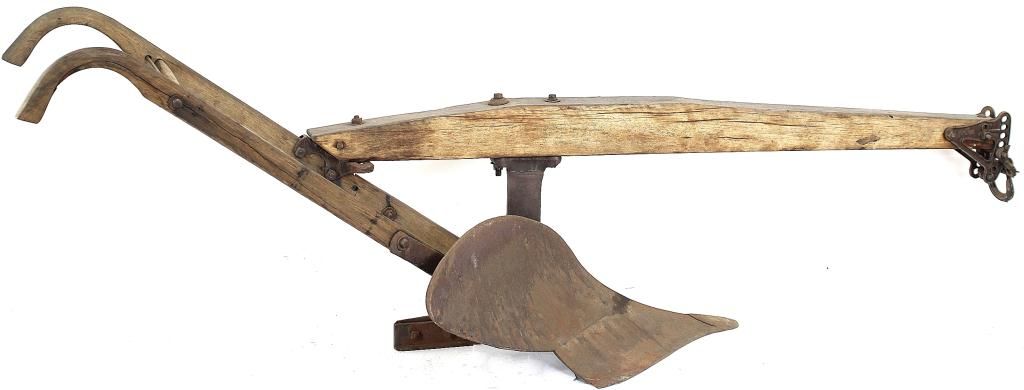
“It is indeed praiseworthy for a believer to consecrate his life to the Lord, but he must never do so lightly or thoughtlessly. Before committing your life in service to God today, count the cost, for “No man, having put his hand to the plough, and looking back, is fit for the kingdom of God” (Luke 9:62).”

    Woodrow Kroll

Image from Wikipedia, verses are from The Message Bible by Eugene Peterson.

Serving God at Night


A song for going up to worship.

“Behold, bless ye the Lord, all ye servants of the Lord, who by night stand in the house of the Lord.

Lift up your hands in the sanctuary, and bless the Lord!

The Lord who made heaven and earth bless thee out of Zion!”

Psalm 134

This remarkable Psalm is part of an elite group known as “the Psalms of Ascent.” There are 15 Psalms (120-134) sung as the congregation of Israel went up the steps of the temple in Jerusalem. They would sing each in “rounds” with each other.

As you can well imagine, this made the ascent slow, but meaningful. As you read the three verses of 134, I get a picture of worshipers turning back and blessing the Levites. This takes place at the very end of the day. The Levites, and other godly ones who lived in the Temple, (remember Anna and Simeon, in Luke 2?)

They were the support staff for the priests.

I have some general thoughts about this Psalm:

V.1, “Behold, bless ye the Lord, all ye servants of the Lord, who by night stand in the house of the Lord.”

The first significant thought is “Lord” mentioned three times. The word is the recognition of someone’s status and standing. We call Him Lord, because He is that (and more). The second has to deal with the Levitical “night shift.”

They served and guarded the Temple during the wee hours of the night.

They probably cleaned, stacked wood, sharpened knives and maintained the Holy Place with its needs. There was no real glory working the night shift. There were no people to serve. The crowds were for the day shift. (Here’s a weird thought– think “Disneyland at 2:00 a.m.”) There was also a contingent of non-Levite people ministering to the Lord as well. They had no duties, and only the priests could serve through their work.

The Levites working at night were not ‘second best.’ At least, not in the eyes of the Holy Spirit. They were integral in both presence and service to the Lord. To despise them is to reveal one’s ignorance. They definitely mattered.

V. 2 “Lift up your hands in the sanctuary, and bless the Lord!

I’ve worked nights before. It’s a real adjustment. You never feel like you’ve had enough sleep, and it is really hard to be positive and cheerful.  I could get pretty grouchy at times. But an exhortation is given, a shout and a blessing as the crowds leave. “Raise up your hands– and praise Him!” It is as the work, although necessary, would be secondary. The worship however, was primary. We need to hear that.

Each of these three verses of this Psalm contain the word “blessing!”

V. 3, “The Lord who made heaven and earth bless thee out of Zion!”

To be blessed (literally, made “lucky”) by our Creator and Lord is pretty profound. As a kid who read a lot, I think of ‘fairy dust.’ I know better now, but to be blessed by God is deeply significant. To summarize, I believe this Psalm is speaking of those in the church who are doing “hidden service.” No one sees them really.

They go about there duties quietly, and purposefully. The only recognition is from God– who sees all. I must encourage you to keep on. There are many more than you think who see your hidden ministry to the Father. You are His ‘night shift.’ You’re seen by few, but Him. He knows what you do.

“There are many of us that are willing to do great things for the Lord, but few of us are willing to do little things.”

     D.L. Moody