Giving Flowers to Jesus

Ephesians 4:30-32, NLT

Sometimes we understand God’s gift of joy to us, it seems wonderful and truly remarkable. We realize that our lives would be quite hollow without it. But have we ever stopped to consider that we have the ability to give Him grief or joy? Is that really possible?

I believe we can bring Him a bouquet of flowers by just obeying!

I believe that the combination of obedience and worship absolutely thrills Him. This passage points out that when our faithfulness to His Spirit gets combined with our praise it’s a powerful combination.

This passage focuses on our obedience.

Verse 30 explains what happens when we obey (and when we won’t). The Holy Spirit goes into mourning when we make our wrong decisions. Our choices, our way of living, determine His sadness (!) or His happiness.(!) That fact should inform and direct us.

We’re now clearly marked people, given a written guarantee by all who understand, resulting in a definite salvation.

But we must respond properly. We’re called to renounce these sins that grieve Him. We can’t continue to be morally and spiritually ugly to Him, and to others around us.

At least if we don’t want to see His tears because of us.

What’s now open to us is this–-kindness, a tender heart, and forgiveness. The forgiveness angle is one that has a special depth. It’s forgiveness that plunges us into all that we’ve been given ourselves. He’s poured out all the wrath on Jesus, enabling us to walk away from the terrible punishment of our sins. We’re fully forgiven because He has absorbed our penalty.

We’re called to be gracious and loving. No matter what comes our way.

The idea of “get rid” makes these truths possible. A full pail can never receive another drop, and we can’t be filled unless the old one is dumped out. We can only receive it if we’re ready. But that decision is ours to make. (Choose wisely.)

This passage clearly reveals the outrageous grace of God that is focused on us.

If our disobedience in this results in God’s grief, then our obedience must bring Him joy. It seems we now have the freedom to walk godly. In a way we can bring a delivery of a fresh bouquet of flowers right into His throne room. But it’s our choice and our decision.

Ephesians 4:32

Bryan Lowe

He’s Much Closer Than You Think

tumblr_static_tumblr_static_1odvenqfc6kkgwo0sg0skgsco_1280

Luke 22:41

WHO KNOWS WHAT JESUS IS THINKING AT THIS PRECISE MOMENT as he entered the Garden? His disciples waited for Jesus and scripture states that he proceeded ahead of them to find some needed strength through prayer— this verse tells us he went “a stone’s throw.”

We often share in the sorrows of the people closest to us, and Jesus wants His disciples to follow him. And they do, but not all the way. They came close, but were oblivious to the full nature of the pain that was beginning for Jesus. They slept while he agonized.

He was for the first time perhaps, needing someone close.

Many of us will make the same trip to the garden. Soon every believer makes the trip to ‘Gethsemane,’ but not as mere observers. It is a distinct place of testing and of sorrow. And each will experience it for themselves. “The servant is not above his master.”

But Jesus is close— he completely understands what it means to be alone with sorrow. The believer can lean on Jesus as the pain continues. He sends his “Comforter” to each, as he escorts us through this time. He comes in grace, and is completely kind.

He is truly just a stone’s throw away.

“God is our refuge and strength,
 always ready to help in times of trouble.”

Psalm 46:1

bry-signat (1)

A Stone’s Throw Away

tumblr_static_tumblr_static_1odvenqfc6kkgwo0sg0skgsco_1280

“And He withdrew from them about a stone’s throw, and He knelt down and began to pray,”

Luke 22:41

WHO KNOWS WHAT JESUS IS THINKING as he entered the Garden? His disciples followed Jesus but scripture states that he proceeded ahead of them. He knew He must find some much-needed strength through prayer— this verse tells us he went “a stone’s throw.”

Often we share in the sorrows of the people closest to us, and Jesus wants His disciples to follow him. And they do, but not all the way. They came very close but didn’t really understand the full nature of the pain that was beginning for Jesus. They slept while he agonized. He was for the first time perhaps, needing someone close.

Some who are reading this will make the same trip to the garden.

Perhaps every believer makes the trip to ‘Gethsemane,’ but not as mere observer or tourist. The garden is a distinct place of testing and of sorrow. And each disciple will experience it for themselves. “The servant is not above his master.” We must follow the Lord Jesus, and it’s not going to be easy.

I’ve gone to the Garden myself, sitting in the dark, waiting for Him to come. And He does. And He is my light.

Jesus is very close. He stands by us. He listens and watches.

He completely understands what it means to be alone with sorrow. The believer can lean on Jesus as the pain continues. He sends his “Comforter” to each, as He personally escorts us through this time in the “garden.” He comes in grace and is completely kind. He truly is just a stone’s throw away.

“God is our refuge and strength, always ready to help in times of trouble.”

Psalm 46:1

“No physician ever weighed out medicine to his patients with half so much care and exactness as God weighs out to us every trial. Not one grain too much does He ever permit to be put in the scale.”

   Henry Ward Beecher

alaskabibleteacher.com

Walking With Him in The Garden

This image has an empty alt attribute; its file name is pardes-hebrew-yellow-1.jpg

“When the cool evening breezes were blowing, the man and his wife heard the Lord God walking about in the garden. So they hid from the Lord God among the trees.”

Genesis 3:8

I honestly have never had the wonderful experience of strolling a lush garden with my Father. At least not totally. But when I’m engaging the Word, pressing in to comprehend a passage, it’s as if I’m truly walking in His orchard with Jesus.

But there is something more to this.

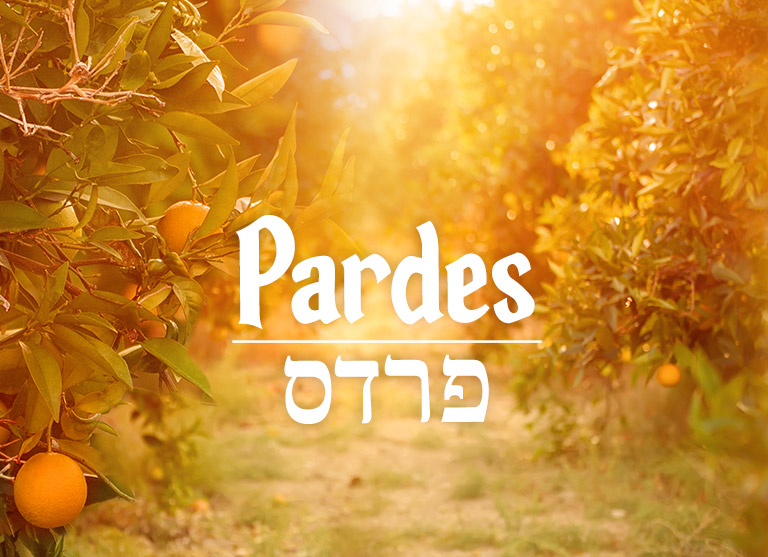
This word “pardes” is also an acronym. The rabbis taught that there are four levels of understanding as we peer into a passage.

  • P’shat–the surface or literal meaning of a verse or passage.
  • Remez– the symbolic or applied reason of the Word. How it connects with my daily life.
  • Drash–how it fits into other parts of the Bible, forming a purposeful teaching.
  • Sod–a hidden meaning that resides “underneath” the verse. This seems when the Holy Spirit gets really involved in the way I live. (Some would say “mystical.)

Now I’m not sure that every passage reaches the “sod” level. (Maybe we’re not really aware?)

When we truly study God’s Word it’s as we walk in the garden. He reveals Himself to us. The Genesis story shows us where we can find Him. The important thing I suppose is trying to hide from God’s presence. We can’t.

We must come to our Father, and learn to walk with Him. The Bible is the best way to fellowship with Him.

The Seed Must Grow

26 And he said, “The kingdom of God is as if a man should scatter seed on the ground. 27 He sleeps and rises night and day, and the seed sprouts and grows; he knows not how. 28 The earth produces by itself, first the blade, then the ear, then the full grain in the ear. 29 But when the grain is ripe, at once he puts in the sickle, because the harvest has come.”

Mark 4:26-29

From a seed to a plant. We have no idea how this happens, it just does. This is a “kingdom” parable, one of several that explain what God’s realm is, and how it happens. In this particular story, we’re told how the Holy Spirit works. It also explains our role in this (which isn’t a whole lot).

The farmer puts the seed in the ground—and that’s it.

He’s done his work, there’s nothing more he can do. He doesn’t do anything else from this point, and honestly he can’t. And yet the soil needs to be prepared—plowed, fertilized and tilled again. You might say he creates the conditions (that’s what makes a good farmer, I guess) for something to happen.

He doesn’t massage the seed, coaxing it to grow.

He doesn’t sing to it, or tell it about the wonders of being lush and green. He does zero. The seed grows on its own. He goes to bed, and gets up. After several days, bingo! That seed turns into a plant—something green and alive. He doesn’t do a thing. Life occurs without his work.

The point is this. God’s work is done invisibly within us (and that’s a relief)!

Robertson’s Commentary

God’s kingdom works pretty much like this. The farmer doesn’t cause the seed growth, all he does is go to bed! He sleeps and waits and watches. It grows and he hasn’t the slightest. It’s a complete mystery. He has done everything he can, and God has done the rest. He “shares” in this amazing transformation, but the father has done it all.

We trust in a process we cannot see, or really understand.

We don’t dig the seed up every morning to see what’s happening. We just let the (super)natural happen. And it does!

The farmer has faith in the process (after all, he did plant the seed), but that’s it. There’s a verse in 1 Corinthians that should be considered. It gives us confidence and a definite trust in this process of growth. The Apostle Paul understands this “principle of growth.”

“So neither he who plants nor he who waters is anything, but only God who gives the growth.”

1 Cor. 3:7

We must trust God completely to grow. We’re responsible for tilling and planting. But you need to understand what happens after that is up to him. The kingdom of God is supernatural. It’s exactly how the kingdom happens—and we must be very patient and incredibly wise.

“There is nothing more important to learn about Christian growth than this: Growing in grace means becoming like Christ.”

     Sinclair B. Ferguson

alaskabibleteacher.com