David and Goliath, Reloaded

Physically there was no comparison. 

Goliath was almost 10 feet tall, a warrior since birth–we read of his armor–he was like a Sherman tank. And David was just a very small, skinny boy–nothing more.

Young David stood and looked at Goliath face-to-face. (If it’s been awhile, you can read of this encounter in 1 Samuel 17.) My guess is that Goliath preened and strutted into the field of battle, and the boy David was stepping up for his very first try at hand-to-hand combat. David is called a “youth” in Hebrew, which means anyone from infancy to adolescence.

And that’s when Goliath begins to blaspheme loudly. Perhaps that’s what giants do best.

He boasts. He mocks.  He believes he is superior, and his arrogance seems to know no bounds.  In his mind the center of the universe is the Philistine army, and he is their champion. He is contemptuous of everything else–physical or spiritual.

Essentially all you need to know is that Goliath is a human wood chipper. 

Everyone who has faced him has been destroyed.  No one has ever survived. But he has never met David before. And Goliath knows nothing of the living God. It amazes me, but David never backs down, his reaction to the ‘human mountain’ of Goliath was to run directly at him. 

“As the Philistine moved closer to attack him, David ran quickly toward the battle line to meet him.  Reaching into his bag and taking out a stone, he slung it and struck the Philistine on the forehead. The stone sank into his forehead, and he fell facedown on the ground”.

1 Sam. 17:48

Many of us face our giants. They come with many names, some are called guilt, pride, doubt, or despair and lust. And they come with many other names as well.

Satan our enemy has marched out on the field of battle, arrogant and supremely confident of his ultimate triumph over us. I suppose that should terrify us. Over the years we’ve been indoctrinated to accept sin’s control, and our inevitable slavery–with a spirit of timidity.

We’ve been rightly told that there are enemies that can destroy us.

As believers we are especially hated in the spiritual world of darkness. Our destruction is inevitable in the mind of the evil one.  Satan still expects to win over your soul, but Jesus stands as our advocate shielding you. I believe you are saved because He really did die for you.

Our own particular favorite demonic ‘monster’ is real and brutal. 

Yet so many believers are intimidated, listening, and then surrendering to the boasting of the giant.  The warfare dimension gets nullified, and soon becomes irrelevant.  Despair reaches us and has the full intention of taking total control. It’s never satisfied with just a little bit.

David ran to the battle–to face the giant who was standing right in front of him. 

He passed through the dark intimidation and influence to approach Goliath.  There was no doubt to cloud his mind.  David took a spiritually aggressive position, he took on the fear, and then ran directly at the giant Goliath.  His spirit was untouchable. This is the boy who wrote Psalm 23.

Some of us stare down our giants repeatedly, over and over.

As believers, we might struggle.  We can turn our hearts over to despair.  Sometimes we actually make ourselves available to the enemy’s workings. When we do this the enemy spreads his influence to others through us. And any confidence we might have through faith is dissolved into doubt and confusion. 

But the victory we have in Christ allows us liberty, through the Blood of Him who defeats our own Goliath of despair. We can run into the battle. We fight our giant, but we’re never defeated.

     Thomas Watson

“But thanks be to God, who gives us the victory through our Lord Jesus Christ.”

1 Corinthians 15:57, ESV

alaskabibleteacher.com

Suffering Well

“Dear brothers and sisters, when troubles of any kind come your way, consider it an opportunity for great joy.”

“For you know that when your faith is tested, your endurance has a chance to grow. So let it grow, for when your endurance is fully developed, you will be perfect and complete, needing nothing.”

James 1:2-4, NLT

There are many different points where our Lord connects to us through our desperation. Our sorrow and confusion can be how God ‘wires us’ for additional contact— in some kind of weird and cosmic way, my pain becomes His ‘copper wire.’ Often is how He touches my heart as He flows through it.

I think it’s helpful to see our issues in this way. 

There is a current that must work through us, making contact and ultimately creating a circuit. What I mean by this is that it seems we have to experience pain, in order to know His presence.  Only if you know that a brother has struggled, do you become aware that a pearl of tremendous wisdom (and love) is now accompanying him. Usually.

We must be aware that our distress allows us access to His ‘careful’ grace. Our trials, properly received, endow us with special and supplemental power.

When it gets dark, light becomes exceptional.  In a book by Stephen Lawhead, (I think it was “the Silver Hand.”) we see a man, the hero take up stones that have been infused with the creative power of the universe.  Standing on the walls of a besieged stronghold, the desperate hero throws the stones down on the attackers.  And as each stone smashes into the ground it releases a part of a song, which destroys the enemy and defeats those strong in the darkness. (Silly story.)

I know that His Spirit infuses Himself into our hearts. 

He has imparted something in us that is both precious and powerful.  He works through the pain and struggles that we encounter.  These are terribly ugly, no question.  But it is through these we plug into something real and eternal.

I suppose when the tragedy finally brings real life it’s a most precious thing. We treasure all this for it comes at such an exorbitant price.

Pain indeed has a purpose, but oh, so many times it seems to only hurt. But that’s the way it works.

But yet, that is our calling. I certainly know that life is seldom easy and our choices are even harder. I recently read that Queen Victoria, as just a teen fiercely opposed her future coronation as the sovereign of England. She grew sullen, and rebellious and would continually frustrate her teachers.

Once when Victoria was shown a lineage that showed her and revealed her place in England’s future as queen.  She became uncharacteristically quiet and she responded with an astonishing simple awareness, “I will be good.” From that moment everything changed for her.

flourish12 (1)

We want to avoid suffering, death, sin, ashes. But we live in a world crushed and broken and torn, a world God Himself visited to redeem. We receive his poured-out life, and being allowed the high privilege of suffering with Him, may then pour ourselves out for others.

Elizabeth Elliot

bry-signat (1)

The Present Tense Jesus

All we really have is the present moment. The past is gone, you can’t change it. The future isn’t here yet, we really have no idea what it’ll bring. But we have the now, and Jesus reveals Himself to us, right now.

This doesn’t mean the past or future is irrelevant or unimportant.

God redeems our past, and our future as believers are filled with His precious promises. This is no small thing. We learn from our past, and believe Jesus will be there for our future. I cannot or won’t diminish this. Both our past, and our future, matter. We learn (reflect) and trust (faith).

But Jesus often refers to the present moment. For instance, in the Gospel of John, the Lord uses the immediate now to explain who He really is. (There are seven of these here and now verses.) He says I am, and that is right now.

Notice: Not I was, or I will be, but now in this present moment, Jesus says, “I am.

Due to grammatical rules, “I am” must be translated, from the original Greek, as present tense, and 99% of every Bible translation agrees. “I am” is right now, in the present tense. Not I was, or i will be. (Sorry, I am being redundant here.)

The Seven I AM Statements of Jesus as found in John’s Gospel.

  • I am the bread of life.” (John 6:35, 41, 48, 51)
  • “I am the light of the world.” (John 8:12) 
  • “I am the door [or gate] of the sheep.” (John 10:7, 9) 
  • “I am the good shepherd.” (John 10:11, 14) 
  • “I am the resurrection and the life.” (John 11:25) 
  • “I am the way, the truth, and the life.” (John 14:6) 
  • “I am the true vine.” (John 15:1, 5) 

Because these characteristics are neither past or future we can be confident that these are in the now. We know that God doesn’t change, “Jesus Christ is the same yesterday and today and forever.” (Hebrews 13:8.)

So, when you wait on God, it’s all in the present moment.

The “I am” is now. When He states “I am the bread of life,” we understand that Jesus wants us to come and dine, right now. When he says, “I am the good shepherd,” it is meant for me being in His flock, right now.

Why does this even matter?

Well first of all, it gives us confidence that Jesus is our present tense Savior. He is always there. Furthermore we’re not trapped in the distant past or the nebulous future. We only have the now– this present moment. When this present moment happens, it slides into the past.

I guess this idea is a bit of a shocker for me.

Living in the now and gripping on Jesus when I pray and worship, or read the Word gives me the powerful sense that He is present. He’s now focusing on me. I do admit that my past life has been terrible, I can’t live there, and my future, well, it only builds on the now.

It has taken me almost 40 years to see this.

Moses understood this concept. God said to Moses, “I am who I am. And he said, “Say this to the people of Israel: ‘I am has sent me to you.’” (Exodus 3:14.) These emancipated slaves needed the present tense “I am God” to lead them every step of the way. They needed Him every morning–everyday.

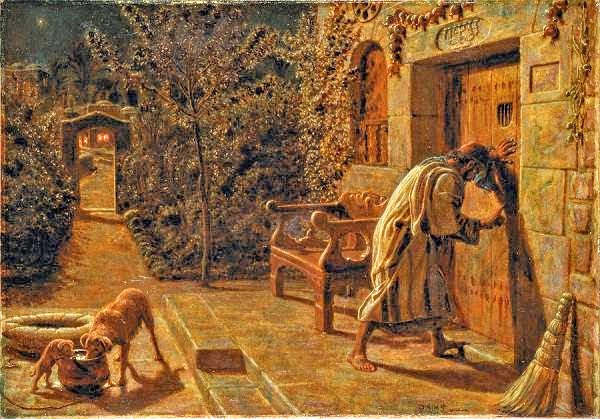
Be aware of Him in this present moment. Jesus is waiting for you. It’s time to press into the Lord of the now. I believe He can’t wait for you to join Him. He stands at your door, and knocks. Please let Him in.

The Four Alls of Prayer

Praying at all times in the Spirit, with all prayer and supplication. To that end, keep alert with all perseverance, making supplication for all the saints, 

19 and also for me, that words may be given to me in opening my mouth boldly to proclaim the mystery of the gospel, 20 for which I am an ambassador in chains, that I may declare it boldly, as I ought to speak.”

Eph. 6:18-20, ESV

I am convinced that our most challenging work is learning to pray. Whenever we experience revival, whenever we rediscover our true calling and purpose for living, we do so by prayer. Prayer isn’t the way to get things, it’s how we change.

Prayer is the way we become like Jesus.

Satan’s primary focus is to destroy our prayer lives, he works to eliminate our communion with our Father. He detests that, and he and his demons (and the world system) work overtime to tear down our walk. The enemy concentrates everything on our prayer life.

This passage (v.v. 18-20) emphasizes several truths about prayer. If you take apart these you’ll discover how to shape and direct your ‘time on your knees.’ Notice the following.

  • All times
  • All prayer
  • All perseverance
  • All the saints

If we go further we see that the word “all” in Greek, (although it’s a simple adjective), gets used 1245 times in the Bible. It can mean:

  • all manner of
  • the whole or entirety
  • everything, or the totality of
  • completely

With this in mind we see that Paul stresses the complete effort of prayer and its focus. All the time, every kind, no matter what and for your brother and sisters in Christ need. It’s work, spiritual work. It seems that once we put the armor on (verses 10-17) we can stand in God’s own strength. It’s from that we start to learn prayer.

It’s not enough to wear your armor. There’s something you must do wearing it.

If we’re clothed in armor it’s pretty much for the exclusive purpose of prayer. Yes we must dress for war and protection, true, but its ultimate purpose is prayer and intercession. Don’t just wear it but pray out of it. It’ll be work, but you must do this, even if you sweat. You must strive in prayer, so much is counting on you.

You can make a difference.

The Church is counting on you. “Paul,” (symbolizing all pastors and elders, teachers and leaders), absolutely need your prayers. We need boldness, and we need grace and love, and only God can give it, if you’ll only intercede for us.

It will not be easy. The enemy wants to suppress your prayer life. He absolutely hates it. Satan wants to see you passive and dull and you cannot let him do this. You have a very critical part and place in God’s kingdom. Perhaps others are waiting for you, and perhaps you’re the only one who can step in the gap for them.

You’ve been given a part of God’s field to care for, you have your own sphere of influence. No one else has it, but you.

There many different ways to pray:

  • On your knees
  • walking
  • standing or sitting
  • vocally, or in your focused thoughts
  • with others, a group
  • using a prayer list, (very helpful).
  • “arrow” prayers, (those with 1-2 sentences that end up in His throne room).
  • using the Psalms or reading the many prayers in the Bible

(I know there are many more, but these are what comes to mind right now.)

There’s a “school” of prayer and the Holy Spirit intends to teach you.

Don’t play hooky. You’ll make mistakes or perhaps lose focus. The Spirit will teach you holy stamina. You might pray for one or two minutes at first, but it’ll grow and you’ll learn endurance. Remember though–you’re most like Jesus when you start to intercede for others.

Just maybe your sanctification will come when you start to pray?

-Brother Lawrence

alaskabibleteacher.com

Leaving Your Boat Behind

27 “But immediately Jesus spoke to them, saying, 

“Take heart; it is I. Do not be afraid.”

28 And Peter answered him, “Lord, if it is you, command me to come to you on the water.” 29 He said, “Come.” So Peter got out of the boat and walked on the water and came to Jesus.”

Matthew 14:27-29, (context, vv. 22-33)


Jesus is full of surprises! You can never guess the things He will do next. He is Lord after all. To walk on water is totally impossible. But Jesus does it. He walks on it as if it were a concrete sidewalk. When they see Him they freak out. They couldn’t believe their eyes.

Jesus wants to reveal to His disciples His true nature.

They had just seen Him multiply fish and loaves, He fed five thousand plus just a few hours ago. Wasn’t that a miracle enough? It seems that Jesus doesn’t think so.

For some inexplicable reason, Peter wants to insert himself into Jesus’ miracle. Oddly, he has decided he’ll join Jesus, and leave behind the security of the boat–for the insecurity of the impossible! He truly believes that Jesus can hold him up somehow. Perhaps this alone is the most amazing part of this passage. Can a man duplicate the walk of Jesus? Can we walk like Him?

Peter really wants to leave the security of the boat, for the insecurity of the impossible.

It seems to me that we’re constantly doing the “Peter thing.” It’s true our walk of faith really is intensely supernatural, and yet we somehow forget this. And face it, we’ll never generate the “fruits of the Holy Spirit” on our own. Our most sincere efforts will never turn water into something solid.

We will never walk the disciple’s path without faith in the Master who calls us to come to Him.

I think Jesus wants us to join Him. Our faith in Him is the key. We believe that we can walk with Him, we believe we will see the impossible. Without question it’s Jesus’ power that holds us up. Our faith in Him is the ignition point in all of this. Our mustard seed faith, combined with Jesus’ power. becomes the true walk of the disciple.

We must bravely launch ourselves into the purposes of God. Jump when God puts opportunity in your path.

To merely sit in the boat is hardly faith. When Peter steps over the gunwales, he steps into the world of the amazing. The water holds him, and his trust in Jesus solidifies like the water he walks on. He is now doing the impossible. He’s now becoming very much like Jesus.

Our walk seems terribly weak at times, we can easily list our sin and weaknesses. We’re not quite convinced that the blood of Jesus covers all our sin–and therefore we can’t step out of the boat. I think it’s Peter’s faith in Jesus’ power that holds him up.

When his faith falters, he does the “rock thing,” There is something about his circumstances–the wind, and the waves that begin to frighten him. (But I must believe Jesus was pleased.)

To really understand, to obey Jesus is to step out of our boat in faith; when we do we’ll start to see miracles happen.

“Christ will always accept the faith the puts its trust in Him.”

-Andrew Murray


alaskabibleteacher.com

Are You Resting? נוח Nuach

Life can get out of hand sometimes, becoming hectic and frantic. It seems like we’ve got 1000 ‘irons in the fire.’ The anxiety of doing everything creates fear and worry. We cannot possibly keep up. There isn’t enough hours in the day.

We are not at rest with ourselves, or with the Lord.

And oh my, the news, the internet, and our cell phones create awful issues if we can’t manage them with the Holy Spirit’s direction and purposes. Our computers seem like a pipeline for darkness. Unless they’re “given” to God, they can destroy you.

What causes me anxiety? I’m quite sure you can add your own issues. But here’s a partial list:

  • ambition, self-promotion, pride, jockeying for position
  • family issues, marriage and children
  • my job and career, “keeping up with the Joneses”
  • religious ‘duties’
  • finances, bills
  • politics, media
  • unrepented sin, separation from God, peace is missing

But I assure you, there is rest.

The Old Testament uses a word, נוח or ‘nuach.’ It’s a Hebrew word. Both Moses and Jesus understood the implications. It means calming, to become quiet or still. To rest quietly.

This promise is given to Moses; frankly, he’s overwhelmed by his burden. In the “tent of the meeting” he battles with God, and it’s in that place Moses insists on the Lord’s active presence on him and on the people. He will not take another step unless God does this.

The Lord Jesus calls each of us to rest in Him. It seems we work hard and we carry awful heavy burdens. Jesus uses the word, “Come” which is typically a command or an imperative. (It can be used with an explanation mark!)

Jesus understands our hearts and our effort and “labor.” He fully grasps that we’re “heavy laden” much of the time. His invitation is to come and find the peace of a resting disciple. It is His gift to us, and only Jesus can give it to us.

 “‘Come’; he drives none away; he calls them to himself. His favorite word is ‘Come.’ Not, go to Moses – ‘Come unto me.’ To Jesus himself we must come, by a personal trust. Not to doctrine, ordinance, nor ministry are we to come first; but to the personal Saviour.”

CH Spurgeon

Breaking Down the Door

Luke 11:5-8

This parable is known by some as “the Importunate Neighbor.” That’s an excellent description. Importunate is defined as being persistent, especially to the point of annoyance or intrusion. It’s tenacious and stubborn–not giving up even when being ignored, and that describes what’s happening here.

What immediately proceeds this parable is Luke’s version of the Lord’s prayer, which the disciples requested. They wanted to understand the methods and mechanics of praying–perhaps the Pharisee’s prayers weren’t quite up to snuff–they wanted more; and they insisted that Jesus instruct them.

The disciples wanted to do prayer right.

A typical Jewish home had sleeping quarters (one room!) located on a raised platform. A ladder was used to access that level (which could be crowded, sometimes two to a bed.) Often their livestock were brought inside. And when it was time to get up, everyone got up. That explains the homeowner’s reluctance to give bread to his neighbor. To get up, light a lamp, wasn’t a solitary affair.

He’s obviously unenthusiastic to make that effort.

The word used here to explain the neighbor actions is ἀναίδεια “anaídeia,” which is only used once–it’s translated as impudence, shamelessness, audacity or chutzpah. It’s a Greek word that explains the knocker’s rudeness. He won’t stop. He knocks and pounds until he gets his bread. Not having bread for his guests is unheard of, for it violates all kinds of convention.

The unwritten law of Jewish hospitality demanded action. 

This is part of Jesus’ view on prayer. It means we must be inappropriate sometimes–even to the point were we are being rude.

Immediately following this parable (the very next thought) are the following instructions:

“So I say to you, ask, and it will be given to you. Seek, and you will find. Knock, and the door will be opened to you. 10 For everyone who asks receives, and the one who seeks finds, and to the one who knocks, the door will be opened.”

Luke 11:9-10

Perhaps it’s this intensity that’s lacking.

We “pray” but don’t insist. We desire but don’t demand. Maybe it takes a certain shamelessness to make prayer work. Jesus emphasizes a necessary attitude to praying God’s way. It’s never automatic, but in this parable we see words that move the Father’s heart, and loosen his hand. In Jesus’ teaching, prayer means effort.

It means spiritual work. He wants us to know this. It is important.

“There is neither encouragement nor room in Bible religion for feeble desires, listless efforts, lazy attitudes; all must be strenuous, urgent, ardent. Flamed desires, impassioned, unwearied insistence delight heaven. God would have His children incorrigibly in earnest and persistently bold in their efforts. Our whole being must be in our praying.”

    E.M. Bounds

f

Needing His Cross Daily

We live in this place.

I confess that peace has never been really high on my list. Love, joy, kindness, and even goodness are clear priorities. Peace… not so much. Until I find out it’s not there. And then I get frantic by its absence and scrambling look for it with bewilderment.

Sometimes I don’t understand why God still loves me. At times like this anxiety eats at me. I beat myself up by my last failure. The guilt of my latest sin grows until it looms larger than the blood that saved me. Sometimes I suppose, religious people seem to have the most neurosis.

I’m afraid that we are taking the ‘present tense’ out of the Gospel.

The past tense is preferable to us as we find it easier to ‘manage’ our Christian life. We like to make check marks on our list. [Church attendance– check. Baptism– check. Bible study– check.] I think it gives me a definite feeling of ‘maturity.’

But these things matter little without intimacy with Jesus Christ.

I certainly haven’t arrived, and it seems at times I’m still the hideous sinner I always was. I cannot pretend otherwise, even with a spiritual truckload of cosmetics at my disposal. I know, I’ve tried. And I’m still ‘ugly.’ I do know forgiveness, and I do walk in its wonderful light (by grace).

I read Luther 30 years ago. (And Bonhoeffer would say something similar.)

“When our Lord and Master Jesus Christ said, ‘Repent,’ he willed the entire life of believers to be one of repentance.”

Martin Luther

This is the first of his 95 Theses nailed to the door of the Castle Church in Wittenberg, Germany. And there is a present tense here we can’t ignore about these declarations. I don’t just repent over smoking, beer drinking, fornication, or hypocrisy, once and done. But my entire way of living is to be one of repenting. To repent everyday opens the door to a true grace-filled discipleship.

“All of the Christian life is repentance. Turning from sin and trusting in the good news that Jesus saves sinners aren’t merely a one-time inaugural experience but the daily substance of Christianity. The gospel is for every day and every moment. Repentance is to be the Christian’s continual posture.”

John Piper

Luther’s last words, on his deathbed, was found written on a scrap of paper stuck in his coat, “We are beggars! This is true.” Even after thirty years, he was only echoing his first thesis.

It seems dear ones, we are to live at the foot of the cross.

The Seed Must Grow

26 And he said, “The kingdom of God is as if a man should scatter seed on the ground. 27 He sleeps and rises night and day, and the seed sprouts and grows; he knows not how. 28 The earth produces by itself, first the blade, then the ear, then the full grain in the ear. 29 But when the grain is ripe, at once he puts in the sickle, because the harvest has come.”

Mark 4:26-29

From a seed to a plant. We have no idea how this happens, it just does. This is a “kingdom” parable, one of several that explain what God’s realm is, and how it happens. In this particular story, we’re told how the Holy Spirit works. It also explains our role in this (which isn’t a whole lot).

The farmer puts the seed in the ground—and that’s it.

He’s done his work, there’s nothing more he can do. He doesn’t do anything else from this point, and honestly he can’t. And yet the soil needs to be prepared—plowed, fertilized and tilled again. You might say he creates the conditions (that’s what makes a good farmer, I guess) for something to happen.

He doesn’t massage the seed, coaxing it to grow.

He doesn’t sing to it, or tell it about the wonders of being lush and green. He does zero. The seed grows on its own. He goes to bed, and gets up. After several days, bingo! That seed turns into a plant—something green and alive. He doesn’t do a thing. Life occurs without his work.

The point is this. God’s work is done invisibly within us (and that’s a relief)!

Robertson’s Commentary

God’s kingdom works pretty much like this. The farmer doesn’t cause the seed growth, all he does is go to bed! He sleeps and waits and watches. It grows and he hasn’t the slightest. It’s a complete mystery. He has done everything he can, and God has done the rest. He “shares” in this amazing transformation, but the father has done it all.

We trust in a process we cannot see, or really understand.

We don’t dig the seed up every morning to see what’s happening. We just let the (super)natural happen. And it does!

The farmer has faith in the process (after all, he did plant the seed), but that’s it. There’s a verse in 1 Corinthians that should be considered. It gives us confidence and a definite trust in this process of growth. The Apostle Paul understands this “principle of growth.”

“So neither he who plants nor he who waters is anything, but only God who gives the growth.”

1 Cor. 3:7

We must trust God completely to grow. We’re responsible for tilling and planting. But you need to understand what happens after that is up to him. The kingdom of God is supernatural. It’s exactly how the kingdom happens—and we must be very patient and incredibly wise.

“There is nothing more important to learn about Christian growth than this: Growing in grace means becoming like Christ.”

     Sinclair B. Ferguson

alaskabibleteacher.com

Abide.

The repetition of this should be obvious. Our discipleship must hang on that simple (yet profound) word. We are clearly called to “abide.” It’s a small word, and yet the thought it carries is deep and heartfelt. Jesus calls His disciples to rest and obey Him.

To abide means to “dwell,” “remain,” “be present,” and to “be connected.” Abiding addresses our posture and place. How connected are we to our source? Where are we in proximity to Christ? A disciple must ask these questions.

The issue is “sap.” Am I connected in such a way that His presence flows through me?

A branch must be attached in order to bear fruit. If, somehow, it isn’t connected, it dries up and needs to be cut off the vine. Many believers are in danger, they’re not producing fruit and they are not growing. Somehow they aren’t affixed to the Lord Jesus.

This doesn’t mean they have lost their salvation, it just means that their discipleship has little meaning. They have no purpose, the sap of Jesus becomes a trickle and fruit is never really produced. It is a sad and difficult place to be.

Often the real issue comes down to obedience/disobedience.

I must learn that “abide” is now my life, my sap, my fruitfulness.

“Abide in Me says Jesus. Cling to Me. Stick fast to Me. Live the life of close and intimate communion with Me. Get nearer to Me. Roll every burden on Me. Cast your whole weight on Me. Never let go your hold on Me for a moment. Be, as it were, rooted and planted in Me. Do this and I will never fail you. I will ever abide in you.”

     J.C. Ryle

alaskabibleteacher.com