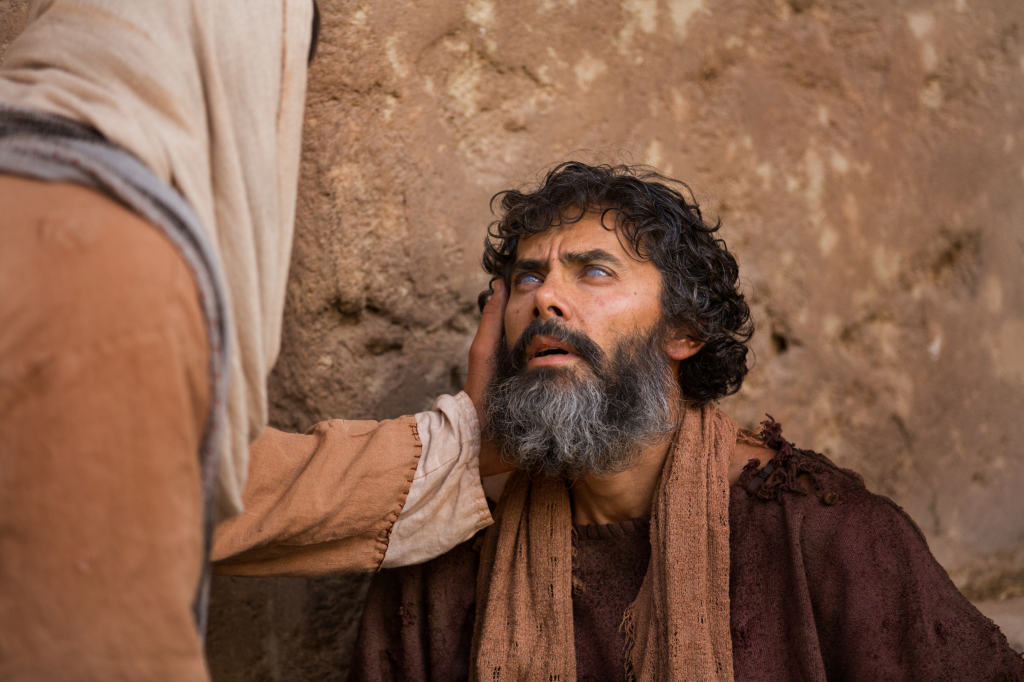
“And He withdrew from them about a stone’s throw, and He knelt down and began to pray,”
Luke 22:41
WHO KNOWS WHAT JESUS IS THINKING as he entered the Garden? His disciples followed Jesus but scripture states that he proceeded ahead of them. He knew He must find some much-needed strength through prayer— this verse tells us he went “a stone’s throw.”
Often we share in the sorrows of the people closest to us, and Jesus wants His disciples to follow him. And they do, but not all the way. They came very close but didn’t really understand the full nature of the pain that was beginning for Jesus. They slept while he agonized. He was for the first time perhaps, needing someone close.
Some who are reading this will make the same trip to the garden.
Perhaps every believer makes the trip to ‘Gethsemane,’ but not as mere observer or tourist. The garden is a distinct place of testing and of sorrow. And each disciple will experience it for themselves. “The servant is not above his master.”We must follow the Lord Jesus, and it’s not going to be easy.
I’ve gone to the Garden myself, sitting in the dark, waiting for Him to come. And He does. And He is my light.
Jesus is very close. He stands by us. He listens and watches.
He completely understands what it means to be alone with sorrow. The believer can lean on Jesus as the pain continues. He sends his “Comforter” to each, as He personally escorts us through this time in the “garden.” He comes in grace and is completely kind. He truly is just a stone’s throw away.
“God is our refuge and strength, always ready to help in times of trouble.”
Psalm 46:1
“No physician ever weighed out medicine to his patients with half so much care and exactness as God weighs out to us every trial. Not one grain too much does He ever permit to be put in the scale.”
“The more I have read the Bible and studied the life of Jesus, the more I have become convinced that Christianity spreads best not through force but through fascination.“
Shane Claiborne
I believe in evangelism. Right after Bible college I joined SOS Ministries as a full-time evangelist. I was there for three years living in a ministry house in the Mission district. We did high-visibility street work, preaching and leading teams to various parts of the City. This was in the 1980s and the City was pretty challenging.
I was primarily a street preacher and a team leader.
San Francisco is a city of 800,000 people. The work was intense. I remember once I was leading a Church team on Haight-Ashbury, and I was punched in the face by a backslidden Christian who strenuously objected to the Gospel being preached. I tried to respond in humility and kindness, even though I thought my nose was broken. (It wasn’t.)
Over the years I have come to see that the most powerful witness is a joyful and loving character that’s submitted to Christ.
Walking through the dusty roads and journeying into the small villages of Judea we read of the incredible hold that Jesus had on the hearts of men. They were fascinated by Him. People came face to face with God’s presence and it grabbed them. They traveled great distances to meet Him.
“And all the people were amazed, and said, “Can this be the Son of David?”
As we submit to His Spirit we begin to understand this same amazing dynamic. It’s not us, it’s Him. And it will always be Him. The fruits of His presence are becoming very visible. Jesus is living inside of us!
“But the fruit of the Spirit is love, joy, peace, patience, kindness, goodness, faithfulness, 23 gentleness, self-control; against such things there is no law.”
Galatians 5:22-23
I remember visiting a Christian commune in the early 70s. I was a young believer with a ton of questions. I recall the peace, humility, and joy I saw on the faces of these brothers and sisters. I instinctively knew that I was encountering Jesus. And it shook me in a good way, a deeply supernatural way.
Please do not remove the presence of Jesus from your evangelism.
If you ask me, I will tell you. Jesus is still fascinates, and it’s His residence in you that still touches people. Evangelism is far more than the ability to recite facts and good arguments. It’s something far more.
And yet I still believe in high visibility evangelism. God’s word must be proclaimed openly and without compromise. But 40 years have passed now,and I have come to see that our faith spreads best through our example.
Perhaps He must be seen as well as to be heard?
“Soon we shall be up there with Christ. God did not mean us to be happy without Him; but God would first have us to be witnesses for Him down here, to hold out as much light as we can.”
Who understands this mystery? Even the angels are baffled!
The Maker of the universe As Man, for man was made a curse. The claims of law which He had made, Unto the uttermost He paid.
2
His holy fingers made the bough Which grew the thorns that crowned His brow. The nails that pierced His hands were mined In secret places He designed.
3
He made the forest whence there sprung The tree on which His body hung. He died upon a cross of wood, Yet made the hill on which it stood.
4
The sky that darkened o’er His head By Him above the earth was spread. The sun that hid from Him its face By His decree was poised in space.
5
The spear which spilled His precious blood Was tempered in the fires of God. The grave in which His form was laid, Was hewn in rocks His hands had made.
6
The throne on which He now appears Was His from everlasting years. But a new glory crowns His brow. And every knee to Him shall bow.
“The Maker of the Universe,” lyrics by Phil Keaggy, 1986
One of my favorite places to fish in Alaska is Kodiak Island, where I tried to catch silver salmon with some friends. Just as we were setting up camp, the sun disappeared, and the temperature dropped quickly. While we struggled with our tents, the wind joined in. Then, it started pouring rain—like someone dumped a bucket of water on us! I woke up at midnight to strong winds flattening my tent, making me wonder if fishing Kodiak was really worth it. 😁
But in the morning, the storm had moved on. The sky transformed into something gold! The sun shone brightly, making the world come alive. The night gracefully stepped aside, allowing the darkness to fade away and make room for a new, vibrant day.
I realized then that’s the way of Christmas.
We have an Advent hope. The light doesn’t negotiate with darkness; there’s no struggle. The darkness retreats when the light arrives. Plain and simple.
Advent hope seems slow, but honestly, it’s unstoppable.
When Jesus came into the world, nothing could stop Him. His birth is recognized during Advent. His arrival was predicted in the scriptures. Jesus came to take away our sins and offer us eternal life.
The Bible teaches us that Jesus is God in the flesh, fully divine and fully man, who came to save us from our sin. This is basic Christianity.
“In the beginning” reminds us of Genesis, where God created everything (Genesis 1:1). Through the Spirit, he shows that he has taken an important step towards us with the arrival of Jesus. He is dedicated to saving us.
God created us to know and enjoy him (Gen 3:8). We must understand that sin entered the world and screwed everything up. Jesus came to sacrifice Himself to secure our salvation, restoring his image in those who trust him.
Jesus Christ restores all that we lost because of our sin.
In the beginning was the Word. The Word did not come into existence in Mary’s womb but He always was. The Word is eternal. Before it all began, he was there, and he was coming for us.
The phrase “the word was also with God” indicates that the Word is from God but is closely connected to Him (Mk 6:3; 11:4; 2 Cor 5:8; 1 John 1:2). The Word is also God and represents the eternal Son of God, who is both with God and is God. He is the Word and the Son, distinct yet unified with God.
Everything we see was made through Jesus, and nothing exists without him (see Col 1:16-17). The Old Testament says that God created the heavens and the earth, while the New Testament shows that the Word is the true Creator. This highlights Christ’s key role in creation and his divine nature. Both Testaments emphasize the relationship between God the Father and Jesus, confirming that all existence is intentional and meaningful.
Recognizing Jesus as the Creator enhances our understanding of his authority, showing us that all things were created through him and find their purpose in him.
We must understand that we’re born spiritually dead and blind. But that can change.
Jesus is the light and every one of us is spiritually blind to truth and beauty and glory (John 17:24). Jesus overcomes our darkness and now gives life. Jesus does for us what we cannot do for ourselves. His love is seeking us.
The word, the gospel, brings forth life and light so that we are born again, literally born from above, and so we see (John 3:3). The light shines into our darkness and the darkness leaves us.
From a sermon given at Community Christian Church, December 7, 2025
David Taylor has been a follower of Christ since 1983 and a pastor since 1988. He moved from Los Angeles to Homer, Alaska in 2004.
“Therefore take up the whole armor of God, that you may be able to withstand in the evil day and having done all, to stand firm. 14 Stand therefore, having fastened on the belt of truth and having put on the breastplate of righteousness, 15 and, as shoes for your feet, having put on the readiness given by the gospel of peace. 16 In all circumstances take up the shield of faith, with which you can extinguish all the flaming darts of the evil one; 17 and take the helmet of salvation, and the sword of the Spirit, which is the word of God,“
Eph. 6:13-17, ESV
You’re called to be armor-plated.
Ephesians is quite clear about this, and we dare not live without spiritual protection, and as a matter of fact, we must wear each piece to survive spiritually. To be ‘naked’ is catastrophic. Neglecting to dress appropriately brings cataclysmic disorder. We dare not minimize our need for wearing our armor.
Each piece listed must be worn. This is a scriptural mandate for every believer in Jesus.
“The whole armor of God” explains the equipment we need to survive spiritually. Here’s a list of the six:
The belt of truth–this pulls everything together and holds us and keeps us secure in the truth.
The breastplate of righteousness–our spiritual heart is protected by knowing we’re accepted by the Father. Being right with God is not a feeling nor is it a mere hopeful wish. We wear what is real.
The shoes of the gospel (of peace)–the idea of standing in place (“to stand”) explain our ability to be fixed on grace. When we wear battle shoes we cannot be pushed back or lose our footing. Wearing gospel shoes brings us spiritual stability. We can stand in place, rooted and strong.
The shield of faith–is a vital way of protecting ourselves from the evil arrows shot by the enemy. Satan targets us when he thinks that we aren’t using faith to defend ourselves.
The helmet of salvation–this is the realization that our mind is protected. This vital piece brings us wholeness as we understand what Jesus has done. We know we are saved and wearing our helmet is our protection from demonic-inspired lies.
The sword of the Holy Spirit–the only offensive weapon we have, and it’s all we need. The Word of God will frighten the enemy and push him back. The Word slices and cuts down every obstacle and every lie.
“Only those who are spiritual perceive the reality of the spiritual foe and hence engage in battle. Such warfare is not fought with arms of the flesh. Because the conflict is spiritual so must the weapons.“
I must stress that clothing yourself is vital. You dare not live spiritually naked wearing nothing. You will be totally vulnerable to the satanic wickedness that is swirling around you. I’m afraid it’s all very real and sobering and there is no escape clause until you finally arrive in heaven.
“We know [positively] that we are of God, and the whole world [around us] is under the power of the evil one.”
1 John 5:19, Amplified Bible
I’m afraid you haven’t been given an option in all of this. Our battle equipment in Ephesians 6 is not just some theological preference or concept. It’s real.
Over 40 years of following Jesus have taught me that most believers struggle because they won’t arm themselves for battle. They refuse to acknowledge the environment they’re in and don’t realize the spiritual battle they are facing. They like the sentiment behind this particular passage, (it stirs their heart) but the reality of the battle never fully sinks in.
They end up leaving their armor behind.
The good news is that we have already won because of what the Lord has done. Wearing the armor strengthens and stabilizes us. He pours out His grace, and there will be times of rest of that I am certain. “He leads me beside still waters.”
As obedient and faithful believers we need to realize we’re secure in Him. Yes, there is a terrible fight, but “The battle is the Lord’s.”
“For you equipped me with strength for the battle; you made those who rise against me sink under me.”
“Give thanks to the Lord, for he is good, for his steadfast love endures forever.”
Psalm 136:1, ESV
Repetition is when a single word or phrase is used multiple times in short succession for effect. It can help emphasize a point. This Psalm certainly does that.
Since this post is pretty much about repetition, I’m going to share some different versions that different translators have interpreted the last phrase of all 26 verses. Keep in mind the last phrase is used is repeating itself word for word in each translation.
Now here are seven different English translations of the end of every verse.
AMP: …for His lovingkindness (graciousness, mercy, compassion) endures forever.
NASB: …for His faithfulness is everlasting.
KJV: …for his mercy endureth for ever.
NCV: …His love continues forever.
CJB: …for his grace continues forever.
MSG: …His love never quits.
NET: …for his loyal love endures.
The word, translated in these different ways, is “hesed” in Hebrew. It means a forever love, loyalty, faithfulness or kindness. It is something everlasting or eternal that’s based all on covenant. Yes, every translation is different, but the same.
I suppose this repeated phrase (26 times) may seem a bit redundant. I for one am prone to skip Psalms 136 because of that, I mean it seems boring. Just repeating this over and over I start to wonder if there’s something better to read.
But we dare not make this mistake.
If we respectfully dismantle this phrase we find it deals with seeing God as eternally steadfast. We are called to state out loud His love for us that never wavers or ends. A “steady” forever love that will not change, flicker, or diminish. It just goes on and on and on.
The phrase then moves even deeper than that. “Endures forever,” shapes the whole thought. You might say that these two words extend or amplify the complete verse and strengthen the entire Psalm.
O.K. Here’s another bone to chew on.
First, I need to point out that the first part of each verse states the unique circumstance that declares what exactly has been done. For instance notice the wonder and power of each verse. This is verse 15, for example,
“He overthrew Pharaoh and his host in the Red Sea,(the unique phrase) for his steadfast love endures forever.” (the repeated phrase)
The first part describes a miracle of deliverance from Egypt. The second is that same repeated phrase we find in all 26 verses. First the unique phrase, and but then comes the repeated one. But let’s add even more flavor. We must teach ourselves to remember. You must consider each event He has led you through to be a testimony to others.
We forget these miracles unless we consciously recall what God has done. Miracles, healings, provisions, and His amazing grace. Never disremember these things. Bring them to mind, over and over again. You should never forget those “God-things.” They’re uniquely yours. He has done distinctive and tremendous things for you alone.
I guess the main point of this post is to emphasize to you to value those unique miracles that you’ve experienced in your own life.
In life it seems we remember what is important to us. What He has done for you is your own unique testimony. It’s yours, and yours alone. What you’ve experienced is completely your own testimony.
When we enter a forever kind of an endless eternity that each of us will have amazing stories to tell each other about God’s special touch, His miracles and all of the grace and forgiveness that He uniquely loved us with. We all will have our own unique and singular stories. What we share will be our evidence of His love.
That’s pretty amazing when you think about it.
But please remember.
“And they have conquered him by the blood of the Lamb and by the word of their testimony,”
“One of the criminals who were hanged railed at him, saying, “Are you not the Christ? Save yourself and us!” 40 But the other rebuked him, saying, “Do you not fear God, since you are under the same sentence of condemnation? 41 And we indeed justly, for we are receiving the due reward of our deeds; but this man has done nothing wrong.” 42 And he said, “Jesus, remember me when you come into your kingdom.”
And he said to him, “Truly, I say to you, today you will be with me in paradise.”
The pain was incredible, but I know that deep down I deserved to die. But not like this. Never like this. I was almost out of my mind with fear. What they were about to do to me was terrifying.
You must understand that I was just a common thief. I had stolen a loaf of bread when I was eight years old and that’s how it all got started for me. It more or else got bigger and easier. I knew how to steal and I was quite good at it. I was Jacob, the master thief!
When I was finally caught, they had sentenced me to die.
I supposed it was inevitable. I fault no one but myself, I knew what I was getting into. As I dragged my beam up to Golgotha, it was really strange but I suddenly remembered a verse from the scripture and it really did unsettle me.
“Cursed is everyone who hangs on a tree.”
It’s a terrible thing to die this way. There were three of us, nailed to the wood and lifted up between heaven and earth. Jesus was nailed to the middle cross, not that it really mattered; all three of us were going to die today. Many hope for a simple and easy death, maybe in their sleep–but that’s not going to happen to us.
The third man could only mock, he was afraid, and I suppose he just echoed those Pharisees who didn’t really understand. But I knew better. I knew who this other man was, I had heard all the stories. Deep down I knew that this man on the center cross was the Messiah.
A crowd had gathered to watch us die. The Romans in their wonderful ingenuity had made a sign that they nailed above Jesus’ head, and it declared to everyone that Jesus was “the king of the Jews.” Even as he was dying, they found a way to malign him and to stir-up the crowd.
The other man being crucified continued to mock Jesus, and it infuriated me.
Why I defended him I don’t know for sure.
But I understood. He was being murdered out of envy and jealousy. He didn’t deserve to die like this, but the powers that be hated him, and who can confront these religious men without becoming a victim. Jesus had repeatedly crossed the line, so now they were now putting him to death. It seemed evil was really winning today.
I saw the soldiers throwing dice for Jesus’ clothes. He was now being mocked by them as well, even as he was dying on a brutal cross.
But all of a sudden it all made perfect sense, he really was the Messiah, and these bastards were killing him. Crucifixion was starting to work on me now. I began to choke on my words, and it was getting hard to breathe.
“Jesus… please remember me. When your Kingdom comes, please let me be a part of it.”
And as beaten as he was, he managed to turn and look directly at me. They had whipped and brutalized him, and yet he was still aware. His words were whispered now, but I understood. “I promise that today you will be with me in paradise.”
I was starting to spasm again, but the horror of death had left me. Some time had passed, and I could hear his breathing stop. But for the first time, I had peace. They used a spear on Jesus, but he was already dead.
The soldiers now came to the two of us, and they were carrying an ax to break our legs. It all had to do with the coming festival, and the Pharisees wanted us dead. When they swung that ax I knew pain that I could never describe. My own death came quickly after that.
I was suddenly standing in paradise, whole and complete.
Someone was standing before me. He was shining I remember, and I knew he was powerful; stronger, and he was more glorious than anyone I had ever met. It was crazy but somehow I knew that he was an angel and he had been sent to meet me. It’s funny, but I realized that somehow I really did belong. Me–a dirty rotten thief.
Jesus had promised me, he had pronounced me righteous, me of all people.
I suddenly had a joy that I could never explain. I really was a part of the Kingdom that was beyond anything I had ever known. And all I can really say about this was that I was privileged to die with him. That is all I could claim. I simply believed him and asked if somehow I could be part of his eternal rule.
I simply asked and you know what, He gave me everything.
And so, I’ll see you in heaven.
Cover Art: “Christ on the Cross between Two Thieves,” by Peter Paul Rubens
It seems I’m the world’s worst and the clumsiest of all. And since my brain surgery, it has gotten even worse. I fall several times every month. I need to use a cane now. (And if you look up “klutz” in the dictionary you’ll see my picture, lol.) 😃
When I start to dance,you had better head for higher ground!
Even so, I do love the idea of dancing, but I’m like Bozo, the circus clown, only wearing roller skates! I lurch from side-to-side and I’m always on the verge of falling on someone’s lap, which is a real hoot!
But there is just one dance that I am waiting for.
It’s the dance I’ll have with my Savior. There will be a day, in a place and time where He will call me home and He himself will teach me how to dance. I know it’ll be incredible, and it’s a day that I anticipate, and honestly, I hope it comes soon. (He’s finally going to heal me!)
But to really dance you must first liberate your heart.
You must cancel out all self-consciousness. If you are self-aware, you will never enter into the joy and wonder of the true dance. You will be a perpetual wallflower, living only on the edges. And, you will be very sad.
It seems you must dance in your heart before you can ever dance with your feet.
I desperately would like to dance. And when I see Him clearly on that day, I’ll have no cane to slow me down. I will be as graceful, and to be perfectly honest, I won’t be watching you, (I’m sorry). I will see only Jesus. And I believe that my heart will beat for Him exclusively.
Jesus shed His blood for me.
I belong to Him. He forgave all my sin and has given me eternal life. Knowing this fills me with such joy that my feet won’t stand still. He redeems me, and is this not a cause for a dance, or two, or maybe three? Maybe eternity will be filled with more joy than we ever dreamed possible?
Some of you have been damaged–mashed up in the grinding gears of life’s hard issues. It’s hard to dance. I understand.
But I also know that your life can be astonishingly full of grace– you have endured so much, and yet Jesus intends to occupy your thoughts and vision with real hope. As His disciple, you’ll discover your special dance. And when you finally see Him, your heart will finally be free to spin and twirl.
He after all is the Lord of the dance.
“Young women and young men, together with the elderly, will celebrate and dance because I will comfort them and turn their sorrow into happiness.”
“They kept demanding an answer, so he stood up again and said, “All right, but let the one who has never sinned throw the first stone!”
(John 8:7, NLT)
“None knows the weight of another’s burden.”
-George Herbert
As believers, we must discern motives and false doctrine. We’re to be constantly aware of people and issues that swirl around us–of this, there is no doubt, we mustn’t be ignorant. This is a healthy “discernment.” But we must learn that having discernment isn’t a way that passes out a ‘guilty’ penalty. We are ‘seeing’ things these things–not to pass judgment, but that we might pray clearly and earnestly, and grow into His love for the weak.
But to pass out a guilty sentence is God’s exclusive jurisdiction.
It’s far beyond our ‘pay grade.’ He is the final judge in everything. He judges justly and lovingly. He alone knows and understands everything very clearly. We don’t.
And yet how foolish we are. Do we really have the ability to pronounce a penalty to someone else? Could it be when we decide to throw rocks at certain people we’re in terrible danger of forfeiting our own salvation? “But if you do not forgive others their sins, your Father will not forgive your sins.” (Matt. 6:15.)
We discern, not to pass judgment, but to pray more clearly and effectively. What you see or sense is for the prayer closet, not before a judge’s bench.
(If you have a ‘rock’ in your hand, you are in definite danger.)
“Don’t judge others, or you will be judged. 2 You will be judged in the same way that you judge others, and the amount you give to others will be given to you.
We really don’t have a problem with worldly people. We understand that they are lost in their sins, terribly wrapped up in their own personal darkness, and that should definitely disturb us. We must point to the Blood of Christ that forgives us. We share the good news of true repentance and faith. His Spirit teaches us to be witnesses of His love to everyone we meet.
But in light of this, isn’t strange that almost all of our judgment is somehow directed at other believers! Why?! For some strange reason, it ‘seems,’ we think that we must pronounce guilt and (by doing so) we declare our own “holy” attitude to our place in the Body. In a weird sense, we think we have the supreme calling to condemn someone else’ walk, and by doing so exalt our own!
“The life of faith is a struggle enough in a broken world without us complicating it for other believers.”
–Jake Colsen
It just may come as a shock to some, but it’s extremely difficult to throw stones at someone when we are busy “washing” their feet.
“The nature and end of judgment or sentence must be corrective, never vindictive; it is always for healing, and never for destruction.”
–John Owen
Perhaps when we judge others, we reveal that we don’t understand what ‘real’ discipleship with Jesus is? Somehow it seems, we really aren’t quite grasping the immensity of His grace on guilty people? Do we really understand His profound love for the fallen? “God so loved the World…” Have we had any idea how patient He is with us? Do we doubt His ability to correct others? (These are awfully hard questions.)
“Judge not lest you be judged.” (Jesus’ words really do scare me sometimes.)
Certainly, I intend to confront the darkness. “You are the light, a city set on a hill!” I am His salt and light and I do shine into this dark night. But that is His doing, not mine. I do not generate light on my own. The Bible declares me as ‘self-righteous’ when I try. I am a broken person, who is just starting to understand the scope of my own brokenness and weaknesses. I’m starting to realize I’m not in a position to judge someone else. I’m not quite healed myself yet and I must not think I can point to someone else as being worse than me.
Quite simply, I can’t throw ‘rocks’ at other believers anymore.
I can no longer pass out any condemnation from my own limited understanding. My chief concern right now is to be a humble, earnest Christian who is always ready to forgive those who, in their awful sin and confusion, are hurting others. I’m beginning to see that my calling is to be; a simple servant to my brothers and sisters, nothing more, and nothing less.
“And he arose and came to his father. But while he was still a long way off, his father saw him and felt compassion, and ran and embraced him and kissed him.”
Luke 15:20, ESV
There comes a time when the prodigal stands up–looks around, and then decides he can’t live this way anymore–it’s now time to return home. But he is no longer a ‘rich man’s son,’ the pig-pen completely crushed that idea. He returns home, thinking that at least he can be a slave.
The devastated prodigal now understands.
And it’s that which gives him the propulsion to leave the pigs behind, and begin to somehow be received by his father. The trip is a long one, lots of walking, and yes, it’s hard–he’s far from where he’s supposed to be. He is tired, ragged and worn.
But please dear one, you must understand this about Jesus’ parable–the story isn’t so much about the prodigal son, rather I think that the focus should really be on the father. Jesus is teaching us that the love of God is a searching/seeking kind of love, and it cannot be shut down, or go away over time. Not ever.
You see, it is a 24/7/365 day kind of love. Intense and constant.
Think of it like high intensity radar that steadily sweeps over extreme distances, it is always looking, seeking, and it won’t be denied. The Father is seeking for His sons and daughters. He intends to find them. If we refuse we will continue to feed pigs, over and over, and we will starve.
The Father never sits on His backside, calmly watching from His throne. He reaches out and runs to us. He is far from passive, rather He intensely yearns for His sons. And God is fully focused into the work of reclaiming His missing sons and daughters, just like in Jesus’ story.
He continues to search, even when things get really nasty for the son. He won’t give up.
I personally believe that this parable is the greatest of them all!
Jesus is explaining the deep love the Father has for prodigals like us. This story is so revealing, for in it we see that the Father who is running. We must know this about Him. We must internalize it and understand the compassion He has. If we stall in our discipleship it’s often because we don’t grip the awesome depth of His love.
There seems to be very few people who understand a God who runs.
As the prodigal hits bottom he realizes the futility of his choices and yearns to return to the forgiving embrace of his father. Overwhelmed by guilt and shame, he makes the long journey back to the home he once took for granted. Little does he know it, behind the scenes, his father has been watching, waiting, and hoping for his return.
And then, in a moment that encapsulates the beauty of unconditional love, the father catches sight of his boy from afar. Without a second thought, the father runs towards him with outstretched arms, his love insisting on forgiveness. His arms reaching through the filth.
Here we see a love that surpasses all human understanding.
Jesus teaches us a different kind of love. It’s not based on achievements or what society says. This love is given to everyone, regardless of their flaws, but in order to have it, they must leave the pigs behind. Sometimes that isn’t always easy. I hate to tell you this, but some will never make the journey home.
This profound depth of His love often leaves us feeling totally doubtful or skeptical.
Our logical minds struggle to grasp how such boundless love can exist, especially when we witness the failings and flaws of human love. Yet, it is precisely because love transcends logic that it is so powerful. It operates on a different plane, bypassing our human limitations and revealing a deeper truth about the nature of God’s infinite compassion.
We’re simply beggers telling other beggers where to find bread.
Let’s speak out boldly of this love that will transform lives. For when we approach Jesus’ parable with a bit more humility and faith, we may just catch a glimpse of its astronomical power and love that will never give up on His sons who are camouflaging themselves as pig farmers.
We shout of the love the Father has for His blundering and wayward children.
If the Church can just keep up with our running God, we will finally understand who He really is. And if we only accept the love of the Father towards prodigals—no matter what the sin—it’s then we will finally understand the ‘white-hot’ love of the Kingdom of Jesus.
And the Church will finally be doing His will in the world.