Are You Wearing White?

Rev. 7:9, ESV 

We fail to grasp the essence of grace and its significance.

When we speak about grace, we must define it. First, grace is a free gift and kindness from God that people do not earn or deserve. When we appropriate grace as believers we understand that it gives us the power and gifts to live biblically and faithfully. We see that grace is given for both salvation and service. 

Sometimes we forget this. I wonder sometimes if we’re ‘allergic’ to God’s grace.

We fall into the trap of work and legalism! I often lose sight of my true identity before a holy God, as unmerited favor tragically tries to become merited favor. This is not biblical; it is a distortion of the truth!

OK. What about repentance? We must understand that we’re called to renounce our sin and utterly turn from it. You are called to live holy and free. When Jesus met the adulteress who was about to be stoned, He forgave her, but He also commanded her: 

“Jesus stood up and said to her, “Woman, where are they? Has no one condemned you?” 11 She said, “No one, Lord.” And Jesus said, “Neither do I condemn you; go, and from now on sin no more.” 

John 8:10-11

The whole incident was grace, and this woman was receiving the unmerited favor of Jesus. She deserved death, she should have been stoned. But the first thing after her salvation was to live differently. This was a command to turn away from the sin which was going to destroy her. 

I’m amazed by this grace. 

Remember the thief hanging on the cross, consider the prodigal son, or the tax man Zaccheus. All three intrigue me as they found favor without meeting our own definition of repentance. Salvation seems to come by grace through faith alone. 

Perhaps grace includes both faith and repentance? I must think about this more.

Brennan Manning compassionately comments on God’s grace:

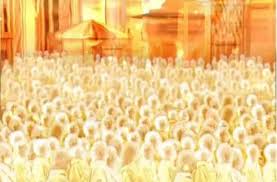
“Because salvation is by grace through faith, I believe that among the countless number of people standing in front of the throne and in front of the Lamb, dressed in white robes and holding palms in their hands.  

I shall see the prostitute from the Kit-Kat Ranch in Carson City, Nevada, who tearfully told me that she could find no other employment to support her two-year-old son.  

I shall see the woman who had an abortion and is haunted by guilt and remorse but did the best she could faced with grueling alternatives; the businessman besieged with debt who sold his integrity in a series of desperate transactions; the insecure clergyman addicted to being liked, who never challenged his people from the pulpit and longed for unconditional love. 

The sexually abused teen molested by his father and now selling his body on the street, who, as he falls asleep each night after his last ‘trick’, whispers the name of the unknown God he learned about in Sunday school. 
 
‘But how?’ We should ask. 
 
Then the voice says, ‘They have washed their robes and have made them white in the blood of the Lamb.’ 
 
There they are. There we are – the multitude who so wanted to be faithful, who at times got defeated, soiled by life, and bested by trials, wearing the bloodied garments of life’s tribulations, but through it all clung to faith. 
 
My friends, if this is not good news to you, you have never understood the gospel of grace.” 
Without Your Wound? (John 5)

angel6

The subject of “the pool at Bethesda” alludes to the Thorton Wilder play, “The Angel that Troubled the Waters.” 

The play tells of a physician who comes to the pool of Bethesda, hoping to see the stir, and then be the first in the water, and healed of his debilitating depression.  An angel appears and troubles the water. Everybody at the pool hopes to be the first one in and to be healed of their disability.

An angel appears and blocks a physician at the very moment he is about to step into the pool and be healed.

angel1

Angel: “Drawback, physician, this moment is not for you.”

Physician: “Angelic visitor, I pray thee, listen to my prayer.

Angel: “This healing dear physician, is not for you.”

Physician: “Surely, surely, the angels are wise. Surely, O Prince, you are not deceived by my apparent wholeness. Your eyes can see the nets in which my wings are caught; the sin into which all my endeavors sink half-performed, cannot be concealed from you.”

Angel: “I know.”

Later, the person who enters the pool first, and was healed rejoices in his good fortune, then turns to the physician before leaving and says:

“But come with me first, an hour only, to my home. My son is lost in dark thoughts. I — I do not understand him, and only you have ever lifted his mood.”

“Only an hour… my daughter… since her child has died, sits in the shadow. She will not listen to us, but she will listen to you.”

The play pierces me with this line— “Without your wound where would your power be?“ That thought causes me to look at my many weaknesses with an entirely different perspective.

Paul’s teachings offer us a powerful revelation: it is through our weaknesses that we can authentically minister to others, just as Jesus did by going to the cross. This priniple slowly permeates my understanding, and emphasizes the reasons behind my weaknesses.

Paul boldly declares that it is the very things we perceive as weak that have the potential to cultivate strength and truth within us and to others. It is my sincere hope that the ministry of alaskabibleteacher.com will impact lives by declaring this.

I hope so anyway. Please pray for me. I desperately need it.

I first encountered this excerpt in the book, “Abba’s Child: The Cry of the Heart for Intimate Belonging,” by Brennan Manning. The book is a worthy read, and worth finding if you can. The play is based on the biblical verses of John 5:1-4, however, it changes the end of the parable. The play is fictitious.


alaskabibleteacher.com

Listening to Brennan Manning

Here are several quotes written by Brennan Manning. They’re definitely thought-provoking and should be prayed through. I think they’re worth considering. If you like them great, if not that’s ok too.

“The gospel declares that no matter how dutiful or prayerful we are, we can’t save ourselves. What Jesus did was sufficient.”

“When we wallow in guilt, remorse, and shame over real or imagined sins of the past, we are disdaining God’s gift of grace.”

“God loves you unconditionally, as you are, and not as you should be because nobody is as they should be.”

“I could more easily contain Niagara Falls in a teacup than I can comprehend the wild, uncontainable love of God.”

“In my experience, self-hatred is the dominant malaise crippling Christians and stifling their growth in the Holy Spirit.”

“The splendor of a human heart that trusts it is loved unconditionally gives God more pleasure than Westminster Cathedral, the Sistine Chapel, Beethoven’s “Ninth Symphony”, Van Gogh’s “Sunflowers”, the sight of 10,000 butterflies in flight, or the scent of a million orchids in bloom. Trust is our gift back to God, and he finds it so enchanting that Jesus died for love of it.”

“Those who have the disease called Jesus will never be cured.”

“The men and women who are truly filled with light are those who have gazed deeply into the darkness of their own imperfect existence.”

“God loves us as we are…not as we ought to be, because we are never going to be as we ought to be.”

“The ragamuffin gospel reveals that Jesus forgives sins, including the sins of the flesh; that He is comfortable with sinners who remember how to show compassion; but that He cannot and will not have a relationship with pretenders in the Spirit.”

“The North American Church is at a critical juncture. The gospel of grace is being confused and compromised by silence, seduction, and outright subversion. The vitality of the faith is being jeopardized. The lying slogans of the fixers who carry religion like a sword of judgment pile up with impunity. Let ragamuffins everywhere gather as a confessing Church to cry out in protest. Revoke the licenses of religious leaders who falsify the idea of God. Sentence them to three years in solitude with the Bible as their only companion.”

“When I get honest, I admit I am a bundle of paradoxes. I believe and I doubt, I hope and get discouraged, I love and I hate, I feel bad about feeling good, I feel guilty about not feeling guilty. I am trusting and suspicious. I am honest and I still play games. Aristotle said I am a rational animal; I say I am an angel with an incredible capacity for beer.”

alaskabibleteacher.com