If You Really Want to Worship, Use a Knife

In Biblical hermeneutics, the ‘Law of First Mention‘ is used. Essentially it means that the first time a word or a concept is mentioned should go on to determine the way it needs to be understood throughout scripture. It is a guiding principle more than anything, but a good one at that. Genesis, being the first book, is a blessed repository for many of these ‘first mentions.’

In Genesis 22, we have the story of Abraham and Isaac on Mt. Moriah.

Abraham has tied up his son on an altar to offer him as a sacrifice in obedience to God’s direction (v. 2). This is faith being tested to the ultimate extreme. And Abraham shows us how to enter in.

“Then on the third day Abraham lifted his eyes and saw the place afar off. 5 And Abraham said to his young men, “Stay here with the donkey; the lad and I will go yonder and worship, and we will come back to you.”

Genesis 22:4-5

This is the first time that  the word “worship” is used in the Bible.

It sets the singular tone for all the scriptures on this subject. I guess what is interesting is there were no musical instruments involved. There was just these needful things:

  • stones,
  • wood,
  • rope,
  • fire,
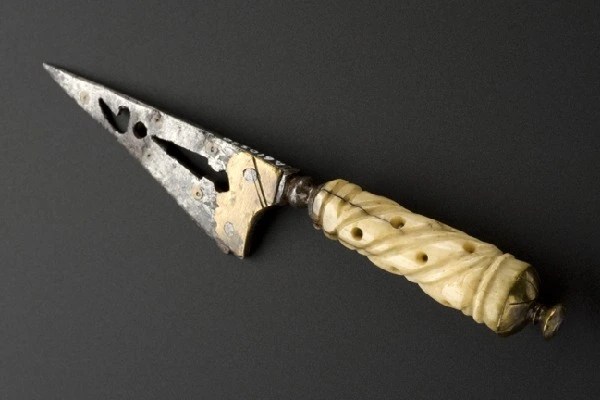
  • a knife,
  • and Isaac, (the would-be ‘lamb.’)

When the Hebrew word for ‘worship’ was used for the first time; it is interlaced with the idea of an incredible sacrifice. Abraham is the first ‘worship leader’ and he has no guitar. No piano, or drums either. No musical instruments whatsoever. No overhead lyrics to speak of.

Just a handmade altar, and a knife.

In the end, Abraham raises that knife, and then suddenly, to the relief of us all, he is stopped. His faith has withstood the test, and he has truly ‘worshiped.’

“But the Angel of the Lord called to him from heaven and said, “Abraham, Abraham!” So he said, “Here I am.” And He said, “Do not lay your hand on the lad, or do anything to him; for now I know that you fear God, since you have not withheld your son, your only son, from Me.”

Gen. 22:11-12

Principle One: There really can’t be worship without sacrifice.

Recovering this truth concerning worship would be beneficial. It seems we delegate ‘worship’ to a select few who are talented and gifted. We probably don’t do this deliberately, but sometimes we feel it makes a better presentation. We all want to look good, even Christians. (Perhaps this is more substantial than we know.)

Principle Two: The first worshiper didn’t use a guitar, but a knife.

This difference keeps the idea of sacrifice in its definition. There isn’t worship without sacrifice. The knife thrust that he was ready to wield wasn’t backed up by drums or piano. Yet Abraham understood worship every step to Moriah with the knife in his belt.

“The Scriptures include or allude to just about every approach to worship there is: organized, spontaneous, public, private, simple, complex, ornate or plain. Yet there is no comment anywhere about any one way being preferred over another. Rather, it is the spiritual condition of the worshiper that determines whether or not God is at work.”  

Harold Best

“So, brothers and sisters, because of God’s mercies, I encourage you to present your bodies as a living sacrifice that is holy and pleasing to God. This is your appropriate priestly service.”

Romans 12:1

Ultimately, we must realize our sacrifice is the Lamb of God. It’s His blood on God’s altar for our sins. As believers, our faith firmly rests in this spiritual fact.

We of all people have cause to really worship.

David and Goliath, Reloaded

Physically there was no comparison. 

Goliath was almost 10 feet tall, a warrior since birth–we read of his armor–he was like a Sherman tank. And David was just a very small, skinny boy–nothing more.

Young David stood and looked at Goliath face-to-face. (If it’s been awhile, you can read of this encounter in 1 Samuel 17.) My guess is that Goliath preened and strutted into the field of battle, and the boy David was stepping up for his very first try at hand-to-hand combat. David is called a “youth” in Hebrew, which means anyone from infancy to adolescence.

And that’s when Goliath begins to blaspheme loudly. Perhaps that’s what giants do best.

He boasts. He mocks.  He believes he is superior, and his arrogance seems to know no bounds.  In his mind the center of the universe is the Philistine army, and he is their champion. He is contemptuous of everything else–physical or spiritual.

Essentially all you need to know is that Goliath is a human wood chipper. 

Everyone who has faced him has been destroyed.  No one has ever survived. But he has never met David before. And Goliath knows nothing of the living God. It amazes me, but David never backs down, his reaction to the ‘human mountain’ of Goliath was to run directly at him. 

“As the Philistine moved closer to attack him, David ran quickly toward the battle line to meet him.  Reaching into his bag and taking out a stone, he slung it and struck the Philistine on the forehead. The stone sank into his forehead, and he fell facedown on the ground”.

1 Sam. 17:48

Many of us face our giants. They come with many names, some are called guilt, pride, doubt, or despair and lust. And they come with many other names as well.

Satan our enemy has marched out on the field of battle, arrogant and supremely confident of his ultimate triumph over us. I suppose that should terrify us. Over the years we’ve been indoctrinated to accept sin’s control, and our inevitable slavery–with a spirit of timidity.

We’ve been rightly told that there are enemies that can destroy us.

As believers we are especially hated in the spiritual world of darkness. Our destruction is inevitable in the mind of the evil one.  Satan still expects to win over your soul, but Jesus stands as our advocate shielding you. I believe you are saved because He really did die for you.

Our own particular favorite demonic ‘monster’ is real and brutal. 

Yet so many believers are intimidated, listening, and then surrendering to the boasting of the giant.  The warfare dimension gets nullified, and soon becomes irrelevant.  Despair reaches us and has the full intention of taking total control. It’s never satisfied with just a little bit.

David ran to the battle–to face the giant who was standing right in front of him. 

He passed through the dark intimidation and influence to approach Goliath.  There was no doubt to cloud his mind.  David took a spiritually aggressive position, he took on the fear, and then ran directly at the giant Goliath.  His spirit was untouchable. This is the boy who wrote Psalm 23.

Some of us stare down our giants repeatedly, over and over.

As believers, we might struggle.  We can turn our hearts over to despair.  Sometimes we actually make ourselves available to the enemy’s workings. When we do this the enemy spreads his influence to others through us. And any confidence we might have through faith is dissolved into doubt and confusion. 

But the victory we have in Christ allows us liberty, through the Blood of Him who defeats our own Goliath of despair. We can run into the battle. We fight our giant, but we’re never defeated.

     Thomas Watson

“But thanks be to God, who gives us the victory through our Lord Jesus Christ.”

1 Corinthians 15:57, ESV

alaskabibleteacher.com

Still Standing, Still Running

Hebrews 12:1

“Endurance is not just the ability to bear a hard thing, but to turn it into glory.”

     Philip Yancey

Just on a general basis, life can be terribly hard. I have had to face down so many enemies. Most all of them have been health issues, some critical. I know that there are many others that have also been besieged. To stand, and run with endurance takes the Holy Spirit (+ our weakness).

We’ve been called to stay standing, and to continue running.

The Bible is rich with verses that encourage believers to persevere, remain steadfast, and endure through hardships. Here are 10 promises that will never fail.

  • “I have fought the good fight, I have finished the race, I have kept the faith.” 2 Timothy 4:7
  • “For you have need of endurance, so that when you have done the will of God you may receive what is promised.” Hebrews 10:36
  • “Not only that, but we rejoice in our sufferings, knowing that suffering produces endurance,” Romans 5:3
  • “Consider it pure joy, my brothers and sisters, whenever you face trials of many kinds, because you know that the testing of your faith produces perseverance.” James 1:2-3
  • “Rejoice in hope, be patient in tribulation, be constant in prayer.” Romans 12:12

“To learn strong faith is to endure great trials. I have learned my faith by standing firm amid severe testings.”

    George Mueller

  • “As you know, we count as blessed those who have persevered. You have heard of Job’s perseverance and have seen what the Lord finally brought about. The Lord is full of compassion and mercy.” James 5:11
  • “Patient endurance is what you need now, so that you will continue to do God’s will. Then you will receive all that he has promised.”  Hebrews 10:36, NLT
  • “But the one who endures to the end will be saved.” Matthew 24:13
  • “May the God who gives endurance and encouragement give you the same attitude of mind toward each other that Christ Jesus had,” Romans 15:5
  • “Let perseverance finish its work so that you may be mature and complete, not lacking anything.” James 1:4
  • “But if we must keep trusting God for something that hasn’t happened yet, it teaches us to wait patiently and confidently.” Romans 8:25, LB

Somehow I just realized that “joy” must be found. The race is long and hard. If you are really a believer, you will run for the rest of your life. Challenging, yes. But the Holy Spirit will give you His joy. “The joy of the Lord is your strength.” (Neh. 8:10.)

“The only true conqueror who shall be crowned in the end is he who continues until war’s trumpet is blown no more…. Christian, wear your shield close to your armor and cry earnestly to God, that by His Spirit you may endure to the end.”

     Alistair Begg

Your Heavy Load

Matthew 11:28-29, Amplified Bible

He is inviting us.

Jesus requests our presence in one simple statement, “come to Me.” This phrase must be our starting point. It’s how you begin daily. If you’re His disciple, it’s imperative that you obey. But this concept is nuanced, it has profound meanings.

“All who are weary.” Each of us carries a heavy load. Sin has weight, whether we believe it or not. When I start to see this, I really begin my discipleship. Apart from Jesus’ invitation I will try to carry this heaviness on my own. This is called “religion,” and it’s a bad thing.

“My guilt overwhelms me—
    it is a burden too heavy to bear.”

Psalm 38:4

“I will give you rest.” It’s His gift, given to each believer. It isn’t earned, you don’t deserve it. His heart is for you to “rest.” The original Greek word often means “to refresh, or to cease your work.” Every true disciple knows this, and understands that Jesus rather laying a terrible burden on us, takes it off.

We must understand our calling.

Another burden (His own burden), is now given to us. It’s Jesus’own weight shared with believers. But it’s a restful burden that gives joy and peace. There are no longer sweaty religious rules, but authentic rest. Real discipleship is now based on love, not duty.

To follow Him in obedience is the happy delight of every disciple. When you are in love with Him the rigors of obedience have little weight.

 Oswald Chambers

“For I am gentle and humble in heart,” is His nature. He always acts this way, it is who Jesus is. This is how He behaves to each of us. It becomes the very essence of how He relates to human beings, always gentle and completely humble. Sometimes we add things that obscure this, and we see Jesus in our own particular image. (Maybe that’s a way of defining idolatry?)

And finally--“and you will find rest for your souls.” Again, the Greek here is quite instructive: rest, “cessation of any motion, or labor.” My walk, following Him, isn’t working harder, but being in a joyful rest. God’s saints aren’t called to sweat, but walk in the sureness of the presence of Jesus inside them.

Life can be awfully hard. Trials come and we get overwhelmed.

The joyful rest is only a slice of what heaven will be like. If joy and peace are a wonder now, just you wait, our future holds promises of a continual awareness of Him in our new bodies. This fallen world will be completely remade. Sin, sadness and Satan will be no more.

“And me? I plan on looking you full in the face. When I get up, I’ll see your full stature and live heaven on earth.”

Psalm 17:15, MSG

Getting Ready for Water Baptism

water-baptism1

“Those who accepted his message were baptized.”

Acts 2:41 

 “Repent and be baptized.”

Acts 2:38 

 “Having been buried with him in baptism and raised with him through your  faith in the power of God.”

Col. 2:12 

Perhaps the most significant decision we’ll make is to follow Jesus Christ into the waters of baptism.  This is just obedience to the Lord’s command to be baptized. Discipleship begins when we appropriate baptism into our faith. Ideally, it should forever alter your life. At least that is the Father’s intention.

It takes faith to be authentically prepared for baptism.  You will be taking a stand. By faith, you’re making public your allegiance to Christ. It is an important and critical step.

“Baptism was to put a line of demarcation between your past sins when you are buried with Him by Baptism–you are burying your past sins–eradicating them–putting a line in the sand saying that old man is dead and he is no longer alive anymore and I rise up to walk in the newness of life.”

T.D. Jakes

I suggest that you prayerfully attend examine the process listed below.  You’ll find there’s a big difference between truly being baptized, and just getting wet!

The interrogative process can be used to solidify the faith before man and in front of His people. In a sense, it’s much like the vows made by a husband and wife in the vows of marriage.

Here are some suggestions you should consider:

A series of questions are asked, to which the reply is always, “I renounce them.”

  1. Do you renounce Satan and all the spiritual forces of wickedness that rebel against God?
  2. Do you renounce the evil powers of this world that corrupt and destroy the creatures of God?
  3. Do you renounce all sinful desires that draw you from the love of God?

The second half also must be asked, to which the reply is always, “I do.”

  1. Do you turn to Jesus Christ and accept him as your Savior?
  2. Do you put your whole trust in his grace and love?
  3. Do you promise to follow and obey him as your Lord?

The Apostle’s Creed can be recited publicly (or privately in prayer).

This creed is our faith boiled down to its core essence. This declaration helps set us apart from the World, the flesh, and the devil:

“I believe in God, the Father Almighty, maker of heaven and earth. And in Jesus Christ, his only Son, our Lord,

who was conceived by the Holy Spirit, and born of the Virgin Mary, suffered under Pontius Pilate, who was crucified, died and was buried.

He descended into hell. and on the third day, He rose again from the dead. He ascended into heaven and sits at the right hand of the Father. From thence He will come to judge the living and the dead.

I believe in the Holy Spirit, the holy catholic Church,  the communion of saints, the forgiveness of sins, the resurrection of the body, and the life everlasting. Amen.”

We need to develop these into a living discipleship; you’ll see that water baptism is analogous to a master key that opens the door to a special joy. Obeying the command to be baptized pleases Jesus. And that is what we long to do.

“Indeed, baptism is a vow, a sacred vow of the believer to follow Christ. Just as a wedding celebrates the fusion of two hearts, baptism celebrates the union of the sinner with the Savior.”

–Max Lucado

“Baptism is an outward expression of inward faith.”

–Watchman Nee

“Baptism separates the tire kickers from the car buyers.”

    –Max Lucado

A special word to “older” believers:

There may come a time when you feel that you would want to be baptized again.  I believe that this is not only allowable but commendable.  You may have not had a good understanding of the baptismal process, but now it makes more sense to you.  I would encourage you to follow your heart. God will honor your re-dedication.

Ask your pastor or an elder what they think.

1brobry-sig

You may copy and distribute this post in its entirety.

It Gets Even Better

I just saw a t-shirt. “It gets better,” and inside me something connected, it resonated. If there is something like spiritual mirth and laughter, I could barely contain myself. I wanted to shout and dance, but being an old man I knew I had to take extra Advil if I did. (Besides I was in Safeway.)

Romans 8:18

 The last 20 years are something I’d rather forget and erase. It seems I’ve been hit with just about everything awful you can imagine. After each incident I find myself thinking, “finally, it’s done,” but no, it’s not really done, there’s more coming. I’m smiling as I write these words. “But no, it’s not.” Ha!

Being slammed over and over has created within me a special longing for my real home. When I ponder the eternity of heaven the knots of this life begin to unravel, and I see life as it really is. You see present day life is quite temporary, and these many issues will be forgotten.

The Apostle is remarkably clear about this.

“Neither count my life dear unto myself, so that I might finish my course with joy,” is Paul’s take on his life’s issues. To finally complete all of the moments–and do it with joy, is his goal. Crossing the tape triumphantly is the hope of the staggering believer. And it is mine.

My pain is just for a simple singular moment, but eternity is time on steroids.

It is forever and ever and ever and ever.

On my end, the exchange I make is hardly perfect. I turn in my “sawdust” and get gold in return, and who can turn this trade down? My ugliness becomes eternal beauty and who can resist such a deal? These terrible things that hurt me so badly carry an everlasting weight of glory.

Brother, please believe this. Yes, I know, it hurts.

The Greek word “worthy” in verse 18 can be translated “having weight” which suggests a heaviness or burden that must be carried. But even so, it’s temporary. It enters but passes, even though at the moment it seems forever. You carry it for a moment–but that is all. and it’s done.

I look, and gaze into eternity, and laugh in joy.

Thorns for the Whore

“Therefore I will hedge up her way with thorns,
    and I will build a wall against her,
    so that she cannot find her paths.”

Hosea 2:6

A holy prophet is told to marry a prostitute–sounds crazy I know, but this union was intentionally commanded by God. It served to announce to Israel the present condition of their hearts, (1:2). In God’s eyes, Israel was nothing more than a spiritual whore. They would now be forced to grapple with this truth.

Her name was Gomer, and the prophet was Hosea.

The truth is sometimes a very hard thing. God has a bellyful of Israel’s prostitution, the nation has repeatedly went astray, they’re full of sin and idolatry. What else can God do to break this ‘spell’ and get their attention?

O.K. So why this hedge of thorns?

  • This hedge was initiated by God Himself
  • It was not vindictive; it wasn’t meant to destroy
  • Sin will never satisfy those in a covenant relationship with Him
  • Repentance was the goal God wanted to see
  • It’s function was to resist their sin and idolatry
  • This hedge was to bring Israel back into a right relationship with Himself

Imagine being restrained by the Lord in this way. Spiritual handcuffs and fetters and anything else that would restrict you from sin. He loves you and as a believer you belong to Him exclusively. He will discipline you if you persist in your sin. (But that is a good thing.)

He does this out of an everlasting love that’s forever loyal to you.

The very next verse (v. 7) is the response of Israel to being hedged in. It seems to be doing what He intends it to do. The ‘block’ seems to be working. (This sounds a bit like the “prodigal son.”)


“She shall pursue her lovers
    but not overtake them,
and she shall seek them
    but shall not find them.
Then she shall say,
    ‘I will go and return to my first husband,
    for it was better for me then than now.’
“

Hosea 2:7

When you receive Jesus as your Savior you now belong exclusively to Him. That covenant is far more than eternal life. It also means that He is fully and irrevocably committed Himself to making you a holy person. He disciplines when you persist in sin. But it’s done out of love.

Some have suggested praying the hedge of thorns over straying children or family. Perhaps that’s what is necessary. Pastors and elders could intercede for wandering believers using the same example found in Hosea 2. I believe God hears us as we pray.

“We often learn more of God under the rod that strikes us than under the staff that comforts us.”

   Stephen Charnock

Needing His Cross Daily

We live in this place.

I confess that peace has never been really high on my list. Love, joy, kindness, and even goodness are clear priorities. Peace… not so much. Until I find out it’s not there. And then I get frantic by its absence and scrambling look for it with bewilderment.

Sometimes I don’t understand why God still loves me. At times like this anxiety eats at me. I beat myself up by my last failure. The guilt of my latest sin grows until it looms larger than the blood that saved me. Sometimes I suppose, religious people seem to have the most neurosis.

I’m afraid that we are taking the ‘present tense’ out of the Gospel.

The past tense is preferable to us as we find it easier to ‘manage’ our Christian life. We like to make check marks on our list. [Church attendance– check. Baptism– check. Bible study– check.] I think it gives me a definite feeling of ‘maturity.’

But these things matter little without intimacy with Jesus Christ.

I certainly haven’t arrived, and it seems at times I’m still the hideous sinner I always was. I cannot pretend otherwise, even with a spiritual truckload of cosmetics at my disposal. I know, I’ve tried. And I’m still ‘ugly.’ I do know forgiveness, and I do walk in its wonderful light (by grace).

I read Luther 30 years ago. (And Bonhoeffer would say something similar.)

“When our Lord and Master Jesus Christ said, ‘Repent,’ he willed the entire life of believers to be one of repentance.”

Martin Luther

This is the first of his 95 Theses nailed to the door of the Castle Church in Wittenberg, Germany. And there is a present tense here we can’t ignore about these declarations. I don’t just repent over smoking, beer drinking, fornication, or hypocrisy, once and done. But my entire way of living is to be one of repenting. To repent everyday opens the door to a true grace-filled discipleship.

“All of the Christian life is repentance. Turning from sin and trusting in the good news that Jesus saves sinners aren’t merely a one-time inaugural experience but the daily substance of Christianity. The gospel is for every day and every moment. Repentance is to be the Christian’s continual posture.”

John Piper

Luther’s last words, on his deathbed, was found written on a scrap of paper stuck in his coat, “We are beggars! This is true.” Even after thirty years, he was only echoing his first thesis.

It seems dear ones, we are to live at the foot of the cross.

The Absolute Danger in Exalting Yourself

7 Now he told a parable to those who were invited, when he noticed how they chose the places of honor, saying to them, 8 “When you are invited by someone to a wedding feast, do not sit down in a place of honor, lest someone more distinguished than you be invited by him, 9 and he who invited you both will come and say to you, ‘Give your place to this person,’ and then you will begin with shame to take the lowest place. 

10 But when you are invited, go and sit in the lowest place, so that when your host comes he may say to you, ‘Friend, move up higher.’ Then you will be honored in the presence of all who sit at table with you. 11 For everyone who exalts himself will be humbled, and he who humbles himself will be exalted.”

Luke 14:7-11, ESV

Choose your seat carefully. In Jesus’ day, there was a definite seating order to a wedding feast. It wasn’t first come, first served. There was a strict protocol, where one’s importance mattered.

Honored people got honorable seats–close to the front as possible. Average people got average spots; but no one wanted be at the bottom, having to sit at the “kids table.”

Jesus was watching, and he what he saw was a spiritual principle of his Kingdom.

Jesus often teaches us out of the things we encounter.

Truth often hits us from those things we actually see. If you want to know what God is doing in your life, all you need to do is look around at the practical things, and start to see the spiritual lessons inside them. We learn from real-life. That’s how he often teaches us, he combines the Word with what we’re experiencing.

Our natural inclination is to move higher up.

We think that we’re deserving, and so we take our rightful positions. That’s the way humans think. We all want to sit in the best possible place, and so we end up wheedling our way up front. We can fall into the subtle trap of self-promotion. But that’s not how discipleship works.

Jesus corrects, advising us to take the lowest place.

I think verse 11 is the key to figuring out this seating arrangement. We’re starting to see a physical situation become a spiritual lesson. There’s much to learn. Here’s verse 11 in the Amplified version:

“For everyone who exalts himself will be humbled [before others], and he who habitually humbles himself (keeps a realistic self-view) will be exalted.”

Luke 14:11

This particular translation injects some realism into our lives, especially in how we see ourselves. It’s quite foundational. It lays down a principle that is always true in his Kingdom (1 Peter 5:6). If we don’t accept and implement this, we’ll suffer a definite weakness in our discipleship. It stunts the growth of many believers. And that is tragic.

The whole scene lays out how life in the spirit really works, and it seems paradoxical.

Our human logic asserts that deliberately choosing the lesser is foolish, things really don’t work that way. We think, (falsely,) that we’ll only advance by asserting ourselves. But Jesus, quite aptly, clarifies the ways of the Kingdom.

True maturity will only come if we decide to take the lowest place.

James 4:10

alaskabibleteacher.com

The Seed Must Grow

26 And he said, “The kingdom of God is as if a man should scatter seed on the ground. 27 He sleeps and rises night and day, and the seed sprouts and grows; he knows not how. 28 The earth produces by itself, first the blade, then the ear, then the full grain in the ear. 29 But when the grain is ripe, at once he puts in the sickle, because the harvest has come.”

Mark 4:26-29

From a seed to a plant. We have no idea how this happens, it just does. This is a “kingdom” parable, one of several that explain what God’s realm is, and how it happens. In this particular story, we’re told how the Holy Spirit works. It also explains our role in this (which isn’t a whole lot).

The farmer puts the seed in the ground—and that’s it.

He’s done his work, there’s nothing more he can do. He doesn’t do anything else from this point, and honestly he can’t. And yet the soil needs to be prepared—plowed, fertilized and tilled again. You might say he creates the conditions (that’s what makes a good farmer, I guess) for something to happen.

He doesn’t massage the seed, coaxing it to grow.

He doesn’t sing to it, or tell it about the wonders of being lush and green. He does zero. The seed grows on its own. He goes to bed, and gets up. After several days, bingo! That seed turns into a plant—something green and alive. He doesn’t do a thing. Life occurs without his work.

The point is this. God’s work is done invisibly within us (and that’s a relief)!

Robertson’s Commentary

God’s kingdom works pretty much like this. The farmer doesn’t cause the seed growth, all he does is go to bed! He sleeps and waits and watches. It grows and he hasn’t the slightest. It’s a complete mystery. He has done everything he can, and God has done the rest. He “shares” in this amazing transformation, but the father has done it all.

We trust in a process we cannot see, or really understand.

We don’t dig the seed up every morning to see what’s happening. We just let the (super)natural happen. And it does!

The farmer has faith in the process (after all, he did plant the seed), but that’s it. There’s a verse in 1 Corinthians that should be considered. It gives us confidence and a definite trust in this process of growth. The Apostle Paul understands this “principle of growth.”

“So neither he who plants nor he who waters is anything, but only God who gives the growth.”

1 Cor. 3:7

We must trust God completely to grow. We’re responsible for tilling and planting. But you need to understand what happens after that is up to him. The kingdom of God is supernatural. It’s exactly how the kingdom happens—and we must be very patient and incredibly wise.

“There is nothing more important to learn about Christian growth than this: Growing in grace means becoming like Christ.”

     Sinclair B. Ferguson

alaskabibleteacher.com