The Thief on the Cross Speaks

Luke 23:39-43

“One of the criminals who were hanged railed at him, saying, “Are you not the Christ? Save yourself and us!” 40 But the other rebuked him, saying, “Do you not fear God, since you are under the same sentence of condemnation? 41 And we indeed justly, for we are receiving the due reward of our deeds; but this man has done nothing wrong.” 

42 “And he said, “Jesus, remember me when you come into your kingdom.” 43 And he said to him, “Truly, I say to you, today you will be with me in paradise.”

The pain was incredible, but I know that deep down I deserved to die. But not like this. Never like this. I was almost out of my mind with fear. What they were doing to me was terrifying.

You must understand that I was a common thief. I had stolen a loaf of bread when I was eight years old and that’s how it all got started for me. It more or else got bigger and easier. I knew how to steal and I was quite good at it. I was Jacob, the master thief!

When I was finally caught, they sentenced me to die. I supposed it was inevitable. I fault no one but myself as I knew what I was getting into. As I dragged my beam up to Golgotha, it was really strange but I suddenly remembered a verse from the scripture and it really did unsettle me.

(Gal. 3:13, ESV)

It’s a terrible thing to die this way. There were three of us, nailed to the wood and lifted up between heaven and earth. Jesus was nailed to the middle cross, not that it really mattered; all three of us were going to die today.

Many hope for an easy death, maybe in their sleep–but that’s not going to happen to us.

The third man could only mock, he was afraid, and I suppose he just echoed those Pharisees who didn’t really understand. But I knew better. I knew who this other man was, I had heard all the stories. Deep down I knew that this man on the center cross was the Messiah.

A crowd had gathered to watch us die. The Romans in their wonderful ingenuity had made a sign that they nailed above Jesus’ head, and it declared to everyone that Jesus was “the king of the Jews.” Even as he was dying, they found a way to malign him and irritate the crowd.

The other man being crucified continued to mock Jesus, and it infuriated me.

Why I defended him I don’t know for sure.

But I understood. Jesus was murdered out of the envy and jealousy of the Pharisees. He didn’t deserve to die like this, but He was hated, and who can confront these religious men without becoming a victim. Jesus had repeatedly crossed the line, so now they were now putting him to death. It seemed evil was really winning today.

I saw the soldiers throwing dice for Jesus’ clothes. He was now being mocked by them as well, even as He was dying on a brutal cross.

But all of a sudden it all made perfect sense.

He really was the Messiah, and these bastards were killing him. Crucifixion was starting to work on me now. I began to choke on my words, and it was getting hard to breathe.

“Jesus… please remember me. When your kingdom comes, please let me be a part of it.”

And as beaten as He was, He managed to turn and look directly at me. They had whipped and brutalized Him, and yet He was still aware. His words were whispered now, but I understood. “I promise that today you will be with me in paradise.”

I was starting to spasm again.

But the horror of death had left me. Some time had passed, and I could hear his breathing stop. But for the first time, I had peace. They used a spear on Jesus, but he was already dead.

The soldiers now came to the two of us, and they were carrying an ax to break our legs. It all had to do with the coming festival, and the Pharisees wanted us dead. When they swung that ax I knew a pain that I could never describe. My own death came quickly after that.

I was suddenly standing in paradise, whole and complete, and loved.

Someone was standing before me. He was shining, and I knew he was powerful; stronger, and He was more glorious than anyone I had ever met. It was crazy but somehow I knew that it was the Lord Jesus. He had come to meet me. It’s funny, but I realized that somehow I really did belong. Me–a dirty rotten thief.

Jesus had promised me, pronouncing me righteous, me of all people. I suddenly had a joy that I could never explain. I really was a part of the Kingdom that was beyond anything I had ever known. I believed him and asked if somehow I could be part of his eternal rule.

I simply asked and He gave me everything.

“I am going to heaven just like the thief on the cross who said in that final last moment: “Lord remember me.”

Billy Graham

alaskabibleteacher.com

Cover Art: “Christ on the Cross between Two Thieves,” by Peter Paul Rubens
For I’m a Sinful Man

Luke 5:4-8, ESV

Man, could He teach. Jesus sat in my boat speaking to the crowd–His words had the ring of truth–authoritative. I had never in my life encountered anyone like Him. His teaching was masterful and it pierced through the religious rhetoric we grew up with.

But it just wasn’t words. My mother-in-law had a terrible fever, and Jesus had healed her. He had also healed many others as we watched. Never had a man done this, it was unprecedented. And now this very same Jesus was sitting in my boat.

He directed us to go out and fish again.

You must know that we had already fished during the night away, and had caught nothing. Sometimes that happens. But Jesus was asking us to make another try. Fishing during the day just wasn’t done and I suppose I wasn’t thrilled about working again.

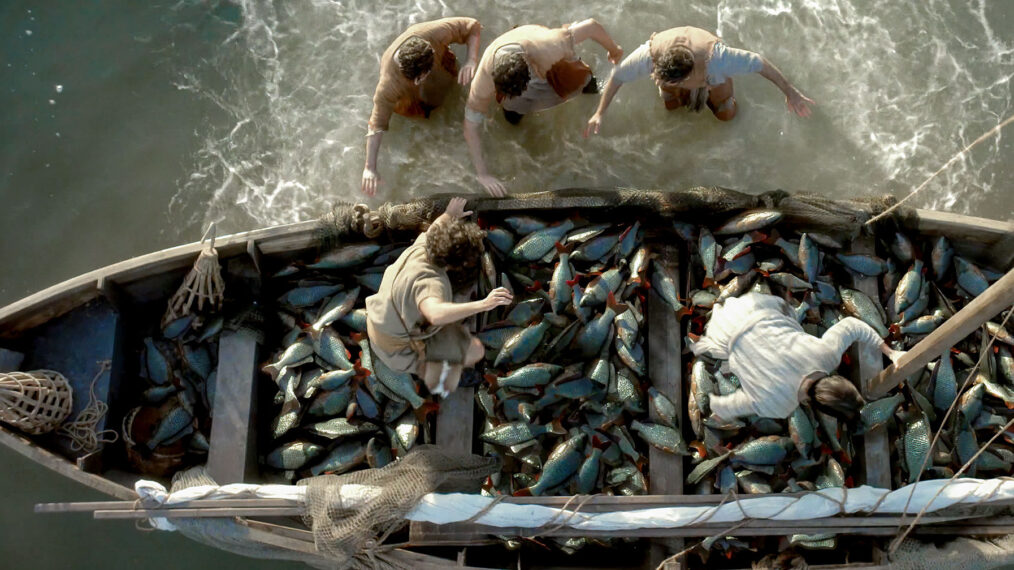
We rowed out some distance and threw out our nets. I expected nothing. Suddenly, without warning, the nets began to fill with fish–big, beautiful fish! We scooped out as fast as we could, and our boat began to sink. There were so many and they kept coming. I shouted out to the other boat. We needed help.

Soon both of our boats had taken all they could possibly handle.

I was completely overwhelmed, and I turned around to see Jesus in a new light. He was more than a powerful man–He was the Lord and the Messiah! I instantly knew and believed. It was then I collapsed at His feet. I spoke that which was in my heart.

“Depart from me, for I am a sinful man, O Lord.”

Life was about to change for Peter. Radically. I believe that it was at this point that his discipleship began. As he knelt there on the slimy fish he was told that he was going to become a “fisher of men.” That moment of brokenness would become a moment of real strength for him. I suppose that this is how it works.

Peter would commit a multitude of sins–he fell woefully short on several different occasions, and yet Jesus would forgive him over and over. At the end Peter would end up denying the Lord three times, and yet he repented.

Peter is an example of God’s grace and mercy.

“God uses broken things. It takes broken soil to produce a crop, broken clouds to give rain, broken grain to give bread, broken bread to give strength. It is the broken alabaster box that gives forth perfume. It is Peter, weeping bitterly, who returns to greater power than ever.“

     Vance Havner

alaskabibleteacher.com

Deer Feet for the Believer

“He made my feet like the feet of a deer
    and set me secure on the heights.
35 He trains my hands for war,
    so that my arms can bend a bow of bronze.”

2 Samuel 22:34-35

David’s Song of Deliverance

This entire psalm was written after David was delivered from the hand of Saul. David had been a fugitive for years and had experienced extreme difficulties. He had been pushed to the brink many times, yet maintained a close walk with God.

This verse in 2 Samuel has always blessed me. The image of a deer who has been put on a mountaintop through the direct action of the Lord–it’s a place of safety, a position of victory. It comes as a decisive maneuver of the Holy Spirit.

Psalm 18:33

David had learned things in the wilderness that he would never have otherwise. At times life got pretty extreme for him. When he struggled it was understandable. He followed the path that God laid out. It wasn’t easy for David, but he walked in faith and not by sight.

Danger surrounded David on every side – physically, spiritually, emotionally, socially. It would come from enemies, and even from his dearest friends.

God’s people are not immune from trials. It’s good to know that these are now orchestrated by our Father, and they’re purposeful and planned.

The prophet Isaiah extends the imagery of a deer in his prophetic ministry, but adds other ideas as well. The lame, mute and the desperately thirsty are descriptive of people who are given a special grace and touch. They’re promised something. They receive the promise of the Lord Jesus Christ.

“Then shall the lame man leap like a deer,
    and the tongue of the mute sing for joy.
For waters break forth in the wilderness,
    and streams in the desert;”

Isaiah 35:6

“David thought of how deer seem to skip from place to place and never lose their footing. God gave him the same kind of skill in working through the challenges brought by his enemies.”

David Guzak

alaskabibleteacher.com

Please Let the Children Come

Luke 18:15-17, ESV

We were wrong. I suppose we were trying to maximize Jesus’ ministry. We were there to give Him some much ‘needed’ organization. We simply felt that Jesus’ time was our concern, and we as His disciples wanted Him to connect with those who really mattered. We kept people out and let others in.

But the parents were bringing their children to be blessed by Jesus.

“It was the custom for mothers to bring their children to some distinguished Rabbi on the first birthday that he might bless them.”

William Barclay

We had far more important stuff that needed to be done.

Jesus’ ministry was for adults. There were lepers, demon-possessed, paralyzed, tax-collectors all waiting for His ministry. Somehow we overlooked the needs of little children. Again, we were wrong, misguided, and ignorant of the walk of the true believer.

Jesus made it clear that these children needed to be the focus of our ministry. Our efforts were not to be centered on adults, rather it was misguided thinking on our part to let this happen. We wanted to focus on Jesus’ ministry on those we thought were important.

These little ones kept getting in the way.

And sure enough, Jesus explained to us what we were missing. Children were to become our focus. They were the ones who we were to emulate and esteem. The radical thing to us was understanding that these ‘little ones’ were that significant. This was a powerful jolt, and not at all what we expected.

“Let these children alone. Don’t get between them and me. These children are the kingdom’s pride and joy. Mark this: Unless you accept God’s kingdom in the simplicity of a child, you’ll never get in.”

Luke 18:16-17, The Message

This rocked our world! It was nothing less than another strange thought from our Teacher. Accepting this wasn’t easy, but Jesus was crystal clear. We dare not think otherwise, and yet it was against all we thought we understood.

Jesus understood that childlikeness was the only way we could enter His Kingdom.

Up to now, we assumed that maturity meant something like sophistication. It was all about right thinking and good theology. That was what God was looking for. We assumed that being simple wasn’t quite what Jesus wanted from us. Rather we believed the opposite.

Children were now to be our examples. Their simpleness was to be our guide–it was the Kingdom of God’s doorway into true discipleship.

Who would have guessed?

Beth Moore

alaskabibleteacher.com

Living as His Brother

Jesus Papyrus, jerusalemperspective.com

Matthew 12:49-50, (context, vv. 46-50)

His family is spiritual. Earthly connections aren’t what really matters, Jesus expresses an important understanding of the Kingdom of God. Things are not evaluated by physical relationships anymore. Life is different now.

I don’t think Jesus has gone out of His way to alienate His earthly or physical connections to His family. I don’t think He is being rude or uncaring. That isn’t part of His thinking. And yet He does seem to point to something that’s more permanent and everlasting.

It isn’t enough to be His brother, or cousin or uncle. These things really don’t matter. What does matter is being part of His spiritual family. To be painfully honest, it seems to me anyway, that the spiritual relationship is what truly counts. Being Jesus’ disciple, and doing the Father’s will for us transforms us and lifts us up to family ‘status.’

But it doesn’t strictly matter “how” you relate to Jesus so much, but how you do the will of God. That is what impresses Jesus. That’s what He communicates to those who are standing around Him. Do you really understand what is family? Can you grasp the idea that doing the will of God now makes you authentic?

We must reach out and grab this concept–we are family if we do the will of God, believe in His sacrificial work and immerse ourselves into His purposes. We become His family, spiritually anyway, when we start to do what He wants for us. Am I doing what He wants for me at this moment, or the next, or the next?

Are we really part of His family, or is someone else our father?

“The purpose of the Bible is simply to proclaim God’s plan to save His children. It asserts that man is lost and needs to be saved. And it communicates the message that Jesus is the God in the flesh sent to save His children.”

– Max Lucado

Deepen Your Repentance

Two Psalms followed David’s return to God after his sin with Bathsheba, and murdering Uriah. The sins of adultery and murder are terrible and yet David finds forgiveness from God for both. He responds properly to Nathan’s hard word. King David was a warrior of renown and a talented Psalm writer and he put together two Psalms that would guide others.

Many years ago I used an overhead projector in a class. I had two transparencies, the first projected a map on a screen showing boundaries–the second laid over the top showed the movements of an invading army. They complimented each other to show a point. One laid on top of the other to make it clear what happened. (I realized I just dated myself–I’m old.)

You might say that’s how I want to teach Psalm 51 and Psalm 32. Both are David’s serious remarks on his repentance. They’re the same incident, but incredibly different. They both explain his repentance in contrasting ways.

You see that one is a psalm; the other is a maskil.

A psalm is a guide for worship, something musical sung from the knees—an acclamation of a joyful song. The other type is different; it’s called a maskil, which is something wise and reflective, thoughtful and understanding. To write a maskil takes time to pull one’s thoughts together and share seasoned instruction.

I’ve chosen v.v. 1-2 (both due to obvious constraints of brevity.)

Psalm 51

__________

Psalm 32

Reading the two Psalms together like this, laid on top of each other, or, like two sides of a coin, gives us an idea of David’s repentance–an clear understanding and a real depth. How did he respond to God’s message from the prophet? How can we answer others when the Holy Spirit convicts us of sin?

Both a “subjective” psalm, and an “objective” maskil is necessary I think. They both are to become the daily practice of a believer, both communicate what is needful. One sings–the other teaches, but both should be done carefully.

Perhaps another way is to see the art and the science of it all. But a caveat here. Psalm 32 blends with the autobiographical theme just like Psalm 53 does. (See 32:2-5). It even seems the objective takes on a tear or two! I guess that’s how truth in God’s kingdom works?

Our theology needs tears, and our tears need theology.

(I hope this isn’t confusing.)

I want to encourage you to take your repentance even deeper. I want to see you stir up this beautiful gift. I will want to hear your song, and then to understand your reasons for singing so beautifully.

“The Christian who has stopped repenting has stopped growing.”

    A.W. Pink

alaskabibleteacher.com

Jonah Measures God’s Love

The Prodigal Prophet

(“The LORD is gracious and merciful, slow to anger and abounding in steadfast love.”)

Psalm 145:8

This understanding of God’s character is used 13x in the Old Testament. It was first discerned by Moses, and was passed on to other men. It was stamped into the hearts of those who followed him. It was a description of who God was, and it became the strong foundation of their ministry.

Jonah understood who God really was.

And that was the reason Jonah refused to give the Ninevites a break. He didn’t want them to repent. He wanted no part of their salvation, which is rather disturbing. How can a prophet act this way? What was it that angered Jonah that he would resist God?

The book of Jonah contains question marks, especially chapter 4. Of the 14 questions that are asked, 11 are directed at Jonah.

When we read it we can focus on the secondary ideas. We see Jonah and the whale. Maybe we think about his disobedience. Or maybe the storm or the plant that helped Jonah endure the heat of the sun. These are all good things to consider, but they are not the main theme.

God’s heart for even the Ninevites is the main purpose of the book of Jonah.

God is not the exclusive ‘property’ of the Hebrew nation! He very much cares for others outside of our own group. In John 3:16 we’re made aware of His passion for the whole earth.

The Great Commission has always been in effect. In the OT Israel was called to be a light to the Gentiles, Acts 13:46-48. The covenant given to Abraham was that Israel would be a blessing to every nation. This was God’s plan and His intention. (Genesis 17:1-8.)

Jonah’s anger and apparent prejudice is definitely a cause for concern.

But could the message of Jonah describe the reluctance of the Church today? Is God’s love for everyone? Does God even care?

alaskabibleteacher.com

Praying Authentically

front-prayer

Prayer can often be just a nice religious duty, that makes us feel warm and fuzzy. But such prayer does not suit a disciple who is tired of religion and is seeking authenticity. There are few models who can be our guides.

That is one of the reasons why we need elders in our fellowships; they have been through so much, they can anchor us to all that is real. As elders, they probably had lessons in prayer.

We often will theologically play on the periphery, and cleverly deceive others and ourselves.  My own heart gets pretty creative as I display self-righteousness. (I should win an Academy Award as ‘best actor.’) But Jesus insists on us becoming real. You might say that really is the prayer that touches his heart.

When you talk with Jesus, do you truly talk to Him?

Do you have a real awareness that you are really talking with Him?

Is it the real you that fellowships with the ‘real’ God?

The following is an excerpt from A Diary of Private Prayer, by the Scottish theologian, John Baillie, 1886-1960:

Eternal Father of my soul, let my first thought today be of You, let my first impulse be to worship You, let my first speech be Your name, let my first action be to kneel before You in prayer.

For Your perfect wisdom and perfect goodness:

For the love with which You love mankind:

For the love with which You love me:

For the great and mysterious opportunity of my life:

For the indwelling of your Spirit in my heart:

For the sevenfold gifts of your Spirit:

I praise and worship You, O Lord.

Yet let me not, when this morning prayer is said, think my worship ended and spend the day in forgetfulness of You. Rather from these moments of quietness let light go forth, and joy, and power, that will remain with me through all the hours of the day;

Keeping me chaste in thought:

Keeping me temperate and truthful in speech:

Keeping me faithful and diligent in my work:

Keeping me humble in my estimation of myself:

Keeping me honorable and generous in my dealings with others:

Keeping me loyal to every hallowed memory of the past:

Keeping me mindful of my eternal destiny as a child of Yours.

Through Jesus Christ my Lord, Amen.

(Taken from Richard Foster’s Devotional Classics, pp. 126-127.)

“Praying Authentically,” alaskabibleteacher.com, Bryan Lowe

Our Work is Our Worship, “Avad”

It’s interesting–the Hebrew word for worship is also used for work. I think that is pretty significant. Seeing and understanding this is a life-altering experience. It completely changes the way we look at discipleship. Worship and work/serve go together, and God sees them as one and the same.

To work [avad] as a “farmer”and serve as a worshiper [avad] overlap.

  • “The LORD God took the man and put him in the garden of Eden to work it [avad] and keep it.”
  • “Serve [Avad] the Lord with gladness! Come into his presence with singing!”

Genesis 2:15 and Psalm 100:2

Notice that both work and worship use the same Hebrew word.

  • “Six days you shall labor, and do all your work, [avad].”
  • “When peoples gather together, and kingdoms, to worship [avad] the Lord.”

And wow! There are dozens of verses that link our work with our worship. The implications are profound–we’re to see our Sunday worship and our jobs as one and the same. Typically we don’t see it that way. Our Monday through Friday are in a separate category than what we do on Sunday.

Our work and our worship overlap. God intends it that way, and we grow in obedience if we also accept the fact that they’re not separate. Our occupation, whether we’re flipping burgers or being a brain surgeon, is to be an act of worship.

One small Hebrew word can mean so much.

Our whole paradigm shifts when we understand that our worship is far more than 20 minutes on a Sunday morning. It’s to extend to all we do throughout our week. Our Monday job is just as significant to God as our shared time with our brothers on Sunday.

This understanding gets used in the New Testament as we see our work and worship are connected.

“Whatever you do, work heartily, as for the Lord and not for men, 24 knowing that from the Lord you will receive the inheritance as your reward. You are serving the Lord Christ.”

Colossians 3: 23-24

“Not by the way of eye-service, as people-pleasers, but as bondservants of Christ, doing the will of God from the heart, 7 rendering service with a good will as to the Lord and not to man.”

Ephesian 6:6-7

Lois Tverberg, En-Gedi Resources

alaskabibleteacher.com

Peter the Great

The apostle Peter was well acquainted with failure. He understood blowing it big time. I’ve identified at least 11 times when he did the wrong thing; He stumbled repeatedly, but that encourages me.

(I’m really glad he struggled.)

I suppose that we must acknowledge that Jesus saw something in Peter–a definite future of a ministry that would be critical in the lives of the other disciples, but it wasn’t going to be easy for Peter. Jesus was alert and He prayed specifically for His bumbling disciple.

“…but I have prayed for you that your faith may not fail. And when you have turned again, strengthen your brothers.”

Luke 22:32, ESV

Here’s my list of Peter’s greatest flops:

  • Peter can’t figure out the Parable of the Sower, so he asks Jesus for further explanation. We too don’t understand all the things Jesus taught, we get confused. Peter’s example is a strength for us. Jesus doesn’t reject our ignorance. (Matthew 15:15-16.)
  • Peter and the others try to keep the children away from Jesus. (Mark 10:13-14.)
  • Peter is full of selfish ambition and argues with the other disciples as they walk with Jesus. (Mark 9:33-34; Luke 22:24.)
  • Peter tried to follow Jesus by walking on the water. He failed and sank; Jesus took him by the hand and gave him a gentle rebuke. (Matthew 14:28-33.)
  • On the Mountain of the Transfiguration Peter witnessed an incredible event when Jesus was seen in all His glory. Peter blew it by not understanding what had just happened. (Mark 9:2-8.)
  • Peter actually is strongly rebuked by Jesus and called, “Satan.” (Matthew 16:23.)
  • Peter resists Jesus when He is washing the disciple’s feet. (John 13:5-9.)
  • Peter fails to listen to Jesus in the garden of Gethsemane and falls asleep. He was told to watch and pray. Peter failed, and fell asleep. (Matthew 26:36-46.)
  • Peter, with “oaths” and “curses” denies knowing Jesus in the courtyard of the High Priest. (Matthew 26:69-75.) See also, Matt. 10:33.
  • Peter is broken over his denial of Jesus. It seems that he’s a complete failure as a disciple and returns to his boat and goes fishing. The other disciples follow him.(John 21:1-3.) We also see Jesus restoring Peter to Himself. (John 21:15-19.)
  • Peter is intimidated by the Jews, and withdraws from fellowshipping with the Gentile believers. He is soundly rebuked by Paul “to his face.” (Gal. 2:11-14.)

It seems that none of these are spiritually fatal, but perhaps they could be. In every case listed we can see the tenderness and goodness of the Lord Jesus who forgave and restored Peter. He loves His disciple much more than Peter realizes.

At times our walk is also somewhat discouraging.

We sin, and we fail in so many ways. It seems overwhelming at times. The Holy Spirit calls us to pray and sing, but if we’re honest we often can’t do these things. Our failures seem to disqualify us to be disciples. A kind of “spiritual depression” falls over us. We seem to believe that God is angry with us. We think He condemns us.

 “I give them eternal life, and they will never perish, and no one will snatch them out of my hand.”

John 10:28

But God’s love for you is total and everlasting.

On that day you accepted Him as your Savior a covenant was made. He’s committed to bring you through life and to Himself. Forever. Jesus is completely faithful and He loves you deeply and most unreasonably. We call this “grace.”

  1. God has initiated your salvation. He launched it and He is in charge of it.
  2. God works over and over in your life to make you like His Son.
  3. When you die and stand before Him that process will be finished completely.

“And I am sure of this, that he who began a good work in you will bring it to completion at the day of Jesus Christ.”

Philippians 1:6

alaskabibleteacher.com