“The Lord confides in those who fear him; he makes his covenant known to them.”
Psalm 25:14
“The secret things belong to the Lord our God, but the things that are revealed belong to us and to our children forever, that we may do all the words of this law.”
Deut. 29:29
What I need to share with you is privileged information, profoundly insightful yet delicate in nature. Not every believer will understand or resonate with the depths of this revelation. Some will readily agree with the truths I will unveil, finding comfort and clarity in them, while others might struggle to grasp the significance of the message. This is a secret but not secretive; it is an invitation to explore a deeper relationship with the divine. Every Christian can enter into this profound understanding if they choose to open their hearts and minds. Some will accept this call willingly, embracing the journey of discovery, and some won’t, perhaps choosing to remain within their comfort zones, unaware of the profound impact this knowledge could have on their spiritual walk. Yet, for those who are willing to seek, an incredible path of enlightenment and connection awaits them.
“Then Jesus strictly warned them not to tell anyone about Him.” Mark 8:30
“Call to me and I will answer you, and will tell you great and hidden things that you have not known.” Jeremiah 33:3
Learning His secrets–
Intimacy with God: Seeking Him personally, not just intellectually.
Fear & Awe: Having reverence and respect for God (Psalm 25:14).
Dependence on the Spirit: Relying on the Holy Spirit for understanding, as humans cannot know these things on their own (1 Corinthians 2:10-12).
Faith & Surrender: Trusting God’s revealed truths and surrendering to His will, even when answers are withheld.
To understand His special things is not automatic. I encourage you to come and sit, read and pray. And listen. It will come to you by grace through His blood.
“Some Christians are called to endure a disproportionate amount of suffering. Such Christians are a spectacle of grace to the church, like flaming bushes unconsumed, and cause us to ask, like Moses: ‘Why is this bush not burned up?’” (Exodus 3:2-3)
“The strength and stability of these believers can be explained only by the miracle of God’s sustaining grace. The God who sustains Christians in unceasing pain is the same God — with the same grace — who sustains me in my smaller sufferings. We marvel at God’s persevering grace and grow in our confidence in Him as He governs our lives.”
— John Newton, author of “Amazing Grace
We all know a brother or sister who seems to be a target of an undue amount of suffering. It looks like they’re always in the furnace. All we can do really is to shake our heads and then give them double honor for their faith in God’s grace and providence.
Ministering to these sufferers can be a challenge.
What can we say to those who seem to be on “God’s anvil?” How can we bless those who are in pain?
Perhaps a simple word of calm encouragement is the most effective. In the midst of some awful difficulties, I once had a dear brother who gently and carefully quoted Philippians 1:6 to me over and over, whenever we met and whenever we parted:
“And I am certain that God, who began the good work within you, will continue his work until it is finally finished on the day when Christ Jesus returns.”
Philippians 1:6
It was a precious thing that he did. I didn’t mind it all, as a matter of fact, I grew to like it. At first, I’ll admit it was strange, but my faith began to ‘mix’ with the Word and I began to believe it. It’s now my favorite verse in the Bible.
Fred refused to preach to me.
He had the maturity to see what God was doing and to make himself available to God on my behalf. Perhaps that patience he showed should be for us the method of choice? I look forward to seeing him someday, someway.
“We can rejoice, too, when we run into problems and trials, for we know that they help us develop endurance.”
Romans 5:3
A keyword in this verse is “rejoice.”
It’s a good reminder that the pain we feel is not the end. These trials have a limited duration (although it seems far away). There’s a day when we can navigate through these issues and come out on the other side. “We will shine like the stars” (Daniel 12:3).
Much wisdom is needed in our ministry to disproportionate sufferers. We should have a fear of intruding on the work the Lord is doing. We must be patient and humble in this matter. There is no rushing God, after all, it’s His work. Most importantly we must be very much ‘present’ for our friend.
“But not only that! We even take pride in our problems, because we know that trouble produces endurance”
Romans 5:3
A “word” spoken out of place can cause even more heartache for the sufferer. Let’s be careful. At times it’s better not to say anything, and that’s alright. Job’s friends were best sitting in the ash heap, saying no word.
“The Lord God gives me the right words to encourage the weary. Each morning he awakens me eager to learn his teaching.”
Isaiah 50:4, CEB
Trust Jesus to show you how to love, and serve those who seem to struggle so very much. Ask the Father to give you the right words–He will if you only ask.
“Who among us shall dwell with the devouring fire? Who among us shall dwell with everlasting burnings?”
Isaiah 33:14
Perhaps we can become too casual in our intimacy with God? Becoming close is obviously needed, but it must be done with certain precautions. (Bear with me as I try to explain.)
He asks for us to see Him with an awareness of His holiness. It’s important to Him, and it is vital for us. We must honor Him as the One who is supremely holy. But seeing that we can walk with God in a new way.
“For our God is a consuming fire.”
Hebrews 12:29, ESV
The closer we come, the more significant our response. I believe the Holy Spirit carefully monitors us to see what we will do after we confront the reality of Him. He insists that we should honor Him as ‘holy.’ He passionately desires and requests that we do what is appropriate and honorable as we meet Him.
Giving Jesus honor is critical to all we say or do.
It should be the first thought of every man or woman who presses in to know Him. Honoring Him as holy is not regarded as an option to be debated or brought out for consideration. It is essential to follow Him faithfully.
He is like a tiger whom we have grabbed by the tail, we have but a few options. One is to release our hold and face the consequences. The second is too hold on to Him with all our strength. He loves those who make the second choice. Grab hold of the Lord Jesus, and hang on for dear life!
He is dangerous, but in a good way. Intimacy is important, but so is having a healthy fear of Him.
We should anticipate Him coming and disrupting our Sunday services. Perhaps we need our ushers to hand-out ropes and life-jackets before the service starts? We should expect Him to explode in our congregations in a whirlwind of holy love. He wants us to anticipate His presence.
In Isaiah 33:14 there is something that is needful and mandatory for us to understand about our Father. Often we’ll discover that entering and abiding in His presence requires us to honor His holiness. When we do so, we find we will trigger a response from the Lord, which will it turn be a true blessing to our own souls.
“The moment you come to realize that only a holy God can make a man godly, you are left with no option but to find God, and to know God, and to let God be God in and through you.”
“A rule I have had for years is: to treat the Lord Jesus Christ as a personal friend. His is not a creed, a mere doctrine, but it is He Himself we have.”
~D.L. Moody
Friendship with God can be a liberating secret for the believer. It releases us from the terrible bondage of religion and ritual with all its negative connotations. Intimacy with our Lord will carry us beyond creed or doctrine to the place of true communion..
Abraham. Moses. David. The disciples. Paul. Each experienced a relationship with God. This friendship developed over time. I suppose it’s not unlike any other friendship. Being with each other–a special holy familiarity grows.
“I no longer call you slaves, because a master doesn’t confide in his slaves. Now you are my friends since I have told you everything the Father told me.”
John 15:15, NLT
Friendship with Jesus will bring true guidance. He shares secrets and wisdom with his friends. We are brought into a true knowledge of the Kingdom through the relationship of friendship with the King. We are not slaves– or drones, slavishly serving out of slavish fear.
We are now His friends!
Jesus’ kingdom is packed full of great mysteries! He is looking to bring us into the authenticity of constant communion. Only through intimacy with Jesus can we truly handle what He wants to teach us. (See Psalm 25:14; John 15:15.)
Here are 8 ways you can grow your friendship with God. (I found this list somewhere.)
Make time to draw close to Him. …
Revere Him. …
Rejoice at His counsel and trust His corrections. …
Obey what’s on His heart. …
Celebrate what He is doing in you, and in others. …
Have a pure heart and speak with grace. …
Love Him unwaveringly, intimately, and sacrificially.
Friendship with Jesus comes with a price. It means we are now tethered to the Lord. That can get old, especially when I want to do my own thing. I will continually have to lay something down and choose to accept being tethered and follow Him.
But my soul now has a best friend. Or just maybe, Jesus has been my friend all along, and I just didn’t know it.
“A rule I have had for years is: to treat the Lord Jesus Christ as a personal friend. His is not a creed, a mere doctrine, but it is He Himself we have.”
~D.L. Moody
Friendship with God can be quite liberating for the believer. It releases us from the terrible bondage of religion and ritual with all its negative connotations. Intimacy with our Lord will carry us beyond creed or doctrine to the place of true communion. We fellowship with Him directly in person.
It’s not that the Law is bad, but in the intense light of God’s love, it’s a poor substitute for real discipleship. We often put an undue value on rules and religious effort, but that misses out on grace completely. Doctrine is a good servant, but it’s a poor master.
God’s grace always trumps our legalism. Love truly surpasses rules, without breaking them.
As good evangelicals, we can talk big about “a personal relationship.” That is indeed crucial. But few are the believers that walk in a daily friendship with their Savior, and that is truly a tragedy.
As a teacher of God’s Word, I mourn over my students when they miss out on what is real and true. I’m afraid for them. They haven’t come to the place of being a friend of Jesus.
“No longer do I call you servants, for the servant does not know what his master is doing; but I have called you friends.”
John 15:15, ESV
Friendship with Jesus will bring true guidance. He shares secrets and wisdom with his friends. We are brought into a true knowledge of the Kingdom through companionship with the King. We are not slaves– or drones, slavishly serving out of fear. We are His confidantes.
We’re His friends!
Jesus wants to confide in us; sharing wisdom and truth hidden by time and sin. And his kingdom is chock full of great mysteries! He is looking to bring us into the willingness of daily communion. I believe its only through intimacy with Jesus can we handle what He wants to teach us. (see Psalm 25:14; John 15:15.) We will simply short-circuit if we’re not intimate with Him.
He will heal our wounds, and forgive all our sins. He is truly our Savior as well as our friend.
But that friendship comes with a price. It means we are now tethered to the Lord. That can get old, especially when I want to do my own thing. It seems I will continually have to lay something down and choose to accept being bonded with Him, and to always follow.
But my soul now has a best friend. Or just maybe, Jesus has been my friend all along, and I just didn’t know it.
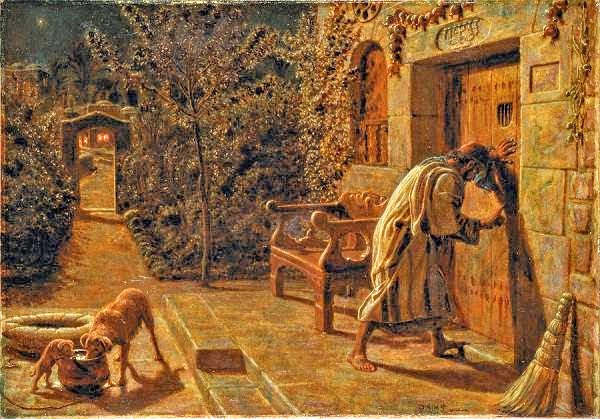
“And He said to them, “Which of you shall have a friend, and go to him at midnight and say to him, ‘Friend, lend me three loaves; for a friend of mine has come to me on his journey, and I have nothing to set before him’; and he will answer from within and say, ‘Do not trouble me; the door is now shut, and my children are with me in bed; I cannot rise and give to you’?
I say to you, though he will not rise and give to him because he is his friend, yet because of his persistence he will rise and give him as many as he needs.”
Luke 11:5-8
This parable is known by some as “the Importunate Neighbor.” That’s an excellent description. Importunate is defined as being persistent, especially to the point of annoyance or intrusion. It’s tenacious and stubborn–not giving up even when being ignored, and that describes what’s happening here.
What immediately proceeds this parable is Luke’s version of the Lord’s prayer, which the disciples requested. They wanted to understand the methods and mechanics of praying–perhaps the Pharisee’s prayers weren’t quite up to snuff–they wanted more; and they insisted that Jesus instruct them.
The disciples wanted to do prayer right.
A typical Jewish home had sleeping quarters (one room!) located on a raised platform. A ladder was used to access that level (which could be crowded, sometimes two to a bed.) Often their livestock were brought inside. And when it was time to get up, everyone got up. That explains the homeowner’s reluctance to give bread to his neighbor. To get up, light a lamp, wasn’t a solitary affair.
He’s obviously unenthusiastic to make that effort.
The word used here to explain the neighbor actions is ἀναίδεια “anaídeia,” which is only used once–it’s translated as impudence, shamelessness, audacity or chutzpah. It’s a Greek word that explains the knocker’s rudeness. He won’t stop. He knocks and pounds until he gets his bread. Not having bread for his guests is unheard of, for it violates all kinds of convention.
The unwritten law of Jewish hospitality demanded action.
This is part of Jesus’ view on prayer. It means we must be inappropriate sometimes–even to the point were we are being rude.
Immediately following this parable (the very next thought) are the following instructions:
“So I say to you, ask, and it will be given to you. Seek, and you will find. Knock, and the door will be opened to you. 10 For everyone who asks receives, and the one who seeks finds, and to the one who knocks, the door will be opened.”
Luke 11:9-10
Perhaps it’s this intensity that’s lacking.
We “pray” but don’t insist. We desire but don’t demand. Maybe it takes a certain shamelessness to make prayer work. Jesus emphasizes a necessary attitude to praying God’s way. It’s never automatic, but in this parable we see words that move the Father’s heart, and loosen his hand. In Jesus’ teaching, prayer means effort.
It means spiritual work. He wants us to know this. It is important.
“There is neither encouragement nor room in Bible religion for feeble desires, listless efforts, lazy attitudes; all must be strenuous, urgent, ardent. Flamed desires, impassioned, unwearied insistence delight heaven. God would have His children incorrigibly in earnest and persistently bold in their efforts. Our whole being must be in our praying.”
“Jesus said to them again, “Peace be with you. As the Father has sent me, I also send you.”22 After saying this, he breathed on them and said, “Receive the Holy Spirit. 23 If you forgive the sins of any, they are forgiven them; if you retain the sins of any, they are retained.”
John 20:21-23 (19-23)
This is the second “peace be with you” in this passage. So why the duplication of this peace proclamation? The disciples are sequestered and scared in the upper room (v. 19; and Luke 24:36. Having peace is being emphasized–the disciples were afraid of the Pharisees, but they were also undone by Jesus’ surprise visit.
Peace was definitely a precious commodity for them.
Jesus gives his disciples a mission to do, and they must be as ‘familiar’ with Jesus just as Jesus is with God. The disciples had followed him for three years–seeing incredible miracles, and hearing profound teaching, they’re ready, they just need power.
In track and field, there’s a relay race where a baton is passed from runner to runner, and maybe that’s how it’s working here? We see the same idea in John 17:18.
The baton has now been passed to the disciples.
The breath of the risen Jesus is necessary (and yes, he’s breathing.) What went down here, I don’t know exactly. But Jesus recognizes that his 12 followers will need this to do his work. Also, we might consider Adam in Genesis 2:7 where God’s breath brought him to life, which is pretty awesome when you think of the parallels.
The disciples were pretty much observers, but now they are to take up the ‘mantle’ of Jesus’ work. This is a definite duplication, which connects with the idea of one seed producing many others (John 12:24.) That’s how the Kingdom will come to people.
Verse 23 intrigues me. It seems that our life comes from the breath of Jesus. And it’s the Holy Spirit that gives both power and the authority that’s needed to function like Jesus. We now have the ability to pronounce forgiveness to the new believer, and yet that doesn’t seem a function of the Church today.
I wonder why this is so?
This entire passage is a real humdinger for Bible students. But it clearly declares the Churches new role as we follow in his footsteps. Disciples are to do exactly what Jesus does–with his breath and authority–filled with the Holy Spirit. We have a mission.
If we neglect these things we’re going to fall flat on our face.
“The work of Jesus for His disciples on resurrection Sunday gives an ongoing pattern for His work among His people. Jesus wants to continue this fourfold ministry of assurance, mission, the Holy Spirit and authority to His people today.”
Today I’m thinking about the rich young ruler in Matthew 19:16-26. The passage is tragic and disturbing. These verses detail an encounter with Jesus by a man who couldn’t give up his wealth. He could not become a disciple.
“When the young man heard this he went away sorrowful, for he had great possessions.”
I would like to suggest something.
Perhaps riches aren’t the real point? Yes, I definitely believe that having wealth is inherently dangerous to wannabe disciples; it’s what this passage is all about. And it’s obvious that this man couldn’t give up his money to follow Jesus. But what if the issue for us isn’t about personal wealth; what if it’s envy, lust, selfishness or pride?
Sinful behavior of any kind effectively blocks the call and purpose of our lives.
No matter what it is. No matter what sin that stands in the way of true discipleship. Yes, it could be wealth. But it may be 1000 other sins (take your pick, there’s plenty). Hebrews 12 tells us that there is “the sin that so easily ensnares us.” Perhaps there is that one particular sin is one that traps us, over and over?
Jesus puts His hand on our lives, He calls us to love Him supremely. I like to think that loving Jesus is our energy source–He’s the nuclear core of our discipleship. His presence gives us the power to live and love. A sustained first love for Jesus propels us into the true reason of a disciple’s existence.
Perhaps it’s a daily surrender? Sin must be renounced every day. Jesus must always be the disciple’s first choice.
My most cherished sin would destroy me if it wasn’t for His grace and kindness.
Wealth, of course was this rich, young ruler’s sin. But don’t forget that there are many issues we could add. Lots of different sins that are getting in the way of being an actual follower. It’s a choice, and God’s power is always ready for you.
So who or what do we love most?
“Whoever loves father or mother more than me is not worthy of me, and whoever loves son or daughter more than me is not worthy of me.”
On a dirt road in the middle of a wide field stood a beautiful carriage, something on the order of a stagecoach but all edged in gold and with beautiful carvings. It was pulled by six large chestnut horses: two in the lead, two in the middle and two in the rear. But they were not moving, they were not pulling the carriage, and I wondered why. Then I saw the driver underneath the carriage on the ground on his back just behind the last two horses’ heels working on something between the front wheels on the carriage. I thought, “My, he is in a dangerous place; for if one of those horses kicked or stepped back, they could kill him, or if they decided to go forward, or got frightened somehow, they would pull the carriage right over him.”
But he didn’t seem afraid for he knew that those horses were disciplined and would not move till he told them to move. The horses were not stamping their feet nor acting restless, and though there were bells on their feet, the bells were not tinkling. There were pom-poms on their harness over their heads but the pom-poms were not moving. They were simply standing still and quiet waiting for the voice of the Master.
THERE WERE TWO YOUNG COLTS IN THE FIELD
As I watched the harnessed horses I noticed two young colts coming out of the open field and they approached the carriage and seemed to say to the horses: “Come and play with us, we have many fine games, we will race with you, come catch us.” And with that the colts kicked up their heels flicked their tails and raced across the open field. But when they looked back and saw the horses were not following they were puzzled. They knew nothing of the harnesses and could not understand why the horses did not want to play. So they called to them: “Why do you not race with us? Are you tired? Are you too weak? Do you not have strength to run? You are much too solemn, you need more joy in life.” But the horses answered not a word nor did they stamp their feet or toss their heads.
But they stood, quiet and still, waiting for the voice of the Master.
Again the colts called to them: “Why do you stand so in the hot sun? Come over here in the shade of this nice tree. See how green the grass is? You must be hungry, come and feed with us, it is so green and so good. You look thirsty, come drink of one of our many streams of cool clear water.” But the horses answered them not so much as a glance but stood still waiting for the command to go forward with the King.
COLTS IN THE MASTER’S CORRAL
And then the scene changed and I saw lariat nooses fall around the necks of the two colts and they were led off to the Master’s corral for training and discipline. How sad they were as the lovely green fields disappeared and they were put into the confinement of the corral with its brown dirt and high fence. The colts ran from fence to fence seeking freedom but found that they were confined to this place of training. And then the Trainer began to work on them with His whip and His bridle. What a death for those who had been all their lives accustomed to such a freedom!
They could not understand the reason for this torture, this terrible discipline. What crime had they done to deserve this? Little did they know of the responsibility that was to be theirs when they had submitted to the discipline, learned to perfectly obey the Master and finished their training. All they knew was that this processing was the most horrible thing they had ever known.
SUBMISSION AND REBELLION
One of the colts rebelled under the training and said, “This is not for me. I like my freedom, my green hills, my flowing streams of fresh water. I will not take any more of this confinement, this terrible training.” So he found a way out jumped the fence and ran happily back to the meadows of grass. I was astonished that the Master let him go and went not after him. But He devoted His attention to the remaining colt. This colt though he had the same opportunity to escape decided to submit his own will and learn the ways of the Master. The training got harder than ever but he was rapidly learning more and more how to obey the slightest wish of the Master and to respond to even the quietness of His voice. And I saw that had there been no training, no testing, there would have been neither submission nor rebellion from either of the colts. For in the field they did not have the choice to rebel or submit, they were sinless in their innocence. But when brought to the place of testing and training and discipline, then was made manifest the obedience of one and the rebellion of the other. And though it seemed safer not to come to the place of discipline because of the risk of being found rebellious, yet I saw that without this there could be no sharing of His glory, no Sonship.
INTO THE HARNESS
Finally this period of training was over. Was he now rewarded with his freedom and sent back to the fields? Oh no. But a greater confinement than ever now took place as a harness dropped about his shoulders. Now he found there was not even the freedom to run about the small corral for in the harness he could only move where and when his Master spoke. And unless the Master spoke he stood still.
The scene changed and I saw the other colt standing on the side of a hill nibbling at some grass. Then across the fields, down the road came the King’s carriage drawn by six horses. With amazement he saw that in the lead, on the right side, was his brother colt now made strong and mature on the good corn in the Master’s stable. He saw the lovely pom-poms shaking in the wind, noticed the glittering gold bordered harness about his brother, heard the beautiful tinkling of the bells on his feet — and envy came into his heart. Thus he complained to himself: “Why has my brother been so honored, and I am neglected? They have not put bells on MY feet nor pom-poms on MY head. The Master has not given ME the wonderful responsibility of pulling His carriage, has not put about ME the gold harness. Why have they chosen my brother instead of me?” And by the Spirit the answer came back to me as I watched: “Because one submitted to the will and discipline of the Master and one rebelled, thus has one been chosen and the other set aside.”
A FAMINE IN THE LAND
Then I saw a great drought sweep across the countryside and the green grass became dead, dry, brown and brittle. The little streams of water dried up, stopped flowing, and there was only a small muddy puddle here and there. I saw the little colt (I was amazed that it never seemed to grow or mature) as he ran here and there across the fields looking for fresh streams and green pastures finding none. Still he ran, seemingly in circles, always looking for something to feed his famished spirit. But there was a famine in the land and the rich green pastures and flowing streams of yesterday were not to be had. And one day the colt stood on the hillside on weak and wobbly legs wondering where to go next to find food and how to get strength to go. It seemed like there was no use, for good food and flowing streams were a thing of the past and all the efforts to find more only taxed his waning strength.
Suddenly he saw the King’s carriage coming down the road pulled by six great horses. And he saw his brother, fat and strong, muscles rippling, sleek and beautiful with much grooming. His heart was amazed and perplexed, and he cried out: “My brother where do you find the food to keep you strong and fat in these days of famine? I have run everywhere in my freedom, searching for food, and I find none. Where do you in your awful confinement find food in this time of drought? Tell me, please, for I must know!” And then the answer came back from a voice filled with victory and praise: “In my Master’s House there is a secret place in the confining limitations of His stables where He feeds me by His own hand and His granaries never run empty and His well never runs dry.” And with this the Lord made me to know that in the day when people are weak and famished in their spirits in the time of spiritual famine that those who have lost their own wills and have come into the secret place of the most High into the utter confinement of His perfect will shall have plenty of the corn of Heaven and a never ending flow of fresh streams of revelation by His Spirit. Thus the vision ended.
INTERPRETATION OF THE VISION
“Write the vision, and make it plain upon tables, that he may run that readeth it,” (Habakkuk 2:2). “Harness the horses; and get up, ye horseman,” (Jeremiah 46:4). I am sure that many of you who can hear what the Spirit saith to the Church have already seen what God was showing in the vision. But let me make it plain. Being born into the Family of God feeding in the green pastures and drinking of the many streams of the unfolding revelation of His purposes is fine and wonderful. But it is not enough. While we were children, young and undisciplined, limited only by the outer fence of the Law that ran around the limits of the pastures (that kept us from getting into the dark pastures of poison weeds) He was content to watch us develop and grow into young manhood, spiritually speaking.
But the time came to those who fed in His pastures and drank at His streams, when they were to be brought into discipline or “child-training” for the purpose of making them mature Sons. Many of the children today cannot understand why some of those who have put on the harness of God cannot get excited by the many religious games and the playful antics of the immature. They wonder why the disciplined ones run not after every new revelation or feed on every opportunity to engage in seemingly “good and profitable” religious activities. They wonder why some will not race with them in their frantic efforts to build great works and great and notable ministries. They cannot understand the simple fact that this Company of saints is waiting for the voice of the Master and they do not hear God in all this outward activity.
They will move in their time when the Master speaks. But not before, though many temptations come from the playful colts. And the colts cannot understand why those who seemingly appear to have great abilities and strength are not putting it to good use. “Get the carriage on the road,” they say, but the disciplined ones, those in God’s harness, know better than to move before they hear the voice of the Master. They will move in their time with purpose and great responsibility.
And the Lord made me to know that there were many whom He had brought into training who had rebelled against the discipline, the chastising of the Father. They could not be trusted with the great responsibility of mature Sonship so He let them go back to their freedom, back to their religious activities and revelations and gifts. They are still His people, still feeding in His pastures, but He has set them aside from the great purposes for this end of the age. So they revel in their freedom feeling that they were the Chosen Ones with the many streams of living water not knowing that they have been set aside as unfit for His great work in this end of the age.
He showed me that though the chastising seemeth grievous for the time and the discipline hard to endure yet the result with all the glory of Sonship is worth it all and the glory to follow far exceeds the suffering we endure. And though some lose even their lives in this training yet they will share alike in the glory of His eternal purposes. So faint not saints of God for it is the Lord that doth bring thee into confinement and not thine enemy. It is for thy good and for His glory so endure all things with praises and thanksgiving that He hath counted thee worthy to share His glory!
Fear thou not the whip in His hand for it is not to punish thee but to correct and train thee that thou mightest come into submission to His will and be found in His likeness in that hour. Rejoice thou in thy trials in all thy tribulations and glory thou in His cross and in the confining limitations of His harness for He hath chosen thee and He hath taken upon Himself the responsibility of keeping thee strong and well fed. So lean thou upon Him and trust not in thine own ability and thine own understanding. So shalt thou be fed and His hand shall be upon thee and His glory shall overshadow thee and shall flow through thee as it goes forth to cover the earth. Glory to God! Bless the Lord! He’s wonderful! Let Him be Lord of your life, friends, and complain not at that which He bringeth to pass in your life.
Bill Britton served as Vice President of Pinecrest Bible Training Center for the first three years of its existence and was a great blessing in helping to establish the work at Pinecrest.
A comment–
I first connected with this message in 1984, by a man named, Bob Mumford. As a young Christian, the allegory “nailed” me. What did I want for my life? I had to make some decisions. I sincerely wanted to follow the Father through this process. And this hasn’t changed in almost 40 years.
For more of these and other messages: Bill Britton P.O. Box 707 Springfield, Missouri 65801-0707. This is a faith ministry, made possible by members of the Body of Christ. Not copyrighted, may be translated or reprinted without further permission. All messages are free as the Lord provides.
“A rule I have had for years is: to treat the Lord Jesus Christ as a personal friend. His is not a creed, a mere doctrine, but it is He Himself we have.”
~D.L. Moody
Friendship with God is a liberating secret for the believer. It releases us from the terrible bondage of religion and ritual with all its negative connotations. Intimacy with our Lord will carry us beyond creed or doctrine to the place of true communion.
It’s not that the Law is bad, but in the intense light of God’s grace, it’s really a very poor substitute. We value legalism, and that is precisely what we believe when we bypass the relationship. Doctrine is a good servant, but a poor master.
Grace always overcomes legalism. Love truly surpasses rules.
As good evangelicals, we talk big about a “personal relationship.” That is indeed crucial. But few be the believers that walk in a daily friendship with their Savior. That is truly a tragedy. We come oh so close, but we misunderstand the depth of the Gospel.
As a teacher of God’s Word, I mourn over my students when they miss out on what is real and true. I’m afraid for them. I’m also scared that I may just be adding to their confusion. The issue can be seen in Paul’s concern for the church in Corinth.
“I no longer call you slaves, because a master doesn’t confide in his slaves. Now you are my friends since I have told you everything the Father told me.”
John 15:15, NLT
Friendship with Jesus will bring true guidance. He shares secrets and wisdom with his friends. We are brought into a true knowledge of the Kingdom through the relationship of friendship with the King. We are not slaves– or drones, slavishly serving out of slavish fear.
We’re now His friends! (Imagine that.)
Jesus wants to confide in us; sharing wisdom and truth hidden by time and sin. And his kingdom is chock full of great mysteries! He is looking to bring us into a willingness of daily communion. Only through intimacy with Jesus can we handle what He wants to teach us. (see Psalm 25:14; John 15:15.)
He will heal our wounds, and forgive all our darkest sins. He is truly our Savior as well as our friend.
But friendship comes with a price. It means we are now tethered to the Lord. That can get old, especially when I want to do my own thing. I will continually have to lay something down and choose to accept being tethered and follow Him.
But my soul now has a best friend. Or just maybe, Jesus has been my friend all along, and I just didn’t know it.





















 Alaska Bible Teacher