Disproportionate Suffering

“Some Christians are called to endure a disproportionate amount of suffering. Such Christians are a spectacle of grace to the church, like flaming bushes unconsumed, and cause us to ask, like Moses:

‘Why is this bush not burned up?’

The strength and stability of these believers can be explained only by the miracle of God’s sustaining grace. The God who sustains Christians in unceasing pain is the same God — with the same grace — who sustains me in my smaller sufferings. We marvel at God’s persevering grace and grow in our confidence in Him as He governs our lives.”

— John Newton, author of “Amazing Grace”

+++

All of us know a brother or sister who seems to be a target of an undue amount of suffering. It seems like they’re always in the furnace. All we can do really is to shake our heads and then give them double honor for their faith in God’s grace and providence.

Ministering to these extreme sufferers can be a real challenge.

What can we say to those who seem to be on “God’s anvil?” How can we bless those who are in unbelievable pain?

Perhaps a very simple word of calm encouragement is the only real way to touch their hearts. They often don’t need another teaching or a link to a website. In the midst of some awful difficulties, I once had a dear brother who gently and carefully quoted Philippians 1:6 to me over and over whenever we met and whenever we parted:

“And I am certain that God, who began the good work within you, will continue his work until it is finally finished on the day when Christ Jesus returns.”

Philippians 1:6

It was a precious thing that he did. I didn’t mind it all, as a matter of fact, I grew to like it. At first, I’ll admit it was strange, but my faith began to ‘mix’ with the Word and I began to believe it. It’s now my favorite verse in the Bible.

He refused to preach or counsel me. The light he carried was more than enough.

He had the maturity to see what God was doing and to make himself available to God on my behalf. Perhaps that patience he showed should become our own method of choice? I look forward to seeing him someday, someway. (If you hear someone quoting Philippians 1:6 in heaven, that will probably be Fred.) 🙂

“We can rejoice, too, when we run into problems and trials, for we know that they help us develop endurance.”

Romans 5:3

A keyword in this verse is “rejoice.”

It is a good reminder that the pain we feel is not the end. These trials have a limited duration (although admittedly it seems far away). There is coming a day when we can navigate through these issues and come out on the other side. “We will shine like the stars” (Daniel 12:3).

Much wisdom is needed in our ministry to disproportionate sufferers. We should have a fear of intruding on the work the Lord is doing. We must be patient and humble in this matter. There is no rushing God, after all, it’s His work. Most importantly we must be very much ‘present’ for our friend.

But not only that! We even take pride in our problems, because we know that trouble produces endurance,

Romans 5:3

A word spoken out of place can cause even more ‘heartache’ for the sufferer. Let us be careful. At times it’s better not to say anything, and that’s alright. Remember, Job’s friends were best sitting in the ash heap, saying nothing.  

The Lord God gives me
the right words
to encourage the weary.
Each morning he awakens me
eager to learn his teaching.
Isaiah 50:4, CEB

Ask the Father to guide you. Be gentle. Be there. He will give you, in His time, a good word for them.


If You Really Want to Worship, Use a Knife

In Biblical hermeneutics, the ‘Law of First Mention‘ is used. Essentially it means that the first time a word or a concept is mentioned should go on to determine the way it needs to be understood throughout scripture. It is a guiding principle more than anything, but a good one at that. Genesis, being the first book, is a blessed repository for many of these ‘first mentions.’

In Genesis 22, we have the story of Abraham and Isaac on Mt. Moriah.

Abraham has tied up his son on an altar to offer him as a sacrifice in obedience to God’s direction (v. 2). This is faith being tested to the ultimate extreme. And Abraham shows us how to enter in.

“Then on the third day Abraham lifted his eyes and saw the place afar off. 5 And Abraham said to his young men, “Stay here with the donkey; the lad and I will go yonder and worship, and we will come back to you.”

Genesis 22:4-5

This is the first time that  the word “worship” is used in the Bible.

It sets the singular tone for all the scriptures on this subject. I guess what is interesting is there were no musical instruments involved. There was just these needful things:

  • stones,
  • wood,
  • rope,
  • fire,
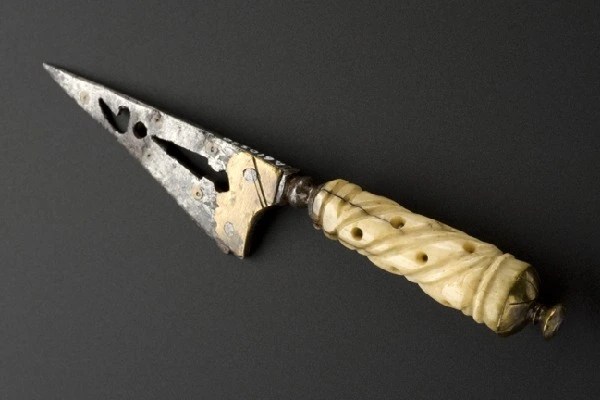
  • a knife,
  • and Isaac, (the would-be ‘lamb.’)

When the Hebrew word for ‘worship’ was used for the first time; it is interlaced with the idea of an incredible sacrifice. Abraham is the first ‘worship leader’ and he has no guitar. No piano, or drums either. No musical instruments whatsoever. No overhead lyrics to speak of.

Just a handmade altar, and a knife.

In the end, Abraham raises that knife, and then suddenly, to the relief of us all, he is stopped. His faith has withstood the test, and he has truly ‘worshiped.’

“But the Angel of the Lord called to him from heaven and said, “Abraham, Abraham!” So he said, “Here I am.” And He said, “Do not lay your hand on the lad, or do anything to him; for now I know that you fear God, since you have not withheld your son, your only son, from Me.”

Gen. 22:11-12

Principle One: There really can’t be worship without sacrifice.

Recovering this truth concerning worship would be beneficial. It seems we delegate ‘worship’ to a select few who are talented and gifted. We probably don’t do this deliberately, but sometimes we feel it makes a better presentation. We all want to look good, even Christians. (Perhaps this is more substantial than we know.)

Principle Two: The first worshiper didn’t use a guitar, but a knife.

This difference keeps the idea of sacrifice in its definition. There isn’t worship without sacrifice. The knife thrust that he was ready to wield wasn’t backed up by drums or piano. Yet Abraham understood worship every step to Moriah with the knife in his belt.

“The Scriptures include or allude to just about every approach to worship there is: organized, spontaneous, public, private, simple, complex, ornate or plain. Yet there is no comment anywhere about any one way being preferred over another. Rather, it is the spiritual condition of the worshiper that determines whether or not God is at work.”  

Harold Best

“So, brothers and sisters, because of God’s mercies, I encourage you to present your bodies as a living sacrifice that is holy and pleasing to God. This is your appropriate priestly service.”

Romans 12:1

Ultimately, we must realize our sacrifice is the Lamb of God. It’s His blood on God’s altar for our sins. As believers, our faith firmly rests in this spiritual fact.

We of all people have cause to really worship.

20 Quotes for the Believer at Christmas

Some quotes on the meaning of Christmas:

He was created of a mother whom He created. He was carried by hands that He formed. He cried in the manger in wordless infancy, He the Word, without whom all human eloquence is mute.    

–Augustine

There were many who saw the babe, but did not see the salvation.  

–Author Unknown

For the Christ-child who comes is the Master of all; No palace too great, no cottage too small.  

 –Phillips Brooks

Rejoice, that the immortal God is born, so that mortal man may live in eternity.    

–John Hus

His poverty was so great that He was born in another man’s house, and buried in another man’s tomb.    

–John Boys

It is here, in the thing that happened at the first Christmas, that the most profound unfathomable depths of the Christian revelation lie. God became man; Nothing in fiction is so fantastic as this truth of the incarnation.  

–J.I. Packer

Who can add to Christmas? The perfect motive is that God so loved the world. The perfect gift is that He gave His only Son. The only requirement is to believe in Him. The reward of faith is that you shall have everlasting life.  

–Corrie Ten Boom

The Almighty appeared on earth as a helpless human baby, needing to be fed and changed and taught to talk like any other child. The more you think about it, the more staggering it gets. Nothing in fiction is so fantastic as this truth of the Incarnation.  

— J.I. Packer

There were only a few shepherds at the first Bethlehem. The ox and the donkey understood more of the first Christmas than the high priests in Jerusalem. And it is the same today.    

–Thomas Merton

Christmas is based on an exchange of gifts, the gift of God to man – His unspeakable gift of His Son, and the gift of man to God – when we present our bodies a living sacrifice.   

 –Vance Havner

The idea that there’s a force of love and logic behind the universe is overwhelming to start with, if you believe it. Actually, maybe even far-fetched to start with, but the idea that that same love and logic would choose to describe itself as a baby born in shit and straw and poverty is genius, and brings me to my knees, literally. To me, as a poet, I am just in awe of that. It makes some sort of poetic sense. It’s the thing that makes me a believer, though it didn’t dawn on me for many years.    

–Bono

The central miracle asserted by Christians is the incarnation. They say that God became man.   

— C.S. Lewis

Infinite, and an infant. Eternal, and yet born of a woman. Almighty, and yet hanging on a woman’s breast. Supporting a universe, and yet needing to be carried in a mother’s arms. King of angels, and yet the reputed son of Joseph. Heir of all things, and yet the carpenter’s despised son.   

–Charles Spurgeon

Carols stir us. Holy words inspire us. The golden glow from the manger warms us. A little religion at Christmas is fine. But that glow in the manger comes from the Light of the world. It exposes evil and either redeems it or destroys it. The babe in the manger is far more than an object for sentimental sighs. He is the Son of God who must be accepted as ruler – or confronted as rival.  

–John G. Stackhouse, Jr.

It is good to be children sometimes, and never better than at Christmas when its mighty Founder was a child Himself.  

–Charles Dickens

Christmas is for children. But it is for grown-ups too. Even if it is a headache, a chore, and a nightmare, it is a period of necessary defrosting of chilled hidebound hearts.  

–Lenora Mattingly Weber

Hark the herald angels sing,
Glory to the newborn king.”
Peace on earth, and mercy mild,
God and sinners reconciled.

–Charles Wesley

This Gospel anticipates a world far different from C.S. Lewis’s Narnia, where it is “always winter, and never Christmas.” The promise of the Gospel is that it is “always Christmas.”  To be “in Christ” is to enjoy each morning as a Christmas morning with the family of God, celebrating the gift of God around the tree of life.  

–Kevin VanHoozer

The spirit of Christmas needs to be superseded by the Spirit of Christ. The spirit of Christmas is annual; the Spirit of Christ is eternal. The spirit of Christmas is sentimental; the Spirit of Christ is supernatural. The spirit of Christmas is a human product; the Spirit of Christ is a divine person. That makes all the difference in the world.  

–Stuart Briscoe

Here’s a side to the Christmas story that isn’t often told: Those soft little hands, fashioned by the Holy Spirit in Mary’s womb, were made so that nails might be driven through them. Those baby feet, pink and unable to walk, would one day walk up a dusty hill to be nailed to a cross. That sweet infant’s head with sparkling eyes and eager mouth was formed so that someday men might force a crown of thorns onto it. That tender body, warm and soft, wrapped in swaddling clothes, would one day be ripped open by a spear. Jesus was born to die.    

–John MacArthur

We See So Little

Job 26:14

Job’s suffering has led him to this point. He realizes how little he understands God. I guess pain can have a powerful effect on how we see things. Job has learned the immensity of God.

In verse 14 he speaks about the “outskirts” the word in Hebrew means the mere edge, or fringe. One translation of this verse reads like this: “These are only a few of the things that God does. We only know about a few small things. If he used all of his power, we could never understand.“

“That being the case, let’s consider God’s capacity for just a moment. He’s not only “high capacity”, He’s “infinite capacity.” He never sleeps or slumbers. He is perfect in all His abilities. There isn’t a single thing that He doesn’t know, and there is no one more powerful than Him. And unlike humans who can only be in one place at one time, He is everywhere at the same time. This is amazing, and just like the Psalmist said in Psalm 113, “Who is like the Lord our God?” The answer, very simply, is no one.”

John Piper

“For now we see in a mirror dimly, but then face to face. Now I know in part; then I shall know fully, even as I have been fully known.” (1 Cor. 13:12)

I’m thinking about Moses who asked to see God’s glory. Moses was called “the friend of God,” but he wanted to see more. God’s response was that He couldn’t because it would kill Moses. But provision was made for him to see the backside of God as Moses was in a cleft of a rock. (Exodus 33.)

The Bible doesn’t reveal it all. But we’re given enough. Job told us that only the outer fringes can be seen by men and women. We see His periphery, but we must understand our limits. We’re told that we will see Him someday–but not yet. But at the moment of death, we will see Him.

The Lord Jesus came to show us the Father. “In [Christ] all the fullness of deity dwells bodily.” When we see Jesus we see the Father. Reading the Gospels we are encountering God, because Jesus reveals Him fully.


“He is the radiance of the glory of God and the exact imprint of his nature, and he upholds the universe by the word of his power.” 

Hebrews 1:3

Romans 11:33

alaskabibleteacher.com

How Much Do You Love Him?

How much do you love Jesus? This parable looks at the heart of the believer, the person who has been incredibly forgiven of everything–past, present and future. And it’s here we see a woman whose heart is broken by her sin, and she discovers Jesus’ grace, and tremendous mercy.

“A certain moneylender had two debtors. One owed five hundred denarii, and the other fifty. 42 When they could not pay, he cancelled the debt of both. Now which of them will love him more?” 43 Simon answered, “The one, I suppose, for whom he cancelled the larger debt.” And he said to him, “You have judged rightly.” 

44 “Then turning toward the woman he said to Simon, “Do you see this woman? I entered your house; you gave me no water for my feet, but she has wet my feet with her tears and wiped them with her hair. 45 You gave me no kiss, but from the time I came in she has not ceased to kiss my feet. 46 You did not anoint my head with oil, but she has anointed my feet with ointment.” 

47 “Therefore I tell you, her sins, which are many, are forgiven—for she loved much. But he who is forgiven little, loves little.”

Luke 7:40-47

Jesus has been invited to Simon’s home. He’s a Pharisee, and at this point they haven’t quite banded together to attack Jesus, it seems that there were still some Pharisees who were true seekers.

The text jumps right in and we see Jesus reclining at a table (the Jewish people didn’t use chairs–pillows were used instead.) At a feast like this people who weren’t officially invited could come in to stand in the back and listen in on the conversation. (That seems awkward.)

Suddenly a woman enters the room.

She’s described as “a woman of the city,” which is a code word for “a sinner, or a harlot.” (Let your imagination roll that one around.) She comes with a definite purpose, for she brings a jar of quite expensive perfume with her.

The passage reveals that she’s on her knees, weeping on Jesus’ feet, and rubbing her tears with her hair, and pouring out the perfume. She’s kissing his feet. She’s obviously a broken person—someone who knows who Jesus is, and who understands who she is, and how deep sin has destroyed her.

At this point Simon is deeply offended, and probably embarrassed by what’s happening. But he also assumes that Jesus isn’t who he’s saying he is. “How dare does this man let an unclean person even touch Him!” But Jesus understands everything. His parable is short (just two verses) and it’s directed at Simon; and it’s a no-brainer.

The interpretation is obvious: the man who owes the most will love the most.

Jesus accentuates Simon’s breach of protocol. The Lord deftly explains the entire situation and Simon is busted. He’s put on the spot and Jesus has made his point. It’s all so obvious. The essence of the story is clear. How much do you love the Master?

(Or maybe you’re a Simonite?)

Perhaps you’re someone who doesn’t quite accept what’s real? The Bible tells us repeatedly that no one is righteous. No one. Scripture has a very low opinion of the righteousness of men. (That should shatter your thinking.)

“But we are all as an unclean thing, and all our righteousnesses are as filthy rags; and we all do fade as a leaf; and our iniquities, like the wind, have taken us away.”

Isaiah 64:6, KJV

The Hebrew word for “filthy rags” is extremely graphic–literally it means “a menstruating cloth.” It was something that a woman used before Tampax came along. How very descriptive. Do we even have the slightest idea what that means? Are our good deeds that bad?

Yes they are. Isaiah announces that’s exactly how God sees our best attempts to find acceptance apart from grace. It often seems we try to please Him by doing the best we can, but that isn’t sufficient. We always fall short and mess up.

How does understanding this change our discipleship? I’ll let you be the judge on this on this one.

“He loved us not because we are lovable, but because He is love.”

C.S. Lewis

Finding the Light

“Indeed, we felt that we had received the sentence of death, so that we would not trust in ourselves but in God who raises the dead.”

2 Corinthians 1:9

To be chronically ill often means living with awful frustration. We can’t do what we want, we are ‘trapped’ by a disease we never asked for, and we’re held hostage by our minds and bodies. We once had a job– a career… and our time was occupied by that. Suddenly our lives are turned upside down.

We wanted something else, anything more than being very sick.

I once was a pastor of a small church here in Alaska. I also taught Gospels, several years in a local Bible Institute. I loved ministry very much. They defined my identity and gave me purpose. I enjoyed helping people and teaching the Word. I endeavored to be faithful in the ministry. And I hope I did.

With the sudden onset of a brain tumor, followed up by a diagnosis of severe depression, my life more or less exploded. I had extensive memory loss. I knew I had to step out of the ministry. I simply could not function. It was a hard thing to leave it behind. (And I still miss it.)

My depression grew even more profound with the stillborn death of our third child just 3 days before her delivery. Things suddenly ground to a standstill as my wife and I tried to process all of this. I guess I just couldn’t understand and more or less just shut down. I was angry at God. I spent months in bed, unable to function.

Some people were true jewels.

Others were more or less mean and uncaring. (I quickly learned how to take the good with the bad.) I suppose I should have understood, but things were so tangled up inside me that I couldn’t verbalize a thing. But God knew all about me. He loved and never judged.

The post-op recovery following the tumor was an ordeal, as I had to learn many things all over again. A few years later I ended up on disability; I was unable to work, and my symptoms were so unpredictable. I dealt with profound depression and a solid dose of paranoia and fear.

I learned that meds can help, but they can’t fix the problem.

Sometimes the isolation seemed worse than the pain. We wonder why this is happening to us, and we hear lies about our worthiness or God’s goodness. Our value to others seems to be scuttled by our illness. We can feel cursed, forgotten, crippled by God, or even worse. (Maybe even irrevocably lost?)

Satan craves our spiritual destruction, and he snares unsteady souls.

I admit I have been slow to learn this– but God brings good things out of the dark. I’m embarrassed by my personal lack of acquiring all of this. Now I’m starting to learn finally, and I want His words to reflect these truths.

“We now have this light shining in our hearts, but we ourselves are like fragile clay jars containing this great treasure. This makes it clear that our great power is from God, not from ourselves.”

2 Corinthians 4:7

This light will shine, and the treasure is found in clay vessels. Brokenness only means the treasure is now seen clearly. It’s important to note–jewels lose none of their value by being surrounded by broken clay. Our weaknesses are being turned into goodness, understanding, and love for our brothers and sisters.

Troubles of many varieties will pay us a visit. Count on it.

No matter what their nature, God holds his people in place while everything else is falling apart. But for the broken believer, there is another dimension; we will finally triumph. The tragedies we’ve had to endure only supplement our faith. We will stand– because He makes us stand.

“We are pressed on every side by troubles, but we are not crushed. We are perplexed, but not driven to despair. We are hunted down, but never abandoned. We get knocked down, but we are not destroyed.”

2 Corinthians 4:8-9

alaskabibleteacher.com

Being a Friend of the King


“A Christian is not a person who believes in his head the teachings of the Bible. Satan believes in his head the teachings of the Bible! A Christian is a person who has died with Christ, whose stiff neck has been broken, whose brazen forehead has been shattered, whose stony heart has been crushed, whose pride has been slain, and whose life is now mastered by Jesus Christ.”

–John Piper

“No longer do I call you servants, for a servant does not know what his master is doing; but I have called you friends, for all things that I heard from My Father I have made known to you.”

John 15:15

It seems that the purpose of life is not to find our freedom. It’s really meant to find our Master.

Yes, the idea of being a slave to anyone is repugnant. We chafe at this, and yet man was never meant to be separated from the Lordship of Jesus. We’re instructed repeatedly with the New Testament idea that “our life is not our own”  Over and over God proclaims Himself as the King.

That troubles us somewhat.

Not so much when life is fairly good, granted, but in those hard moments when a decision must be made between enjoying the titillating “lusts of the flesh,” or accepting the fruits of the Spirit. This is one of those “lordship moments.” They come and go, and they show us exactly who we are.

If you’re really going to be authentic–a legitimate and real disciple, then you must determine who is going to be in charge, and this isn’t one of those casual decisions. Your decision must become a settled issue.

You must securely fix it in your heart.

The thief on the cross knew salvation, he was promised an eternity with God simply by faith. But I submit to you that he put himself under the Lordship of Jesus. He recognized the sign, “the King of the Jews.” I believe he saw and understood its implications. Jesus was King! He realized he was in the presence of royalty.

This is a very hard word for some, but so many of our personal issues hang on this.

I know this first-hand. It’s a monumental struggle at times. You must admit to not only having Jesus as your Savior, but you also must put your life under His total Lordship.  You need to pick up your cross daily in order to follow. 

We need to learn how to kneel.

I’ve chosen a crown to open up this post–it’s done on purpose.  I simply want you to understand the supreme call He has on your life. Here’s Bob Dylan, and he nails this idea down:

You must learn here and now how to kneel before the Sovereign King. 

AlaskaBibleTeacher.com

A Weeping Mother

Matthew 15:21-28, ESV

My daughter had a demon living inside her. Please understand me, I love her more than life itself. It was a terrible torment to see her fall under the control of the evil one like this. Every day seemed worse than the previous, and I knew that the day would come that I would lose her completely to the dark pit.

She would be lost forever.

God knows I tried everything. There was the pagan temple to Eshmon. He was our god of healing and protection for our nation, and it was a short walk away. We made trips there to present ourselves for healing. But things got worse, not better.

When Jesus came we knew we had to meet Him.

I was desperate, at the very end of my rope. I was scared. Meeting Jesus’ disciples was the first step and it really didn’t go well at all. They protected Him, and I couldn’t get close enough to speak with Him.

So much was blocking me. I saw so many obstacles, but when your child is suffering like mine, these things mean nothing. I came to the point where I began to shout, over and over for Jesus to intervene. I was asked to stop, I ignored His followers and kept yelling.

This passage asks us to consider many heavy issues. We have questions that need answers. Why did Jesus seem so cold and harsh? What about the “dog” reference, and His seemingly reluctance to heal? What about her ethnicity as a pagan?

Did Jesus know something about the situation we don’t?

I really want to keep this post short, so I won’t try to answer these questions. But the situation is intriguing. It must be noted that Jesus, at this particular point in His ministry, is focusing on reaching the Jewish population. (But that will change in the future.)

And yet there are positive characteristics of this woman that must be considered. These need to be understood to open up this passage. Please ponder them, they put the entire situation in a different light. We see the following:

  1. Her humility
  2. Her patience
  3. Her prayer and worship
  4. Her persistence
  5. Her faith

Each of these are crucial, and Jesus saw them. Yes, we see the obstacles, but we understand her love for her demon possessed daughter that drives her into Jesus’ presence. We see her faith that won’t give up no matter the resistance she encountered.

    Corrie Ten Boom

alaskabibleteacher.com

A Legion of Demons

Mark 5:1-15

“They came to the other side of the sea, to the region of the Gerasenes. 2 As soon as he got out of the boat, a man with an unclean spirit came out of the tombs and met him. 3 He lived in the tombs, and no one was able to restrain him anymore—not even with a chain— 4 because he often had been bound with shackles and chains, but had torn the chains apart and smashed the shackles. No one was strong enough to subdue him. 5 Night and day among the tombs and on the mountains, he was always crying out and cutting himself with stones.“

6 When he saw Jesus from a distance, he ran and knelt down before him. 7 And he cried out with a loud voice, “What do you have to do with me, Jesus, Son of the Most High God? I beg you before God, don’t torment me!” 8 For he had told him, “Come out of the man, you unclean spirit!”

9 “What is your name?” he asked him.

“My name is Legion,” he answered him, “because we are many.” 10 And he begged him earnestly not to send them out of the region.

11 A large herd of pigs was there, feeding on the hillside. 12 The demons begged him, “Send us to the pigs, so that we may enter them.” 13 So he gave them permission, and the unclean spirits came out and entered the pigs. The herd of about two thousand rushed down the steep bank into the sea and drowned there.

14 The men who tended them ran off and reported it in the town and the countryside, and people went to see what had happened. 15 They came to Jesus and saw the man who had been demon-possessed, sitting there, dressed and in his right mind; and they were afraid.

I had so many demons inside me, people called me Legion. I ruled the spiritual world of the Garasenes. People were afraid of me, of what I would do to them. Believe me, they knew. I was a living nightmare, their boogeyman. My days was filled with awful confusion and terror.

And I was completely insane.

I can recall little through my darkness, and I suppose that was for the best. My madness permeated everything. My life had become completely saturated with evil. What little I know I will tell you.

Try to imagine the condensed insanity of a mental hospital crammed into one’s little brain.

That day, I was on the Gerasenes’ “welcoming committee.” I ran to greet Jesus before he even got out of the boat. I remember falling at His feet. I knew instinctively who He was. He was the Lord over my darkness. I suppose that deep down I knew that only He could free me.

The authority of Jesus enabled him to speak directly to my demons. I remember how they tried to negotiate their way out, but with His total authority over darkness, He calmly sent them into a herd of swine nearby.

There were about 2,000 pigs, and when my evil spirits left me, they entered them. The pigs went berserk, squealing and running. I was told later that they destroyed themselves. They couldn’t handle all the evil that I had ‘bottled up’ inside me.

With Jesus’ firm and decisive command, the darkness immediately left me alone.

Suddenly, I could no longer hear the demon’s vile words. I knew that I would no longer have to carry out their disgusting will. There were no longer voices in my head. I stood up as a free man, now walking in the light. Jesus Christ had decisively intervened.

Someone gave me a robe to cover up my nakedness. I sat at Jesus’ feet in a wonderful daze at what had just happened, and it didn’t take long for the townspeople to arrive. They came and found me clothed and completely sane. I suppose it was out of fear that they asked Jesus to leave the region immediately.

I only wish they understood who He really was.

When Jesus was getting into the boat I wanted to join Him. I simply had to be close to Him. But Jesus told me no. He told me that I needed to go home to my family, and I must tell them everything. “Tell them all of the power and mercy I have had on you.” As I watched them sail away I knew that I wanted to do what He asked.

I would now be Jesus’ ambassador to the Ten Towns.

I explained to them everything that had happened to me and all that Jesus could do. I was now His very visible witness. I shared about the power and authority of the Lord Jesus Christ over my incredible darkness. I was now a source of His light to my people.

I had to witness to the others, and it would be my joy to do so.

Lord Jesus, You completely rule the spiritual forces of darkness. Help me to remember this and assist me with my own dark issues. I want to be free from all that opposes You. I must tell others of what you’ve done for me. Amen.

alaskabibleteacher.com

Dancing in the Streets

I see a people dancing along a long, straight road. Their voices form a chorus of praise to the king who gave his life to set them free. 

Along the road there are lots of little stalls and shops. They are all arranged in such a way that the dancers can look inside and see all the thrilling goods and shining things for sale. The salesmen are also turned towards the throngs of people and have exciting offers: ”Take a thing now, pay later!” ”Have a look around!”, ”Come, satisfy and fulfill all your dreams!”.  Beautiful clothes of the latest fashion. Sparkling jewels. Delicious foods as far as the eye can see. But strange things were also for sale. High positions. Power. Glory. Bodies.

Entrances were made to walk into, but not to find one’s way out. The shelves in the shops lead you into alleys, backstreets and sidetracks. And there, people live in darkness.

Some people in the jubilant parade get curious and stop at the sight of something interesting. Others take a few steps further in. Still others try on different things and even start shopping, but some of them soon regret it all and find their way back to the parade. Because they have seen something far better than every tempting thing trying to get their attention.

They have their eyes fixed on the destination: the horizon far ahead, the shining bright sun with sunbeams shining on the road they are walking on. They know that it gives far more joy and deeper peace than anything the world has to offer. You can tell it by their looks!

Those still living in darkness now and then see the light in their faces and repent. Sometimes greedy salesmen can see their sincerity and are drawn to them. People are caught up by the whirl of happiness and leave all their possessions behind. Even those whose families want to stay on, still choose to leave. Some dancers have to endure mockery, beatings and persecution from those who remain, since they love darkness. But it rarely keeps the dancers from continuing. For the light carries them!

And it does not stop there. The people are not just dancing for themselves. The light that they are receiving wants to shine into the darkest backstreets. And so many dancers let themselves be led there. Once there, they share their plasters, their food and drink and their shoes with all those in need. They chant out stories of what they have seen and experienced and invite those listening to dance with them. Whenever someone joins them, they are met with rejoicing. And all around them beauty is bursting forth where beauty has not been seen before, life is born from what used to be dead and darkness is driven away by light. 

We all have terrible scars

The parade consists of all kinds of people: women and men, rich and poor. But they are all broken. They all have scars – some have many scars and others just a few scars and they long for the complete healing. Some are heavily burdened, while others have let go of their burdens along the way, received lighter clothing from above and so can dance more quickly and easily. But the most important thing is not how fast one can move but in what direction. If you try a move that has not been given to you, one which is too difficult or too fast, you are in danger of stumbling and falling.

But if you stay on the road, there is always strength to get up. Indeed, sometimes you need help, even a lot of help. Hands reach out, eyes see and ears listen. The wind caresses cheeks, opens lungs and breathes in new life. And when you raise your eyes once more, you can brush off the dirt.

Love is what most of all characterizes them. It sets their hearts on fire and encourages them to give their lives for each other.  It shapes them into one people under one and the same king, one family with one and the same Father, one temple for one and the same Spirit, one bride to one and the same Christ. 

————

Found this article that I thought would bless you. It’s such an encouragement. (I wish I’d written it.) 🙂