Singing From the Pit

“I waited patiently for the Lord to help me,
    and he turned to me and heard my cry.
He lifted me out of the pit of despair,
    out of the mud and the mire.
He set my feet on solid ground
    and steadied me as I walked along.”

3″He has given me a new song to sing,
    a hymn of praise to our God.
Many will see what he has done and be amazed.
    They will put their trust in the Lord.”

Psalms 40:1-3, NLT

Psalm 40 is jam packed with great and wonderful truth. It contains freedom for the Christian– a way out for the broken believer. We do well when we use it, and that’s what it’s there for. The deep pit has been used over many centuries as the way God teaches us to sing certain songs. But that doesn’t make it easier, does it?

Verse 1

“I waited patiently for the Lord to help me, and he turned to me and heard my cry.”

Waiting is a critical word, it should not be regarded as trivial. In our daily walk we must be patiently seeking the Lord, that comes first. Admitting you need help is the first step. And guess what? You need help. 😁

The word ‘wait’ is special, it’s kawvah in Hebrew. It can mean ‘to bind together by twisting.‘ It can be used with the idea of braiding strands of rope together. It is never a passive act that just happens. Waiting on God is to be done with intentional purpose.

Remember that the Lord is not some distant deity on a hill far away.

He’s not hiding from you. It’s really quite the opposite. He is closer to you than you think. He is responsive and aware. He hears your cries and wants to act; He is not deaf, but our patience is critical. Waiting on Him is crucial to being free. We must bind and twist our hearts and live our life to His desires.

Verse 2

He lifted me out of the pit of despair, out of the mud and the mire. He set my feet on solid ground and steadied me as I walked along.

The seeable terrain can be awful, with muddy paths and mucky pits. Things that pull you down and suck you in. They’ll trap the traveler. But the Holy Spirit is quite able to lift us out. He picks us up and secures us. He uses the rope of God’s Word.

He is way more willing to save us, than we are to being saved.

Solid ground is where we are meant to be. It’s become a place of firm standing and secure footing. He makes us steady and He keeps us safe. The Holy Spirit now has intimate care over your soul.

Verse 3-4

“He has given me a new song to sing, a hymn of praise to our God. Many will see what he has done and be amazed. They will put their trust in the Lord.

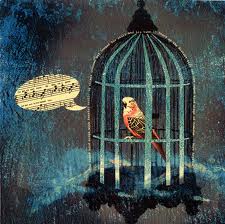
Some of the greatest songs are the ones that come from those just delivered from the pit. These are ‘pit songs,’ offered to God from sincere and true hearts that have once been trapped. There’s something solid heard from the hearts of those redeemed from disaster.

These songs no longer sound religious or contrived.

“YOU CAN SEE GOD FROM ANYWHERE IF YOUR MIND IS SET TO LOVE AND OBEY HIM.”

AW Tozer

From our deepest pits come our greatest praises.

There is a passionate quality that saturates these ‘pit praises’ that is highly treasured by God, and esteemed and valued by the Church– a sense of authenticity starts to be finally heard. We can finally start to see that our pits become ‘launching pads’ of true songs of deliverance.

Deer Feet for the Believer

“He made my feet like the feet of a deer
    and set me secure on the heights.
35 He trains my hands for war,
    so that my arms can bend a bow of bronze.”

2 Samuel 22:34-35

David’s Song of Deliverance

This entire psalm was written after David was delivered from the hand of Saul. David had been a fugitive for years and had experienced extreme difficulties. He had been pushed to the brink many times, yet maintained a close walk with God.

This verse in 2 Samuel has always blessed me. The image of a deer who has been put on a mountaintop through the direct action of the Lord–it’s a place of safety, a position of victory. It comes as a decisive maneuver of the Holy Spirit.

Psalm 18:33

David had learned things in the wilderness that he would never have otherwise. At times life got pretty extreme for him. When he struggled it was understandable. He followed the path that God laid out. It wasn’t easy for David, but he walked in faith and not by sight.

Danger surrounded David on every side – physically, spiritually, emotionally, socially. It would come from enemies, and even from his dearest friends.

God’s people are not immune from trials. It’s good to know that these are now orchestrated by our Father, and they’re purposeful and planned.

The prophet Isaiah extends the imagery of a deer in his prophetic ministry, but adds other ideas as well. The lame, mute and the desperately thirsty are descriptive of people who are given a special grace and touch. They’re promised something. They receive the promise of the Lord Jesus Christ.

“Then shall the lame man leap like a deer,
    and the tongue of the mute sing for joy.
For waters break forth in the wilderness,
    and streams in the desert;”

Isaiah 35:6

“David thought of how deer seem to skip from place to place and never lose their footing. God gave him the same kind of skill in working through the challenges brought by his enemies.”

David Guzak

alaskabibleteacher.com

A Proper Steward of Your Pain

Some time ago I came across a story that connected. A visiting speaker stood in front of a congregation and shared a painful incident from his childhood. He wanted to bring healing. After he spoke, an elder came and spoke to him–

“You have learned how to become a proper steward of your pain.”

The visiting speaker was profoundly touched by this. Finally, something came together in his heart and soul. Yes, he did learn how to deal scripturally with those ugly things from his past. He was becoming a proper steward of his pain.

The word for steward in the original Greek is oikonomos. It literally means “a keeper of a home.” It describes a manager, a superintendent to whom the head of the house or proprietor has entrusted the management of his affairs, the diligent care of receipts and expenditures.

The issue for us is managing these awful things for the Kingdom of God.

No question about it, we live in a world of darkness. Each of us has been touched by hard things. Scars are part of our lives. When we come to Christ they come with us. All of these grim things are a real piece of us, we have been hurt (or maybe we’ve wounded others?)

Are you a good steward of who you are? Whether it’s a trauma, a physical, sexual, or perhaps a mental illness. It’s a scar you carry from your past, and no one is immune from them it seems. You’ll find freedom if you can use these things for Him and his Kingdom.

We must see and understand that Jesus has taken everything and redeemed it all for His glory.

He understands us fully–our past, present, and future. He ‘knows’ us–the real and hidden us. The challenge I suppose is to take these sad events to the throne. He alone can heal and then use that which has devastated us.

Satan has afflicted you in his dark attempt to destroy you.

Jesus intervenes to save. As we grow to accept this, the Holy Spirit comes as our comforter and guide. He starts to teach us true redemption, and the incredible healing that he brings with him. It really is his work, not ours. We finally understand. It’s then we become broken healers that God can use.

(Read how Joseph handled betrayal: Genesis 50:19-21.)

The light has truly overcome the dark.

We’re being taught (sometimes very slowly) to carry all of these things and plead the blood of Jesus over our past. He covers us completely. He has redeemed us. Luke 1:68 explains much clearer than I can:

“Blessed is the Lord, the God of Israel because he has visited and provided redemption for his people.”

Becoming a steward of our pain is his doing. We’re able to touch others with these things that would cripple and destroy others. He has made us “managers” of these things, and we are taught to teach others, declaring that God has completely saved us. He works miracles!

“Therefore, if anyone is in Christ, he is a new creation; the old has passed away, and see, the new has come!”

2 Corinthians 5:17

We’ll sovereignly meet those who need to hear our story. We’re being transformed into authentic witnesses. Yes, at times these awful things still hurt, and I suppose that’s to be expected. But we’re learning to manage them. We’ve become real-life stewards of our pain.

That’s why we can be so sure that every detail in our lives of love for God is worked into something good.”

Romans 8:28, Message

The Snare: Psalm 91

caged-bird

Whoever dwells in the shelter of the Most High
    will rest in the shadow of the Almighty.
I will say of the Lord, “He is my refuge and my fortress,
    my God, in whom I trust.” 

Psalm 91:1-2, NIV

This psalm focuses on being intimate with our heavenly Father.

Throughout the entire chapter, we see personal pronouns used. In contrast to other psalms that are directed to the nation, this one is written to an individual. This personal focus makes this a favorite psalm for many.

Shelter and shadow, refuge and fortress.

These are the opening ‘word pictures’ and they’re used very adeptly.  The psalmist writes what he knows, and it is apparent that he understands deeply the needs of the human spirit, and its protection. Each of these four words creates a common link between believers. Each of us needs a working understanding of all four protections.

I should ‘dwell’ in God’s sheltered care. All too often, I wander out past the security of the Lord (or maybe I’m lured out?) But there is safety in having God so close to us. His proximity is for my protection.

“Surely he will save you
    from the fowler’s snare
    and from the deadly pestilence.
He will cover you with his feathers,
    and under his wings you will find refuge;
    his faithfulness will be your shield and rampart.”

Psalm 91:3-4

silhouette-bird-on-branch-granger

V.v. 3-4, maintains its personal tone. ‘Save you’ (salvation) is far more than a theological term.  The psalmist is not speaking ‘doctrine’ as much as the psalm describes a loving embrace. He is rescued from a deadly trap, and jumping from metaphor to metaphor, he engages our imaginations to ‘see’ God’s salvation. The writer knows his stuff.

The Lord is pictured as a protective bird that covers his chicks.

We have a sure confidence as we gather together in that warm and safe spot under His wing. Whatever is after us has to go through God first. His presence is formidable. In His company is found our only safety.

“What, then, shall we say in response to these things? If God is for us, who can be against us? Who will bring any charge against those whom God has chosen? It is God who justifies.”

Romans 8:31, 33

All of heaven is rallying for your well-being. You are sure of this based on your faith in God’s own word. He has ‘busted us’ out of a dark cage, and now defends you against all your enemies.

And that is a very good thing.


Jesus Writes in the Dust

John 8:3-11

Then the scribes and the Pharisees brought a woman caught in adultery, making her stand in the center. “Teacher,” they said to him, “this woman was caught in the act of committing adultery. In the law Moses commanded us to stone such women. So what do you say?” They asked this to trap him, in order that they might have evidence to accuse him.

Jesus stooped down and started writing on the ground with his finger. When they persisted in questioning him, he stood up and said to them, “The one without sin among you should be the first to throw a stone at her.” Then he stooped down again and continued writing on the ground. When they heard this, they left one by one, starting with the older men. Only he was left, with the woman in the center. 10 When Jesus stood up, he said to her, “Woman, where are they? Has no one condemned you?”

11 “No one, Lord,” she answered.

I remember how Jesus defended me from the religious men. I had been publically led through the crowds. The temple was filled with people who were there for the festival. It was a time of joy and feasting, but not for me. Definitely not for me.

The religious police escorted me to Jesus. I was now the focus of everyone’s attention. I felt dirty and ashamed. Standing there I could feel the leering looks from the Pharisees; but there was something else as well, a look from Jesus that I had never seen before. There was compassion there, something quite extraordinary. I saw a firm mercy.

I’m ashamed, but I had committed adultery. I slept with a man who wasn’t my husband.

I was to be stoned, to know hard rocks thrown by “holy” men. The Law had pronounced my guilt, and I knew exactly how I was to be punished. And I deserved it. Yet the man I slept with was never charged; he escaped, and I would be put to death. I didn’t blame him.

My shame was now public knowledge–everyone knew, the Pharisees made sure of that. Jesus had been accepted by some to be the Messiah and by others not so much. I wasn’t sure one way or another. I was in a daze, not able to even try to defend myself.

They only put me front and center to test Him. These men who brought me had ulterior motives, they desperately hoped Jesus would stumble. I think they wanted to prove once and all to the crowds that were watching that Jesus really wasn’t the Messiah. They tried to trap him.

Jesus realized the ugly implications of this satanic effort against Him.

Only Rome had the power of execution, and the Mosaic Law declared that I was to die. I stood waiting, expecting the worst. What else could I do?

It’s funny, but Jesus understood all of this. He looked right through this theological trick, and He responded in a way that really shocked everyone. He never spoke, but bowed low and began to write in the dirt with his finger. Amidst their vicious accusations, they pressed their case.

Jesus bent down again, and he wrote some more.

I never knew what he wrote–but I had to believe it must have been something about the sin of the men who were accusing me. At that moment, they dropped the case against me and left. They all filed out, one by one, in dramatic fashion. I now stood alone with Jesus.

Jesus looked directly at me. I was still afraid, but it was strange, I felt a wave of peace as well. I quietly waited, not knowing what He was going to say to me. I half expected the worst.

Yes, he did confront me. He wanted me to acknowledge that those accusing men had left. I saw it and understood. Jesus was asking me to believe that I was now really free. But then he wanted me to understand something that seemed quite crucial.

“Neither do I condemn you,” said Jesus. “Go, and from now on do not sin anymore.”

That dear one was a powerful moment. He set me free with the understanding that He did not condemn me. My new freedom came with a catch–sort of. I knew then that my sin must be renounced. My freedom came with a price. But knowing I was completely released, meant I was now a free woman.

At that moment I understood everything completely.

A Summons to War

battle

Watch, O Lord, with those who wake or weep tonight, and give your angels and saints charge over those who slumber.

“Tend your sick ones, O Lord Christ, Rest your weary ones, Bless your dying ones, Soothe your suffering ones, Pity your afflicted ones, Shield your joyous ones,

And all for your love’s sake.”

Amen.

Augustine

Woven into this ancient ‘evening prayer’ is an idea of God meeting us with overflowing grace and kindness.  There is a strong sense of God watching everyone! And there is also a “tending” sense that He has overall.

As I read this prayer, I seem to focus on the single phrase, “shield your joyous ones.”  To think that these joyful people need protection strikes me as odd.  Why do they even need a “shield?”  Of all people, don’t they have it together?

God sees to our every need, and His flock can be incredibly needy.

As I thought it through, I started to realize that joy is its best standing in the shadow of warfare. The joyful ones are companions– “buddies” who share the same ‘fox hole’ on enemy lines.  But this isn’t a grim thing, Nehemiah told those trying to build the city walls,

“The joy of the Lord is your strength” 

Neh. 8:10

Joy connects with the desperate need of the moment; it is the muscle of all ministry.  And as a result, perhaps more vulnerable.

He didn’t say that the joy of the Lord is our happiness, cheeriness, or merriment. 

But rather, joy would impart strength, and stiffen one’s ability to go to war for our brothers and sisters, our churches, and our communities. There are certain epoxy resins that will only harden when a special light is used on them.  Maybe joy transforms into strength when we step toward our Father.

We need to spiritually protect and cover those who are His “joyous ones.”  They can be found sprinkled throughout our churches and ministries.  And they need us to shield them.  They seem to be quite exceptional, and seemingly invulnerable.  But that isn’t the case.  We need to pray for them. Joyful people inspire me in battle.

“The joy of the Lord will arm us against the assaults of our spiritual enemies and put our mouths out of taste for those pleasures with which the tempter baits his hooks.”     Matthew Henry

He’s Much Closer Than You Think

tumblr_static_tumblr_static_1odvenqfc6kkgwo0sg0skgsco_1280

“And He withdrew from them about a stone’s throw, and He knelt down and began to pray,”

Luke 22:41

WHO KNOWS WHAT JESUS IS THINKING AT THIS PRECISE MOMENT as he entered the Garden? His disciples waited for Jesus and scripture states that he proceeded ahead of them to find some needed strength through prayer— this verse tells us he went “a stone’s throw.”

We often share in the sorrows of the people closest to us, and Jesus wants His disciples to follow him. And they do, but not all the way. They came close, but were oblivious to the full nature of the pain that was beginning for Jesus. They slept while he agonized.

He was for the first time perhaps, needing someone close.

Many of us will make the same trip to the garden. Soon every believer makes the trip to ‘Gethsemane,’ but not as mere observers. It is a distinct place of testing and of sorrow. And each will experience it for themselves. “The servant is not above his master.”

But Jesus is close— he completely understands what it means to be alone with sorrow. The believer can lean on Jesus as the pain continues. He sends his “Comforter” to each, as he escorts us through this time. He comes in grace, and is completely kind.

He is truly just a stone’s throw away.

“God is our refuge and strength,
 always ready to help in times of trouble.”

Psalm 46:1

bry-signat (1)

David and Goliath, Reloaded

Physically there was no comparison. 

Goliath was almost 10 feet tall, a warrior since birth–we read of his armor–he was like a Sherman tank. And David was just a very small, skinny boy–nothing more.

Young David stood and looked at Goliath face-to-face. (If it’s been awhile, you can read of this encounter in 1 Samuel 17.) My guess is that Goliath preened and strutted into the field of battle, and the boy David was stepping up for his very first try at hand-to-hand combat. David is called a “youth” in Hebrew, which means anyone from infancy to adolescence.

And that’s when Goliath begins to blaspheme loudly. Perhaps that’s what giants do best.

He boasts. He mocks.  He believes he is superior, and his arrogance seems to know no bounds.  In his mind the center of the universe is the Philistine army, and he is their champion. He is contemptuous of everything else–physical or spiritual.

Essentially all you need to know is that Goliath is a human wood chipper. 

Everyone who has faced him has been destroyed.  No one has ever survived. But he has never met David before. And Goliath knows nothing of the living God. It amazes me, but David never backs down, his reaction to the ‘human mountain’ of Goliath was to run directly at him. 

“As the Philistine moved closer to attack him, David ran quickly toward the battle line to meet him.  Reaching into his bag and taking out a stone, he slung it and struck the Philistine on the forehead. The stone sank into his forehead, and he fell facedown on the ground”.

1 Sam. 17:48

Many of us face our giants. They come with many names, some are called guilt, pride, doubt, or despair and lust. And they come with many other names as well.

Satan our enemy has marched out on the field of battle, arrogant and supremely confident of his ultimate triumph over us. I suppose that should terrify us. Over the years we’ve been indoctrinated to accept sin’s control, and our inevitable slavery–with a spirit of timidity.

We’ve been rightly told that there are enemies that can destroy us.

As believers we are especially hated in the spiritual world of darkness. Our destruction is inevitable in the mind of the evil one.  Satan still expects to win over your soul, but Jesus stands as our advocate shielding you. I believe you are saved because He really did die for you.

Our own particular favorite demonic ‘monster’ is real and brutal. 

Yet so many believers are intimidated, listening, and then surrendering to the boasting of the giant.  The warfare dimension gets nullified, and soon becomes irrelevant.  Despair reaches us and has the full intention of taking total control. It’s never satisfied with just a little bit.

David ran to the battle–to face the giant who was standing right in front of him. 

He passed through the dark intimidation and influence to approach Goliath.  There was no doubt to cloud his mind.  David took a spiritually aggressive position, he took on the fear, and then ran directly at the giant Goliath.  His spirit was untouchable. This is the boy who wrote Psalm 23.

Some of us stare down our giants repeatedly, over and over.

As believers, we might struggle.  We can turn our hearts over to despair.  Sometimes we actually make ourselves available to the enemy’s workings. When we do this the enemy spreads his influence to others through us. And any confidence we might have through faith is dissolved into doubt and confusion. 

But the victory we have in Christ allows us liberty, through the Blood of Him who defeats our own Goliath of despair. We can run into the battle. We fight our giant, but we’re never defeated.

     Thomas Watson

“But thanks be to God, who gives us the victory through our Lord Jesus Christ.”

1 Corinthians 15:57, ESV

alaskabibleteacher.com

Getting Ready for Water Baptism

water-baptism1

“Those who accepted his message were baptized.”

Acts 2:41 

 “Repent and be baptized.”

Acts 2:38 

 “Having been buried with him in baptism and raised with him through your  faith in the power of God.”

Col. 2:12 

Perhaps the most significant decision we’ll make is to follow Jesus Christ into the waters of baptism.  This is just obedience to the Lord’s command to be baptized. Discipleship begins when we appropriate baptism into our faith. Ideally, it should forever alter your life. At least that is the Father’s intention.

It takes faith to be authentically prepared for baptism.  You will be taking a stand. By faith, you’re making public your allegiance to Christ. It is an important and critical step.

“Baptism was to put a line of demarcation between your past sins when you are buried with Him by Baptism–you are burying your past sins–eradicating them–putting a line in the sand saying that old man is dead and he is no longer alive anymore and I rise up to walk in the newness of life.”

T.D. Jakes

I suggest that you prayerfully attend examine the process listed below.  You’ll find there’s a big difference between truly being baptized, and just getting wet!

The interrogative process can be used to solidify the faith before man and in front of His people. In a sense, it’s much like the vows made by a husband and wife in the vows of marriage.

Here are some suggestions you should consider:

A series of questions are asked, to which the reply is always, “I renounce them.”

  1. Do you renounce Satan and all the spiritual forces of wickedness that rebel against God?
  2. Do you renounce the evil powers of this world that corrupt and destroy the creatures of God?
  3. Do you renounce all sinful desires that draw you from the love of God?

The second half also must be asked, to which the reply is always, “I do.”

  1. Do you turn to Jesus Christ and accept him as your Savior?
  2. Do you put your whole trust in his grace and love?
  3. Do you promise to follow and obey him as your Lord?

The Apostle’s Creed can be recited publicly (or privately in prayer).

This creed is our faith boiled down to its core essence. This declaration helps set us apart from the World, the flesh, and the devil:

“I believe in God, the Father Almighty, maker of heaven and earth. And in Jesus Christ, his only Son, our Lord,

who was conceived by the Holy Spirit, and born of the Virgin Mary, suffered under Pontius Pilate, who was crucified, died and was buried.

He descended into hell. and on the third day, He rose again from the dead. He ascended into heaven and sits at the right hand of the Father. From thence He will come to judge the living and the dead.

I believe in the Holy Spirit, the holy catholic Church,  the communion of saints, the forgiveness of sins, the resurrection of the body, and the life everlasting. Amen.”

We need to develop these into a living discipleship; you’ll see that water baptism is analogous to a master key that opens the door to a special joy. Obeying the command to be baptized pleases Jesus. And that is what we long to do.

“Indeed, baptism is a vow, a sacred vow of the believer to follow Christ. Just as a wedding celebrates the fusion of two hearts, baptism celebrates the union of the sinner with the Savior.”

–Max Lucado

“Baptism is an outward expression of inward faith.”

–Watchman Nee

“Baptism separates the tire kickers from the car buyers.”

    –Max Lucado

A special word to “older” believers:

There may come a time when you feel that you would want to be baptized again.  I believe that this is not only allowable but commendable.  You may have not had a good understanding of the baptismal process, but now it makes more sense to you.  I would encourage you to follow your heart. God will honor your re-dedication.

Ask your pastor or an elder what they think.

1brobry-sig

You may copy and distribute this post in its entirety.

You Need to Understand This

Finally, be strong in the Lord and in the strength of his might. 11 Put on the whole armor of God, that you may be able to stand against the schemes of the devil. 

For we do not wrestle against flesh and blood, but against the rulers, against the authorities, against the cosmic powers over this present darkness, against the spiritual forces of evil in the heavenly places.

Eph. 6:10-12, ESV 

Often in Scripture we’ll understand something which will shake us. Dismissing its truth as optional would be a grave oversight. Instead of perceiving it as a mere emphasis reserved for those more inclined towards “charisma,” we must insist on its relevance for each and every believer.

We face a battle. Every one of us.

We look around and see others whose ‘reality’ is different from ours. We see politics, psychology, biology or cosmology, religion or philosophy, entertainment or science that are blind to reality. But Ephesians 6 tells us what we’re up against. We’re starting to realize that humans have a terrible knack for being manipulated by evil powers.

1 John 5:19, Amplified

Ephesians 6 declares that we’re in a world where every individual is in a war.

This passage clearly tells us that the only place of safety is to be strong in God and to find that the only safety is pressing into His presence. To survive we must push everything else aside to be in His presence. He gives us His strength to overcome all evil.

The above passage stresses that there is an organized force of darkness focused on us. These verses in Ephesians 6 unveil a government of wickedness that’s everywhere. Without the humble intimacy that needs prayer and Bible reading, we will be spiritually destroyed.

C.S. Lewis

We need protection. Our only hope is Jesus’ strength. But we must actively step into this spiritual intensity.

We’re only strong through our intimacy with Him. He shields us from the spiritual corruption that swirls all around us. As we draw to Him we become mighty, as we listen closely to the Holy Spirit, we will walk in true discipleship with Jesus.

Watchman Nee

alaskabibleteacher.com