Boasting for Dummies


“Let not the wise man boast in his wisdom, let not the mighty man boast in his might, let not the rich man boast in his riches,”

“but let him who boasts boast in this, that he understands and knows me, that I am the Lord who practices steadfast love, justice, and righteousness in the earth. For in these things I delight, declares the Lord.”

Jeremiah 9:23-24

There is bad boasting (v.23), and good boasting (v.24). When I think of someone who brags it’s almost always in a negative sense. 

Boasting is one way pride becomes visible, it’s the way we exaggerate or embellish our identity. We magnify ourselves, amplifying our achievements beyond what is reality. We must understand that all it really is is arrogance on display.

There is no room for braggarts in the Church.

You cannot sanctify boasting. It is pride that we vocalize and use to influence. We want to change another person’s perspective of you. We desperately want others to admire and think better of us. Some have postulated that it really is nothing more than masking insecurity. I think they’re right.

The Word differentiates between good and bad boasting.

The book of Jeremiah (9:23-24) does precisely that. It explains that what is worldly: wisdom, strength, money– is the wrong way of seeking recognition and importance. God’s people are to declare (brag) that they are in an intimate relationship with God.

We understand, we know that we have a loving connection with the Lord. We learn we can brag about Him.

I encourage you to become aware of how you conduct yourself in front of others. We seldom think of ourselves realistically. For many of us our lives are so intertwined with the false that we struggle with what is true.

God resists pride. (James 4:6.)

Jeremiah tells us we can choose to be different. We can swivel from the negative to the positive. We must quit exalting any attainment we have and instead boast that we now know God.

No longer do we strut, but now we choose to kneel.

“Humility is to make a right estimate of one’s self.” 

Charles Spurgeon


God, Have Mercy On Me

Luke 18:9-14

“He also told this parable to some who trusted in themselves that they were righteous and looked down on everyone else: 10 “Two men went up to the temple to pray, one a Pharisee and the other a tax collector. 11 The Pharisee was standing and praying like this about himself: ‘God, I thank you that I’m not like other people—greedy, unrighteous, adulterers, or even like this tax collector. 12 I fast twice a week; I give a tenth of everything I get.’”

13 “But the tax collector, standing far off, would not even raise his eyes to heaven but kept striking his chest and saying, ‘God, have mercy on me, a sinner!’ 14 I tell you, this one went down to his house justified rather than the other, because everyone who exalts himself will be humbled, but the one who humbles himself will be exalted.”

He despised others. As a Pharisee he prided himself as a holy person; he stood before God and congratulated himself. I believe that self-righteousness has many levels. You can be blatant and obvious about it, or it can be subtle and hidden. But we must understand that the father sees and knows. Notice the “we all” here in Isaiah 64:6

(Hmm. Is that what He sees? A menstrual rag? You got to be kidding!)

We often advance ourselves by demeaning those who struggle hard with their sin–there are those who see and somehow know that they’re superior. We don’t come out and say so; but we’ve arrived— but guess what— God (and scripture) tell us something radically different.

But we’re not dealing here with a hidden self-righteousness. The Pharisee truly believes that he is special. He stands and doesn’t kneel. He feels comfortable and confident in the holy presence of God Almighty. He’s not like the others. He is sure that he’s holy.

Look though, the tax-collector was being brutally honest.

He didn’t need anyone to tell him how sinful he was—he understood his own wickedness. Jesus’ story reveals God’s love for those who know that they’re twisted inside. Notice the heart of the tax-collector:

  • “He stood afar off” which showed his awareness of his separation from God.
  • “He wouldn’t even raise his eyes to heaven,” which declared his humility in the presence of God.
  • He kept “striking his chest,” which tells us of a deep pain over his sin against God.
  • He prayed, ‘God, have mercy on me, a sinner!’ This describes his desperate heart.

These both came to pray, but that is all they had in common.

The Pharisee came to the temple to show off his righteousness, the tax-collector out of a terrible despair. It strikes me that the text in verse 11 says the Pharisee “began praying to himself.” It seems that his prayer never really met God—he was proud and showy, doing the things God hates (Prov. 29:23).

Things really came obvious in verse 14. That’s the critical point of the entire story—“one went down to his house justified rather than the other.” Wow! What a statement. One professionally religious man, sure of his holiness, the other a sinful sinner, who came humble and broken. One showed off his faith—boasting with a legalistic swagger. The other desperate and desolate, completely undone.

But it was the tax-man who became righteous in the eyes of God.

Humility is the foundation of the kingdom of Jesus. In Matthew 5:3-4 makes a lot of sense—to be “poor in spirit” and to “mourn” are the bedrock of a Christian’s discipleship. To be justified (made right) was a gift. He didn’t try to earn it, and there wasn’t a probationary period. The tax-collector now became righteous; the Pharisee carried his sin.

God wants us to have a broken-heart. He rejects everything else. I suppose that the question is this: Do you mourn over your sin? 

Psalm 34:18

Art by Eugène Burnand

Do You Belong in the Fellowship of Pain?

The hands of a leper

“In one of the villages, Jesus met a man with an advanced case of leprosy. When the man saw Jesus, he bowed with his face to the ground, begging to be healed. “Lord,” he said, “if you are willing, you can heal me and make me clean.”

Luke 5:12, NLT

The Bible text reveals a man who is desperate.  His leprosy has advanced; he is covered with it from ‘head-to-toe.’ He’s an outcast now, completely infected by something he never asked for; he is ‘unclean’ and completely without hope. There is no treatment, the doctors can do nothing.

The leper knows that without the touch of Jesus, he’ll never be healed. 

He knows it; he doesn’t need to be convinced by anyone over the complete hopelessness of his condition. He is lost. And yet he has heard that Jesus can do incredible miracles. Could it be that Jesus can heal his sickness? The leper comes and falls on his knees before the Lord, with his face in the dirt. This man is completely broken; he has no hope, except for Jesus. What else can he do?

Our diseases differ, but our lives have been completely changed by our pain. We all have this in common. 

Our pain and darkness vary. Some hurt more, some less. But we’ve all come to the place where we no longer have illusions of somehow being made whole. Whenever we meet, I think there should be a secret handshake or a password. We all share a comradeship— we’re all part of the same community.  We’re a broken club of tired and decidedly unclean misfits.

We belong to the fellowship of pain.

Lying in the dirt, we start to believe the unbelievable.  Our faith doesn’t activate our healing, as much as it simply guides us to Jesus. We can kneel, and perhaps that’s all we need to do. His presence drives away the fear, the doubt, and the pain. He’s come, and somehow we begin to hope for mercy. Only he can carry us through this.

In times past I’ve struggled with deep dark depression. I’ve had to take meds.  But when I come into Jesus’ presence, all my melancholy is driven out. He comes and I start to hope again.  Am I a stellar example of perfect discipleship?  I think not. But isn’t about us becoming “angels,” perhaps it’s more about us learning how to kneel, and to allow Jesus to touch our hearts.

You must do this, repeatedly.

“The power of the Church is not a parade of flawless people, but of a flawless Christ who embraces our flaws.”

“The Church is not made up of whole people, rather of the broken people who find wholeness in a Christ who was broken for us.”   

–Mike Yaconelli

alaskabibleteacher.com

Modern Idolatry, Plain and Simple

“The human heart is an idol factory.”

John Calvin

The definition of idolatry, according to Webster, is “the worship of idols or excessive devotion to, or reverence for some person or thing.” Idolatry is real, and it’s really a challenge to the believer, and it’s seldom mentioned today. In almost 40 years of following Jesus, I honestly can’t remember one real sermon on idolatry. That’s sad.

In fact, one of the first commandments given by God is in Exodus 20:3, “You shall have no other gods before me.” This has never been rescinded. It’s not obsolete or old-fashioned. The unredeemed human heart remains a factory of idolatry. Nothing has changed.

“An idol is anything that replaces the one, true God. The most prevalent form of idolatry in Bible times was the worship of images that were thought to embody the various pagan deities.”

So what is modern idolatry –what does a modern idol look like?

To help clear that up, Nicholas McDonald wrote a letter to you from the perspective of your very own, personal idol. (The last line is definitely a whopper.)

Hello. I am an idol.

Don’t be afraid, it’s just me. I notice you’re turned off by my name: “Idol.”

It’s okay. I get that a lot.

Allow me to rename myself.

I’m your family.

Your bank account.

Your sex life.

The people who accept you.

Your career.

Your self-image.

Your ideal spouse.

Your law-keeping.

I’m whatever you want me to be.

I’m what you think about while you drive on the freeway.

I’m your anxiety when you lay your head on the pillow.

I’m where you turn when you need comfort.

I’m what your future cannot live without.

When you lose me, you’re nothing.

When you have me, you’re the center of existence.

You look up to those who have me.

You look down on those who don’t.

You’re controlled by those who offer me.

You’re furious at those who keep you from me.

When I make a suggestion to you, you’re compelled.

When you cannot gratify me, I consume you.

No—I cannot see you, or hear you, or speak back to you.

But that’s what you like about me.

No—I am never quite what you think I am.

But that’s why you keep coming back.

And no—I don’t love you.

But I’m there for you, whenever you need me.

What am I?

I think you know by now.

You tell me.

I hope this helps. And I hope God gives you understanding.

alaskabibleteacher.com

No Doctor Could Heal Me

A woman suffering from bleeding for twelve years, who had spent all she had on doctors and yet could not be healed by any, approached from behind and touched the end of his robe. Instantly her bleeding stopped.

45 “Who touched me?” Jesus asked.

When they all denied it, Peter said, “Master, the crowds are hemming you in and pressing against you.”

Luke 8:43-45

(Matthew 9:20-22)

I just had to touch Him. I had to reach out and somehow get His attention. It was no longer an option. I bled all the time and it wouldn’t stop. It was constant, and it had been 12 miserable years. No one or nothing could cure this, no doctor, no medicine. I was so desperate. It had to stop, you must understand, I was dying.

I had spent so much money on so many doctors.

I had nothing left. Each doctor promised a cure and my hopes were always dashed. But then I heard about a teacher named Jesus, I was told He had the power to raise the dead and heal every disease He encountered. I don’t really know why, but instantly I knew only He could heal me.

I had an issue of blood, that meant I was ritually unclean and all that I touched became unclean. The temple was off-limits to me, I had been cut off from sacrifice and any kind of personal forgiveness for my sins. In my darker moments, I really wondered if God really had forsaken me? Was I damned?

After all, it had been 12 long years.

What I had to do must be done secretly and quietly. I knew I just somehow had to touch this man. I would have to wriggle my way through the crowd to get close enough. I would be violating ritual law and if I got caught and I’d be harshly censured and condemned. I was unclean and I knew only He could change that.

And I was always tired. Sometimes I barely could walk without feeling faint.

The crowds were packed all around Him, but honestly, I knew all I needed was just a simple touch. I knew Jesus had the power. I just knew it. I needed somehow to get close enough; I knew that everything depended on me somehow connecting with Him.

So I waited and watched. I tried to jockey myself and get in the right position. The crowds were tightly surrounding Jesus, I had to push, drive and squeeze. Sometimes I had to get on my hands and knees. But in that split second when He passed, I just managed to grab just the very outside corner of the tassel of His head covering.

And immediately the flow stopped. Just like that! I felt it inside, and immediately knew what happened. Finally I knew, deep down, I had been healed! I was clean.

_____

Please understand dear one, only Jesus can free you. If you can only reach out and touch Him, He will change you– forever.

Christ is the Good Physician. There is no disease He cannot heal; no sin He cannot remove; no trouble He cannot help.”

    James H. Aughey

alaskabibleteacher.com

Going to War

13 Therefore take up the whole armor of God, that you may be able to withstand in the evil day and having done all, to stand firm. 14 Stand therefore, having fastened on the belt of truth and having put on the breastplate of righteousness, 15 and, as shoes for your feet, having put on the readiness given by the gospel of peace. 16 In all circumstances take up the shield of faith, with which you can extinguish all the flaming darts of the evil one; 17 and take the helmet of salvation, and the sword of the Spirit, which is the word of God,

Eph. 6:13-17, ESV

You’re called to be armor-plated. Ephesians is quite clear about this, and we DARE not live without spiritual protection, and as a matter of fact, we must wear each piece to survive spiritually. To be ‘naked’ is to invite disaster. Neglecting to dress appropriately brings cataclysmic disaster. We dare not minimize the need for armor.

Each piece listed must be worn. This is a scriptural mandate for every believer in Jesus.

“The whole armor of God” explains the equipment we need to survive spiritually. Here’s a list and a brief comment on the six:

  • The belt of truth–this pulls everything together and holds us and keeps us secure in the truth.
  • The breastplate of righteousness–our spiritual heart is protected by knowing we’re accepted by the Father. Being right with God is not a feeling nor is it a mere hopeful wish.
  • The shoes of the gospel (of peace)–the idea of standing in place (“to stand”) explain our ability to be fixed on grace. When we wear battle shoes we cannot be pushed back or lose our footing. Wearing gospel shoes brings us spiritual stability. We can stand in place, rooted and strong.
  • The shield of faith–is a vital way of protecting ourselves from the evil arrows shot by the enemy. Satan targets us when he thinks that we aren’t using faith to defend ourselves.
  • The helmet of salvation–this is the realization that our mind is protected. This vital piece brings us wholeness as we understand what Jesus has done. We know we are saved and wearing our helmet is our protection from demonic-inspired lies.
  • The sword of the Holy Spirit–the only offensive weapon we have, and it’s all we need. The Word of God will frighten the enemy and push him back. The Word slices and cuts down every obstacle and every lie.

Only those who are spiritual perceive the reality of the spiritual foe and hence engage in battle. Such warfare is not fought with arms of the flesh. Because the conflict is spiritual so must the weapons.

     Watchman Nee

I must stress that clothing yourself is vital. You dare not live spiritually naked wearing nothing. You will be totally vulnerable to the satanic wickedness that is swirling around you. I’m afraid it’s all very real and sobering and there is no escape clause until you finally arrive in heaven.

“We know [positively] that we are of God, and the whole world [around us] is under the power of the evil one.”

1 John 5:19, Amplified Bible

I’m afraid you haven’t been given an option in all of this. Our battle equipment in Ephesians 6 is not just some theological preference or concept. It’s real.

Over 40 years of following Jesus have taught me that most believers struggle because they won’t arm themselves for battle. They refuse to acknowledge the environment they’re in and don’t realize the spiritual battle they are facing. They like the sentiment behind this particular passage, (it stirs their heart) but the reality of the battle never fully sinks in.

They end up leaving their armor behind.

The good news is that we have already won because of what the Lord has done. Wearing the armor strengthens and stabilizes us. He pours out His grace, and there will be times of rest of that I am certain. “He leads me beside still waters.”

As obedient and faithful believers we need to realize we’re secure in Him. Yes, there is a terrible fight, but “The battle is the Lord’s.”

“For you equipped me with strength for the battle; you made those who rise against me sink under me.”

Psalm 18:39, ESV

Jesus Writes in the Dust

John 8:3-11

Then the scribes and the Pharisees brought a woman caught in adultery, making her stand in the center. “Teacher,” they said to him, “this woman was caught in the act of committing adultery. In the law Moses commanded us to stone such women. So what do you say?” They asked this to trap him, in order that they might have evidence to accuse him.

Jesus stooped down and started writing on the ground with his finger. When they persisted in questioning him, he stood up and said to them, “The one without sin among you should be the first to throw a stone at her.” Then he stooped down again and continued writing on the ground. When they heard this, they left one by one, starting with the older men. Only he was left, with the woman in the center. 10 When Jesus stood up, he said to her, “Woman, where are they? Has no one condemned you?”

11 “No one, Lord,” she answered.

I remember how Jesus defended me from the religious men. I had been publically led through the crowds. The temple was filled with people who were there for the festival. It was a time of joy and feasting, but not for me. Definitely not for me.

The religious police escorted me to Jesus. I was now the focus of everyone’s attention. I felt dirty and ashamed. Standing there I could feel the leering looks from the Pharisees; but there was something else as well, a look from Jesus that I had never seen before. There was compassion there, something quite extraordinary. I saw a firm mercy.

I’m ashamed, but I had committed adultery. I slept with a man who wasn’t my husband.

I was to be stoned, to know hard rocks thrown by “holy” men. The Law had pronounced my guilt, and I knew exactly how I was to be punished. And I deserved it. Yet the man I slept with was never charged; he escaped, and I would be put to death. I didn’t blame him.

My shame was now public knowledge–everyone knew, the Pharisees made sure of that. Jesus had been accepted by some to be the Messiah and by others not so much. I wasn’t sure one way or another. I was in a daze, not able to even try to defend myself.

They only put me front and center to test Him. These men who brought me had ulterior motives, they desperately hoped Jesus would stumble. I think they wanted to prove once and all to the crowds that were watching that Jesus really wasn’t the Messiah. They tried to trap him.

Jesus realized the ugly implications of this satanic effort against Him.

Only Rome had the power of execution, and the Mosaic Law declared that I was to die. I stood waiting, expecting the worst. What else could I do?

It’s funny, but Jesus understood all of this. He looked right through this theological trick, and He responded in a way that really shocked everyone. He never spoke, but bowed low and began to write in the dirt with his finger. Amidst their vicious accusations, they pressed their case.

Jesus bent down again, and he wrote some more.

I never knew what he wrote–but I had to believe it must have been something about the sin of the men who were accusing me. At that moment, they dropped the case against me and left. They all filed out, one by one, in dramatic fashion. I now stood alone with Jesus.

Jesus looked directly at me. I was still afraid, but it was strange, I felt a wave of peace as well. I quietly waited, not knowing what He was going to say to me. I half expected the worst.

Yes, he did confront me. He wanted me to acknowledge that those accusing men had left. I saw it and understood. Jesus was asking me to believe that I was now really free. But then he wanted me to understand something that seemed quite crucial.

“Neither do I condemn you,” said Jesus. “Go, and from now on do not sin anymore.”

That dear one was a powerful moment. He set me free with the understanding that He did not condemn me. My new freedom came with a catch–sort of. I knew then that my sin must be renounced. My freedom came with a price. But knowing I was completely released, meant I was now a free woman.

At that moment I understood everything completely.

The Four Alls of Prayer

Praying at all times in the Spirit, with all prayer and supplication. To that end, keep alert with all perseverance, making supplication for all the saints, 

19 and also for me, that words may be given to me in opening my mouth boldly to proclaim the mystery of the gospel, 20 for which I am an ambassador in chains, that I may declare it boldly, as I ought to speak.”

Eph. 6:18-20, ESV

I am convinced that our most challenging work is learning to pray. Whenever we experience revival, whenever we rediscover our true calling and purpose for living, we do so by prayer. Prayer isn’t the way to get things, it’s how we change.

Prayer is the way we become like Jesus.

Satan’s primary focus is to destroy our prayer lives, he works to eliminate our communion with our Father. He detests that, and he and his demons (and the world system) work overtime to tear down our walk. The enemy concentrates everything on our prayer life.

This passage (v.v. 18-20) emphasizes several truths about prayer. If you take apart these you’ll discover how to shape and direct your ‘time on your knees.’ Notice the following.

  • All times
  • All prayer
  • All perseverance
  • All the saints

If we go further we see that the word “all” in Greek, (although it’s a simple adjective), gets used 1245 times in the Bible. It can mean:

  • all manner of
  • the whole or entirety
  • everything, or the totality of
  • completely

With this in mind we see that Paul stresses the complete effort of prayer and its focus. All the time, every kind, no matter what and for your brother and sisters in Christ need. It’s work, spiritual work. It seems that once we put the armor on (verses 10-17) we can stand in God’s own strength. It’s from that we start to learn prayer.

It’s not enough to wear your armor. There’s something you must do wearing it.

If we’re clothed in armor it’s pretty much for the exclusive purpose of prayer. Yes we must dress for war and protection, true, but its ultimate purpose is prayer and intercession. Don’t just wear it but pray out of it. It’ll be work, but you must do this, even if you sweat. You must strive in prayer, so much is counting on you.

You can make a difference.

The Church is counting on you. “Paul,” (symbolizing all pastors and elders, teachers and leaders), absolutely need your prayers. We need boldness, and we need grace and love, and only God can give it, if you’ll only intercede for us.

It will not be easy. The enemy wants to suppress your prayer life. He absolutely hates it. Satan wants to see you passive and dull and you cannot let him do this. You have a very critical part and place in God’s kingdom. Perhaps others are waiting for you, and perhaps you’re the only one who can step in the gap for them.

You’ve been given a part of God’s field to care for, you have your own sphere of influence. No one else has it, but you.

There many different ways to pray:

  • On your knees
  • walking
  • standing or sitting
  • vocally, or in your focused thoughts
  • with others, a group
  • using a prayer list, (very helpful).
  • “arrow” prayers, (those with 1-2 sentences that end up in His throne room).
  • using the Psalms or reading the many prayers in the Bible

(I know there are many more, but these are what comes to mind right now.)

There’s a “school” of prayer and the Holy Spirit intends to teach you.

Don’t play hooky. You’ll make mistakes or perhaps lose focus. The Spirit will teach you holy stamina. You might pray for one or two minutes at first, but it’ll grow and you’ll learn endurance. Remember though–you’re most like Jesus when you start to intercede for others.

Just maybe your sanctification will come when you start to pray?

-Brother Lawrence

alaskabibleteacher.com

Yirah, Fear/Awe

Hebrew for Awe and Fear

Psalm 33:8, ESV

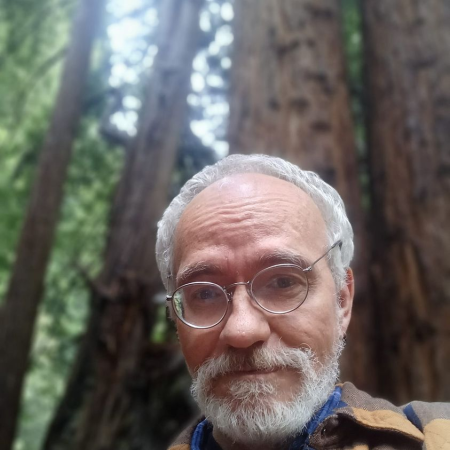
Whenever I’m in Northern California I simply have to visit the redwoods. Walking through them always directs me to the immense God who created these massive trees. Since I live in Alaska I’m also surrounded by stunning beauty: mountains, glaciers, eagles, forests and fireweed.

To truly see reality is to live in yirah.

I believe that God intentionally created the world to inspire awe in us. The complexity of creation is truly remarkable, with scientists dedicating their lives to understanding it. There is so much about the cosmos that remains beyond our comprehension, which leads us to consider how much more unfathomable its Creator must be.

Often missing from our lives and worship is yirah, or “awe, fear.”

“The fear [yirah] of the Lord is the beginning of wisdom, and the knowledge of the Holy One is insight.”

Proverbs 9:10

Three observations I need to make. These are something to consider:

  1. Believers are to teach our children the yirah of the Lord. It must be learned which implies that it’s not something natural to us. “So that they may learn to fear me all the days that they live on the earth, and that they may teach their children so.” (Deut. 4:10.)
  2. His love for us can’t be diminished by His power and might. I believe that these three are not mutually exclusive–you can’t have one without having the other. They can’t be separated. “But with you there is forgiveness, that you may be feared.” (Psalm 130:4.)
  3. Submitting to God with awe and yirah will lead you to obedience and consistency. Loving Him becomes a joy when we respect and honor in fear of our Father.

“Just as obedience to the Lord is an indication of our love for him, so is it also a proof of our fear of God.”

Jerry Bridges

alaskabibleteacher.com

Shama, Listening

1 Samuel 15:22, ESV

In Hebrew, the word ‘shama’ has a powerful meaning which is hard to translate into English. The word actually means “listening and doing.” Shama is a word that combines both ideas into one. To hear and obey is one word to the Hebrews.

It’s all about activity that’s a result of hearing.

Here, the word shama means to allow the words to sink in, to provide understanding that requires a response—it’s about becoming obedient when you hear His voice. In Hebrew, hearing and doing are the same thing. Obedience to these laws is not about legalism or trying to earn God’s favor—it’s about love and active listening.

We desperately need “shama” as disciples of Jesus.

We must understand that listening to God is needed, but obedience is required. Shama tells us this. We can’t just hear Him without obeying. I believe that obedience becomes easy when we are listening to Him.

And that’s a good thing.

Henry T. Blackaby

alaskabibleteacher.com