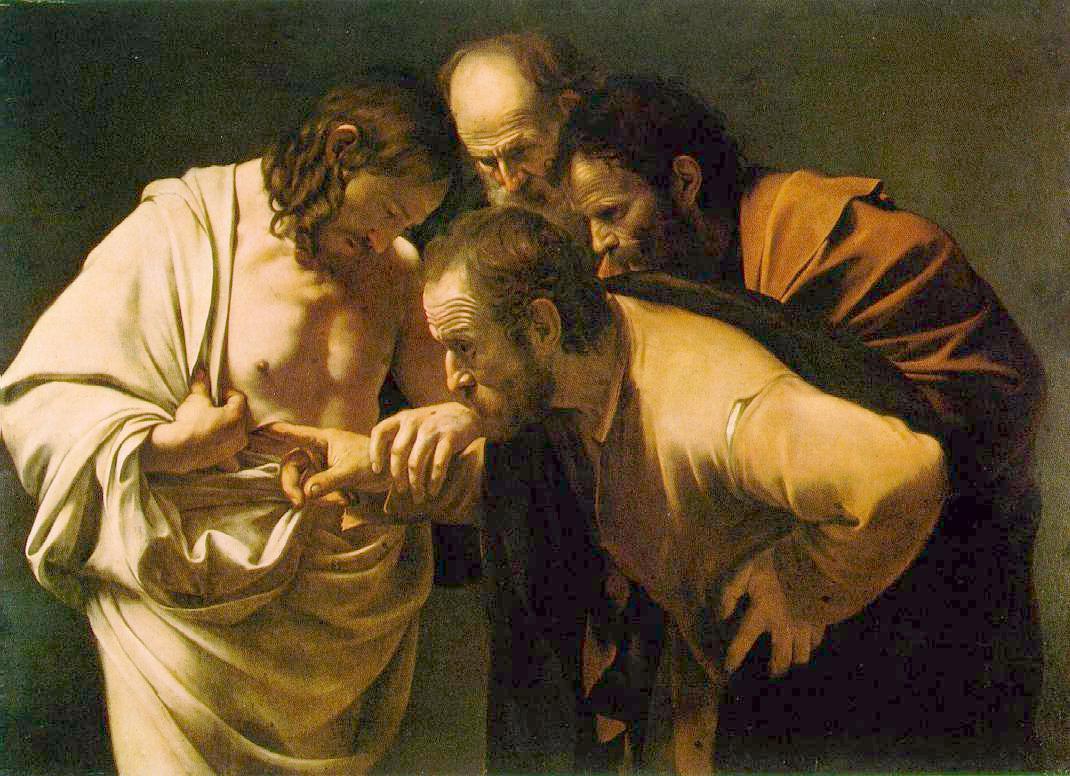
Trusting in Yourself: A Parable

Luke 18:9-14

“He also told this parable to some who trusted in themselves that they were righteous and looked down on everyone else: 10 “Two men went up to the temple to pray, one a Pharisee and the other a tax collector. 11 The Pharisee was standing and praying like this about himself: ‘God, I thank you that I’m not like other people—greedy, unrighteous, adulterers, or even like this tax collector. 12 I fast twice a week; I give a tenth of everything I get.’”

13 “But the tax collector, standing far off, would not even raise his eyes to heaven but kept striking his chest and saying, ‘God, have mercy on me, a sinner!’ , 14 I tell you, this one went down to his house justified rather than the other, because everyone who exalts himself will be humbled, but the one who humbles himself will be exalted.”

He despised others. As a Pharisee he prided himself as a holy person; he stood before God and congratulated himself. I believe that self-righteousness has many levels. You can be blatant and obvious about it, or it can be subtle and hidden. But we must understand that the Father sees and knows. Notice the “all” here in Isaiah 64:6:

(Hmm. A menstrual rag? You got to be kidding!)

We often advance ourselves by demeaning those who struggle hard with their sin–there are those who see them and somehow suspect that they’re more superior. We don’t come out and say so; but we’ve arrived— but guess what— God (and scripture) knows better than this.

But we’re not dealing here with a hidden self-righteousness. The Pharisee truly believes that he is different from the tax-collector. He stands and doesn’t kneel. He feels comfortable and confident in the holy presence of God Almighty. He’s not like the others. He is sure that he’s holy.

But the tax-collector was brutally honest about himself.

He didn’t need anyone to tell him how sinful he was—he understood his own wickedness. This parable reveals God’s love for those who know that they’re twisted inside. Notice the heart of the tax-collector:

  • “He stood afar off” which showed his awareness of his separation from God.
  • “He wouldn’t even raise his eyes to heaven,” which declared his humility in the presence of God.
  • He kept “striking his chest,” which tells us of a deep pain over his sin against God.
  • He prayed, ‘God, have mercy on me, a sinner!’ This describes his desperate heart.

Both came to pray, but really, that’s all they had in common.

The Pharisee came to the temple to show off his righteousness, the tax-collector out of a terrible despair. It strikes me that the text in verse 11 says the Pharisee “began praying to himself.“ It seems that his prayer never really met God—he was proud and showy, and ended up doing the things God detests, (Prov. 29:23).

Things really heat up in verse 14. That’s the critical point of the entire story—“one went down to his house justified rather than the other.” Wow! What a statement. One professionally religious man, sure of his holiness, and the other a sinful sinner, who came humble and broken. One showed off his faith–boasting with a legalistic swagger. The other desperate and desolate, completely undone.

But it was the tax-man who became righteous in the eyes of God.

Humility is the foundation of the kingdom of Jesus. In Matthew 5:3-4 makes a lot of sense—to be “poor in spirit” and to “mourn” are the bedrock of a Christian’s discipleship. To be justified (made right) was a gift. He didn’t try to earn it, and there wasn’t a probationary period. The tax-collector now became righteous; the Pharisee carried his sin still inside him.

God wants us to have a broken-heart. He rejects everything else. I suppose that the question is this:

Do you truly mourn over your sin?

Psalm 34:18

Art by Eugène Burnand

Our King and Our Master

A Kings Crown and the Crown of Thorns


“A Christian is a person who has died with Christ, whose stiff neck has been broken, whose brazen forehead has been shattered, whose stony heart has been crushed, whose pride has been slain, and whose life is now mastered by Jesus Christ.”

–John Piper

“No longer do I call you servants, for a servant does not know what his master is doing; but I have called you friends, for all things that I heard from My Father I have made known to you.”

John 15:15

It seems that the purpose of life is not to find our freedom. It’s really meant to find our Master.

Yes, the idea of being a slave to anyone is repugnant. We chafe at this, and yet man was never meant to be separated from the Lordship of Jesus. We’re instructed repeatedly with the New Testament idea that “our life is not our own”  Over and over God proclaims Himself as the King.

That troubles us somewhat.

Not so much when life is fairly good, granted, but in those hard moments when a decision must be made between enjoying the titillating “lusts of the flesh,” or accepting the fruits of the Spirit. This is one of those “lordship moments.” They come and go, and they show us exactly who we are.

If you’re really going to be authentic–a legitimate and real disciple, then you must determine who is going to be in charge, and this isn’t one of those casual decisions. Your decision must become a settled issue.

You must securely fix it in your heart.

The thief on the cross knew salvation, he was promised an eternity with God simply by faith. But I submit to you that he had put himself under the Lordship of Jesus, simply by recognizing the sign, “the King of the Jews.” I believe he saw and understood its implications. Jesus was King! He knew and understood.

This is a very hard word for some, but so many of our personal issues hinge on this.

I know this first-hand. It is a monumental struggle. You must admit to not only having Jesus as your Savior, but you also must put your life under His total Lordship.  You need to pick up your cross daily in order to follow.  You need to learn how to kneel.

I’ve chosen a crown to open up this post–it’s done on purpose.  I simply want you to understand the supreme call He has on your life. Here’s Bob Dylan, and he nails this idea down:

But you’re gonna have to serve somebody, yes indeed
You’re gonna have to serve somebody
Well, it may be the devil or it may be the Lord
But you’re gonna have to serve somebody


You must learn here and now how to kneel before the Sovereign King. 


alaskabibleteacher.com

God’s Word is Not a Cudgel

Ephesians 4:29, ESV

In the spring of 1987 I was working with SOS Ministries in San Francisco. Our ministry house was on Sycamore in the Mission, a really rough place. There was ten of us and we were committed ourselves to street evangelism throughout the city. When I wasn’t on the street our in-house writing/printing took up a lot my time.

Vicky was our ministry secretary. She was young, outgoing, smart and a very good administrator. She was a whiz taking care of the office–and us. She was a vital part of the house. She was pretty much irreplacable.

Sometimes though we would clash, but never in a bad way.

But after time it seemed all I could only hear from her was criticism. And I began to get really angry. Our relationship grew testy over time and things began to fester inside of me. It’s funny, but now it was inconsquential.

But one day there was one of those moments I would regret even now after all these years. I had misconstrued that she was criticizing me. Whenever I was in the office it seemed she had it in for me.

I decided I must correct her. I believed she was way out of line it was up to me to set her straight.

“Vicky, I have a word for you, from God! Read Judges 16:16.“

As she grabbed her Bible and read the verse I could see the tears well up in her eyes. And I had used the Word of God like a cudgel, beating her with a billy club. I had bludgeoned her with a Bible verse.

What can I say? The memory of doing that has always stuck with me. I had wounded her spirit intentionally. Now the Father has forgiven me, I know that–but the lesson I learned has stuck with me through 30 years of ministering God’s Word.

“People who think they are religious but say things they should not say are just fooling themselves. Their “religion” is worth nothing.”

James 1:26, NCV

This quote drives this home:

     James H. Aughey

I really must warn you, if you’re hurting your brothers and sisters by speaking foolishness, the Father will deal with you. Sometimes harshly. Now there is definitely room to correct, but I suggest for every second of time you speak, you need to spend twenty minutes in real prayer, for them and for yourself.

You don’t discern to expose sin. You discern to pray and intercede. I think this is a good “rule of thumb” for us all.

alaskabibleteacher.com

The Boogeyman of the Garasenes

Mark 5:1-15, ESV

My name was Legion. I was called that by all who knew me–it was a name of repulsive darkness, horror and fear. I was possessed by demons; there were so many of them that I was given this terrible name– “Legion, 5000.” So much darkness. Wonderful, isn’t it? What little I know I will tell you now.

My days were filled with awful confusion and terror.

I ran naked among the tombs, and cut myself on the rocks. People had chained me but I found I had a demonic, super-human strength– I broke their iron bonds. I freed myself to run wild among the caves once again. No man could tame me. I was the central force of evil in this area. I was the boogeyman of the Gerasenes.

And I was completely insane.

I recall little through my times of darkness, and I suppose that was for the best. My madness permeated everything until I had become completely saturated with evil. I was controlled by demons.

Try to imagine the condensed insanity of a mental hospital crammed into one’s little mind.

That day I was on the Gerasenes’ “welcoming committee.” I ran to greet Jesus before he even got out of the boat. I remember falling at his feet. I knew instinctively who He was. He was Lord over my darkness. I suppose that deep down I knew that only He could free me.

The authority of Jesus enabled him to speak directly to my demons. I remember how they tried to negotiate their way out, and He calmly sent them into a herd of swine nearby. There were about 2000 pigs and my evil spirits left me and entered them. The pigs went berserk and then they destroyed themselves. They couldn’t handle all the evil that I had ‘bottled up’ inside me.

With Jesus’ firm and decisive command, the darkness immediately left me alone.

Suddenly I could no longer hear their vile words. I knew that I would no longer have to carry out the disgusting will of my demons. There were no voices in my head. I stood up as a free man for the first time in years. Jesus Christ had decisively intervened. I knew now that He was my Messiah and my deliverer! My liberator who was sent from God. Just for me.

Someone gave me a robe to cover up my nakedness. I sat at Jesus’ feet in wonder at what had just happened. It didn’t take long for the townspeople to arrive. They came and found me clothed and completely sane.

I suppose it was out of fear that they asked Jesus to leave the region immediately.

I only wish they understood.

When Jesus was getting into the boat I wanted to join Him. I simply had to be close. But Jesus told me no. He told me that I needed to go home to my family, and I must tell them everything. “Tell them all of the power and mercy I have had on you.” As I watched them sail away I knew that I wanted to do what He wanted.

I would now be Jesus’ ambassador to the Ten Towns. Once I was filled with incredible darkness, but now I carry the Light.

Everything that had happened to me and all that Jesus could do for them I would share. I was now His very visible witness. I shared about the power and authority of the Lord Jesus Christ over my incredible darkness. I was now a source of His light to my people. I had to witness.

My darkness was completely gone, and I couldn’t control my joy!

Lord Jesus, You completely rule the spiritual forces of darkness. Help me to remember this and assist me with my own dark issues. I want to be free from all that opposes You. I must tell others of what you’ve done for me. Amen.

alaskabibleteacher.com

Nothing More Than a Child

A song for going up to worship. Of David.

Psalm 131

The Christian who is struggling should become a reader of the Psalms. We must remind ourself of this need to study through them, repeatedly. For believers, Psalm 131 is mandatory, and this is a great place to start.

This particular psalm is unique, and incredibly insightful.  It begins its work in us right at the start; the superscription.  “A song for going up to worship,” and it strikes me that a work must happen inside of my heart.  It is a preparation that will take me higher, and it helps me see God more clearly from a new vantage point. 

Verse 1 states the certain issue we have; it is called ‘pride.’  What David says seems to be a very arrogant and audacious thing to say.  There is a truism that you think you’re humble, you’re not.  To claim you are suddenly liberated from pride, knowing ears perk up.  It is almost always a sign of danger.

😁

Take it at face value, David states that he has a real contentment with his limitations and weaknesses.  It appears that he has been freed from the vicious cycle of needing to be the center of everything. He sings of his ignorance, and weakness. David goes public with his self-flattery. He knows that if he really wants to ascend he must descend.

And it must happen continuously.

Some make themselves spiritually sick by the deep dark quest to be important.  In verse 2, we connect with some astonishing imagery.  A baby!  I am like a little child being held by my mom. It’s not an issue of sophistication, but simplicity. You must choose to do this.

The word for weaned isn’t a newborn here. Rather in Hebrew it denotes a small toddler.

A weaned child no longer needs his mom’s milk. He doesn’t fuss, or nuzzle his mother’s breast, demanding his food.  The child no longer receives his nourishment this way. 

This is a significant step into maturity. To me, verse 2 is the centerpiece of Psalm 131.  OK, let’s apply this spiritually.  There was a time when it was necessary for me to have my mother’s milk. I screamed and would throw a terrible tantrum if she didn’t feed me from her breast.  I would starve if she didn’t give me her milk.

For all practical purposes, it seems we use God to get what we need.  But we grow, and become mature. David is saying that we need to emulate his example. 

Now we can come into God’s presence– just to be with Him.

That’s all.  So simple.  As a child, we just want to be where He is at.  We have no ulterior motives, there is no manipulation.  We seek His face, not what is in His hands. If we rightly connect the dots, we find that we land right back to that opening superscription. 

“A song for going up to worship.“

This is an amazing concept of true adoration– the real kind.  As a struggler, more a rascal than Christlike, I must start at the beginning– again, and again, and again. I can only do this if I become a little boy again. 

I finally start to realize that I must renounce my selfish ambition and silly pride. Polished people won’t understand, they never will.

Matthew 11:25

alaskabibleteacher.com

Walls Don’t Work Anymore

36 As they were talking about these things, Jesus himself stood among them, and said to them, “Peace to you!” 37 But they were startled and frightened and thought they saw a spirit. 

38 And he said to them, “Why are you troubled, and why do doubts arise in your hearts? 39 See my hands and my feet, that it is I myself. Touch me, and see. For a spirit does not have flesh and bones as you see that I have.” 

40 And when he had said this, he showed them his hands and his feet. 41 And while they still disbelieved for joy and were marveling, he said to them, “Have you anything here to eat?” 42 They gave him a piece of broiled fish, 43 and he took it and ate before them.

Luke 24:36-43, ESV

In the most thrilling moments of a story, there are instances when the true essence of the events becomes crystal clear. Luke’s narrative brilliantly captures that exhilarating sensation. Picture this: Jesus, triumphantly risen from the depths of death, enters the room with a burst of energy that electrifies everyone present. It must have been one of those extraordinary instances where words simply fall short, and experiencing it firsthand is the only way to truly grasp its profound impact.

“Frightened” and “terrified”–it seems it takes two words to describe this spooky experience. 

Everyone was terrified; they were convinced that Jesus must be a ghost. They all panicked and tried to run to the nearest exit, but then realized that the door was still locked!

Oh boy, Jesus must have had a good chuckle over this one! I mean, imagine being a human and seeing your disciples, all stooped and scared, trying to approach you like a bunch of timid puppies. It’s like trying to get a dog to come to you when it’s so terrified it’s peeing on the floor! I bet Jesus couldn’t help but smile and think, “What a hilarious sight!”

They slowly encircle Jesus and as they come, I have to believe He’s amused. He has survived a very brutal cross, and walked through hell. And, He has risen from the dead.

He is laughing from the pure joy of one who has endured the worst of a very real hell.

Jesus emerged unscathed on the opposite end, a testament to his invincibility. His arrival has undoubtedly filled him with undeniable joy, surrounded by beloved companions. In his triumphant resurrection, he defied all odds and accomplished the unimaginable, evoking a cascade of profound emotions, a mingling of laughter and tears.

I believe each of us has walls. 

Walls can provide a sense of security and protection, both physically and emotionally. People often feel the need for boundaries and walls to feel safe. This is similar to how disciples found safety in numbers and the walls around them. They were afraid, and so they hid themselves.

Jesus insists on penetrating our walls.  He’s overcoming much resistance and delusions. And then suddenly we come ‘face-to-face’ with the dead person who’s now alive. He is “The King of Kings and the Lord of Lords.

Behold, behold! Witness the magnificent display of unadulterated resurrection power—a force unparalleled in the vast expanse of the universe. Its brilliance eclipses the sun, its might surpasses that of the mightiest atomic bomb. Prepare to be astounded, for this power knows no bounds!

It’s funny, when Moses prostrated himself before the Lord’s glory, he changed.  Not only that, but he had to take precautions to cover his face when he returned to camp. These disciples however have just seen the glory of God first-hand.

As His disciples, we must be prepared for any eventuality.  Jesus can and will burst into our homes, and into our very lives.  Can you hear him laugh?  When he comes, nothing really is the same again.  He loves his disciples too much to leave them in a dark stuffy room.  They have work to do.

The resurrected Jesus is coming for you!

“Here I am! I stand at the door and knock. If you hear my voice and open the door, I will come in and eat with you, and you will eat with me.”

Revelation 3:20, NCV

alaskabibleteacher.com

What Does God Want From You?

I plead for you not to skip this post.

“He also told this parable to some who trusted in themselves that they were righteous and looked down on everyone else: 

“Two men went up to the temple to pray, one a Pharisee and the other a tax collector. 11 The Pharisee was standing and praying like this about himself: ‘God, I thank you that I’m not like other people—greedy, unrighteous, adulterers, or even like this tax collector. 12 I fast twice a week; I give a tenth of everything I get.’”

13 “But the tax collector, standing far off, would not even raise his eyes to heaven but kept striking his chest and saying, ‘God, have mercy on me, a sinner!’”

Luke 18:9-13

He despised others. As a Pharisee, he prided himself as a holy person; he thought he stood before God accepted and pure. He congratulated himself over this. I’m starting to see that self-righteousness has many levels. You can be blatant and obvious about it, or perhaps it might be more subtle and hidden. (Many believers like it hidden.)

We have to understand that God sees all and our hearts and minds are continuously inspected by the Holy Spirit. God sees our hearts as we see the faces of our friends. Any presence of pride or the absence of humility is automatically rejected by our heavenly Father.

In the Bible, it’s quite clear that being humble and admitting our sins and flaws are the best way to counteract any kind of puffed up pride. But for some reason, we often don’t realize when our selfishness and ego is getting in the way. It often comes very, very subtle. Tricky maybe.

Humility is a quality that cannot be acquired or maintained permanently.

Humility is not an accomplishment. There are no spiritual medals given for humility and brokenness. It’s not once you’re done. We must find humility every single day. Every morning, when my feet hit the floor, it’s something that requires my daily effort and practice. But it’s scary, because I’m starting to see that God’s precious grace is ultimately nullified by my pride.

The right kind of heart is broken and humble every single morning.

The Pharisee believes he is better than the tax-collector, and he now stands confidently before God. He thinks he is holy and superior to others. He really believes he has spiritually arrived.

But the tax-collector was brutally honest about himself. He understood the presence of God.

He didn’t need anyone to tell him how sinful he was–he knew his own wickedness. Jesus’ story reveals God’s love for those who know that they’re twisted up inside and lost. But let’s look closer at the heart of the tax-collector:

  • “He stood afar off,” which showed his awareness of his separation from God.
  • “He wouldn’t even raise his eyes to heaven,” which declared his humility in the presence of a holy God.
  • He kept “striking his chest,” which tells us of a deep pain over his sin against God.
  • He prayed, ‘God, have mercy on me, a sinner!’ This describes his desperate heart.

Both men came to pray, but to be really honest, that’s all they had in common.

The Pharisee came to the temple to declare his righteousness, the tax-collector came out of a terrible despair. It strikes me that the text in verse 11 says the Pharisee, “began praying to himself.” It seems that his prayer never really met God–all he was proud and showy, and he was only doing those things God hates (Prov. 29:23).

But it was the tax-man who became righteous in the eyes of God.

Humility is the foundation of the kingdom of Jesus. Matthew 5:3-4, makes a lot of sense to me. To be “poor in spirit” and to “mourn” has now become the solid bedrock of a Christian’s discipleship. To be justified (made right) is a gift. No one can earn salvation. The tax-man could only hold out his empty cup and hoped that God would fill it. Maybe that’s our beginning point.

But suddenly the tax collector is now considered righteous, while the Pharisee left the temple unchanged, and unforgiven.

“We had long known the Lord without realizing that meekness and lowliness of heart should be the distinguishing feature of the disciple.”

    Andrew Murray

When I crawl out of bed in the morning I start all over again. I realize I am nothing, I deserve nothing. I can only cling to the grace of my Father.

God wants us to have a broken heart and it’s apparent He rejects everything else. I suppose that there are questions I must ask myself: Am I really poor in spirit? Do I really mourn over my sin? Am I broken or am I subtly proud of myself? I must ask myself these questions.

“This is the Lord’s declaration. I will look favorably on this kind of person: one who is humble, submissive in spirit, and trembles at my word.”

Isaiah 66:2, CSB

Art by Eugène Burnand

alaskabibleteacher.com

The Whips of Jesus

John 2:14-17, NCV

 “In the Temple he found people selling cattle, sheep, and doves. He saw others sitting at tables, exchanging different kinds of money. 15 Jesus made a whip out of cords and forced all of them, both the sheep and cattle, to leave the Temple. He turned over the tables and scattered the money of those who were exchanging it. 16 Then he said to those who were selling pigeons, “Take these things out of here! Don’t make my Father’s house a place for buying and selling!”

17 When this happened, the followers remembered what was written in the Scriptures: “My strong love for your Temple completely controls me.”

He really did use a whip. The text tells us that Jesus carefully took some cords and made a whip by intertwining them. What can I say? I’m amazed at His response to what He saw happening in the Temple. Jesus saw deeply saddened Him to the point that there wasn’t anything else He could do.

It appears that there are three distinct whips in the N.T. that we should take into consideration.

  1. The one Jesus carefully braided to “cleanse the Temple.” (John 2:25.)
  2. The one used on Jesus’ back as part of our atonement. (Isaiah 53:4-6.)
  3. The one that believers experience in the ways God disciplines us as His children. (Heb. 12:6.)

All three are important to see. All three have their own meaning. The first one: The Temple is finally clean. The second one: He was punished for me. The third one: He intervenes in my life to make me a holy person.

The third whip is my focus here. He intends to sanctify us by correction. This discipline is the way Jesus separates us from our sin. We’re being disciplined in order to become holy people. Hebrews 12 explains the process.

“If ye endure chastening, God dealeth with you as with sons; for what son is he whom the father chasteneth not? But if ye be without chastisement, whereof all are partakers, then are ye bastards, and not sons.“

Hebrews 12:7-8, KJV

God’s intention isn’t to inflict punishment upon us. His correction isn’t a way by which we make amends for our transgressions. It’s crucial to remember that Jesus has already taken upon Himself the full weight of our sins, fully satisfying any debt. He absorbed it all.

God, in His role as a loving father, corrects and guides us with deep affection.

It’s important to note that God’s methods of discipline do not involve any form of “spiritual child abuse” whatsoever. His love is extraordinarily good, it never wavers, never turns into something evil. He patiently works His will, using loving and healing hands.

“For the moment all discipline seems painful rather than pleasant, but later it yields the peaceful fruit of righteousness to those who have been trained by it.”

Hebrews 12:11, ESV

God has corrected me a 1000 times throughout my 40 years of following Him.

Not with a leather whip mind you, but a braided spiritual cord of correction. What He saw taking place in the marketplace of “me,” (my temple), brings Jesus grief and sorrow. I’m the temple of the Holy Spirit, and He fully intends to make me pure inside. Hebrews 12 tells me what to expect as a son. I need to be corrected.

It’s good to ponder this.

Isaiah 53:5, (context. 4-7)

Yes, a “whip” will be used, but cautiously, even though it may hurt us. Jesus will never intentionally correct you beyond what you can handle.

These three whips are vital, they educate us about the Lord’s efforts. They help us to comprehend and experience God’s workings. As much as we’re able, we must embrace them.

“God’s corrections are our instructions; His lashes our lessons, and His scourges our schoolmasters.“

     James H. Aughey

alaskabibleteacher.com

Instant Breakfast

“The message of the cross is foolish to those who are headed for destruction! But we who are being saved know it is the very power of God.”

1 Corinthians 1:18, NLT

Our salvation often comes like a sudden bolt of lightning. It happens very fast, a flash of true faith, and we move from darkness to glorious light in an instant. I am absolutely confident about this.

When someone genuinely believes in Jesus and in repentance seeks forgiveness, they receive everlasting life. It never ends. Our salvation occurs in the blink of an eye. It’s like a switch that gets flipped on.

But Peter and Paul clearly write that we are “being saved.” I believe that our salvation has three tenses:

I believe that our faith and transformation are also continuous processes, a lifetime of dedication and progress. It is important to see that following Christ is an ongoing journey. Additionally, it is essential to understand that accepting Christ as our Savior does not automatically result in an immediate ascent to heaven. We must “work out our salvation with fear and trembling.”

We prefer convenience. Microwaves, K-Mart shops, fast food, ATM machines, credit cards, and so on. We quickly grab our protein shake (or coffee?) and rush out the door to keep up with our day. Things become faster and more convenient. We practically demand it.

We want patience and we want it now!

Most people don’t like the idea of a daily (and slow) commitment. We want quick and easy solutions, but having faith doesn’t work like that. Even though we want to make progress quickly, becoming a follower of Jesus takes time. It’s called “discipleship.”

I’m sorry to be the bearer of bad news, but if you’re a true believer, you have a challenging journey ahead of you.

Here are Philippians 2:12 in four different translations.

  • Work out your own salvation with fear and trembling. (KJV, ESV)
  • Work hard to show the results of your salvation, obeying God with deep reverence and fear. (NLT)
  • Keep on working to complete your salvation with fear and trembling. (NCV)
  • Keep on working with fear and trembling to complete your salvation. (GNT)

Some believers will find a deeper understanding of a “discipleship effort” that’s necessary. Others may not be ready to accept it. But the writers of the New Testament epistles effectively communicate this idea of being on a journey.

“Instant Christianity tends to make the faith act deadly and so smothers the desire for spiritual advance. It fails to understand the true nature of the Christian life, which is not static but dynamic and expanding.“

A.W. Tozer

alaskabibleteacher.com

Cross-Eyed Christians

In the book of Genesis we find the story of Leah and her sister Rachel. Let’s start by saying two daughters of Laban have become Jacob’s wives. We must step into Genesis 29 to see more.

Jacob longs for Rachel. She is his “soul mate” and because he’s in love, but the customs and technicalities of the day somehow get by him. Because of this, he will have to deal with Laban’s subtle trickery, where his daughters get swapped, and we must sort out the customs of that day to really understand.

Let’s just say that Laban’s deception creates a huge crisis for everyone. 

Throughout his life deception has been Jacob’s besetting sin. But now he’s the recipient. When we see a deceiver like Jacob gets deceived, that can’t be all bad. Call it karma, kismet, fate; he deals with it. “As you sow, so will you reap.”

Jacob is so in love with Rachel that he works for seven years for the right to marry her. This may be a bit outrageous. But we really must weigh these issues. I believe Jacob really is a monogamist at heart and he has no real love for Leah. 

He can only see that one girl that he is crazy about, his true love, Rachel.

But you know, it’s Leah that I tend to think about. Her own issues are unique. Genesis 29 explains it a bit cryptically,

“Leah’s eyes were weak, but Rachel was beautiful in form and appearance.” 

Genesis 29:17

You need to know that there is some confusion by commentators about the “weak eyes.” Others who look at the original Hebrew find the words to be vague. Some take it as she is very near-sighted, or even cross-eyed. Others think that this is a polite way of saying she really wasn’t pretty. I think I can gain from these different interpretations.

But to be honest, I think I might understand Leah.

She is wounded, and life requires that she live as unwanted. She is a woman of tragedy and broken hopes and dreams. She will always live as a reject. At best, she will always be a distant second, and perhaps scorned and neglected for this.

I conclude that Leah is the champion for the second best, those challenged by weakness.

Her life seems a long tragedy and very full of sadness. For the next 30-40 years she will always be a cast-off, someone who has been broken by life’s bitter vagaries. She’s a fellow struggler and a survivor.

Her sad life is similar to us who have to fight so hard over our own illness or handicaps. For some, addiction is an issue. We never choose this path. I believe darkness has many forms.

But I have no idea what her problem was.

I do know but she must’ve been challenged by this weakness. I understand this. My own life has been topsy turvy and a hard struggle at times. I survived a massive brain tumor and I have a paralyzed right arm. I have no balance and must use a cane. I can no longer drive.

For those who are confined to a wheelchair, or must use a cane, or who deal with a physical or mental illness, Leah should be our hero. For those who have been betrayed by addiction, or who have felt rejected through a bitter divorce, Leah speaks to us.

She is for every loser and for failures of all stripes. But through all of our setbacks and messes, we must realize that God does love us– even as we weep.

Our pain always has a purpose in God’s kingdom. Always.

“One of the main ways we move from abstract knowledge about God to a personal encounter with him as a living reality is through the furnace of affliction.”  


Tim Keeler