To follow Him can be really hard. There doesn’t seem to be any contingency plans for any who are looking to escape such a drastic call. Jesus either is, or He isn’t our Lord. “Do you also want to leave?” This is a question that will be asked to every disciple–sometimes0once, and sometimes repeatedly.
There are these crystalline moments when I must make a decision. Will I take up my cross and go with Him? There doesn’t seem to be any room in Jesus’ band for ‘almost’ disciples. That scares me sometimes.
Today’s cross is waiting for me. I’m afraid at times that I won’t be able to take the next step as a true follower. Am I just fooling myself?
All of heaven seems to stand on tiptoe to see what I’m going to do next.
Who am I really?
Being obedient to Jesus is far from easy. We must have His Spirit.
“After this, many of his disciples left. They no longer wanted to be associated with him. Then Jesus gave the Twelve their chance:
“Do you also want to leave?”
“Peter replied, “Master, to whom would we go? You have the words of real life, eternal life. We’ve already committed ourselves, confident that you are the Holy One of God.”
John 6:66-69, The Message
“It is indeed praiseworthy for a believer to consecrate his life to the Lord, but he must never do so lightly or thoughtlessly. Before committing your life in service to God today, count the cost, for “No man, having put his hand to the plough, and looking back, is fit for the kingdom of God” (Luke 9:62).”
Quarantines are a real possibility, even in this day. A quarantine is imposed when disease is contagious enough that it would harm a society: Measles, Smallpox, and the recent COVID-19 are just a few physical diseases where isolation must be imposed. It can be severe— an epidemic, with desperate consequences if not adhered to; in some rare cases, the use of deadly force have been authorized to maintain a quarantine until the disease is no longer communicable.
This may surprise you, but there are examples of ‘quarantines’ in the Bible. The term ‘unclean’ was used for ‘leprosy.’ Those afflicted had to isolate themselves; they had to ‘announce’ their presence when in contact with society. Lepers lived in groups away from the general populace, as a result of their disease.
In Paul’s epistle to the Corinthian he addresses another kind of ‘quarantine.’ The situation was dire; the church had advocated a Christian living with his father’s wife.
“I have already passed judgment on this man in the name of the Lord Jesus. You must call a meeting of the church. I will be present with you in spirit, and so will the power of our Lord Jesus. Then you must throw this man out and hand him over to Satan so that his sinful nature will be destroyed and he himself will be saved on the day the Lord returns.” 1 Corinthians 5:3-5
Understanding the Principal of Usefulness
“Now in a large house there are not only gold and silver vessels, but also vessels of wood and of earthenware, and some to honor and some to dishonor.” 2 Timothy 2:20, NASB
In the pantry of God, one can find an array of pots and pans, each serving a distinct purpose. Paul communicates to Timothy regarding the ‘large house’ that represents the Church as a whole. Timothy must observe the presence of both gold and silver vessels, each bearing a noble purpose befitting such a grand establishment. These are the vessels designated for the guests, appropriately reflecting the significance of the Lord Himself. Their value is inherent, as they are crafted from precious metals.
There are vessels of a different category. These are the ones made of wood, and of clay. These are part of the household, make no mistake about it. But their use is one of function, they’re utilized in common and ignoble ways. (A clay ‘bed-pan’ perhaps?!)
“Therefore, if anyone cleanses himself from these things, he will be a vessel for honor, sanctified, useful to the Master, prepared for every good work.” 2 Timothy 2:21
Paul, the author of New Testament doctrine of grace emphasizes the place of personal holiness. We are to ‘cleanse’ ourselves to become a vessel of honor. There is good news here:
All are vessels in the Father’s house. Each of us belong to Him. He alone determines their use.
Things are not yet in their final state. Change in status can be experienced. In God’s economy, clay pots can become ‘golden.’ Silver can become ‘wood.’
Some sin is indeed contagious. It influences believers, leading to a compromised Church due to our choices. At times, we find ourselves in a protective quarantine by the Holy Spirit—until the contagion is eradicated. This spiritual disease cannot be allowed to persist.
I have walked through this journey many times in my own discipleship. While these moments can be quite challenging, they come without condemnation. I remain His servant, and His love for me is remarkably unwavering. He has never turned away from a repentant child, no matter how deeply they have fallen.
“Yes, I am His servant, but I must wait out in the hall. I haven’t been faithful. So I sit in His waiting room, waiting for His call. This is for my good. And my Father knows what is best.”
“One of the criminals who were hanged railed at him, saying, “Are you not the Christ? Save yourself and us!” 40 But the other rebuked him, saying, “Do you not fear God, since you are under the same sentence of condemnation? 41 And we indeed justly, for we are receiving the due reward of our deeds; but this man has done nothing wrong.” 42 And he said, “Jesus, remember me when you come into your kingdom.”
And he said to him, “Truly, I say to you, today you will be with me in paradise.”
The pain was incredible, but I know that deep down I deserved to die. But not like this. Never like this. I was almost out of my mind with fear. What they were about to do to me was terrifying.
You must understand that I was just a common thief. I had stolen a loaf of bread when I was eight years old and that’s how it all got started for me. It more or else got bigger and easier. I knew how to steal and I was quite good at it. I was Jacob, the master thief!
When I was finally caught, they had sentenced me to die.
I supposed it was inevitable. I fault no one but myself, I knew what I was getting into. As I dragged my beam up to Golgotha, it was really strange but I suddenly remembered a verse from the scripture and it really did unsettle me.
“Cursed is everyone who hangs on a tree.”
It’s a terrible thing to die this way. There were three of us, nailed to the wood and lifted up between heaven and earth. Jesus was nailed to the middle cross, not that it really mattered; all three of us were going to die today. Many hope for a simple and easy death, maybe in their sleep–but that’s not going to happen to us.
The third man could only mock, he was afraid, and I suppose he just echoed those Pharisees who didn’t really understand. But I knew better. I knew who this other man was, I had heard all the stories. Deep down I knew that this man on the center cross was the Messiah.
A crowd had gathered to watch us die. The Romans in their wonderful ingenuity had made a sign that they nailed above Jesus’ head, and it declared to everyone that Jesus was “the king of the Jews.” Even as he was dying, they found a way to malign him and to stir-up the crowd.
The other man being crucified continued to mock Jesus, and it infuriated me.
Why I defended him I don’t know for sure.
But I understood. He was being murdered out of envy and jealousy. He didn’t deserve to die like this, but the powers that be hated him, and who can confront these religious men without becoming a victim. Jesus had repeatedly crossed the line, so now they were now putting him to death. It seemed evil was really winning today.
I saw the soldiers throwing dice for Jesus’ clothes. He was now being mocked by them as well, even as he was dying on a brutal cross.
But all of a sudden it all made perfect sense, he really was the Messiah, and these bastards were killing him. Crucifixion was starting to work on me now. I began to choke on my words, and it was getting hard to breathe.
“Jesus… please remember me. When your Kingdom comes, please let me be a part of it.”
And as beaten as he was, he managed to turn and look directly at me. They had whipped and brutalized him, and yet he was still aware. His words were whispered now, but I understood. “I promise that today you will be with me in paradise.”
I was starting to spasm again, but the horror of death had left me. Some time had passed, and I could hear his breathing stop. But for the first time, I had peace. They used a spear on Jesus, but he was already dead.
The soldiers now came to the two of us, and they were carrying an ax to break our legs. It all had to do with the coming festival, and the Pharisees wanted us dead. When they swung that ax I knew pain that I could never describe. My own death came quickly after that.
I was suddenly standing in paradise, whole and complete.
Someone was standing before me. He was shining I remember, and I knew he was powerful; stronger, and he was more glorious than anyone I had ever met. It was crazy but somehow I knew that he was an angel and he had been sent to meet me. It’s funny, but I realized that somehow I really did belong. Me–a dirty rotten thief.
Jesus had promised me, he had pronounced me righteous, me of all people.
I suddenly had a joy that I could never explain. I really was a part of the Kingdom that was beyond anything I had ever known. And all I can really say about this was that I was privileged to die with him. That is all I could claim. I simply believed him and asked if somehow I could be part of his eternal rule.
I simply asked and you know what, He gave me everything.
And so, I’ll see you in heaven.
Cover Art: “Christ on the Cross between Two Thieves,” by Peter Paul Rubens
“Who among us shall dwell with the devouring fire? Who among us shall dwell with everlasting burnings?”
Isaiah 33:14
Perhaps we can become too casual in our intimacy with God? Becoming close is obviously needed, but it must be done with certain precautions. (Bear with me as I try to explain.)
He asks for us to see Him with an awareness of His holiness. It’s important to Him, and it is vital for us. We must honor Him as the One who is supremely holy. But seeing that we can walk with God in a new way.
“For our God is a consuming fire.”
Hebrews 12:29, ESV
The closer we come, the more significant our response. I believe the Holy Spirit carefully monitors us to see what we will do after we confront the reality of Him. He insists that we should honor Him as ‘holy.’ He passionately desires and requests that we do what is appropriate and honorable as we meet Him.
Giving Jesus honor is critical to all we say or do.
It should be the first thought of every man or woman who presses in to know Him. Honoring Him as holy is not regarded as an option to be debated or brought out for consideration. It is essential to follow Him faithfully.
He is like a tiger whom we have grabbed by the tail, we have but a few options. One is to release our hold and face the consequences. The second is too hold on to Him with all our strength. He loves those who make the second choice. Grab hold of the Lord Jesus, and hang on for dear life!
He is dangerous, but in a good way. Intimacy is important, but so is having a healthy fear of Him.
We should anticipate Him coming and disrupting our Sunday services. Perhaps we need our ushers to hand-out ropes and life-jackets before the service starts? We should expect Him to explode in our congregations in a whirlwind of holy love. He wants us to anticipate His presence.
In Isaiah 33:14 there is something that is needful and mandatory for us to understand about our Father. Often we’ll discover that entering and abiding in His presence requires us to honor His holiness. When we do so, we find we will trigger a response from the Lord, which will it turn be a true blessing to our own souls.
“The moment you come to realize that only a holy God can make a man godly, you are left with no option but to find God, and to know God, and to let God be God in and through you.”
15 “When they had finished breakfast, Jesus said to Simon Peter, “Simon, son of John, do you love me more than these?” He said to him, “Yes, Lord; you know that I love you.” He said to him, “Feed my lambs.”
16 He said to him a second time, “Simon, son of John, do you love me?” He said to him, “Yes, Lord; you know that I love you.” He said to him, “Tend my sheep.”17 He said to him the third time,”
“Simon, son of John, do you love me?” Peter was grieved because he said to him the third time, “Do you love me?” and he said to him, “Lord, you know everything; you know that I love you.” Jesus said to him, “Feed my sheep.'”
Peter’s denial was public one, and it was important that his restoration be public as well. It may come as a shock, but Peter needed to do this–even though it was a grief to him (verse 17.) He needed to do this to heal properly. It was also a clear testimony to the others that he was completely restored.
Repeatedly in this passage, love gets linked to service.
(Can you see this, it’s important that you do.) The Lord asks Peter if he really loved him, and most likely it was a solemn affair, not something trivial or casual. The word used is ἀγαπάω, “agape”–this is the type of love that God has for people. It’s an all-powerful love, one that gives 110%.
The third time the word for love is different though, the word used is φιλέω, “philo”–this is a type of love that a man has for others, a brotherly kind of love. Something good, but not quite agape love.
Each time Jesus uses agape to Peter, Peter responds with philo.
Peter responds, but he’s fixated on the brotherly type of love. I don’t mean to be confusing here, but every time Jesus uses agape to Peter, Peter responds with philo. It’s as if Peter is struggling with loving Jesus wholeheartedly. Perhaps Peter was ashamed of his denial. But to his credit he was honest.
Service is now connected to agape love.
Love can’t be seen unless it has a physical aspect. Love can’t be abstract, a vague feeling, or a hazy concept–it has to be seen by others. Jesus’ sheep (and lambs) must be fed, and watched over. This is now Peter’s call to ministry.
This is Jesus’ ministry as well.
Apparently there is plenty of this kind of work to go around! Isaiah prophesied about Jesus’ work in Isa. 40:11. This now becomes Peter’s work as well.
“He will tend his flock like a shepherd; he will gather the lambs in his arms; he will carry them in his bosom, and gently lead those that are with young.”
Whether or not Peter was the first “pope” is debatable. But it’s clear that Jesus focused on Peter. And isn’t it just like him to turn our failings into victories. Peter’s denial was now his ministry to others. It dealt with the pride issue, which disrupts true ministry to His flock.
“And I will give you shepherds after my own heart, who will feed you with knowledge and understanding.”
Jeremiah 3:15
God uses broken things. It takes broken soil to produce a crop, broken clouds to give rain, broken grain to give bread, broken bread to give strength. It is the broken alabaster box that gives forth perfume. It is Peter, weeping bitterly, who returns to greater power than ever.
A dear Christian friend has built his own coffin. He now uses it as a coffee table in his living room until the day he dies. I’m told that Trappist monks next to their monastery an open grave, a constant reminder of the certainty of death. When they file past it, they understand that everyone must die.
Do you see death-smiling as a type of leer or as an evil grin upon the face of an enemy that is about to bring you pain? Or is the smile a gentle one that offers solace at a time when fear may be raging?
“You sweep people away like dreams that disappear. They are like grass that springs up in the morning. 6 In the morning it blooms and flourishes, but by evening it is dry and withered.”
Psalm 90:4-6
In ancient Israel, Psalm 39 served as a “memento mori”—a reminder of human mortality. “Oh LORD, make me know my end and what is the measure of my days; let me know how fleeting I am!” (v. 4). David understood that life is somewhat insignificant in the light of eternity.
Remember that you must die someday.
“None of us can hold back our spirit from departing. None of us has the power to prevent the day of our death. There is no escaping that obligation, that dark battle.”
Ecclesiastes 8:7-8
Memento mori is a reminder of the inevitability of death. Jesus’s words, “Very truly I tell you, unless a kernel of wheat falls to the ground and dies, it remains only a single seed. But if it dies, it produces many seeds” (John 12:24).
As we adopt the reality of dying we must refuse the worldly ideas of death:
Our fear
Our doubts
Our frustration and cynicism
The loneliness
Satanic attack
“Let your hope of heaven master your fear of death.”
In the New Testament, Jesus exhorts his disciples to pick up their crosses daily and to remember their death as they follow him to the Place of the Skull: “If any want to become my followers, let them deny themselves and take up their cross daily and follow me” (Lk 9:23).
Remembering one’s death is an absolutely essential aspect of the Christian life, not only because it helps us to live well but also because it helps us to remember what Christ has done for us.
As you integrate memento mori into your life, you will find more fruit in the practice if you are able to connect within the community of the Church who are on the same journey. Talk with family and close friends about your journey.
Knowing you’re going to die and face a certain judgement is a bit unnerving. It’s also a definite way of defeating sinful habits. When we understand this, much evil is now avoided and renounced. Yes, you’re barreling into a real encounter with God. That you can be sure.
Our judgement is very much real. But we have a perfect plea. Jesus has paid the price for us. It’s His blood that delivers us and fully redeems us. Standing (or kneeling) we realize the love and mercy He has for us. When we stand before God, we stand complete.
“Death is no more than passing from one room into another. But there’s a difference for me, you know. Because in that other room I shall be able to see.”
We’re fully and irrevocably forgiven. You can be sure of that. We can smile at death, knowing that it leads us into a perfect connection. Are you afraid? Yes, I understand. But know, if you’ve accepted Jesus as your Savior and Lord, the payment for all your sins, you’re forgiven.
“He predestined us to be adopted as sons through Jesus Christ for himself, according to the good pleasure of his will, 6 to the praise of his glorious grace that he lavished on us in the Beloved One.“
Ephesians 1:5-6
These particular verses establish the believer’s election. That involves being predestined or having a “pre-destiny” to be adopted as sons and daughters.
He predestined us to be adopted as sons. This is meant to be staggering. He’s made a profound move to bring the adopted (us) into a place of the family with this place of the divine. He chose us, and we simply accept this choice.
Sons. Not slaves. We’ve now included in this predestination that has made us His family. His own family!
For himself, according to the good pleasure of his will, What can we say? It’s what He wanted to do. He has willed our adoption. He wanted it, and because of this, we belong. We’re now part of His family tree.
To the praise of his glorious grace that he lavished on us in the Beloved One. “Praise” here is a strong word in the original text. It’s the highest level there is. It’s very intense.
“Glorious grace.” This glory is fully attached to grace and in a way it intensives it. Grace here is something undeserved and yet it’s given to us freely. It belongs exclusively to God, but it’s like a “Christmas present.” It’s now given to each of us to open up what God has given us.
The word “grace” is charis in Greek and it can be translated as a benefit, bounty, “that which affords joy, pleasure, delight, sweetness, charm, loveliness.” It’s a word with a lot of dimensions to it.
Lavished on us in the Beloved One. It’s extravagant and excessive and it’s poured out on one’s spirit without measure. When one first believes in Jesus, (the beloved one) it completely saturates us. This poured-out grace isn’t earned or deserved, rather He has made His decision to heap on us a powerful love.
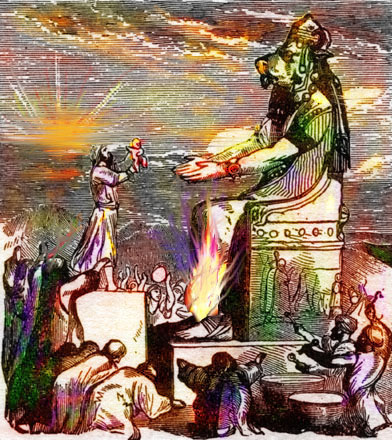
God’s temple was now filled with an evil darkness. King Manasseh made the Lord’s holy place a fountain of sin and filth. Instead of holiness, it was an evil place.
He brought in dark things that were twisted, perverted and clearly forbidden.
“Manasseh led Judah and the inhabitants of Jerusalem astray, to do more evil than the nations whom the Lord destroyed before the people of Israel.”
2 Chronicles 33:9, ESV
His own darkness was now encouraged by others, it became accessible, available and promoted:
The high places were rebuilt throughout the land.
Altars to Baal rebuilt, using images of wood.
In the holy temple, altars to the “starry host,” astrology, plain and simple.
Human sacrifice of his own sons to Molech, a false god. Murder.
He practiced soothsaying, used witchcraft and sorcery, and consulted mediums and spiritists.
Evil was being encouraged and something wicked was replacing all that was good and true. The analysis of Manasseh’s policies was way beyond disturbing. Of all the kings of Judah, he was the most sinful and the most corrupt. He was at the bottom of the barrel.
The Hebrew word for “led astray” can be translated seduced.
Manasseh was an incredibly immoral man, a king who ruled for 40 years. “He did all he could to pervert the national character, and totally destroy the worship of the true God; and he succeeded.” (Clarke)
It’s believed that he put Isaiah to death by cutting him in two.
Moreover Manasseh shed very much innocent blood, till he had filled Jerusalem from one end to another, besides his sin by which he made Judah sin, in doing evil in the sight of the LORD.
1 Kings 21:16
But then something happened.
And the LORD spoke to Manasseh and his people, but they would not listen. Therefore the LORD brought upon them the captains of the army of the king of Assyria, who took Manasseh with hooks, bound him with bronze fetters, and carried him off to Babylon.
2 Chronicles 33:10-11
Assyria came knocking on Manasseh’s door. I think there was a certain mercy here, but also discipline. Manasseh had “hooks,” inserted through his jaw and out of his mouth. Like a fish he was led to Babylon, a trophy of the power of the army of Babylon.
It was from a dark dungeon that Manasseh cried out to the Lord and repented.
There’s a Jewish fable that when Manasseh cried out to God the angels boarded up the windows in heaven. They wanted to block out his prayer so God wouldn’t be able to hear. But God, rich in mercy, bored a hole in front of His throne to hear Manasseh’s desperate cry.
The Lord’s intention was to forever show His kindness and grace given to the most awful repentant sinner.
I believe that Manasseh was the “Prodigal Son” of the Old Testament.
God is not at a loss when He moves to bring us back to Himself. He can woo or whip. He can draw or drive. He can work rapidly or slowly, as He pleases. In other words, He is free to be God! And in His own way, at His own pace, He brings us back.
God is wildly in love with you. Yes, the sin you’ve committed is awful, but the Lord wants you to come back. He may discipline you, but He forgives everything if you’ll turn and repent.
No matter how awful your sin, He forgives and restores. Manasseh is proof of that.
“I waited patiently for the Lord to help me, and he turned to me and heard my cry. 2 He lifted me out of the pit of despair, out of the mud and the mire. He set my feet on solid ground and steadied me as I walked along.”
3″He has given me a new song to sing, a hymn of praise to our God. Many will see what he has done and be amazed. They will put their trust in the Lord.”
Psalms 40:1-3, NLT
Psalm 40 is jam packed with great and wonderful truth. It contains freedom for the Christian– a way out for the broken believer. We do well when we use it, and that’s what it’s there for. The deep pit has been used over many centuries as the way God teaches us to sing certain songs. But that doesn’t make it easier, does it?
Verse 1
“I waited patiently for the Lord to help me, and he turned to me and heard my cry.”
Waiting is a critical word, it should not be regarded as trivial. In our daily walk we must be patiently seeking the Lord, that comes first. Admitting you need help is the first step. And guess what? You need help. 😁
The word ‘wait’ is special, it’s kawvah in Hebrew. It can mean ‘to bind together by twisting.‘ It can be used with the idea of braiding strands of rope together. It is never a passive act that just happens. Waiting on God is to be done with intentional purpose.
Remember that the Lord is not some distant deity on a hill far away.
He’s not hiding from you. It’s really quite the opposite. He is closer to you than you think. He is responsive and aware. He hears your cries and wants to act; He is not deaf, but our patience is critical. Waiting on Him is crucial to being free. We must bind and twist our hearts and live our life to His desires.
Verse 2
He lifted me out of the pit of despair, out of the mud and the mire. He set my feet on solid ground and steadied me as I walked along.
The seeable terrain can be awful, with muddy paths and mucky pits. Things that pull you down and suck you in. They’ll trap the traveler. But the Holy Spirit is quite able to lift us out. He picks us up and secures us. He uses the rope of God’s Word.
He is way more willing to save us, than we are to being saved.
Solid ground is where we are meant to be. It’s become a place of firm standing and secure footing. He makes us steady and He keeps us safe. The Holy Spirit now has intimate care over your soul.
Verse 3-4
“He has given me a new song to sing, a hymn of praise to our God.Many will see what he has done and be amazed. They will put their trust in the Lord.“
Some of the greatest songs are the ones that come from those just delivered from the pit. These are ‘pit songs,’ offered to God from sincere and true hearts that have once been trapped. There’s something solid heard from the hearts of those redeemed from disaster.
These songs no longer sound religious or contrived.
“YOU CAN SEE GOD FROM ANYWHERE IF YOUR MIND IS SET TO LOVE AND OBEY HIM.”
AW Tozer
From our deepest pits come our greatest praises.
There is a passionate quality that saturates these ‘pit praises’ that is highly treasured by God, and esteemed and valued by the Church– a sense of authenticity starts to be finally heard. We can finally start to see that our pits become ‘launching pads’ of true songs of deliverance.
“Then [Ezra] told them, Go your way, eat the fat, drink the sweet drink, and send portions to him for whom nothing is prepared; for this day is holy to our Lord. And be not grieved and depressed, for the joy of the Lord is your strength and stronghold.”
Nehemiah 8:10, Amplified
The people of God are grieving; they are filled with sorrow. They are fully aware of their sin, and understand how awful they have become. They’re overwhelmed, and can’t really accept what God was doing.
Nehemiah and Ezra have their hands full.
Grief often turns into depression. Joyless living opens us to the pressures of Satan, and he tries to manipulate us to do his work. Now this is a terrible thing, and it’s also a sad way to live. Nehemiah understands what is happening.
Sometimes our emotions drive us, and we can see nothing but our sin. Our hearts are filled with melancholy and introspection. They closed their hearts to thankfulness and joy. Instead they wept, they could see little hope when Ezra read the Word from the pulpit.
Galatians 5:22 tells us that the Holy Spirit is residing within–it’s called “fruit” and it grows in the heart of an obedient believer who has submitted himself to God. It is not just a good attitude. Joy is never contingent on circumstances.
A few things to remember.
Joy is the evidence that He lives inside us.
We need a devotional life.
Known sin must be renounced and forsaken.
We must abandon the “works of the flesh.” (Gal. 5:19-20)
We must ask Him to fill us with His Spirit.
We must learn how to worship authentically.
A key for me, I want to emphasize this, as I’ve finally seen this in my own discipleship– I need to pursue Jesus, and not joy itself. If I think that I will find joy apart from knowing Him, is wrong and perhaps a bit dangerous.
I will end this with something that must be thought through. I hope you will.
“To say that it is the Christian’s duty, his moral obligation, to be joyful. That means that the failure of a Christian to be joyful is a sin, that unhappiness and a lack of joy are, in a certain way, manifestations of the flesh.”















 Alaska Bible Teacher