So What Happened to the Church in Ephesus?

God speaks to the Church of Ephesus:

But I have this against you, that you have abandoned the love you had at first. Remember therefore from where you have fallen; repent, and do the works you did at first. If not, I will come to you and remove your lampstand from its place, unless you repent.

“Anyone with ears to hear must listen to the Spirit and understand what he is saying to the churches.

Revelation 2:4-5, 7

I ministered full-time in San Francisco, preaching and teaching in a very difficult place for three years. The sin and degradation of that city were extremely difficult. But I suppose ministering in the city of Ephesus was also quite challenging. Like San Francisco, it was full of false idols, immorality, and much sinfulness. I encountered much of this. I’ve learned firsthand about evil powers in high places.

Paul knows what the Ephesians are up against, there is an organized evil in Ephesus that could very well destroy them. Paul is on his way to Jerusalem, and in order not to miss his boat, he requests that the elders of Ephesus meet him near his port. He has an urgent warning for them. He says “goodbye” with tears, and deep concern.

“So guard yourselves and God’s people. Feed and shepherd God’s flock—his church, purchased with his own blood—over which the Holy Spirit has appointed you as leaders. 29 I know that false teachers, like vicious wolves, will come in among you after I leave, not sparing the flock. 30 Even some men from your own group will rise up and distort the truth in order to draw a following. 

31 Watch out! Remember the three years I was with you—my constant watch and care over you night and day, and my many tears for you.’

Acts 20:28-31

Keep in mind that Paul lived in Ephesus. He taught the church daily and prayed often for them for three years. Also, Apollos (a tremendous evangelist) would become a disciple there. Also, Timothy based his ministry in Ephesus.

There seems to be a slow drift away from the first love for Jesus and slippage into an unacceptable doctrine. During my own time in ministry in San Francisco, there always seemed to be resistance there, constant spiritual pressure on any attempt to stay faithful and live in purity.

In Revelation 2 an angel speaks to the church in Ephesus. His assessment wasn’t kind but yet it was accurate.

A papyrus fragment from the book of Revelation chapter 2 written to the Ephesians by John the Apostle.

Maintaining the first love in this center of wickedness and depravity wasn’t easy.

Paul was in a Roman prison when he wrote to the Ephesians. He put pen to papyrus to write down and to show God’s purpose for them. He taught and preached, he knew that they must know the intentions of God for their lives.

In Acts 20 he states a warning to the elders of the church in Ephesus. They must be aware. And for the most, they stayed true, and yet they were missing a vital and critical truth. In Revelation 2 they are nailed and we must understand. They had somehow down the line they had lost their “first love.” This happens, regularly.

Jesus must be primary to the true walk of the real believer–this isn’t optional.

This is the critical definition of an authentic Christian. We must love Him first. The Ephesians had faithfully protected against heresy. But we discover good theology without real love isn’t acceptable.

We’re called to love Him first of all.

Living in a wicked world demands a love that exceeds the norm that isn’t acceptable to “polite society.” We must go on to love Him first. What we think we know isn’t going to be enough. We must love Him. Him!

Is Jesus our first love? And what does that really mean anyway?

You really must figure this out for yourself. But, the first step is humility.
The Man on the Other Cross

Luke 23:39-43, ESV

The pain was incredible, but I know that deep down I deserved to die. But not like this. Never like this. I was almost out of my mind with fear. What they were about to do to me was terrifying.

You must understand that I was just a common thief. I had stolen a loaf of bread when I was eight years old and that’s how it all got started for me. It more or else got bigger and easier. I knew how to steal and I was quite good at it. I was Jacob, the master thief!

When I was finally caught, they had sentenced me to die.

I supposed it was inevitable. I fault no one but myself, I knew what I was getting into. As I dragged my beam up to Golgotha, it was really strange but I suddenly remembered a verse from the scripture and it really did unsettle me.

“Cursed is everyone who hangs on a tree.”

It’s a terrible thing to die this way. There were three of us, nailed to the wood and lifted up between heaven and earth. Jesus was nailed to the middle cross, not that it really mattered; all three of us were going to die today. Many hope for a simple and easy death, maybe in their sleep–but that’s not going to happen to us.

The third man could only mock, he was afraid, and I suppose he just echoed those Pharisees who didn’t really understand. But I knew better. I knew who this other man was, I had heard all the stories. Deep down I knew that this man on the center cross was the Messiah.

A crowd had gathered to watch us die. The Romans in their wonderful ingenuity had made a sign that they nailed above Jesus’ head, and it declared to everyone that Jesus was “the king of the Jews.” Even as he was dying, they found a way to malign him and to stir-up the crowd.

The other man being crucified continued to mock Jesus, and it infuriated me.

Why I defended him I don’t know for sure.

But I understood. He was being murdered out of envy and jealousy. He didn’t deserve to die like this, but the powers that be hated him, and who can confront these religious men without becoming a victim. Jesus had repeatedly crossed the line, so now they were now putting him to death. It seemed evil was really winning today.

I saw the soldiers throwing dice for Jesus’ clothes. He was now being mocked by them as well, even as he was dying on a brutal cross.

But all of a sudden it all made perfect sense, he really was the Messiah, and these bastards were killing him. Crucifixion was starting to work on me now. I began to choke on my words, and it was getting hard to breathe.

“Jesus… please remember me. When your Kingdom comes, please let me be a part of it.”

And as beaten as he was, he managed to turn and look directly at me. They had whipped and brutalized him, and yet he was still aware. His words were whispered now, but I understood. “I promise that today you will be with me in paradise.”

I was starting to spasm again, but the horror of death had left me. Some time had passed, and I could hear his breathing stop. But for the first time, I had peace. They used a spear on Jesus, but he was already dead.

The soldiers now came to the two of us, and they were carrying an ax to break our legs. It all had to do with the coming festival, and the Pharisees wanted us dead. When they swung that ax I knew pain that I could never describe. My own death came quickly after that.

I was suddenly standing in paradise, whole and complete.

Someone was standing before me. He was shining I remember, and I knew he was powerful; stronger, and he was more glorious than anyone I had ever met. It was crazy but somehow I knew that he was an angel and he had been sent to meet me. It’s funny, but I realized that somehow I really did belong. Me–a dirty rotten thief.

Jesus had promised me, he had pronounced me righteous, me of all people.

I suddenly had a joy that I could never explain. I really was a part of the Kingdom that was beyond anything I had ever known. And all I can really say about this was that I was privileged to die with him. That is all I could claim. I simply believed him and asked if somehow I could be part of his eternal rule.

I simply asked and you know what, He gave me everything.

And so, I’ll see you in heaven.

Cover Art: “Christ on the Cross between Two Thieves,” by Peter Paul Rubens

Without Your Wound?

angel6

The subject of “the pool at Bethesda” alludes to the Thorton Wilder play, “The Angel that Troubled the Waters.” 

The play tells of a physician who comes to the pool of Bethesda, hoping to see the stir, and then be the first in the water, and healed of his debilitating depression.  An angel appears and troubles the water. Everybody at the pool hopes to be the first one in and to be healed of their disability.

An angel appears and blocks a physician at the very moment he is about to step into the pool and be healed.

angel1

Angel: “Drawback, physician, this moment is not for you.”

Physician: “Angelic visitor, I pray thee, listen to my prayer.

Angel: “This healing dear physician, is not for you.”

Physician: “Surely, surely, the angels are wise. Surely, O Prince, you are not deceived by my apparent wholeness. Your eyes can see the nets in which my wings are caught; the sin into which all my endeavors sink half-performed, cannot be concealed from you.”

Angel: “I know.”

Physician: “Oh, in such an hour was I born, and doubly fearful to me is the flaw in my heart. Must I drag my shame, Prince and Singer, all my days more bowed than my neighbor?”

Angel: Without your wound, where would your power be?” 

“It is your very sadness that makes your low voice tremble into the hearts of men. The very angels themselves, cannot persuade the wretched, and blundering children on earth, as can one human being broken on the wheels of living.

Later, the person who enters the pool first, and was healed rejoices in his good fortune, then turns to the physician before leaving and says:

“But come with me first, an hour only, to my home. My son is lost in dark thoughts. I — I do not understand him, and only you have ever lifted his mood.”

“Only an hour… my daughter… since her child has died, sits in the shadow. She will not listen to us, but she will listen to you.”

The play pierces me with this line— “Without your wound where would your power be?“ That thought causes me to look at my many weaknesses with an entirely different perspective.

Paul’s teachings offer us a powerful revelation: it is through our weaknesses that we can authentically minister to others, just as Jesus did by going to the cross. This priniple slowly permeates my understanding, and emphasizes the reasons behind my weaknesses.

Paul boldly declares that it is the very things we perceive as weak that have the potential to cultivate strength and truth within us and to others. It is my sincere hope that the ministry of alaskabibleteacher.com will impact lives by declaring this.

I hope so anyway. Please pray for me. I desperately need it.

I first encountered this excerpt in the book, “Abba’s Child: The Cry of the Heart for Intimate Belonging,” by Brennan Manning. The book is a worthy read, and worth finding if you can. The play is based on the biblical verses of John 5:1-4, however, it changes the end of the parable. The play is fictitious.

Check out Brennan Manning’s Facebook page for more info.

alaskabibleteacher.com


The Stomach Churning Sin of Manasseh

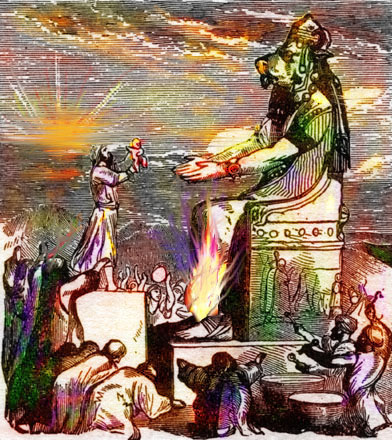
God’s temple was now filled with an evil darkness. King Manasseh made the Lord’s holy place a fountain of sin and filth. Instead of holiness, it was an evil place.

He brought in dark things that were twisted, perverted and clearly forbidden.

“Manasseh led Judah and the inhabitants of Jerusalem astray, to do more evil than the nations whom the Lord destroyed before the people of Israel.”

2 Chronicles 33:9, ESV

His own darkness was now encouraged by others, it became accessible, available and promoted:

  • The high places were rebuilt throughout the land.
  • Altars to Baal rebuilt, using images of wood.
  • In the holy temple, altars to the “starry host,” astrology, plain and simple.
  • Human sacrifice of his own sons to Molech, a false god. Murder.
  • He practiced soothsaying, used witchcraft and sorcery, and consulted mediums and spiritists.

Evil was being encouraged and something wicked was replacing all that was good and true. The analysis of Manasseh’s policies was way beyond disturbing. Of all the kings of Judah, he was the most sinful and the most corrupt. He was at the bottom of the barrel.

The Hebrew word for “led astray” can be translated seduced.

Manasseh was an incredibly immoral man, a king who ruled for 40 years. “He did all he could to pervert the national character, and totally destroy the worship of the true God; and he succeeded.” (Clarke)

It’s believed that he put Isaiah to death by cutting him in two.

Moreover Manasseh shed very much innocent blood, till he had filled Jerusalem from one end to another, besides his sin by which he made Judah sin, in doing evil in the sight of the LORD.

1 Kings 21:16

But then something happened.

And the LORD spoke to Manasseh and his people, but they would not listen. Therefore the LORD brought upon them the captains of the army of the king of Assyria, who took Manasseh with hooks, bound him with bronze fetters, and carried him off to Babylon.

2 Chronicles 33:10-11

Assyria came knocking on Manasseh’s door. I think there was a certain mercy here, but also discipline. Manasseh had “hooks,” inserted through his jaw and out of his mouth. Like a fish he was led to Babylon, a trophy of the power of the army of Babylon.

It was from a dark dungeon that Manasseh cried out to the Lord and repented.

(2 Chronicles 33:12-13.)

There’s a Jewish fable that when Manasseh cried out to God the angels boarded up the windows in heaven. They wanted to block out his prayer so God wouldn’t be able to hear. But God, rich in mercy, bored a hole in front of His throne to hear Manasseh’s desperate cry.

The Lord’s intention was to forever show His kindness and grace given to the most awful repentant sinner.

I believe that Manasseh was the “Prodigal Son” of the Old Testament.

God is not at a loss when He moves to bring us back to Himself. He can woo or whip. He can draw or drive. He can work rapidly or slowly, as He pleases. In other words, He is free to be God! And in His own way, at His own pace, He brings us back.

     Tom Wells

God is wildly in love with you. Yes, the sin you’ve committed is awful, but the Lord wants you to come back. He may discipline you, but He forgives everything if you’ll turn and repent.

No matter how awful your sin, He forgives and restores. Manasseh is proof of that.

Sources:

2 Chronicles 33:1-20

2 Kings 21:1-18

Enduring Word commentary

alaskabibleteacher.com

Sharp Knife Worship

In biblical hermeneutics, the “Law of First Mention” states that the initial occurrence of a word or concept in scripture determines its subsequent understanding. Obviously the book of Genesis is a main source of these initial mentions.

In Genesis 22, we have the story of Abraham and Isaac on Mt. Moriah.

Abraham has tied his son on an altar to offer him as a sacrifice in obedience to God’s direction (v. 2). His faith is tested to the ultimate extreme. Abraham shows us how to enter into real worship.

Genesis 22:4-5

This is the first time in scripture the word “worship” is used.

It sets the singular tone for all the scriptures on this subject. I guess what’s really interesting is that there are no musical instruments involved. There were just these needful things:

  • stones
  • wood
  • rope
  • fire
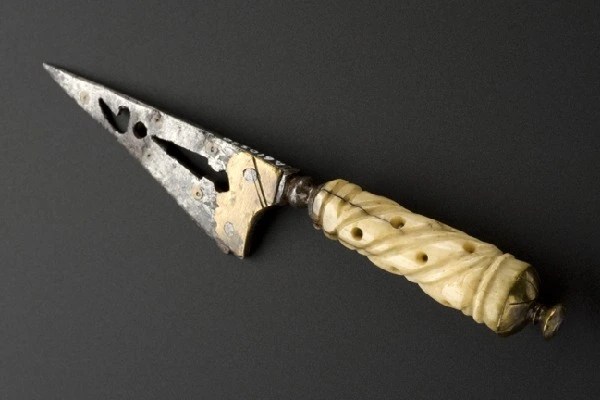
  • a knife
  • and Isaac, (the would be ‘lamb.’)

When the Hebrew word for ‘worship’ was used for the first time, it was infused with the idea of a sacrifice. Abraham is the first ‘worship leader’ and he has no guitar. No piano, or drums either. No musical instruments whatsoever. No amplifier, no overhead lyrics to speak of.

Just a handmade altar, and a very sharp knife.

In the end, as Abraham raises that knife, and he is suddenly stopped, (to the relief of us all). His faith has withstood the test, and he has genuinely ‘worshiped.’

Gen. 22:11-12

Principle One:

There really can’t be worship without sacrifice.

Sometimes we think that only talented and gifted people should lead worship, and maybe they should. But in reality, we all must worship, regardless of our talents or skills. Let’s remember that worship isn’t about impressing others, but it’s about expressing our devotion and commitment to God. But in the long run, there needs to be a sacrifice of some sort. It may be something small, but it’s always dear.

Principle Two:

The first worshiper didn’t use a guitar, but a knife.

This difference keeps the idea of sacrifice in its definition. I truly believe that there can’t be real worship without sacrifice. The knife thrust he was ready to use wasn’t backed up by drums or piano. Yet Abraham understood worship every step he took to Mt. Moriah with the knife in his belt.

Jesus is my Isaac, my sacrifice. He died so I now live.

We must realize our sacrifice is the Lamb of God. It’s His blood on God’s altar for our sin. As believers, our faith firmly rests in this spiritual fact. It’s a sacrifice, and He did it for us. We of all people have cause to really worship.

    John Piper

If You Really Want to Worship, Use a Knife

In Biblical hermeneutics, the ‘Law of First Mention‘ is used. Essentially it means that the first time a word or a concept is mentioned should go on to determine the way it needs to be understood throughout scripture. It is a guiding principle more than anything, but a good one at that. Genesis, being the first book, is a blessed repository for many of these ‘first mentions.’

In Genesis 22, we have the story of Abraham and Isaac on Mt. Moriah.

Abraham has tied up his son on an altar to offer him as a sacrifice in obedience to God’s direction (v. 2). This is faith being tested to the ultimate extreme. And Abraham shows us how to enter in.

“Then on the third day Abraham lifted his eyes and saw the place afar off. And Abraham said to his young men, “Stay here with the donkey; the lad and I will go yonder and worship, and we will come back to you.”

Genesis 22:4-5

This is the first time that  the word “worship” is used in the Bible.

It sets the singular tone for all the scriptures on this subject. I guess what is interesting is there were no musical instruments involved. There was just these needful things:

  • stones,
  • wood,
  • rope,
  • fire,
  • a knife,
  • and Isaac, (the would-be ‘lamb.’)

When the Hebrew word for ‘worship’ was used for the first time; it is interlaced with the idea of an incredible sacrifice. Abraham is the first ‘worship leader’ and he has no guitar. No piano, or drums either. No musical instruments whatsoever. No overhead lyrics to speak of.

Just a handmade altar, and a knife.

In the end, Abraham raises that knife, and then suddenly, to the relief of us all, he is stopped. His faith has withstood the test, and he has truly ‘worshiped.’

But the Angel of the Lord called to him from heaven and said, “Abraham, Abraham!” So he said, “Here I am.” And He said, “Do not lay your hand on the lad, or do anything to him; for now I know that you fear God, since you have not withheld your son, your only son, from Me.”

Gen. 22:11-12

Principle One: There really can’t be worship without sacrifice.

Recovering this truth concerning worship would be beneficial. It seems we delegate ‘worship’ to a select few who are talented and gifted. We probably don’t do this deliberately, but sometimes we feel it makes a better presentation. We all want to look good, even Christians. (Perhaps this is more substantial than we know.)

Principle Two: The first worshiper didn’t use a guitar, but a knife.

This difference keeps the idea of sacrifice in its definition. There isn’t worship without sacrifice. The knife thrust that he was ready to wield wasn’t backed up by drums or piano. Yet Abraham understood worship every step to Moriah with the knife in his belt.

“The Scriptures include or allude to just about every approach to worship there is: organized, spontaneous, public, private, simple, complex, ornate or plain. Yet there is no comment anywhere about any one way being preferred over another. Rather, it is the spiritual condition of the worshiper that determines whether or not God is at work.”  

Harold Best

So, brothers and sisters, because of God’s mercies, I encourage you to present your bodies as a living sacrifice that is holy and pleasing to God. This is your appropriate priestly service.”

Romans 12:1

Ultimately, we must realize our sacrifice is the Lamb of God. It’s His blood on God’s altar for our sins. As believers, our faith firmly rests in this spiritual fact.

We of all people have cause to really worship.

“I Kept You From Sinning”

Genesis 20:6

This is called restraining grace, the doctrine that teaches that God intervenes to prevent sin from happening.

Both the pagan king Abimelech and the patriarch Abraham have problems. One wants to add Sarah to his harem (lust), and the other pretends that Sarah isn’t his wife, but his sister (cowardice).

The dream:

Abimelech goes to bed and has a “God dream.” The Lord threatens him with death for taking another man’s wife. King Abimelech protests and pleads for his life. (Dreams were significant in Genesis.)

God relents and to Abimelech’s credit the Lord understands that this was done from a clear conscience. It seems that Abraham’s spinelessness has given the wrong idea about Sarah. She isn’t his sister, but his wife!

There are some interesting issues here. Not only is the king prevented from sinning here, but we see the lengths God went to protect Abraham and Sarah’s marriage. They were to be the parents of the nation of Israel. God would see to that.

There are real consequences to our sin. We will reap what we sow (Galatians 6:7), but God’s grace protects the believer who desires to be Christ-like. He is a shield to the man who runs to Him.

It probably happens more than you realize. I’ve found that there is a still, small voice that speaks to the Spirit-filled believer. Sometimes we ignore it and sometimes we obey it, but it’s there. It’s meant to guide us.

Our conscience is the “sheriff” of our souls. It’s our compass.

It seems that little is said about conscience anymore, but it’s imperative that you recognize it. Conscience tells you whether something is right or wrong. It’s our guide and must be closely watched over. It can become seared and clouded–it can be defiled. But it also can be purified and made holy.

Our conscience knows this. It’s a spiritual fact.

Ligonier.org

For further study: Psalm 12:7; Proverbs 11:6; Proverbs 13:6; 1 Peter 3:12.

alaskabibleteacher.com

Against Rulers and Forces

10 Finally, be strong in the Lord and in the strength of His might. 11 Put on the full armor of God, so that you will be able to stand firm against the schemes of the devil. 

12 For our struggle is not against flesh and blood, but against the rulers, against the powers, against the world forces of this darkness, against the spiritual forces of wickedness in the heavenly places.

Eph. 6:10-12, NASB 

Paul tells us that discerning the cosmic forces of wickedness is now critical. If we choose to ignore his words and make them optional, we will become spiritual toast. We need to hear reality. We want to be told the truth. And the truth is that we’re neck deep in spiritual alligators.

Point blank: We were each born for battle. Every believer must wear armor.

This passage in Ephesians 6 stresses that there is something sinister, an organized force, something evil, a darkness that’s focused directly on us. Verse 12 unveils to us a veritable government of wickedness. Satan leads his demons out with the intention of confusing believers and destroying holiness.

We also need to understand that human beings have a terrible knack of walking in their sin, and also by being manipulated by evil forces. Human history bears this out. We have a lousy track record. Without the Spirit we will be lost and destroyed by our own darkness.

Christians are to see life very differently than others do.

Ephesians 6 teaches us to find strength in being connected with God, which is critical to walk through in this confusing darkness. By prioritizing our relationship with Him, we can draw upon His strength and a sincere faith to navigate through all of this.

Without intimacy there is no obedience and there can be no real victory.

You must come to him humbly and holy, and sit before Him and listen, learn and love. And that is the major step in true holiness. Being controlled by Him means when you need to, you can stand and deliver damage to Satan’s kingdom.

You’ll be leading angels in this terrible battle! They have their swords drawn and are quite capable. Remember that this is a spiritual war–not physical. Your attack must be fought on your knees. And angels, they’re watching and listening to you as you pray. They are God’s messengers to protect you.

Satan presses us hard through redirection and forgetfulness of who we are.

Without the humble intimacy that can only grow on prayer and Bible reading, we will be spiritually destroyed. We need the protection of the Presence. Please don’t forget this; you need Jesus more today than yesterday. You must come closer. He will help you.

You see, your only hope is in Jesus’ strength and intimate love for you.

We must reach for our power and grab upon this intense love. We can only become strong through our intimacy with Jesus. He shields us from the spiritual corruption that swirls all around us. As we draw to Him we become mighty, as we listen closely to the Holy Spirit, we will walk in true discipleship with Jesus.

You will hear Him speak clearly to you, perhaps when you actively push to do His will than your own.

“We are a long time in learning that all our strength and salvation is in God.”

     David Brainerd

alaskabibleteacher.com