God’s Night Shift, Psalm 134:1-3

A song of ascents.

“Now bless the Lord,
all you servants of the Lord
who stand in the Lord’s house at night!
Lift up your hands in the holy place
and bless the Lord!

 May the Lord,
Maker of heaven and earth,
bless you from Zion.

Psalm 134:1-3

Not every Levite labored during the day. The night shift continued their work. Granted, no sacrifices were offered, but the “night priests” stood to protect the Ark, gather wood, and keep the incense burning and cleaned up the blood. But most importantly they must worship and pray for Israel.

“Servants of the Lord” is a phrase that resonates in my heart. Those words are both a comfort and a responsibility and that seems to open this passage up. We’ve got a Master, and we serve Him only. And I know and believe that worship was the main responsibility of the night watch!

“Christians believe that true worship is the highest and noblest activity of which man, by the grace of God, is capable.”

-John Stott

Worship is the central work of the disciple, it’s what we’re called to do. Evangelism, missions, and preaching are fine. But prayer and intercession must be the heartbeat of each believer. It’s the holy calling of the Church. When does the church service end? Never!

The service really gets going Monday through Saturday!

In this short Psalm, (just 3 verses!) we’re introduced to a group of Levites who are working the night shift. What they do is hidden–it’s not seen by others. They keep the fires stoked, gather wood, and patrol the walls. But more importantly, they stand and worship and intercede for Jerusalem.

No real recognition is given, and the spotlight is rarely shined on them.

They serve at night, vitally essential but seldom seen. And yet they intercede for the nation. They “bless” the Lord and the people of God. That’s their place and position. They must do this. Israel must be blessed. These night shift workers insist on it!

The church needs nursery workers and Sunday school teachers. So many are working behind the scenes. Often the deacons and elders of a church are rarely seen and seldom acknowledged. So much is concealed. Their work is a hidden one. But the Father sees.

In a church, someone has to clean the bathrooms and take out the garbage, and others will make coffee or shovel snow. They vacuum and straightened the chairs. They are the ones who collect the mail and prepare the overheads. There’s always something to do. And it’s a hidden work carried out with no one watching. No one, but God.

“It is good to give thanks to the Lord,
    to sing praises to your name, O Most High;
to declare your steadfast love in the morning,
    and your faithfulness by night,

Psalm 92:1-2

Serving at night can be a challenge, not all can lead worship or preach the sermon on Sunday morning. Those called to do those tasks serve in the day. But those who serve the Lord at night also labor, and sometimes that hiddenness behind the scenes has its own special challenges.

This may come as a surprise, but it takes as much of the Spirit to work the night shift as it does to stand behind the podium and preach the Word. I believe that this is true! These hidden ones carry out much of the ministry of the Church. Few notice, but God Himself sees them.

“They [Levites] are exhorted to fill the night with prayer and watchfulness and to let their hearts go up in blessing to Jehovah. The voice of praise should echo through the silent night and float over the sleeping city.”

Alexander MacLaren

alaskabibleteacher.com

Without Your Wound?

angel6

The subject of “the pool at Bethesda” alludes to the Thorton Wilder play, “The Angel that Troubled the Waters.” 

The play tells of a physician who comes to the pool of Bethesda, hoping to see the stir, and then be the first in the water, and healed of his debilitating depression.  An angel appears and troubles the water. Everybody at the pool hopes to be the first one in and to be healed of their disability.

An angel appears and blocks a physician at the very moment he is about to step into the pool and be healed.

angel1

Angel: “Drawback, physician, this moment is not for you.”

Physician: “Angelic visitor, I pray thee, listen to my prayer.

Angel: “This healing dear physician, is not for you.”

Physician: “Surely, surely, the angels are wise. Surely, O Prince, you are not deceived by my apparent wholeness. Your eyes can see the nets in which my wings are caught; the sin into which all my endeavors sink half-performed, cannot be concealed from you.”

Angel: “I know.”

Physician: “Oh, in such an hour was I born, and doubly fearful to me is the flaw in my heart. Must I drag my shame, Prince and Singer, all my days more bowed than my neighbor?”

Angel: Without your wound, where would your power be?” 

“It is your very sadness that makes your low voice tremble into the hearts of men. The very angels themselves, cannot persuade the wretched, and blundering children on earth, as can one human being broken on the wheels of living.

Later, the person who enters the pool first, and was healed rejoices in his good fortune, then turns to the physician before leaving and says:

“But come with me first, an hour only, to my home. My son is lost in dark thoughts. I — I do not understand him, and only you have ever lifted his mood.”

“Only an hour… my daughter… since her child has died, sits in the shadow. She will not listen to us, but she will listen to you.”

The play pierces me with this line— “Without your wound where would your power be?“ That thought causes me to look at my many weaknesses with an entirely different perspective.

Paul’s teachings offer us a powerful revelation: it is through our weaknesses that we can authentically minister to others, just as Jesus did by going to the cross. This priniple slowly permeates my understanding, and emphasizes the reasons behind my weaknesses.

Paul boldly declares that it is the very things we perceive as weak that have the potential to cultivate strength and truth within us and to others. It is my sincere hope that the ministry of alaskabibleteacher.com will impact lives by declaring this.

I hope so anyway. Please pray for me. I desperately need it.

I first encountered this excerpt in the book, “Abba’s Child: The Cry of the Heart for Intimate Belonging,” by Brennan Manning. The book is a worthy read, and worth finding if you can. The play is based on the biblical verses of John 5:1-4, however, it changes the end of the parable. The play is fictitious.

Check out Brennan Manning’s Facebook page for more info.

alaskabibleteacher.com


Leave the Spear in the Wall

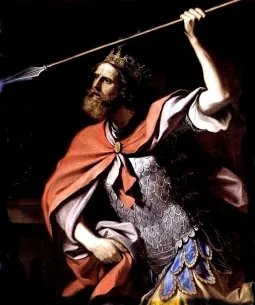
And Saul hurled the spear, for he thought, “I will pin David to the wall.” But David evaded him twice.

1 Samuel 18:11, ESV

And Saul sought to pin David to the wall with the spear, but he eluded Saul so that he struck the spear into the wall. And David fled and escaped that night.

Saul’s spear shows up later in David’s life, and it becomes a vital component in his growth as Israel’s next king.

But David doesn’t know that yet. In 1 Samuel 26 we read about David’s second encounter with the spear of Saul.

The scene is in the wilderness and David’s on the run. Now the badlands are a good place to hide as any Western movie knows. I think David had his scouts and I suppose that there were also men who knew every rock and cave in that wasteland. They were hiding from Saul.

“So David and Abishai entered the encampment by night, and there he was—Saul, stretched out asleep at the center of the camp, his spear stuck in the ground near his head, with Abner and the troops sound asleep on all sides.”

1 Samuel 26:7

Sneaking into Saul’s camp was bold and audacious. Saul was sleeping and scripture says that David’s companion desperately wanted to kill Saul, but David refused, David, looking through the darkness lighted on Saul’s spear. Perhaps he remembered back to when Saul tried very hard to kill him.

He avoided that spear a long time ago, and now he escapes it again.

The tables have completely turned. Given a chance to end King Saul’s life, he refused; he would not kill him. When you think about it, many problems would’ve been solved, and David would take his rightful place as Israel’s new king.

But David spiritually understood God’s heart. He understood the spiritual principle of “turning the other cheek” and “loving your enemies.” He overcame with love and kindness. And lots of grace.

“Do not be overcome by evil, but overcome evil with good.”

Romans 12:21, ESV

The Greek word for “overcome” is νικάω which can be translated as “to conquer or to come forth victorious.” It is also used when someone is arraigned before a court of law but wins the case.

To follow Jesus means you entirely reject using the spear. It’s not for you. Never.

“We win by tenderness. We conquer by forgiveness.”

Frederick W. Robertson

We must leave the spear in the wall. You must not throw it back.

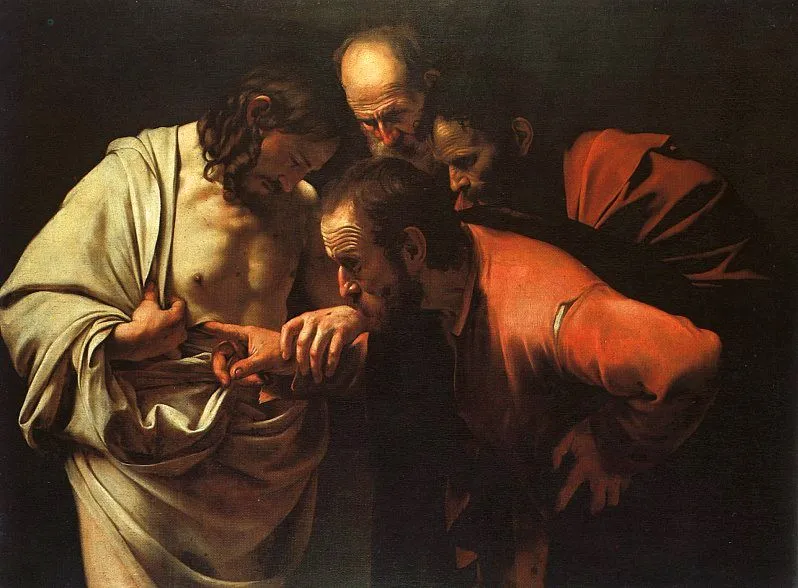
Like David, we are to trust the Father. We’re to be secure in His timing. And yes, we each must use kindness and brokenness to overcome dark things. When you think about it, Jesus also faced evil without defending Himself. The spear showed up again and we see that our Savior allowed it to pierce His side on the cross.

You must leave the spear in the wall.

You mustn’t use the spear when it seems you can wield it at the perfect moment, and like Jesus you need to allow it to save your enemies from their sin.

These three spears are evidence you “have God’s heart.”

Boasting for Dummies


“Let not the wise man boast in his wisdom, let not the mighty man boast in his might, let not the rich man boast in his riches,”

“but let him who boasts boast in this, that he understands and knows me, that I am the Lord who practices steadfast love, justice, and righteousness in the earth. For in these things I delight, declares the Lord.”

Jeremiah 9:23-24

There is bad boasting (v.23), and good boasting (v.24). When I think of someone who brags it’s almost always in a negative sense. 

Boasting is one way pride becomes visible, it’s the way we exaggerate or embellish our identity. We magnify ourselves, amplifying our achievements beyond what is reality. We must understand that all it really is is arrogance on display.

There is no room for braggarts in the Church.

You cannot sanctify boasting. It is pride that we vocalize and use to influence. We want to change another person’s perspective of you. We desperately want others to admire and think better of us. Some have postulated that it really is nothing more than masking insecurity. I think they’re right.

The Word differentiates between good and bad boasting.

The book of Jeremiah (9:23-24) does precisely that. It explains that what is worldly: wisdom, strength, money– is the wrong way of seeking recognition and importance. God’s people are to declare (brag) that they are in an intimate relationship with God.

We understand, we know that we have a loving connection with the Lord. We learn we can brag about Him.

I encourage you to become aware of how you conduct yourself in front of others. We seldom think of ourselves realistically. For many of us our lives are so intertwined with the false that we struggle with what is true.

God resists pride. (James 4:6.)

Jeremiah tells us we can choose to be different. We can swivel from the negative to the positive. We must quit exalting any attainment we have and instead boast that we now know God.

No longer do we strut, but now we choose to kneel.

“Humility is to make a right estimate of one’s self.” 

Charles Spurgeon


God’s Extravagant Love

Anointed by God

He predestined us to be adopted as sons through Jesus Christ for himself, according to the good pleasure of his will, to the praise of his glorious grace that he lavished on us in the Beloved One.

Ephesians 1:5-6

These particular verses establish the believer’s election. That involves being predestined or having a “pre-destiny” to be adopted as sons and daughters.

He predestined us to be adopted as sons. This is meant to be staggering. He’s made a profound move to bring the adopted (us) into a place of the family with this place of the divine. He chose us, and we simply accept this choice.

Sons. Not slaves. We’ve now included in this predestination that has made us His family. His own family!

For himself, according to the good pleasure of his will, What can we say? It’s what He wanted to do. He has willed our adoption. He wanted it, and because of this, we belong. We’re now part of His family tree.

To the praise of his glorious grace that he lavished on us in the Beloved One. “Praise” here is a strong word in the original text. It’s the highest level there is. It’s very intense.

“Glorious grace.” This glory is fully attached to grace and in a way it intensives it. Grace here is something undeserved and yet it’s given to us freely. It belongs exclusively to God, but it’s like a “Christmas present.” It’s now given to each of us to open up what God has given us.

The word “grace” is charis in Greek and it can be translated as a benefit, bounty, “that which affords joy, pleasure, delight, sweetness, charm, loveliness.” It’s a word with a lot of dimensions to it.

Lavished on us in the Beloved One. It’s extravagant and excessive and it’s poured out on one’s spirit without measure. When one first believes in Jesus, (the beloved one) it completely saturates us. This poured-out grace isn’t earned or deserved, rather He has made His decision to heap on us a powerful love.

B

Your Shepherd is Speaking

John 10:1-6, The Message

1-5 “Let me set this before you as plainly as I can. If a person climbs over or through the fence of a sheep pen instead of going through the gate, you, know he’s up to no good—a sheep rustler! The shepherd walks right up to the gate. The gatekeeper opens the gate to him and the sheep recognize his voice.”

“He calls his own sheep by name and leads them out. When he gets them all out, he leads them and they follow because they are familiar with his voice. They won’t follow a stranger’s voice but will scatter because they aren’t used to the sound of it.”

6 “Jesus told this simple story, but they had no idea what he was talking about.

For context: 10:7-18

What joy can be found in our Shepherd’s care, and to hear his voice. Nothing really can match this wonder. We follow as he leads. The voice is an integral part of this passage and the foundation of authentic discipleship. You really can’t walk with him unless you hear him. We belong to him. We’re his flock that he keeps and provides for.

He knows our name! That’s the intimacy found in these verses. We’re never forgotten and he will never overlook us. To think otherwise is slander and an attack on his present-day ministry. Jesus is our good shepherd. He always will be.

“Intimacy with God comes in whispers, not shouts.”

     Woodrow Kroll

He sometimes whispers, and this world can’t hear him. To be perfectly honest, my ‘busyness’ silences him. I suppose that the real issue isn’t with him, but with myself.

“And after the earthquake, there was a fire, but the Lord was not in the fire. And after the fire, there was the sound of a gentle whisper.”

1 Kings 19:12

The gentle whisper to a man afraid. This fits the Father’s m.o. He doesn’t speak through a windstorm, earthquake, or fire. He chooses to speak very quietly, and that’s a problem for me. In the original Hebrew, the word for “whisper” can be translated as calm, silence, or something gentle. He speaks this way if only we shut up for a little while.

If we are to recognize God’s voice, we must belong to Him. We hear His voice when we spend time in Bible study and quiet contemplation of His Word. The more time we spend intimately with God and His Word, the easier it is to recognize His voice and His leadership in our lives(.

(Perhaps Psalm 23 should be brought in at this point?)

The flock hears the shepherd, and it’s that voice that breaks through our cluttered-up life. We can hear, and it’s that communication that encourages us to walk through life—one day at a time. Just today. That’s all you must do.

There are so many other voices. You must ignore them.

So many are speaking, and so many want us to hear and follow them. But in reality, they want us to leave the Shepherd and his flock behind.

But we can’t allow this, we must learn to listen to him alone.

(Art by Eugène Burnard)

Becoming a Little Christ

Luke 9:1-6, Amplified

Now Jesus called together the twelve [disciples] and gave them [the right to exercise] power and authority over all the demons and to heal diseases. 

Then He sent them out [on a brief journey] to preach the kingdom of God and to perform healing. And He said to them, “Take nothing for your journey [that might encumber you]—neither a walking stick, nor bag, nor bread, nor money; and do not even have two tunics apiece. Whatever house you enter, stay there until you leave that city [to go to another]. And as for all those who do not welcome you, when you leave that city, shake the dust off your feet [breaking all ties with them] as a testimony against them [that they rejected My message].” 

So they began going from village to village, preaching the gospel and healing the sick everywhere.

A disciple’s perspective:

Jesus called the twelve of us together that day for a reason–He wanted us to start doing His work, which, I admit wasn’t really in my thinking. But this was His plan, and He knew exactly what He was doing. I didn’t feel remotely competent, and the thought of doing what Jesus did seemed a bit sacrilegious.

I was intimidated by all of this.

But now I can see that was what He intended all along, to push us into the supernatural–preaching, healing, and exorcising demons. He wanted us to touch people, to meet the needs of the desperate, and by doing so, extend the kingdom of God.

We were all skeptical, obviously. We weren’t Jesus, not by a long shot, and we had no right or ability to do miracles. On our own, I we were still fishermen and tax collectors. And honestly, what Jesus was asking (or commanding?) was for us to leave what we felt was comfortable and to step into His sandals. He wanted us to be just like Him.

He gave us His authority and power–it was His to give.

I suppose that this was the key to it all. We had witnessed fantastic miracles, stunning things that pretty much undid us. Jesus repeatedly defied the laws of nature—with just a word. And we’re His disciples, so I suppose that meant we needed to step out and touch people just like He taught. I guess that was Jesus’ plan for us all along. We just thought it wouldn’t happened this quick.

So the power and authority was given and we became “little Christs.”

Two by two we went in different directions to discover for ourselves what would happen. The needs we encountered were substantial. The world was a needy place that made its home in the pain and darkness of the demonized and the desperate. It seemed overwhelming. I think we all felt weak and very inadequate.

It’s funny, but we suddenly saw all these people through His eyes–it’s like we never had seen them before. We were now cloaked in Jesus’ very own power. When we laid hands on people astonishing miracles began to happen. All at once there were needs all around us. And the people kept coming.

I began to understand what it really meant to love people. We had left the relative safety of learners and had now became doers. I suppose we realized that there was an incredible difference between the two. We were all astonished by what we saw, at that moment we had few doubts about what was happening inside of us.

It changed us like nothing else could!

Being made into “little Christs” now made perfect sense. We saw fantastic miracles and dramatic victories over dark demons. The things we had seen Jesus do were now the things we were doing! Suddenly everything came together and we understood many of the words that He had tried to drill into our thick skulls.

From village to village we went–we stayed with whoever wanted us. The needs we saw were staggering, from sunrise to sunset people came. Wherever we turned there seemed to be somebody else, but Jesus’ own authority was always present, it never diminished or weakened. It was like a bubbling spring that never once ran dry.

I suppose what happened inside me was just as much a miracle as we had seen Him do for others.

I was astonished–up to now I never realized how exciting it was to follow the Lord Jesus. What a joy to see the face of a man or woman who was set free. It was such a thrill to touch a little boy’s dead eyes and suddenly realize that he could see!

So this is what it honestly means to be His disciple!

“Truly I tell you, the one who believes in me will also do the works that I do. And he will do even greater works than these, because I am going to the Father.”

John 14:12

Spiritual Sloth

Matthew 25:1-13

“At that time the kingdom of heaven will be like ten virgins who took their lamps and went out to meet the groom. Five of them were foolish and five were wise. When the foolish took their lamps, they didn’t take oil with them; but the wise ones took oil in their flasks with their lamps. When the groom was delayed, they all became drowsy and fell asleep.

“In the middle of the night there was a shout: ‘Here’s the groom! Come out to meet him.’

“Then all the virgins got up and trimmed their lamps. The foolish ones said to the wise ones, ‘Give us some of your oil, because our lamps are going out.’

“The wise ones answered, ‘No, there won’t be enough for us and for you. Go instead to those who sell oil, and buy some for yourselves.’

10 “When they had gone to buy some, the groom arrived, and those who were ready went in with him to the wedding banquet, and the door was shut. 11 Later the rest of the virgins also came and said, ‘Master, master, open up for us!’

12 “He replied, ‘Truly I tell you, I don’t know you!’

13 “Therefore be alert, because you don’t know either the day or the hour.

There were three stages in every ancient Jewish wedding.

  • Engagement–when fathers got together to make sure that it would be a good match.
  • Betrothal—a ceremony in which formal promises were made by the lovers.
  • Marriage—a surprise arrival, usually a year later, by the groom at the home of the woman.

Each was incredibly important. There couldn’t be any short-cuts; one just didn’t jump into this. It wasn’t a Las Vegas approach to just getting hitched. This parable was an extension of the previous verses in Matthew 24:36-51 and had to do with being prepared.

We can extract this from the third step of marriage. The groom would show up at night, and torches were used to light their way, (apparently the flashlight hadn’t been invented yet). Within Jesus’ parable was the idea of suddenness or surprise.

But no one knew exactly when the groom would show up.

Hence there is an emergency feel to this story. The text states in verse 5:

Five of them were foolish and five were wise.”

The story hinges on this sentence. Readiness is the issue here. Everything of any significance must take on the sudden arrival of the groom’s entourage. The virgins, apparently, would go out to meet him—the torches mingling their light, and drive out any darkness. (It seems that 10 was the acceptable number for a proper rabbinical ceremony).

The problem was that only 1/2 of them were ready. It’s interesting to note that everyone was sleeping. Obviously, that didn’t mean anything for it was the availability of “oil” that would make the difference. The idea was a surprise visit.

The oil was the key. And for us, it represents the Holy Spirit.

Sleep is not the whole issue here, but being prepared is. Five girls were foolish, they were simply not ready. They realized their error and tried to finagle oil from the others, but ultimately that would short everyone in their group. There was an idea that a trip to the local oil merchant would work. It was an idea anyway.

But it was already too late!

The door was closed. The five simply missed it. They stood outside knocking and calling, but they didn’t enter in on time. Reading between the lines, I sense they were desperate. Verse 12 is meant to penetrate and reveal the price of tolerating spiritual sloth.

“He replied, ‘Truly I tell you, I don’t know you!’

The purpose of this parable is the ending line that stresses alertness in a society that dulls everything. The temptation is to act like you’re spiritually aware when you’re not. It’s one of our greatest sins. We assume our lamps are lit when the reality is that our oil (the Holy Spirit) is running close to zero. When our sloth gets mixed with hypocrisy it’ll surely destroy us.

We’re snoring our way to spiritual death.

We must resist slumber and slothfulness. Jesus asserts that his virgins must be prepared and ready for his coming. We must be ready, we must—the price of our unreadiness is high indeed.

“Take care of giving up your first zeal; beware of cooling in the least degree. Ye were hot and earnest once; be hot and earnest still, and let the fire which once burnt within you still animate you. Be ye still men of might and vigor, men who serve their God with diligence and zeal.”

    Charles Spurgeon

Art by Eugène Burnan

Sharp Knife Worship

In biblical hermeneutics, the “Law of First Mention” states that the initial occurrence of a word or concept in scripture determines its subsequent understanding. Obviously the book of Genesis is a main source of these initial mentions.

In Genesis 22, we have the story of Abraham and Isaac on Mt. Moriah.

Abraham has tied his son on an altar to offer him as a sacrifice in obedience to God’s direction (v. 2). His faith is tested to the ultimate extreme. Abraham shows us how to enter into real worship.

Genesis 22:4-5

This is the first time in scripture the word “worship” is used.

It sets the singular tone for all the scriptures on this subject. I guess what’s really interesting is that there are no musical instruments involved. There were just these needful things:

  • stones
  • wood
  • rope
  • fire
  • a knife
  • and Isaac, (the would be ‘lamb.’)

When the Hebrew word for ‘worship’ was used for the first time, it was infused with the idea of a sacrifice. Abraham is the first ‘worship leader’ and he has no guitar. No piano, or drums either. No musical instruments whatsoever. No amplifier, no overhead lyrics to speak of.

Just a handmade altar, and a very sharp knife.

In the end, as Abraham raises that knife, and he is suddenly stopped, (to the relief of us all). His faith has withstood the test, and he has genuinely ‘worshiped.’

Gen. 22:11-12

Principle One:

There really can’t be worship without sacrifice.

Sometimes we think that only talented and gifted people should lead worship, and maybe they should. But in reality, we all must worship, regardless of our talents or skills. Let’s remember that worship isn’t about impressing others, but it’s about expressing our devotion and commitment to God. But in the long run, there needs to be a sacrifice of some sort. It may be something small, but it’s always dear.

Principle Two:

The first worshiper didn’t use a guitar, but a knife.

This difference keeps the idea of sacrifice in its definition. I truly believe that there can’t be real worship without sacrifice. The knife thrust he was ready to use wasn’t backed up by drums or piano. Yet Abraham understood worship every step he took to Mt. Moriah with the knife in his belt.

Jesus is my Isaac, my sacrifice. He died so I now live.

We must realize our sacrifice is the Lamb of God. It’s His blood on God’s altar for our sin. As believers, our faith firmly rests in this spiritual fact. It’s a sacrifice, and He did it for us. We of all people have cause to really worship.

    John Piper

The Five Crowns

In the New Testament crowns are given to certain believers. They’re more than a reward, they’re recognition of a Christian’s life and character. Keep in mind that each one given is pure grace. They are not rewards that we earn, but recognition of God’s blessing. We can do nothing unless He gives us His grace. You must understand this.

We find that there are five. But understand, these are not given as recompense or compensation. A crown is never earned, and it’s never given as an achievement for exceptional behavior. All are received by His grace and kindness. (And, we’re not in any competition on who can receive the most.)

Here’s a list which I hope is complete.

  • the Victor’s Crown
  • the Crown of Rejoicing
  • the Crown of Righteousness
  • the Crown of Life
  • the Crown of Glory 

The Victor’s Crown, which is also called the Martyr’s Crown. We can read it in James 1:12 and also in Revelation 2:10. The Church of Smyrna is promised by Jesus, Do not fear what you are about to suffer…the devil is about to throw some of you into prison…Be faithful unto death, and I will give you the crown of life.”

The Crown of Rejoicing, is described in 1 Thessalonians 2:19 and in Philippians 4:1. This crown is given to those dedicated to evangelism or the mission field. Paul receives this crown for his work with the Thessalonians. “Therefore, my brothers, whom I love and long for, my joy and crown, stand firm thus in the Lord, my beloved.”

The Crown of Righteousness, this is given to believers who steadfastly look for Jesus’ Second Coming. It seems it’s also given to those who seek after an intimacy with Jesus. We can read of this in 2 Timothy 4:8. “There is laid up for me the crown of righteousness, which the Lord, the righteous judge, will award to me on that day, and not only to me but also to all who have loved his appearing.”

The Crown of Life, this is given to those who have laid aside all the things this world offers and are committed to a life that is eternal. “Everyone who competes in the games goes into strict training. “They do it to get a crown that will not last, but we do it to get a crown that will last forever.” (1 Cor. 9:25.)

The Crown of Glory, given to the pastoral servants who have prayed and served the Church, “And when the chief Shepherd appears, you will receive the unfading crown of glory.” According to 1 Peter 5:2-4 this crown is given to those who have served the flock faithfully as His shepherds and teachers.

These five crowns are freely given, by grace, to each who deserves them. In each and every case it’s Jesus who coronates each believer. We’ll watch and we’ll agree with His decision. We will not vote to see who is worthy but we will understand His gracious wisdom of that person’s trials and challenges.

None of these crowns will not be worn very long. There will not be any reason to show them off to other believers, “Look at me, I’m wearing two, how many crowns are you wearing?” No. Rather, in love, we return each crown to Him who gave it to us.

A crown is temporary and is given back to Him who loved us so much. 

“The twenty-four elders fall down before him who is seated on the throne and worship him who lives forever and ever. They cast their crowns before the throne, saying,

“Worthy are you, our Lord and God,
    to receive glory and honor and power,
for you created all things,
    and by your will they existed and were created.”

Revelation 4:10-12

Willian Tiptaft