To follow Him can be really hard. There doesn’t seem to be any contingency plans for any who are looking to escape such a drastic call. Jesus either is, or He isn’t our Lord. “Do you also want to leave?” This is a question that will be asked to every disciple–sometimes0once, and sometimes repeatedly.
There are these crystalline moments when I must make a decision. Will I take up my cross and go with Him? There doesn’t seem to be any room in Jesus’ band for ‘almost’ disciples. That scares me sometimes.
Today’s cross is waiting for me. I’m afraid at times that I won’t be able to take the next step as a true follower. Am I just fooling myself?
All of heaven seems to stand on tiptoe to see what I’m going to do next.
Who am I really?
Being obedient to Jesus is far from easy. We must have His Spirit.
“After this, many of his disciples left. They no longer wanted to be associated with him. Then Jesus gave the Twelve their chance:
“Do you also want to leave?”
“Peter replied, “Master, to whom would we go? You have the words of real life, eternal life. We’ve already committed ourselves, confident that you are the Holy One of God.”
John 6:66-69, The Message
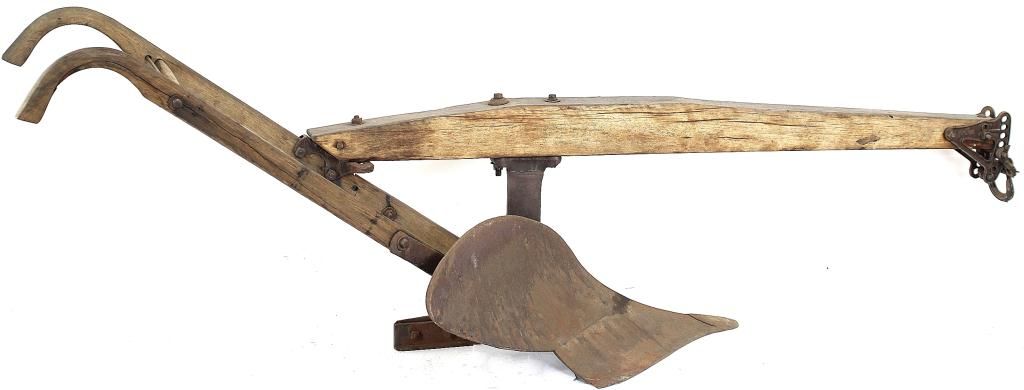
“It is indeed praiseworthy for a believer to consecrate his life to the Lord, but he must never do so lightly or thoughtlessly. Before committing your life in service to God today, count the cost, for “No man, having put his hand to the plough, and looking back, is fit for the kingdom of God” (Luke 9:62).”
“The Lord confides in those who fear him; he makes his covenant known to them.”
Psalm 25:14
“The secret things belong to the Lord our God, but the things that are revealed belong to us and to our children forever, that we may do all the words of this law.”
Deut. 29:29
What I need to share with you is privileged information, profoundly insightful yet delicate in nature. Not every believer will understand or resonate with the depths of this revelation. Some will readily agree with the truths I will unveil, finding comfort and clarity in them, while others might struggle to grasp the significance of the message. This is a secret but not secretive; it is an invitation to explore a deeper relationship with the divine. Every Christian can enter into this profound understanding if they choose to open their hearts and minds. Some will accept this call willingly, embracing the journey of discovery, and some won’t, perhaps choosing to remain within their comfort zones, unaware of the profound impact this knowledge could have on their spiritual walk. Yet, for those who are willing to seek, an incredible path of enlightenment and connection awaits them.
“Then Jesus strictly warned them not to tell anyone about Him.” Mark 8:30
“Call to me and I will answer you, and will tell you great and hidden things that you have not known.” Jeremiah 33:3
Learning His secrets–
Intimacy with God: Seeking Him personally, not just intellectually.
Fear & Awe: Having reverence and respect for God (Psalm 25:14).
Dependence on the Spirit: Relying on the Holy Spirit for understanding, as humans cannot know these things on their own (1 Corinthians 2:10-12).
Faith & Surrender: Trusting God’s revealed truths and surrendering to His will, even when answers are withheld.
To understand His special things is not automatic. I encourage you to come and sit, read and pray. And listen. It will come to you by grace through His blood.
“But it is not this way among you, but whoever wishes to become great among you shall be your servant.”
Mark 10:44
I admit that I’m processing something right now, and it isn’t easy.
I suppose its implications could turn everything ‘upside down,’ at least for me anyway. Some scientists have postulated that our planet is due for a complete magnetic switchover. This is when the north becomes south and vice versa. My issues at this moment are not quite that cosmic.
There are 7,000,000,000+ people now alive on this planet.
Sometimes I wonder if many of my issues come from not seeing this. It seems that there’s an intoxication of success when we become increasingly confused over ‘who’ we are. We think it’s about our efforts, our giftedness. Pride drives us, even among supposedly mature Christian believers.
3 “Don’t be selfish; don’t try to impress others. Be humble, thinking of others as better than yourselves. 4 Don’t look out only for your own interests, but take an interest in others, too. 5 You must have the same attitude that Christ Jesus had.”
Philippians 2
Jesus was not driven like we seem to be.
We, on the other hand, think we need to be assertive, (at least the Christian version of it) and push our way forward. However, Jesus’ message and teaching were all about emptying Himself of being God and becoming a servant of servants. This is the arresting fact we fail to consider–
Jesus did all of this while wearing a towel, not a crown.
John 13:3-5
He could have done a ‘teaching’ on servanthood, or maybe direct a symposium on “slave theory” and I’m certain it would have been more than sufficient. But instead, Jesus put ‘skin on His words’ and actually got down on His knees to wash dirty feet. His disciples freaked out when they saw him do this. You and I, witnesses of this, would pretty much do the same.
It was something they could never unsee, nor ever forget.
6 “Though he was God, he did not think of equality with God as something to cling to.
7 Instead, he gave up his divine privileges; he took the humble position of a slave and was born as a human being. When he appeared in human form,
8 he humbled himself in obedience to God and died a criminal’s death on a cross.”
How can we not do this, and why is seeing Him serving like this so brain-flipping?
This is a hard question to ask, but to be perfectly honest, does our discipleship include emptying ourselves daily? Can we find peace and fulfillment by becoming an unknown? Is this what we’re missing in becoming Christlike? These are very hard questions.
“Humility is perfect quietness of heart, It is to expect nothing, to wonder at nothing that is done to me, to feel nothing done against me.”
“It is to be at rest when nobody praises me, and when I am blamed or despised. It is to have a blessed home in the Lord, where I can go in and shut the door, and kneel to my Father in secret, and am at peace as in a deep sea of calmness, when all around and above is trouble.”
“One of the criminals who were hanged railed at him, saying, “Are you not the Christ? Save yourself and us!” 40 But the other rebuked him, saying, “Do you not fear God, since you are under the same sentence of condemnation? 41 And we indeed justly, for we are receiving the due reward of our deeds; but this man has done nothing wrong.” 42 And he said, “Jesus, remember me when you come into your kingdom.”
And he said to him, “Truly, I say to you, today you will be with me in paradise.”
The pain was incredible, but I know that deep down I deserved to die. But not like this. Never like this. I was almost out of my mind with fear. What they were about to do to me was terrifying.
You must understand that I was just a common thief. I had stolen a loaf of bread when I was eight years old and that’s how it all got started for me. It more or else got bigger and easier. I knew how to steal and I was quite good at it. I was Jacob, the master thief!
When I was finally caught, they had sentenced me to die.
I supposed it was inevitable. I fault no one but myself, I knew what I was getting into. As I dragged my beam up to Golgotha, it was really strange but I suddenly remembered a verse from the scripture and it really did unsettle me.
“Cursed is everyone who hangs on a tree.”
It’s a terrible thing to die this way. There were three of us, nailed to the wood and lifted up between heaven and earth. Jesus was nailed to the middle cross, not that it really mattered; all three of us were going to die today. Many hope for a simple and easy death, maybe in their sleep–but that’s not going to happen to us.
The third man could only mock, he was afraid, and I suppose he just echoed those Pharisees who didn’t really understand. But I knew better. I knew who this other man was, I had heard all the stories. Deep down I knew that this man on the center cross was the Messiah.
A crowd had gathered to watch us die. The Romans in their wonderful ingenuity had made a sign that they nailed above Jesus’ head, and it declared to everyone that Jesus was “the king of the Jews.” Even as he was dying, they found a way to malign him and to stir-up the crowd.
The other man being crucified continued to mock Jesus, and it infuriated me.
Why I defended him I don’t know for sure.
But I understood. He was being murdered out of envy and jealousy. He didn’t deserve to die like this, but the powers that be hated him, and who can confront these religious men without becoming a victim. Jesus had repeatedly crossed the line, so now they were now putting him to death. It seemed evil was really winning today.
I saw the soldiers throwing dice for Jesus’ clothes. He was now being mocked by them as well, even as he was dying on a brutal cross.
But all of a sudden it all made perfect sense, he really was the Messiah, and these bastards were killing him. Crucifixion was starting to work on me now. I began to choke on my words, and it was getting hard to breathe.
“Jesus… please remember me. When your Kingdom comes, please let me be a part of it.”
And as beaten as he was, he managed to turn and look directly at me. They had whipped and brutalized him, and yet he was still aware. His words were whispered now, but I understood. “I promise that today you will be with me in paradise.”
I was starting to spasm again, but the horror of death had left me. Some time had passed, and I could hear his breathing stop. But for the first time, I had peace. They used a spear on Jesus, but he was already dead.
The soldiers now came to the two of us, and they were carrying an ax to break our legs. It all had to do with the coming festival, and the Pharisees wanted us dead. When they swung that ax I knew pain that I could never describe. My own death came quickly after that.
I was suddenly standing in paradise, whole and complete.
Someone was standing before me. He was shining I remember, and I knew he was powerful; stronger, and he was more glorious than anyone I had ever met. It was crazy but somehow I knew that he was an angel and he had been sent to meet me. It’s funny, but I realized that somehow I really did belong. Me–a dirty rotten thief.
Jesus had promised me, he had pronounced me righteous, me of all people.
I suddenly had a joy that I could never explain. I really was a part of the Kingdom that was beyond anything I had ever known. And all I can really say about this was that I was privileged to die with him. That is all I could claim. I simply believed him and asked if somehow I could be part of his eternal rule.
I simply asked and you know what, He gave me everything.
And so, I’ll see you in heaven.
Cover Art: “Christ on the Cross between Two Thieves,” by Peter Paul Rubens
Some time ago I came across a story that connected. It seems a visiting speaker visited a congregation and shared a painful incident from his childhood. He wanted to bring healing, but in the end he was still unsure he did the right thing. But after he finished, an elder of that church came up and spoke to him–
“You have finally learned how to become a proper steward of your pain.”
The visiting speaker was profoundly touched by this. And finally, something came together in his heart and soul. Yes, he did learn how to deal scripturally with those ugly things from his past. And yes, he had finally become a proper steward of his pain.
The word for steward in the original Greek is oikonomos. It literally means “a keeper of a home.” It describes a manager, a superintendent to whom the head of the house or proprietor has entrusted the management of his affairs, the diligent care of receipts and expenditures.
The issue for us is managing our awful things for the Kingdom of God.
No question about it, we live in a world of darkness. Each of us has been touched by hard things. Scars are part of our lives. When we come to Christ they often come with us. All of these grim things are a real piece of us–we have been hurt. Sometimes profoundly.
Or maybe you’ve wounded others?
Are you a good steward of all of this? Whether it’s a trauma–a physical, sexual, or perhaps a mental illness. It’s a scar you carry from your past, and it seems that no one is immune from them. But dear one, I really believe that you’ll find freedom when you start to use these things for Him and his Kingdom. I have finally, I think anyway.
We must see and understand that Jesus has taken everything and redeems it all for His glory.
He understands us fully–our past, present, and future. He ‘knows’ us–the real and hidden us. He’s not surprised by these hidden sins. I suppose the challenge is to take these sad events and give them to Him. He alone can heal and then use that which has devastated us. He uses our pain to touch others deeply.
Satan has afflicted you in a dark attempt to destroy you.
But Jesus intervenes to save. As we grow to accept this, the Holy Spirit comes as our comforter and guide. He starts to teach us true redemption, and the incredible healing that He brings with him. It really is His work, not ours. We finally understand the wide scope of His cross. It’s then we become broken healers that God can use.
The light has truly overcome the dark!
We’re able to touch others with these things that would cripple and destroy. He has made us “managers” of these things, and we are taught to teach others, declaring that God has completely saved us. He works miracles!
“Therefore, if anyone is in Christ, he is a new creation; the old has passed away, and see, the new has come!”
2 Corinthians 5:17
We’ll definitely meet those who need to hear our story of us walking through an ugly pain. God will arrange it.
We’re slowly being transformed into authentic witnesses of His healing power. And yes, at times these awful things will still hurt us, and I suppose that’s to be expected. But we’re learning to manage them by His grace.
We’re finally becoming real-life stewards of our pain.
“He will wipe away every tear from their eyes, and death shall be no more, neither shall there be mourning, nor crying, nor pain anymore, for the former things have passed away.”
“Now he told a parable to those who were invited, when he noticed how they chose the places of honor, saying to them,”
8 “When you are invited by someone to a wedding feast, do not sit down in a place of honor, lest someone more distinguished than you be invited by him, 9 and he who invited you both will come and say to you, ‘Give your place to this person,’ and then you will begin with shame to take the lowest place. 10 But when you are invited, go and sit in the lowest place, so that when your host comes he may say to you, ‘Friend, move up higher.’ Then you will be honored in the presence of all who sit at table with you.”
11 “For everyone who exalts himself will be humbled, and he who humbles himself will be exalted.“
Choose your seat carefully. In Jesus’ day, there was a definite seating order to a wedding feast. It wasn’t first come, first served. There was a strict protocol, where one’s importance mattered. Honored people got honorable seats–close to the front as possible. Average people got average spots; but no one wanted to be at the bottom, having to sit at the “kids table.” 😁
Jesus was watching, and He saw a spiritual truth of his Kingdom.
Often He teaches out of the things we encounter–real life events. Spiritual truth often hits us from those things we actually see. If you want to know what God is doing in your life, all you need to do is look around at the “practical” things, and start to see the spiritual lessons inside them. We learn from real-life. That’s how he often teaches us, he combines the Word with what we’re experiencing.
I suspect that life is a very long lesson in humility.
Our natural inclination is to move higher up. We often think that we’re deserving, and so we take our “rightful” positions. That’s the way humans think. We all want to sit in the best possible place, and so we end up wheedling our way up front. We can fall into the subtle trap of self-promotion. But that’s not how discipleship works.
Humility is totally opposite from the world’s way of thinking.
Jesus corrects, advising us to take the lowest place. I think verse 11 is the key to figuring out this seating arrangement. We’re starting to see a physical situation become a spiritual lesson. There’s much to learn.
“For everyone who exalts himself will be humbled [before others], and he who habitually humbles himself (keeps a realistic self-view) will be exalted.”
Verse 11, Amplified Bible
This translation injects some realism into our lives, especially in how we see ourselves. It’s quite foundational. It lays down a principle that is always true in his Kingdom (1 Peter 5:6). If we don’t accept and implement this, we’ll suffer a definite deficiency in our discipleship. It stunts the growth of many believers. And that is tragic.
The whole scene lays out how life in the spirit really works, and it seems terribly paradoxical.
Our human logic asserts that deliberately choosing the lesser is foolish, things really don’t work that way. We think (falsely) that we’ll only advance by asserting ourselves. But Jesus, quite aptly, clarifies the ways of the Kingdom–true maturity will only come if we decide to take the lowest place.
“Humble yourselves before the Lord, and he will exalt you.”
15 “When they had finished breakfast, Jesus said to Simon Peter, “Simon, son of John, do you love me more than these?” He said to him, “Yes, Lord; you know that I love you.” He said to him, “Feed my lambs.”
16 He said to him a second time, “Simon, son of John, do you love me?” He said to him, “Yes, Lord; you know that I love you.” He said to him, “Tend my sheep.”17 He said to him the third time,”
“Simon, son of John, do you love me?” Peter was grieved because he said to him the third time, “Do you love me?” and he said to him, “Lord, you know everything; you know that I love you.” Jesus said to him, “Feed my sheep.'”
Peter’s denial was public one, and it was important that his restoration be public as well. It may come as a shock, but Peter needed to do this–even though it was a grief to him (verse 17.) He needed to do this to heal properly. It was also a clear testimony to the others that he was completely restored.
Repeatedly in this passage, love gets linked to service.
(Can you see this, it’s important that you do.) The Lord asks Peter if he really loved him, and most likely it was a solemn affair, not something trivial or casual. The word used is ἀγαπάω, “agape”–this is the type of love that God has for people. It’s an all-powerful love, one that gives 110%.
The third time the word for love is different though, the word used is φιλέω, “philo”–this is a type of love that a man has for others, a brotherly kind of love. Something good, but not quite agape love.
Each time Jesus uses agape to Peter, Peter responds with philo.
Peter responds, but he’s fixated on the brotherly type of love. I don’t mean to be confusing here, but every time Jesus uses agape to Peter, Peter responds with philo. It’s as if Peter is struggling with loving Jesus wholeheartedly. Perhaps Peter was ashamed of his denial. But to his credit he was honest.
Service is now connected to agape love.
Love can’t be seen unless it has a physical aspect. Love can’t be abstract, a vague feeling, or a hazy concept–it has to be seen by others. Jesus’ sheep (and lambs) must be fed, and watched over. This is now Peter’s call to ministry.
This is Jesus’ ministry as well.
Apparently there is plenty of this kind of work to go around! Isaiah prophesied about Jesus’ work in Isa. 40:11. This now becomes Peter’s work as well.
“He will tend his flock like a shepherd; he will gather the lambs in his arms; he will carry them in his bosom, and gently lead those that are with young.”
Whether or not Peter was the first “pope” is debatable. But it’s clear that Jesus focused on Peter. And isn’t it just like him to turn our failings into victories. Peter’s denial was now his ministry to others. It dealt with the pride issue, which disrupts true ministry to His flock.
“And I will give you shepherds after my own heart, who will feed you with knowledge and understanding.”
Jeremiah 3:15
God uses broken things. It takes broken soil to produce a crop, broken clouds to give rain, broken grain to give bread, broken bread to give strength. It is the broken alabaster box that gives forth perfume. It is Peter, weeping bitterly, who returns to greater power than ever.
When Jesus had entered Capernaum, a centurion came to him, asking for help. 6 “Lord,” he said, “my servant lies at home paralyzed, suffering terribly.”
7 Jesus said to him, “Shall I come and heal him?”
8 The centurion replied, “Lord, I do not deserve to have you come under my roof. But just say the word, and my servant will be healed. 9 For I myself am a man under authority, with soldiers under me. I tell this one, ‘Go,’ and he goes; and that one, ‘Come,’ and he comes. I say to my servant, ‘Do this,’ and he does it.”
13 Then Jesus said to the centurion, “Go! Let it be done just as you believed it would.” And his servant was healed at that moment.
Obedience was how we would survive. I understood authority and submission to my superior officers. It’s known as “the chain of command” and it’s the reason why armies function well. I blended my will to my superior, and I knew he was also under authority to his own superior.
It wasn’t easy duty as a Roman soldier among the Jews.We were hated everywhere.
But my servant was paralyzed, and I knew that he was suffering greatly, but I had run out of options. My servant was the only family I was allowed to have. Since I served as a centurion I was not allowed to have a wife for the duration of my service. Over the years I’ve kept close and trustworthy servants with me–these men were very dear to me. They were my family.
I certainly was aware that we lived in constant danger from radical Jews, especially the Zealots. They had already assassinated some of my men.
I had exhausted all efforts to bring some relief and healing to my servant, he seemed to be getting worse, not better. I had information that there was an itinerant teacher who had a reputation as a healer of diseases. This man, Jesus from Nazareth, had a large following and I realized that He was now my only possible solution.
So I went to Him for help.
He wanted to return with me to my home. His willingness to come encouraged me, but I simply couldn’t allow that. Jesus’ visit would’ve made Him ceremonially unclean–I was a Gentile, a “dog.” Returning with Him would only sow doubt among my men.
I understood that my home was officially off-limits to Him.
But yet I did understand something. I was under authority as a centurion in the Roman army, and my men followed my orders. Obedience meant survival in a very angry and hostile environment like Judea. Our entire unit was constantly drilled in this, and each man understood the need for following authority. We had to obey our superiors.
So I simply asked Jesus to heal my servant, with just His word of command.
As a Roman centurion I knew I deserved nothing. Simply, Jesus spoke a command and when I returned home my servant was healed. I came and found him completely healthy.
“As the authority of the Caesars flowed through his own yielded life, so the authority of God over diseases, demons, and all else would flow through Christ’s.”
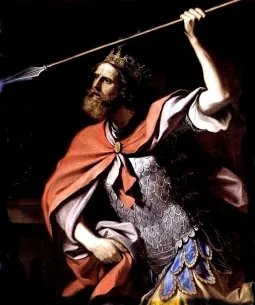
“And Saul hurled the spear, for he thought, “I will pin David to the wall.” But David evaded him twice.“
1 Samuel 18:11, ESV
“And Saul sought to pin David to the wall with the spear, but he eluded Saul so that he struck the spear into the wall. And David fled and escaped that night.“
1 Samuel 19:10
King Saul has gone mad.
We need to understand that David is completely different. He would leave Saul’s spear in the wall. Remember that David was the giant killer, the boy who faced Goliath. I don’t really think that David was really afraid, he knew God’s protective hand was on him and this made the difference.
Saul’s spear shows up later in David’s life, and it becomes a vital component in his growth as Israel’s next king.
But David doesn’t know that yet. In 1 Samuel 26 we read about David’s second encounter with the spear of Saul.
The scene is in the wilderness and David’s on the run. Now the badlands are a good place to hide as any Western movie knows. I think David had his scouts and I suppose that there were also men who knew every rock and cave in that wasteland. They were hiding from Saul.
“So David and Abishai entered the encampment by night, and there he was—Saul, stretched out asleep at the center of the camp, his spear stuck in the ground near his head, with Abner and the troops sound asleep on all sides.”
1 Samuel 26:7
Sneaking into Saul’s camp was bold and audacious. Saul was sleeping and scripture says that David’s companion desperately wanted to kill Saul, but David refused, David, looking through the darkness lighted on Saul’s spear. Perhaps he remembered back to when Saul tried very hard to kill him.
He avoided that spear a long time ago, and now he escapes it again.
The tables have completely turned. Given a chance to end King Saul’s life, he refused; he would not kill him. When you think about it, many problems would’ve been solved, and David would take his rightful place as Israel’s new king.
But David spiritually understood God’s heart. He understood the spiritual principle of “turning the other cheek” and “loving your enemies.” He overcame with love and kindness. And lots of grace.
“Do not be overcome by evil, but overcome evil with good.”
Romans 12:21, ESV
The Greek word for “overcome” is νικάω which can be translated as “to conquer or to come forth victorious.” It is also used when someone is arraigned before a court of law but wins the case.
To follow Jesus means you entirely reject using the spear. It’s not for you. Never.
“We win by tenderness. We conquer by forgiveness.”
Frederick W. Robertson
We must leave the spear in the wall. You must not throw it back.
Like David, we are to trust the Father. We’re to be secure in His timing. And yes, we each must use kindness and brokenness to overcome dark things. When you think about it, Jesus also faced evil without defending Himself. The spear showed up again and we see that our Savior allowed it to pierce His side on the cross.
You must leave the spear in the wall.
You mustn’t use the spear when it seems you can wield it at the perfect moment, and like Jesus you need to allow it to save your enemies from their sin.
These three spears are evidence you “have God’s heart.”
20 “And he arose and came to his father. But while he was still a long way off, his father saw him and felt compassion, and ran and embraced him and kissed him. 21 And the son said to him, ‘Father, I have sinned against heaven and before you. I am no longer worthy to be called your son.’”
22 “But the father said to his servants, ‘Bring quickly the best robe, and put it on him, and put a ring on his hand, and shoes on his feet. 23 And bring the fattened calf and kill it, and let us eat and celebrate. 24 For this my son was dead, and is alive again; he was lost, and is found.’ And they began to celebrate.”
Luke 15:20-24
“Cursed is the man that feeds the swine.” That’s the commentary on Jewish ritual cleanness. The prodigal knew this, but when you’re starving, tradition is thrown out the window. It’s really hard to be spiritually correct when your stomach is growling. In verse 17, we see that the prodigal suddenly realized his condition. Notice the change:
It took sometime for this to happen. But it was a true and a complete repentance. A total alteration of his mind and heart took place at that point. And I must assume, when he finally made the decision to return, he didn’t even say ‘good bye’ to the pigs.
It’s the Father’s reaction that fascinates me.
How does God see us? Is he angry or frustrated? And yes I suppose, there is ample reason for him to treat us with caution. Deep down, we know exactly how dark we are, and on a superficial level we realize our dirt doesn’t belong in heaven. And yet the father is in a party frame of mind. That isn’t rational.
There were no tests to see if the repentance was real.
Did he really repent, or was it all for show? The text tell us that he was hungry, maybe he just wanted a hand-out? Did he meet the criteria needed for reinstatement? It amazes me, there wasn’t a 30 day waiting period to determine whether the prodigal had truly repented. No, the party started when the father hugged his son.
Do you see the “suddenness” of this part of the story?
At least for me, the pace quickens, and I imagine the whole household jumped up to get in the act. Verse 10 explains the joy that reverberates through heaven at this, Just so, I tell you, “there is joy before the angels of God over one sinner who repents.”
Joy seems to be the key thought to really “get” these verses. If we can’t see it saturate (like a sponge) we’ll never understand this parable. Its not hard if you can read it with excitement and anticipation. If you decide to do so, it’ll make a lot of sense, and it’ll be less mysterious.
This story is as much about the father as it’s about the son.
In it we see the character of the Father revealed. We see his joy, and excitement over his son’s return. Right from the start we see him running, (v. 20) moving to his son. I can see a weeping father giving his son a big bear hug and lots of kisses. He has hoped and dreamed about this moment.
Golly, there is so much to be said: there’s a ring and shoes and a roasted calf. But I think that the overwhelming lesson is the joy of the father. It tells me much about what he’s like–and he’s not at all what I thought he’d be.
I’m convinced, after 30 years of reading this parable, that He’s the Father who is always moving, and he runs to meet us. He’s the One who is filled with joy at our return. Please dear one, take Him at His word.
“What marvelous love the Father has extended to us! Just look at it—we’re called children of God!”














 Alaska Bible Teacher