Seeing in a Fresh New Way

Frederick Buechner

Having a “Sanctified Imagination”

I need to be very clear. We’re not trying to shape reality or mold anything. We’re not supposed to be involved in creating an alternate world. We’re talking about using your imagination, and not creating the imaginative.

The New Testament is over 70% narrative. The dictionary definition is “a spoken or written account of connected events; a story.” That means that we’ll need to approach it, sometimes anyway, picturing it in the minds that God has given us. I suppose that this requires that we see and understand it, differently.

I like to call this—a ‘sanctified imagination.’

The parables of Jesus are heavenly stories that declare the truths of God’s Kingdom. When we read about the parable of the Prodigal Son, we must imagine the son partying away from his father’s money. We must see the husks, and fill our noses with the stench of the pig poop. We need to see the prodigal coming to his senses, and returning to the father who runs out to meet him.

Jesus’ parables are designed purposefully for you.

This is what I mean when I say we use our sanctified imagination. We engage these parables with our hearts and mind. God has given us this ability, it’s part of the way we communicate with him. I become that prodigal, it’s I who returns to the Father. I see it and understand it better that way. But it’s imagination–it’s never supposed to be imaginary.

Our imaginations can be used for evil as well. A man pictures a new type of machine gun and then makes and designs it. Another presses into pornography and engages his mind in lust over a picture. There are many dark ways we use to alter our worlds. We can use the images in our minds to commit sin.

God’s truths seem to go deeper if we press into using our minds to engage what the Father desires.

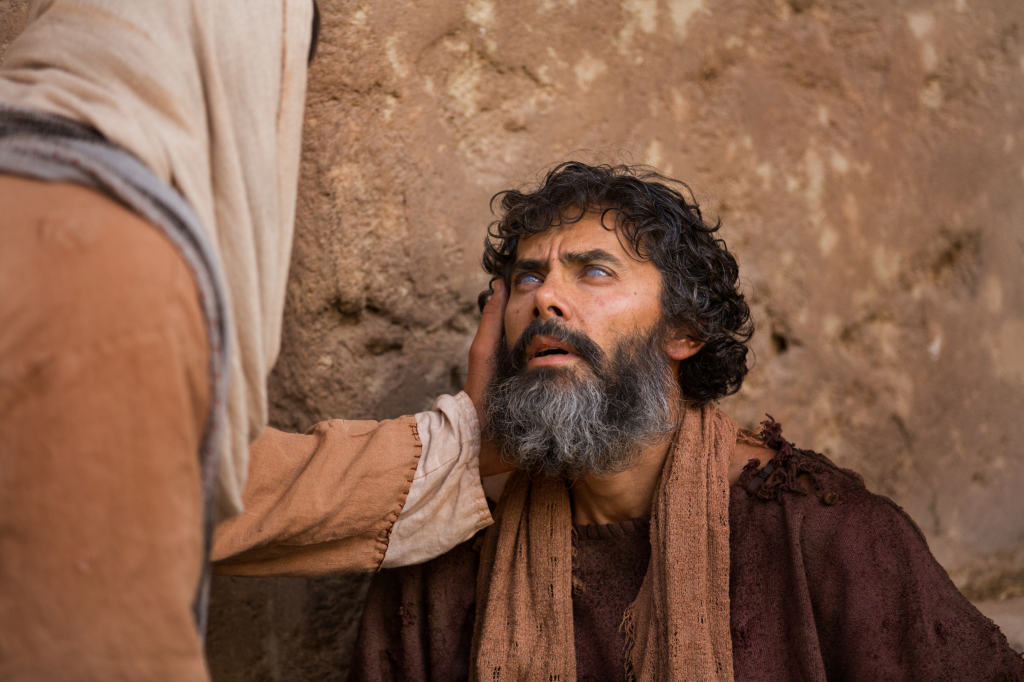
Sometimes I pray the old words of those who have gone before me: “Lord Jesus, Son of God, have mercy on me.” Often this (or a close variation of this) was the cry of the desperately needy in the Gospel accounts. When I pray this I imagine I’m blind Bartimaeus sitting by the side of the road, or the woman with a sick child. I see myself standing and waiting for His touch. This is the power of sanctified imagination.

“When the Spirit of truth comes, he will guide you into all the truth, for he will not speak on his own authority, but whatever he hears he will speak, and he will declare to you the things that are to come. 14 He will glorify me, for he will take what is mine and declare it to you.”

John 16:13-14

Some additional reading:

A good (and simple) can be found at Crossway.com. I would also suggest Focus on the Family and Christianity Today. Both are really clear and explain it much better than I can. Also, check out biblegateway.com for more info

Having an Anointed Life

I have to admit, I always wondered what this verse in Psalm 23 meant. I thought He anoints my head with oilwas a nice poetic phrase for God blessing David. But as I delved deeper into the context and explored different interpretations, a beautiful and profound meaning unfolded before my eyes.

First of all the act of anointing with oil holds significant cultural and spiritual symbolism in biblical times. It was a practice to anoint guests as a sign of honor and welcome, especially in lavish feasts and celebrations.

Anointing with oil also had medicinal purposes, as it could soothe and heal various ailments. (Now that’s interesting, I thought.)

In the context of Psalm 23, the phrase “He anoints my head with oil” takes on a deeper metaphorical meaning. It signifies God’s abundant blessings, His provision, and His care for His people. Just as a host anoints the head of a guest as an act of honor and hospitality, God lovingly anoints us with blessings and favor.

Moreover, the act of anointing with oil has spiritual connotations. In ancient religious rituals, anointing with oil was a sign of consecration, setting apart someone or something for a holy purpose.

This verse also portrays a practical picture of medicinal shepherding.

In biblical times, shepherds used oil to treat and protect the sheep’s wounds and keep insects away from their heads. By anointing our heads with oil, God brings healing and comfort to our brokenness, soothing our hurts and protecting us from the turmoil of life.

Sheep often can do harmful things to themselves as they try to find relief from flies and ticks.

Their ears and eyes can be targets for tormenting insects as well.

Sheep have been known to bash their heads against rock walls to dislodge flies from their ears, noses, and eyes. A good shepherd watches closely over his flock. He watches over them carefully.

A good shepherd knows that poured out oil forms a barrier of protection against these things that would try to destroy the sheep.

Have you ever asked God to anoint your head with oil?

Psalm 23 as a whole beautifully paints a picture of God as our loving and caring Shepherd, guiding us, providing for us, and protecting us. The imagery of anointing with oil further illuminates the depth of His love and the extent of His care. It reminds us that we are chosen and cherished by God, and that His blessings are abundant and unending.

But ask yourself these questions. Do you have times of mental torment? Do the worrisome thoughts invade your mind over and over? Do you beat your head against a wall trying to stop them?

The Holy Spirit can come with His endless supply of oil!

“You prepare a table before me
    in the presence of my enemies;
you anoint my head with oil;
    my cup overflows.”

Psalm 23:5, ESV

Oh how He loves you!

Wonder

My thoughts

There are some things that leave an indelible mark, deep down into our souls. For me, one instance I remember staying at Simpson College on Silver Ave. in San Francisco in June 1986. The dorms were empty and I had a whole floor to myself. The campus was gorgeous; the roses were in full bloom.

I found a little “mom and pop” corner market nearby which had an awesome deli. Here I could buy cold cuts, some excellent braunschweiger, and freshly baked sourdough bread. I returned to my room to build my sandwich.

I remember that the windows were open and there was a beautiful breeze. Food, warm sun, flowers in bloom and the Holy Spirit are just about ready to ‘intersect’ in my life. It would be a holy collision. I would come to Jesus in this bright new way.

It was simply a moment that I captured and savored. Everything seemed to coincide, it was magical in the best sense of the word. It was beautiful, that is all I can say. That time in that dorm room has become a crystalline moment that I will never forget. Right there, it seemed I fell in love, not with a girl, but with a moment in time and place.

That nostalgia lies incredibly thick on the shoulders of the writer of Psalm 84.

He remembers and savors those powerful memories of his visit to the temple. He was given something at that particular moment that would follow him for the rest of his life.

The beauty of that experience was inviolable and true and could never be duplicated. This treasure was his. As he aged he could tell his grandchildren, “I walked with God.” And he really meant it.

I personally believe God gives us these holy moments, wrapped in wonder and awe. When the Holy Spirit deeply touches in this way you will never, ever be the same.

The psalmist has the same hunger.

These moments in the temple which are so blessed have also ‘ruined’ him. Often special times of God’s presence will result in a ‘sanctified’ dissatisfaction with the present status quo.

But when we finally make our way to Jesus (or He draws us), life takes on a special and curious wonder. When the rain finally comes to the barren desert, an explosion of life bursts out. In much the same way, our lives are ‘watered’ by Jesus. Things get very green and lush as we live in the Spirit. All of this is in contrast to our dry and desperate life without His presence.

I want to become hungry for His presence.

I so want to be in the center of wherever He is at. I admit that His grace and love has spoiled me. But the love of Jesus does this. Normal life seems to be nothing more than a boring journey into ‘black & white,’ but somehow He turns it all into stunning color.

The psalmist practically begs to be returned to the temple. He wants to be there, more than anything else. It is now his true home and he is homeless without God. He will not be satisfied with anything less.

Psalm 84:2

alaskabibleteacher.com

Wrestling with God

Jacob was a scoundrel, a cheat and a swindler. It seems that his life was built on defrauding others. I see no integrity, no goodness in his early life. He plotted and tricked everyone he could in order to advance his own status.

Yes, Jacob was tricked also, which I suppose was a “good” thing. It seems that when men like Jacob get deceived themselves we tend to gloat a bit. After all, they are finally getting what they deserve.

But no bad man is outside of God’s grace and mercy.

Jacob is a grifter. He has built his life around a selfish deception. But again, he is still on God’s radar, and the Father isn’t finished with him yet.

A night of wrestling with God is really something we all will do at least once in our life. We each have a “Jabbok” and each will go body to body with the Holy One. Some of us will learn how to surrender, others will not. But sometimes, our dealings with God are silent, and unobservable.

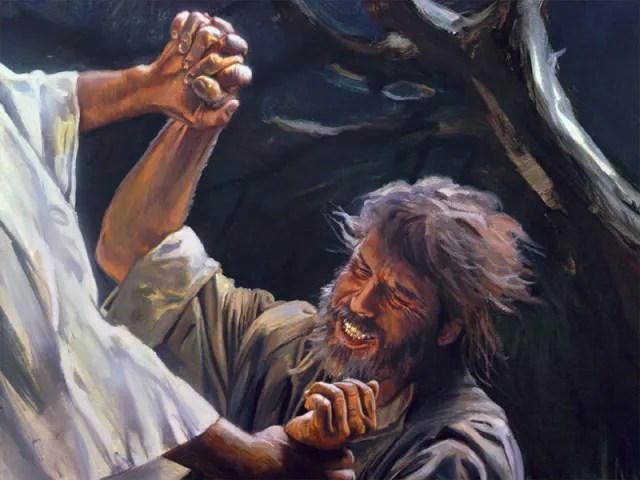
It fascinates me to see Jacob wounded. “When the man saw that he would not win the match, he touched Jacob’s hip and wrenched it out of its socket” (v. 25). Jacob will limp for the rest of his life. Every morning as he got out of bed, he would groan from the stiffness and be reminded of that fight by the river.

So dear one, how should we process all of this?

  1. No man is too far gone for God’s dealings.
  2. Each of us, whether we realize it or not, will have our encounter with God. (Our personal “Jabbok.”)
  3. God loves us too much to let us remain in our sin and darkness.
  4. And sometimes, from that encounter we’ll walk with a limp.

My own experience. I was not in a good place 8 years ago, I was wrestling with God, and having some issues, but the Holy Spirit had no intention of letting me go. I had a very bad fall. Needless to say I laid on the ground with my right arm pinned beneath me for some time. That injury is known as “compartment syndrome.” I went into surgery immediately.

My right forearm/hand is now paralyzed. about 80% of the muscle tissue and nerves had to be removed. The doctors considered taking my arm off, but I’m glad they didn’t.

Like Jacob, I now have a tangible reminder of my fight with the Lord. There are times when I hurt. I’ve had to relearn and adjust to using my left hand. It has not been easy. Jacob would limp for the rest of his life, I can relate having just one arm.

“God has no pleasure in afflicting us, but He will not keep back even the most painful chastisement if He can but thereby guide His beloved child to come home and abide in the beloved Son.”

 Andrew Murray

I Couldn’t Follow Him

Mark 10:17-22

As he was starting out on a trip, a man came running to him and knelt down, and asked, “Good Teacher, what must I do to get to heaven?”

18 “Why do you call me good?” Jesus asked. “Only God is truly good! 19 But as for your question—you know the commandments: don’t kill, don’t commit adultery, don’t steal, don’t lie, don’t cheat, respect your father and mother.”

20 “Teacher,” the man replied, “I’ve never once broken a single one of those laws.”

21 Jesus felt genuine love for this man as he looked at him. “You lack only one thing,” he told him; “go and sell all you have and give the money to the poor—and you shall have treasure in heaven—and come, follow me.”

22 Then the man’s face fell, and he went sadly away, for he was very rich.

My name is inconsequential. I suppose all you must know of me is I tried to keep God’s Law and that I was very wealthy. Many believed that being rich was evidence that God approved of me. Of that, I wasn’t too sure. I kept the Law out of fear I suppose, and at times I just knew it wasn’t quite enough.

As I studied I began to realize that riches weren’t going to make me righteous. There was enough Scripture in me to let me know that it wasn’t enough. The prophets, especially Isaiah spoke about the deadliness of wealth, but there was that one verse in Proverbs that really disturbed me:

“Your riches won’t help you on Judgment Day; only righteousness counts then.”

(Proverbs 11:4.)

This verse (and all of the others) were the cause of many a sleepless night.

I was tormented by the reality of standing before God with nothing but my money to cover me. Coming under God’s righteous judgment haunted me. I thought of it day and night. I was terrified of being damned. My own righteousness wasn’t enough, and I knew it.

I heard about Jesus (and who hasn’t), and some were boldly claiming that he was the Messiah. He was at least a wonderful teacher and many said he worked powerful miracles, and perhaps he had answers for me. I hoped so, but I needed to know. It was my questions that drove me to find him.

And finding him was easy–I just followed the crowd.

I got ahead of everybody. I knelt in his path and waited. I must know what he thought I should do. When he stood before me I asked the question that had haunted me my whole life–“Good Teacher, what must I do to get eternal life?”

Jesus looked right at me. I knew deep down that he loved me.

But oh those words, his words really disturbed me. He told me that I only lacked one thing, that I must sell everything and distribute the money to the poor. Only by doing that would I discover riches in heaven. And only then could I truly follow him.

But that was the thing I couldn’t do.

It was my idol, my golden calf, and it was a sacrifice that I could never make.

I’ve come to realize now, over my many years, that when I do finally stand before God, I will have nothing to save me. Jesus invited me to follow, and I couldn’t and I didn’t. I won’t.

And that my friend, means I will die unforgiven.

“For what shall it profit a man, if he shall gain the whole world, and lose his own soul?”

Mark 8:36, KJV

alaskabibleteacher.com

Listening to Brennan Manning

Here are several quotes written by Brennan Manning. They’re definitely thought-provoking and should be prayed through. I think they’re worth considering. If you like them great, if not that’s ok too.

“The gospel declares that no matter how dutiful or prayerful we are, we can’t save ourselves. What Jesus did was sufficient.”

“When we wallow in guilt, remorse, and shame over real or imagined sins of the past, we are disdaining God’s gift of grace.”

“God loves you unconditionally, as you are, and not as you should be because nobody is as they should be.”

“I could more easily contain Niagara Falls in a teacup than I can comprehend the wild, uncontainable love of God.”

“In my experience, self-hatred is the dominant malaise crippling Christians and stifling their growth in the Holy Spirit.”

“The splendor of a human heart that trusts it is loved unconditionally gives God more pleasure than Westminster Cathedral, the Sistine Chapel, Beethoven’s “Ninth Symphony”, Van Gogh’s “Sunflowers”, the sight of 10,000 butterflies in flight, or the scent of a million orchids in bloom. Trust is our gift back to God, and he finds it so enchanting that Jesus died for love of it.”

“Those who have the disease called Jesus will never be cured.”

“The men and women who are truly filled with light are those who have gazed deeply into the darkness of their own imperfect existence.”

“God loves us as we are…not as we ought to be, because we are never going to be as we ought to be.”

“The ragamuffin gospel reveals that Jesus forgives sins, including the sins of the flesh; that He is comfortable with sinners who remember how to show compassion; but that He cannot and will not have a relationship with pretenders in the Spirit.”

“The North American Church is at a critical juncture. The gospel of grace is being confused and compromised by silence, seduction, and outright subversion. The vitality of the faith is being jeopardized. The lying slogans of the fixers who carry religion like a sword of judgment pile up with impunity. Let ragamuffins everywhere gather as a confessing Church to cry out in protest. Revoke the licenses of religious leaders who falsify the idea of God. Sentence them to three years in solitude with the Bible as their only companion.”

“When I get honest, I admit I am a bundle of paradoxes. I believe and I doubt, I hope and get discouraged, I love and I hate, I feel bad about feeling good, I feel guilty about not feeling guilty. I am trusting and suspicious. I am honest and I still play games. Aristotle said I am a rational animal; I say I am an angel with an incredible capacity for beer.”

alaskabibleteacher.com

Listen to Him

“Jesus told this simple story, but they had no idea what he was talking about.

John 10:6

For context: 10:7-18

What a joy can be found in the Shepherd’s care, and to hear his voice. Nothing really can match this wonder. We follow as he leads. The voice is an integral part of this passage and the foundation of authentic discipleship. You really can’t walk with him unless you hear him. We belong to him. We’re his flock that he keeps and provides for.

John 10:1-6

Amazing. He knows our name! That’s the intimacy found in these verses. We’re never forgotten and he will never overlook us. To think otherwise is slander and an attack on his present-day ministry. Jesus is our good shepherd. He always will be.

“Intimacy with God comes in whispers, not shouts.”

     Woodrow Kroll

He sometimes whispers, and this world can’t hear him. To be perfectly honest, my ‘busy-ness’ silences him. I suppose that the real issue isn’t with him, but with myself.

“And after the earthquake, there was a fire, but the Lord was not in the fire. And after the fire, there was the sound of a gentle whisper.”

1 Kings 19:12

The gentle whisper to a man afraid. This fits the Father’s m.o. He doesn’t speak through a windstorm, earthquake, or fire. He chooses to speak very quietly, and that’s a problem for me. In the original Hebrew, the word for “whisper” can be translated as calm, silence, or something gentle. He speaks this way if only we shut up for a little while.

If we are to recognize God’s voice, we must belong to Him. We hear His voice when we spend time in Bible study and quiet contemplation of His Word. The more time we spend intimately with God and His Word, the easier it is to recognize His voice and His leading in our lives.

The flock hears the shepherd, and it’s that voice that breaks through our cluttered-up life. We can hear, and it’s that communication that encourages us to walk through life—one day at a time. Just today. That’s all you must do.

There are so many other voices. You must ignore them.

So many are speaking, so many want us to hear and follow them. But in reality, they want us to leave the Shepherd and his flock behind. But we can’t allow this, we must learn to listen to him alone.

    Elisabeth Elliot

Art by Eugène Burnan

Thinking Out Hard Things

To follow Him can be really hard. There doesn’t seem to be any contingency plans for any who are looking to escape such a drastic call. Jesus either is, or He isn’t our Lord. “Do you also want to leave?” This is a question that will be asked to every disciple–sometimes0once, and sometimes repeatedly.

There are these crystalline moments when I must make a decision. Will I take up my cross and go with Him? There doesn’t seem to be any room in Jesus’ band for ‘almost’ disciples. That scares me sometimes.

Today’s cross is waiting for me. I’m afraid at times that I won’t be able to take the next step as a true follower. Am I just fooling myself?

All of heaven seems to stand on tiptoe to see what I’m going to do next.

Who am I really?

Being obedient to Jesus is far from easy. We must have His Spirit.

“After this, many of his disciples left. They no longer wanted to be associated with him. Then Jesus gave the Twelve their chance:

“Do you also want to leave?”

“Peter replied, “Master, to whom would we go? You have the words of real life, eternal life. We’ve already committed ourselves, confident that you are the Holy One of God.”

John 6:66-69, The Message

“It is indeed praiseworthy for a believer to consecrate his life to the Lord, but he must never do so lightly or thoughtlessly. Before committing your life in service to God today, count the cost, for “No man, having put his hand to the plough, and looking back, is fit for the kingdom of God” (Luke 9:62).”

    Woodrow Kroll

Image from Wikipedia, verses are from The Message Bible by Eugene Peterson.

Piles and Piles of Manure

The Augean Stable

Proverbs 30:12

The dictionary explains filthy things like this, “to be disgustingly dirty” or “to an extreme extent.” Understanding this draws us into a perilous understanding of what our situation really is–to despair is our only real step of being acceptable in God’s eyes.

Despairing is our first step.

The Pharisees (“the holy ones”) never understood. But they never understood the basics. They read but never really understood the words of the prophet Isaiah,

“Their tables are covered with vomit; filth is everywhere.”

Isaiah 28:8. (Context 28:8-9.)

Hercules in Greek mythology was assigned to clean the Augean stables. King Augeaus had 3,000 oxen and their stable had not been cleaned in 30 years! (That’s a whole lot of manure.)

He was given 24 hours to clean it up. And rather than grab a shovel, he concentrated on redirecting two rivers, turning them directly into the stable, and essentially flushing out the accrued filth of the oxen. His ingenuity fulfilled the task. The stables were cleaned.

The formidable task of cleaning those stables was totally fulfilled by Jesus Christ.

Our hearts were soiled by our sin and iniquity. No man could ever clean them, the piles of sin merely got deeper. At times we’ve tried hard, but sin continued to climb higher. Sometimes we pointed to others as having even worse kept stables than us, but that does not work.

“We are all infected and impure with sin.
    When we display our righteous deeds,
    they are nothing but filthy rags.

Isaiah 64:6

So much we hear seems to diminish our sin. Nothing we hear preached changes this. Only the heroic effort of Jesus can cleanse us from what we know, deep down, is true. We are “infected” with sin. The fever rages within, and it abates at times, but it’s always there.

“So get rid of all the filth and evil in your lives, and humbly accept the word God has planted in your hearts, for it has the power to save your souls.”

James 1:21

Some suggest the repentance is archaic and obsolete. I don’t think so. Rather it seems like it’s the starting point, we don’t change by feeling bad about the piles of manure (and yes, we know about them). We are simply those who’ve decided that we need God’s “river” to clean us.

I point no fingers. I blame or accuse no one. I’m merely a man who is wet, by the grace of God alone.

God came in the humanity of Jesus to heal us, to “flush” us clean. He alone can cleanse us from our filth and darkness.

“I will cleanse you of your filthy behavior.”

Ezekiel 37:29

“God the Father knew you and chose you long ago, and his Spirit has made you holy. As a result, you have obeyed him and have been cleansed by the blood of Jesus Christ.”

1 Peter 1:2

You have to decide. Will you simply adapt to your manure, or simply allow the rivers of grace to change you?

Quarantined for a Reason

Quarantines are a real possibility, even in this day. A quarantine is imposed when disease is contagious enough that it would harm a society: Measles, Smallpox, and the recent COVID-19 are just a few physical diseases where isolation must be imposed. It can be severe— an epidemic, with desperate consequences if not adhered to; in some rare cases, the use of deadly force have been authorized to maintain a quarantine until the disease is no longer communicable.

This may surprise you, but there are examples of ‘quarantines’ in the Bible. The term ‘unclean’ was used for ‘leprosy.’ Those afflicted had to isolate themselves; they had to ‘announce’ their presence when in contact with society. Lepers lived in groups away from the general populace, as a result of their disease.

In Paul’s epistle to the Corinthian he addresses another kind of ‘quarantine.’ The situation was dire; the church had advocated a Christian living with his father’s wife.

“I have already passed judgment on this man in the name of the Lord Jesus. You must call a meeting of the church. I will be present with you in spirit, and so will the power of our Lord Jesus. Then you must throw this man out and hand him over to Satan so that his sinful nature will be destroyed and he himself will be saved on the day the Lord returns.” 1 Corinthians 5:3-5

Understanding the Principal of Usefulness

“Now in a large house there are not only gold and silver vessels, but also vessels of wood and of earthenware, and some to honor and some to dishonor.” 2 Timothy 2:20, NASB

In the pantry of God, one can find an array of pots and pans, each serving a distinct purpose. Paul communicates to Timothy regarding the ‘large house’ that represents the Church as a whole. Timothy must observe the presence of both gold and silver vessels, each bearing a noble purpose befitting such a grand establishment. These are the vessels designated for the guests, appropriately reflecting the significance of the Lord Himself. Their value is inherent, as they are crafted from precious metals.

There are vessels of a different category. These are the ones made of wood, and of clay. These are part of the household, make no mistake about it. But their use is one of function, they’re utilized in common and ignoble ways. (A clay ‘bed-pan’ perhaps?!)

“Therefore, if anyone cleanses himself from these things, he will be a vessel for honor, sanctified, useful to the Master, prepared for every good work.” 2 Timothy 2:21

Paul, the author of New Testament doctrine of grace emphasizes the place of personal holiness. We are to ‘cleanse’ ourselves to become a vessel of honor. There is good news here:

All are vessels in the Father’s house. Each of us belong to Him. He alone determines their use.

Things are not yet in their final state. Change in status can be experienced. In God’s economy, clay pots can become ‘golden.’ Silver can become ‘wood.’

Some sin is indeed contagious. It influences believers, leading to a compromised Church due to our choices. At times, we find ourselves in a protective quarantine by the Holy Spirit—until the contagion is eradicated. This spiritual disease cannot be allowed to persist.

I have walked through this journey many times in my own discipleship. While these moments can be quite challenging, they come without condemnation. I remain His servant, and His love for me is remarkably unwavering. He has never turned away from a repentant child, no matter how deeply they have fallen.

“Yes, I am His servant, but I must wait out in the hall. I haven’t been faithful. So I sit in His waiting room, waiting for His call. This is for my good. And my Father knows what is best.”