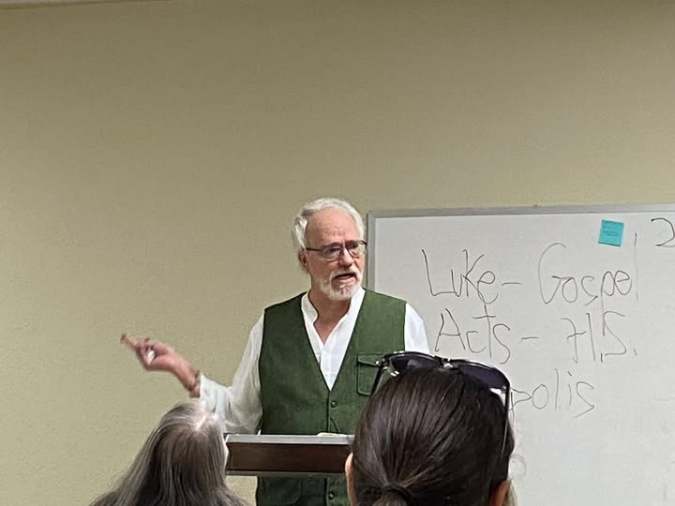
The School of the Prophets

The phrase “the School of the Prophets” has been identified as the ‘naioth’ or “dwellings” in Ramah in 1 Samuel 19:18-24 where the fellowship or “school of the prophets” assembled to worship, pray, and ask God for wisdom. The idea of ‘naioth’ described an idea of community. They seemed to live in a commune of sorts.

An older prophet became the teacher. They would be drilled into the Law. Much of the character of God was talked about, and this would become the core of these new prophets. They learned to seek His anointing, and also humility of heart and mind. The older prophet would emphasize these two things. He was understood as the foundation of any real ministry.

I wish there was more given to us. 

We can only emphasize and extrapolate out of a few verses. Even so, I must believe that the Holy Spirit was profoundly involved in speaking deliberately and honestly to the nations of Judea and Israel. These prophets would be sent out into ministry as needed.

I believe that there were many who spoke the heart of God. And yes, there were the majors: Isaiah, Jeremiah, Ezekiel, and Daniel. The minor prophets would carry a shorter ministry, at least in the written sense, but were not regarded as lesser ministries.

So what does this mean for you?

If your ministry is a specialized one, community becomes key. In this place you will learn about God, in a way that you’ll never ever learn on your own. A prophet is not a prophet unless he learns from a brother. When you fail (and you will) that dear-hearted brother will confront and teach you where you went wrong.

You must recognize the authority of God in the words of a true prophet. You must also understand the treacherous voice of the flesh and the demonic. You must discern, and as a believer that is paramount. You must listen, and hear the Voice of Jesus. “And many false prophets will appear and deceive many people.” Matthew 24:11.

But God…

But God, being rich in mercy, because of the great love with which he loved us, even when we were dead in our trespasses, made us alive together with Christ — by grace you have been saved.”

(Ephesians 2:4–5)

But God. Short words with a powerful meaning, used over 4100 times in the Bible (every 7 verses). It’s used to imply intervention and change, typically a holy interruption of some kind. This verse in Ephesians 2 describes the Father getting involved in a tangible way.

We were terribly lost–actually the Bible says, “dead.”

But He is rich in love and mercy, and it’s grace (and only grace] that makes us alive. Now we’re not reformed or rehabilitated. These are good words, but the verse describes a resurrection–a revivification. The dead live!

Jesus actually resurrects each believer.

“But God.” Joseph learned that “all things work together for good.” His brothers cruelty sold him into slavery and even though he endured prison, he would become the prime minister of Egypt. After many years his wicked brothers come before him. Revenge? Not on your life.

“As for you, you meant evil against me, but God meant it for good in order to bring about this present result, to preserve many people alive.

Genesis 50:20

Let God have His way with you. Acknowledge His sovereignty by allowing Him to interrupt when He wants to. He is active in our lives. Having resurrected us from the dead, the Holy Spirit becomes actively involved in our lives (and He brings us grace and beauty).

If you do this, I expect great things for you.

“My flesh and my heart may fail, But God is the strength of my heart and my portion forever.”

Psalm 73:26


A Proper Steward of Your Pain

Some time ago I came across a story that connected. A visiting speaker stood in front of a congregation and shared a painful incident from his childhood. He wanted to bring healing. After he spoke, an elder came and spoke to him–

“You have learned how to become a proper steward of your pain.”

The visiting speaker was profoundly touched by this. Finally, something came together in his heart and soul. Yes, he did learn how to deal scripturally with those ugly things from his past. He was becoming a proper steward of his pain.

The word for steward in the original Greek is oikonomos. It literally means “a keeper of a home.” It describes a manager, a superintendent to whom the head of the house or proprietor has entrusted the management of his affairs, the diligent care of receipts and expenditures.

The issue for us is managing these awful things for the Kingdom of God.

No question about it, we live in a world of darkness. Each of us has been touched by hard things. Scars are part of our lives. When we come to Christ they come with us. All of these grim things are a real piece of us, we have been hurt (or maybe we’ve wounded others?)

Are you a good steward of who you are? Whether it’s a trauma, a physical, sexual, or perhaps a mental illness. It’s a scar you carry from your past, and no one is immune from them it seems. You’ll find freedom if you can use these things for Him and his Kingdom.

We must see and understand that Jesus has taken everything and redeemed it all for His glory.

He understands us fully–our past, present, and future. He ‘knows’ us–the real and hidden us. The challenge I suppose is to take these sad events to the throne. He alone can heal and then use that which has devastated us.

Satan has afflicted you in his dark attempt to destroy you.

Jesus intervenes to save. As we grow to accept this, the Holy Spirit comes as our comforter and guide. He starts to teach us true redemption, and the incredible healing that he brings with him. It really is his work, not ours. We finally understand. It’s then we become broken healers that God can use.

(Read how Joseph handled betrayal: Genesis 50:19-21.)

The light has truly overcome the dark.

We’re being taught (sometimes very slowly) to carry all of these things and plead the blood of Jesus over our past. He covers us completely. He has redeemed us. Luke 1:68 explains much clearer than I can:

“Blessed is the Lord, the God of Israel because he has visited and provided redemption for his people.”

Becoming a steward of our pain is his doing. We’re able to touch others with these things that would cripple and destroy others. He has made us “managers” of these things, and we are taught to teach others, declaring that God has completely saved us. He works miracles!

“Therefore, if anyone is in Christ, he is a new creation; the old has passed away, and see, the new has come!”

2 Corinthians 5:17

We’ll sovereignly meet those who need to hear our story. We’re being transformed into authentic witnesses. Yes, at times these awful things still hurt, and I suppose that’s to be expected. But we’re learning to manage them. We’ve become real-life stewards of our pain.

That’s why we can be so sure that every detail in our lives of love for God is worked into something good.”

Romans 8:28, Message

The Great Sculptor’s Shop

Romans 9:20, ESV

“Christianity is a world that is a great sculptor’s shop. We are the statues and there a rumor going around the shop that some of us are some day going to come to life.”

     C.S. Lewis

Scripture describes the process of becoming like Jesus in different ways. But one is a potter fashioning something beautifully useful. He works to bring out something good from that which is formless. Both the potter, and the sculptor, fully intend to create something out of improbable clay or hard marble.

What sculpture is to a block of marble, so is a person who is being shaped into the image of God.

“For we are his workmanship.” Ephesians 2:10

The word used for workmanship is ποίημαpoíēma, and this word strongly suggests something that a creator does, and it’s also used in Genesis 1 to describe God making the earth. I suppose that it’s His “work” that goes into the reality of all we see. He designs it all.

God is also a sculptor, but not one limited to granite or marble.

Instead, He sculpts our characters. He can take a sinful human being and mold and chisel and hammer away until that person reflects something of heaven’s glory. 

The Sculptor must do with us as the sculptor did with the stone. He must bring to bear upon us the sharp chisel of circumstances, of disappointment, of trial. These are tough, and sometimes painful. It seems that these things will destroy us.


God is a sculptor, but not one limited to granite or marble. Instead, He sculpts our character. He can take a sinful human being and mold and chisel and hammer away until that person reflects something of heaven’s glory.

Let Him do the work of the Spirit in you. As He chips away it may seem like destruction. But the sculptor is a master, he has studied the marble and knows exactly what it takes to shape out what He wants.

Trust in His wisdom and love. He knows what He is doing. Of that I have no doubt.

Can you accept God’s tools? Do you trust Him?

alaskabibleteacher.com

Disproportionate Suffering

“Some Christians are called to endure a disproportionate amount of suffering. Such Christians are a spectacle of grace to the church, like flaming bushes unconsumed, and cause us to ask, like Moses:

‘Why is this bush not burned up?’

The strength and stability of these believers can be explained only by the miracle of God’s sustaining grace. The God who sustains Christians in unceasing pain is the same God — with the same grace — who sustains me in my smaller sufferings. We marvel at God’s persevering grace and grow in our confidence in Him as He governs our lives.”

— John Newton, author of “Amazing Grace”

+++

All of us know a brother or sister who seems to be a target of an undue amount of suffering. It seems like they’re always in the furnace. All we can do really is to shake our heads and then give them double honor for their faith in God’s grace and providence.

Ministering to these extreme sufferers can be a real challenge.

What can we say to those who seem to be on “God’s anvil?” How can we bless those who are in unbelievable pain?

Perhaps a very simple word of calm encouragement is the only real way to touch their hearts. They often don’t need another teaching or a link to a website. In the midst of some awful difficulties, I once had a dear brother who gently and carefully quoted Philippians 1:6 to me over and over whenever we met and whenever we parted:

And I am certain that God, who began the good work within you, will continue his work until it is finally finished on the day when Christ Jesus returns.”

Philippians 1:6

It was a precious thing that he did. I didn’t mind it all, as a matter of fact, I grew to like it. At first, I’ll admit it was strange, but my faith began to ‘mix’ with the Word and I began to believe it. It’s now my favorite verse in the Bible.

He refused to preach or counsel me. The light he carried was more than enough.

He had the maturity to see what God was doing and to make himself available to God on my behalf. Perhaps that patience he showed should become our own method of choice? I look forward to seeing him someday, someway. (If you hear someone quoting Philippians 1:6 in heaven, that will probably be Fred.) 🙂

“We can rejoice, too, when we run into problems and trials, for we know that they help us develop endurance.”

Romans 5:3

A keyword in this verse is “rejoice.”

It is a good reminder that the pain we feel is not the end. These trials have a limited duration (although admittedly it seems far away). There is coming a day when we can navigate through these issues and come out on the other side. “We will shine like the stars” (Daniel 12:3).

Much wisdom is needed in our ministry to disproportionate sufferers. We should have a fear of intruding on the work the Lord is doing. We must be patient and humble in this matter. There is no rushing God, after all, it’s His work. Most importantly we must be very much ‘present’ for our friend.

But not only that! We even take pride in our problems, because we know that trouble produces endurance,

Romans 5:3

A word spoken out of place can cause even more ‘heartache’ for the sufferer. Let us be careful. At times it’s better not to say anything, and that’s alright. Remember, Job’s friends were best sitting in the ash heap, saying nothing.  

The Lord God gives me
the right words
to encourage the weary.
Each morning he awakens me
eager to learn his teaching.
Isaiah 50:4, CEB

Ask the Father to guide you. Be gentle. Be there. He will give you, in His time, a good word for them.

Going to War

13 Therefore take up the whole armor of God, that you may be able to withstand in the evil day and having done all, to stand firm. 14 Stand therefore, having fastened on the belt of truth and having put on the breastplate of righteousness, 15 and, as shoes for your feet, having put on the readiness given by the gospel of peace. 16 In all circumstances take up the shield of faith, with which you can extinguish all the flaming darts of the evil one; 17 and take the helmet of salvation, and the sword of the Spirit, which is the word of God,

Eph. 6:13-17, ESV

You’re called to be armor-plated. Ephesians is quite clear about this, and we DARE not live without spiritual protection, and as a matter of fact, we must wear each piece to survive spiritually. To be ‘naked’ is to invite disaster. Neglecting to dress appropriately brings cataclysmic disaster. We dare not minimize the need for armor.

Each piece listed must be worn. This is a scriptural mandate for every believer in Jesus.

“The whole armor of God” explains the equipment we need to survive spiritually. Here’s a list and a brief comment on the six:

  • The belt of truth–this pulls everything together and holds us and keeps us secure in the truth.
  • The breastplate of righteousness–our spiritual heart is protected by knowing we’re accepted by the Father. Being right with God is not a feeling nor is it a mere hopeful wish.
  • The shoes of the gospel (of peace)–the idea of standing in place (“to stand”) explain our ability to be fixed on grace. When we wear battle shoes we cannot be pushed back or lose our footing. Wearing gospel shoes brings us spiritual stability. We can stand in place, rooted and strong.
  • The shield of faith–is a vital way of protecting ourselves from the evil arrows shot by the enemy. Satan targets us when he thinks that we aren’t using faith to defend ourselves.
  • The helmet of salvation–this is the realization that our mind is protected. This vital piece brings us wholeness as we understand what Jesus has done. We know we are saved and wearing our helmet is our protection from demonic-inspired lies.
  • The sword of the Holy Spirit–the only offensive weapon we have, and it’s all we need. The Word of God will frighten the enemy and push him back. The Word slices and cuts down every obstacle and every lie.

Only those who are spiritual perceive the reality of the spiritual foe and hence engage in battle. Such warfare is not fought with arms of the flesh. Because the conflict is spiritual so must the weapons.

     Watchman Nee

I must stress that clothing yourself is vital. You dare not live spiritually naked wearing nothing. You will be totally vulnerable to the satanic wickedness that is swirling around you. I’m afraid it’s all very real and sobering and there is no escape clause until you finally arrive in heaven.

“We know [positively] that we are of God, and the whole world [around us] is under the power of the evil one.”

1 John 5:19, Amplified Bible

I’m afraid you haven’t been given an option in all of this. Our battle equipment in Ephesians 6 is not just some theological preference or concept. It’s real.

Over 40 years of following Jesus have taught me that most believers struggle because they won’t arm themselves for battle. They refuse to acknowledge the environment they’re in and don’t realize the spiritual battle they are facing. They like the sentiment behind this particular passage, (it stirs their heart) but the reality of the battle never fully sinks in.

They end up leaving their armor behind.

The good news is that we have already won because of what the Lord has done. Wearing the armor strengthens and stabilizes us. He pours out His grace, and there will be times of rest of that I am certain. “He leads me beside still waters.”

As obedient and faithful believers we need to realize we’re secure in Him. Yes, there is a terrible fight, but “The battle is the Lord’s.”

“For you equipped me with strength for the battle; you made those who rise against me sink under me.”

Psalm 18:39, ESV

A Summons to War

battle

Watch, O Lord, with those who wake or weep tonight, and give your angels and saints charge over those who slumber.

“Tend your sick ones, O Lord Christ, Rest your weary ones, Bless your dying ones, Soothe your suffering ones, Pity your afflicted ones, Shield your joyous ones,

And all for your love’s sake.”

Amen.

Augustine

Woven into this ancient ‘evening prayer’ is an idea of God meeting us with overflowing grace and kindness.  There is a strong sense of God watching everyone! And there is also a “tending” sense that He has overall.

As I read this prayer, I seem to focus on the single phrase, “shield your joyous ones.”  To think that these joyful people need protection strikes me as odd.  Why do they even need a “shield?”  Of all people, don’t they have it together?

God sees to our every need, and His flock can be incredibly needy.

As I thought it through, I started to realize that joy is its best standing in the shadow of warfare. The joyful ones are companions– “buddies” who share the same ‘fox hole’ on enemy lines.  But this isn’t a grim thing, Nehemiah told those trying to build the city walls,

“The joy of the Lord is your strength” 

Neh. 8:10

Joy connects with the desperate need of the moment; it is the muscle of all ministry.  And as a result, perhaps more vulnerable.

He didn’t say that the joy of the Lord is our happiness, cheeriness, or merriment. 

But rather, joy would impart strength, and stiffen one’s ability to go to war for our brothers and sisters, our churches, and our communities. There are certain epoxy resins that will only harden when a special light is used on them.  Maybe joy transforms into strength when we step toward our Father.

We need to spiritually protect and cover those who are His “joyous ones.”  They can be found sprinkled throughout our churches and ministries.  And they need us to shield them.  They seem to be quite exceptional, and seemingly invulnerable.  But that isn’t the case.  We need to pray for them. Joyful people inspire me in battle.

“The joy of the Lord will arm us against the assaults of our spiritual enemies and put our mouths out of taste for those pleasures with which the tempter baits his hooks.”     Matthew Henry

Straining at Your Oars

“He saw the disciples straining at the oars because the wind was against them.”

Mark 6:48

We must know that Jesus sees our labor and effort.  He understands all that concerns us, and he perceives every issue that we take.  Jesus is attentive and He comes to our little boat.  It’s quite common for us to think that he isn’t really concerned, and we may feel that He’ll pass us by without a word.  But that’s only from our own perspective.

Jesus watches over us, all the time. 

He knows all about our battles, the terrible fight we have with our flesh, the profound  difficulty we have with temptation and trials. He understands these things perfectly. I often struggle to steer my boat, but the winds and waves are hard. Jesus knows when and why I labor like I do.  And He doesn’t condemn me.

The disciples were straining very hard to keep the boat afloat. 

Every oar was being used and every man had his seat. Some were frantically bailing, and a couple tried muscling the tiller. A considerable effort was being expended.  But the wind pushed even harder against them.  This is perplexing.  If you remember, they’re simply trying to obey the command of Jesus to cross the sea. 

Why do things have to be so difficult?

I’m intrigued by preachers who preach sunshine, blue sky, and red roses because they are doing God’s will.  They don’t seem to think through the issues of conflict and challenge–my own boat has been pounded by the storm, and it seems it’s always on the verge of taking water and sinking. Is it because I have no faith?

“It is necessary to go through many hardships to enter the kingdom of God.”

Acts 14:22

Often doing the will of God will mean a headwind blowing directly at us.
 

The seas will become impossible, and we may even be driven back.  But special comfort comes when we realize we’re being watched and cared for.  Jesus is in constant lookout and He sees our toil on the oars. He comes to us, walking on the water. He comes and brings us His peace and special comfort.

Even in our storm, our hearts can rejoice.

This is His fantastic and sure promise:

“Lo, I am with you always, even to the end of the age”

Matthew 28:20

alaskabibleteacher.com

When Pain is All You Can Think About

Sometimes we live in darkness. We suffer and it’s hard. We mentally accept God’s grace and His love for us, but in our heart we remain untouched. Pain saturates everything it seems. We seem to go through the motions, but deep down we’re convinced that we’ll never find the light that so many claim to have.

Are we “cursed?”

Pain fills our life. We live with something that is persistent, and our hope is a day when it’s all over. Psalm 88 is our Psalm. Nothing is sugar-coated. It is raw and unabridged. It’s pain under a microscope. That Psalm is yours.

For my soul is full of troubles,

    and my life draws near to Sheol.

I am counted among those who go down to the pit;

    I am a man who has no strength,

Psalm 88:3-4

Catching Men

“The Morning of the Fisherman,” Valentina Kostadinva, oil

“And so also were James and John, sons of Zebedee, who were partners with Simon. And Jesus said to Simon,

“Do not be afraid; from now on you will be catching men.”

Luke 5:10

Fear is an ugly thing, it turns men into timid cowards who cannot really trust God. Simon Peter is promised courage. Throughout his life this will be a constant battle for him. It seems like Simon Peter will always struggle with what people will think about him. He is ‘crippled’ and he needs Jesus to intervene. And He does.

I remember Jody and I were sent out by a pastor to do “door-to-door” evangelism. I was terrified. We knocked on a door and then I sort of freaked out, I left her on the porch and hid behind a tree. Witnessing scared me. She shared Jesus while I ran away. How ‘Peter-like’ I am.

“Catching men” is a reference to Peter’s occupation as a fisherman. Jesus speaks so Peter will understand. He expresses evangelism in a way that describes the work of the Kingdom. Fishing describes the main task of the believer. All too often we’re ‘fixed’ on self-improvement, and our vision becomes blurred. Evangelism is to be our work.

“Evangelism is not a professional job for a few trained men, but is instead the unrelenting responsibility of every person who belongs to the company of Jesus.”

-Elton Trueblood