Come Out of the Closet

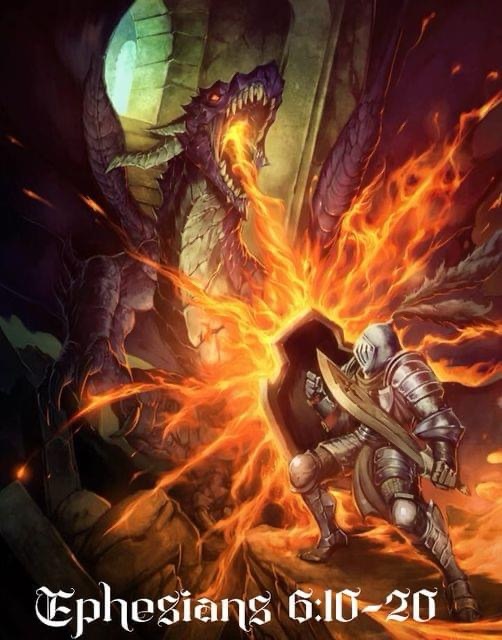
“Therefore take up the whole armor of God, that you may be able to withstand in the evil day and having done all, to stand firm. 14 Stand therefore, having fastened on the belt of truth and having put on the breastplate of righteousness, 15 and, as shoes for your feet, having put on the readiness given by the gospel of peace. 16 In all circumstances take up the shield of faith, with which you can extinguish all the flaming darts of the evil one; 17 and take the helmet of salvation, and the sword of the Spirit, which is the word of God,

Eph. 6:13-17, ESV

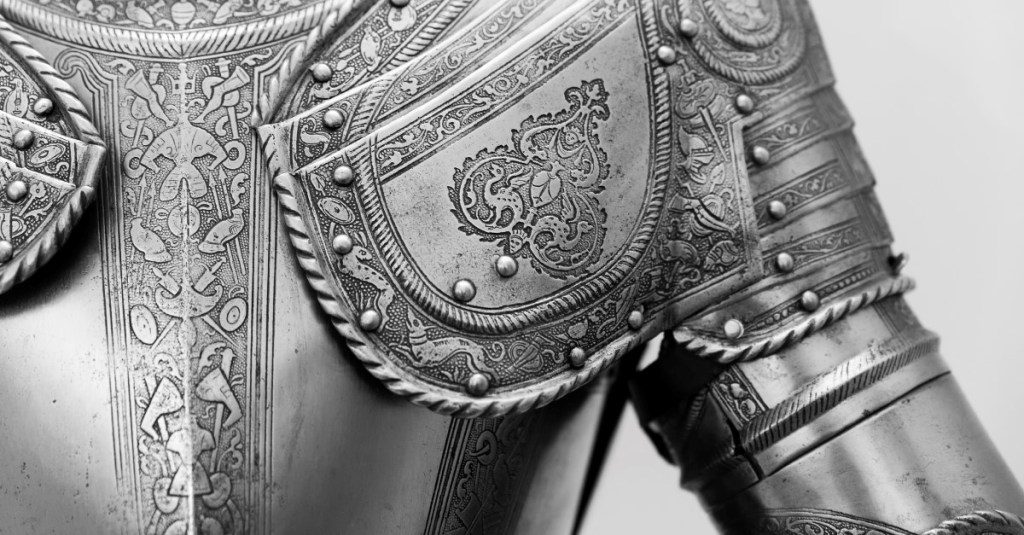
You’re called to be armor-plated.

Ephesians is quite clear about this, and we dare not live without spiritual protection, and as a matter of fact, we must wear each piece to survive spiritually. To be ‘naked’ is catastrophic. Neglecting to dress appropriately brings cataclysmic disorder. We dare not minimize our need for wearing our armor.

Each piece listed must be worn. This is a scriptural mandate for every believer in Jesus.

“The whole armor of God” explains the equipment we need to survive spiritually. Here’s a list of the six:

  • The belt of truth–this pulls everything together and holds us and keeps us secure in the truth.
  • The breastplate of righteousness–our spiritual heart is protected by knowing we’re accepted by the Father. Being right with God is not a feeling nor is it a mere hopeful wish. We wear what is real.
  • The shoes of the gospel (of peace)–the idea of standing in place (“to stand”) explain our ability to be fixed on grace. When we wear battle shoes we cannot be pushed back or lose our footing. Wearing gospel shoes brings us spiritual stability. We can stand in place, rooted and strong.
  • The shield of faith–is a vital way of protecting ourselves from the evil arrows shot by the enemy. Satan targets us when he thinks that we aren’t using faith to defend ourselves.
  • The helmet of salvation–this is the realization that our mind is protected. This vital piece brings us wholeness as we understand what Jesus has done. We know we are saved and wearing our helmet is our protection from demonic-inspired lies.
  • The sword of the Holy Spirit–the only offensive weapon we have, and it’s all we need. The Word of God will frighten the enemy and push him back. The Word slices and cuts down every obstacle and every lie.

   Watchman Nee

I must stress that clothing yourself is vital. You dare not live spiritually naked wearing nothing. You will be totally vulnerable to the satanic wickedness that is swirling around you. I’m afraid it’s all very real and sobering and there is no escape clause until you finally arrive in heaven.

“We know [positively] that we are of God, and the whole world [around us] is under the power of the evil one.”

1 John 5:19, Amplified Bible

I’m afraid you haven’t been given an option in all of this. Our battle equipment in Ephesians 6 is not just some theological preference or concept. It’s real.

Over 40 years of following Jesus have taught me that most believers struggle because they won’t arm themselves for battle. They refuse to acknowledge the environment they’re in and don’t realize the spiritual battle they are facing. They like the sentiment behind this particular passage, (it stirs their heart) but the reality of the battle never fully sinks in.

They end up leaving their armor behind.

The good news is that we have already won because of what the Lord has done. Wearing the armor strengthens and stabilizes us. He pours out His grace, and there will be times of rest of that I am certain. “He leads me beside still waters.”

As obedient and faithful believers we need to realize we’re secure in Him. Yes, there is a terrible fight, but “The battle is the Lord’s.”

“For you equipped me with strength for the battle; you made those who rise against me sink under me.”

Psalm 18:39, ESV

The Church of the Burning Bush

— John Newton, author of “Amazing Grace
We all know a brother or sister who seems to be a target of an undue amount of suffering. It looks like they’re always in the furnace. All we can do really is to shake our heads and then give them double honor for their faith in God’s grace and providence.

Ministering to these sufferers can be a challenge.

What can we say to those who seem to be on “God’s anvil?” How can we bless those who are in pain?

Perhaps a simple word of calm encouragement is the most effective. In the midst of some awful difficulties, I once had a dear brother who gently and carefully quoted Philippians 1:6 to me over and over, whenever we met and whenever we parted:

 “And I am certain that God, who began the good work within you, will continue his work until it is finally finished on the day when Christ Jesus returns.”

Philippians 1:6

It was a precious thing that he did. I didn’t mind it all, as a matter of fact, I grew to like it. At first, I’ll admit it was strange, but my faith began to ‘mix’ with the Word and I began to believe it. It’s now my favorite verse in the Bible.

Fred refused to preach to me.

He had the maturity to see what God was doing and to make himself available to God on my behalf. Perhaps that patience he showed should be for us the method of choice? I look forward to seeing him someday, someway.

“We can rejoice, too, when we run into problems and trials, for we know that they help us develop endurance.”

Romans 5:3

A keyword in this verse is “rejoice.”

Much wisdom is needed in our ministry to disproportionate sufferers. We should have a fear of intruding on the work the Lord is doing. We must be patient and humble in this matter. There is no rushing God, after all, it’s His work. Most importantly we must be very much ‘present’ for our friend.

“But not only that! We even take pride in our problems, because we know that trouble produces endurance”

Romans 5:3

A “word” spoken out of place can cause even more heartache for the sufferer. Let’s be careful. At times it’s better not to say anything, and that’s alright. Job’s friends were best sitting in the ash heap, saying no word.  

“The Lord God gives me
the right words
    to encourage the weary.
Each morning he awakens me
    eager to learn his teaching.”

Isaiah 50:4, CEB

Trust Jesus to show you how to love, and serve those who seem to struggle so very much. Ask the Father to give you the right words–He will if you only ask.

His Love Persists, Psalm 136

Psalm 136

“Give thanks to the Lord, for he is good, for his steadfast love endures forever.”

Psalm 136:1, ESV

Repetition is when a single word or phrase is used multiple times in short succession for effect. It can help emphasize a point. This Psalm certainly does that.

Since this post is pretty much about repetition, I’m going to share some different versions that different translators have interpreted the last phrase of all 26 verses. Keep in mind the last phrase is used is repeating itself word for word in each translation.

Now here are seven different English translations of the end of every verse.

AMP: …for His lovingkindness (graciousness, mercy, compassion) endures forever.

NASB: …for His faithfulness is everlasting.

KJV: …for his mercy endureth for ever.

NCV: …His love continues forever.

CJB: …for his grace continues forever.

MSG: …His love never quits.

NET: …for his loyal love endures.

The word, translated in these different ways, is hesed” in Hebrew. It means a forever love, loyalty, faithfulness or kindness. It is something everlasting or eternal that’s based all on covenant. Yes, every translation is different, but the same.

I suppose this repeated phrase (26 times) may seem a bit redundant. I for one am prone to skip Psalms 136 because of that, I mean it seems boring. Just repeating this over and over I start to wonder if there’s something better to read.

But we dare not make this mistake.

If we respectfully dismantle this phrase we find it deals with seeing God as eternally steadfast. We are called to state out loud His love for us that never wavers or ends. A “steady” forever love that will not change, flicker, or diminish. It just goes on and on and on.

The phrase then moves even deeper than that. “Endures forever,” shapes the whole thought. You might say that these two words extend or amplify the complete verse and strengthen the entire Psalm.

O.K. Here’s another bone to chew on.

First, I need to point out that the first part of each verse states the unique circumstance that declares what exactly has been done. For instance notice the wonder and power of each verse. This is verse 15, for example,

“He overthrew Pharaoh and his host in the Red Sea, (the unique phrase)
    
for his steadfast love endures forever.”
(the repeated phrase)

The first part describes a miracle of deliverance from Egypt. The second is that same repeated phrase we find in all 26 verses. First the unique phrase, and but then comes the repeated one. But let’s add even more flavor. We must teach ourselves to remember. You must consider each event He has led you through to be a testimony to others.

You then must tell your children about your own personal experiences with God.

We forget these miracles unless we consciously recall what God has done. Miracles, healings, provisions, and His amazing grace. Never disremember these things. Bring them to mind, over and over again. You should never forget those “God-things.” They’re uniquely yours. He has done distinctive and tremendous things for you alone.

I guess the main point of this post is to emphasize to you to value those unique miracles that you’ve experienced in your own life.

In life it seems we remember what is important to us. What He has done for you is your own unique testimony. It’s yours, and yours alone. What you’ve experienced is completely your own testimony.

When we enter a forever kind of an endless eternity that each of us will have amazing stories to tell each other about God’s special touch, His miracles and all of the grace and forgiveness that He uniquely loved us with. We all will have our own unique and singular stories. What we share will be our evidence of His love.

That’s pretty amazing when you think about it.

“And they have conquered him by the blood of the Lamb and by the word of their testimony,”

Rev. 12:11, ESV

Going to War

13 Therefore take up the whole armor of God, that you may be able to withstand in the evil day and having done all, to stand firm. 14 Stand therefore, having fastened on the belt of truth and having put on the breastplate of righteousness, 15 and, as shoes for your feet, having put on the readiness given by the gospel of peace. 16 In all circumstances take up the shield of faith, with which you can extinguish all the flaming darts of the evil one; 17 and take the helmet of salvation, and the sword of the Spirit, which is the word of God,

Eph. 6:13-17, ESV

You’re called to be armor-plated. Ephesians is quite clear about this, and we DARE not live without spiritual protection, and as a matter of fact, we must wear each piece to survive spiritually. To be ‘naked’ is to invite disaster. Neglecting to dress appropriately brings cataclysmic disaster. We dare not minimize the need for armor.

Each piece listed must be worn. This is a scriptural mandate for every believer in Jesus.

“The whole armor of God” explains the equipment we need to survive spiritually. Here’s a list and a brief comment on the six:

  • The belt of truth–this pulls everything together and holds us and keeps us secure in the truth.
  • The breastplate of righteousness–our spiritual heart is protected by knowing we’re accepted by the Father. Being right with God is not a feeling nor is it a mere hopeful wish.
  • The shoes of the gospel (of peace)–the idea of standing in place (“to stand”) explain our ability to be fixed on grace. When we wear battle shoes we cannot be pushed back or lose our footing. Wearing gospel shoes brings us spiritual stability. We can stand in place, rooted and strong.
  • The shield of faith–is a vital way of protecting ourselves from the evil arrows shot by the enemy. Satan targets us when he thinks that we aren’t using faith to defend ourselves.
  • The helmet of salvation–this is the realization that our mind is protected. This vital piece brings us wholeness as we understand what Jesus has done. We know we are saved and wearing our helmet is our protection from demonic-inspired lies.
  • The sword of the Holy Spirit–the only offensive weapon we have, and it’s all we need. The Word of God will frighten the enemy and push him back. The Word slices and cuts down every obstacle and every lie.

Only those who are spiritual perceive the reality of the spiritual foe and hence engage in battle. Such warfare is not fought with arms of the flesh. Because the conflict is spiritual so must the weapons.

     Watchman Nee

I must stress that clothing yourself is vital. You dare not live spiritually naked wearing nothing. You will be totally vulnerable to the satanic wickedness that is swirling around you. I’m afraid it’s all very real and sobering and there is no escape clause until you finally arrive in heaven.

“We know [positively] that we are of God, and the whole world [around us] is under the power of the evil one.”

1 John 5:19, Amplified Bible

I’m afraid you haven’t been given an option in all of this. Our battle equipment in Ephesians 6 is not just some theological preference or concept. It’s real.

Over 40 years of following Jesus have taught me that most believers struggle because they won’t arm themselves for battle. They refuse to acknowledge the environment they’re in and don’t realize the spiritual battle they are facing. They like the sentiment behind this particular passage, (it stirs their heart) but the reality of the battle never fully sinks in.

They end up leaving their armor behind.

The good news is that we have already won because of what the Lord has done. Wearing the armor strengthens and stabilizes us. He pours out His grace, and there will be times of rest of that I am certain. “He leads me beside still waters.”

As obedient and faithful believers we need to realize we’re secure in Him. Yes, there is a terrible fight, but “The battle is the Lord’s.”

“For you equipped me with strength for the battle; you made those who rise against me sink under me.”

Psalm 18:39, ESV

David and Goliath, Reloaded

Physically there was no comparison. 

Goliath was almost 10 feet tall, a warrior since birth–we read of his armor–he was like a Sherman tank. And David was just a very small, skinny boy–nothing more.

Young David stood and looked at Goliath face-to-face. (If it’s been awhile, you can read of this encounter in 1 Samuel 17.) My guess is that Goliath preened and strutted into the field of battle, and the boy David was stepping up for his very first try at hand-to-hand combat. David is called a “youth” in Hebrew, which means anyone from infancy to adolescence.

And that’s when Goliath begins to blaspheme loudly. Perhaps that’s what giants do best.

He boasts. He mocks.  He believes he is superior, and his arrogance seems to know no bounds.  In his mind the center of the universe is the Philistine army, and he is their champion. He is contemptuous of everything else–physical or spiritual.

Essentially all you need to know is that Goliath is a human wood chipper. 

Everyone who has faced him has been destroyed.  No one has ever survived. But he has never met David before. And Goliath knows nothing of the living God. It amazes me, but David never backs down, his reaction to the ‘human mountain’ of Goliath was to run directly at him. 

“As the Philistine moved closer to attack him, David ran quickly toward the battle line to meet him.  Reaching into his bag and taking out a stone, he slung it and struck the Philistine on the forehead. The stone sank into his forehead, and he fell facedown on the ground”.

1 Sam. 17:48

Many of us face our giants. They come with many names, some are called guilt, pride, doubt, or despair and lust. And they come with many other names as well.

Satan our enemy has marched out on the field of battle, arrogant and supremely confident of his ultimate triumph over us. I suppose that should terrify us. Over the years we’ve been indoctrinated to accept sin’s control, and our inevitable slavery–with a spirit of timidity.

We’ve been rightly told that there are enemies that can destroy us.

As believers we are especially hated in the spiritual world of darkness. Our destruction is inevitable in the mind of the evil one.  Satan still expects to win over your soul, but Jesus stands as our advocate shielding you. I believe you are saved because He really did die for you.

Our own particular favorite demonic ‘monster’ is real and brutal. 

Yet so many believers are intimidated, listening, and then surrendering to the boasting of the giant.  The warfare dimension gets nullified, and soon becomes irrelevant.  Despair reaches us and has the full intention of taking total control. It’s never satisfied with just a little bit.

David ran to the battle–to face the giant who was standing right in front of him. 

He passed through the dark intimidation and influence to approach Goliath.  There was no doubt to cloud his mind.  David took a spiritually aggressive position, he took on the fear, and then ran directly at the giant Goliath.  His spirit was untouchable. This is the boy who wrote Psalm 23.

Some of us stare down our giants repeatedly, over and over.

As believers, we might struggle.  We can turn our hearts over to despair.  Sometimes we actually make ourselves available to the enemy’s workings. When we do this the enemy spreads his influence to others through us. And any confidence we might have through faith is dissolved into doubt and confusion. 

But the victory we have in Christ allows us liberty, through the Blood of Him who defeats our own Goliath of despair. We can run into the battle. We fight our giant, but we’re never defeated.

     Thomas Watson

“But thanks be to God, who gives us the victory through our Lord Jesus Christ.”

1 Corinthians 15:57, ESV

alaskabibleteacher.com

The Four Alls of Prayer

Praying at all times in the Spirit, with all prayer and supplication. To that end, keep alert with all perseverance, making supplication for all the saints, 

19 and also for me, that words may be given to me in opening my mouth boldly to proclaim the mystery of the gospel, 20 for which I am an ambassador in chains, that I may declare it boldly, as I ought to speak.”

Eph. 6:18-20, ESV

I am convinced that our most challenging work is learning to pray. Whenever we experience revival, whenever we rediscover our true calling and purpose for living, we do so by prayer. Prayer isn’t the way to get things, it’s how we change.

Prayer is the way we become like Jesus.

Satan’s primary focus is to destroy our prayer lives, he works to eliminate our communion with our Father. He detests that, and he and his demons (and the world system) work overtime to tear down our walk. The enemy concentrates everything on our prayer life.

This passage (v.v. 18-20) emphasizes several truths about prayer. If you take apart these you’ll discover how to shape and direct your ‘time on your knees.’ Notice the following.

  • All times
  • All prayer
  • All perseverance
  • All the saints

If we go further we see that the word “all” in Greek, (although it’s a simple adjective), gets used 1245 times in the Bible. It can mean:

  • all manner of
  • the whole or entirety
  • everything, or the totality of
  • completely

With this in mind we see that Paul stresses the complete effort of prayer and its focus. All the time, every kind, no matter what and for your brother and sisters in Christ need. It’s work, spiritual work. It seems that once we put the armor on (verses 10-17) we can stand in God’s own strength. It’s from that we start to learn prayer.

It’s not enough to wear your armor. There’s something you must do wearing it.

If we’re clothed in armor it’s pretty much for the exclusive purpose of prayer. Yes we must dress for war and protection, true, but its ultimate purpose is prayer and intercession. Don’t just wear it but pray out of it. It’ll be work, but you must do this, even if you sweat. You must strive in prayer, so much is counting on you.

You can make a difference.

The Church is counting on you. “Paul,” (symbolizing all pastors and elders, teachers and leaders), absolutely need your prayers. We need boldness, and we need grace and love, and only God can give it, if you’ll only intercede for us.

It will not be easy. The enemy wants to suppress your prayer life. He absolutely hates it. Satan wants to see you passive and dull and you cannot let him do this. You have a very critical part and place in God’s kingdom. Perhaps others are waiting for you, and perhaps you’re the only one who can step in the gap for them.

You’ve been given a part of God’s field to care for, you have your own sphere of influence. No one else has it, but you.

There many different ways to pray:

  • On your knees
  • walking
  • standing or sitting
  • vocally, or in your focused thoughts
  • with others, a group
  • using a prayer list, (very helpful).
  • “arrow” prayers, (those with 1-2 sentences that end up in His throne room).
  • using the Psalms or reading the many prayers in the Bible

(I know there are many more, but these are what comes to mind right now.)

There’s a “school” of prayer and the Holy Spirit intends to teach you.

Don’t play hooky. You’ll make mistakes or perhaps lose focus. The Spirit will teach you holy stamina. You might pray for one or two minutes at first, but it’ll grow and you’ll learn endurance. Remember though–you’re most like Jesus when you start to intercede for others.

Just maybe your sanctification will come when you start to pray?

-Brother Lawrence

alaskabibleteacher.com

Getting Ready for Water Baptism

water-baptism1

“Those who accepted his message were baptized.”

Acts 2:41 

 “Repent and be baptized.”

Acts 2:38 

 “Having been buried with him in baptism and raised with him through your  faith in the power of God.”

Col. 2:12 

Perhaps the most significant decision we’ll make is to follow Jesus Christ into the waters of baptism.  This is just obedience to the Lord’s command to be baptized. Discipleship begins when we appropriate baptism into our faith. Ideally, it should forever alter your life. At least that is the Father’s intention.

It takes faith to be authentically prepared for baptism.  You will be taking a stand. By faith, you’re making public your allegiance to Christ. It is an important and critical step.

“Baptism was to put a line of demarcation between your past sins when you are buried with Him by Baptism–you are burying your past sins–eradicating them–putting a line in the sand saying that old man is dead and he is no longer alive anymore and I rise up to walk in the newness of life.”

T.D. Jakes

I suggest that you prayerfully attend examine the process listed below.  You’ll find there’s a big difference between truly being baptized, and just getting wet!

The interrogative process can be used to solidify the faith before man and in front of His people. In a sense, it’s much like the vows made by a husband and wife in the vows of marriage.

Here are some suggestions you should consider:

A series of questions are asked, to which the reply is always, “I renounce them.”

  1. Do you renounce Satan and all the spiritual forces of wickedness that rebel against God?
  2. Do you renounce the evil powers of this world that corrupt and destroy the creatures of God?
  3. Do you renounce all sinful desires that draw you from the love of God?

The second half also must be asked, to which the reply is always, “I do.”

  1. Do you turn to Jesus Christ and accept him as your Savior?
  2. Do you put your whole trust in his grace and love?
  3. Do you promise to follow and obey him as your Lord?

The Apostle’s Creed can be recited publicly (or privately in prayer).

This creed is our faith boiled down to its core essence. This declaration helps set us apart from the World, the flesh, and the devil:

“I believe in God, the Father Almighty, maker of heaven and earth. And in Jesus Christ, his only Son, our Lord,

who was conceived by the Holy Spirit, and born of the Virgin Mary, suffered under Pontius Pilate, who was crucified, died and was buried.

He descended into hell. and on the third day, He rose again from the dead. He ascended into heaven and sits at the right hand of the Father. From thence He will come to judge the living and the dead.

I believe in the Holy Spirit, the holy catholic Church,  the communion of saints, the forgiveness of sins, the resurrection of the body, and the life everlasting. Amen.”

We need to develop these into a living discipleship; you’ll see that water baptism is analogous to a master key that opens the door to a special joy. Obeying the command to be baptized pleases Jesus. And that is what we long to do.

“Indeed, baptism is a vow, a sacred vow of the believer to follow Christ. Just as a wedding celebrates the fusion of two hearts, baptism celebrates the union of the sinner with the Savior.”

–Max Lucado

“Baptism is an outward expression of inward faith.”

–Watchman Nee

“Baptism separates the tire kickers from the car buyers.”

    –Max Lucado

A special word to “older” believers:

There may come a time when you feel that you would want to be baptized again.  I believe that this is not only allowable but commendable.  You may have not had a good understanding of the baptismal process, but now it makes more sense to you.  I would encourage you to follow your heart. God will honor your re-dedication.

Ask your pastor or an elder what they think.

1brobry-sig

You may copy and distribute this post in its entirety.

Dragon Warfare

Pencil art by Amiri Bennett, fineartamerica.com

I recently heard a sermon that referred to St. George and the Dragon– a fable, perhaps true, but it does communicate the reality of spiritual warfare. And how easily we forget. The battle is very real for the believer, and Satan has a million and a half strategies and schemes to use against us.

There is a monster out there–described as a vicious dragon and his existence can never be disputed or even minimized. Unbelief in him doesn’t change the reality of his wicked ministry. He often goes by the name of Satan.

“There is no neutral ground in the universe; every square inch, every split second, is claimed by God and counter-claimed by Satan.”

     C.S. Lewis

The image of a dragon is used repeatedly in the rook of Revelation. (Thirteen times to be exact.) The imagery is a potent one, and the readers of John’s letter are brought into the cosmic reality of darkness personified. But never fear, Satan (the dragon) is bound and cast down.

Paul writes to the Ephesian church about the absolute necessity of going to war.

Finally, be strong in the Lord and in the strength of his might. 11 Put on the whole armor of God, that you may be able to stand against the schemes of the devil. 

Ephesians 6:10-11, (read 6:10-18)

Passivity isn’t an option. Apathy or lethargy will kill you spiritually. If it were not for the grace of God we would collapse. Below is Paul’s exhortation to young Timothy–it’s sobering.

“Fight the good fight for the true faith. Hold tightly to the eternal life to which God has called you, which you have declared so well before many witnesses.”

Ephesians 6:10-11, (read 6:10-18)

I would not be a good teacher or writer if I failed to convey this truth. It’s now past time to wake up and go to war. Our own survival depends on this–our families, friends, church and nation are desperately needy.

Your armor hangs in God’s closet waiting for you and you need to wear it. Ephesians 6 has never been more applicable or relevant than in this present moment.

It’s time to step into the battle.

alaskabibleteacher.com

The Giant Goliath, and Sexy Bathsheba

I have wondered about this. It strikes me that there are two giants that David encountered in his walk with God. Granted, there are many other events and people that he experienced, obviously. But there are these two that stick out:

The Goliath showdown, and the Bathsheba fiasco.

These seem to be hinges or pivot points that would change the entire course of king David’s life, and his faith in God. They’re to be an encouragement and warning to us, as both are incredibly significant.

This is a powerful chapter, for it reveals David’s spectacular faith in God. When the boy David killed Goliath it changed the entire future of Israel. One stone from his sling was all it took. Israel routed the Philistine army. David’s faith was the spark that made victory real.

David became a hero that day, and quickly ascended into Saul’s favor. It was both a military and a political development that Israel needed and king Saul welcomed it, the kingdom thrived. The boy David became the man of the hour, a national hero which everyone talked about.

I’d like to point out that David had already been anointed by Samuel to be the next king. This, combined with David’s celebrity status pushed king Saul over the edge–Saul developed a deep resentment that became insanity. David handled this adroitly, fleeing into the wilderness (with his faith) for years.

At this point David is now king and is fighting the Ammonites. The Israelites were besieging Rabbah, the capital city of that country, and it seems like it’s an intense battle. But interestingly enough, David remained in Jerusalem. (And I can’t figure out why.) David can’t sleep so he paces the rooftop and it’s then things get crazy.

David spies Bathsheba who is cleansing herself from her monthly cycle. She is a very beautiful woman, and king David inquires about her. He lusts after her which results in him more or less raping her, commiting adultery and then murdering her husband. This is all very disturbing.

When David had sex with Bathsheba it set in motion the ugliest chain of events imaginable. It seems that up to now David has taken the intiative of events, and then, after this great evil, his story shifts and for the rest of his life he becomes acted upon, a “victim.” He reacts, but doesn’t act anymore.

For the rest of his life he will struggle. All because of lust.

In 2 Samuel 12 David is confronted by a prophet for these sins. Samuel speaks with a parable that penetrates David’s heart. The king responds, “he shall restore the lamb fourfold, because he did this thing, and because he had no pity,” (v. 6). And interestingly enough, David would indeed pay fourfold. There would be four major incidents after this that he would now face.

David faced two “giants” in his walk with God. They were very different but both life altering. He killed Goliath but was not able to destroy his lust with Bathsheba.

Sometimes one “giant” is not enough. It would be nice if that was the case. David walked in victory for a period of time, but failed both himself, his family and his kingdom. Lust always is an act of the will, a deliberate decision that destroys all that it touches. David would be forgiven, but the damage was already done.

There would be dire consequences for everyone.

I believe that our giants were meant to be slaughtered. That is their function and purpose for the faithful believer. There can be no compromise. They’ll take different forms and will often approach you in peculiar ways. Paul tells us to wear God’s armor in Ephesians 6:11-18. I don’t think that protection should be taken off–you dare not only wear it only on special occasions.

Brother, sister–you must be covered all the time.

King David is a lesson for us. There is tremendous pain for us if we deliberately choose to compromise with the giants in our lives. Some of you already understand this; others will. I promise you.

    Oswald Chambers

Bryan Lowe

alaskabibleteacher.com

A Glowing Witness

The more I have read the Bible and studied the life of Jesus, the more I have become convinced that Christianity spreads best not through force but through fascination.

Shane Claiborne

I believe in evangelism. Right after Bible college I joined SOS Ministries as a full-time evangelist. I was there for three years living in a ministry house in the Mission district. We did high-visibility street work, preaching and leading teams to various parts of the City. This was in the 1980s and it was challenging work.

I was primarily a street preacher and a team leader.

San Francisco is a city of 800,000 people. The work was intense. I remember once I was leading a Church team on Haight-Ashbury, and I was punched in the face by a backslidden Christian who strenuously objected to the Gospel being preached. I tried to respond in humility and kindness, even though I thought my nose was broken. (It wasn’t.)

Over the years I have come to see that the most powerful witness is a joyful and loving character that’s submitted to Christ.

Walking through the dusty roads and journeying into the small villages of Judea we read of the incredible hold that Jesus had on the hearts of men. They were fascinated by Him. People came face to face with God’s presence and it grabbed them. They traveled great distances to meet Him.

“And all the people were amazed, and said, “Can this be the Son of David?”

Matthew 12:23; see also Luke 5:26

As we submit to His Spirit we begin to understand this same amazing dynamic. It’s not us, it’s Him. The fruits of His presence are becoming very visible. Jesus is living inside of us!

“But the fruit of the Spirit is love, joy, peace, patience, kindness, goodness, faithfulness, 23 gentleness, self-control; against such things there is no law.”

Galatians 5:22-23

I remember visiting a Christian commune in the early 70s. I was a young believer with a ton of questions. I recall the peace, humility, and joy I saw on the faces of these brothers and sisters. I instinctively knew that I was encountering Jesus. And it shook me in a good way, a deeply supernatural way.

Please do not remove the presence of Jesus from your evangelism.

If you ask me, I will tell you. Jesus is still fascinates, and it’s His residence in you that still touches people. Evangelism is far more than the ability to recite facts and good arguments. It’s something far more.

I still believe in high visibility evangelism. God’s word must be proclaimed openly and without compromise. But 30 years have passed and I have come to see that our faith spreads best through our example.

Perhaps He must be seen as well as to be heard?

“Soon we shall be up there with Christ. God did not mean us to be happy without Him; but God would first have us to be witnesses for Him down here, to hold out as much light as we can.”

    G.V. Wigram