Love Wears Work Gloves

 “But if anyone has the world’s goods and sees his brother in need, yet closes his heart against him, how does God’s love abide in him?”

“Little children, let us not love in words or talk but in deeds and in truth.”

1 John 3:17-18, ESV

Love is a noble idea, it’s admired and extolled by practically everyone–we see it in our music and poetry, ethics and religion. For the most part it’s a word for something decent and virtuous and honorable. It’s a good thing, but I’m afraid it’s not always scriptural.

You see, Bible love wears work gloves.

It labors and sweats. Bible love has chores to do, and it actively looks and sees what needs to be done. 1 John 3 tells us that we shouldn’t deceive ourselves and only see the world’s definition. That love that a believer has is to be different.

Love, in John’s eyes, is most assuredly “doing.” It burns spiritual calories as it labors to serve our brothers and sisters. Love finds things it can do–it doesn’t just talk but it gets busy. Love sees the need and then gets down to serve.

“You must show sincere love to each other as brothers and sisters. Love each other deeply with all your heart.”

1 Peter 1:22

Working (serving) has nothing to do with our salvation, that is a free gift. We’re saved by grace through the blood of Jesus–that’s a given. And this serving love isn’t drudgery, as a matter of fact, working and serving each other is a joy. The deepest kind of joy there is.

Our words, although important, are really an insufficient way of proving our authenticity.  The love we serve another with isn’t “pretty poetry” kind of love. It’s so easy to just shout out truth and never ever show a working, serving kind of love. 

That disconnect is a bit disconcerting. When do we suppose we figure out that His love is actually a verb?


Disproportionate Suffering

“Some Christians are called to endure a disproportionate amount of suffering. Such Christians are a spectacle of grace to the church, like flaming bushes unconsumed, and cause us to ask, like Moses:

‘Why is this bush not burned up?’

The strength and stability of these believers can be explained only by the miracle of God’s sustaining grace. The God who sustains Christians in unceasing pain is the same God — with the same grace — who sustains me in my smaller sufferings. We marvel at God’s persevering grace and grow in our confidence in Him as He governs our lives.”

— John Newton, author of “Amazing Grace”

+++

All of us know a brother or sister who seems to be a target of an undue amount of suffering. It seems like they’re always in the furnace. All we can do really is to shake our heads and then give them double honor for their faith in God’s grace and providence.

Ministering to these extreme sufferers can be a real challenge.

What can we say to those who seem to be on “God’s anvil?” How can we bless those who are in unbelievable pain?

Perhaps a very simple word of calm encouragement is the only real way to touch their hearts. They often don’t need another teaching or a link to a website. In the midst of some awful difficulties, I once had a dear brother who gently and carefully quoted Philippians 1:6 to me over and over whenever we met and whenever we parted:

And I am certain that God, who began the good work within you, will continue his work until it is finally finished on the day when Christ Jesus returns.”

Philippians 1:6

It was a precious thing that he did. I didn’t mind it all, as a matter of fact, I grew to like it. At first, I’ll admit it was strange, but my faith began to ‘mix’ with the Word and I began to believe it. It’s now my favorite verse in the Bible.

He refused to preach or counsel me. The light he carried was more than enough.

He had the maturity to see what God was doing and to make himself available to God on my behalf. Perhaps that patience he showed should become our own method of choice? I look forward to seeing him someday, someway. (If you hear someone quoting Philippians 1:6 in heaven, that will probably be Fred.) 🙂

“We can rejoice, too, when we run into problems and trials, for we know that they help us develop endurance.”

Romans 5:3

A keyword in this verse is “rejoice.”

It is a good reminder that the pain we feel is not the end. These trials have a limited duration (although admittedly it seems far away). There is coming a day when we can navigate through these issues and come out on the other side. “We will shine like the stars” (Daniel 12:3).

Much wisdom is needed in our ministry to disproportionate sufferers. We should have a fear of intruding on the work the Lord is doing. We must be patient and humble in this matter. There is no rushing God, after all, it’s His work. Most importantly we must be very much ‘present’ for our friend.

But not only that! We even take pride in our problems, because we know that trouble produces endurance,

Romans 5:3

A word spoken out of place can cause even more ‘heartache’ for the sufferer. Let us be careful. At times it’s better not to say anything, and that’s alright. Remember, Job’s friends were best sitting in the ash heap, saying nothing.  

The Lord God gives me
the right words
to encourage the weary.
Each morning he awakens me
eager to learn his teaching.
Isaiah 50:4, CEB

Ask the Father to guide you. Be gentle. Be there. He will give you, in His time, a good word for them.

If You Really Want to Worship, Use a Knife

In Biblical hermeneutics, the ‘Law of First Mention‘ is used. Essentially it means that the first time a word or a concept is mentioned should go on to determine the way it needs to be understood throughout scripture. It is a guiding principle more than anything, but a good one at that. Genesis, being the first book, is a blessed repository for many of these ‘first mentions.’

In Genesis 22, we have the story of Abraham and Isaac on Mt. Moriah.

Abraham has tied up his son on an altar to offer him as a sacrifice in obedience to God’s direction (v. 2). This is faith being tested to the ultimate extreme. And Abraham shows us how to enter in.

“Then on the third day Abraham lifted his eyes and saw the place afar off. And Abraham said to his young men, “Stay here with the donkey; the lad and I will go yonder and worship, and we will come back to you.”

Genesis 22:4-5

This is the first time that  the word “worship” is used in the Bible.

It sets the singular tone for all the scriptures on this subject. I guess what is interesting is there were no musical instruments involved. There was just these needful things:

  • stones,
  • wood,
  • rope,
  • fire,
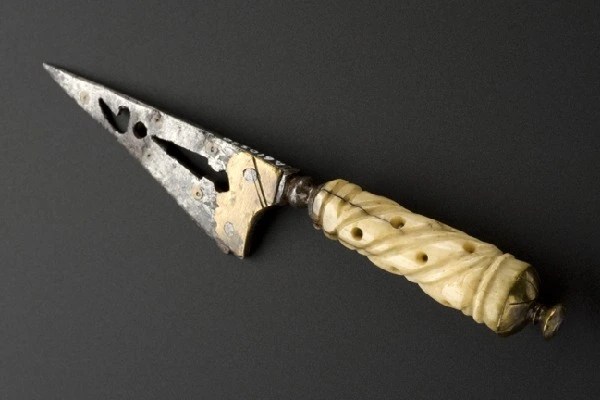
  • a knife,
  • and Isaac, (the would-be ‘lamb.’)

When the Hebrew word for ‘worship’ was used for the first time; it is interlaced with the idea of an incredible sacrifice. Abraham is the first ‘worship leader’ and he has no guitar. No piano, or drums either. No musical instruments whatsoever. No overhead lyrics to speak of.

Just a handmade altar, and a knife.

In the end, Abraham raises that knife, and then suddenly, to the relief of us all, he is stopped. His faith has withstood the test, and he has truly ‘worshiped.’

But the Angel of the Lord called to him from heaven and said, “Abraham, Abraham!” So he said, “Here I am.” And He said, “Do not lay your hand on the lad, or do anything to him; for now I know that you fear God, since you have not withheld your son, your only son, from Me.”

Gen. 22:11-12

Principle One: There really can’t be worship without sacrifice.

Recovering this truth concerning worship would be beneficial. It seems we delegate ‘worship’ to a select few who are talented and gifted. We probably don’t do this deliberately, but sometimes we feel it makes a better presentation. We all want to look good, even Christians. (Perhaps this is more substantial than we know.)

Principle Two: The first worshiper didn’t use a guitar, but a knife.

This difference keeps the idea of sacrifice in its definition. There isn’t worship without sacrifice. The knife thrust that he was ready to wield wasn’t backed up by drums or piano. Yet Abraham understood worship every step to Moriah with the knife in his belt.

“The Scriptures include or allude to just about every approach to worship there is: organized, spontaneous, public, private, simple, complex, ornate or plain. Yet there is no comment anywhere about any one way being preferred over another. Rather, it is the spiritual condition of the worshiper that determines whether or not God is at work.”  

Harold Best

So, brothers and sisters, because of God’s mercies, I encourage you to present your bodies as a living sacrifice that is holy and pleasing to God. This is your appropriate priestly service.”

Romans 12:1

Ultimately, we must realize our sacrifice is the Lamb of God. It’s His blood on God’s altar for our sins. As believers, our faith firmly rests in this spiritual fact.

We of all people have cause to really worship.

Speaking His Language

Peter Warms Himself

“The girl asked Peter, “Aren’t you one of Jesus’ disciples?”

“No,” he said, “I am not!”

“The police and the household servants were standing around a fire they had made, for it was cold. And Peter stood there with them, warming himself.”

John 18:17-18, Living Bible

The Galileans had a distinct accent. Just as we easily identify someone from Texas just by the tone and cadence of their speech, Peter had that distinct drawl that told everyone that he came from the same province as Jesus. It was something he couldn’t hide.

Peter was a very different man in his three years of being with Jesus. And you might say that had transformed him–you might even say that he was now a marked man, the enemy was now quite aware of him. He was no longer a captain of a small fishing boat looking for a catch. He was now the leader of Jesus’ disciples.

The entire text (18:15-18) reveals a confrontation that Peter had with a servant girl, and we hear him making a bald-faced lie. At this very moment, Peter was fulfilling the “promise” that Jesus had predicted (Matthew 26:31-32).

What was going through Peter’s head at that moment? She was a simple servant girl, perhaps one who ministered at the gate of the high priest’s home. It’s interesting that she is the first one to question Peter’s duplicity. Most likely she was just doing her job, watching and listening. She was probably quite alert.

It’s easy to point our finger at Peter.

He was a coward, and when he was put on the spot he bailed. People hate cowards–we extol those who take a definite stand against evil. But he was frightened, scared of being connected with Jesus–the man on trial. There was much at stake here.

We also speak with an accent. I know it might be a stretch–but being with Jesus has fundamentally changed us. Our lives now have a specific dialect that others hear, we’re not the same people that we once were.

We open our mouths and others hear the Kingdom of God. (Such as it is.)

Sometimes I try to pretend that I haven’t been with Jesus, and I’m very ashamed of that. Like Peter, I stand with the others and choose to warm myself by their fire, and I try very hard to make myself inconspicuous. But all I have to do is open my mouth, and I betray who I really am.

It’s hilarious, but even servant girls know that I belong to him.

“To stand before the Holy One of eternity is to change.”

Richard Foster

Crushed Grapes

2 Corinthians 1:8

     David Wilkerson

The word is in New Testament Greek is θλῖψις, or thlipsis. It means affliction, trouble, or pressure. It’s used 45 times in the NT and it seems to be used in a negative sense. Personally I think “pressure” is the most intriguing.

To write anything on suffering and pain is a bit of a fool’s errand.

It’s a broad subject and it will vary from person-to-person.

And I’ve no special insight to give. I know this. Perhaps though, something will come of this. Personally, I have had several traumatic (and dramatic) brushes with pain and suffering. Almost all of them have come as a believer–(I hope that doesn’t mess with your theology).

Looking at the Apostle Paul we can see suffering clearly. Often his ministry was extremely hard. He wrestled repeatedly over his churches and his own sin. When we look at the totality of his work we start to realize that being crushed was part of calling. He understood the challenge of himself and his message.

I write this first to remind you that to minister true grace in any real capacity will mean difficulty. But I also want to encourage you to see that God will always bring life when we remain obedient to Him.

That’s how it works. (At least I think so.)

    Alan Redpath

Our Work is Our Worship, “Avad”

It’s interesting–the Hebrew word for worship is also used for work. I think that is pretty significant. Seeing and understanding this is a life-altering experience. It completely changes the way we look at discipleship. Worship and work/serve go together, and God sees them as one and the same.

To work [avad] as a “farmer”and serve as a worshiper [avad] overlap.

  • “The LORD God took the man and put him in the garden of Eden to work it [avad] and keep it.”
  • Serve [Avad] the Lord with gladness! Come into his presence with singing!”

Genesis 2:15 and Psalm 100:2

Notice that both work and worship use the same Hebrew word.

  • “Six days you shall labor, and do all your work, [avad].”
  • “When peoples gather together, and kingdoms, to worship [avad] the Lord.”

And wow! There are dozens of verses that link our work with our worship. The implications are profound–we’re to see our Sunday worship and our jobs as one and the same. Typically we don’t see it that way. Our Monday through Friday are in a separate category than what we do on Sunday.

Our work and our worship overlap. God intends it that way, and we grow in obedience if we also accept the fact that they’re not separate. Our occupation, whether we’re flipping burgers or being a brain surgeon, is to be an act of worship.

One small Hebrew word can mean so much.

Our whole paradigm shifts when we understand that our worship is far more than 20 minutes on a Sunday morning. It’s to extend to all we do throughout our week. Our Monday job is just as significant to God as our shared time with our brothers on Sunday.

This understanding gets used in the New Testament as we see our work and worship are connected.

“Whatever you do, work heartily, as for the Lord and not for men, 24 knowing that from the Lord you will receive the inheritance as your reward. You are serving the Lord Christ.”

Colossians 3: 23-24

“Not by the way of eye-service, as people-pleasers, but as bondservants of Christ, doing the will of God from the heart, rendering service with a good will as to the Lord and not to man.”

Ephesian 6:6-7

Lois Tverberg, En-Gedi Resources

alaskabibleteacher.com

Covering the Sins of Others

“And don’t build an altar that requires steps; you might expose yourself when you climb up.”

Exodus 20:26

“Most important of all, continue to show deep love for each other, for love covers a multitude of sins.”

1 Peter 4:8

While I lived in the SOS Ministry house in the Mission District of San Francisco a dear brother taught me this principle.  Living in a Christian community was wonderful, but it also could be a tremendous challenge at times.  What Michael taught me allowed my understanding to grow into my own calling in the Kingdom.

The principle is this:  

Throughout the scripture “being naked, or nakedness” is always a shame.  It comes welded to the concept of being vulnerable to the sight of those who are mature.  It carries the idea of sin; it’s sin that some can see, it is hidden to most but causes terrible shame. Exposure of their nakedness seems like the worst thing that could happen.

For those who often sin, we latch onto the idea of keeping a lid on it, and being secretive about it.  We believe that people will never know.  Often sex sins, drugs, and alcohol sin, are kept hidden from the view of family and friends, and the Church. Hidden sin will never be healed by hiding it. (That’s a very common deception.)

Noah and his nakedness, Genesis 9

“Noah became a farmer and planted a vineyard. When he drank wine made from his grapes, he became drunk and lay naked in his tent. Ham, the father of Canaan, looked at his naked father and told his brothers outside. Then Shem and Japheth got a coat and, carrying it on both their shoulders, they walked backwards into the tent and covered their father.”

“They turned their faces away so that they did not see their father’s nakedness.”  

Genesis 9:20-24, (See Lev. 18).

Granted, it’s hard to process this patriarch’s gross sin. However in all fairness, Noah had lost practically everything in the flood, so perhaps we should be gentle with him.

The Church needs people who cover up the nakedness of others, people who are gentle and humble.  They would never, ever dream of making a scandal.  They are trustworthy and understand to a great degree the things that make a man or woman of God.

Mature believers will protect the open areas of others. 

They will refuse to judge or point out sins. Any discernment that’s given from God is for intercession, not for fault-finding.  They stand in the gap, shielding and protecting. And praying. This is God’s heart, and they understand.

But the issues for leadership are quite clear.

The principle of spiritual responsibility and active sin requires definite action for the health of the Church. A pastor or teacher who practices evil cannot remain in their place of authority. The standard for them is different. They have been charged for care and oversight over God’s flock.

With the ordination vows comes scrutiny. I believe special grace is given to each leader, but with that comes the commitment to following Jesus faithfully. It’s a serious call and deliberate sin invalidates that. The man may be quite gifted but can no longer be trusted to serve in their office.

I’m convinced that Paul’s epistles support this.

God’s final word on nakedness is in Revelation 3:18, and perhaps this is a good place to end this post.

alaskabibleteacher.com

Hineni, “Here I am”

The life of Moses is a wonderful story. When he was a young man he met God in a common shrub. He was shepherding a flock for his father-in-law. Then something quite extraordinary happened. He saw a bush on fire.

“When the Lord saw that he turned aside to see, God called to him out of the bush, “Moses, Moses!” And he said, “Here I am.”

Exodus 3:4, ESV

God would call Abraham, Issac, Jacob, Joshua. And there was also Samuel and Isaiah. In the book of Acts Paul heard Jesus call him on the Damascus road. And they all responded with one Hebrew word– hineni.

“Here I am.”

God is never silent. He still speaks to each believer. He calls out to us, and hineni must be our response. Yes, walking in faith can be hard, but each one has been summoned. I believe this is true. Each of us is valuable in God’s eyes–“You were bought with a price.”

How are you going to respond to this?

Hineni is a dangerous word. Ask the disciples. When Jesus called them to follow they had no idea how turbulent and troublesome life would become. Each believer gets a cross. And each will know grace and peace.

“And calling the crowd to him with his disciples, he said to them, “If anyone would come after me, let him deny himself and take up his cross and follow me.”

Mark 8:34

There’s grace given to everyone who can really say, hineni, “Here I am.” I have known that there is joy in my journey, a kindness that has no bottom, a love that surpasses every pinnacle. I’m loved that much.

“Christianity without discipleship is always Christianity without Christ.”

    Dietrich Bonhoeffer

alaskabibleteacher.com

The Giant Goliath, and Sexy Bathsheba

I have wondered about this. It strikes me that there are two giants that David encountered in his walk with God. Granted, there are many other events and people that he experienced, obviously. But there are these two that stick out:

The Goliath showdown, and the Bathsheba fiasco.

These seem to be hinges or pivot points that would change the entire course of king David’s life, and his faith in God. They’re to be an encouragement and warning to us, as both are incredibly significant.

This is a powerful chapter, for it reveals David’s spectacular faith in God. When the boy David killed Goliath it changed the entire future of Israel. One stone from his sling was all it took. Israel routed the Philistine army. David’s faith was the spark that made victory real.

David became a hero that day, and quickly ascended into Saul’s favor. It was both a military and a political development that Israel needed and king Saul welcomed it, the kingdom thrived. The boy David became the man of the hour, a national hero which everyone talked about.

I’d like to point out that David had already been anointed by Samuel to be the next king. This, combined with David’s celebrity status pushed king Saul over the edge–Saul developed a deep resentment that became insanity. David handled this adroitly, fleeing into the wilderness (with his faith) for years.

At this point David is now king and is fighting the Ammonites. The Israelites were besieging Rabbah, the capital city of that country, and it seems like it’s an intense battle. But interestingly enough, David remained in Jerusalem. (And I can’t figure out why.) David can’t sleep so he paces the rooftop and it’s then things get crazy.

David spies Bathsheba who is cleansing herself from her monthly cycle. She is a very beautiful woman, and king David inquires about her. He lusts after her which results in him more or less raping her, commiting adultery and then murdering her husband. This is all very disturbing.

When David had sex with Bathsheba it set in motion the ugliest chain of events imaginable. It seems that up to now David has taken the intiative of events, and then, after this great evil, his story shifts and for the rest of his life he becomes acted upon, a “victim.” He reacts, but doesn’t act anymore.

For the rest of his life he will struggle. All because of lust.

In 2 Samuel 12 David is confronted by a prophet for these sins. Samuel speaks with a parable that penetrates David’s heart. The king responds, “he shall restore the lamb fourfold, because he did this thing, and because he had no pity,” (v. 6). And interestingly enough, David would indeed pay fourfold. There would be four major incidents after this that he would now face.

David faced two “giants” in his walk with God. They were very different but both life altering. He killed Goliath but was not able to destroy his lust with Bathsheba.

Sometimes one “giant” is not enough. It would be nice if that was the case. David walked in victory for a period of time, but failed both himself, his family and his kingdom. Lust always is an act of the will, a deliberate decision that destroys all that it touches. David would be forgiven, but the damage was already done.

There would be dire consequences for everyone.

I believe that our giants were meant to be slaughtered. That is their function and purpose for the faithful believer. There can be no compromise. They’ll take different forms and will often approach you in peculiar ways. Paul tells us to wear God’s armor in Ephesians 6:11-18. I don’t think that protection should be taken off–you dare not only wear it only on special occasions.

Brother, sister–you must be covered all the time.

King David is a lesson for us. There is tremendous pain for us if we deliberately choose to compromise with the giants in our lives. Some of you already understand this; others will. I promise you.

    Oswald Chambers

Bryan Lowe

alaskabibleteacher.com

Leaders Who Wash Between the Toes

drsunil.com, art by Takla

He came to Simon Peter, who said to him, “Lord, do you wash my feet?” Jesus answered him, “What I am doing you do not understand now, but afterward you will understand.” Peter said to him, “You shall never wash my feet.” Jesus answered him, “If I do not wash you, you have no share with me.”

John 13:6-8 (verses 3-17)

Chapter 13 always rocks my world. I visualize this, like a fly on the wall, watching it happen–and then I replay it over, and over in my mind. It always unravels me. Why does this have to happen? What does this passage tell me about Jesus and his kingdom? (John 13). Why can’t I just walk away from it, and leave it be?

Jesus made himself a slave on purpose.

Or perhaps he was always a slave all along, and we just didn’t realize it? Foot-washers were pretty much regarded as sub-human, mindless drones who mechanically performed a necessary duty. The lowest of the low, the very least of the least. (Today they’re the burger flippers and the pool cleaners.)

But Jesus took that role on himself, he laid aside his garments and his Godhood. (They landed in a pile in the corner of the room). When he knelt down to scrub feet (making sure he got between the toes), it was Deity serving man. This God/rabbi intentionally did this, not reluctantly or halfheartedly–but carefully. Brilliantly.

He was their teacher, and custom demanded he enjoys the prerogatives of that position. But he wouldn’t, and didn’t. He mustn’t. As I stress over this, I must conclude he really was their “teacher,” but not in the way I expect. What he was doing on his knees, was instructing them in the art of loving each other.

He showed us a real leader in action.

And isn’t making disciples all about loving (and washing) someone else more than ourselves?

We get things turned around sometimes–we think that spiritual authority is moving up when it’s all about going down. We elevate our pastors and elders, maybe subconsciously–and human nature lets it happen, and then we’re amazed why our leaders struggle so.

Leaders function best when they wash between the toes.

There was a point in Jewish history when the people actually demanded that God would give them a king, instead of a judge (1 Samuel 8:5-9). God warned them that this wasn’t in his plans–but they insisted.

They had to have one, everyone else did. We still must have celebrities, and then we wonder why they short-circuit on us. Who can resist the privilege, and the limelight of the platform?

The Church was never meant to operate like this.

That’s what Jesus said. Instead, it’s we who’ve turned it upside down. It’s we who insist on turning our pastors into minor celebrities. We assert that they take on the role of a “king” (albeit, a little one maybe). Perhaps leaders who stumble and fall do so because we want them to be front and center? Who can handle the privilege and the adulation? I know I can’t.

Peter was classic Peter.

It seems that whenever he resists, he gets rebuked. He makes it quite clear that Jesus will never wash feet–that Jesus will never use a basin or towel and serve him like this. It was outrageous. Unacceptable. It didn’t fit in Peter’s personal theology. He had no room for Jesus the slave. (Perhaps he knew that to follow meant he would have to do the same thing? IDK).

Jesus still washes His people. He has not changed.

He sits us down and takes off our shoes and socks, and scrubs us clean. And we hate it. But to be washed by him is a condition of our discipleship. Every follower must be clean, and he continues his work to this day. We sin daily, even as his own, and he cleans us up–and somehow that really bothers us.

The gifts of leadership are one way of washing feet. At least that’s what our leaders were designed to do. That’s Jesus’ way of doing things. But it seems we’ve adopted Peter’s attitude, and embraced the ‘pre-king’ thinking of Israel. We need our celebrities, we want our kings. We simply can’t imagine it any other way.

“The very first thing which needs to be said about Christian ministers of all kinds is that they are “under” people as their servants rather than “over” them. Jesus made this absolutely plain. The chief characteristic of Christian leaders, he insisted, is humility not authority, and gentleness not power.”

 John Stott