He Came for Us!

by Pastor David Taylor

“The central miracle asserted by Christians is the incarnation. They say that God became man.” 

CS Lewis

One of my favorite places to fish in Alaska is Kodiak Island, where I tried to catch silver salmon with some friends. Just as we were setting up camp, the sun disappeared, and the temperature dropped quickly. While we struggled with our tents, the wind joined in. Then, it started pouring rain—like someone dumped a bucket of water on us! I woke up at midnight to strong winds flattening my tent, making me wonder if fishing Kodiak was really worth it. 😁

But in the morning, the storm had moved on. The sky transformed into something gold! The sun shone brightly, making the world come alive. The night gracefully stepped aside, allowing the darkness to fade away and make room for a new, vibrant day.

I realized then that’s the way of Christmas. 

We have an Advent hope. The light doesn’t negotiate with darkness; there’s no struggle. The darkness retreats when the light arrives. Plain and simple.

Advent hope seems slow, but honestly, it’s unstoppable.

When Jesus came into the world, nothing could stop Him. His birth is recognized during Advent. His arrival was predicted in the scriptures. Jesus came to take away our sins and offer us eternal life.

The Bible teaches us that Jesus is God in the flesh, fully divine and fully man, who came to save us from our sin. This is basic Christianity.

One: The Word Who Always Was, (vv. 1-2)

“In the beginning” reminds us of Genesis, where God created everything (Genesis 1:1). Through the Spirit, he shows that he has taken an important step towards us with the arrival of Jesus. He is dedicated to saving us.

God created us to know and enjoy him (Gen 3:8). We must understand that sin entered the world and screwed everything up. Jesus came to sacrifice Himself to secure our salvation, restoring his image in those who trust him. 

Jesus Christ restores all that we lost because of our sin.

In the beginning was the Word. The Word did not come into existence in Mary’s womb but He always was. The Word is eternal. Before it all began, he was there, and he was coming for us.

The phrase “the word was also with God” indicates that the Word is from God but is closely connected to Him (Mk 6:3; 11:4; 2 Cor 5:8; 1 John 1:2). The Word is also God and represents the eternal Son of God, who is both with God and is God. He is the Word and the Son, distinct yet unified with God.

Two: The Word Who is the Creator, (v. 3)

Everything we see was made through Jesus, and nothing exists without him (see Col 1:16-17). The Old Testament says that God created the heavens and the earth, while the New Testament shows that the Word is the true Creator. This highlights Christ’s key role in creation and his divine nature. Both Testaments emphasize the relationship between God the Father and Jesus, confirming that all existence is intentional and meaningful. 

Recognizing Jesus as the Creator enhances our understanding of his authority, showing us that all things were created through him and find their purpose in him.

Three: The Word Who is the Light, (vs. 4-5). 

We must understand that we’re born spiritually dead and blind. But that can change.

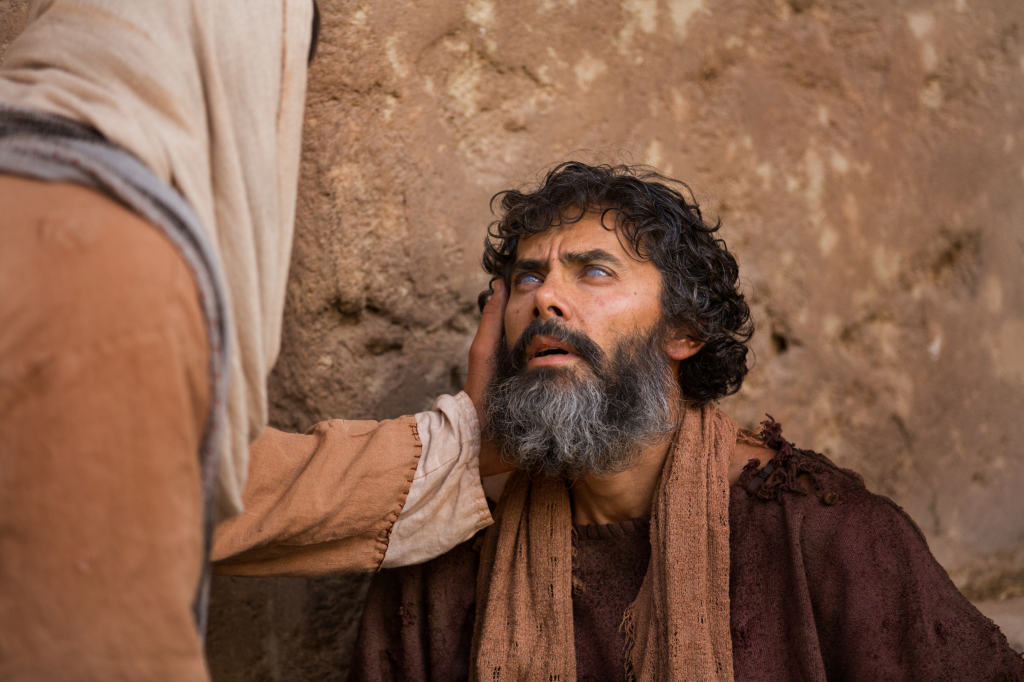
Jesus is the light and every one of us is spiritually blind to truth and beauty and glory (John 17:24). Jesus overcomes our darkness and now gives life. Jesus does for us what we cannot do for ourselves. His love is seeking us.

The word, the gospel, brings forth life and light so that we are born again, literally born from above, and so we see (John 3:3). The light shines into our darkness and the darkness leaves us.

Come Out of the Closet

“Therefore take up the whole armor of God, that you may be able to withstand in the evil day and having done all, to stand firm. 14 Stand therefore, having fastened on the belt of truth and having put on the breastplate of righteousness, 15 and, as shoes for your feet, having put on the readiness given by the gospel of peace. 16 In all circumstances take up the shield of faith, with which you can extinguish all the flaming darts of the evil one; 17 and take the helmet of salvation, and the sword of the Spirit, which is the word of God,

Eph. 6:13-17, ESV

You’re called to be armor-plated.

Ephesians is quite clear about this, and we dare not live without spiritual protection, and as a matter of fact, we must wear each piece to survive spiritually. To be ‘naked’ is catastrophic. Neglecting to dress appropriately brings cataclysmic disorder. We dare not minimize our need for wearing our armor.

Each piece listed must be worn. This is a scriptural mandate for every believer in Jesus.

“The whole armor of God” explains the equipment we need to survive spiritually. Here’s a list of the six:

  • The belt of truth–this pulls everything together and holds us and keeps us secure in the truth.
  • The breastplate of righteousness–our spiritual heart is protected by knowing we’re accepted by the Father. Being right with God is not a feeling nor is it a mere hopeful wish. We wear what is real.
  • The shoes of the gospel (of peace)–the idea of standing in place (“to stand”) explain our ability to be fixed on grace. When we wear battle shoes we cannot be pushed back or lose our footing. Wearing gospel shoes brings us spiritual stability. We can stand in place, rooted and strong.
  • The shield of faith–is a vital way of protecting ourselves from the evil arrows shot by the enemy. Satan targets us when he thinks that we aren’t using faith to defend ourselves.
  • The helmet of salvation–this is the realization that our mind is protected. This vital piece brings us wholeness as we understand what Jesus has done. We know we are saved and wearing our helmet is our protection from demonic-inspired lies.
  • The sword of the Holy Spirit–the only offensive weapon we have, and it’s all we need. The Word of God will frighten the enemy and push him back. The Word slices and cuts down every obstacle and every lie.

   Watchman Nee

I must stress that clothing yourself is vital. You dare not live spiritually naked wearing nothing. You will be totally vulnerable to the satanic wickedness that is swirling around you. I’m afraid it’s all very real and sobering and there is no escape clause until you finally arrive in heaven.

“We know [positively] that we are of God, and the whole world [around us] is under the power of the evil one.”

1 John 5:19, Amplified Bible

I’m afraid you haven’t been given an option in all of this. Our battle equipment in Ephesians 6 is not just some theological preference or concept. It’s real.

Over 40 years of following Jesus have taught me that most believers struggle because they won’t arm themselves for battle. They refuse to acknowledge the environment they’re in and don’t realize the spiritual battle they are facing. They like the sentiment behind this particular passage, (it stirs their heart) but the reality of the battle never fully sinks in.

They end up leaving their armor behind.

The good news is that we have already won because of what the Lord has done. Wearing the armor strengthens and stabilizes us. He pours out His grace, and there will be times of rest of that I am certain. “He leads me beside still waters.”

As obedient and faithful believers we need to realize we’re secure in Him. Yes, there is a terrible fight, but “The battle is the Lord’s.”

“For you equipped me with strength for the battle; you made those who rise against me sink under me.”

Psalm 18:39, ESV

The Church of Many Colors

“His intent was that now, through the church, the manifold wisdom of God should be made known to the rulers and authorities in the heavenly realms, according to his eternal purpose that he accomplished in Christ Jesus our Lord.”

Ephesians 3:10-11

Now Israel loved Joseph more than all his children because he was the son of his old age. Also, he made him a tunic of many colors.

Genesis 37:3

The word “manifold” is a very curious word. In the Old Testament, this particular word is used to describe Joseph’s coat of many colors. I can only imagine that it was striped like a rainbow, (or maybe even tied-dyed?) Whatever it was, Joseph was quite distinctive as he wore his colorful coat.

Joseph’s coat

Paul in Ephesians 3, intentionally borrows this word to explain “the manifold wisdom of God.”

Paul uses this dramatic imagery of Joseph’s coat to describe God’s wonderful wisdom that has saturated the Church. There is something variegated in this wisdom (balance, comprehension, understanding) that infuses His Church.

First of all, we are people of diverse colors. There is a wisdom given to each believer. This defines us and portrays us to a color-starved world. God’s own wisdom, defined quite incredibly in our hearts and spirits, describes our coloration and hue.

Some are merciful, and other believers are bold. Some are kind, others are discerning.

Some are gentle, and others are prophetic and sharp. Some are artists, while others know how to roof a house properly. A few are discerning, and others can endure much. But our personal coloring should never threaten another. Those who see only blue– should never be shaken when another sees yellow.

Our fleshly attitudes would militate against this understanding. We seem to insist that everyone be green, or yellow even. But this isn’t how God through the Holy Spirit comes to our spirits. We should receive each brother and sister, in the wisdom that God has chosen, to flow and grow and give. It seems we are each a prism that reflects a certain light.

We can see the “gifts of the Holy Spirit” in 1 Corinthians 12:4-11.

They are carefully distributed, but definitely never dumped. They come out in many ways through many different personalities and backgrounds. But it seems we are slowly learning that each believer has a definite place and purpose.

I suppose that pride confines us into something that is restrictive. We prefer ideas and proclivities we can control (or maybe label).  Perhaps, it is we that need to be adjusted. We should see the incredible broadness of God’s grace, and how each one is touched and shaped.

The Church is now God’s unique reservoir of wisdom and grace for the world.

We gleam with the certain light of His presence and goodness. Each believer radiates an aspect of grace from the heart of God to others. We are indeed the “Church of many colors.”

“The complaint that church is boring is never made by people in awe.” 

RC Sproul

alaskabibleteacher.com

Following Jesus on the Flowered Path

There is an old French fable about Jesus. It’s pretty interesting. I came across it several years ago and I’ve been considering it since. Now, it’s a legend of course–a story, a simple folk tale. But maybe it will speak to your heart like it did mine.

We experience moments of fleeting joy as we travel through life. Do you remember how life was before knowing Jesus? It was dull and empty. But now, as His followers, we walk on His beautiful path, learning to be obedient, grateful, and devoted in prayer and worship. It can be challenging, but can you sense the wonderful presence of Jesus? Do you notice the beauty around you?

Discipleship can be tough, but even in the hard times, it’s eternally worth it.

Perhaps we’ll see the flowers blooming as we follow in His steps.

And sometimes you must be patient, just a little while longer.

I’m beginning to see His flowers flourish in His steps through my difficulties. Jesus is close. Don’t be alarmed if your own walk takes you through this awful valley. Very often there are tears, but pay attention, our path is full of flowers, and even when we are hurt. Especially when we hurt.

Amy Carmichael

– Amy Carmichael

In life’s journey, amidst challenges and awareness of sin, it is important to remember to raise our heads, appreciate the beauty around us, and find joy in the presence of Jesus. He is there, even when it seems like we’re all alone.

Worship out of affliction becomes a special sacrifice that God values highly.

When we come with tears into His presence it means something special to our Father. The combination of pain and praise is a potent spiritual mixture. I don’t think I’ve fully grasped this. But there are blossoms and flowers, even if I can’t fully see them yet.

I guess that he patriarch Job is a prime example of this. One of themes of the book is that his life is wrecked and his faith when almost is totalled. The writings of this ultimate sufferer are pretty profound.

Job 13:15, ESV

Dear one, keep on the flowered path with Jesus. Don’t look at this present and physical life, your gaze needs to be on eternity. Good things are about to happen, but it may take some time. Remember that when times get rough.

Revelation 21:4, ESV

The Church of the Burning Bush

— John Newton, author of “Amazing Grace
We all know a brother or sister who seems to be a target of an undue amount of suffering. It looks like they’re always in the furnace. All we can do really is to shake our heads and then give them double honor for their faith in God’s grace and providence.

Ministering to these sufferers can be a challenge.

What can we say to those who seem to be on “God’s anvil?” How can we bless those who are in pain?

Perhaps a simple word of calm encouragement is the most effective. In the midst of some awful difficulties, I once had a dear brother who gently and carefully quoted Philippians 1:6 to me over and over, whenever we met and whenever we parted:

 “And I am certain that God, who began the good work within you, will continue his work until it is finally finished on the day when Christ Jesus returns.”

Philippians 1:6

It was a precious thing that he did. I didn’t mind it all, as a matter of fact, I grew to like it. At first, I’ll admit it was strange, but my faith began to ‘mix’ with the Word and I began to believe it. It’s now my favorite verse in the Bible.

Fred refused to preach to me.

He had the maturity to see what God was doing and to make himself available to God on my behalf. Perhaps that patience he showed should be for us the method of choice? I look forward to seeing him someday, someway.

“We can rejoice, too, when we run into problems and trials, for we know that they help us develop endurance.”

Romans 5:3

A keyword in this verse is “rejoice.”

Much wisdom is needed in our ministry to disproportionate sufferers. We should have a fear of intruding on the work the Lord is doing. We must be patient and humble in this matter. There is no rushing God, after all, it’s His work. Most importantly we must be very much ‘present’ for our friend.

“But not only that! We even take pride in our problems, because we know that trouble produces endurance”

Romans 5:3

A “word” spoken out of place can cause even more heartache for the sufferer. Let’s be careful. At times it’s better not to say anything, and that’s alright. Job’s friends were best sitting in the ash heap, saying no word.  

“The Lord God gives me
the right words
    to encourage the weary.
Each morning he awakens me
    eager to learn his teaching.”

Isaiah 50:4, CEB

Trust Jesus to show you how to love, and serve those who seem to struggle so very much. Ask the Father to give you the right words–He will if you only ask.

Furnace People Understand

The Furnace

Isaiah 48:10

“Once we have come through the ‘furnace of humiliation,’ desperately, fearfully clinging to Christ for all He is worth, then we are fully equipped to march into somebody else’s furnace.”

You will not be able to handle the Kingdom of God unless you’re walking out of a life of brokenness and humility!

Furnace people will often recognize those without any real and tangible connection with God’s work. There are furnace promises, but many, without truly understanding will walk around in unreality. Often ‘they get religion.’ These are those who land on “the rocky soil.” They become ‘quasi-disciples’ who will do and say things that they really don’t really understand.

But furnace people have a connection to that which is honest and true. The Holy Spirit refuses to give up. These people can’t tolerate anything false or manipulative.  Their own hearts are being transformed by the fire, and it seems only then are qualified to minister God’s grace. Only furnace people can enter. You will know them by their scars.

The Church has a tremendous need for those who have withstood the furnace of humiliation.

After we endure its ugliness and its great evil, we’ll discover that we’re in an altogether different place than when we first started. The Church is waiting for those who went in and then come out on the other side.

Again, the furnace of affliction will have done its work.

I was thinking today about Joseph, and his ordeal, as found in the Book of Genesis chapters 37-50.  He was a rare kind of person. Perhaps, one in a thousand. You may emulate but never exceed his faith. His confidence in the Lord was true and came from his lousy circumstances.

Furnace people have the ability to function gracefully at this particular stage.

Furnace people are sovereignly brought to a place where they can minister the grace of God into desperate situations. We must convince ourselves, that furnace people have a gift.  They have been through the worst.  They may be battered and bruised.  But they still stand.  We must look to those who have become the gracious agents of a loving God.

Our brothers and sisters have carried the Word with wisdom and grace. They come to us, through the fire.

But will we receive them? I hope so.

My hope is that you will personally grasp what God has worked for you. That really is your truest calling.  The things good or bad, that have happened are part of how you’ll understand grace. He waits for you to respond.  Will you come to Him, through the grace you find in flames?

Frequently the most gracious people you’ll ever meet are those who endured God’s furnace.

Malachi 3:3

***

When There’s Too Much Pain

“You have given me many troubles and bad times, but you will give me life again. When I am almost dead, You will keep me alive.”

Psalm 71:20, NCV

“He was despised and forsaken of men, A man of sorrows and acquainted with grief.”

Isaiah 53:3, NASB


I have never spoken out like this, but my wife and I had a daughter who died in a terribly vicious way–she was stillborn, dead at birth, in November 1999. She was doing great, up to a week before Lynnie’s due date. We knew that in a few days, we would be able to see her– face-to-face. What a joy that was going to be!

But yet that’s not what happened.

Elizabeth Grace Lowe died from strangulation from her own umbilical cord. Nothing could have been done. My wife had noticed a moment of very frantic activity, as Elizabeth fought for her life. We plummeted from ecstatic joy to devastating sorrow in just seconds. It came “out of the blue,” totally unexpected. Who could prepare us?

We were completely undone. 

“For the Lord will not reject forever,
For if He causes grief,
Then He will have compassion
According to Him there is abundant lovingkindness.
For He does not afflict willingly
Or grieve the sons of men.”

Lamentations 3:32-33, NASB

Yes, there can be horrifying pain, but there are also solid promises.

There can be brutal sadness, but there are those specious Psalms. There is a blessing for all those who grieve. This topic deserves far more attention than this simple post. (If you’re in the thick of things, I’m trusting the Holy Spirit will help you to your next step.)

There can be such sorrow in this life, far much more than the human heart can possibly contain. But our Savior has a title (one of many). He is called the “Man of Sorrows.” He is the one who is “on point.” He leads us through such intense hostility and mind-numbing pain. He is there when the switch is flipped on us and it becomes instantly dark. He can’t, won’t, and will not leave you to face your pain alone. He knows.

There are a few things that I want to communicate to you.

These have come out of great darkness. I have tried awfully hard to be a disciple, even though I’m doing the worst job of it. These may be right, or wrong, or just okay–you decide. I don’t really know anymore.

  1. God amazingly takes the full weight of our pain and sorrow (Isa. 45:6-7, NLT). He doesn’t shift the blame or deny His work in the life of people. He’s fully sovereign. (Sometimes we need to adjust our theology.) Maybe it’s hard to trust Him right now–that’s more than understandable. In eternity, I believe, it’ll make perfect sense. Sometimes, we need to wait.
  2. Jesus has fully entered into our sorrows. All that you are feeling right now, He feels. If you feel you are at a minus 10, then He does as well. As you suffer, He is closer than your shadow. He knows us. He feels it all. Please don’t short-circuit over this.
  3. Nothing is ever wasted. We really shouldn’t treat these moments of sorrow as a waste. Have you ever wondered at Jesus’ ‘economy’ after the 5000 were fed?  He assigns value to the leftovers. The disciples pick up their baskets and collect everything again. Nothing will go to waste.  I strongly suspect that His kingdom works this way.
  4. This pain, this sorrow, is the intensive crash course in becoming a person of mercy. You now will always walk with a limp. At times the scars will be quite visible to those who can really see. This pain will become forever a “healed wound,” (but a wound nevertheless). It helps to seek out others who have walked this same path. And yet, to be honest, I don’t think I will ever fully trust a person (or a pastor even) who doesn’t walk with a limp.
  5. You will need (but maybe not accept) the transformation of your suffering into glory. This will take some time, and it almost feels like you’re not progressing at all. I encourage you to re-think each of these simple points. The Holy Spirit may be working, perhaps behind the scenes.
  6. Finally remember this: God is not a monster, stomping on us like a boy crushes ants. He has carried all of our pain and illness. He clearly comes alongside every suffering believer. It is Satan who would suggest to you that God is a Celestial Menace, not worthy of our love. I will be very blunt with you, that idea has to be implicitly rejected. Its origins are truly satanic.

“The LORD is close to the brokenhearted; he rescues those whose spirits are crushed.”

Psalm 147:3

“The Spirit of the Sovereign LORD is upon me, for the LORD has anointed me to bring good news to the poor. He has sent me to comfort the brokenhearted and to proclaim that captives will be released and prisoners will be freed.”

Isaiah 61:1

“He heals the wounds of every shattered heart.”

Psalm 147:3, TPT
 
I’m pretty much convinced that this post is a bit much for some. But please hold it close, maybe it’ll matter later on? (But I hope not.)
 

“A teardrop on earth summons the King of heaven.”

    Chuck Swindoll

*


The Pharisee & the Tax Collector

Luke 18:10-14

 “Two men went to the Temple to pray. One was a proud, self-righteous Pharisee, and the other a cheating tax collector. 11 The proud Pharisee ‘prayed’ this prayer: ‘Thank God, I am not a sinner like everyone else, especially like that tax collector over there! For I never cheat, I don’t commit adultery, 12 I go without food twice a week, and I give to God a tenth of everything I earn.’

13 “But the corrupt tax collector stood at a distance and dared not even lift his eyes to heaven as he prayed, but beat upon his chest in sorrow, exclaiming, ‘God, be merciful to me, a sinner.’ 14 I tell you, this sinner, not the Pharisee, returned home forgiven! For the proud shall be humbled, but the humble shall be honored.”

Meet the Pharisee:

I had it all together. I had shaped myself to be the ultimate Pharisee–the Pharisees of the Pharisees. I understood the Law; I could quote whole books, forward and backward. I fasted twice a week, and tithed everything, right down to my herbs and spices. I had it all together.

And I made sure everyone saw my commitment.

I strenuously kept God’s Law. I was consumed by understanding it, I tried to grasp all its nuances and complexity. The 10 commandments were emblazoned on all that I did. I wanted everyone to know that I was one of “the pure ones,” for that was the meaning behind the word Pharisee. I knew that I was pure.

I went to the Temple every day to pray, I stood holy and set apart, standing before a real and holy God. I was always the truest example to the people of Israel. I always stood when I prayed, for I was completely committed to doing all that the Law demanded of me.

One day I saw a wicked man in God’s holy temple. I had to thank God that we were total opposites. He was a tax collector and an evil person. I really was nothing like him. I rejoiced that I had become a true example of a righteous man.

I knew I was righteous, and certainly not at all like that sinful tax collector.

———————-

Meet the Tax Collector:

I didn’t have it all together. I understood this and was horrified that I had become so evil. I came to the Temple, driven by my guilt and shame–no one had to tell me this, for I knew my sin and I was deeply ashamed.

Why I came, I don’t know. I honestly didn’t belong here, and I kept a distance from the front. I guess that’s where I belonged. On the fringes before the Holy One. It seemed now that I was drawn to this place, and I’m still not sure why I came that day.

I knew that I breathed evil and had become evil.

I fell to my knees, and I begged God to forgive me. I saw the Pharisee standing in the presence of God, but I knew I wasn’t at all like him. He was righteous and I knew I was not. Oh, how I wanted God to forgive me for all the sins I had committed.

I must tell you that my spirit was in agony.

“Humble men are very fortunate!” he told them, “for the Kingdom of Heaven is given to them. Those who mourn are fortunate! for they shall be comforted. The meek and lowly are fortunate! for the whole wide world belongs to them.

Matthew 5:3-5, LB

Jesus clearly told us who was truly forgiven that day. When we think we have it all together, we’re deceiving ourselves.

Let’s not pretend otherwise, okay.

alaskabibleteacher.com

Art: Eugene Burnand, 1850-1924, litho; Scripture used here is from the Living Bible.

The Forbidden First Stone

“They kept demanding an answer, so he stood up again and said, “All right, but let the one who has never sinned throw the first stone!”

(John 8:7, NLT)

“None knows the weight of another’s burden.”

-George Herbert

As believers, we must discern motives and false doctrine. We’re to be constantly aware of people and issues that swirl around us–of this, there is no doubt, we mustn’t be ignorant. This is a healthy “discernment.” But we must learn that having discernment isn’t a way that passes out a ‘guilty’ penalty. We are ‘seeing’ things these things–not to pass judgment, but that we might pray clearly and earnestly, and grow into His love for the weak.

But to pass out a guilty sentence is God’s exclusive jurisdiction.

It’s far beyond our ‘pay grade.’ He is the final judge in everything. He judges justly and lovingly. He alone knows and understands everything very clearly. We don’t.

And yet how foolish we are. Do we really have the ability to pronounce a penalty to someone else? Could it be when we decide to throw rocks at certain people we’re in terrible danger of forfeiting our own salvation? “But if you do not forgive others their sins, your Father will not forgive your sins.” (Matt. 6:15.)

We discern, not to pass judgment, but to pray more clearly and effectively. What you see or sense is for the prayer closet, not before a judge’s bench.

(If you have a ‘rock’ in your hand, you are in definite danger.)

“Don’t judge others, or you will be judged. You will be judged in the same way that you judge others, and the amount you give to others will be given to you.

We really don’t have a problem with worldly people. We understand that they are lost in their sins, terribly wrapped up in their own personal darkness, and that should definitely disturb us. We must point to the Blood of Christ that forgives us. We share the good news of true repentance and faith. His Spirit teaches us to be witnesses of His love to everyone we meet.

But in light of this, isn’t strange that almost all of our judgment is somehow directed at other believers! Why?! For some strange reason, it ‘seems,’ we think that we must pronounce guilt and (by doing so) we declare our own “holy” attitude to our place in the Body. In a weird sense, we think we have the supreme calling to condemn someone else’ walk, and by doing so exalt our own!

“The life of faith is a struggle enough in a broken world without us complicating it for other believers.”

–Jake Colsen

It just may come as a shock to some, but it’s extremely difficult to throw stones at someone when we are busy “washing” their feet.

“The nature and end of judgment or sentence must be corrective, never vindictive; it is always for healing, and never for destruction.”

–John Owen

Perhaps when we judge others, we reveal that we don’t understand what ‘real’ discipleship with Jesus is? Somehow it seems, we really aren’t quite grasping the immensity of His grace on guilty people? Do we really understand His profound love for the fallen? “God so loved the World…” Have we had any idea how patient He is with us? Do we doubt His ability to correct others? (These are awfully hard questions.)

“Judge not lest you be judged.” (Jesus’ words really do scare me sometimes.)

Certainly, I intend to confront the darkness. “You are the light, a city set on a hill!” I am His salt and light and I do shine into this dark night. But that is His doing, not mine. I do not generate light on my own. The Bible declares me as ‘self-righteous’ when I try. I am a broken person, who is just starting to understand the scope of my own brokenness and weaknesses. I’m starting to realize I’m not in a position to judge someone else. I’m not quite healed myself yet and I must not think I can point to someone else as being worse than me.

Quite simply, I can’t throw ‘rocks’ at other believers anymore.

I can no longer pass out any condemnation from my own limited understanding. My chief concern right now is to be a humble, earnest Christian who is always ready to forgive those who, in their awful sin and confusion, are hurting others. I’m beginning to see that my calling is to be; a simple servant to my brothers and sisters, nothing more, and nothing less.

Serving God at Night


A song for going up to worship.

“Behold, bless ye the Lord, all ye servants of the Lord, who by night stand in the house of the Lord.

Lift up your hands in the sanctuary, and bless the Lord!

The Lord who made heaven and earth bless thee out of Zion!”

Psalm 134

This remarkable Psalm is part of an elite group known as “the Psalms of Ascent.” There are 15 Psalms (120-134) sung as the congregation of Israel went up the steps of the temple in Jerusalem. They would sing each in “rounds” with each other.

As you can well imagine, this made the ascent slow, but meaningful. As you read the three verses of 134, I get a picture of worshipers turning back and blessing the Levites. This takes place at the very end of the day. The Levites, and other godly ones who lived in the Temple, (remember Anna and Simeon, in Luke 2?)

They were the support staff for the priests.

I have some general thoughts about this Psalm:

V.1, “Behold, bless ye the Lord, all ye servants of the Lord, who by night stand in the house of the Lord.”

The first significant thought is “Lord” mentioned three times. The word is the recognition of someone’s status and standing. We call Him Lord, because He is that (and more). The second has to deal with the Levitical “night shift.”

They served and guarded the Temple during the wee hours of the night.

They probably cleaned, stacked wood, sharpened knives and maintained the Holy Place with its needs. There was no real glory working the night shift. There were no people to serve. The crowds were for the day shift. (Here’s a weird thought– think “Disneyland at 2:00 a.m.”) There was also a contingent of non-Levite people ministering to the Lord as well. They had no duties, and only the priests could serve through their work.

The Levites working at night were not ‘second best.’ At least, not in the eyes of the Holy Spirit. They were integral in both presence and service to the Lord. To despise them is to reveal one’s ignorance. They definitely mattered.

V. 2 “Lift up your hands in the sanctuary, and bless the Lord!

I’ve worked nights before. It’s a real adjustment. You never feel like you’ve had enough sleep, and it is really hard to be positive and cheerful.  I could get pretty grouchy at times. But an exhortation is given, a shout and a blessing as the crowds leave. “Raise up your hands– and praise Him!” It is as the work, although necessary, would be secondary. The worship however, was primary. We need to hear that.

Each of these three verses of this Psalm contain the word “blessing!”

V. 3, “The Lord who made heaven and earth bless thee out of Zion!”

To be blessed (literally, made “lucky”) by our Creator and Lord is pretty profound. As a kid who read a lot, I think of ‘fairy dust.’ I know better now, but to be blessed by God is deeply significant. To summarize, I believe this Psalm is speaking of those in the church who are doing “hidden service.” No one sees them really.

They go about there duties quietly, and purposefully. The only recognition is from God– who sees all. I must encourage you to keep on. There are many more than you think who see your hidden ministry to the Father. You are His ‘night shift.’ You’re seen by few, but Him. He knows what you do.

“There are many of us that are willing to do great things for the Lord, but few of us are willing to do little things.”

     D.L. Moody