Leave the Spear in the Wall

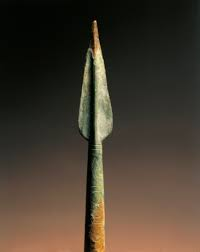
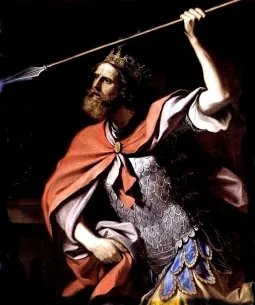
And Saul hurled the spear, for he thought, “I will pin David to the wall.” But David evaded him twice.

1 Samuel 18:11, ESV

And Saul sought to pin David to the wall with the spear, but he eluded Saul so that he struck the spear into the wall. And David fled and escaped that night.

Saul’s spear shows up later in David’s life, and it becomes a vital component in his growth as Israel’s next king.

But David doesn’t know that yet. In 1 Samuel 26 we read about David’s second encounter with the spear of Saul.

The scene is in the wilderness and David’s on the run. Now the badlands are a good place to hide as any Western movie knows. I think David had his scouts and I suppose that there were also men who knew every rock and cave in that wasteland. They were hiding from Saul.

“So David and Abishai entered the encampment by night, and there he was—Saul, stretched out asleep at the center of the camp, his spear stuck in the ground near his head, with Abner and the troops sound asleep on all sides.”

1 Samuel 26:7

Sneaking into Saul’s camp was bold and audacious. Saul was sleeping and scripture says that David’s companion desperately wanted to kill Saul, but David refused, David, looking through the darkness lighted on Saul’s spear. Perhaps he remembered back to when Saul tried very hard to kill him.

He avoided that spear a long time ago, and now he escapes it again.

The tables have completely turned. Given a chance to end King Saul’s life, he refused; he would not kill him. When you think about it, many problems would’ve been solved, and David would take his rightful place as Israel’s new king.

But David spiritually understood God’s heart. He understood the spiritual principle of “turning the other cheek” and “loving your enemies.” He overcame with love and kindness. And lots of grace.

“Do not be overcome by evil, but overcome evil with good.”

Romans 12:21, ESV

The Greek word for “overcome” is νικάω which can be translated as “to conquer or to come forth victorious.” It is also used when someone is arraigned before a court of law but wins the case.

To follow Jesus means you entirely reject using the spear. It’s not for you. Never.

“We win by tenderness. We conquer by forgiveness.”

Frederick W. Robertson

We must leave the spear in the wall. You must not throw it back.

Like David, we are to trust the Father. We’re to be secure in His timing. And yes, we each must use kindness and brokenness to overcome dark things. When you think about it, Jesus also faced evil without defending Himself. The spear showed up again and we see that our Savior allowed it to pierce His side on the cross.

You must leave the spear in the wall.

You mustn’t use the spear when it seems you can wield it at the perfect moment, and like Jesus you need to allow it to save your enemies from their sin.

These three spears are evidence you “have God’s heart.”

Leaders Who Are Kind and Generous

“And the king said, “Is there not still someone of the house of Saul, that I may show the kindness of God to him?” Ziba said to the king, “There is still a son of Jonathan; he is crippled in his feet.”

 2 Samuel 9:3, ESV 

That crippled man was named Mephibosheth.  He was injured by the actions of a nurse, she accidentally dropped him as she was trying to escape the palace (2 Sam. 4:4).  He was just five years old. It was not of Mephibosheth’s doing, but someone else made a mistake, and it totally and irrevocably changed his life.

As a result, for the rest of his life, he would always use crutches.

It may be of interest, but Mephibosheth’s name means, “shame,” and perhaps this would’ve been an integral part of how people treated him or even how he saw himself. But David was a different sort of king (as kings go), and he elevates Mephibosheth to the feasting table.

King David wants to bring this crippled man to a lavish dinner.

Interesting. I believe that there are a great many people like Mephibosheth.  They’ve been injured by someone else’s stumbling.  It seems we pass these things on to each other.  And the lameness we inflict may not be physical.  It may be spiritual or emotional.  Sometimes we injure others without knowing what we have really done to them.

Whether we know it or not, we are capable of much evil. 

Some of the most evil woundings that are done are usually on a moral or spiritual level. If you break your arm, you will heal.  But if I wound your spirit you may not ever recover. These injuries are incredibly devastating.  When someone harms us on this level it can completely undo us, for a lifetime. (And perhaps, maybe even forever.)

We can read of King David’s truly majestic treatment of Mephibosheth in 2 Samuel 9. He actively blessed him, and perhaps that is the proactive action we ought to take. We must make an effort to always strengthen the people around us.

As a king, this was a very minor incident. Hardly worth recording in the lofty affairs of state. But as a man, to restore Mephibosheth, was definitely one of David’s greatest decisions.

I would suggest that kindness should always be a key part of someone who is in authority, especially those who are serving others in leadership.

But there’s another concept here– we discover something that is profoundly true about us in Paul’s letter to the Church in Ephesus.  It’s here, in 1:5, that we see that God our Father, acts like David, and receives Mephibosheth–just like God receives us to Himself. We find that we’re adopted, loved, and held, and we get a prime place at the table. Forever and ever.

God decided in advance to adopt us into his own family by bringing us to himself through Jesus Christ. This is what he wanted to do, and it gave him great pleasure.”

Ephesians 1:5, NLT

We may use crutches, but we walk by faith. This verse in Ephesians may be the greatest lesson and the most profound experience we can have as believers.

alaskabibleteacher.com

Singing From the Pit

“I waited patiently for the Lord to help me,
    and he turned to me and heard my cry.
He lifted me out of the pit of despair,
    out of the mud and the mire.
He set my feet on solid ground
    and steadied me as I walked along.”

3″He has given me a new song to sing,
    a hymn of praise to our God.
Many will see what he has done and be amazed.
    They will put their trust in the Lord.”

Psalms 40:1-3, NLT

Psalm 40 is jam packed with great and wonderful truth. It contains freedom for the Christian– a way out for the broken believer. We do well when we use it, and that’s what it’s there for. The deep pit has been used over many centuries as the way God teaches us to sing certain songs. But that doesn’t make it easier, does it?

Verse 1

“I waited patiently for the Lord to help me, and he turned to me and heard my cry.”

Waiting is a critical word, it should not be regarded as trivial. In our daily walk we must be patiently seeking the Lord, that comes first. Admitting you need help is the first step. And guess what? You need help. 😁

The word ‘wait’ is special, it’s kawvah in Hebrew. It can mean ‘to bind together by twisting.‘ It can be used with the idea of braiding strands of rope together. It is never a passive act that just happens. Waiting on God is to be done with intentional purpose.

Remember that the Lord is not some distant deity on a hill far away.

He’s not hiding from you. It’s really quite the opposite. He is closer to you than you think. He is responsive and aware. He hears your cries and wants to act; He is not deaf, but our patience is critical. Waiting on Him is crucial to being free. We must bind and twist our hearts and live our life to His desires.

Verse 2

He lifted me out of the pit of despair, out of the mud and the mire. He set my feet on solid ground and steadied me as I walked along.

The seeable terrain can be awful, with muddy paths and mucky pits. Things that pull you down and suck you in. They’ll trap the traveler. But the Holy Spirit is quite able to lift us out. He picks us up and secures us. He uses the rope of God’s Word.

He is way more willing to save us, than we are to being saved.

Solid ground is where we are meant to be. It’s become a place of firm standing and secure footing. He makes us steady and He keeps us safe. The Holy Spirit now has intimate care over your soul.

Verse 3-4

“He has given me a new song to sing, a hymn of praise to our God. Many will see what he has done and be amazed. They will put their trust in the Lord.

Some of the greatest songs are the ones that come from those just delivered from the pit. These are ‘pit songs,’ offered to God from sincere and true hearts that have once been trapped. There’s something solid heard from the hearts of those redeemed from disaster.

These songs no longer sound religious or contrived.

“YOU CAN SEE GOD FROM ANYWHERE IF YOUR MIND IS SET TO LOVE AND OBEY HIM.”

AW Tozer

From our deepest pits come our greatest praises.

There is a passionate quality that saturates these ‘pit praises’ that is highly treasured by God, and esteemed and valued by the Church– a sense of authenticity starts to be finally heard. We can finally start to see that our pits become ‘launching pads’ of true songs of deliverance.

Do You Belong in the Fellowship of Pain?

The hands of a leper

“In one of the villages, Jesus met a man with an advanced case of leprosy. When the man saw Jesus, he bowed with his face to the ground, begging to be healed. “Lord,” he said, “if you are willing, you can heal me and make me clean.”

Luke 5:12, NLT

The Bible text reveals a man who is desperate.  His leprosy has advanced; he is covered with it from ‘head-to-toe.’ He’s an outcast now, completely infected by something he never asked for; he is ‘unclean’ and completely without hope. There is no treatment, the doctors can do nothing.

The leper knows that without the touch of Jesus, he’ll never be healed. 

He knows it; he doesn’t need to be convinced by anyone over the complete hopelessness of his condition. He is lost. And yet he has heard that Jesus can do incredible miracles. Could it be that Jesus can heal his sickness? The leper comes and falls on his knees before the Lord, with his face in the dirt. This man is completely broken; he has no hope, except for Jesus. What else can he do?

Our diseases differ, but our lives have been completely changed by our pain. We all have this in common. 

Our pain and darkness vary. Some hurt more, some less. But we’ve all come to the place where we no longer have illusions of somehow being made whole. Whenever we meet, I think there should be a secret handshake or a password. We all share a comradeship— we’re all part of the same community.  We’re a broken club of tired and decidedly unclean misfits.

We belong to the fellowship of pain.

Lying in the dirt, we start to believe the unbelievable.  Our faith doesn’t activate our healing, as much as it simply guides us to Jesus. We can kneel, and perhaps that’s all we need to do. His presence drives away the fear, the doubt, and the pain. He’s come, and somehow we begin to hope for mercy. Only he can carry us through this.

In times past I’ve struggled with deep dark depression. I’ve had to take meds.  But when I come into Jesus’ presence, all my melancholy is driven out. He comes and I start to hope again.  Am I a stellar example of perfect discipleship?  I think not. But isn’t about us becoming “angels,” perhaps it’s more about us learning how to kneel, and to allow Jesus to touch our hearts.

You must do this, repeatedly.

“The power of the Church is not a parade of flawless people, but of a flawless Christ who embraces our flaws.”

“The Church is not made up of whole people, rather of the broken people who find wholeness in a Christ who was broken for us.”   

–Mike Yaconelli

alaskabibleteacher.com

But God…

But God, being rich in mercy, because of the great love with which he loved us, even when we were dead in our trespasses, made us alive together with Christ — by grace you have been saved.”

(Ephesians 2:4–5)

But God. Short words with a powerful meaning, used over 4100 times in the Bible (every 7 verses). It’s used to imply intervention and change, typically a holy interruption of some kind. This verse in Ephesians 2 describes the Father getting involved in a tangible way.

We were terribly lost–actually the Bible says, “dead.”

But He is rich in love and mercy, and it’s grace (and only grace] that makes us alive. Now we’re not reformed or rehabilitated. These are good words, but the verse describes a resurrection–a revivification. The dead live!

Jesus actually resurrects each believer.

“But God.” Joseph learned that “all things work together for good.” His brothers cruelty sold him into slavery and even though he endured prison, he would become the prime minister of Egypt. After many years his wicked brothers come before him. Revenge? Not on your life.

“As for you, you meant evil against me, but God meant it for good in order to bring about this present result, to preserve many people alive.

Genesis 50:20

Let God have His way with you. Acknowledge His sovereignty by allowing Him to interrupt when He wants to. He is active in our lives. Having resurrected us from the dead, the Holy Spirit becomes actively involved in our lives (and He brings us grace and beauty).

If you do this, I expect great things for you.

“My flesh and my heart may fail, But God is the strength of my heart and my portion forever.”

Psalm 73:26


The Leper Meets Jesus

Matthew 8:1-4 

It was a wild scene, we can’t forget this. But it’s funny, Jesus through all this sees and hears this leper. He doesn’t respond to the crowd but to the diseased man. The text tells us that the leperous man was on his knees and he was “praying.” His pleas were directed at Jesus.

But remember, the end of the previous verses explains exactly what’s happening. Matthew 7:28-29, (MSG) explains their excitement–

When Jesus concluded his address, the crowd burst into applause. They had never heard teaching like this. It was apparent that he was living everything he was saying—quite a contrast to their religion teachers! This was the best teaching they had ever heard.

The crowds responded wildly to the marvelous teaching of Jesus, and that was awesome. We really shouldn’t minimize that. However, in the Gospels, the “crowd” is pretty much a bad term, or at least a neutral one.

I suppose that Jesus seems to ignore the multitude’s extremely positive reaction. He knows it won’t last. The fickle crowd will soon cry out and demand His crucifixion.

But I understand, I’m that leper and He sees me.

Scripture tells me that Jesus now sits in heaven and makes intercession for me. He focuses on just me, I’m the center of His care–but I also know that attention is also on you, and others, and yet I’m assured that He sees me and each of His sheep. This should be a comfort. He concentrates and ministers to the person, and never to the multitude. 

Jesus loves you, and He loves me too.

“So he told them this parable: “What man among you, who has a hundred sheep and loses one of them, does not leave the ninety-nine in the open field and go after the lost one until he finds it? When he has found it, he joyfully puts it on his shoulders, and coming home, he calls his friends and neighbors together, saying to them, ‘Rejoice with me, because I have found my lost sheep!’”

Luke 15:3-6

The Church is Collecting Sinners

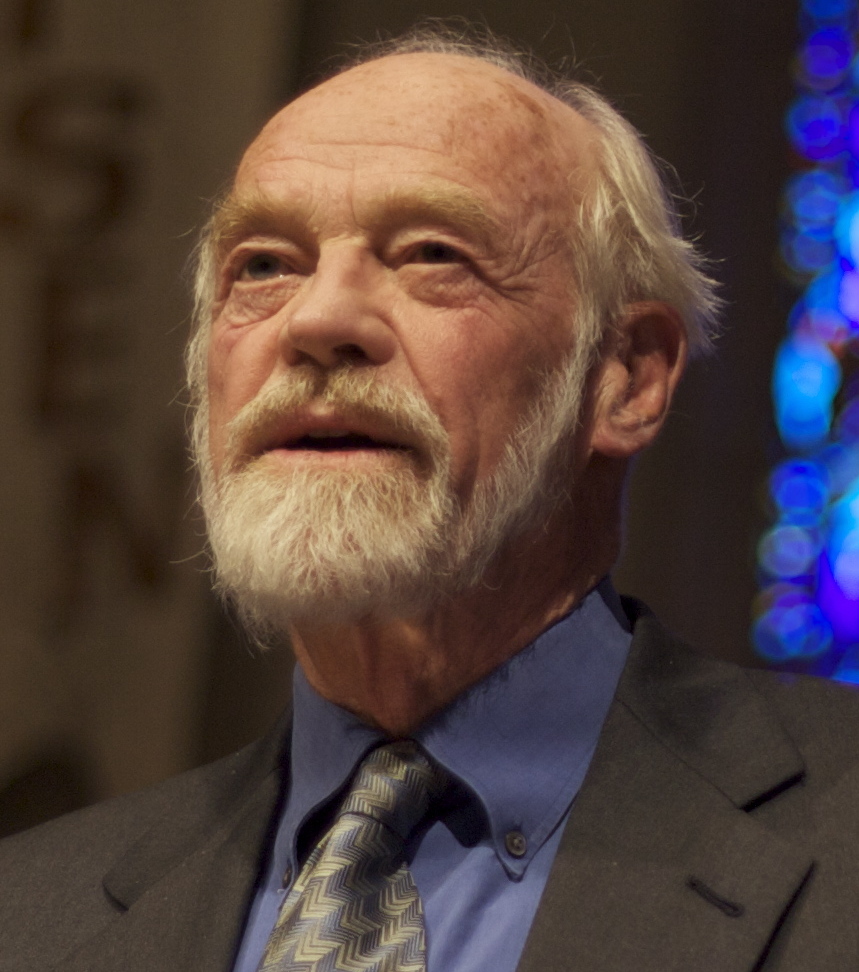
The following excerpt is from the devotional book, “Living the Message,” by Eugene H. Peterson.  This pastor-professor is probably the person I want to grow up to be like; he has a gentleness and eloquence that is seldom seen–and highly respected.
Dr. Peterson died in 2018.

***********

“When Christian believers gather in churches, everything that can go wrong sooner or later does.  Outsiders, on observing this, conclude there is nothing to this religious business, except perhaps, business…and a distant one at that.  Insiders see it much differently.”

“Just as a hospital gathers the sick under one roof and labels them as such, the Church collects sinners.” 

“Many people outside are just as sick as the ones inside, but their illnesses are either undiagnosed or disguised.  It is similar with sinners outside the church.”

“One way to define spiritual life is getting so tired and fed up with yourself you go on to something better, which is following Jesus.”

Some other quotes by Eugene Peterson:

  • “All the persons of faith I know are sinners, doubters, uneven performers. We are secure not because we are sure of ourselves but because we trust that God is sure of us.”
  • “Suffering attracts fixers the way road-kills attract vultures.”
  • “When we sin and mess up our lives, we find that God doesn’t go off and leave us- he enters into our trouble and saves us.”
  • “That’s the whole spiritual life. It’s learning how to die. And as you learn how to die, you start losing all your illusions, and you start being capable now of true intimacy and love.”
  • “American religion is conspicuous for its messianically pretentious energy, its embarrassingly banal prose, and its impatiently hustling ambition.”

More Eugene Peterson Quotes…

When Pain is All You Can Think About

Sometimes we live in darkness. We suffer and it’s hard. We mentally accept God’s grace and His love for us, but in our heart we remain untouched. Pain saturates everything it seems. We seem to go through the motions, but deep down we’re convinced that we’ll never find the light that so many claim to have.

Are we “cursed?”

Pain fills our life. We live with something that is persistent, and our hope is a day when it’s all over. Psalm 88 is our Psalm. Nothing is sugar-coated. It is raw and unabridged. It’s pain under a microscope. That Psalm is yours.

For my soul is full of troubles,

    and my life draws near to Sheol.

I am counted among those who go down to the pit;

    I am a man who has no strength,

Psalm 88:3-4

The Thief on the Cross Speaks

Luke 23:39-43

“One of the criminals who were hanged railed at him, saying, “Are you not the Christ? Save yourself and us!” 40 But the other rebuked him, saying, “Do you not fear God, since you are under the same sentence of condemnation? 41 And we indeed justly, for we are receiving the due reward of our deeds; but this man has done nothing wrong.” 

42 “And he said, “Jesus, remember me when you come into your kingdom.” 43 And he said to him, “Truly, I say to you, today you will be with me in paradise.”

The pain was incredible, but I know that deep down I deserved to die. But not like this. Never like this. I was almost out of my mind with fear. What they were doing to me was terrifying.

You must understand that I was a common thief. I had stolen a loaf of bread when I was eight years old and that’s how it all got started for me. It more or else got bigger and easier. I knew how to steal and I was quite good at it. I was Jacob, the master thief!

When I was finally caught, they sentenced me to die. I supposed it was inevitable. I fault no one but myself as I knew what I was getting into. As I dragged my beam up to Golgotha, it was really strange but I suddenly remembered a verse from the scripture and it really did unsettle me.

(Gal. 3:13, ESV)

It’s a terrible thing to die this way. There were three of us, nailed to the wood and lifted up between heaven and earth. Jesus was nailed to the middle cross, not that it really mattered; all three of us were going to die today.

Many hope for an easy death, maybe in their sleep–but that’s not going to happen to us.

The third man could only mock, he was afraid, and I suppose he just echoed those Pharisees who didn’t really understand. But I knew better. I knew who this other man was, I had heard all the stories. Deep down I knew that this man on the center cross was the Messiah.

A crowd had gathered to watch us die. The Romans in their wonderful ingenuity had made a sign that they nailed above Jesus’ head, and it declared to everyone that Jesus was “the king of the Jews.” Even as he was dying, they found a way to malign him and irritate the crowd.

The other man being crucified continued to mock Jesus, and it infuriated me.

Why I defended him I don’t know for sure.

But I understood. Jesus was murdered out of the envy and jealousy of the Pharisees. He didn’t deserve to die like this, but He was hated, and who can confront these religious men without becoming a victim. Jesus had repeatedly crossed the line, so now they were now putting him to death. It seemed evil was really winning today.

I saw the soldiers throwing dice for Jesus’ clothes. He was now being mocked by them as well, even as He was dying on a brutal cross.

But all of a sudden it all made perfect sense.

He really was the Messiah, and these bastards were killing him. Crucifixion was starting to work on me now. I began to choke on my words, and it was getting hard to breathe.

“Jesus… please remember me. When your kingdom comes, please let me be a part of it.”

And as beaten as He was, He managed to turn and look directly at me. They had whipped and brutalized Him, and yet He was still aware. His words were whispered now, but I understood. “I promise that today you will be with me in paradise.”

I was starting to spasm again.

But the horror of death had left me. Some time had passed, and I could hear his breathing stop. But for the first time, I had peace. They used a spear on Jesus, but he was already dead.

The soldiers now came to the two of us, and they were carrying an ax to break our legs. It all had to do with the coming festival, and the Pharisees wanted us dead. When they swung that ax I knew a pain that I could never describe. My own death came quickly after that.

I was suddenly standing in paradise, whole and complete, and loved.

Someone was standing before me. He was shining, and I knew he was powerful; stronger, and He was more glorious than anyone I had ever met. It was crazy but somehow I knew that it was the Lord Jesus. He had come to meet me. It’s funny, but I realized that somehow I really did belong. Me–a dirty rotten thief.

Jesus had promised me, pronouncing me righteous, me of all people. I suddenly had a joy that I could never explain. I really was a part of the Kingdom that was beyond anything I had ever known. I believed him and asked if somehow I could be part of his eternal rule.

I simply asked and He gave me everything.

“I am going to heaven just like the thief on the cross who said in that final last moment: “Lord remember me.”

Billy Graham

alaskabibleteacher.com

Cover Art: “Christ on the Cross between Two Thieves,” by Peter Paul Rubens

The Ministry of Poured Oil

I have to admit, I never really appreciated the depth of Psalm 23:5. I supposed that “He anoints my head with oil” was simply just figurative language for something nice. Poetic. I never knew this definite parallel until recently. But David completely understood and was able to understand the full ministry of the Shepherd.

“You prepare a table before me
    in the presence of my enemies;
you anoint my head with oil;
    my cup overflows.”

Psalm 23:5, ESV

I recently read this and suddenly I understood.

“Sheep can get their head caught in briers and die trying to get untangled. There are horrid little flies that like to torment sheep by laying eggs in their nostrils which turn into worms and drive the sheep to beat their head against a rock, sometimes to death. Their ears and eyes are also susceptible to tormenting insects.”

So the shepherd anoints their whole head with oil.

“Then there is peace. That oil forms a barrier of protection against the evil that tries to destroy the sheep. Do you have times of mental torment? Do the worrisome thoughts invade your mind over and over? Do you beat your head against a wall trying to stop them? Have you ever asked God to anoint your head with oil?”

He has an endless supply!

His oil protects and makes it possible for you to fix your heart, mind, and eyes on Him today and always! There is peace in the valley! May our good good Father anoint your head with oil today so that your cup overflows with blessings! God is good and He is faithful!!”

Posted by Heart Prints

“But you have an anointing from the Holy One, and all of you know the truth.”

1 John 2:20

Oh, How He Loves You!