Stone Throwing

” “Let him who is without sin among you be the first to throw a stone at her.””

John 8:7, ESV

“None knows the weight of another’s burden.”

-George Herbert

Definitely, we must discern motives and false doctrine. We’re to be constantly aware of people and issues that swirl around us–of this, there is no doubt, we mustn’t be ignorant. This is a healthy “discernment.”

But we must learn that having discernment isn’t a way that passes out a ‘guilty’ penalty? We are ‘seeing’ things these things–not to pass judgment, but that we might pray clearly and earnestly, and grow into His love for the weak.

But ‘passing a guilty sentence’ is His exclusive jurisdiction.

It’s far beyond our ‘pay grade.’ He is the final judge in everything. He judges justly and lovingly. He alone knows and understands everything very clearly.

It becomes imperative that we understand this; that any real discernment given is only to intensify and escalate the calling of every ‘saint,’ intercessor, or pastor. We discern, not to pass judgment, but to pray more clearly and effectively.

What you see or sense is for the prayer closet, not before a judge’s bench.

Do we really have the ability to ascribe a penalty to someone else? Could it be when we decide to throw rocks at certain people we’re in terrible danger of forfeiting our own salvation?

Do we really have the ability to ascribe a penalty to someone else? Could it be when we decide to throw rocks at certain people we’re in terrible danger of forfeiting our own salvation?

How foolish we become.

But if you do not forgive others their sins, your Father will not forgive your sins.” (Matt. 6:15.)

(If you have a ‘rock’ in your hand, you are in considerable danger. Please consider this–it’s never easy, is it?)

“Don’t judge others, or you will be judged. You will be judged in the same way that you judge others, and the amount you give to others will be given to you.

“Why do you notice the little piece of dust in your friend’s eye, but you don’t notice the big piece of wood in your own eye?

Matthew 7:1-3

We are broken people. We struggle with many different things. Some of us are mentally or physically ill. We are not whole yet. Some of us must take meds to help us be ‘normal.’ We deal with issues that would devastate someone else. And we don’t have it anywhere near together.

And yet out of our ‘hot mess,’ do we think we can penalize someone else? Really?

We really don’t have a problem with worldly people. We understand that they are lost in their sins, terribly wrapped up in their own personal darkness, and that should definitely disturb us. We must point to the Blood of Christ that forgives us. We share the good news of true repentance and faith. His Spirit teaches us to be witnesses of His love to everyone we meet.

“The life of faith is a struggle enough in a broken world without us complicating it for other believers.”

–Jake Colsen

It just may come as a shock to some, but it’s extremely difficult to throw stones at someone when we are busy “washing” their feet.

Granted, “we are to be wise as serpents,” But that same verse instructs us “to be as harmless as doves.” (Matt. 10:16.) A loving meekness and gentleness, need to be combined with intense spiritual power. We must embody “the fruits of the Spirit.” These things are the characteristics of the Spirit-saturated believer.

“The nature and end of judgment or sentence must be corrective, never vindictive; it is always for healing, and never for destruction.”

–John Owen

Perhaps when we judge others, we reveal that we don’t understand what ‘real’ discipleship with Jesus is? Somehow it seems, we really aren’t quite grasping the immensity of His grace on guilty people? Do we really understand His profound love for the fallen? “God so loved the World…” Have we had any idea how patient He is with us? Do we doubt His ability to correct others? (Again, these are awfully hard questions.)

“Judge not lest you be judged.” (Jesus’ words really do scare me sometimes. )

Certainly, I intend to confront the darkness. “You are the light, a city set on a hill!” I am His salt and light and I do shine into this black night. But that is His doing, not mine. I do not generate light on my own. The Bible declares me as ‘self-righteous’ when I try. I am a broken person, who is just starting to understand the scope of my own brokenness and weaknesses. I’m starting to realize I’m not in the position to Judge someone else. I’m not quite healed myself yet and I must not think I can point to someone else as being worse than me.

Quite simply, I can’t throw ‘rocks’ at other believers anymore.

I can no longer pass out any condemnation from my own limited understanding. My chief concern right now is to be a humble, earnest Christian who is always ready to forgive those who, in their awful sin and confusion, are hurting others.

I’m beginning to see that my calling is to be; a simple servant to my brothers and sisters, nothing more, and nothing less.

Jonah Measures God’s Love

(“The LORD is gracious and merciful, slow to anger and abounding in steadfast love.”)

Psalm 145:8

This understanding of God’s character is used 13x in the Old Testament. It was first discerned by Moses, and was passed on to other men. It was stamped into the hearts of those who followed him. It was a description of who God was, and it became the strong foundation of their ministry.

Jonah understood who God really was.

And that was the reason Jonah refused to give the Ninevites a break. He didn’t want them to repent. He wanted no part of their salvation, which is rather disturbing. How can a prophet act this way? What was it that angered Jonah that he would resist God?

The book of Jonah contains question marks, especially chapter 4. Of the 14 questions that are asked, 11 are directed at Jonah.

When we read it we can focus on the secondary ideas. We see Jonah and the whale. Maybe we think about his disobedience. Or maybe the storm or the plant that helped Jonah endure the heat of the sun. These are all good things to consider, but they are not the main theme.

God’s heart for even the Ninevites is the main purpose of the book of Jonah.

God is not the exclusive ‘property’ of the Hebrew nation! He very much cares for others outside of our own group. In John 3:16 we’re made aware of His passion for the whole earth.

The Great Commission has always been in effect. In the OT Israel was called to be a light to the Gentiles, Acts 13:46-48. The covenant given to Abraham was that Israel would be a blessing to every nation. This was God’s plan and His intention. (Genesis 17:1-8.)

Jonah’s anger and apparent prejudice is definitely a cause for concern.

But could the message of Jonah describe the reluctance of the Church today? Is God’s love for everyone? Does God even care?

alaskabibleteacher.com

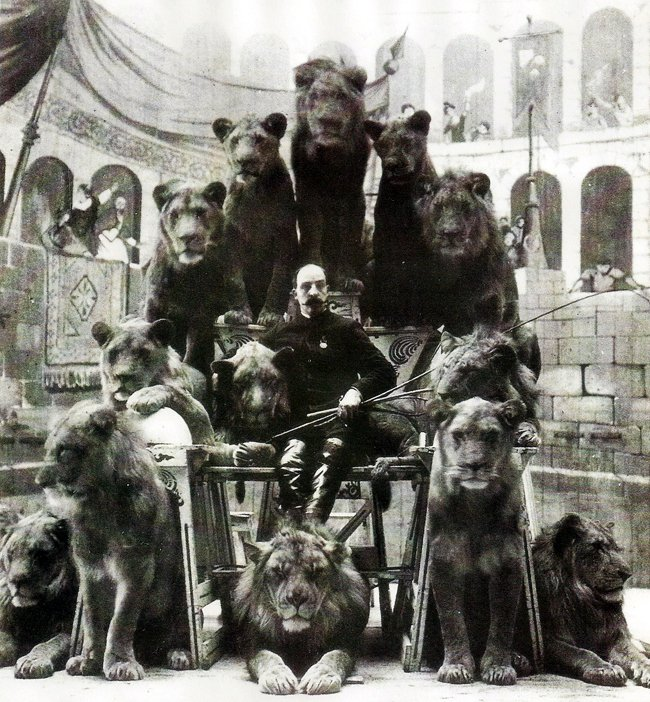
Daniel, the Lion Tamer

Daniel 6:22-23, ESV

I am rather frustrated with myself. I confess I haven’t read Daniel in years, and I’ve chosen to rectify this. Lately I’ve busted through this book and discovered some wonderful stuff. I guess chapter 6 has become my favorite.

A couple of things stick out.

Daniel was an incredibly faithful man, praying three times a day. He was true-hearted who served each king with the gifts God had given him. I like him a lot.

Daniel became the king’s favorite, the Hebrew word used means “prominent or esteemed.” He was the greatest and best there was to be found. You could say that he was the finest man in the kingdom.

Daniel knew how to lead and direct others. We read that he oversaw 120 chief overseers. I suspect he knew a thing or two about good leadership. Daniel understood his work, and it seems that he instinctively knew what good government required.

But Daniel was a victim of jealousy. A concerted effort, carefully planned and directed was meant to destroy him. Although the leaders of this rebellion could find nothing to accuse him of, they resorted to trap him because he prayed to God. Faithfully and consistently.

Their plot worked. These officials, through their twisting and manipulation of the legal code, were able to sentence Daniel to death. It seems being fed to hungry lions was the penalty for “breaking the law.”

Sometimes we must choose to serve God, even if it means breaking men’s laws.

Acts 5:29

Daniel was over 90 years old when he was thrown to the lions. Even in his advanced years he kept up serving God. The passage declares that he had “an excellent spirit.”

The lions, (several I assume), were not at all interested in devouring Daniel. King Darius however was incredibly distraught over Daniel’s execution, but it seems he was forced into it. The passage tells us that the king was so distressed that he couldn’t sleep that night.

Undoubtedly, Daniel slept far better then Darius.

To be faithful to the Lord God may require us to sleep with lions, but we can be assured of the Holy Spirit’s presence with us even then. A verse in Hebrews suggests “faith” protects us from the strong jaws of the enemy. Daniel understood.

Hebrews 11:33

But yet, sometimes even the faithful will be eaten.

Sometimes the lions will devour believers. But we must trust and believe no matter what happens. Hebrews goes on to show us the extremity of the faithful. Read Hebrews 11:35-38 and you’ll understand what I mean. Being faithful can be very difficult. Bad things often happen.

*****

     Thomas Watson

alaskabibleteacher.com

A Rose in the Snow

Merry Christmas, dear ones! 

I’m looking at Christmas 1000 years from today, when He will bring us all together.  I think that we’ll all kick back, and we will try to remember Christmas, 2023.  We will most likely say, “But that was so long ago, it feels like a dream, I’m not so sure now…”

Like me, I trust your deepest hopes are pinned on an incredible grace. 

Under the tree there are gifts.  But we have been given a gift– of gifts.  It is something that ‘rocks our world’.  It’s called ‘eternal life’.  It has been given to us freely, and without any stipulations.  We’ve been ‘cut-loose’ from the tangled mass of sin.  We are now very much free.

I know I need to learn to live like a free man.

My physical and mental illnesses often trips me up. I’m saddened by my weaknesses.  But I reach out and touch this grace, I pull it in and take and make it my own.  Jesus has freed me, and I want to walk in truth, with Him—and with you.

I’m grateful for my doctors, they’re definitely a blessing. I must keep looking to my rose–my Jesus who is my Savior. I covet your prayers especially now.

Our Lord Jesus is truly a “rose in the snow.” He has come to this mean and hostile world, but He is precious and beautiful in the eyes of the faithful. I pray that you find Him flourishing in your heart.

Love to you from alaskabibleteacher!

Finding the Light

“Indeed, we felt that we had received the sentence of death, so that we would not trust in ourselves but in God who raises the dead.”

2 Corinthians 1:9

To be chronically ill often means living with awful frustration. We can’t do what we want, we are ‘trapped’ by a disease we never asked for, and we’re held hostage by our minds and bodies. We once had a job– a career… and our time was occupied by that. Suddenly our lives are turned upside down.

We wanted something else, anything more than being very sick.

I once was a pastor of a small church here in Alaska. I also taught Gospels, several years in a local Bible Institute. I loved ministry very much. They defined my identity and gave me purpose. I enjoyed helping people and teaching the Word. I endeavored to be faithful in the ministry. And I hope I did.

With the sudden onset of a brain tumor, followed up by a diagnosis of severe depression, my life more or less exploded. I had extensive memory loss. I knew I had to step out of the ministry. I simply could not function. It was a hard thing to leave it behind. (And I still miss it.)

My depression grew even more profound with the stillborn death of our third child just 3 days before her delivery. Things suddenly ground to a standstill as my wife and I tried to process all of this. I guess I just couldn’t understand and more or less just shut down. I was angry at God. I spent months in bed, unable to function.

Some people were true jewels.

Others were more or less mean and uncaring. (I quickly learned how to take the good with the bad.) I suppose I should have understood, but things were so tangled up inside me that I couldn’t verbalize a thing. But God knew all about me. He loved and never judged.

The post-op recovery following the tumor was an ordeal, as I had to learn many things all over again. A few years later I ended up on disability; I was unable to work, and my symptoms were so unpredictable. I dealt with profound depression and a solid dose of paranoia and fear.

I learned that meds can help, but they can’t fix the problem.

Sometimes the isolation seemed worse than the pain. We wonder why this is happening to us, and we hear lies about our worthiness or God’s goodness. Our value to others seems to be scuttled by our illness. We can feel cursed, forgotten, crippled by God, or even worse. (Maybe even irrevocably lost?)

Satan craves our spiritual destruction, and he snares unsteady souls.

I admit I have been slow to learn this– but God brings good things out of the dark. I’m embarrassed by my personal lack of acquiring all of this. Now I’m starting to learn finally, and I want His words to reflect these truths.

“We now have this light shining in our hearts, but we ourselves are like fragile clay jars containing this great treasure. This makes it clear that our great power is from God, not from ourselves.”

2 Corinthians 4:7

This light will shine, and the treasure is found in clay vessels. Brokenness only means the treasure is now seen clearly. It’s important to note–jewels lose none of their value by being surrounded by broken clay. Our weaknesses are being turned into goodness, understanding, and love for our brothers and sisters.

Troubles of many varieties will pay us a visit. Count on it.

No matter what their nature, God holds his people in place while everything else is falling apart. But for the broken believer, there is another dimension; we will finally triumph. The tragedies we’ve had to endure only supplement our faith. We will stand– because He makes us stand.

“We are pressed on every side by troubles, but we are not crushed. We are perplexed, but not driven to despair. We are hunted down, but never abandoned. We get knocked down, but we are not destroyed.”

2 Corinthians 4:8-9

alaskabibleteacher.com

A Weeping Mother

Matthew 15:21-28, ESV

My daughter had a demon living inside her. Please understand me, I love her more than life itself. It was a terrible torment to see her fall under the control of the evil one like this. Every day seemed worse than the previous, and I knew that the day would come that I would lose her completely to the dark pit.

She would be lost forever.

God knows I tried everything. There was the pagan temple to Eshmon. He was our god of healing and protection for our nation, and it was a short walk away. We made trips there to present ourselves for healing. But things got worse, not better.

When Jesus came we knew we had to meet Him.

I was desperate, at the very end of my rope. I was scared. Meeting Jesus’ disciples was the first step and it really didn’t go well at all. They protected Him, and I couldn’t get close enough to speak with Him.

So much was blocking me. I saw so many obstacles, but when your child is suffering like mine, these things mean nothing. I came to the point where I began to shout, over and over for Jesus to intervene. I was asked to stop, I ignored His followers and kept yelling.

This passage asks us to consider many heavy issues. We have questions that need answers. Why did Jesus seem so cold and harsh? What about the “dog” reference, and His seemingly reluctance to heal? What about her ethnicity as a pagan?

Did Jesus know something about the situation we don’t?

I really want to keep this post short, so I won’t try to answer these questions. But the situation is intriguing. It must be noted that Jesus, at this particular point in His ministry, is focusing on reaching the Jewish population. (But that will change in the future.)

And yet there are positive characteristics of this woman that must be considered. These need to be understood to open up this passage. Please ponder them, they put the entire situation in a different light. We see the following:

  1. Her humility
  2. Her patience
  3. Her prayer and worship
  4. Her persistence
  5. Her faith

Each of these are crucial, and Jesus saw them. Yes, we see the obstacles, but we understand her love for her demon possessed daughter that drives her into Jesus’ presence. We see her faith that won’t give up no matter the resistance she encountered.

    Corrie Ten Boom

alaskabibleteacher.com

Against Rulers and Forces

10 Finally, be strong in the Lord and in the strength of His might. 11 Put on the full armor of God, so that you will be able to stand firm against the schemes of the devil. 

12 For our struggle is not against flesh and blood, but against the rulers, against the powers, against the world forces of this darkness, against the spiritual forces of wickedness in the heavenly places.

Eph. 6:10-12, NASB 

Paul tells us that discerning the cosmic forces of wickedness is now critical. If we choose to ignore his words and make them optional, we will become spiritual toast. We need to hear reality. We want to be told the truth. And the truth is that we’re neck deep in spiritual alligators.

Point blank: We were each born for battle. Every believer must wear armor.

This passage in Ephesians 6 stresses that there is something sinister, an organized force, something evil, a darkness that’s focused directly on us. Verse 12 unveils to us a veritable government of wickedness. Satan leads his demons out with the intention of confusing believers and destroying holiness.

We also need to understand that human beings have a terrible knack of walking in their sin, and also by being manipulated by evil forces. Human history bears this out. We have a lousy track record. Without the Spirit we will be lost and destroyed by our own darkness.

Christians are to see life very differently than others do.

Ephesians 6 teaches us to find strength in being connected with God, which is critical to walk through in this confusing darkness. By prioritizing our relationship with Him, we can draw upon His strength and a sincere faith to navigate through all of this.

Without intimacy there is no obedience and there can be no real victory.

You must come to him humbly and holy, and sit before Him and listen, learn and love. And that is the major step in true holiness. Being controlled by Him means when you need to, you can stand and deliver damage to Satan’s kingdom.

You’ll be leading angels in this terrible battle! They have their swords drawn and are quite capable. Remember that this is a spiritual war–not physical. Your attack must be fought on your knees. And angels, they’re watching and listening to you as you pray. They are God’s messengers to protect you.

Satan presses us hard through redirection and forgetfulness of who we are.

Without the humble intimacy that can only grow on prayer and Bible reading, we will be spiritually destroyed. We need the protection of the Presence. Please don’t forget this; you need Jesus more today than yesterday. You must come closer. He will help you.

You see, your only hope is in Jesus’ strength and intimate love for you.

We must reach for our power and grab upon this intense love. We can only become strong through our intimacy with Jesus. He shields us from the spiritual corruption that swirls all around us. As we draw to Him we become mighty, as we listen closely to the Holy Spirit, we will walk in true discipleship with Jesus.

You will hear Him speak clearly to you, perhaps when you actively push to do His will than your own.

“We are a long time in learning that all our strength and salvation is in God.”

     David Brainerd

alaskabibleteacher.com

Instant Breakfast

“The message of the cross is foolish to those who are headed for destruction! But we who are being saved know it is the very power of God.”

1 Corinthians 1:18, NLT

Our salvation often comes like a sudden bolt of lightning. It happens very fast, a flash of true faith, and we move from darkness to glorious light in an instant. I am absolutely confident about this.

When someone genuinely believes in Jesus and in repentance seeks forgiveness, they receive everlasting life. It never ends. Our salvation occurs in the blink of an eye. It’s like a switch that gets flipped on.

But Peter and Paul clearly write that we are “being saved.” I believe that our salvation has three tenses:

I believe that our faith and transformation are also continuous processes, a lifetime of dedication and progress. It is important to see that following Christ is an ongoing journey. Additionally, it is essential to understand that accepting Christ as our Savior does not automatically result in an immediate ascent to heaven. We must “work out our salvation with fear and trembling.”

We prefer convenience. Microwaves, K-Mart shops, fast food, ATM machines, credit cards, and so on. We quickly grab our protein shake (or coffee?) and rush out the door to keep up with our day. Things become faster and more convenient. We practically demand it.

We want patience and we want it now!

Most people don’t like the idea of a daily (and slow) commitment. We want quick and easy solutions, but having faith doesn’t work like that. Even though we want to make progress quickly, becoming a follower of Jesus takes time. It’s called “discipleship.”

I’m sorry to be the bearer of bad news, but if you’re a true believer, you have a challenging journey ahead of you.

Here are Philippians 2:12 in four different translations.

  • Work out your own salvation with fear and trembling. (KJV, ESV)
  • Work hard to show the results of your salvation, obeying God with deep reverence and fear. (NLT)
  • Keep on working to complete your salvation with fear and trembling. (NCV)
  • Keep on working with fear and trembling to complete your salvation. (GNT)

Some believers will find a deeper understanding of a “discipleship effort” that’s necessary. Others may not be ready to accept it. But the writers of the New Testament epistles effectively communicate this idea of being on a journey.

“Instant Christianity tends to make the faith act deadly and so smothers the desire for spiritual advance. It fails to understand the true nature of the Christian life, which is not static but dynamic and expanding.

A.W. Tozer

alaskabibleteacher.com

Dancing in the Streets

I see a people dancing along a long, straight road. Their voices form a chorus of praise to the king who gave his life to set them free. 

Along the road there are lots of little stalls and shops. They are all arranged in such a way that the dancers can look inside and see all the thrilling goods and shining things for sale. The salesmen are also turned towards the throngs of people and have exciting offers: ”Take a thing now, pay later!” ”Have a look around!”, ”Come, satisfy and fulfill all your dreams!”.  Beautiful clothes of the latest fashion. Sparkling jewels. Delicious foods as far as the eye can see. But strange things were also for sale. High positions. Power. Glory. Bodies.

Entrances were made to walk into, but not to find one’s way out. The shelves in the shops lead you into alleys, backstreets and sidetracks. And there, people live in darkness.

Some people in the jubilant parade get curious and stop at the sight of something interesting. Others take a few steps further in. Still others try on different things and even start shopping, but some of them soon regret it all and find their way back to the parade. Because they have seen something far better than every tempting thing trying to get their attention.

They have their eyes fixed on the destination: the horizon far ahead, the shining bright sun with sunbeams shining on the road they are walking on. They know that it gives far more joy and deeper peace than anything the world has to offer. You can tell it by their looks!

Those still living in darkness now and then see the light in their faces and repent. Sometimes greedy salesmen can see their sincerity and are drawn to them. People are caught up by the whirl of happiness and leave all their possessions behind. Even those whose families want to stay on, still choose to leave. Some dancers have to endure mockery, beatings and persecution from those who remain, since they love darkness. But it rarely keeps the dancers from continuing. For the light carries them!

And it does not stop there. The people are not just dancing for themselves. The light that they are receiving wants to shine into the darkest backstreets. And so many dancers let themselves be led there. Once there, they share their plasters, their food and drink and their shoes with all those in need. They chant out stories of what they have seen and experienced and invite those listening to dance with them. Whenever someone joins them, they are met with rejoicing. And all around them beauty is bursting forth where beauty has not been seen before, life is born from what used to be dead and darkness is driven away by light. 

We all have terrible scars

The parade consists of all kinds of people: women and men, rich and poor. But they are all broken. They all have scars – some have many scars and others just a few scars and they long for the complete healing. Some are heavily burdened, while others have let go of their burdens along the way, received lighter clothing from above and so can dance more quickly and easily. But the most important thing is not how fast one can move but in what direction. If you try a move that has not been given to you, one which is too difficult or too fast, you are in danger of stumbling and falling.

But if you stay on the road, there is always strength to get up. Indeed, sometimes you need help, even a lot of help. Hands reach out, eyes see and ears listen. The wind caresses cheeks, opens lungs and breathes in new life. And when you raise your eyes once more, you can brush off the dirt.

Love is what most of all characterizes them. It sets their hearts on fire and encourages them to give their lives for each other.  It shapes them into one people under one and the same king, one family with one and the same Father, one temple for one and the same Spirit, one bride to one and the same Christ. 

————

Found this article that I thought would bless you. It’s such an encouragement. (I wish I’d written it.) 🙂

Rooted Firmly and Deeply

“But I am like a green olive tree
    in the house of God.
I trust in the steadfast love of God
    forever and ever.”

Psalm 52:8

In Psalm 52 we read of David’s run-in with Doeg, a very bad man, (a mass murderer actually). But David, hearing about the slaughter of 85 innocent priests doesn’t respond in hatred, rather he sits down and writes this song of contemplation which we know as Psalm 52.

It isn’t something written out of wrath and vengeance rather the word that begins his writing is “maskil” which implies– enlightenment, or something reflective, thoughtful, discerning. He sat down and considered Doeg’s awful evil, and by doing this was able to understand own heart as well.

Psalm 52 has two distinct parts.

The first is Doeg’s vicious atrocity, and the condemnation that it incurs, (v.v. 1-7). The second was David’s own commitment to following God, and understanding his own place in a very evil world, (v.v. 8-9).

Rather than castigate himself for being discovered in Nob–a circumstance which directly led to the mass murder of these priests (and their families). We find that David does not blame himself. He could have, but he didn’t. Rather he thoughtfully, and carefully, detailed his own “observations” of the whole sordid matter.

David could easily have destroyed himself with guilt and grief. He didn’t.

He chose not to play the losing game of ‘what if.’ He instead would be like a green olive tree rooted himself in the holy temple and into the protective presence of God. David knew he would destroy himself if he didn’t place himself there. It was a deliberate decision.

It would keep himself sane.

It seems to me that trees work heavily into David’s own theology and that this is how he sees his relationship with God. He’s planted and therefore able to survive terrible trials. He shows us how to survive and thrive.

His roots would need to go very deep though.

David’s thoughtful imagery is himself as an olive tree planted in God’s presence.

I believe knowing this is the antidote to the poison of guilt. Perhaps we should follow his example?


“They are like trees planted along a riverbank,
    with roots that reach deep into the water.
Such trees are not bothered by the heat
    or worried by long months of drought.
Their leaves stay green,
    and they never stop producing fruit.”

Jeremiah 17:8