God, Have Mercy On Me

Luke 18:9-14

“He also told this parable to some who trusted in themselves that they were righteous and looked down on everyone else: 10 “Two men went up to the temple to pray, one a Pharisee and the other a tax collector. 11 The Pharisee was standing and praying like this about himself: ‘God, I thank you that I’m not like other people—greedy, unrighteous, adulterers, or even like this tax collector. 12 I fast twice a week; I give a tenth of everything I get.’”

13 “But the tax collector, standing far off, would not even raise his eyes to heaven but kept striking his chest and saying, ‘God, have mercy on me, a sinner!’ 14 I tell you, this one went down to his house justified rather than the other, because everyone who exalts himself will be humbled, but the one who humbles himself will be exalted.”

He despised others. As a Pharisee he prided himself as a holy person; he stood before God and congratulated himself. I believe that self-righteousness has many levels. You can be blatant and obvious about it, or it can be subtle and hidden. But we must understand that the father sees and knows. Notice the “we all” here in Isaiah 64:6

(Hmm. Is that what He sees? A menstrual rag? You got to be kidding!)

We often advance ourselves by demeaning those who struggle hard with their sin–there are those who see and somehow know that they’re superior. We don’t come out and say so; but we’ve arrived— but guess what— God (and scripture) tell us something radically different.

But we’re not dealing here with a hidden self-righteousness. The Pharisee truly believes that he is special. He stands and doesn’t kneel. He feels comfortable and confident in the holy presence of God Almighty. He’s not like the others. He is sure that he’s holy.

Look though, the tax-collector was being brutally honest.

He didn’t need anyone to tell him how sinful he was—he understood his own wickedness. Jesus’ story reveals God’s love for those who know that they’re twisted inside. Notice the heart of the tax-collector:

  • “He stood afar off” which showed his awareness of his separation from God.
  • “He wouldn’t even raise his eyes to heaven,” which declared his humility in the presence of God.
  • He kept “striking his chest,” which tells us of a deep pain over his sin against God.
  • He prayed, ‘God, have mercy on me, a sinner!’ This describes his desperate heart.

These both came to pray, but that is all they had in common.

The Pharisee came to the temple to show off his righteousness, the tax-collector out of a terrible despair. It strikes me that the text in verse 11 says the Pharisee “began praying to himself.” It seems that his prayer never really met God—he was proud and showy, doing the things God hates (Prov. 29:23).

Things really came obvious in verse 14. That’s the critical point of the entire story—“one went down to his house justified rather than the other.” Wow! What a statement. One professionally religious man, sure of his holiness, the other a sinful sinner, who came humble and broken. One showed off his faith—boasting with a legalistic swagger. The other desperate and desolate, completely undone.

But it was the tax-man who became righteous in the eyes of God.

Humility is the foundation of the kingdom of Jesus. In Matthew 5:3-4 makes a lot of sense—to be “poor in spirit” and to “mourn” are the bedrock of a Christian’s discipleship. To be justified (made right) was a gift. He didn’t try to earn it, and there wasn’t a probationary period. The tax-collector now became righteous; the Pharisee carried his sin.

God wants us to have a broken-heart. He rejects everything else. I suppose that the question is this: Do you mourn over your sin? 

Psalm 34:18

Art by Eugène Burnand

The Stomach Churning Sin of Manasseh

God’s temple was now filled with an evil darkness. King Manasseh made the Lord’s holy place a fountain of sin and filth. Instead of holiness, it was an evil place.

He brought in dark things that were twisted, perverted and clearly forbidden.

“Manasseh led Judah and the inhabitants of Jerusalem astray, to do more evil than the nations whom the Lord destroyed before the people of Israel.”

2 Chronicles 33:9, ESV

His own darkness was now encouraged by others, it became accessible, available and promoted:

  • The high places were rebuilt throughout the land.
  • Altars to Baal rebuilt, using images of wood.
  • In the holy temple, altars to the “starry host,” astrology, plain and simple.
  • Human sacrifice of his own sons to Molech, a false god. Murder.
  • He practiced soothsaying, used witchcraft and sorcery, and consulted mediums and spiritists.

Evil was being encouraged and something wicked was replacing all that was good and true. The analysis of Manasseh’s policies was way beyond disturbing. Of all the kings of Judah, he was the most sinful and the most corrupt. He was at the bottom of the barrel.

The Hebrew word for “led astray” can be translated seduced.

Manasseh was an incredibly immoral man, a king who ruled for 40 years. “He did all he could to pervert the national character, and totally destroy the worship of the true God; and he succeeded.” (Clarke)

It’s believed that he put Isaiah to death by cutting him in two.

Moreover Manasseh shed very much innocent blood, till he had filled Jerusalem from one end to another, besides his sin by which he made Judah sin, in doing evil in the sight of the LORD.

1 Kings 21:16

But then something happened.

And the LORD spoke to Manasseh and his people, but they would not listen. Therefore the LORD brought upon them the captains of the army of the king of Assyria, who took Manasseh with hooks, bound him with bronze fetters, and carried him off to Babylon.

2 Chronicles 33:10-11

Assyria came knocking on Manasseh’s door. I think there was a certain mercy here, but also discipline. Manasseh had “hooks,” inserted through his jaw and out of his mouth. Like a fish he was led to Babylon, a trophy of the power of the army of Babylon.

It was from a dark dungeon that Manasseh cried out to the Lord and repented.

(2 Chronicles 33:12-13.)

There’s a Jewish fable that when Manasseh cried out to God the angels boarded up the windows in heaven. They wanted to block out his prayer so God wouldn’t be able to hear. But God, rich in mercy, bored a hole in front of His throne to hear Manasseh’s desperate cry.

The Lord’s intention was to forever show His kindness and grace given to the most awful repentant sinner.

I believe that Manasseh was the “Prodigal Son” of the Old Testament.

God is not at a loss when He moves to bring us back to Himself. He can woo or whip. He can draw or drive. He can work rapidly or slowly, as He pleases. In other words, He is free to be God! And in His own way, at His own pace, He brings us back.

     Tom Wells

God is wildly in love with you. Yes, the sin you’ve committed is awful, but the Lord wants you to come back. He may discipline you, but He forgives everything if you’ll turn and repent.

No matter how awful your sin, He forgives and restores. Manasseh is proof of that.

Sources:

2 Chronicles 33:1-20

2 Kings 21:1-18

Enduring Word commentary

alaskabibleteacher.com

Repairing Your Nets

“Yet those who wait for the Lord
Will gain new strength;
They will mount up with wings like eagles,
They will run and not get tired,
They will walk and not become weary.”

Isaiah 40:31, NASB

The word “wait” used here is powerful. It’s an awesome word, never used casually in the Hebrew scriptures. It does not mean to be uncaring or idle. Sometimes we wait in line at the grocery store, or maybe we’re waiting for a phone call. We wait all the time, and often, we don’t even realize it.

The Hebrew word for ‘wait’ is special. It’s qāvâ. It means, ‘to bind together by twisting.’ It’s an active word.

It sometimes means to work like a fisherman repairing his nets to get them ready for tomorrow’s catch.

(There are always holes to mend after a long night’s efforts.)

When we wait spiritually, repairing our nets, the following should be used. Much of this can be done in prayer.

  • Calming ourselves, setting aside everything that doesn’t fit
  • Reading His word
  • Seeing His face
  • Hearing His voice
  • Keeping pace with Him, whether He moves (or doesn’t)

Fixing our nets is a cool way to describe our journey, right? Sometimes, when we think about waiting, we usually only think about it in English, and that can be annoying. It often stops us from truly understanding the true meaning of ‘wait’.

I strongly believe that the Holy Spirit wants us to understand the concept of being closely connected to Him. Sadly, we are often held back by our own definitions, rather than embracing the definitions found in God’s Word.

“The LORD is good to those who WAIT for him,
to the soul who seeks him.”

Psalm 27:14

Sometimes we are instructed by someone to “wait on the Lord.” This instruction can be challenging and we are unsure exactly how we should do it. It’s usual for us to simply show agreement through a smile and a nod. We never completely grasp the essence of that word.

He becomes my source of power that comes from waiting.

He is now the sturdy bond that I am intertwined with. (Maybe this is how He gives strength and power to His people?) We must listen to this, and the Lord is very enthusiastic about guiding us into this fresh form of closeness.

The promise in Isaiah 40:31 talks about receiving new strength, like an eagle’s wings, a holy energy. This verse is important for us, especially today; we need this kind of strength right now. We need to repair our nets as often as we can.

“Waiting for God is not laziness. Waiting for God is not going to sleep. Waiting for God is not the abandonment of effort. Waiting for God means, first, activity under command; second, readiness for any new command that may come; third, the ability to do nothing until the command is given.”

    G. Campbell Morgan

alaskabibleteacher.com

How to Die Well

“Even though I walk through the valley of the shadow of death, I will fear no evil, for you are with me; your rod and your staff, they comfort me.”

Psalm 23:4, ESV

“Precious in the sight of the Lord is the death of his saints.”

Psalm 116:15

“Death is like my car. It takes me where I want to go.” 

Pastor John Piper

Our generation simply doesn’t know how to die well.  There are many conflicting messages and attitudes which have steered us away from the reality of dying.  Much of it is the natural development of unbelief.  Our pop culture develops this and gives it momentum.  We are trying to convince ourselves that “death is impossible, my life will not end.”  But we’re escaping into a delusion. And it only intensifies as we age. 

We are running from what is real.

There is a Latin phrase,  Ars moriendi  (“The Art of Dying”) which the Church practiced in past generations.  In the past, Christians would be buried as close as possible to a Church building.  Many would be interred within the very walls of the Church.  The understanding was that the dead were part of the congregation.  That there was only a thin veil that stood between the living and the dead.  

The dead didn’t just vanish. They still live. We just don’t see them.

Our generation is confused.  We have forced death to wear a mask.  We insist on a significant camouflage to hide the reality of sickness and death.  No one really ever talks about it, and so no instructions are given on how to die well. So we don’t, and we die poorly–often in ICUs. We die sedated, separated and unable to process dying. We never help our families process it. 

For many, the fear of dying is intense and paralyzing.  

It’s time for the Church to step up and guide us to our next step.  Our pastors and elders have got to prepare us to die well.  It is a part of being a disciple.  It is discipleship, and dying is inclusive.  We need somebody to prepare us for the inevitable and the certainty that is approaching us.  I need someone that will help me face my own death.

You know what?  No one escapes.  

And the reality of that drives some of us mad, or addicted, or psychotic.  The idea of filling a casket up for forever is incomprehensible.  We cannot live with this sick idea of dying.  It disturbs us on the deepest level possible.  It is completely evil.

Psalm 23 has been pure comfort and healing for generations.  And it is an excellent starting point for us.  Verse 4 develops the idea of traversing death.  The writer has incredible insight of passing through death.  This verse alone is worth billions of dollars in gold.

Psalm 23 has been pure comfort and healing for generations.  And it is an excellent starting point for us.  Verse 4 develops the idea of traversing death.  The writer has incredible insight of passing through death. Psalm 23 has made me a very wealthy man.  His Word has become my rich treasure.

“Some day you will read in the papers that D.L. Moody of East Northfield, is dead. Don’t you believe a word of it! At that moment I shall be more alive than I am now; I shall have gone up higher, that is all, out of this old clay tenement into a house that is immortal- a body that death cannot touch, that sin cannot taint; a body fashioned like unto His glorious body.”

    D.L. Moody

No Doctor Could Heal Me

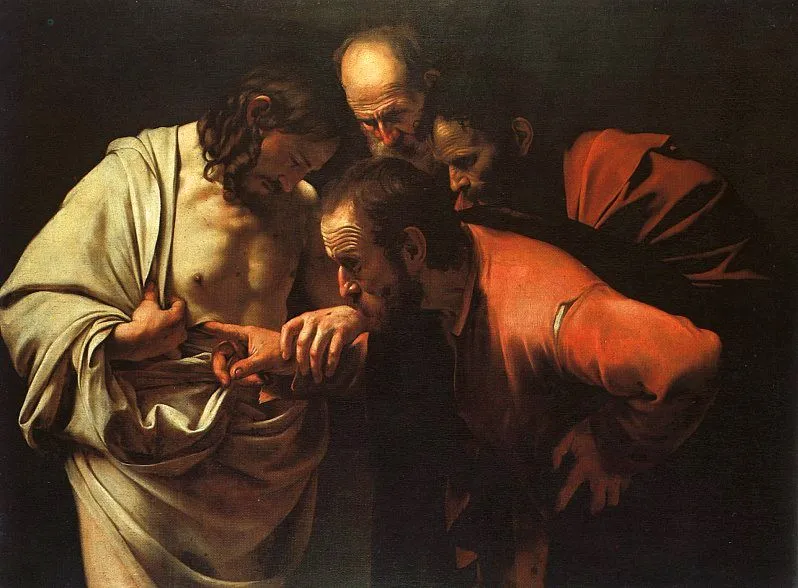
A woman suffering from bleeding for twelve years, who had spent all she had on doctors and yet could not be healed by any, approached from behind and touched the end of his robe. Instantly her bleeding stopped.

45 “Who touched me?” Jesus asked.

When they all denied it, Peter said, “Master, the crowds are hemming you in and pressing against you.”

Luke 8:43-45

(Matthew 9:20-22)

I just had to touch Him. I had to reach out and somehow get His attention. It was no longer an option. I bled all the time and it wouldn’t stop. It was constant, and it had been 12 miserable years. No one or nothing could cure this, no doctor, no medicine. I was so desperate. It had to stop, you must understand, I was dying.

I had spent so much money on so many doctors.

I had nothing left. Each doctor promised a cure and my hopes were always dashed. But then I heard about a teacher named Jesus, I was told He had the power to raise the dead and heal every disease He encountered. I don’t really know why, but instantly I knew only He could heal me.

I had an issue of blood, that meant I was ritually unclean and all that I touched became unclean. The temple was off-limits to me, I had been cut off from sacrifice and any kind of personal forgiveness for my sins. In my darker moments, I really wondered if God really had forsaken me? Was I damned?

After all, it had been 12 long years.

What I had to do must be done secretly and quietly. I knew I just somehow had to touch this man. I would have to wriggle my way through the crowd to get close enough. I would be violating ritual law and if I got caught and I’d be harshly censured and condemned. I was unclean and I knew only He could change that.

And I was always tired. Sometimes I barely could walk without feeling faint.

The crowds were packed all around Him, but honestly, I knew all I needed was just a simple touch. I knew Jesus had the power. I just knew it. I needed somehow to get close enough; I knew that everything depended on me somehow connecting with Him.

So I waited and watched. I tried to jockey myself and get in the right position. The crowds were tightly surrounding Jesus, I had to push, drive and squeeze. Sometimes I had to get on my hands and knees. But in that split second when He passed, I just managed to grab just the very outside corner of the tassel of His head covering.

And immediately the flow stopped. Just like that! I felt it inside, and immediately knew what happened. Finally I knew, deep down, I had been healed! I was clean.

_____

Please understand dear one, only Jesus can free you. If you can only reach out and touch Him, He will change you– forever.

Christ is the Good Physician. There is no disease He cannot heal; no sin He cannot remove; no trouble He cannot help.”

    James H. Aughey

alaskabibleteacher.com

A Proper Steward of Your Pain

Some time ago I came across a story that connected. A visiting speaker stood in front of a congregation and shared a painful incident from his childhood. He wanted to bring healing. After he spoke, an elder came and spoke to him–

“You have learned how to become a proper steward of your pain.”

The visiting speaker was profoundly touched by this. Finally, something came together in his heart and soul. Yes, he did learn how to deal scripturally with those ugly things from his past. He was becoming a proper steward of his pain.

The word for steward in the original Greek is oikonomos. It literally means “a keeper of a home.” It describes a manager, a superintendent to whom the head of the house or proprietor has entrusted the management of his affairs, the diligent care of receipts and expenditures.

The issue for us is managing these awful things for the Kingdom of God.

No question about it, we live in a world of darkness. Each of us has been touched by hard things. Scars are part of our lives. When we come to Christ they come with us. All of these grim things are a real piece of us, we have been hurt (or maybe we’ve wounded others?)

Are you a good steward of who you are? Whether it’s a trauma, a physical, sexual, or perhaps a mental illness. It’s a scar you carry from your past, and no one is immune from them it seems. You’ll find freedom if you can use these things for Him and his Kingdom.

We must see and understand that Jesus has taken everything and redeemed it all for His glory.

He understands us fully–our past, present, and future. He ‘knows’ us–the real and hidden us. The challenge I suppose is to take these sad events to the throne. He alone can heal and then use that which has devastated us.

Satan has afflicted you in his dark attempt to destroy you.

Jesus intervenes to save. As we grow to accept this, the Holy Spirit comes as our comforter and guide. He starts to teach us true redemption, and the incredible healing that he brings with him. It really is his work, not ours. We finally understand. It’s then we become broken healers that God can use.

(Read how Joseph handled betrayal: Genesis 50:19-21.)

The light has truly overcome the dark.

We’re being taught (sometimes very slowly) to carry all of these things and plead the blood of Jesus over our past. He covers us completely. He has redeemed us. Luke 1:68 explains much clearer than I can:

“Blessed is the Lord, the God of Israel because he has visited and provided redemption for his people.”

Becoming a steward of our pain is his doing. We’re able to touch others with these things that would cripple and destroy others. He has made us “managers” of these things, and we are taught to teach others, declaring that God has completely saved us. He works miracles!

“Therefore, if anyone is in Christ, he is a new creation; the old has passed away, and see, the new has come!”

2 Corinthians 5:17

We’ll sovereignly meet those who need to hear our story. We’re being transformed into authentic witnesses. Yes, at times these awful things still hurt, and I suppose that’s to be expected. But we’re learning to manage them. We’ve become real-life stewards of our pain.

That’s why we can be so sure that every detail in our lives of love for God is worked into something good.”

Romans 8:28, Message

If You Really Want to Worship, Use a Knife

In Biblical hermeneutics, the ‘Law of First Mention‘ is used. Essentially it means that the first time a word or a concept is mentioned should go on to determine the way it needs to be understood throughout scripture. It is a guiding principle more than anything, but a good one at that. Genesis, being the first book, is a blessed repository for many of these ‘first mentions.’

In Genesis 22, we have the story of Abraham and Isaac on Mt. Moriah.

Abraham has tied up his son on an altar to offer him as a sacrifice in obedience to God’s direction (v. 2). This is faith being tested to the ultimate extreme. And Abraham shows us how to enter in.

“Then on the third day Abraham lifted his eyes and saw the place afar off. And Abraham said to his young men, “Stay here with the donkey; the lad and I will go yonder and worship, and we will come back to you.”

Genesis 22:4-5

This is the first time that  the word “worship” is used in the Bible.

It sets the singular tone for all the scriptures on this subject. I guess what is interesting is there were no musical instruments involved. There was just these needful things:

  • stones,
  • wood,
  • rope,
  • fire,
  • a knife,
  • and Isaac, (the would-be ‘lamb.’)

When the Hebrew word for ‘worship’ was used for the first time; it is interlaced with the idea of an incredible sacrifice. Abraham is the first ‘worship leader’ and he has no guitar. No piano, or drums either. No musical instruments whatsoever. No overhead lyrics to speak of.

Just a handmade altar, and a knife.

In the end, Abraham raises that knife, and then suddenly, to the relief of us all, he is stopped. His faith has withstood the test, and he has truly ‘worshiped.’

But the Angel of the Lord called to him from heaven and said, “Abraham, Abraham!” So he said, “Here I am.” And He said, “Do not lay your hand on the lad, or do anything to him; for now I know that you fear God, since you have not withheld your son, your only son, from Me.”

Gen. 22:11-12

Principle One: There really can’t be worship without sacrifice.

Recovering this truth concerning worship would be beneficial. It seems we delegate ‘worship’ to a select few who are talented and gifted. We probably don’t do this deliberately, but sometimes we feel it makes a better presentation. We all want to look good, even Christians. (Perhaps this is more substantial than we know.)

Principle Two: The first worshiper didn’t use a guitar, but a knife.

This difference keeps the idea of sacrifice in its definition. There isn’t worship without sacrifice. The knife thrust that he was ready to wield wasn’t backed up by drums or piano. Yet Abraham understood worship every step to Moriah with the knife in his belt.

“The Scriptures include or allude to just about every approach to worship there is: organized, spontaneous, public, private, simple, complex, ornate or plain. Yet there is no comment anywhere about any one way being preferred over another. Rather, it is the spiritual condition of the worshiper that determines whether or not God is at work.”  

Harold Best

So, brothers and sisters, because of God’s mercies, I encourage you to present your bodies as a living sacrifice that is holy and pleasing to God. This is your appropriate priestly service.”

Romans 12:1

Ultimately, we must realize our sacrifice is the Lamb of God. It’s His blood on God’s altar for our sins. As believers, our faith firmly rests in this spiritual fact.

We of all people have cause to really worship.

A Summons to War

battle

Watch, O Lord, with those who wake or weep tonight, and give your angels and saints charge over those who slumber.

“Tend your sick ones, O Lord Christ, Rest your weary ones, Bless your dying ones, Soothe your suffering ones, Pity your afflicted ones, Shield your joyous ones,

And all for your love’s sake.”

Amen.

Augustine

Woven into this ancient ‘evening prayer’ is an idea of God meeting us with overflowing grace and kindness.  There is a strong sense of God watching everyone! And there is also a “tending” sense that He has overall.

As I read this prayer, I seem to focus on the single phrase, “shield your joyous ones.”  To think that these joyful people need protection strikes me as odd.  Why do they even need a “shield?”  Of all people, don’t they have it together?

God sees to our every need, and His flock can be incredibly needy.

As I thought it through, I started to realize that joy is its best standing in the shadow of warfare. The joyful ones are companions– “buddies” who share the same ‘fox hole’ on enemy lines.  But this isn’t a grim thing, Nehemiah told those trying to build the city walls,

“The joy of the Lord is your strength” 

Neh. 8:10

Joy connects with the desperate need of the moment; it is the muscle of all ministry.  And as a result, perhaps more vulnerable.

He didn’t say that the joy of the Lord is our happiness, cheeriness, or merriment. 

But rather, joy would impart strength, and stiffen one’s ability to go to war for our brothers and sisters, our churches, and our communities. There are certain epoxy resins that will only harden when a special light is used on them.  Maybe joy transforms into strength when we step toward our Father.

We need to spiritually protect and cover those who are His “joyous ones.”  They can be found sprinkled throughout our churches and ministries.  And they need us to shield them.  They seem to be quite exceptional, and seemingly invulnerable.  But that isn’t the case.  We need to pray for them. Joyful people inspire me in battle.

“The joy of the Lord will arm us against the assaults of our spiritual enemies and put our mouths out of taste for those pleasures with which the tempter baits his hooks.”     Matthew Henry

Little Christs

Acts 11:26, ESV

Some have suggested that the word “Christian” (grk. christianos) was meant as a slur or insult. It meant little Christs, or mini-Christs. Perhaps that was the best the unbelievers came up with. They identified believers in Jesus and slapped a label on them that was supposed to mock and demean them.

But guess what? The early Christians loved it!

The disciples very quickly adopted it as a great explanation of their new identity. It became a badge of honor. The early Church of disciples became known as little Christs. This now identified them, and they wholeheartedly embraced this new nickname.

From all that I’ve read I see Antioch as a pretty interesting place. It was a city of almost 300,000 people and it had some major Roman temples, and amphitheatres. The city was fully entrenched in the economy and military of the empire. Antioch was regarded as the eastern capital of Rome.

After heavy persecution in Jerusalem, Christians moved north and made Antioch their home base.

This verse (Acts 11:26) tells us that Paul spent a considerable amount of time there teaching the church. After a generation or two, Ignatius of Antioch took over leadership of the Church. By 390 AD the city had almost 200,000 believers!

I’m not sure why, but the word “Christian” is only used 3x in the N.T. (Go figure?) Just maybe the letters of Paul and Peter predated the new label? IDK.

C.S. Lewis

To be a mini-Christ is a pretty profound calling. I think of the 12 being sent out by Jesus to heal and announce the arrival of His kingdom in a new way. In essence they duplicated Jesus’ ministry. (Matthew 10:5.) The more we know Him, the more like Christ we become. (Matthew 11:29.)

Now don’t get me wrong, we are definitely NOT little gods. No way! We are simply broken people who battle sin and must be filled with the Holy Spirit constantly. (Acts 13:52.) In no way, shape, or form are we anything more than human.

And yet we also are little-Christs!

His Spirit comes when, in our neediness we make room for Him in our hearts and minds, and simply ask in faith. Your faith must be humble, and never ever, be proud or arrogant. We are called to reveal the heart of Jesus to an unbelieving world.

Persecution, in its different intensities, will also be present for mini-Christs. Jesus repeatedly warned us to expect it.

John 16:33, ESV

So where do we go from here? Mother Teresa once said, “Calcuttas are everywhere if only we have eyes to see. Find your Calcutta.” It’s probably closer than you’ve ever imagined. Open your eyes and receive the reality of being a little-Christ sent out into this world.

Just like Him.

It Gets Even Better

I just saw a t-shirt. “It gets better,” and inside me something connected, it resonated. If there is something like spiritual mirth and laughter, I could barely contain myself. I wanted to shout and dance, but being an old man I knew I had to take extra Advil if I did. (Besides I was in Safeway.)

Romans 8:18

 The last 20 years are something I’d rather forget and erase. It seems I’ve been hit with just about everything awful you can imagine. After each incident I find myself thinking, “finally, it’s done,” but no, it’s not really done, there’s more coming. I’m smiling as I write these words. “But no, it’s not.” Ha!

Being slammed over and over has created within me a special longing for my real home. When I ponder the eternity of heaven the knots of this life begin to unravel, and I see life as it really is. You see present day life is quite temporary, and these many issues will be forgotten.

The Apostle is remarkably clear about this.

“Neither count my life dear unto myself, so that I might finish my course with joy,” is Paul’s take on his life’s issues. To finally complete all of the moments–and do it with joy, is his goal. Crossing the tape triumphantly is the hope of the staggering believer. And it is mine.

My pain is just for a simple singular moment, but eternity is time on steroids.

It is forever and ever and ever and ever.

On my end, the exchange I make is hardly perfect. I turn in my “sawdust” and get gold in return, and who can turn this trade down? My ugliness becomes eternal beauty and who can resist such a deal? These terrible things that hurt me so badly carry an everlasting weight of glory.

Brother, please believe this. Yes, I know, it hurts.

The Greek word “worthy” in verse 18 can be translated “having weight” which suggests a heaviness or burden that must be carried. But even so, it’s temporary. It enters but passes, even though at the moment it seems forever. You carry it for a moment–but that is all. and it’s done.

I look, and gaze into eternity, and laugh in joy.