Our City of Refuge

“Unless we are thoroughly convinced that without Christ we are under the eternal curse of God, as the worst of His enemies, we shall never flee to Him for refuge.”

   John Owen

Buried in the Old Testament we discover the idea of the Cities of Refuge.

They speak profoundly to our situation and bring real hope to those who struggle. Six places of safety were given to protect those who accidentally killed another person— maybe an ax head flew and hit someone, and they died as a result.

God told Joshua to establish cities of protection where one could be safe from an avenger. There were six of them, three on the east side of the Jordan river, and three on the west. The cities covered Israel; each was spread out intentionally so they were always close.

That city became a place of asylum for those guilty of manslaughter.

As believers, we know that we’ve committed crimes against God and other people. The burden we carry threatens to undo us. Satan (and his minions) want to destroy us—and honestly, we deserve it. We are essentially spiritual ‘criminals’ who have hurt others and damaged ourselves in the process.

Outside the city, we’re vulnerable—but inside those walls we find safety.

Those who have killed others are protected. If we venture outside, we find our adversary who is waiting. Scripture tells us that we must stay cloistered there until the current high priest dies. Upon his death, we’re released and may leave the city walls.

For broken believers, the whole concept rings true.

The text speaks for itself, and there is spiritual logic in all of this. We see parallels here that speak to our condition. We’ve messed up big time. We also carry issues that the enemy can attack. Depression, bipolar, trauma, and even thoughts of committing suicide— can be a fundamental part of our lives.

I must tell you that safety is found only in the Savior.

Finding God and abiding in him is our place of safety. His walls protect us, Jesus is our high priest, who never dies; that means we need to stay with him, permanently. I like Hebrews 6:18, LB:

“Now all those who flee to him to save them can take new courage when they hear such assurances from God; now they can know without a doubt that he will give them the salvation he has promised them.”

For us especially, we often have problems with the doctrine of assurance of salvation. Our enemy works overtime to accuse us (Rev.12:10). We’re his targets and the lies of many demons assault us. We can, at times, wonder if we’re really saved. We wonder if we are really forgiven, and we doubt our salvation. Satan’s efforts can be constant and crippling.

I encourage you to think this over and pray about this.

Numbers 35 is a good place to start. That chapter is pretty clear. Look also at Exodus 21:13-14; Joshua 20:1-6; Deuteronomy 19:2-13.

The Five Crowns

In the New Testament crowns are given to certain believers. They’re more than a reward, they’re recognition of a Christian’s life and character. Keep in mind that each one given is pure grace. They are not rewards that we earn, but recognition of God’s blessing. We can do nothing unless He gives us His grace. You must understand this.

We find that there are five. But understand, these are not given as recompense or compensation. A crown is never earned, and it’s never given as an achievement for exceptional behavior. All are received by His grace and kindness. (And, we’re not in any competition on who can receive the most.)

Here’s a list which I hope is complete.

  • the Victor’s Crown
  • the Crown of Rejoicing
  • the Crown of Righteousness
  • the Crown of Life
  • the Crown of Glory 

The Victor’s Crown, which is also called the Martyr’s Crown. We can read it in James 1:12 and also in Revelation 2:10. The Church of Smyrna is promised by Jesus, Do not fear what you are about to suffer…the devil is about to throw some of you into prison…Be faithful unto death, and I will give you the crown of life.”

The Crown of Rejoicing, is described in 1 Thessalonians 2:19 and in Philippians 4:1. This crown is given to those dedicated to evangelism or the mission field. Paul receives this crown for his work with the Thessalonians. “Therefore, my brothers, whom I love and long for, my joy and crown, stand firm thus in the Lord, my beloved.”

The Crown of Righteousness, this is given to believers who steadfastly look for Jesus’ Second Coming. It seems it’s also given to those who seek after an intimacy with Jesus. We can read of this in 2 Timothy 4:8. “There is laid up for me the crown of righteousness, which the Lord, the righteous judge, will award to me on that day, and not only to me but also to all who have loved his appearing.”

The Crown of Life, this is given to those who have laid aside all the things this world offers and are committed to a life that is eternal. “Everyone who competes in the games goes into strict training. “They do it to get a crown that will not last, but we do it to get a crown that will last forever.” (1 Cor. 9:25.)

The Crown of Glory, given to the pastoral servants who have prayed and served the Church, “And when the chief Shepherd appears, you will receive the unfading crown of glory.” According to 1 Peter 5:2-4 this crown is given to those who have served the flock faithfully as His shepherds and teachers.

These five crowns are freely given, by grace, to each who deserves them. In each and every case it’s Jesus who coronates each believer. We’ll watch and we’ll agree with His decision. We will not vote to see who is worthy but we will understand His gracious wisdom of that person’s trials and challenges.

None of these crowns will not be worn very long. There will not be any reason to show them off to other believers, “Look at me, I’m wearing two, how many crowns are you wearing?” No. Rather, in love, we return each crown to Him who gave it to us.

A crown is temporary and is given back to Him who loved us so much. 

“The twenty-four elders fall down before him who is seated on the throne and worship him who lives forever and ever. They cast their crowns before the throne, saying,

“Worthy are you, our Lord and God,
    to receive glory and honor and power,
for you created all things,
    and by your will they existed and were created.”

Revelation 4:10-12

Willian Tiptaft

Modern Idolatry, Plain and Simple

“The human heart is an idol factory.”

John Calvin

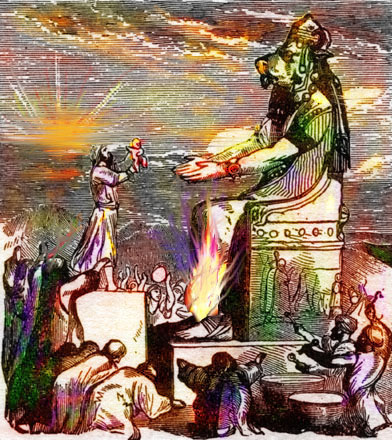
The definition of idolatry, according to Webster, is “the worship of idols or excessive devotion to, or reverence for some person or thing.” Idolatry is real, and it’s really a challenge to the believer, and it’s seldom mentioned today. In almost 40 years of following Jesus, I honestly can’t remember one real sermon on idolatry. That’s sad.

In fact, one of the first commandments given by God is in Exodus 20:3, “You shall have no other gods before me.” This has never been rescinded. It’s not obsolete or old-fashioned. The unredeemed human heart remains a factory of idolatry. Nothing has changed.

“An idol is anything that replaces the one, true God. The most prevalent form of idolatry in Bible times was the worship of images that were thought to embody the various pagan deities.”

So what is modern idolatry –what does a modern idol look like?

To help clear that up, Nicholas McDonald wrote a letter to you from the perspective of your very own, personal idol. (The last line is definitely a whopper.)

Hello. I am an idol.

Don’t be afraid, it’s just me. I notice you’re turned off by my name: “Idol.”

It’s okay. I get that a lot.

Allow me to rename myself.

I’m your family.

Your bank account.

Your sex life.

The people who accept you.

Your career.

Your self-image.

Your ideal spouse.

Your law-keeping.

I’m whatever you want me to be.

I’m what you think about while you drive on the freeway.

I’m your anxiety when you lay your head on the pillow.

I’m where you turn when you need comfort.

I’m what your future cannot live without.

When you lose me, you’re nothing.

When you have me, you’re the center of existence.

You look up to those who have me.

You look down on those who don’t.

You’re controlled by those who offer me.

You’re furious at those who keep you from me.

When I make a suggestion to you, you’re compelled.

When you cannot gratify me, I consume you.

No—I cannot see you, or hear you, or speak back to you.

But that’s what you like about me.

No—I am never quite what you think I am.

But that’s why you keep coming back.

And no—I don’t love you.

But I’m there for you, whenever you need me.

What am I?

I think you know by now.

You tell me.

I hope this helps. And I hope God gives you understanding.

alaskabibleteacher.com

Purity in an Impure World

First, let’s start off with a definition. Purity describes something that is not mixed with anything else. It’s not 80% of something, or even 99.9%, rather it’s fully and completely one thing. Purity also means to be solely without any additive, contamination or pollution.

Purity of heart is to be exclusively focused on one thing.

This verse, 5:8, “strikes the very center of the target as he says, not ‘Blessed are the pure in language, or the pure in action,’ much less ‘Blessed are the pure in ceremonies, or in raiment, or in food;’ but ‘Blessed are the pure in heart.’” (C.H. Spurgeon)

We really must see this world as God sees it. 

We find that scripture is not very kind to us. It seems that mankind defiles everything he touches. (I wish it wasn’t so.)

“The human mind is the most deceitful of all things. It is incurable. No one can understand how deceitful it is.” Jeremiah 17:9

Consider the following areas that are affected by out “fallenness:

  • Entertainment, movies, the internet 
  • Politics, local, national and world 
  • Religion, philosophy, theology and spirituality
  • Culture and art, literature and music
  • Education
  • Science and technology, medicine and psychology
  • Economics, wealth and poverty
  • Sexuality

The above list is hardly complete, and as I compiled it I got a little heavy-hearted. I had to ask myself, are we really this bad? Again the Christian must look at the Bible for wisdom and direction.

 “All have sinned and continually fall short of the glory of God.” Romans 3:23

“The heart of the sons of men is full of evil, and madness is in their heart while they live.” Ecclesiates 9:3

As Christians who spiritually understand the work and the love of Jesus Christ. We are called to know and love God, must continually reacquaint ourselves to the absolutely depraved condition of this world. No one, and nothing is exempt.

There is another verse I want to consider, it mentions purity twice!

“Having purified your souls by your obedience to the truth for a sincere brotherly love, love one another earnestly from a pure heart,” 1 Peter 1:22

Notice. The verse stresses that we have to take the initiative. Now I suspect that being pure is our responsibility. “Obedience to the truth” must lead to “brotherly love.” It’s not really a surprise that that’s where we end up. 

To really see God, and to truly love others, requires purity. 

When it comes to being pure we must become humble–that’s our starting point. Humility keeps purity from becoming false. We dare not become “holier-than-thou.” We can easily become hard, religious and judgemental. Becoming a “Pharisee” is easy and always possible.

Lower Seat Christians

Luke 14:7-11

Choose your seat carefully. In Jesus’ day, there was a definite seating order to a wedding feast. It wasn’t first come, first served. There was a strict protocol, where one’s importance mattered. Honored people got honorable seats–close to the front as possible. Average people got average spots; but no one wanted be at the bottom, having to sit at the “kids table.”

Jesus was watching, and what he saw was a spiritual principle of His Kingdom.

Jesus often teaches out of the things we encounter–real life events. Spiritual truth often hits us from those things we actually see. If you want to know what God is doing in your life, all you need to do is look around at the “practical” things, and start to see the spiritual lessons inside them. We learn from real-life. That’s how he often teaches us, he combines the Word with what we’re experiencing.

Our natural inclination is to move higher up.

We often think that we’re deserving, and so we take our “rightful” positions. That’s the way humans think. We all want to sit in the best possible place, and so we end up wheedling our way up front. We can fall into the subtle trap of self-promotion. But that’s not how discipleship works.

Jesus corrects, advising us to take the lowest place. I think verse 11 is the key to figuring out this seating arrangement. We’re starting to see a physical situation become a spiritual lesson. There’s much to learn. Here’s verse 11 in the Amplified version:

“For everyone who exalts himself will be humbled [before others], and he who habitually humbles himself (keeps a realistic self-view) will be exalted.”

Verse 14, Amplified Bible

This translation injects some realism into our lives, especially in how we see ourselves. It’s something quite foundational. It lays down a principle that is always true in his Kingdom (1 Peter 5:6). If we don’t accept and implement this, we’ll suffer a definite deficiency in our discipleship. It stunts the growth of many believers. And that is tragic.

The whole scene lays out how life in the spirit really works, and it seems terribly paradoxical.

Our human logic asserts that deliberately choosing the lesser is foolish, things really don’t work that way. We think (falsely), that we’ll only advance by asserting ourselves. But Jesus, quite aptly, clarifies the ways of the Kingdom–true maturity will only come if we decide to take the lowest place.

“Humble yourselves before the Lord, and he will exalt you.”

James 4:10

Do You Really Love the Master?

How much do you love Jesus? This parable looks at the heart of the believer, the person who has been incredibly forgiven of everything–past, present and future. And it’s here we see a woman whose heart is broken by her sin, and she discovers Jesus’ grace, and tremendous mercy.

“A certain moneylender had two debtors. One owed five hundred denarii, and the other fifty. 42 When they could not pay, he cancelled the debt of both. Now which of them will love him more?” 43 Simon answered, “The one, I suppose, for whom he cancelled the larger debt.” And he said to him, “You have judged rightly.” 

44 “Then turning toward the woman he said to Simon, “Do you see this woman? I entered your house; you gave me no water for my feet, but she has wet my feet with her tears and wiped them with her hair. 45 You gave me no kiss, but from the time I came in she has not ceased to kiss my feet. 46 You did not anoint my head with oil, but she has anointed my feet with ointment.” 

47 “Therefore I tell you, her sins, which are many, are forgiven—for she loved much. But he who is forgiven little, loves little.”

Luke 7:40-47

Jesus has been invited to Simon’s home. He’s a Pharisee, and at this point they haven’t quite banded together to attack Jesus, it seems that there were still some Pharisees who were true seekers.

The text jumps right in and we see Jesus reclining at a table (the Jewish people didn’t use chairs–pillows were used instead.) At a feast like this people who weren’t officially invited could come in to stand in the back and listen in on the conversation. (That seems awkward.)

Suddenly a woman enters the room.

She’s described as “a woman of the city,” which is a code word for “a sinner, or a harlot.” (Let your imagination roll that one around.) She comes with a definite purpose, for she brings a jar of quite expensive perfume with her.

The passage reveals that she’s on her knees, weeping on Jesus’ feet, and rubbing her tears with her hair, and pouring out the perfume. She’s kissing his feet. She’s obviously a broken person—someone who knows who Jesus is, and who understands who she is, and how deep sin has destroyed her.

At this point Simon is deeply offended, and probably embarrassed by what’s happening. But he also assumes that Jesus isn’t who he’s saying he is. “How dare does this man let an unclean person even touch Him!” But Jesus understands everything. His parable is short (just two verses) and it’s directed at Simon; and it’s a no-brainer.

The interpretation is obvious: the man who owes the most will love the most.

Jesus accentuates Simon’s breach of protocol. The Lord deftly explains the entire situation and Simon is busted. He’s put on the spot and Jesus has made his point. It’s all so obvious. The essence of the story is clear. How much do you love the Master?

Do you fully fathom how much sin Jesus has forgiven you?

(Or maybe you’re a Simonite?)

Perhaps you’re someone who doesn’t quite accept what’s real? The Bible tells us repeatedly that no one is righteous. No one. Scripture has a very low opinion of the righteousness of men. (That should shatter your thinking.)

“But we are all as an unclean thing, and all our righteousnesses are as filthy rags; and we all do fade as a leaf; and our iniquities, like the wind, have taken us away.”

Isaiah 64:6, KJV

The Hebrew word for “filthy rags” is extremely graphic–literally it means “a menstruating cloth.” It was something that a woman used before Tampax came along. How very descriptive. Do we even have the slightest idea what that means? Are our good deeds that bad?

Yes they are. Isaiah announces that’s exactly how God sees our best attempts to find acceptance apart from grace. It often seems we try to please Him by doing the best we can, but that isn’t sufficient. We always fall short and mess up.

How does understanding this change our discipleship? I’ll let you be the judge on this on this one.

“He loved us not because we are lovable, but because He is love.”

C.S. Lewis

The Snare: Psalm 91

caged-bird

Whoever dwells in the shelter of the Most High
    will rest in the shadow of the Almighty.
I will say of the Lord, “He is my refuge and my fortress,
    my God, in whom I trust.” 

Psalm 91:1-2, NIV

This psalm focuses on being intimate with our heavenly Father.

Throughout the entire chapter, we see personal pronouns used. In contrast to other psalms that are directed to the nation, this one is written to an individual. This personal focus makes this a favorite psalm for many.

Shelter and shadow, refuge and fortress.

These are the opening ‘word pictures’ and they’re used very adeptly.  The psalmist writes what he knows, and it is apparent that he understands deeply the needs of the human spirit, and its protection. Each of these four words creates a common link between believers. Each of us needs a working understanding of all four protections.

I should ‘dwell’ in God’s sheltered care. All too often, I wander out past the security of the Lord (or maybe I’m lured out?) But there is safety in having God so close to us. His proximity is for my protection.

“Surely he will save you
    from the fowler’s snare
    and from the deadly pestilence.
He will cover you with his feathers,
    and under his wings you will find refuge;
    his faithfulness will be your shield and rampart.”

Psalm 91:3-4

silhouette-bird-on-branch-granger

V.v. 3-4, maintains its personal tone. ‘Save you’ (salvation) is far more than a theological term.  The psalmist is not speaking ‘doctrine’ as much as the psalm describes a loving embrace. He is rescued from a deadly trap, and jumping from metaphor to metaphor, he engages our imaginations to ‘see’ God’s salvation. The writer knows his stuff.

The Lord is pictured as a protective bird that covers his chicks.

We have a sure confidence as we gather together in that warm and safe spot under His wing. Whatever is after us has to go through God first. His presence is formidable. In His company is found our only safety.

“What, then, shall we say in response to these things? If God is for us, who can be against us? Who will bring any charge against those whom God has chosen? It is God who justifies.”

Romans 8:31, 33

All of heaven is rallying for your well-being. You are sure of this based on your faith in God’s own word. He has ‘busted us’ out of a dark cage, and now defends you against all your enemies.

And that is a very good thing.


The Church is Collecting Sinners

The following excerpt is from the devotional book, “Living the Message,” by Eugene H. Peterson.  This pastor-professor is probably the person I want to grow up to be like; he has a gentleness and eloquence that is seldom seen–and highly respected.
Dr. Peterson died in 2018.

***********

“When Christian believers gather in churches, everything that can go wrong sooner or later does.  Outsiders, on observing this, conclude there is nothing to this religious business, except perhaps, business…and a distant one at that.  Insiders see it much differently.”

“Just as a hospital gathers the sick under one roof and labels them as such, the Church collects sinners.” 

“Many people outside are just as sick as the ones inside, but their illnesses are either undiagnosed or disguised.  It is similar with sinners outside the church.”

“One way to define spiritual life is getting so tired and fed up with yourself you go on to something better, which is following Jesus.”

Some other quotes by Eugene Peterson:

  • “All the persons of faith I know are sinners, doubters, uneven performers. We are secure not because we are sure of ourselves but because we trust that God is sure of us.”
  • “Suffering attracts fixers the way road-kills attract vultures.”
  • “When we sin and mess up our lives, we find that God doesn’t go off and leave us- he enters into our trouble and saves us.”
  • “That’s the whole spiritual life. It’s learning how to die. And as you learn how to die, you start losing all your illusions, and you start being capable now of true intimacy and love.”
  • “American religion is conspicuous for its messianically pretentious energy, its embarrassingly banal prose, and its impatiently hustling ambition.”

More Eugene Peterson Quotes…

Jesus Writes in the Dust

John 8:3-11

Then the scribes and the Pharisees brought a woman caught in adultery, making her stand in the center. “Teacher,” they said to him, “this woman was caught in the act of committing adultery. In the law Moses commanded us to stone such women. So what do you say?” They asked this to trap him, in order that they might have evidence to accuse him.

Jesus stooped down and started writing on the ground with his finger. When they persisted in questioning him, he stood up and said to them, “The one without sin among you should be the first to throw a stone at her.” Then he stooped down again and continued writing on the ground. When they heard this, they left one by one, starting with the older men. Only he was left, with the woman in the center. 10 When Jesus stood up, he said to her, “Woman, where are they? Has no one condemned you?”

11 “No one, Lord,” she answered.

I remember how Jesus defended me from the religious men. I had been publically led through the crowds. The temple was filled with people who were there for the festival. It was a time of joy and feasting, but not for me. Definitely not for me.

The religious police escorted me to Jesus. I was now the focus of everyone’s attention. I felt dirty and ashamed. Standing there I could feel the leering looks from the Pharisees; but there was something else as well, a look from Jesus that I had never seen before. There was compassion there, something quite extraordinary. I saw a firm mercy.

I’m ashamed, but I had committed adultery. I slept with a man who wasn’t my husband.

I was to be stoned, to know hard rocks thrown by “holy” men. The Law had pronounced my guilt, and I knew exactly how I was to be punished. And I deserved it. Yet the man I slept with was never charged; he escaped, and I would be put to death. I didn’t blame him.

My shame was now public knowledge–everyone knew, the Pharisees made sure of that. Jesus had been accepted by some to be the Messiah and by others not so much. I wasn’t sure one way or another. I was in a daze, not able to even try to defend myself.

They only put me front and center to test Him. These men who brought me had ulterior motives, they desperately hoped Jesus would stumble. I think they wanted to prove once and all to the crowds that were watching that Jesus really wasn’t the Messiah. They tried to trap him.

Jesus realized the ugly implications of this satanic effort against Him.

Only Rome had the power of execution, and the Mosaic Law declared that I was to die. I stood waiting, expecting the worst. What else could I do?

It’s funny, but Jesus understood all of this. He looked right through this theological trick, and He responded in a way that really shocked everyone. He never spoke, but bowed low and began to write in the dirt with his finger. Amidst their vicious accusations, they pressed their case.

Jesus bent down again, and he wrote some more.

I never knew what he wrote–but I had to believe it must have been something about the sin of the men who were accusing me. At that moment, they dropped the case against me and left. They all filed out, one by one, in dramatic fashion. I now stood alone with Jesus.

Jesus looked directly at me. I was still afraid, but it was strange, I felt a wave of peace as well. I quietly waited, not knowing what He was going to say to me. I half expected the worst.

Yes, he did confront me. He wanted me to acknowledge that those accusing men had left. I saw it and understood. Jesus was asking me to believe that I was now really free. But then he wanted me to understand something that seemed quite crucial.

“Neither do I condemn you,” said Jesus. “Go, and from now on do not sin anymore.”

That dear one was a powerful moment. He set me free with the understanding that He did not condemn me. My new freedom came with a catch–sort of. I knew then that my sin must be renounced. My freedom came with a price. But knowing I was completely released, meant I was now a free woman.

At that moment I understood everything completely.

Speaking His Language

Peter Warms Himself

“The girl asked Peter, “Aren’t you one of Jesus’ disciples?”

“No,” he said, “I am not!”

“The police and the household servants were standing around a fire they had made, for it was cold. And Peter stood there with them, warming himself.”

John 18:17-18, Living Bible

The Galileans had a distinct accent. Just as we easily identify someone from Texas just by the tone and cadence of their speech, Peter had that distinct drawl that told everyone that he came from the same province as Jesus. It was something he couldn’t hide.

Peter was a very different man in his three years of being with Jesus. And you might say that had transformed him–you might even say that he was now a marked man, the enemy was now quite aware of him. He was no longer a captain of a small fishing boat looking for a catch. He was now the leader of Jesus’ disciples.

The entire text (18:15-18) reveals a confrontation that Peter had with a servant girl, and we hear him making a bald-faced lie. At this very moment, Peter was fulfilling the “promise” that Jesus had predicted (Matthew 26:31-32).

What was going through Peter’s head at that moment? She was a simple servant girl, perhaps one who ministered at the gate of the high priest’s home. It’s interesting that she is the first one to question Peter’s duplicity. Most likely she was just doing her job, watching and listening. She was probably quite alert.

It’s easy to point our finger at Peter.

He was a coward, and when he was put on the spot he bailed. People hate cowards–we extol those who take a definite stand against evil. But he was frightened, scared of being connected with Jesus–the man on trial. There was much at stake here.

We also speak with an accent. I know it might be a stretch–but being with Jesus has fundamentally changed us. Our lives now have a specific dialect that others hear, we’re not the same people that we once were.

We open our mouths and others hear the Kingdom of God. (Such as it is.)

Sometimes I try to pretend that I haven’t been with Jesus, and I’m very ashamed of that. Like Peter, I stand with the others and choose to warm myself by their fire, and I try very hard to make myself inconspicuous. But all I have to do is open my mouth, and I betray who I really am.

It’s hilarious, but even servant girls know that I belong to him.

“To stand before the Holy One of eternity is to change.”

Richard Foster