“A Christian is a person who has died with Christ, whose stiff neck has been broken, whose brazen forehead has been shattered, whose stony heart has been crushed, whose pride has been slain, and whose life is now mastered by Jesus Christ.”
–John Piper
“No longer do I call you servants, for a servant does not know what his master is doing; but I have called you friends,for all things that I heard from My Father I have made known to you.”
John 15:15
It seems that the purpose of life is not to find our freedom. It’s really meant to find our Master.
Yes, the idea of being a slave to anyone is repugnant. We chafe at this, and yet man was never meant to be separated from the Lordship of Jesus. We’re instructed repeatedly with the New Testament idea that “our life is not our own” Over and over God proclaims Himself as the King.
That troubles us somewhat.
Not so much when life is fairly good, granted, but in those hard moments when a decision must be made between enjoying the titillating “lusts of the flesh,” or accepting the fruits of the Spirit. This is one of those “lordship moments.” They come and go, and they show us exactly who we are.
If you’re really going to be authentic–a legitimate and real disciple, then you must determine who is going to be in charge, and this isn’t one of those casual decisions. Your decision must become a settled issue.
You must securely fix it in your heart.
The thief on the cross knew salvation, he was promised an eternity with God simply by faith. But I submit to you that he had put himself under the Lordship of Jesus, simply by recognizing the sign, “the King of the Jews.” I believe he saw and understood its implications. Jesus was King! He knew and understood.
This is a very hard word for some, but so many of our personal issues hinge on this.
I know this first-hand. It is a monumental struggle. You must admit to not only having Jesus as your Savior, but you also must put your life under His total Lordship. You need to pick up your cross daily in order to follow. You need to learn how to kneel.
I’ve chosen a crown to open up this post–it’s done on purpose. I simply want you to understand the supreme call He has on your life. Here’s Bob Dylan, and he nails this idea down:
But you’re gonna have to serve somebody, yes indeed You’re gonna have to serve somebody Well, it may be the devil or it may be the Lord But you’re gonna have to serve somebody
You must learn here and now how to kneel before the Sovereign King.
O Lord, my heart is not lifted up; my eyes are not raised too high; I do not occupy myself with things too great and too marvelous for me. 2 But I have calmed and quieted my soul, like a weaned child with its mother; like a weaned child is my soul within me.
3 O Israel, hope in the Lord from this time forth and forevermore.
Psalm 131
The Christian who is struggling should become a reader of the Psalms. We must remind ourself of this need to study through them, repeatedly. For believers, Psalm 131 is mandatory, and this is a great place to start.
This particular psalm is unique, and incredibly insightful. It begins its work in us right at the start; the superscription. “A song for going up to worship,” and it strikes me that a work must happen inside of my heart. It is a preparation that will take me higher, and it helps me see God more clearly from a new vantage point.
Verse 1 states the certain issue we have; it is called ‘pride.’ What David says seems to be a very arrogant and audacious thing to say. There is a truism that you think you’re humble, you’re not. To claim you are suddenly liberated from pride, knowing ears perk up. It is almost always a sign of danger.
😁
A church once decided to give an elder a medal for his remarkable humility. But then they had to take it away, because he wore it everywhere!
Take it at face value, David states that he has a real contentment with his limitations and weaknesses. It appears that he has been freed from the vicious cycle of needing to be the center of everything. He sings of his ignorance, and weakness. David goes public with his self-flattery. He knows that if he really wants to ascend he must descend.
And it must happen continuously.
Are you content to be the simple servant now, and delay the accolades and praise until you get to heaven?
Some make themselves spiritually sick by the deep dark quest to be important. In verse 2, we connect with some astonishing imagery. A baby! I am like a little child being held by my mom. It’s not an issue of sophistication, but simplicity. You must choose to do this.
The word for weaned isn’t a newborn here. Rather in Hebrew it denotes a small toddler.
A weaned child no longer needs his mom’s milk. He doesn’t fuss, or nuzzle his mother’s breast, demanding his food. The child no longer receives his nourishment this way.
This is a significant step into maturity. To me, verse 2 is the centerpiece of Psalm 131. OK, let’s apply this spiritually. There was a time when it was necessary for me to have my mother’s milk. I screamed and would throw a terrible tantrum if she didn’t feed me from her breast. I would starve if she didn’t give me her milk.
For all practical purposes, it seems we use God to get what we need. But we grow, and become mature. David is saying that we need to emulate his example.
Now we can come into God’s presence– just to be with Him.
That’s all. So simple. As a child, we just want to be where He is at. We have no ulterior motives, there is no manipulation. We seek His face, not what is in His hands. If we rightly connect the dots, we find that we land right back to that opening superscription.
This is an amazing concept of true adoration– the real kind. As a struggler, more a rascal than Christlike, I must start at the beginning– again, and again, and again. I can only do this if I become a little boy again.
I finally start to realize that I must renounce my selfish ambition and silly pride. Polished people won’t understand, they never will.
“At that time Jesus declared, “I thank you, Father, Lord of heaven and earth, that you have hidden these things from the wise and understanding and revealed them to little children.”
“He went out again beside the sea, and all the crowd was coming to him, and he was teaching them. 14 And as he passed by, he saw Levi the son of Alphaeus sitting at the tax booth, and he said to him, “Follow me.” And he rose and followed him.
“And Levi jumped to his feet and went along.”
Mark 2:13-14, ESV
My name is Levi, and I once collected taxes for Rome. It was a very good living–it’s funny, but my parents chose my name– “Gift of God.” They were pious Jews who dreamed I would be more than I was. I sometimes wonder. Did they understand what Jesus was calling me to become?
As a tax collector, I was considered unclean. A very small step above a leper I guess. The Temple was off-limits for me; so I never had any sacrifice for my many sins. I carried my guilt like a heavy jacket on a hot day–some would say that God turned His back on me. I was seen as a collaborator, a betrayer of my people. I had been excommunicated forever.
Do you know what it’s like to be one of the damned?
My friends were sinners like me. In some dark way we understood each other, for we were all outcasts. Some of us were thieves, drunkards, and whores. Some of us were blind or disabled–all were undesirables. We became the community of those damned to hell.
My tax booth was situated at a crossroads, the ideal spot for collecting taxes. No one carrying goods could get by–they had to pay me first. I soon became wealthy, and unfortunately, very recognizable (which was dangerous). I had Roman guards that protected me.
There were times I wondered if that was all my life was good for, collecting coins for Rome.
Jesus was teaching near my booth one day.
I listened to Him closely. I prided myself as a good judge of character, I knew when someone was lying–my business taught me that. I immediately knew that I had never seen or heard anyone quite like Him.
Jesus quickly turned and stared directly at me. My heart stopped. I felt His eyes searching and I realized that He looked through me. He knew exactly who and what I was all about, and that unnerved me. I wasn’t seeing Him, rather it was He that saw me.
“Come, follow me.”
Suddenly I knew that all I attained in my business was a big pile of nothingness. I can never get over the shock of those words– Jesus, the Messiah wanted me. He had put His call on me, someone who was very much lost.
Why me? Who am I?
To follow wasn’t negotiable. I looked down at the silver and gold and realized they were nothing but piles of dirt. I left the coins on the table and walked away. If anything, I was sickened by my world of money.
I have never questioned that moment. What would you have done in my place but follow Him?
We had a grand going-away party that night. I of course invited all my disreputable friends. The rooms quickly filled up with whores, drunks, and the outcasts. Jesus shared many wonderful things with us. Never had anyone love us like Him.
We had never experienced this before!
“And as he reclined at table in his house, many tax collectors and sinners were reclining with Jesus and his disciples, for there were many who followed him. 16 And the scribes of the Pharisees, when they saw that he was eating with sinners and tax collectors, said to his disciples, “Why does he eat with tax collectors and sinners?”
“And when Jesus heard it, he said to them, “Those who are well have no need of a physician, but those who are sick. I came not to call the righteous, but sinners.”
Mark 2:15-17, ESV
The Pharisees were absolutely livid. They began to verbally rebuke Jesus and His disciples for setting down to eat and fellowship with us. In their minds we were the damned. My home was unclean, my family unclean–we were all filthy.
But that was not the way Jesus saw us. He loved us when nobody else would.
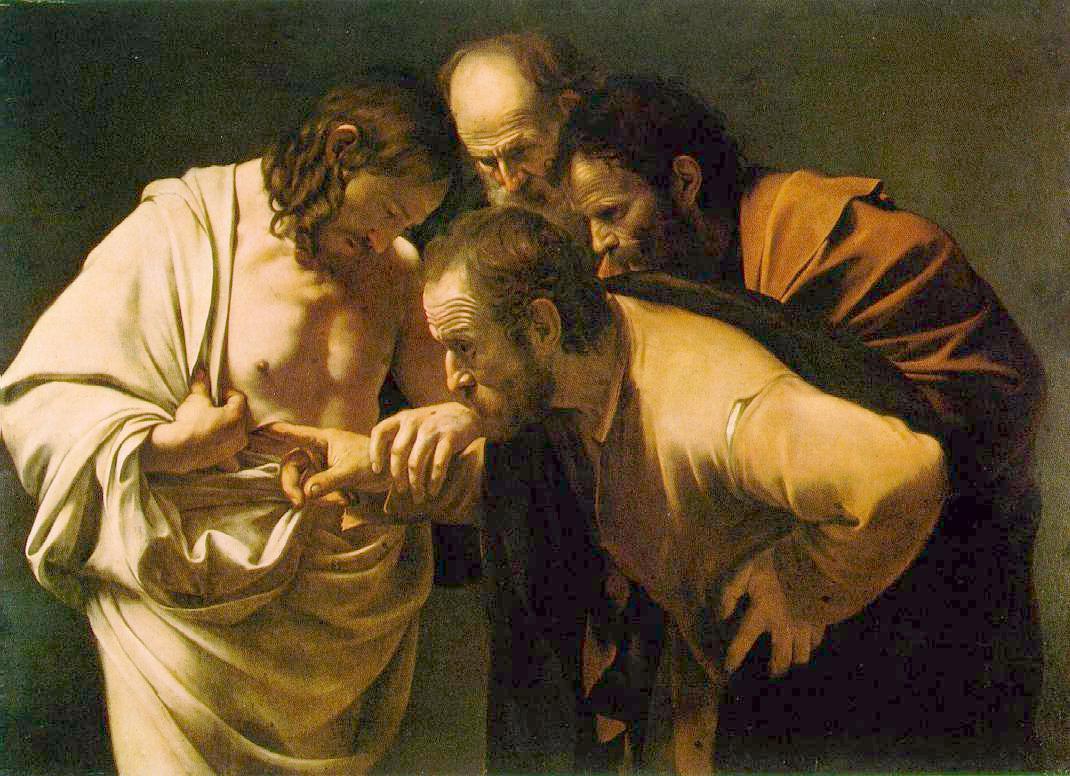
36 As they were talking about these things, Jesus himself stood among them, and said to them, “Peace to you!” 37 But they were startled and frightened and thought they saw a spirit.
38 And he said to them, “Why are you troubled, and why do doubts arise in your hearts? 39 See my hands and my feet, that it is I myself. Touch me, and see. For a spirit does not have flesh and bones as you see that I have.”
40 And when he had said this, he showed them his hands and his feet. 41 And while they still disbelieved for joy and were marveling, he said to them, “Have you anything here to eat?” 42 They gave him a piece of broiled fish, 43 and he took it and ate before them.
Luke 24:36-43, ESV
In the most thrilling moments of a story, there are instances when the true essence of the events becomes crystal clear. Luke’s narrative brilliantly captures that exhilarating sensation. Picture this: Jesus, triumphantly risen from the depths of death, enters the room with a burst of energy that electrifies everyone present. It must have been one of those extraordinary instances where words simply fall short, and experiencing it firsthand is the only way to truly grasp its profound impact.
“Frightened” and “terrified”–it seems it takes two words to describe this spooky experience.
Everyone was terrified; they were convinced that Jesus must be a ghost. They all panicked and tried to run to the nearest exit, but then realized that the door was still locked!
Oh boy, Jesus must have had a good chuckle over this one! I mean, imagine being a human and seeing your disciples, all stooped and scared, trying to approach you like a bunch of timid puppies. It’s like trying to get a dog to come to you when it’s so terrified it’s peeing on the floor! I bet Jesus couldn’t help but smile and think, “What a hilarious sight!”
They slowly encircle Jesus and as they come, I have to believe He’s amused. He has survived a very brutal cross, and walked through hell. And, He has risen from the dead.
He is laughing from the pure joy of one who has endured the worst of a very real hell.
Jesus emerged unscathed on the opposite end, a testament to his invincibility. His arrival has undoubtedly filled him with undeniable joy, surrounded by beloved companions. In his triumphant resurrection, he defied all odds and accomplished the unimaginable, evoking a cascade of profound emotions, a mingling of laughter and tears.
I believe each of us has walls.
Walls can provide a sense of security and protection, both physically and emotionally. People often feel the need for boundaries and walls to feel safe. This is similar to how disciples found safety in numbers and the walls around them. They were afraid, and so they hid themselves.
Jesus insists on penetrating our walls. He’s overcoming much resistance and delusions. And then suddenly we come ‘face-to-face’ with the dead person who’s now alive. He is “The King of Kings and the Lord of Lords.
Behold, behold! Witness the magnificent display of unadulterated resurrection power—a force unparalleled in the vast expanse of the universe. Its brilliance eclipses the sun, its might surpasses that of the mightiest atomic bomb. Prepare to be astounded, for this power knows no bounds!
It’s funny, when Moses prostrated himself before the Lord’s glory, he changed. Not only that, but he had to take precautions to cover his face when he returned to camp. These disciples however have just seen the glory of God first-hand.
As His disciples, we must be prepared for any eventuality. Jesus can and will burst into our homes, and into our very lives. Can you hear him laugh? When he comes, nothing really is the same again. He loves his disciples too much to leave them in a dark stuffy room. They have work to do.
The resurrected Jesus is coming for you!
“Here I am! I stand at the door and knock. If you hear my voice and open the door, I will come in and eat with you, and you will eat with me.”
“In the Temple he found people selling cattle, sheep, and doves. He saw others sitting at tables, exchanging different kinds of money. 15 Jesus made a whip out of cords and forced all of them, both the sheep and cattle, to leave the Temple. He turned over the tables and scattered the money of those who were exchanging it. 16 Then he said to those who were selling pigeons, “Take these things out of here! Don’t make my Father’s house a place for buying and selling!”
17 When this happened, the followers remembered what was written in the Scriptures: “My strong love for your Temple completely controls me.”
He really did use a whip. The text tells us that Jesus carefully took some cords and made a whip by intertwining them. What can I say? I’m amazed at His response to what He saw happening in the Temple. Jesus saw deeply saddened Him to the point that there wasn’t anything else He could do.
It appears that there are three distinct whips in the N.T. that we should take into consideration.
The one Jesus carefully braided to “cleanse the Temple.” (John 2:25.)
The one used on Jesus’ back as part of our atonement. (Isaiah 53:4-6.)
The one that believers experience in the ways God disciplines us as His children. (Heb. 12:6.)
All three are important to see. All three have their own meaning. The first one: The Temple is finally clean. The second one: He was punished for me. The third one: He intervenes in my life to make me a holy person.
The third whip is my focus here. He intends to sanctify us by correction. This discipline is the way Jesus separates us from our sin. We’re being disciplined in order to become holy people. Hebrews 12 explains the process.
“If ye endure chastening, God dealeth with you as with sons; for what son is he whom the father chasteneth not? But if ye be without chastisement, whereof all are partakers, then are ye bastards, and not sons.“
Hebrews 12:7-8, KJV
God’s intention isn’t to inflict punishment upon us. His correction isn’t a way by which we make amends for our transgressions. It’s crucial to remember that Jesus has already taken upon Himself the full weight of our sins, fully satisfying any debt. He absorbed it all.
God, in His role as a loving father, corrects and guides us with deep affection.
It’s important to note that God’s methods of discipline do not involve any form of “spiritual child abuse” whatsoever. His love is extraordinarily good, it never wavers, never turns into something evil. He patiently works His will, using loving and healing hands.
“For the moment all discipline seems painful rather than pleasant, but later it yields the peaceful fruit of righteousness to those who have been trained by it.”
Hebrews 12:11, ESV
God has corrected me a 1000 times throughout my 40 years of following Him.
Not with a leather whip mind you, but a braided spiritual cord of correction. What He saw taking place in the marketplace of “me,” (my temple), brings Jesus grief and sorrow. I’m the temple of the Holy Spirit, and He fully intends to make me pure inside. Hebrews 12 tells me what to expect as a son. I need to be corrected.
Yes, a “whip” will be used, but cautiously, even though it may hurt us. Jesus will never intentionally correct you beyond what you can handle.
These three whips are vital, they educate us about the Lord’s efforts. They help us to comprehend and experience God’s workings. As much as we’re able, we must embrace them.
“God’s corrections are our instructions; His lashes our lessons, and His scourges our schoolmasters.“
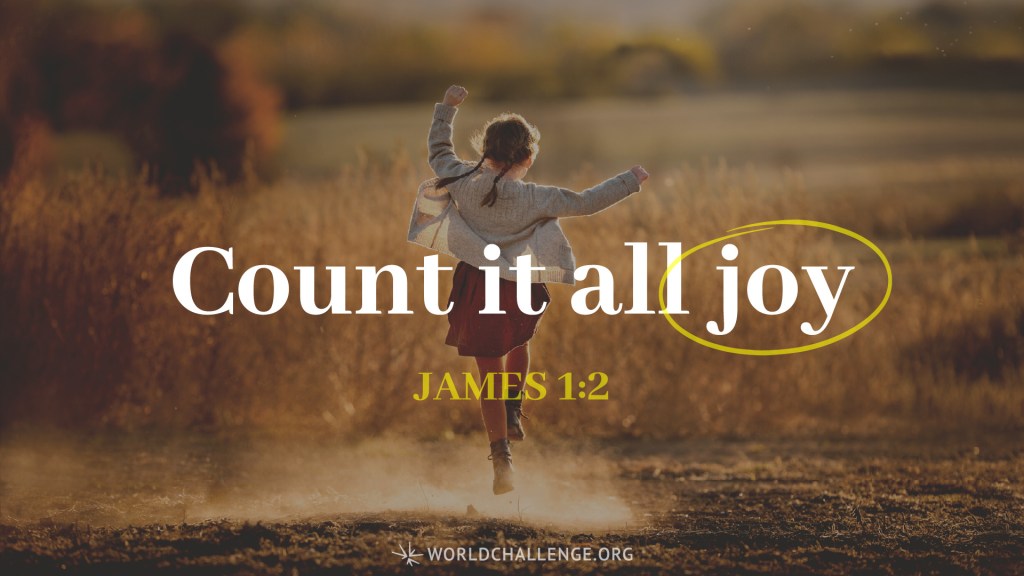
“Count it all joy, my brothers, when you meet trials of various kinds, 3 for you know that the testing of your faith produces steadfastness.”
James 1:2-3, ESV
“There is no circumstance, no trouble, no testing, that can ever touch me until, first of all, it has gone past God and past Christ, right through to me. If it has come that far, it has come with a great purpose.”
“All joy,” (verse 2) is a fantastic thought. It stresses a joy that becomes militant, something powerful and significant. “All joy,” surpasses “some joy” or even “occasional joy.” Instead it’s a joy that remains joy even when tired and weak. It will only shine brighter in the darkness.
Jewels, diamonds, and pearls are typically displayed on a black background.
This reveals their brilliance and value. In the same way darkness should only encourage us to be deliberately brighter than our surroundings. We must understand that we shine only because He makes us shine. There is a divine incandescence that awaits every believer who feels the need or desire for more of God.
God’s special nearness is available to each believer, especially those in the heat of the furnace. He is close to those who want Him, and there is nothing will stand in His way. The Lord cherishes and treasures the seeking heart. There is nothing that can detour the believer’s yearning after their Father. Your faith must be purified, and this is never optional.
Name your trial, then turn it to God in prayer.
Leave it alone and refuse to carry it no further. It’s now the Lord’s concern. Simply watch for the deliverance to come. When God sees your heart, He will lavish Himself out on you. He delights to see your faith becoming solid and real.
We never choose to suffer, rather we choose His will. We must do so whether we suffer or not.
Trust Him.
“God, who foresaw your tribulation, has specially armed you to go through it, not without pain but without stain.”
Today I’m thinking about the rich young ruler in Matthew 19:16-26. The passage is tragic and disturbing. These verses detail an encounter with Jesus by a man who couldn’t give up his wealth. He could not become a disciple.
“When the young man heard this he went away sorrowful, for he had great possessions.”
I would like to suggest something.
Perhaps riches aren’t the real point? Yes, I definitely believe that having wealth is inherently dangerous to wannabe disciples; it’s what this passage is all about. And it’s obvious that this man couldn’t give up his money to follow Jesus. But what if the issue for us isn’t about personal wealth; what if it’s envy, lust, selfishness or pride?
Sinful behavior of any kind effectively blocks the call and purpose of our lives.
No matter what it is. No matter what sin that stands in the way of true discipleship. Yes, it could be wealth. But it may be 1000 other sins (take your pick, there’s plenty). Hebrews 12 tells us that there is “the sin that so easily ensnares us.” Perhaps there is that one particular sin is one that traps us, over and over?
Jesus puts His hand on our lives, He calls us to love Him supremely. I like to think that loving Jesus is our energy source–He’s the nuclear core of our discipleship. His presence gives us the power to live and love. A sustained first love for Jesus propels us into the true reason of a disciple’s existence.
Perhaps it’s a daily surrender? Sin must be renounced every day. Jesus must always be the disciple’s first choice.
My most cherished sin would destroy me if it wasn’t for His grace and kindness.
Wealth, of course was this rich, young ruler’s sin. But don’t forget that there are many issues we could add. Lots of different sins that are getting in the way of being an actual follower. It’s a choice, and God’s power is always ready for you.
So who or what do we love most?
“Whoever loves father or mother more than me is not worthy of me, and whoever loves son or daughter more than me is not worthy of me.”
On a dirt road in the middle of a wide field stood a beautiful carriage, something on the order of a stagecoach but all edged in gold and with beautiful carvings. It was pulled by six large chestnut horses: two in the lead, two in the middle and two in the rear. But they were not moving, they were not pulling the carriage, and I wondered why. Then I saw the driver underneath the carriage on the ground on his back just behind the last two horses’ heels working on something between the front wheels on the carriage. I thought, “My, he is in a dangerous place; for if one of those horses kicked or stepped back, they could kill him, or if they decided to go forward, or got frightened somehow, they would pull the carriage right over him.”
But he didn’t seem afraid for he knew that those horses were disciplined and would not move till he told them to move. The horses were not stamping their feet nor acting restless, and though there were bells on their feet, the bells were not tinkling. There were pom-poms on their harness over their heads but the pom-poms were not moving. They were simply standing still and quiet waiting for the voice of the Master.
THERE WERE TWO YOUNG COLTS IN THE FIELD
As I watched the harnessed horses I noticed two young colts coming out of the open field and they approached the carriage and seemed to say to the horses: “Come and play with us, we have many fine games, we will race with you, come catch us.” And with that the colts kicked up their heels flicked their tails and raced across the open field. But when they looked back and saw the horses were not following they were puzzled. They knew nothing of the harnesses and could not understand why the horses did not want to play. So they called to them: “Why do you not race with us? Are you tired? Are you too weak? Do you not have strength to run? You are much too solemn, you need more joy in life.” But the horses answered not a word nor did they stamp their feet or toss their heads.
But they stood, quiet and still, waiting for the voice of the Master.
Again the colts called to them: “Why do you stand so in the hot sun? Come over here in the shade of this nice tree. See how green the grass is? You must be hungry, come and feed with us, it is so green and so good. You look thirsty, come drink of one of our many streams of cool clear water.” But the horses answered them not so much as a glance but stood still waiting for the command to go forward with the King.
COLTS IN THE MASTER’S CORRAL
And then the scene changed and I saw lariat nooses fall around the necks of the two colts and they were led off to the Master’s corral for training and discipline. How sad they were as the lovely green fields disappeared and they were put into the confinement of the corral with its brown dirt and high fence. The colts ran from fence to fence seeking freedom but found that they were confined to this place of training. And then the Trainer began to work on them with His whip and His bridle. What a death for those who had been all their lives accustomed to such a freedom!
They could not understand the reason for this torture, this terrible discipline. What crime had they done to deserve this? Little did they know of the responsibility that was to be theirs when they had submitted to the discipline, learned to perfectly obey the Master and finished their training. All they knew was that this processing was the most horrible thing they had ever known.
SUBMISSION AND REBELLION
One of the colts rebelled under the training and said, “This is not for me. I like my freedom, my green hills, my flowing streams of fresh water. I will not take any more of this confinement, this terrible training.” So he found a way out jumped the fence and ran happily back to the meadows of grass. I was astonished that the Master let him go and went not after him. But He devoted His attention to the remaining colt. This colt though he had the same opportunity to escape decided to submit his own will and learn the ways of the Master. The training got harder than ever but he was rapidly learning more and more how to obey the slightest wish of the Master and to respond to even the quietness of His voice. And I saw that had there been no training, no testing, there would have been neither submission nor rebellion from either of the colts. For in the field they did not have the choice to rebel or submit, they were sinless in their innocence. But when brought to the place of testing and training and discipline, then was made manifest the obedience of one and the rebellion of the other. And though it seemed safer not to come to the place of discipline because of the risk of being found rebellious, yet I saw that without this there could be no sharing of His glory, no Sonship.
INTO THE HARNESS
Finally this period of training was over. Was he now rewarded with his freedom and sent back to the fields? Oh no. But a greater confinement than ever now took place as a harness dropped about his shoulders. Now he found there was not even the freedom to run about the small corral for in the harness he could only move where and when his Master spoke. And unless the Master spoke he stood still.
The scene changed and I saw the other colt standing on the side of a hill nibbling at some grass. Then across the fields, down the road came the King’s carriage drawn by six horses. With amazement he saw that in the lead, on the right side, was his brother colt now made strong and mature on the good corn in the Master’s stable. He saw the lovely pom-poms shaking in the wind, noticed the glittering gold bordered harness about his brother, heard the beautiful tinkling of the bells on his feet — and envy came into his heart. Thus he complained to himself: “Why has my brother been so honored, and I am neglected? They have not put bells on MY feet nor pom-poms on MY head. The Master has not given ME the wonderful responsibility of pulling His carriage, has not put about ME the gold harness. Why have they chosen my brother instead of me?” And by the Spirit the answer came back to me as I watched: “Because one submitted to the will and discipline of the Master and one rebelled, thus has one been chosen and the other set aside.”
A FAMINE IN THE LAND
Then I saw a great drought sweep across the countryside and the green grass became dead, dry, brown and brittle. The little streams of water dried up, stopped flowing, and there was only a small muddy puddle here and there. I saw the little colt (I was amazed that it never seemed to grow or mature) as he ran here and there across the fields looking for fresh streams and green pastures finding none. Still he ran, seemingly in circles, always looking for something to feed his famished spirit. But there was a famine in the land and the rich green pastures and flowing streams of yesterday were not to be had. And one day the colt stood on the hillside on weak and wobbly legs wondering where to go next to find food and how to get strength to go. It seemed like there was no use, for good food and flowing streams were a thing of the past and all the efforts to find more only taxed his waning strength.
Suddenly he saw the King’s carriage coming down the road pulled by six great horses. And he saw his brother, fat and strong, muscles rippling, sleek and beautiful with much grooming. His heart was amazed and perplexed, and he cried out: “My brother where do you find the food to keep you strong and fat in these days of famine? I have run everywhere in my freedom, searching for food, and I find none. Where do you in your awful confinement find food in this time of drought? Tell me, please, for I must know!” And then the answer came back from a voice filled with victory and praise: “In my Master’s House there is a secret place in the confining limitations of His stables where He feeds me by His own hand and His granaries never run empty and His well never runs dry.” And with this the Lord made me to know that in the day when people are weak and famished in their spirits in the time of spiritual famine that those who have lost their own wills and have come into the secret place of the most High into the utter confinement of His perfect will shall have plenty of the corn of Heaven and a never ending flow of fresh streams of revelation by His Spirit. Thus the vision ended.
INTERPRETATION OF THE VISION
“Write the vision, and make it plain upon tables, that he may run that readeth it,” (Habakkuk 2:2). “Harness the horses; and get up, ye horseman,” (Jeremiah 46:4). I am sure that many of you who can hear what the Spirit saith to the Church have already seen what God was showing in the vision. But let me make it plain. Being born into the Family of God feeding in the green pastures and drinking of the many streams of the unfolding revelation of His purposes is fine and wonderful. But it is not enough. While we were children, young and undisciplined, limited only by the outer fence of the Law that ran around the limits of the pastures (that kept us from getting into the dark pastures of poison weeds) He was content to watch us develop and grow into young manhood, spiritually speaking.
But the time came to those who fed in His pastures and drank at His streams, when they were to be brought into discipline or “child-training” for the purpose of making them mature Sons. Many of the children today cannot understand why some of those who have put on the harness of God cannot get excited by the many religious games and the playful antics of the immature. They wonder why the disciplined ones run not after every new revelation or feed on every opportunity to engage in seemingly “good and profitable” religious activities. They wonder why some will not race with them in their frantic efforts to build great works and great and notable ministries. They cannot understand the simple fact that this Company of saints is waiting for the voice of the Master and they do not hear God in all this outward activity.
They will move in their time when the Master speaks. But not before, though many temptations come from the playful colts. And the colts cannot understand why those who seemingly appear to have great abilities and strength are not putting it to good use. “Get the carriage on the road,” they say, but the disciplined ones, those in God’s harness, know better than to move before they hear the voice of the Master. They will move in their time with purpose and great responsibility.
And the Lord made me to know that there were many whom He had brought into training who had rebelled against the discipline, the chastising of the Father. They could not be trusted with the great responsibility of mature Sonship so He let them go back to their freedom, back to their religious activities and revelations and gifts. They are still His people, still feeding in His pastures, but He has set them aside from the great purposes for this end of the age. So they revel in their freedom feeling that they were the Chosen Ones with the many streams of living water not knowing that they have been set aside as unfit for His great work in this end of the age.
He showed me that though the chastising seemeth grievous for the time and the discipline hard to endure yet the result with all the glory of Sonship is worth it all and the glory to follow far exceeds the suffering we endure. And though some lose even their lives in this training yet they will share alike in the glory of His eternal purposes. So faint not saints of God for it is the Lord that doth bring thee into confinement and not thine enemy. It is for thy good and for His glory so endure all things with praises and thanksgiving that He hath counted thee worthy to share His glory!
Fear thou not the whip in His hand for it is not to punish thee but to correct and train thee that thou mightest come into submission to His will and be found in His likeness in that hour. Rejoice thou in thy trials in all thy tribulations and glory thou in His cross and in the confining limitations of His harness for He hath chosen thee and He hath taken upon Himself the responsibility of keeping thee strong and well fed. So lean thou upon Him and trust not in thine own ability and thine own understanding. So shalt thou be fed and His hand shall be upon thee and His glory shall overshadow thee and shall flow through thee as it goes forth to cover the earth. Glory to God! Bless the Lord! He’s wonderful! Let Him be Lord of your life, friends, and complain not at that which He bringeth to pass in your life.
Bill Britton served as Vice President of Pinecrest Bible Training Center for the first three years of its existence and was a great blessing in helping to establish the work at Pinecrest.
A comment–
I first connected with this message in 1984, by a man named, Bob Mumford. As a young Christian, the allegory “nailed” me. What did I want for my life? I had to make some decisions. I sincerely wanted to follow the Father through this process. And this hasn’t changed in almost 40 years.
For more of these and other messages: Bill Britton P.O. Box 707 Springfield, Missouri 65801-0707. This is a faith ministry, made possible by members of the Body of Christ. Not copyrighted, may be translated or reprinted without further permission. All messages are free as the Lord provides.
“Finally, be strong in the Lord and in the strength of his might. 11 Put on the whole armor of God, that you may be able to stand against the schemes of the devil.”
12 “For we do not wrestle against flesh and blood, but against the rulers, against the authorities, against the cosmic powers over this present darkness, against the spiritual forces of evil in the heavenly places.”
Ephesians 6:10-12, ESV
This is the last final doctrinal passage of the book of Ephesians. In it Paul tells us we must be very conscious of an ongoing battle which swirls around every person.
Understand, the war is hardly an elective. We can’t drop this, thinking it’s optional or non-compulsory. We might think it’s just an emphasis for some of our brothers and sisters who are more charismatic than us.
We were born for battle. Every one of us. No exceptions.
We look around and see those whose ‘reality’ is different than others. We see politics, psychology, biology, religion, entertainment or science. Ephesians 6 tells us what we’re up against. Humans have a terrible knack for being manipulated by evil.
Believe me, it’s all pretty frightening and dangerous.
We must wear the armor that God assigns to us.
Ephesians 6 declares that we’re in a world where every individual is now a battleground. This passage clearly tells us that the only place of safety is to be “strong” in God and to find that the only place of any safety is pressing into His presence. To survive we must push everything else aside to be into His very being. Intimacy always gives power.
But remember, everything above is only found in first-love intimacy. You must come to him humbly and holy, and sit before Him and learn and love. And that is a major step in true holiness. Not legalism, it’s love.
Is it a playground or a battleground?
Which is it? The passage stresses that there is an organized force of evil darkness arrayed against us. This passage unveils the government of wickedness. I’ve learned that without the humble closeness that vitalizes prayer and Bible reading, we will be spiritually destroyed. We desperately need protection.
Our only hope of spiritual survival is appropriating Jesus’ strength.
We must “step” into it. We become strong through being close to Him. He shields us from the spiritual corruption that swirls all around us. As we draw to Him we become truly mighty, and as we listen closely to the Holy Spirit, we’ll walk in true discipleship with Jesus.
You need to do this. I believe when you do come close you will hear Him speak–especially when you push past the powers of evil. You are born for battle.
“Again, the kingdom of heaven is like a merchant looking for fine pearls. When he found one of great value, he went away and sold everything he had and bought it.”
Matthew 13:45-46
The pearl was truly magnificent! This merchant had never seen one like this. It gleamed in his hands, and he knew he must have it. It wasn’t an option, he had to buy it. His response–sell everything to the highest bidder (of course), and buy it.
O.K. I’m going to take a different approach with this parable. Perhaps it’s not us seeking the precious pearl, (the kingdom of Heaven), rather, just maybe it’s about Jesus seeking us. This different interpretation isn’t as weird as it seems. Please read on.
We know that Jesus loves the Church. He gave up Himself for Her.
He loves everyone, but he’s crazy about his people. I have a shirt, and I’ll wear it sometimes when I feel like it could touch someone, it says “Jesus Loves You, but I’m His Favorite.” I know it’s funny, but maybe it’s true? I’m beginning to understand that he loves me, intensely, and He has given Himself to have me.
Perhaps we are the pearl?
Jesus sees, and he must have it. So He comes, and pays the price, he sells it all just to possess us. Now we know that there isn’t anything remarkable about us, and actually, we know our sinfulness, we’re spiritually evil all of the time. The theologians call it “the depravity of man.” (Ecclesiastes 9:3; Job 15:14-16; Matthew 15:19).
We become the “elect”(2 Timothy 2:10) when we really put our faith in what Jesus did for us. Believe me, that’s not what I feel or sense about myself. It’s not what the world sees. But it’s what He perceives, and He desperately wants me to understand, to truly be his own–and I don’t know why he would do such a thing.
It makes no sense to me at all.
“Love has reasons which reason cannot understand.”














 Alaska Bible Teacher