Seeing in a Fresh New Way

Frederick Buechner

Having a “Sanctified Imagination”

I need to be very clear. We’re not trying to shape reality or mold anything. We’re not supposed to be involved in creating an alternate world. We’re talking about using your imagination, and not creating the imaginative.

The New Testament is over 70% narrative. The dictionary definition is “a spoken or written account of connected events; a story.” That means that we’ll need to approach it, sometimes anyway, picturing it in the minds that God has given us. I suppose that this requires that we see and understand it, differently.

I like to call this—a ‘sanctified imagination.’

The parables of Jesus are heavenly stories that declare the truths of God’s Kingdom. When we read about the parable of the Prodigal Son, we must imagine the son partying away from his father’s money. We must see the husks, and fill our noses with the stench of the pig poop. We need to see the prodigal coming to his senses, and returning to the father who runs out to meet him.

Jesus’ parables are designed purposefully for you.

This is what I mean when I say we use our sanctified imagination. We engage these parables with our hearts and mind. God has given us this ability, it’s part of the way we communicate with him. I become that prodigal, it’s I who returns to the Father. I see it and understand it better that way. But it’s imagination–it’s never supposed to be imaginary.

Our imaginations can be used for evil as well. A man pictures a new type of machine gun and then makes and designs it. Another presses into pornography and engages his mind in lust over a picture. There are many dark ways we use to alter our worlds. We can use the images in our minds to commit sin.

God’s truths seem to go deeper if we press into using our minds to engage what the Father desires.

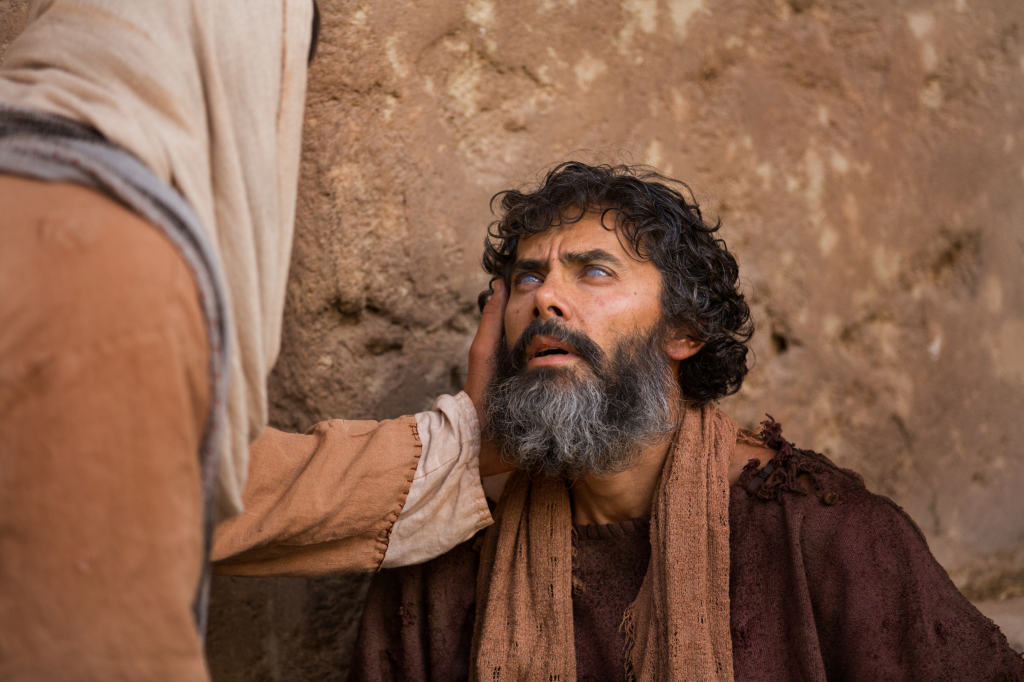
Sometimes I pray the old words of those who have gone before me: “Lord Jesus, Son of God, have mercy on me.” Often this (or a close variation of this) was the cry of the desperately needy in the Gospel accounts. When I pray this I imagine I’m blind Bartimaeus sitting by the side of the road, or the woman with a sick child. I see myself standing and waiting for His touch. This is the power of sanctified imagination.

“When the Spirit of truth comes, he will guide you into all the truth, for he will not speak on his own authority, but whatever he hears he will speak, and he will declare to you the things that are to come. 14 He will glorify me, for he will take what is mine and declare it to you.”

John 16:13-14

Some additional reading:

A good (and simple) can be found at Crossway.com. I would also suggest Focus on the Family and Christianity Today. Both are really clear and explain it much better than I can. Also, check out biblegateway.com for more info

Wrestling with God

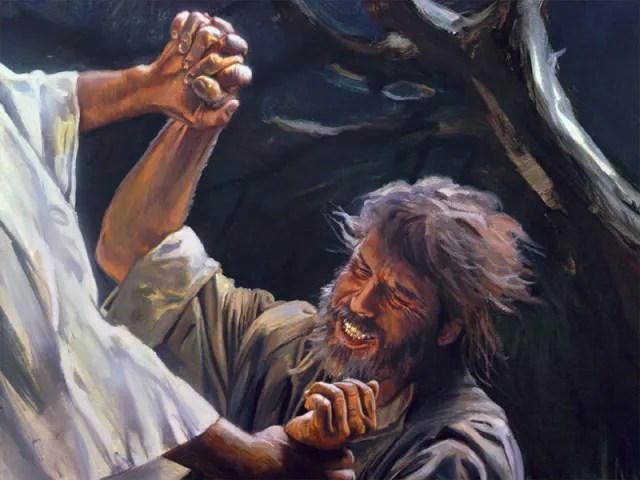
Jacob was a scoundrel, a cheat and a swindler. It seems that his life was built on defrauding others. I see no integrity, no goodness in his early life. He plotted and tricked everyone he could in order to advance his own status.

Yes, Jacob was tricked also, which I suppose was a “good” thing. It seems that when men like Jacob get deceived themselves we tend to gloat a bit. After all, they are finally getting what they deserve.

But no bad man is outside of God’s grace and mercy.

Jacob is a grifter. He has built his life around a selfish deception. But again, he is still on God’s radar, and the Father isn’t finished with him yet.

A night of wrestling with God is really something we all will do at least once in our life. We each have a “Jabbok” and each will go body to body with the Holy One. Some of us will learn how to surrender, others will not. But sometimes, our dealings with God are silent, and unobservable.

It fascinates me to see Jacob wounded. “When the man saw that he would not win the match, he touched Jacob’s hip and wrenched it out of its socket” (v. 25). Jacob will limp for the rest of his life. Every morning as he got out of bed, he would groan from the stiffness and be reminded of that fight by the river.

So dear one, how should we process all of this?

  1. No man is too far gone for God’s dealings.
  2. Each of us, whether we realize it or not, will have our encounter with God. (Our personal “Jabbok.”)
  3. God loves us too much to let us remain in our sin and darkness.
  4. And sometimes, from that encounter we’ll walk with a limp.

My own experience. I was not in a good place 8 years ago, I was wrestling with God, and having some issues, but the Holy Spirit had no intention of letting me go. I had a very bad fall. Needless to say I laid on the ground with my right arm pinned beneath me for some time. That injury is known as “compartment syndrome.” I went into surgery immediately.

My right forearm/hand is now paralyzed. about 80% of the muscle tissue and nerves had to be removed. The doctors considered taking my arm off, but I’m glad they didn’t.

Like Jacob, I now have a tangible reminder of my fight with the Lord. There are times when I hurt. I’ve had to relearn and adjust to using my left hand. It has not been easy. Jacob would limp for the rest of his life, I can relate having just one arm.

“God has no pleasure in afflicting us, but He will not keep back even the most painful chastisement if He can but thereby guide His beloved child to come home and abide in the beloved Son.”

 Andrew Murray

Others May, You Cannot

If God has called you to be really like Jesus, He will draw you into a life of crucifixion and humility, and put upon you such demands of obedience, that you will not be able to follow other people, or measure yourself by other Christians, and in many ways He will seem to let other good people do things which He will not let you do.

Other Christians and ministers who seem very religious and useful, may push themselves, pull wires, and work schemes to carry out their plans, but you cannot do it; and if you attempt it, you will meet with such failure and rebuke from the Lord as to make you sorely penitent.

Others may boast of themselves, of their work, of their success, of their writings, but the Holy Spirit will not allow you to do any such thing, and if you begin it, He will lead you into some deep mortification that will make you despise yourself and all your good works.

Others may be allowed to succeed in making money, or may have a legacy left to them, but it is likely God will keep you poor, because He wants you to have something far better than gold, namely, a helpless dependence on Him, that He may have the privilege of supplying your needs day by day out of an unseen treasury.

The Lord may let others be honored and put forward, and keep you hidden in obscurity, because He wants you to produce some choice, fragrant fruit for His coming glory, which can only be produced in the shade. He may let others be great, but keep you small. He may let others do a work for Him and get the credit for it, but He will make you work and toil on without knowing how much you are doing; and then to make your work still more precious, He may let others get the credit for the work which you have done, and thus make your reward ten times greater then Jesus comes.

The Holy Spirit will put a strict watch over you, with a jealous love, and will rebuke you for little words and feelings, or for wasting your time, which other Christians never seem distressed over. So make up your mind that God is an infinite Sovereign, and has a right to do as He pleases with His own. He may not explain to you a thousand things which puzzle your reason in His dealings with you, but if you absolutely sell yourself to be His love slave, He will wrap you up in a jealous love, and bestow upon you many blessings which come only to those who are in the inner circle.

Settle it forever, then, that you are to deal directly with the Holy Spirit, and that He is to have the privilege of tying your tongue, or chaining your hand, or closing your eyes, in ways that He does not seem to use with others. Now when you are so possessed with the loving God that you are, in your secret heart, pleased and delighted over this peculiar, personal, private, jealous guardianship and management of the Holy Spirit over your life, you will have found the vestibule of Heaven.

A Simple Servant

Body piercing has become pretty much acceptable just in the last ten years.  Studs are placed in a hole or piercing to make a permanent decoration.  I have seen a fair amount of it, and I think that a stud in the tongue has got to be the most intrusive.  (I recently read of a young girl who died after her tongue was pierced from an infection).

There is “body piercing” in scripture.  In Deuteronomy 15:12-18, slaves who are set free by their master after six years of service, if they loved and were loved by their master, could choose to remain a slave to him.

“But if your slave says to you, “I don’t want to leave you,” because he loves you and your family and has a good life with you,17 stick an awl through his ear into the door; he will be your slave for life. Also do this to a female slave.”

Deuteronomy 15:12-18

This was a decision that required elders to act as witnesses.  It was significant as well as completely binding.  I like to think of the ceremony to be kind of a cross between a wedding and a circumcision. (Sounds fun, huh?!)

The slave would be led to a doorpost and the master would take an awl, and push it through his ear lobe.  This designated the slave to be forever “owned” by a specific master.  Herein lies a picture of the Christian.

Many times in the New Testament we are called to be servants (slaves) of Christ.

Peter, Paul, James, and Jude referred to themselves as “bond servants of Jesus Christ” in their epistles.This image has an empty alt attribute; its file name is awl-piercing-faith-1.jpg This is not a forced servitude. It’s a choice made in love!

There are many believers who have done the same, they have fallen in love with their Savior.  They do not plan on a life apart from Him.  So spiritually they have gone to the doorpost, the awl is pushed through their ear, and they are marked from that point on.

Although the ear was pierced physically in the Old Testament, a different kind of piercing takes place in the New.  In Romans 6:16 we read,

“Surely you know that when you give yourselves like slaves to obey someone, then you are really slaves of that person. The person you obey is your master. You can follow sin, which brings spiritual death, or you can obey God, which makes you right with him.”

Romans 6:16, NCV

When the prodigal son returned home from the far country he fell before his father and humbly ask,make me your servant.” (Luke 15:19,21) He, in essence, was saying to the father, “pierce my ear.” The father made him a son, but the attitude of the son’s heart had changed to the heart of a servant. So it must be with us. Only then will we live a “pierced ear” life, revealing to all that we are servants of Jesus Christ!

“Savior, I know Thou hast allowed me absolute liberty, to serve Thee, or to go my own way. I would serve Thee forever, for I love my Master. I will not go out free. Mark my ear, Lord, that it might respond only to Thy voice.”

— Jim Elliot, missionary and martyr


alaskabibleteacher.com

I Couldn’t Follow Him

Mark 10:17-22

As he was starting out on a trip, a man came running to him and knelt down, and asked, “Good Teacher, what must I do to get to heaven?”

18 “Why do you call me good?” Jesus asked. “Only God is truly good! 19 But as for your question—you know the commandments: don’t kill, don’t commit adultery, don’t steal, don’t lie, don’t cheat, respect your father and mother.”

20 “Teacher,” the man replied, “I’ve never once broken a single one of those laws.”

21 Jesus felt genuine love for this man as he looked at him. “You lack only one thing,” he told him; “go and sell all you have and give the money to the poor—and you shall have treasure in heaven—and come, follow me.”

22 Then the man’s face fell, and he went sadly away, for he was very rich.

My name is inconsequential. I suppose all you must know of me is I tried to keep God’s Law and that I was very wealthy. Many believed that being rich was evidence that God approved of me. Of that, I wasn’t too sure. I kept the Law out of fear I suppose, and at times I just knew it wasn’t quite enough.

As I studied I began to realize that riches weren’t going to make me righteous. There was enough Scripture in me to let me know that it wasn’t enough. The prophets, especially Isaiah spoke about the deadliness of wealth, but there was that one verse in Proverbs that really disturbed me:

“Your riches won’t help you on Judgment Day; only righteousness counts then.”

(Proverbs 11:4.)

This verse (and all of the others) were the cause of many a sleepless night.

I was tormented by the reality of standing before God with nothing but my money to cover me. Coming under God’s righteous judgment haunted me. I thought of it day and night. I was terrified of being damned. My own righteousness wasn’t enough, and I knew it.

I heard about Jesus (and who hasn’t), and some were boldly claiming that he was the Messiah. He was at least a wonderful teacher and many said he worked powerful miracles, and perhaps he had answers for me. I hoped so, but I needed to know. It was my questions that drove me to find him.

And finding him was easy–I just followed the crowd.

I got ahead of everybody. I knelt in his path and waited. I must know what he thought I should do. When he stood before me I asked the question that had haunted me my whole life–“Good Teacher, what must I do to get eternal life?”

Jesus looked right at me. I knew deep down that he loved me.

But oh those words, his words really disturbed me. He told me that I only lacked one thing, that I must sell everything and distribute the money to the poor. Only by doing that would I discover riches in heaven. And only then could I truly follow him.

But that was the thing I couldn’t do.

It was my idol, my golden calf, and it was a sacrifice that I could never make.

I’ve come to realize now, over my many years, that when I do finally stand before God, I will have nothing to save me. Jesus invited me to follow, and I couldn’t and I didn’t. I won’t.

And that my friend, means I will die unforgiven.

“For what shall it profit a man, if he shall gain the whole world, and lose his own soul?”

Mark 8:36, KJV

alaskabibleteacher.com

Listen to Him

“Jesus told this simple story, but they had no idea what he was talking about.

John 10:6

For context: 10:7-18

What a joy can be found in the Shepherd’s care, and to hear his voice. Nothing really can match this wonder. We follow as he leads. The voice is an integral part of this passage and the foundation of authentic discipleship. You really can’t walk with him unless you hear him. We belong to him. We’re his flock that he keeps and provides for.

John 10:1-6

Amazing. He knows our name! That’s the intimacy found in these verses. We’re never forgotten and he will never overlook us. To think otherwise is slander and an attack on his present-day ministry. Jesus is our good shepherd. He always will be.

“Intimacy with God comes in whispers, not shouts.”

     Woodrow Kroll

He sometimes whispers, and this world can’t hear him. To be perfectly honest, my ‘busy-ness’ silences him. I suppose that the real issue isn’t with him, but with myself.

“And after the earthquake, there was a fire, but the Lord was not in the fire. And after the fire, there was the sound of a gentle whisper.”

1 Kings 19:12

The gentle whisper to a man afraid. This fits the Father’s m.o. He doesn’t speak through a windstorm, earthquake, or fire. He chooses to speak very quietly, and that’s a problem for me. In the original Hebrew, the word for “whisper” can be translated as calm, silence, or something gentle. He speaks this way if only we shut up for a little while.

If we are to recognize God’s voice, we must belong to Him. We hear His voice when we spend time in Bible study and quiet contemplation of His Word. The more time we spend intimately with God and His Word, the easier it is to recognize His voice and His leading in our lives.

The flock hears the shepherd, and it’s that voice that breaks through our cluttered-up life. We can hear, and it’s that communication that encourages us to walk through life—one day at a time. Just today. That’s all you must do.

There are so many other voices. You must ignore them.

So many are speaking, so many want us to hear and follow them. But in reality, they want us to leave the Shepherd and his flock behind. But we can’t allow this, we must learn to listen to him alone.

    Elisabeth Elliot

Art by Eugène Burnan

Thinking Out Hard Things

To follow Him can be really hard. There doesn’t seem to be any contingency plans for any who are looking to escape such a drastic call. Jesus either is, or He isn’t our Lord. “Do you also want to leave?” This is a question that will be asked to every disciple–sometimes0once, and sometimes repeatedly.

There are these crystalline moments when I must make a decision. Will I take up my cross and go with Him? There doesn’t seem to be any room in Jesus’ band for ‘almost’ disciples. That scares me sometimes.

Today’s cross is waiting for me. I’m afraid at times that I won’t be able to take the next step as a true follower. Am I just fooling myself?

All of heaven seems to stand on tiptoe to see what I’m going to do next.

Who am I really?

Being obedient to Jesus is far from easy. We must have His Spirit.

“After this, many of his disciples left. They no longer wanted to be associated with him. Then Jesus gave the Twelve their chance:

“Do you also want to leave?”

“Peter replied, “Master, to whom would we go? You have the words of real life, eternal life. We’ve already committed ourselves, confident that you are the Holy One of God.”

John 6:66-69, The Message

“It is indeed praiseworthy for a believer to consecrate his life to the Lord, but he must never do so lightly or thoughtlessly. Before committing your life in service to God today, count the cost, for “No man, having put his hand to the plough, and looking back, is fit for the kingdom of God” (Luke 9:62).”

    Woodrow Kroll

Image from Wikipedia, verses are from The Message Bible by Eugene Peterson.

Real Life Humility

Jesus was watching, and he what he saw was a spiritual principle of his Kingdom.

Jesus often teaches out of the things we encounter–real life events. Spiritual truth often hits us from those things we actually see. If you want to know what God is doing in your life, all you need to do is look around at the “practical” things, and start to see the spiritual lessons inside them. We learn from real-life. That’s how he often teaches us, he combines the Word with what we’re experiencing.

Our natural inclination is to move higher up. We often think that we’re deserving, and so we take our “rightful” positions. That’s the way humans think. We all want to sit in the best possible place, and so we end up wheedling our way up front. We can fall into the subtle trap of self-promotion. But that’s not how discipleship works.

Jesus corrects, advising us to take the lowest place. I think verse 11 is the key to figuring out this seating arrangement. We’re starting to see a physical situation become a spiritual lesson. There’s much to learn. Here’s verse 11 in the Amplified version:

“For everyone who exalts himself will be humbled [before others], and he who habitually humbles himself (keeps a realistic self-view) will be exalted.”

This translation injects some realism into our lives, especially in how we see ourselves. It’s something quite foundational. It lays down a principle that is always true in his Kingdom (1 Peter 5:6). If we don’t accept and implement this, we’ll suffer a definite deficiency in our discipleship. It stunts the growth of many believers. And that is tragic.

The whole scene lays out how life in the spirit really works, and it seems terribly paradoxical.

Our human logic asserts that deliberately choosing the lesser is foolish, things really don’t work that way. We think, (falsely,) that we’ll only advance by asserting ourselves. But Jesus, quite aptly, clarifies the ways of the Kingdom–true maturity will only come if we decide to take the lowest place.

James 4:10

Piles and Piles of Manure

The Augean Stable

Proverbs 30:12

The dictionary explains filthy things like this, “to be disgustingly dirty” or “to an extreme extent.” Understanding this draws us into a perilous understanding of what our situation really is–to despair is our only real step of being acceptable in God’s eyes.

Despairing is our first step.

The Pharisees (“the holy ones”) never understood. But they never understood the basics. They read but never really understood the words of the prophet Isaiah,

“Their tables are covered with vomit; filth is everywhere.”

Isaiah 28:8. (Context 28:8-9.)

Hercules in Greek mythology was assigned to clean the Augean stables. King Augeaus had 3,000 oxen and their stable had not been cleaned in 30 years! (That’s a whole lot of manure.)

He was given 24 hours to clean it up. And rather than grab a shovel, he concentrated on redirecting two rivers, turning them directly into the stable, and essentially flushing out the accrued filth of the oxen. His ingenuity fulfilled the task. The stables were cleaned.

The formidable task of cleaning those stables was totally fulfilled by Jesus Christ.

Our hearts were soiled by our sin and iniquity. No man could ever clean them, the piles of sin merely got deeper. At times we’ve tried hard, but sin continued to climb higher. Sometimes we pointed to others as having even worse kept stables than us, but that does not work.

“We are all infected and impure with sin.
    When we display our righteous deeds,
    they are nothing but filthy rags.

Isaiah 64:6

So much we hear seems to diminish our sin. Nothing we hear preached changes this. Only the heroic effort of Jesus can cleanse us from what we know, deep down, is true. We are “infected” with sin. The fever rages within, and it abates at times, but it’s always there.

“So get rid of all the filth and evil in your lives, and humbly accept the word God has planted in your hearts, for it has the power to save your souls.”

James 1:21

Some suggest the repentance is archaic and obsolete. I don’t think so. Rather it seems like it’s the starting point, we don’t change by feeling bad about the piles of manure (and yes, we know about them). We are simply those who’ve decided that we need God’s “river” to clean us.

I point no fingers. I blame or accuse no one. I’m merely a man who is wet, by the grace of God alone.

God came in the humanity of Jesus to heal us, to “flush” us clean. He alone can cleanse us from our filth and darkness.

“I will cleanse you of your filthy behavior.”

Ezekiel 37:29

“God the Father knew you and chose you long ago, and his Spirit has made you holy. As a result, you have obeyed him and have been cleansed by the blood of Jesus Christ.”

1 Peter 1:2

You have to decide. Will you simply adapt to your manure, or simply allow the rivers of grace to change you?

A Glowing Witness

The more I have read the Bible and studied the life of Jesus, the more I have become convinced that Christianity spreads best not through force but through fascination.

Shane Claiborne

I believe in evangelism. Right after Bible college I joined SOS Ministries as a full-time evangelist. I was there for three years living in a ministry house in the Mission district. We did high-visibility street work, preaching and leading teams to various parts of the City. This was in the 1980s and the City was pretty challenging.

I was primarily a street preacher and a team leader.

San Francisco is a city of 800,000 people. The work was intense. I remember once I was leading a Church team on Haight-Ashbury, and I was punched in the face by a backslidden Christian who strenuously objected to the Gospel being preached. I tried to respond in humility and kindness, even though I thought my nose was broken. (It wasn’t.)

Over the years I have come to see that the most powerful witness is a joyful and loving character that’s submitted to Christ.

Walking through the dusty roads and journeying into the small villages of Judea we read of the incredible hold that Jesus had on the hearts of men. They were fascinated by Him. People came face to face with God’s presence and it grabbed them. They traveled great distances to meet Him.

“And all the people were amazed, and said, “Can this be the Son of David?”

Matthew 12:23; see also Luke 5:26

As we submit to His Spirit we begin to understand this same amazing dynamic. It’s not us, it’s Him. And it will always be Him. The fruits of His presence are becoming very visible. Jesus is living inside of us!

“But the fruit of the Spirit is love, joy, peace, patience, kindness, goodness, faithfulness, 23 gentleness, self-control; against such things there is no law.”

Galatians 5:22-23

I remember visiting a Christian commune in the early 70s. I was a young believer with a ton of questions. I recall the peace, humility, and joy I saw on the faces of these brothers and sisters. I instinctively knew that I was encountering Jesus. And it shook me in a good way, a deeply supernatural way.

Please do not remove the presence of Jesus from your evangelism.

If you ask me, I will tell you. Jesus is still fascinates, and it’s His residence in you that still touches people. Evangelism is far more than the ability to recite facts and good arguments. It’s something far more.

And yet I still believe in high visibility evangelism. God’s word must be proclaimed openly and without compromise. But 40 years have passed now,and I have come to see that our faith spreads best through our example.

Perhaps He must be seen as well as to be heard?

“Soon we shall be up there with Christ. God did not mean us to be happy without Him; but God would first have us to be witnesses for Him down here, to hold out as much light as we can.”

    G.V. Wigram