His Love Persists, Psalm 136

Psalm 136

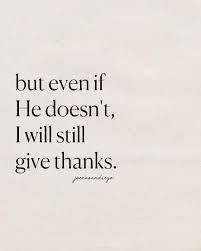
“Give thanks to the Lord, for he is good, for his steadfast love endures forever.”

Psalm 136:1, ESV

Repetition is when a single word or phrase is used multiple times in short succession for effect. It can help emphasize a point. This Psalm certainly does that.

Since this post is pretty much about repetition, I’m going to share some different versions that different translators have interpreted the last phrase of all 26 verses. Keep in mind the last phrase is used is repeating itself word for word in each translation.

Now here are seven different English translations of the end of every verse.

AMP: …for His lovingkindness (graciousness, mercy, compassion) endures forever.

NASB: …for His faithfulness is everlasting.

KJV: …for his mercy endureth for ever.

NCV: …His love continues forever.

CJB: …for his grace continues forever.

MSG: …His love never quits.

NET: …for his loyal love endures.

The word, translated in these different ways, is hesed” in Hebrew. It means a forever love, loyalty, faithfulness or kindness. It is something everlasting or eternal that’s based all on covenant. Yes, every translation is different, but the same.

I suppose this repeated phrase (26 times) may seem a bit redundant. I for one am prone to skip Psalms 136 because of that, I mean it seems boring. Just repeating this over and over I start to wonder if there’s something better to read.

But we dare not make this mistake.

If we respectfully dismantle this phrase we find it deals with seeing God as eternally steadfast. We are called to state out loud His love for us that never wavers or ends. A “steady” forever love that will not change, flicker, or diminish. It just goes on and on and on.

The phrase then moves even deeper than that. “Endures forever,” shapes the whole thought. You might say that these two words extend or amplify the complete verse and strengthen the entire Psalm.

O.K. Here’s another bone to chew on.

First, I need to point out that the first part of each verse states the unique circumstance that declares what exactly has been done. For instance notice the wonder and power of each verse. This is verse 15, for example,

“He overthrew Pharaoh and his host in the Red Sea, (the unique phrase)
    
for his steadfast love endures forever.”
(the repeated phrase)

The first part describes a miracle of deliverance from Egypt. The second is that same repeated phrase we find in all 26 verses. First the unique phrase, and but then comes the repeated one. But let’s add even more flavor. We must teach ourselves to remember. You must consider each event He has led you through to be a testimony to others.

You then must tell your children about your own personal experiences with God.

We forget these miracles unless we consciously recall what God has done. Miracles, healings, provisions, and His amazing grace. Never disremember these things. Bring them to mind, over and over again. You should never forget those “God-things.” They’re uniquely yours. He has done distinctive and tremendous things for you alone.

I guess the main point of this post is to emphasize to you to value those unique miracles that you’ve experienced in your own life.

In life it seems we remember what is important to us. What He has done for you is your own unique testimony. It’s yours, and yours alone. What you’ve experienced is completely your own testimony.

When we enter a forever kind of an endless eternity that each of us will have amazing stories to tell each other about God’s special touch, His miracles and all of the grace and forgiveness that He uniquely loved us with. We all will have our own unique and singular stories. What we share will be our evidence of His love.

That’s pretty amazing when you think about it.

“And they have conquered him by the blood of the Lamb and by the word of their testimony,”

Rev. 12:11, ESV

The Man on the Other Cross

Luke 23:39-43, ESV

The pain was incredible, but I know that deep down I deserved to die. But not like this. Never like this. I was almost out of my mind with fear. What they were about to do to me was terrifying.

You must understand that I was just a common thief. I had stolen a loaf of bread when I was eight years old and that’s how it all got started for me. It more or else got bigger and easier. I knew how to steal and I was quite good at it. I was Jacob, the master thief!

When I was finally caught, they had sentenced me to die.

I supposed it was inevitable. I fault no one but myself, I knew what I was getting into. As I dragged my beam up to Golgotha, it was really strange but I suddenly remembered a verse from the scripture and it really did unsettle me.

“Cursed is everyone who hangs on a tree.”

It’s a terrible thing to die this way. There were three of us, nailed to the wood and lifted up between heaven and earth. Jesus was nailed to the middle cross, not that it really mattered; all three of us were going to die today. Many hope for a simple and easy death, maybe in their sleep–but that’s not going to happen to us.

The third man could only mock, he was afraid, and I suppose he just echoed those Pharisees who didn’t really understand. But I knew better. I knew who this other man was, I had heard all the stories. Deep down I knew that this man on the center cross was the Messiah.

A crowd had gathered to watch us die. The Romans in their wonderful ingenuity had made a sign that they nailed above Jesus’ head, and it declared to everyone that Jesus was “the king of the Jews.” Even as he was dying, they found a way to malign him and to stir-up the crowd.

The other man being crucified continued to mock Jesus, and it infuriated me.

Why I defended him I don’t know for sure.

But I understood. He was being murdered out of envy and jealousy. He didn’t deserve to die like this, but the powers that be hated him, and who can confront these religious men without becoming a victim. Jesus had repeatedly crossed the line, so now they were now putting him to death. It seemed evil was really winning today.

I saw the soldiers throwing dice for Jesus’ clothes. He was now being mocked by them as well, even as he was dying on a brutal cross.

But all of a sudden it all made perfect sense, he really was the Messiah, and these bastards were killing him. Crucifixion was starting to work on me now. I began to choke on my words, and it was getting hard to breathe.

“Jesus… please remember me. When your Kingdom comes, please let me be a part of it.”

And as beaten as he was, he managed to turn and look directly at me. They had whipped and brutalized him, and yet he was still aware. His words were whispered now, but I understood. “I promise that today you will be with me in paradise.”

I was starting to spasm again, but the horror of death had left me. Some time had passed, and I could hear his breathing stop. But for the first time, I had peace. They used a spear on Jesus, but he was already dead.

The soldiers now came to the two of us, and they were carrying an ax to break our legs. It all had to do with the coming festival, and the Pharisees wanted us dead. When they swung that ax I knew pain that I could never describe. My own death came quickly after that.

I was suddenly standing in paradise, whole and complete.

Someone was standing before me. He was shining I remember, and I knew he was powerful; stronger, and he was more glorious than anyone I had ever met. It was crazy but somehow I knew that he was an angel and he had been sent to meet me. It’s funny, but I realized that somehow I really did belong. Me–a dirty rotten thief.

Jesus had promised me, he had pronounced me righteous, me of all people.

I suddenly had a joy that I could never explain. I really was a part of the Kingdom that was beyond anything I had ever known. And all I can really say about this was that I was privileged to die with him. That is all I could claim. I simply believed him and asked if somehow I could be part of his eternal rule.

I simply asked and you know what, He gave me everything.

And so, I’ll see you in heaven.

Cover Art: “Christ on the Cross between Two Thieves,” by Peter Paul Rubens

When Healing Doesn’t Happen

Not everyone who is sick will receive a physical healing.

I find this moderately disturbing. In over 35 years of ministry I have seen a lot. I once prayed over a saint who had a leg that was shorter than the other. She walked in a painful limp, and yet in a brief second, her leg grew. I’ve prayed over terrible fevers, and I instantly saw it leave. I know God heals. He does wonders still.

And yet there has been prayer that doesn’t make it beyond the ceiling.

For believers today who suffer physically or mentally, we may question our faith. (Especially when the healing evangelist comes to town). After 2-3 tries we settle back on our “deficient’ faith feeling a bit miserable.

I honestly don’t think that’s what the Lord wants.

It seems to me that the real issue is not so much a weak faith, but holding on to your faith when you are not healed.

I hear talk about having faith to be healed–but what about the faith that’s needed to be sick?

Why do we suffer from illness? I suspect that for many believers sickness is really there to bring glory to God. Holding onto faith in the midst of pain often encourages those who witness it. I believe that was Paul’s experience (2 Cor. 12:7-10).

Oh dear one, continue to seek healing, (James 5:14).

Healing will happen. We look forward to that special day when all our sin, and all our sickness will be eternally dealt with. Those ugly and painful and savage things will no longer be part of us. We’ll walk unencumbered by earth’s ugly shackles.

“He will wipe away every tear from their eyes, and death shall be no more, neither shall there be mourning, nor crying, nor pain anymore, for the former things have passed away.”

Rev. 21:4

Are You Living in Awe?

“The heavens declare the glory of God,
    and the sky above proclaims his handiwork.”

Psalm 19:1

“Earth’s crammed with heaven, And every common bush afire with God; But only he who sees, takes off his shoes, The rest sit round it and pluck blackberries.”

Elizabeth Barrett Browning

In some odd way, our lives seem to be always getting interrupted by God, and if we’re alert, it can happen a lot. We have a built in need to see the invisible, and the work of the Creator. Our night sky here in Alaska is pretty much unreal. I see stars that others can’t, and the northern lights here are remarkable.

But probably the most incredible night skies were in Mexico while camping. I remember laying on the beach seeing the Milky Way on full display. It seemed there were  more stars than ever before. It was the work of God’s hands.

It was completely overwhelming.

I started to tremble and shake. I got up and ran to our tent. I simply couldn’t handle the incredible universe without some kind of a buffer. I was completely undone and reduced to a quivering speck of dust. I tried to tell my wife what had just happened but I couldn’t. I was too scrambled inside. I couldn’t speak. I couldn’t explain what just happened.

Years later I came to understand that I experienced was called awe.

It was something much more common a few generations ago. There’s a kind of existential crisis which we side-step in these more modern times. We rarely contemplate the night sky, mostly because we can’t see it. It’s called light pollution. Our man-made lights make it impossible to see God’s stars.

We seldom, if ever, have seen “fire in a bush.”MINOLTA DIGITAL CAMERA

It seems we have traded our awareness of an authentically Almighty God, and in turn, we get to pick all blackberries we can haul. We reason it out and feel we have made a better bargain. But when we diminish the created world, we shouldn’t be surprised if we find that we have become spiritual paupers.

Maybe we should start to see those things that are invisible to our naked eye?

Each of us has the opportunity right now to see the spiritual world that swirls around us. Why should we wait for heaven to see these things? Ask our Father to reveal His glory now in this present moment. Learn to see that which can’t be seen, but by faith.

  “When I look at your heavens, the work of your fingers,
    the moon and the stars, which you have set in place,
what is man that you are mindful of him,
    and the son of man that you care for him?”

Psalms 8:3-4

Anavah, (or Humility)

       Charles Spurgeon

O Lord, my heart is not lifted up;
    my eyes are not raised too high;
I do not occupy myself with things
    too great and too marvelous for me.
But I have calmed and quieted my soul,
    like a weaned child with its mother;
    like a weaned child is my soul within me.

Psalm 131:1-2, ESV

To be humble [Hebrew, anavah] means that we recognize our boundaries. We will not advance by stepping beyond what God has ordained for us. We learn to be content with the present. Humility is not thinking less of yourself, but thinking of yourself less. It puts others first.

In Psalm 131 we begin the walk into “anavah.” We’re brought by God into a place where we understand who we really are. Our lives are not characterized by self-promotion, but rather serving God and advancing others before ourselves.

The image is one of being a weaned child resting on a mother’s chest. We have no agenda, there is nothing that we must do, but just relax on Him.

Seeing a weaned baby is one who no longer needs its mother’s milk. There’s no fussing or grasping for nourishment, rather he’s simply content to rest in his mother’s warm embrace.

To practice true humility, or the Hebrew word “anavah,” it is to renounce ambition in all its insidious forms. As Jesus’ disciples we follow Him with our cross. That cross puts the end of our old life. And we die daily. And it is obvious to all.

“And since I, your Lord and Teacher, have washed your feet, you ought to wash each other’s feet.  I have given you an example to follow. Do as I have done to you.”

Andrew Murray

alaskabibleteacher.com

Learning How to Dance

Do the Dance-- For Him

“And David was dancing before the Lord with all his might, and David was wearing a linen ephod.”

2 Samuel 6:13-15

“The most valuable thing the Psalms do for me is to express the same delight in God which made David dance.”

     C.S. Lewis

It seems I’m the world’s worst and the clumsiest of all.  And since my brain surgery, it has gotten even worse. I fall several times every month.  I need to use a cane now.  (And if you look up “klutz” in the dictionary you’ll see my picture, lol.) 😃

When I start to dance, you had better head for higher ground! 

Even so, I do love the idea of dancing, but I’m like Bozo, the circus clown, only wearing roller skates!  I lurch from side-to-side and I’m always on the verge of falling on someone’s lap, which is a real hoot!

But there is just one dance that I am waiting for.

It’s the dance I’ll have with my Savior.  There will be a day, in a place and time where He will call me home and He himself will teach me how to dance.  I know it’ll be incredible, and it’s a day that I anticipate, and honestly, I hope it comes soon. (He’s finally going to heal me!)

But to really dance you must first liberate your heart. 

You must cancel out all self-consciousness.  If you are self-aware, you will never enter into the joy and wonder of the true dance.  You will be a perpetual wallflower, living only on the edges.  And, you will be very sad.

It seems you must dance in your heart before you can ever dance with your feet.

I desperately would like to dance. And when I see Him clearly on that day, I’ll have no cane to slow me down. I will be as graceful, and to be perfectly honest, I won’t be watching you, (I’m sorry). I will see only Jesus. And I believe that my heart will beat for Him exclusively.

Jesus shed His blood for me.

I belong to Him. He forgave all my sin and has given me eternal life. Knowing this fills me with such joy that my feet won’t stand still. He redeems me, and is this not a cause for a dance, or two, or maybe three? Maybe eternity will be filled with more joy than we ever dreamed possible?

Some of you have been damaged–mashed up in the grinding gears of life’s hard issues. It’s hard to dance. I understand.

But I also know that your life can be astonishingly full of grace– you have endured so much, and yet Jesus intends to occupy your thoughts and vision with real hope. As His disciple, you’ll discover your special dance. And when you finally see Him, your heart will finally be free to spin and twirl.

He after all is the Lord of the dance.

“Young women and young men, together with the elderly, will celebrate and dance because I will comfort them and turn their sorrow into happiness.”

Jeremiah 31:13
 
alaskabibleteacher.com

Serving God at Night


A song for going up to worship.

“Behold, bless ye the Lord, all ye servants of the Lord, who by night stand in the house of the Lord.

Lift up your hands in the sanctuary, and bless the Lord!

The Lord who made heaven and earth bless thee out of Zion!”

Psalm 134

This remarkable Psalm is part of an elite group known as “the Psalms of Ascent.” There are 15 Psalms (120-134) sung as the congregation of Israel went up the steps of the temple in Jerusalem. They would sing each in “rounds” with each other.

As you can well imagine, this made the ascent slow, but meaningful. As you read the three verses of 134, I get a picture of worshipers turning back and blessing the Levites. This takes place at the very end of the day. The Levites, and other godly ones who lived in the Temple, (remember Anna and Simeon, in Luke 2?)

They were the support staff for the priests.

I have some general thoughts about this Psalm:

V.1, “Behold, bless ye the Lord, all ye servants of the Lord, who by night stand in the house of the Lord.”

The first significant thought is “Lord” mentioned three times. The word is the recognition of someone’s status and standing. We call Him Lord, because He is that (and more). The second has to deal with the Levitical “night shift.”

They served and guarded the Temple during the wee hours of the night.

They probably cleaned, stacked wood, sharpened knives and maintained the Holy Place with its needs. There was no real glory working the night shift. There were no people to serve. The crowds were for the day shift. (Here’s a weird thought– think “Disneyland at 2:00 a.m.”) There was also a contingent of non-Levite people ministering to the Lord as well. They had no duties, and only the priests could serve through their work.

The Levites working at night were not ‘second best.’ At least, not in the eyes of the Holy Spirit. They were integral in both presence and service to the Lord. To despise them is to reveal one’s ignorance. They definitely mattered.

V. 2 “Lift up your hands in the sanctuary, and bless the Lord!

I’ve worked nights before. It’s a real adjustment. You never feel like you’ve had enough sleep, and it is really hard to be positive and cheerful.  I could get pretty grouchy at times. But an exhortation is given, a shout and a blessing as the crowds leave. “Raise up your hands– and praise Him!” It is as the work, although necessary, would be secondary. The worship however, was primary. We need to hear that.

Each of these three verses of this Psalm contain the word “blessing!”

V. 3, “The Lord who made heaven and earth bless thee out of Zion!”

To be blessed (literally, made “lucky”) by our Creator and Lord is pretty profound. As a kid who read a lot, I think of ‘fairy dust.’ I know better now, but to be blessed by God is deeply significant. To summarize, I believe this Psalm is speaking of those in the church who are doing “hidden service.” No one sees them really.

They go about there duties quietly, and purposefully. The only recognition is from God– who sees all. I must encourage you to keep on. There are many more than you think who see your hidden ministry to the Father. You are His ‘night shift.’ You’re seen by few, but Him. He knows what you do.

“There are many of us that are willing to do great things for the Lord, but few of us are willing to do little things.”

     D.L. Moody

Is Your Pain Going to be Useful?

Some time ago I came across a story that connected. It seems a visiting speaker visited a congregation and shared a painful incident from his childhood. He wanted to bring healing, but in the end he was still unsure he did the right thing. But after he finished, an elder of that church came up and spoke to him–

“You have finally learned how to become a proper steward of your pain.”

The visiting speaker was profoundly touched by this. And finally, something came together in his heart and soul. Yes, he did learn how to deal scripturally with those ugly things from his past. And yes, he had finally become a proper steward of his pain.

The word for steward in the original Greek is oikonomos. It literally means “a keeper of a home.” It describes a manager, a superintendent to whom the head of the house or proprietor has entrusted the management of his affairs, the diligent care of receipts and expenditures.

The issue for us is managing our awful things for the Kingdom of God.

No question about it, we live in a world of darkness. Each of us has been touched by hard things. Scars are part of our lives. When we come to Christ they often come with us. All of these grim things are a real piece of us–we have been hurt. Sometimes profoundly.

Or maybe you’ve wounded others?

Are you a good steward of all of this? Whether it’s a trauma–a physical, sexual, or perhaps a mental illness. It’s a scar you carry from your past, and it seems that no one is immune from them. But dear one, I really believe that you’ll find freedom when you start to use these things for Him and his Kingdom. I have finally, I think anyway.

We must see and understand that Jesus has taken everything and redeems it all for His glory.

He understands us fully–our past, present, and future. He ‘knows’ us–the real and hidden us. He’s not surprised by these hidden sins. I suppose the challenge is to take these sad events and give them to Him. He alone can heal and then use that which has devastated us. He uses our pain to touch others deeply.

But Jesus intervenes to save. As we grow to accept this, the Holy Spirit comes as our comforter and guide. He starts to teach us true redemption, and the incredible healing that He brings with him. It really is His work, not ours. We finally understand the wide scope of His cross. It’s then we become broken healers that God can use.

The light has truly overcome the dark!

We’re able to touch others with these things that would cripple and destroy. He has made us “managers” of these things, and we are taught to teach others, declaring that God has completely saved us. He works miracles!

“Therefore, if anyone is in Christ, he is a new creation; the old has passed away, and see, the new has come!”

2 Corinthians 5:17

We’ll definitely meet those who need to hear our story of us walking through an ugly pain. God will arrange it.

We’re slowly being transformed into authentic witnesses of His healing power. And yes, at times these awful things will still hurt us, and I suppose that’s to be expected. But we’re learning to manage them by His grace.

We’re finally becoming real-life stewards of our pain.

Revelation 21:4

alaskabibleteacher.com

Only His Fire

Isaiah 33:14

Perhaps we can become too casual in our intimacy with God? Becoming close is obviously needed, but it must be done with certain precautions. (Bear with me as I try to explain.)

He asks for us to see Him with an awareness of His holiness. It’s important to Him, and it is vital for us. We must honor Him as the One who is supremely holy. But seeing that we can walk with God in a new way.

Hebrews 12:29, ESV

The closer we come, the more significant our response. I believe the Holy Spirit carefully monitors us to see what we will do after we confront the reality of Him. He insists that we should honor Him as ‘holy.’ He passionately desires and requests that we do what is appropriate and honorable as we meet Him.

Giving Jesus honor is critical to all we say or do.

It should be the first thought of every man or woman who presses in to know Him. Honoring Him as holy is not regarded as an option to be debated or brought out for consideration. It is essential to follow Him faithfully.

He is like a tiger whom we have grabbed by the tail, we have but a few options. One is to release our hold and face the consequences. The second is too hold on to Him with all our strength. He loves those who make the second choice. Grab hold of the Lord Jesus, and hang on for dear life!

He is dangerous, but in a good way. Intimacy is important, but so is having a healthy fear of Him.

We should anticipate Him coming and disrupting our Sunday services. Perhaps we need our ushers to hand-out ropes and life-jackets before the service starts? We should expect Him to explode in our congregations in a whirlwind of holy love. He wants us to anticipate His presence.

In Isaiah 33:14 there is something that is needful and mandatory for us to understand about our Father. Often we’ll discover that entering and abiding in His presence requires us to honor His holiness. When we do so, we find we will trigger a response from the Lord, which will it turn be a true blessing to our own souls.

Major Ian Thomas

Restoration of Peter

15 “When they had finished breakfast, Jesus said to Simon Peter, “Simon, son of John, do you love me more than these?” He said to him, “Yes, Lord; you know that I love you.” He said to him, “Feed my lambs.” 

16 He said to him a second time, “Simon, son of John, do you love me?” He said to him, “Yes, Lord; you know that I love you.” He said to him, “Tend my sheep.” 17 He said to him the third time,” 

“Simon, son of John, do you love me?” Peter was grieved because he said to him the third time, “Do you love me?” and he said to him, “Lord, you know everything; you know that I love you.” Jesus said to him, “Feed my sheep.'”

John 21:15-17, (context vv. 15-19)

Peter’s denial was public one, and it was important that his restoration be public as well. It may come as a shock, but Peter needed to do this–even though it was a grief to him (verse 17.) He needed to do this to heal properly. It was also a clear testimony to the others that he was completely restored.

Repeatedly in this passage, love gets linked to service.

(Can you see this, it’s important that you do.) The Lord asks Peter if he really loved him, and most likely it was a solemn affair, not something trivial or casual. The word used is ἀγαπάω, “agape”–this is the type of love that God has for people. It’s an all-powerful love, one that gives 110%.

The third time the word for love is different though, the word used is φιλέω, “philo”–this is a type of love that a man has for others, a brotherly kind of love. Something good, but not quite agape love.

Each time Jesus uses agape to Peter, Peter responds with philo.

Peter responds, but he’s fixated on the brotherly type of love. I don’t mean to be confusing here, but every time Jesus uses agape to Peter, Peter responds with philo. It’s as if Peter is struggling with loving Jesus wholeheartedly. Perhaps Peter was ashamed of his denial. But to his credit he was honest.

Service is now connected to agape love.

Love can’t be seen unless it has a physical aspect. Love can’t be abstract, a vague feeling, or a hazy concept–it has to be seen by others. Jesus’ sheep (and lambs) must be fed, and watched over. This is now Peter’s call to ministry.

This is Jesus’ ministry as well.

Apparently there is plenty of this kind of work to go around! Isaiah prophesied about Jesus’ work in Isa. 40:11. This now becomes Peter’s work as well.

“He will tend his flock like a shepherd;
he will gather the lambs in his arms;
he will carry them in his bosom,
and gently lead those that are with young.”

Whether or not Peter was the first “pope” is debatable. But it’s clear that Jesus focused on Peter. And isn’t it just like him to turn our failings into victories. Peter’s denial was now his ministry to others. It dealt with the pride issue, which disrupts true ministry to His flock.

“And I will give you shepherds after my own heart, who will feed you with knowledge and understanding.”

Jeremiah 3:15

God uses broken things. It takes broken soil to produce a crop, broken clouds to give rain, broken grain to give bread, broken bread to give strength. It is the broken alabaster box that gives forth perfume. It is Peter, weeping bitterly, who returns to greater power than ever.

  Vance Havner