Peter’s Greatest Flops

The apostle Peter was well acquainted with failure. He understood blowing it big time. I’ve identified at least 11 times when he did the wrong thing; He stumbled repeatedly, but that encourages me.

(I’m really glad he struggled.)

I suppose that we must acknowledge that Jesus saw something in Peter–a definite future of a ministry that would be critical in the lives of the other disciples, but it wasn’t going to be easy for Peter. Jesus was alert and He prayed specifically for His bumbling disciple.

“…but I have prayed for you that your faith may not fail. And when you have turned again, strengthen your brothers.”

Luke 22:32, ESV

Here’s my list of Peter’s greatest flops:

  • Peter can’t figure out the Parable of the Sower, so he asks Jesus for further explanation. We too don’t understand all the things Jesus taught, we get confused. Peter’s example is a strength for us. Jesus doesn’t reject our ignorance. (Matthew 15:15-16.)
  • Peter and the others try to keep the children away from Jesus. (Mark 10:13-14.)
  • Peter is full of selfish ambition and argues with the other disciples as they walk with Jesus. (Mark 9:33-34; Luke 22:24.)
  • Peter tried to follow Jesus by walking on the water. He failed and sank; Jesus took him by the hand and gave him a gentle rebuke. (Matthew 14:28-33.)
  • On the Mountain of the Transfiguration Peter witnessed an incredible event when Jesus was seen in all His glory. Peter blew it by not understanding what had just happened. (Mark 9:2-8.)
  • Peter actually is strongly rebuked by Jesus and called, “Satan.” (Matthew 16:23.)
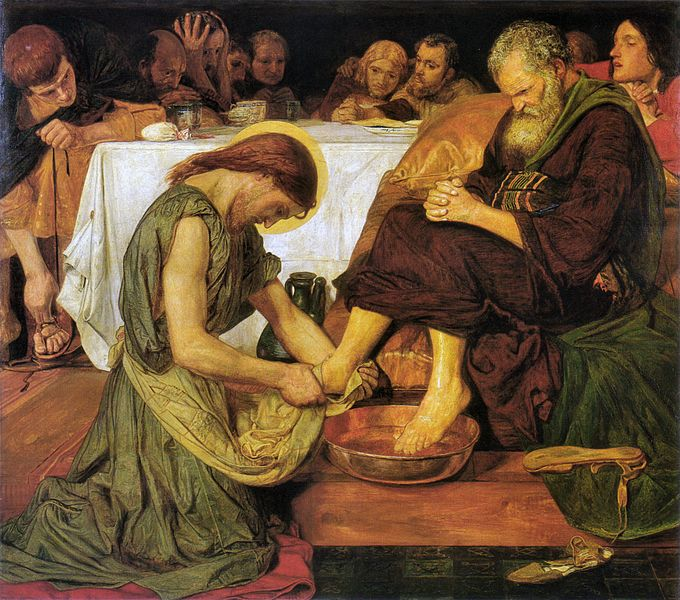
  • Peter resists Jesus when He is washing the disciple’s feet. (John 13:5-9.)
  • Peter fails to listen to Jesus in the garden of Gethsemane and falls asleep. He was told to watch and pray. Peter failed, and fell asleep. (Matthew 26:36-46.)
  • Peter, with “oaths” and “curses” denies knowing Jesus in the courtyard of the High Priest. (Matthew 26:69-75.) See also, Matt. 10:33.
  • Peter is broken over his denial of Jesus. It seems that he’s a complete failure as a disciple and returns to his boat and goes fishing. The other disciples follow him.(John 21:1-3.) We also see Jesus restoring Peter to Himself. (John 21:15-19.)
  • Peter is intimidated by the Jews, and withdraws from fellowshipping with the Gentile believers. He is soundly rebuked by Paul “to his face.” (Gal. 2:11-14.)

It seems that none of these are spiritually fatal, but perhaps they could be. In every case listed we can see the tenderness and goodness of the Lord Jesus who forgave and restored Peter. He loves His disciple much more than Peter realizes.

At times our walk is also somewhat discouraging.

We sin, and we fail in so many ways. It seems overwhelming at times. The Holy Spirit calls us to pray and sing, but if we’re honest we often can’t do these things. Our failures seem to disqualify us to be disciples. A kind of “spiritual depression” falls over us. We seem to believe that God is angry with us. We think He condemns us.

 “I give them eternal life, and they will never perish, and no one will snatch them out of my hand.”

John 10:28

But God’s love for you is total and everlasting.

On that day you accepted Him as your Savior a covenant was made. He’s committed to bring you through life and to Himself. Forever. Jesus is completely faithful and He loves you deeply and most unreasonably. We call this “grace.”

  1. God has initiated your salvation. He launched it and He is in charge of it.
  2. God works over and over in your life to make you like His Son.
  3. When you die and stand before Him that process will be finished completely.

“And I am sure of this, that he who began a good work in you will bring it to completion at the day of Jesus Christ.”

Philippians 1:6

alaskabibleteacher.com

Not a Cliché

Image result for mike yaconelli quotes images

“A bruised reed he will not break, and a faintly burning wick he will not quench.”

Isaiah 42:3

Somehow, we can get ‘side-tracked’ in our thinking. We get confused and the enemy makes sure we don’t walk in the truth. At this present time, it does seem like some of the Church is nothing more than an exclusive club for the wonderful. It seems that those who attend are the ‘achievers,’ those who have somehow arrived at a certain acceptability.

They are there for social reasons–they eschew any real intimacy with Jesus.

For many of us, we are taught that we must have it all together; more or less complete and functioning at an acceptable level to follow Christ. We keep thinking if we work really hard then we just might arrive at a place of acceptable ‘perfection.’ This has become our religion now, this “gospel by achievement.”

But does Jesus agree? Is His Church made up of only ‘completed’ people, those who have it all together? Do we need to become accomplished before we are acceptable? Perhaps we need to find some answers. Perhaps we won’t like what we find.

After over 40 years of following Jesus (most of the time in ministry) I’m starting to realize that I’ve had much of it all wrong. I’ve read that Jesus receives the lame, the tax-collector, the leper and the whore. He deeply loves the unlovable, in spite of what the Church might say.

I believe that true grace is ‘foolish’ to man, and defies human attempts to explain it. Grace is the free, undeserved goodness and favor of God to mankind. We dare not doubt this.

Zephaniah 3:17

God’s love is completely undeserved. It comes without preconditions. He loves us when we are terribly lost and fallen. It has no bounds or limitations. It is unconditional. Grace grabs us and takes us to a place we’ve only dreamed about. We’re irrevocably changed when we understand.

It is a relationship and not a religion. That’s not a cliché.

This ‘world-system’ desperately wants to confuse us. We discover that Satan detests our intimacy with the Lord Jesus. He marshals all of his demonic strength in order to obscure this truth. It’s funny, but Satan likes ‘religion.’ And he hates our nearness to Jesus. (2 Cor. 11:2-3).

All of us are seeking forgiveness, and yet somehow we think that God won’t accept us. Often we stop going to church, pray, or read His Word. We are slowly becoming hard, and it seems like we are slipping into some sort of a ‘spiritual daze’. Our spiritual malaise is starting to look like it’s permanent.

But Jesus is completely enthralled by your faith in Him!

He doesn’t pull away from the ‘sick’ and the weak. You must understand that intimacy is Jesus’ idea to ‘heal’ you. He draws us to a place of friendship with God. Intimacy with Jesus is God’s exclusive way of ‘turning us’ holy. That’s why Satan militates against “first love” faith.

There is a repentance in all of this.

We need to completely change our mind about our sinfulness. His cross and His blood are enough. But it’s genuine intimacy with Jesus that cures us, not keeping rules or having excellent doctrine. We will never be ‘good’ enough, but even in our sin we are deeply loved!

He knows it all, inside and out. He energizes those who get tired, and gives fresh strength to dropouts. For even young people tire and drop out, young folk in their prime stumble and fall. But those who wait upon God get fresh strength.

They spread their wings and soar like eagles, They run and don’t get tired, they walk and don’t lag behind.”

Isaiah 40:29-31, Message

alaskabibleteacher.com

The Thief on the Cross Speaks

Luke 23:39-43

“One of the criminals who were hanged railed at him, saying, “Are you not the Christ? Save yourself and us!” 40 But the other rebuked him, saying, “Do you not fear God, since you are under the same sentence of condemnation? 41 And we indeed justly, for we are receiving the due reward of our deeds; but this man has done nothing wrong.” 

42 “And he said, “Jesus, remember me when you come into your kingdom.” 43 And he said to him, “Truly, I say to you, today you will be with me in paradise.”

The pain was incredible, but I know that deep down I deserved to die. But not like this. Never like this. I was almost out of my mind with fear. What they were doing to me was terrifying.

You must understand that I was a common thief. I had stolen a loaf of bread when I was eight years old and that’s how it all got started for me. It more or else got bigger and easier. I knew how to steal and I was quite good at it. I was Jacob, the master thief!

When I was finally caught, they sentenced me to die. I supposed it was inevitable. I fault no one but myself as I knew what I was getting into. As I dragged my beam up to Golgotha, it was really strange but I suddenly remembered a verse from the scripture and it really did unsettle me.

(Gal. 3:13, ESV)

It’s a terrible thing to die this way. There were three of us, nailed to the wood and lifted up between heaven and earth. Jesus was nailed to the middle cross, not that it really mattered; all three of us were going to die today.

Many hope for an easy death, maybe in their sleep–but that’s not going to happen to us.

The third man could only mock, he was afraid, and I suppose he just echoed those Pharisees who didn’t really understand. But I knew better. I knew who this other man was, I had heard all the stories. Deep down I knew that this man on the center cross was the Messiah.

A crowd had gathered to watch us die. The Romans in their wonderful ingenuity had made a sign that they nailed above Jesus’ head, and it declared to everyone that Jesus was “the king of the Jews.” Even as he was dying, they found a way to malign him and irritate the crowd.

The other man being crucified continued to mock Jesus, and it infuriated me.

Why I defended him I don’t know for sure.

But I understood. Jesus was murdered out of the envy and jealousy of the Pharisees. He didn’t deserve to die like this, but He was hated, and who can confront these religious men without becoming a victim. Jesus had repeatedly crossed the line, so now they were now putting him to death. It seemed evil was really winning today.

I saw the soldiers throwing dice for Jesus’ clothes. He was now being mocked by them as well, even as He was dying on a brutal cross.

But all of a sudden it all made perfect sense.

He really was the Messiah, and these bastards were killing him. Crucifixion was starting to work on me now. I began to choke on my words, and it was getting hard to breathe.

“Jesus… please remember me. When your kingdom comes, please let me be a part of it.”

And as beaten as He was, He managed to turn and look directly at me. They had whipped and brutalized Him, and yet He was still aware. His words were whispered now, but I understood. “I promise that today you will be with me in paradise.”

I was starting to spasm again.

But the horror of death had left me. Some time had passed, and I could hear his breathing stop. But for the first time, I had peace. They used a spear on Jesus, but he was already dead.

The soldiers now came to the two of us, and they were carrying an ax to break our legs. It all had to do with the coming festival, and the Pharisees wanted us dead. When they swung that ax I knew a pain that I could never describe. My own death came quickly after that.

I was suddenly standing in paradise, whole and complete, and loved.

Someone was standing before me. He was shining, and I knew he was powerful; stronger, and He was more glorious than anyone I had ever met. It was crazy but somehow I knew that it was the Lord Jesus. He had come to meet me. It’s funny, but I realized that somehow I really did belong. Me–a dirty rotten thief.

Jesus had promised me, pronouncing me righteous, me of all people. I suddenly had a joy that I could never explain. I really was a part of the Kingdom that was beyond anything I had ever known. I believed him and asked if somehow I could be part of his eternal rule.

I simply asked and He gave me everything.

“I am going to heaven just like the thief on the cross who said in that final last moment: “Lord remember me.”

Billy Graham

alaskabibleteacher.com

Cover Art: “Christ on the Cross between Two Thieves,” by Peter Paul Rubens

Tzel, Shade

“The Lord is your keeper; the Lord is your shade on your right hand.”

Psalm 121:5, ESV

I once worked for my father-in-law who had to meet a deadline. We shoveled rock into 50# bags. It was unbelievably hot–104 F and we had no shade. The sky was clear and the sun was brutal. I recall praying for a cloud, even a little one, anything.

The Jews had a word, tzel. It’s translated “shade” in our English Bible. That word also meant shelter, covering and coolness. In the land of Israel it could get really hot, up to 120 F in the summer. Tzel was much appreciated.

There’s a promise that clearly speaks of this. The Lord guarantees us shade. I suppose figuratively we’ll go through times when life becomes unbearable, and yet the Father understands. He gives us tzel, relief from harsh and cruel conditions we encounter. Without the shade it gets miserable.

Tzel is when the Lord covers you.

We’re protected and given a real place of coolness and relief. This is a good promise for the born-again believer. You can easily appropriate and claim it–God gives it away to those who love Him. Come now and sit in the shade.

The Lord is your shade.

“The safest place in all the world is in the will of God, and the safest protection in all the world is the name of God.”

    Warren Wiersbe

alaskabibleteacher.com

Shama, Listening

1 Samuel 15:22, ESV

In Hebrew, the word ‘shama’ has a powerful meaning which is hard to translate into English. The word actually means “listening and doing.” Shama is a word that combines both ideas into one. To hear and obey is one word to the Hebrews.

It’s all about activity that’s a result of hearing.

Here, the word shama means to allow the words to sink in, to provide understanding that requires a response—it’s about becoming obedient when you hear His voice. In Hebrew, hearing and doing are the same thing. Obedience to these laws is not about legalism or trying to earn God’s favor—it’s about love and active listening.

We desperately need “shama” as disciples of Jesus.

We must understand that listening to God is needed, but obedience is required. Shama tells us this. We can’t just hear Him without obeying. I believe that obedience becomes easy when we are listening to Him.

And that’s a good thing.

Henry T. Blackaby

alaskabibleteacher.com


Kissing His Feet

Luke 7:40-47

40 And Jesus answering said to him, “Simon, I have something to say to you.” And he answered, “Say it, Teacher.”

41 “A certain moneylender had two debtors. One owed five hundred denarii, and the other fifty. 42 When they could not pay, he cancelled the debt of both. Now which of them will love him more?” 43 Simon answered, “The one, I suppose, for whom he cancelled the larger debt.” And he said to him, “You have judged rightly.” 

 Then turning toward the woman he said to Simon, “Do you see this woman? I entered your house; you gave me no water for my feet, but she has wet my feet with her tears and wiped them with her hair. 45 You gave me no kiss, but from the time I came in she has not ceased to kiss my feet. 46 You did not anoint my head with oil, but she has anointed my feet with ointment. 

47 Therefore I tell you, her sins, which are many, are forgiven—for she loved much. But he who is forgiven little, loves little.”

I don’t mean to be blunt, but how much do you love Jesus? This parable looks at the heart of the forgiven believer, the person who has been incredibly forgiven for everything–all sins, past, present and future. And it’s here we see a woman whose heart is broken by her sin, and we see that she discovers Jesus’ grace, total forgiveness and tremendous mercy.

Jesus has been invited to Simon’s home.

He’s a Pharisee, “a pure one,” one who kept the Law. So far the Pharisees haven’t banded together to attack Jesus’ ministry. It seems that there were still some Pharisees who were true seekers of truth. But that’s about to change.

The text jumps right in and we see Jesus reclining at a table (the Jewish people didn’t use chairs–pillows were used instead.) At a feast like this people who weren’t officially invited could come in to stand in the back and listen in on the conversation. (How awkward.)

Suddenly a woman bursts into the room.

She’s described as “a woman of the city,” which is a code word for “a sinner, or a harlot.” (Let your imagination roll that one around.) She comes with a purpose, for she brings a jar of expensive perfume with her.

She knows what she must do.

The passage reveals that she’s on her knees, weeping on Jesus’ feet, and rubbing His feet with her hair, and pouring out the perfume. Only a harlot would undo her hair like this. She’s even kissing his feet!

She’s obviously a broken person—yet someone who knows who Jesus is.

Living in deep sin has completely destroyed her.

And at this point Simon is deeply offended, and probably embarrassed by what’s happening. But he also assumes that Jesus isn’t who he’s saying he is. “How dare does this man let an unclean person do this!” But Jesus understands everything. His parable is short and it’s a broadside directed at Simon.

The interpretation is obvious: the man who owes the most will love the most.

Jesus accentuates Simon’s breach of protocol. The Lord deftly explains the entire situation; Simon is busted. He’s put on the spot and Jesus has made his point. It’s all so obvious. The essence of the story is clear.

How much do you love the Master?

Have you really grasped how much of your sin that’s been forgiven, or maybe you’re a Simonite—someone who doesn’t quite accept God’s forgiveness? The Bible tells us repeatedly that no one is righteous. No one, and Scripture has a very low opinion of the righteousness of men.

Isaiah 64:6, KJV

The Hebrew word for “filthy” is extremely graphic.

I don’t want to offend, but it literally means “a menstruating cloth or rag.” It was something that a woman used before there was Tampax. How very clear and descriptive. Human righteousness is soiled and vulgar to God.

Will we receive God’s righteousness, or will we still try to walk in our righteous filth?

Forgiveness can come only from Him–there is no hesitation or shortage on His part. Our part is to come with loving submission and brokenness at Jesus’s feet, and to fully accept the forgiveness He offers by faith.

“Christianity happens when men and women accept with unwavering trust that their sins have been not only forgiven, but forgotten, washed away in the blood of the Lamb.”


― Brennan Manning, The Ragamuffin Gospel

alaskabibleteacher.com

Dragon Warfare

Pencil art by Amiri Bennett, fineartamerica.com

I recently heard a sermon that referred to St. George and the Dragon– a fable, perhaps true, but it does communicate the reality of spiritual warfare. And how easily we forget. The battle is very real for the believer, and Satan has a million and a half strategies and schemes to use against us.

There is a monster out there–described as a vicious dragon and his existence can never be disputed or even minimized. Unbelief in him doesn’t change the reality of his wicked ministry. He often goes by the name of Satan.

“There is no neutral ground in the universe; every square inch, every split second, is claimed by God and counter-claimed by Satan.”

     C.S. Lewis

The image of a dragon is used repeatedly in the rook of Revelation. (Thirteen times to be exact.) The imagery is a potent one, and the readers of John’s letter are brought into the cosmic reality of darkness personified. But never fear, Satan (the dragon) is bound and cast down.

Paul writes to the Ephesian church about the absolute necessity of going to war.

Finally, be strong in the Lord and in the strength of his might. 11 Put on the whole armor of God, that you may be able to stand against the schemes of the devil. 

Ephesians 6:10-11, (read 6:10-18)

Passivity isn’t an option. Apathy or lethargy will kill you spiritually. If it were not for the grace of God we would collapse. Below is Paul’s exhortation to young Timothy–it’s sobering.

“Fight the good fight for the true faith. Hold tightly to the eternal life to which God has called you, which you have declared so well before many witnesses.”

Ephesians 6:10-11, (read 6:10-18)

I would not be a good teacher or writer if I failed to convey this truth. It’s now past time to wake up and go to war. Our own survival depends on this–our families, friends, church and nation are desperately needy.

Your armor hangs in God’s closet waiting for you and you need to wear it. Ephesians 6 has never been more applicable or relevant than in this present moment.

It’s time to step into the battle.

alaskabibleteacher.com

The Wonder of It All

My thoughts

There are some things that leave an indelible mark, deep down into our souls. For me, one instance I remember staying at Simpson College on Silver Ave. in San Francisco in June 1986. The dorms were empty and I had a whole floor to myself. The campus was gorgeous; the roses were in full bloom.

I found a little “mom and pop” corner market nearby which had an awesome deli. Here I could buy cold cuts, some excellent braunschweiger, and freshly baked sourdough bread. I returned to my room to build my sandwich.

I remember that the windows were open and there was a beautiful breeze. Food, warm sun, flowers in bloom and the Holy Spirit are just about ready to ‘intersect’ in my life. It would be a holy collision. I would come to Jesus in this bright new way.

It was simply a moment that I captured and savored. Everything seemed to coincide, it was magical in the best sense of the word. It was beautiful, that is all I can say. That time in that dorm room has become a crystalline moment that I will never forget. Right there, it seemed I fell in love, not with a girl, but with a moment in time and place.

That nostalgia lays thick on the shoulders of the writer of Psalm 84.

He remembers and savors those powerful memories of his visit to the temple. He was given something at that particular moment that would follow him for the rest of his life.

The beauty of that experience was inviolable and true and could never be duplicated. This treasure was his. As he aged he could tell his grandchildren, “I walked with God.” And he really meant it.

I personally believe God gives us these holy moments, wrapped in wonder and awe. When the Holy Spirit deeply touches in this way you will never, ever be the same.

The psalmist has the same hunger. These moments in the temple which are so blessed have also ‘ruined’ him. Often special times of God’s presence will result in a ‘sanctified’ dissatisfaction with the present status quo.

But when we finally make our way to Jesus (or He draws us), life takes on a special and curious wonder. When the rain finally comes to the barren desert, an explosion of life bursts out. In much the same way, our lives are ‘watered’ by Jesus. Things get very green and lush as we live in the Spirit. All of this is in contrast to our dry and desperate life without His presence.

I want to become hungry for His presence. I so want to be in the center of wherever He is at. I admit that His grace and love has spoiled me. But the love of Jesus does this. Normal life seems to be nothing more than a boring journey into ‘black & white’, but somehow He turns it all into stunning color.

The psalmist practically begs to be returned to the temple. He wants to be there, more than anything else. It is now his true home. He will not be satisfied with anything less.

“I say to the Lord, “You are my Lord. Apart from you, I have nothing good.”

alaskabibleteacher.com

When Water Became a Sidewalk

Matthew 14:24-31

Peter is speaking:

It was the dead of night–the fourth watch, sometime between 3-6 a.m. The crossing was going all wrong, the water and wind were contrary, and we were exhausted. We had worked hard and made little headway. I seldom have seen anything like this, and the waves were pounding our boat. We had no idea how long we could keep this up.

Someone shouted and started pointing. We all looked, and quickly came to the realization that it was Jesus–but that was impossible. It had to be His “ghost.” He was walking on water, calming striding toward us. As absurd as it seems now, we believed that. After all, what we were all seeing defied reason. No way, it was impossible!

As He got closer to our boat when it shouted to us.

We all knew Jesus’ voice—and He was telling us not to be afraid, He understood our fear and He wanted us to know that we were in God’s hands. Our terror got mixed up in skepticism. After all, it had been a long day and this just doesn’t happen. Besides we knew that Jesus was left back in Gaiilee.

I don’t know why to this day where my courage came, but I needed to be with Jesus. Maybe it was curiosity, maybe it was more than that. Somewhere I came up with this wild idea that if He was really Jesus then He could allow me to walk on the water. I know that seems bizarre, but my “faith” in Him was greater than anything else.

Jesus told me to join Him.

So guess what? I stepped out of the boat.

The water was as solid as if I were walking on land! I couldn’t figure that out, it was impossible. Completely unbelievable. I saw the waves and felt the wind–My eyes shifted from Jesus and it was then I began to sink. The water was becoming water, and I began to sink.

“Jesus, save me!”

If there was any lesson that cry moved the heart of Jesus. Perhaps that’s what has shaped my ministry today. The cry of desperation has become an integral part of my walk. At that moment I realized that is my best prayer. “Master, save me!” I use it a lot. Especially when I’m “sinking.”

Jesus grabbed me.

I was pulled up and out of the water to safety. He gently spoke a rebuke–a kind word of instruction and direction. But I learned something.

Following Jesus is a supernatural walk.

It can’t be done in any other way. And you must get out of the safety of the boat, which must come at His invitation. He wasn’t angered by my unbelief, but I believe He was encouraged by my faith, and the lesson was clearly understood by the disciples still in the boat.

The steps of faith fall on the seeming void, but find the rock beneath.

    John Greenleaf Whittier

alaskabibleteacher.com

Jesus Loves Children

Luke 18:15-17, KJV

15 “And they brought unto Him also infants, that He would touch them; but when His disciples saw it, they rebuked them.

16 But Jesus called them unto Him and said, “Suffer little children to come unto Me, and forbid them not, for of such is the Kingdom of God.

17 Verily I say unto you, whosoever shall not receive the Kingdom of God as a little child shall in no wise enter therein.”

Again we were wrong (like usual it seems). I guess that we were trying to maximize Jesus’ ministry. We meant well, but He needed organization. So that was now our “ministry.” We simply felt that Jesus’ time was our concern, and as His disciples we wanted Him to connect with those who really mattered.

The parents were bringing their children to be blessed by Jesus.

“It was the custom for mothers to bring their children to some distinguished Rabbi on the first birthday that he might bless them.”

William Barclay

Jesus made it clear that these children needed to be the focus of our ministry. Our efforts were not to be centered on adults, rather it was misguided thinking that we direct Jesus’ work to be focused and redirected. These little ones were in the way.

Up to now, Jesus’ work was for adults. There were lepers, demon-possessed, paralyzed, tax-collectors all waiting for His ministry. Somehow we overlooked the needs of little children. Again, we were wrong, misguided, and ignorant of the walk of the true believer.

And sure enough, Jesus explained what we were missing. Children were to become our focus. They were the ones who we were to emulate and esteem. The radical thing to us was understanding that these ‘little ones’ were that significant.

I must say that this was a powerful jolt.

“Let these children alone. Don’t get between them and me. These children are the kingdom’s pride and joy. Mark this: Unless you accept God’s kingdom in the simplicity of a child, you’ll never get in.”

Luke 18:16-17, The Message

This was astounding! It was nothing less than another radical thought from our Teacher. Accepting this wasn’t easy, but Jesus was crystal clear. We dare not think otherwise, but to believe this was against all we thought we understood.

Jesus understood that childlikeness was the only way we could enter His Kingdom.

Trust me on this–we believed otherwise. Up to now, we assumed that maturity meant sophistication. It was all about right thinking and good theology that God was looking for. We assumed that being simple wasn’t quite what Jesus wanted from us. Rather we believed the opposite.

Children were now to be our examples. Their simplicity was to be our guide–it was the Kingdom of God’s doorway into true discipleship.

“Part of the exquisite beauty of salvation is its simplicity. Any man, woman, or child can come to Christ with absolutely nothing to offer Him but simple faith-just as they are. Salvation requires nothing more than childlike faith-believing that Jesus Christ died for my sins and accepting His gift of Salvation.”

Beth Moore