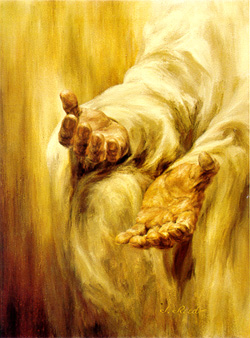
Tether Me to His Cross

We live in this place.

St. Francis of  Assisi once wrote, “The devil never rejoices more than when he robs a servant of God of the peace of God.” 

Sometimes I think I’ve made the devil dance far too many times.

I confess that peace has never been really high on my list. Love, joy, kindness, and even goodness are clear priorities. Peace… not so much. Until it’s not there. And then I get frantic by its absence and look for it with manic bewilderment.

Sometimes I don’t understand why God still loves me. Anxiety eats at me. I beat myself up by my last failure. The guilt of my latest sin grows until it looms larger than the blood that saved me. Sometimes religious people have the most neurosis.

I’m afraid that we are taking “the present tense’ out of the Gospel. The past tense is far preferable to us as we manage the Christian life. We like to make check marks on our list. Repentance– check. Baptism– check. Bible study– check. I think it gives me a definite feeling of ‘maturity.’

These matter little without intimacy with Jesus.

I certainly haven’t arrived, and it seems I’m still the hideous sinner I always was. I cannot pretend otherwise, even with a truckload of cosmetics at my disposal. I know, I’ve tried. And I’m still ‘ugly.’ I do know forgiveness, and I do walk in its wonderful light (by grace.)

I read Luther 30 years ago. (And Bonhoeffer would say something similar.)

“When our Lord and Master Jesus Christ said, ‘Repent,’ he willed the entire life of believers to be one of repentance.”

Martin Luther

This is the first of his 95 Theses nailed to the door of Wittenburg. There is a present tense here we can’t ignore. I don’t just repent over smoking, beer drinking, fornication, or hypocrisy, once and done. But my entire way of living is to be one of repenting.

Repentance is the key to opening the door of grace.

“All of the Christian life is repentance. Turning from sin and trusting in the good news that Jesus saves sinners aren’t merely a one-time inaugural experience but the daily substance of Christianity. The gospel is for every day and every moment. Repentance is to be the Christian’s continual posture.”

John Piper

Luther’s last words, on his deathbed, written on a scrap of paper words, “We are beggars! This is true.” Thirty years before, he was only echoing his first thesis. It seems dear ones, we are to live at the foot of the cross. Everyday. Because we desperately need to.


“Be quiet!” many of the people yelled at him. But he only shouted louder, “Son of David, have mercy on me!”

Mark 10:48

His Breath

“Jesus said to them again, “Peace be with you. As the Father has sent me, I also send you.” 22 After saying this, he breathed on them and said, “Receive the Holy Spirit. 23 If you forgive the sins of any, they are forgiven them; if you retain the sins of any, they are retained.”

John 20:21-23 (19-23)

This is the second “peace be with you” in this passage. Why the duplication of this peace proclamation? The disciples are sequestered and scared in the upper room (v. 19; and Luke 24:36. Having peace is being emphasized–the disciples were afraid of the Pharisees, but they also were undone by Jesus’ surprise visit.

Peace was definitely precious and necessary.

Jesus gives his disciples a mission to do, and they must be as ‘familiar’ with Jesus just as Jesus is with God. The disciples had followed him for three years–seeing incredible miracles, and hearing profound teaching, they’re ready, but they need power.

In track and field, there’s a relay race where a baton is passed from runner to runner, and maybe that’s how it’s working here? We see the same idea in John 17:18.

The baton has now been passed to the disciples.

The breath of the risen Jesus is necessary (and yes, he’s still breathing.) What went down here, I don’t know exactly. But Jesus recognizes that his 12 followers will need this to do his work. Also, we might consider Adam in Genesis 2:7 where God’s breath brought him to life, which is pretty awesome when you think of the parallels.

The Holy Spirit is the energizing factor to do this new work.

The disciples were pretty much observers, but now they are to take up the ‘mantle’ of Jesus’ work. This is a definite duplication, which connects with the idea of one seed producing many others (John 12:24.) That’s how the Kingdom comes to people.

Verse 23 intrigues me. It seems that our life comes from the breath of Jesus. And it’s the Holy Spirit that gives both power and the authority that’s needed to function like Jesus. We also now have the ability to pronounce forgiveness to the new believer, and yet that doesn’t seem a function of the Church today.

I wonder why this is so?

This entire passage is a doozy. It clearly declares the church’s new role as we follow in his footsteps. Disciples are to do exactly what Jesus does–with his breath and authority–filled with the Holy Spirit. If we neglect these things (it seems anyway) we’re going to fall flat on our faces.

“The work of Jesus for His disciples on resurrection Sunday gives an ongoing pattern for His work among His people. Jesus wants to continue this fourfold ministry of assurance, mission, the Holy Spirit and authority to His people today.”

From David Guzik’s website

A Member of Faithful Bloggers

Looking Backwards

Luke 9:57-62

57 As they were going along the road, someone said to him, “I will follow you wherever you go.” 58 And Jesus said to him, “Foxes have holes, and birds of the air have nests, but the Son of Man has nowhere to lay his head.” 59 To another he said, “Follow me.” But he said, “Lord, let me first go and bury my father.” 60 And Jesus[g] said to him, “Leave the dead to bury their own dead. But as for you, go and proclaim the kingdom of God.”

61 Still another said, “I will follow you, Lord; but first let me go back and say goodbye to my family.”

62 Jesus replied, “No one who puts a hand to the plow and looks back is fit for service in the kingdom of God.”

There’s to be no whitewashing the way of discipleship–there’s no glamour, no special recognition–no acclaim in it. I guess this is the “real” way of being His follower. The path Jesus has for me demands I give Him my whole heart. Heart enough to turn it all to Him. Heart enough to give Him total commitment.

Jesus seems to make it hard–we can see this in His responses to each prospective disciple. His statements to these possible followers seem harsh, difficult, and a bit “unreasonable,” but He doesn’t receive these men unless they do what He says.

Discipleship demands that we give up what we hold dearest.

What happened to these three “would-be” followers? Did they return home dejected and frustrated? To follow in Jesus’ footprints means we have to give up our personal agendas and turn our backs on what is closest and dearest. We must renounce everything, and give Him preeminence over all.

He must be our Lord, or we can’t follow Him.

These are hard verses with profound implications. But this passage is given to us for a reason. We dare not minimize what it means to be a disciple. We must grasp the plow with both hands, and we can’t look back. The plowman can never look back if he wants to make a straight furrow, and that’s the way the Kingdom works.

Those who follow Jesus realize that they fall woefully short. They start to realize that this path is going to take the grace of God. Every day we must take up the cross, and we must embrace that we’re loved. To be a disciple we need to become intimate friends with the Holy Spirit; He is both our ‘fuel’ and our guide.

“Anyone who claims to be intimate with God ought to live the same kind of life Jesus lived.”

1 John 2:6, MSG

We must obey our Lord. We’re to be intimately close to Him.

“Christianity without discipleship is always Christianity without Christ. Unless he obeys, a man cannot believe.”

    Dietrich Bonhoeffer


The Authority of the Lord Jesus Christ

“My teaching is not mine, but his who sent me. 17 If anyone’s will is to do God’s will, he will know whether the teaching is from God or whether I am speaking on my own authority.”

John 7:16 (context, Vv. 14-24)

Spiritually, Jesus is superior to everything and everyone. All that he did in the Gospels revealed that salient fact–whether he was healing the sick, walking on water, or teaching the Sermon on the Mount, he had total command. An authority soaked all that he did, just like water saturates a sponge. (See Matthew 28:18.)

The Greek word most often translated as “authority” (exousia) in the New Testament basically means: “right, permission, freedom.” Jesus was completely free to do whatever he knew was the Father’s will–he had full and total authorization to do whatever he wanted. (That seems to be what his baptism was all about. See Luke 3:21-22.)

Kittel’s Theological Dictionary of the New Testament

The Greek word “teach” (didaskō) in the NT means “give instruction, impart doctrine, to explain.” Jesus’ teaching was a marvel, he explained God’s kingdom to us crisply, succinctly, and precisely. All we need to understand was freely given to us in red letters. Everything necessary to us was taught with confidence and freedom. (See Matthew 7:29.)

Since Jesus perfectly combined the two words, both teaching, and authority, He could dictate to us everything we need, everything we must have, in straightforward terms. This can’t be stressed enough, the scripture we read–when ignited with the Holy Spirit, seems to be the only thing that can change the human heart.

The preceding verses in this passage reveal the setting for this statement.

  • Jesus stays out of Jerusalem because of the murderous hatred of the Pharisees.
  • There was a deep concern in his family who doubted Jesus’ timing and direction.
  • The origin of his teaching was questioned. He was speaking with the authority of the Messiah. Jesus completely understood the trustworthy source of his teaching.
  • There was a general consensus among the people of Jesus’ authority. Many were finally arriving at a decision in favor of him. Many would reject him.

We have never seen anyone of his impressive caliber, and we can only imagine the impact he was having on everyone he met. Under the Spirit’s direction, his disciples would retain all that Jesus did and taught. (The author of this passage was the Apostle John, and when you read his letters to us, we see that his memories were quite vivid.)

The Lord’s authority soaked all that he did, just like water saturates a sponge.

So what do we do now? What kind of “lordship” does he have over us? First of all, we learn (slowly) that we MUST teach ourselves to submit to our lord, constantly. He carries the authority we need, the authority human beings require. The Holy Spirit knows exactly how to pierce our pride and independence. Our teacher, comforter (and coach) understands us perfectly.

“His authority on earth allows us to dare to go to all the nations. His authority in heaven gives us our only hope of success. And His presence with us leaves us no other choice.”

-John Stott

Enjoy Your Pig Slop

“After he had spent everything, a severe famine struck that country, and he had nothing.”

“So he got a job with one of the citizens there who sent the son into the fields to feed pigs. 16 The son was so hungry that he wanted to eat the pods the pigs were eating, but no one gave him anything.”

“The Prodigal Son,” Luke 15:14-16

God has a definite way of arranging things to get our undivided attention. The prodigal had blown through his inheritance money and now had nothing. And then there was this famine–a really bad one. (The word can be translated, as “violent.”) I think the Father was working.

Flat broke and having a need to eat, he started looking through the want ads for work. All he found was an ad for a “pig feeder.” That was it, there was nothing else to be had. So now began his new career in porcine agriculture! He was desperate and he was hungry.

A Jewish boy feeding pigs. Oh boy, how the mighty have fallen!

Verse 18 in this passage takes it a step further. As he poured out the slop the things he was feeding the pigs looked mighty tasty. His mouth began to water. He thought seriously about reaching into the trough and grabbing some of the good pods for himself. (Several days without food does funny things to a man.)

God does some interesting things to bring this prodigal home. Not all of them are pleasant and self-affirming. His circumstances got pretty brutal. He still allows hard circumstances to bring back the stupid. It’s very likely his soul was so valuable that this kind of intervention was necessary.

“When he realized what he was doing, he thought, ‘All of my father’s servants have plenty of food. But I am here, almost dying of hunger.”

(v. 17)

What happened at that precise moment of real repentance can be seen in the following translations of verse 17:

  • “he came to himself,”(King James Version and ESV)
  • “he came to his senses,” (Christian Standard Bible)
  • “he realized what he was doing,” (New Century Version)
  • “he turned again to himself,” (Wycliffe Translation)

That I suppose is the power of the trough. It’s a hard place to live.

The prodigal son is jolted by a very real revelation of home. And even though he grossly underestimates the love of the father, he leaves the pigs and returns. No longer does he have any desire to eat pig food.

Often the side effects of our own stubborn rebellion debase and shame us. It reduces a man or woman to a place of ruin and failure. We feel worthless and very much defeated. We know we’re a dirty rotten mess and we believe Satan’s infamous lies about our ‘impossible-to-forgive” sin.

The spiritual danger in self-degrading thoughts and feelings is that we will start to believe things such as, “God’s Holy Spirit can’t help someone like me” or “I’m helplessly addicted to sin” or even “I’m damned without any hope.”

These are some of the vicious lies Satan tells people to keep them in their sin and rebellion. (It has worked well for him over many millennia.) The enemy tells us that we’ll always live with the pigs, and eventually, over time, we will come to enjoy eating the pig slop. Sadly many accept that lie as the truth.

It is not.

God’s Holy Spirit is transformative and powerful; therefore, if we continue to think we are failures and worthless after receiving Spirit, what are we really saying? Do we doubt His power, or question His love? I hope not.

It’s time to come home.

“Because you have been down there Neo, you know that road, you know exactly where it ends. And I know that’s not where you want to be.”

(“The Matrix”)

Opting Out of Cynicism

Cynical

sinikəl/adjective

1.  believing that people are motivated by self-interest; distrustful of human sincerity or integrity. Contemptuous; mocking; derisive; sarcastic.

Dictionary.com

I want to speak from my heart. I woke up this morning intensely cynical about the world. I hate to think I’m becoming critical or judgmental, but whatever it is I must take it in prayer to Jesus. I feel like I’ve been bit by a snake– a venomous one at that.

When I think of our Lord’s example, it helps a great deal. He knows every man’s heart and motives and that didn’t discourage him. He knew when he came what each of us had done, and was capable of doing.

There was this incident at the Temple:

23 Because of the miraculous signs Jesus did in Jerusalem at the Passover celebration, many began to trust in him. 24 But Jesus didn’t trust them, because he knew all about people. 25 No one needed to tell him about human nature, for he knew what was in each person’s heart.

John 2:23-25, NIV

People can’t be trusted. Our motives and our desires, although hidden from men, are clear to God. And yet He loves us deeply. And love, “keeps no record of wrongs” (1 Cor. 13:5.) In his humanity, Jesus was tempted in every way. Discouragement and despair over the sin of men were resisted.

We can become cynical and jaded over the repeated wrongs we see or hear– it’s easy to do. There can become a ‘coarsening’ and hardness of our hearts. That is dangerous. It requires a touch from Jesus. It means it’s time we get on our knees.

When Jesus sent out his disciples he encouraged them, ““Behold, I send you out as sheep in the midst of wolves. Therefore be wise as serpents and harmless as doves.” (Matt. 10:16.) He knew the hostile human heart had its own agendas– people would be like wolves. But though they would see first-hand the deceitfulness of many, they were to be wise and be completely harmless.

The Holy Spirit will keep us close as we seek his victory in this matter. We will be transformed into the likeness of Christ. Exchange your attitude with His. He will strengthen you. We can renounce the spirit of judgmentalism that is so pervasive. We will love the way he loves.

I know there is much more to say about this. But now the Spirit is prompting me to pray through this issue myself.

Cynicism and skepticism are the crudest form of quasi-intellectualism… Let the cynic become cynical of his cynicism and the skeptic skeptical of his skepticism and join the battle.

     R.C. Sproul

Simeon, In His Own Words

Luke 2:25-35

“There was a man in Jerusalem whose name was Simeon. This man was righteous and devout, looking forward to Israel’s consolation, and the Holy Spirit was on him. 26 It had been revealed to him by the Holy Spirit that he would not see death before he saw the Lord’s Messiah. 27 Guided by the Spirit, he entered the temple. When the parents brought in the child Jesus to perform for him what was customary under the law, 28 Simeon took him up in his arms, praised God, and said,

29 Now, Master,
you can dismiss your servant in peace,
as you promised.
30 For my eyes have seen your salvation.
31 You have prepared it
in the presence of all peoples—
32 a light for revelation to the Gentiles
and glory to your people Israel.

His father and mother were amazed at what was being said about him. 34 Then Simeon blessed them and told his mother Mary, “Indeed, this child is destined to cause the fall and rise of many in Israel and to be a sign that will be opposed— 35 and a sword will pierce your own soul—that the thoughts of many hearts may be revealed.”

Yes, there were rumors. The priest Zechariah had declared that his son would become the Messiah’s forerunner. And apparently, angels had visited shepherds in their fields. Each encounter had come exactly how it was foretold.

I’m convinced that the Holy Spirit led me there that day.

I have no doubt that He was guiding me to the Temple. God had promised me that I would see with my own eyes the coming Messiah. This One would be salvation and be a light to the Gentiles which would bring glory and honor to the Jewish nation.

If these were of God, there needed to be collaborating witnesses that would foretell His work. One or two might be a mere coincidence, but three were a definite declaration. Plus I knew that my own eyes would see Him face-to-face.

To be perfectly honest, I really didn’t know what I expected to see. But I knew God’s heart, and I wanted to do His will. Some might say I was a devout believer in Israel’s prophetic purpose. I knew and believed that.

I had God’s promise that I would see Him.

Something or someone was prompting me to the Temple. I guess I had a divine appointment to keep. God had given me His promise, and I knew I was where I was supposed to be. It seemed like I was always on the lookout for that fulfillment.

It was then I saw the Child.

His parents stood out like something fluorescent. It seemed as if they were color in a black-and-white world, and they held the baby who was going to change the world. When I saw them I knew that everything had fallen into place. I saw the promise and He had come to save the world.

I took Jesus and held Him in my arms.

I was holding the Savior! This baby was to save the entire world from their sins. The Law required me to dedicate Him to God. Who can say what that means? I was to devote Him to God’s purpose and plan. Who had this honor, and who can say that this was their privilege? I had been chosen to insert Him into the purposes of God.

Who can say that?

When I laid my hands on Him it was like touching lightning. I spoke the blessing, but I understood that there was something more. I looked at His mother and spoke. It was both a blessing and a warning. I understood what God wanted to say, and it was a word that Israel’s hope would also have a sting that His mother needed to understand.

When I left the three of them in the Temple courts I began to grasp the reality of it all. I spoke God’s heart to His mother Mary. She had to know and understand who this Child really was. For me my task was complete.

I had spoken, and now it was time to leave.

“In the last days the mountain of the Lord’s Temple
    will be the highest of all mountains.
It will be raised higher than the hills.
    There will be a steady stream of people from all nations going there.”

Isaiah 2:2

Art: “Simeon holding Jesus,” by Andrey Shishkin, painted in 2012, Oil on canvas © Andrey Shishkin. Verses used: Christian Standard Bible

Will You Deny Him?

deny

“Suddenly Jesus’ words flashed through Peter’s mind: “Before the rooster crows, you will deny three times that you even know me.” And he went away, weeping bitterly.”

Matthew 26:75, NLT

Three denials are followed by three reaffirmations.

“A third time he asked him, “Simon son of John, do you love me?” Peter was hurt that Jesus asked the question a third time. He said, “Lord, you know everything. You know that I love you.” Jesus said, “Then feed my sheep.”

John 21:17

The apostle Peter was a fervent disciple. He knew who Jesus was before most. He was always included in special times (e.g.  the transfiguration, Gethsemane). He was favored by Jesus throughout times of ministry. I also believe that he was Jesus’ friend.

Peter is known for:

  • being called on the shores of Galilee, Matt 4:18-19
  • ‘almost’ walking on water, Matt 14:29-30
  • finding the tax money in a fish’s mouth, Matt 17:24-27
  • having his feet washed, John 13:6-7
  • in Gethsemane– cutting off an ear, John 18:10-11
  • his remorse at denying Jesus, Matt 26:75
  • at the empty tomb with John, John 20:3-8

Peter’s own denials were of a serious nature affecting who he was, and who he was to become. Jesus astutely intervenes as they ‘breakfasted’ on the seashore. There would be three affirmations; one for each denial. Peter needed to meet the resurrected Jesus and speak with him about what he had done. Peter needed this.

A denial has different intensities and can be used in many different ways.

Out of our own confusion, we realize that we can also deny Jesus. Perhaps frequently.  And none of us have immunity as of yet. We deny the Lord when we refuse to speak of him to others. We deny the Lord when we fail to do what is right. Sometimes we deny him flagrantly, other times it is a more subtle attitude. At best, we’re still inconsistent, and at worst, we’re apostate.

We’re not punished or abandoned for this behavior.

Human logic would suggest that we should be. But instead, we are gently restored. Given the opportunity, Peter the fisherman would eventually become a wise shepherd to the young Church. I would also suggest that Peter’s personal weakness would serve him well as a gentle, and caring pastor.

Peter, near the end of his life, goes full circle and uses a very precise Greek word found in only two places in the New Testament. It is the specific form of the word “shepherd.” It is only used in John 21:16-17 in Peter’s restoration, and in 1 Peter 5:2. Peter encourages the Church with the exact words Jesus himself spoke to him on the beach so long ago! Peter wrote:

“Be shepherds of God’s flock that is under your care, watching over them—not because you must, but because you are willing.”

1 Peter 5:2, NIV

He is Solid, Just Like Us

38 “Why are you troubled?” he asked them. “And why do doubts arise in your hearts? 39 Look at my hands and my feet, that it is I myself! Touch me and see, because a ghost does not have flesh and bones as you can see I have.” 40 Having said this, he showed them his hands and feet. 41 But while they still were amazed and in disbelief because of their joy, he asked them, “Do you have anything here to eat?”

Luke 24:38-41, CSB, (context vv. 36-43)

He isn’t a ghost, a hallucination, or some sort of fabrication of hopeful desires. He’s real! As real as you or I–solid, flesh and blood, and real bones. That may seem like a small thing, but it reveals to the disciples (and us) so much. When his resurrection happened, it didn’t alter Him or change his physical attributes. The disciples were floored when the solid Jesus showed up to be with them.

It was a late Sunday evening.

The doors were shut tight, and the eleven were hiding out there–scared and wallowing in doubt. That’s a lousy mixture. Jesus doesn’t knock on the door, he just pops right into their gathering. That must of been a bit of a shake-up in itself. I know I would have freaked. (And I would’ve taken a serious look at that door.)

At the core, they couldn’t believe that he was real. Maybe a ghost, His spirit, or something else? I’m fairly certain that even if this “man” was really Jesus, it would, maybe be something mystical or ethereal. He wouldn’t be flesh anyway. That was a real stretch for them–and me too.

If it was really true, it meant that physical things are really spiritual.

What I mean by that earth was now combined with heaven. Jesus, the King of the known universe–the One who sits on the throne–is solidly human. Concrete and quite tangible. He’s not a vague kind of spirit, but he’s just like like us. Finally, something physical!

Let’s not get confused about this; I think it’s a critical point. Eternity will not be a vague and misty reality–nebulous and celestial. It’s now quite relatable. When Jesus walks with you on the golden paths of his heaven, you’ll not be walking with a ghost. He’ll be as you and I are right now. He’ll be real. You’ll be real.

You’ll be able to touch him. And if you really want to you can stick your finger into his wounds (verse 40.) I love what this solid Jesus told Thomas in John 20:27:

“Then he said to Thomas, “Put your finger here and look at my hands. Reach out your hand and put it into my side. Don’t be faithless, but believe.

This should shatter any misconceptions you might have. Thomas had real doubts, and instead of getting rebuked, Jesus invites Thomas to discover His reality of himself. This is really quite profound when you think of it. I’m so glad that this happened, I needed to hear it for myself.

I may be a very silly preacher and writer, but that’s the way I see it.

A light shining in this heart of darkness
A new beginning and a miracle
Day by day the integration
Of the concrete and the spiritual

Bob Bennett, “Heart of the Matter

A Member of Faithful Bloggers

Jesus Restores Peter (and Me)

15 “When they had finished breakfast, Jesus said to Simon Peter, “Simon, son of John, do you love me more than these?” He said to him, “Yes, Lord; you know that I love you.” He said to him, “Feed my lambs.” 

16 He said to him a second time, “Simon, son of John, do you love me?” He said to him, “Yes, Lord; you know that I love you.” He said to him, “Tend my sheep.” 17 He said to him the third time,” 

“Simon, son of John, do you love me?” Peter was grieved because he said to him the third time, “Do you love me?” and he said to him, “Lord, you know everything; you know that I love you.” Jesus said to him, “Feed my sheep.'”

John 21:15-17, (context vv. 15-19)

Peter’s denial was a public one, and it was important that his restoration be public as well. It may come as a shock, but Peter needed to do this–even though it was a grief to him (verse 17.) It was necessary for him to heal. It was also a clear testimony to the others that Peter was completely restored.

Repeatedly in this passage, love gets linked to service. (Can you see this, it’s important that you do.) The Lord asks Peter if he really loves him, and most likely it was a solemn affair, not something trivial or casual. The word used is ἀγαπάω, agape–this is the type of love that God has for people. It’s a love that gives 110%.

The third time the word for love is different though, the word used is φιλέω, philo–this is a type of love that a man has for others, a brotherly kind of love. Something good, but less than agape.

And each time Peter responds, he uses the brotherly type of love. I don’t mean to be confusing here, but every time Jesus uses agape to Peter, Peter responds with philo. It’s as if Peter is struggling with loving Jesus wholeheartedly. Perhaps Peter was ashamed of his denial.

We must saturate our work with love. We must serve, but love is to fill our efforts. Always.

Love can’t be seen unless it has a physical aspect. Love can’t be abstract, a vague feeling, or a hazy concept–it has to be seen by others. Jesus’ sheep (and lambs) must be fed, and watched. This is now Peter’s call to ministry.

This is Jesus’ ministry as well.

Apparently, there is plenty of this kind of work to go around! Isaiah prophesied about Jesus’ work in Isa. 40:11. This now becomes Peter’s work as well.

“He will tend his flock like a shepherd;
he will gather the lambs in his arms;
he will carry them in his bosom,
and gently lead those that are with young.”

Whether or not Peter was the first “pope” is debatable. But it’s clear that Jesus focused on Peter. And isn’t it just like him to turn our failings into victories? Peter’s denial was now his ministry to others. It dealt with the pride issue, which often disrupts true ministry to his flock.

“And I will give you shepherds after my own heart, who will feed you with knowledge and understanding.”

Jeremiah 3:15