Not a Cliché

Image result for mike yaconelli quotes images

“A bruised reed he will not break, and a faintly burning wick he will not quench.”

Isaiah 42:3

Somehow, we can get ‘side-tracked’ in our thinking. We get confused and the enemy makes sure we don’t walk in the truth. At this present time, it does seem like some of the Church is nothing more than an exclusive club for the wonderful. It seems that those who attend are the ‘achievers,’ those who have somehow arrived at a certain acceptability.

They are there for social reasons–they eschew any real intimacy with Jesus.

For many of us, we are taught that we must have it all together; more or less complete and functioning at an acceptable level to follow Christ. We keep thinking if we work really hard then we just might arrive at a place of acceptable ‘perfection.’ This has become our religion now, this “gospel by achievement.”

But does Jesus agree? Is His Church made up of only ‘completed’ people, those who have it all together? Do we need to become accomplished before we are acceptable? Perhaps we need to find some answers. Perhaps we won’t like what we find.

After over 40 years of following Jesus (most of the time in ministry) I’m starting to realize that I’ve had much of it all wrong. I’ve read that Jesus receives the lame, the tax-collector, the leper and the whore. He deeply loves the unlovable, in spite of what the Church might say.

I believe that true grace is ‘foolish’ to man, and defies human attempts to explain it. Grace is the free, undeserved goodness and favor of God to mankind. We dare not doubt this.

Zephaniah 3:17

God’s love is completely undeserved. It comes without preconditions. He loves us when we are terribly lost and fallen. It has no bounds or limitations. It is unconditional. Grace grabs us and takes us to a place we’ve only dreamed about. We’re irrevocably changed when we understand.

It is a relationship and not a religion. That’s not a cliché.

This ‘world-system’ desperately wants to confuse us. We discover that Satan detests our intimacy with the Lord Jesus. He marshals all of his demonic strength in order to obscure this truth. It’s funny, but Satan likes ‘religion.’ And he hates our nearness to Jesus. (2 Cor. 11:2-3).

All of us are seeking forgiveness, and yet somehow we think that God won’t accept us. Often we stop going to church, pray, or read His Word. We are slowly becoming hard, and it seems like we are slipping into some sort of a ‘spiritual daze’. Our spiritual malaise is starting to look like it’s permanent.

But Jesus is completely enthralled by your faith in Him!

He doesn’t pull away from the ‘sick’ and the weak. You must understand that intimacy is Jesus’ idea to ‘heal’ you. He draws us to a place of friendship with God. Intimacy with Jesus is God’s exclusive way of ‘turning us’ holy. That’s why Satan militates against “first love” faith.

There is a repentance in all of this.

We need to completely change our mind about our sinfulness. His cross and His blood are enough. But it’s genuine intimacy with Jesus that cures us, not keeping rules or having excellent doctrine. We will never be ‘good’ enough, but even in our sin we are deeply loved!

He knows it all, inside and out. He energizes those who get tired, and gives fresh strength to dropouts. For even young people tire and drop out, young folk in their prime stumble and fall. But those who wait upon God get fresh strength.

They spread their wings and soar like eagles, They run and don’t get tired, they walk and don’t lag behind.”

Isaiah 40:29-31, Message

alaskabibleteacher.com

The Extraordinary Breath of Jesus

“Jesus said to them again, “Peace be with you. As the Father has sent me, I also send you.” 22 After saying this, he breathed on them and said, “Receive the Holy Spirit. 23 If you forgive the sins of any, they are forgiven them; if you retain the sins of any, they are retained.”

John 20:21-23 (19-23)

This is the second “peace be with you” in this passage. So why the duplication of this peace proclamation? The disciples are sequestered and scared in the upper room (v. 19; and Luke 24:36. Having peace is being emphasized–the disciples were afraid of the Pharisees, but they were also undone by Jesus’ surprise visit.

Peace was definitely a precious commodity for them.

Jesus gives his disciples a mission to do, and they must be as ‘familiar’ with Jesus just as Jesus is with God. The disciples had followed him for three years–seeing incredible miracles, and hearing profound teaching, they’re ready, they just need power.

In track and field, there’s a relay race where a baton is passed from runner to runner, and maybe that’s how it’s working here? We see the same idea in John 17:18.

The baton has now been passed to the disciples.

The breath of the risen Jesus is necessary (and yes, he’s breathing.) What went down here, I don’t know exactly. But Jesus recognizes that his 12 followers will need this to do his work. Also, we might consider Adam in Genesis 2:7 where God’s breath brought him to life, which is pretty awesome when you think of the parallels.

The Holy Spirit energizes these men to do this new work.

The disciples were pretty much observers, but now they are to take up the ‘mantle’ of Jesus’ work. This is a definite duplication, which connects with the idea of one seed producing many others (John 12:24.) That’s how the Kingdom will come to people.

Verse 23 intrigues me. It seems that our life comes from the breath of Jesus. And it’s the Holy Spirit that gives both power and the authority that’s needed to function like Jesus. We now have the ability to pronounce forgiveness to the new believer, and yet that doesn’t seem a function of the Church today.

I wonder why this is so?

This entire passage is a real humdinger for Bible students. But it clearly declares the Churches new role as we follow in his footsteps. Disciples are to do exactly what Jesus does–with his breath and authority–filled with the Holy Spirit. We have a mission.

If we neglect these things we’re going to fall flat on our face.

“The work of Jesus for His disciples on resurrection Sunday gives an ongoing pattern for His work among His people. Jesus wants to continue this fourfold ministry of assurancemission, the Holy Spirit and authority to His people today.”

From David Guzik’s website

The Ministry of Poured Oil

I have to admit, I never really appreciated the depth of Psalm 23:5. I supposed that “He anoints my head with oil” was simply just figurative language for something nice. Poetic. I never knew this definite parallel until recently. But David completely understood and was able to understand the full ministry of the Shepherd.

“You prepare a table before me
    in the presence of my enemies;
you anoint my head with oil;
    my cup overflows.”

Psalm 23:5, ESV

I recently read this and suddenly I understood.

“Sheep can get their head caught in briers and die trying to get untangled. There are horrid little flies that like to torment sheep by laying eggs in their nostrils which turn into worms and drive the sheep to beat their head against a rock, sometimes to death. Their ears and eyes are also susceptible to tormenting insects.”

So the shepherd anoints their whole head with oil.

“Then there is peace. That oil forms a barrier of protection against the evil that tries to destroy the sheep. Do you have times of mental torment? Do the worrisome thoughts invade your mind over and over? Do you beat your head against a wall trying to stop them? Have you ever asked God to anoint your head with oil?”

He has an endless supply!

His oil protects and makes it possible for you to fix your heart, mind, and eyes on Him today and always! There is peace in the valley! May our good good Father anoint your head with oil today so that your cup overflows with blessings! God is good and He is faithful!!”

Posted by Heart Prints

“But you have an anointing from the Holy One, and all of you know the truth.”

1 John 2:20

Oh, How He Loves You!

Transformed!

Mark 10:53, ESV

God has touched you in a profound way, (at least I hope so.) Only He could’ve done this. You’re not the same person now. Just like Jesus healed blind Bartimaeus, you too can really see. The beggar becomes a follower. (Mark 10:46-53.)

So what’s next?

There is always another step to take as we follow Jesus. Everyday there is something new. Our salvation is given freely, but we discover that it’s something active–more like a flowing stream and less like a stagnant pool. If we truly have been “healed,” we’ll want to follow. And now each day is a joyous adventure.

After all, we’ve been terribly blind for a long, long time.

Bartimaeus would never be able to truly explain what had happened to him, at least not in a perfect or complete way to the others–but no matter, it really wasn’t necessary. (But I must believe he tried.) He could see!

Notice the sequence of events in verse 53

  • Jesus: “Go your own way.”
  • Bartimaeus: “..followed Him on the way.”

He was now a true follower. No longer a blind beggar, but he was now a true companion of Jesus and the “church.” He now walked with other believers in the Master’s band of disciples. (Having been blind and instantaneously given sight changed him forever.)

So what happened next?

I suspect Bartimaeus followed the Lord all the way. Although scripture doesn’t say what happened, I believe this ‘ex-blind’ man was now a visible witness to any with eyes to see. Bartimaeus became an authentic witness–God’s megaphone to the power and mercy of Jesus Christ.

To follow the One who saved us is the most wonderful adventure. Each of us comes with awful “sicknesses” and sins. Some of us were physically or mentally ill. We might have been thieves, liars and murderers–but no more. Some of us were adulterers, gay, child molesters, “perverts”–twisted and caught in our own sin. Proud, angry, selfish. Drunks and addicts. Sinners, and rebels.

(I could keep it going, after all I don’t want to miss you.) 😁

But we are now forgiven and healed; and now Jesus calls us to follow Him, every day. I believe that there is always another step. So, what happens next? I believe that there is always something.

I can’t say exactly. Each believer has a different story.

But I do know tomorrow’s life episode is going to be something fantastic, and a challenge. The fruit of the Holy Spirit is given to each who are truly being discipled to follow. The road in front of you just might be excruciatingly hard, but truly there is joy in our journey with Jesus.

“You called, You cried, You shattered my deafness, You sparkled, You blazed, You drove away my blindness, You shed Your fragrance, and I drew in my breath, and I pant for You.”

  Augustine

Jonah Measures God’s Love

(“The LORD is gracious and merciful, slow to anger and abounding in steadfast love.”)

Psalm 145:8

This understanding of God’s character is used 13x in the Old Testament. It was first discerned by Moses, and was passed on to other men. It was stamped into the hearts of those who followed him. It was a description of who God was, and it became the strong foundation of their ministry.

Jonah understood who God really was.

And that was the reason Jonah refused to give the Ninevites a break. He didn’t want them to repent. He wanted no part of their salvation, which is rather disturbing. How can a prophet act this way? What was it that angered Jonah that he would resist God?

The book of Jonah contains question marks, especially chapter 4. Of the 14 questions that are asked, 11 are directed at Jonah.

When we read it we can focus on the secondary ideas. We see Jonah and the whale. Maybe we think about his disobedience. Or maybe the storm or the plant that helped Jonah endure the heat of the sun. These are all good things to consider, but they are not the main theme.

God’s heart for even the Ninevites is the main purpose of the book of Jonah.

God is not the exclusive ‘property’ of the Hebrew nation! He very much cares for others outside of our own group. In John 3:16 we’re made aware of His passion for the whole earth.

The Great Commission has always been in effect. In the OT Israel was called to be a light to the Gentiles, Acts 13:46-48. The covenant given to Abraham was that Israel would be a blessing to every nation. This was God’s plan and His intention. (Genesis 17:1-8.)

Jonah’s anger and apparent prejudice is definitely a cause for concern.

But could the message of Jonah describe the reluctance of the Church today? Is God’s love for everyone? Does God even care?

alaskabibleteacher.com

We’re Becoming Like Jesus!

2 Corinthians 3:18, ESV

2 Corinthians 3:18, NLT

The above chart is in black/white. I have found out that most things are seldom black/white, and yet every once in a while I find something that helps me think. This is one of them. If it doesn’t help I apologize now. (But yet it just might be a blessing to some.)

God has made every believer holy through our faith in the blood of Jesus. And yet the Father calls His children to a walk where we become more and more like Jesus, becoming holy in every circumstance we encounter. This is called “sanctification,”

Being changed into His likeness is the dream of every Christian believer.

That driving impulse is one of our common denominators. We want this more than anything, and I have come to believe that the Holy Spirit wants it even more than we do. Looking at the above chart, we see that we’re slowly moving in that direction.

  • Not curious-We’ve all been there, and it’s very often been the prayer of others that has moved us out of our darkness. The Bible says that we are spiritually dead which is not good. Salvation is not in our thinking at this point.
  • Curious-We begin to search and the Holy Spirit begins to woo us into the love of Christ. Typically we start to become slowly fascinated by Jesus and His words. At this point we begin to question the lies and darkness that we’ve walked in. Going to church becomes a possibility. Starting to read the Bible, and we wonder about its truth.
  • Believer-We’ve finally accepted, by saving faith and repentance, the lordship of Jesus. Attending a church where the Word is taught is important. We begin to hear the Holy Spirit and respond. We begin to reach out to other Christians. We learn about baptism and the Lord’s Supper. We learn how to pray, worship, and give. The Holy Spirit has made us believers.
  • Disciple-We’re aligning ourselves to a life of disciplined obedience to the Spirit and the Word. Our faith is maturing and we’re starting to embrace training, (1 Timothy 4:7). We start to understand that the Father Himself has brought us to this place, (Hebrews 12:11). We’re becoming disciplined believers.
  • Disciple makers-We come to see that this is why we’re brought to Him. Our training is for others, and we serve Him by reaching out to those who aren’t advancing in the faith. We understand Jesus’ call to lead others into discipleship. It’s His command and we must do this. (Matthew 28:19.)
  • Life long servant-The Bible describes this stage as being a father [or mother] for the younger believers (1 John 2:13-14). We now realize that we totally belong to Him. We walked through the fire, and our confidence is now serving Jesus alone. At this point we realize we serve Him both now, and for eternity.

We often fluctuate between these different stages.

Sometimes we’re making disciples, and we can slip back to being just a believer. Nothing is written in stone. And yet there is a simple wisdom that comes when we realize where we are really at in our walk with Jesus.

Knowing this process liberates and brings us a quiet but sure understanding.

The Holy Spirit is our teacher and ever present guide. Our discipleship is under His control. A proper response is submission and humility. He takes the intricate circumstances and our unique happenings to make us like Him.

That’s exciting.

alaskabibleteacher.com

STAGES is a disciple making pathway developed by Paul Johnson of the Canadian National Baptist Convention that allows anyone to find where they are on their journey and move forward. 

You can go to Disciple Making Stages also for further study. It’s a good site.

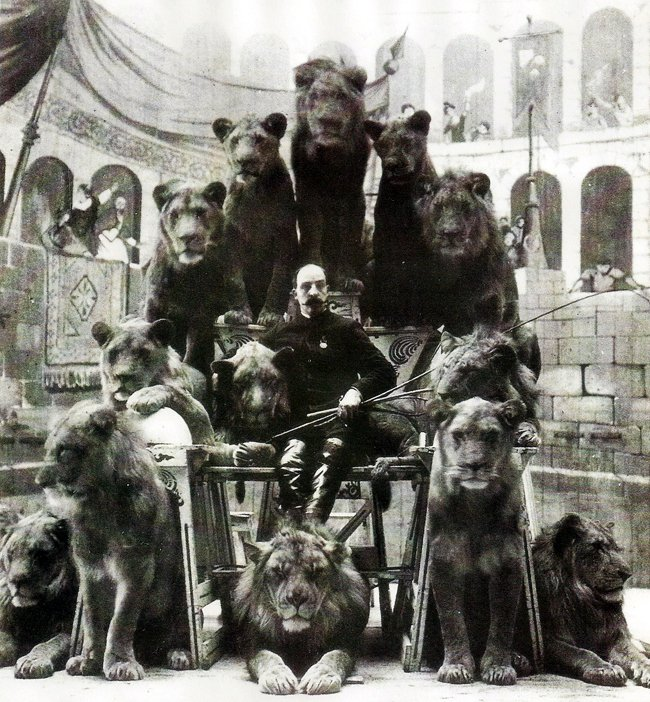
Daniel, the Lion Tamer

Daniel 6:22-23, ESV

I am rather frustrated with myself. I confess I haven’t read Daniel in years, and I’ve chosen to rectify this. Lately I’ve busted through this book and discovered some wonderful stuff. I guess chapter 6 has become my favorite.

A couple of things stick out.

Daniel was an incredibly faithful man, praying three times a day. He was true-hearted who served each king with the gifts God had given him. I like him a lot.

Daniel became the king’s favorite, the Hebrew word used means “prominent or esteemed.” He was the greatest and best there was to be found. You could say that he was the finest man in the kingdom.

Daniel knew how to lead and direct others. We read that he oversaw 120 chief overseers. I suspect he knew a thing or two about good leadership. Daniel understood his work, and it seems that he instinctively knew what good government required.

But Daniel was a victim of jealousy. A concerted effort, carefully planned and directed was meant to destroy him. Although the leaders of this rebellion could find nothing to accuse him of, they resorted to trap him because he prayed to God. Faithfully and consistently.

Their plot worked. These officials, through their twisting and manipulation of the legal code, were able to sentence Daniel to death. It seems being fed to hungry lions was the penalty for “breaking the law.”

Sometimes we must choose to serve God, even if it means breaking men’s laws.

Acts 5:29

Daniel was over 90 years old when he was thrown to the lions. Even in his advanced years he kept up serving God. The passage declares that he had “an excellent spirit.”

The lions, (several I assume), were not at all interested in devouring Daniel. King Darius however was incredibly distraught over Daniel’s execution, but it seems he was forced into it. The passage tells us that the king was so distressed that he couldn’t sleep that night.

Undoubtedly, Daniel slept far better then Darius.

To be faithful to the Lord God may require us to sleep with lions, but we can be assured of the Holy Spirit’s presence with us even then. A verse in Hebrews suggests “faith” protects us from the strong jaws of the enemy. Daniel understood.

Hebrews 11:33

But yet, sometimes even the faithful will be eaten.

Sometimes the lions will devour believers. But we must trust and believe no matter what happens. Hebrews goes on to show us the extremity of the faithful. Read Hebrews 11:35-38 and you’ll understand what I mean. Being faithful can be very difficult. Bad things often happen.

*****

     Thomas Watson

alaskabibleteacher.com

The Brother and 5080.4 Miles

21 “So that you also may know how I am and what I am doing, Tychicus the beloved brother and faithful minister in the Lord will tell you everything. 

22 I have sent him to you for this very purpose, that you may know how we are, and that he may encourage your hearts.”

Ephesians 5:21-22

There is so much here that communicates Paul’s heart. He’s laid out a ton of theology, and now he ends his heavy letter with this final benediction or blessing. These final verses are not doctrine. Instead they’re more like God’s ‘open window’ directly to the Ephesian’s heart.

Just imagine yourself as a believer living in Ephesus. Reading the letter we should see ourselves there (albeit 2000 years removed). This belongs to you as much as it belonged to the churches in Asia Minor. Please, own it.

You need to see this. It changes our walk from the 1st century to the 21st century.

This letter belongs to you personally. Ephesians is your letter from ‘home.’ So dear one, make it yours, for you are the Holy Spirit’s audience, and you’re very much loved!

Tychicus has been chosen to carry this letter 5,000 miles to the Ephesians.

The journey itself was over 5,000 miles from Rome to Ephesus, walking by Roman roads. (It would be a long trip, longer than walking from San Francisco to Boston!) It was difficult and could be dangerous, but the letter Titus carried was important. It would be painstakingly copied and then sent to all the churches in Asia Minor.

(https://cloudofwitnesses.org.uk/studies/tychicus)

Tychicus is mentioned 6 times in the NT.

He was a gospel ‘veteran’ who ministered with Paul in various places in the Roman empire. It appears he was friends with Timothy, who was the young pastor of the church in Ephesus. Tychicus was someone whom Paul trusted implicitly. After all, he was carrying Paul’s heart in his backpack.

Tychicus was 100% loyal, brave, and completely reliable. I think Paul had confidence that he would do everything necessary to make sure this letter would get through. We find he was able to do this. And you and I, well, we owe a spiritual debt to this faithful man who went the distance for us.

We can skim through this passage and never really see Tychicus at all.

Tychicus seems to have no real preaching ability, but he is called “beloved” and “faithful” in verse 21. In verse 22 he is called a “brother” and a “minister.” That word for minister is διάκονος, deacon and it means “a servant of a king” or a “waiter of tables.” I believe that reveals someone who is a minister to the needy (which is no small thing).

Paul closes his letter with a benediction.

In verses 23-24, we read that the blessing is given to the church. He pronounces “peace, love, and faith.” Paul speaks out of God’s heart to the Ephesians, and as a leader, he is conveying God’s own blessing. A proper benediction that originates from the Lord is hardly just a nicety, something free and easy. You must understand, a pastor’s blessing is powerful.

“Grace be with all who love our Lord Jesus Christ with love incorruptible.”

(verse 24)

alaskabibleteacher.com

Deepen Your Repentance

Two Psalms followed David’s return to God after his sin with Bathsheba, and murdering Uriah. The sins of adultery and murder are terrible and yet David finds forgiveness from God for both. He responds properly to Nathan’s hard word. King David was a warrior of renown and a talented Psalm writer and he put together two Psalms that would guide others.

Many years ago I used an overhead projector in a class. I had two transparencies, the first projected a map on a screen showing boundaries–the second laid over the top showed the movements of an invading army. They complimented each other to show a point. One laid on top of the other to make it clear what happened. (I realized I just dated myself–I’m old.)

You might say that’s how I want to teach Psalm 51 and Psalm 32. Both are David’s serious remarks on his repentance. They’re the same incident, but incredibly different. They both explain his repentance in contrasting ways.

You see that one is a psalm; the other is a maskil.

A psalm is a guide for worship, something musical sung from the knees—an acclamation of a joyful song. The other type is different; it’s called a maskil, which is something wise and reflective, thoughtful and understanding. To write a maskil takes time to pull one’s thoughts together and share seasoned instruction.

I’ve chosen v.v. 1-2 (both due to obvious constraints of brevity.)

Psalm 51

__________

Psalm 32

Reading the two Psalms together like this, laid on top of each other, or, like two sides of a coin, gives us an idea of David’s repentance–an clear understanding and a real depth. How did he respond to God’s message from the prophet? How can we answer others when the Holy Spirit convicts us of sin?

Both a “subjective” psalm, and an “objective” maskil is necessary I think. They both are to become the daily practice of a believer, both communicate what is needful. One sings–the other teaches, but both should be done carefully.

Perhaps another way is to see the art and the science of it all. But a caveat here. Psalm 32 blends with the autobiographical theme just like Psalm 53 does. (See 32:2-5). It even seems the objective takes on a tear or two! I guess that’s how truth in God’s kingdom works?

Our theology needs tears, and our tears need theology.

(I hope this isn’t confusing.)

I want to encourage you to take your repentance even deeper. I want to see you stir up this beautiful gift. I will want to hear your song, and then to understand your reasons for singing so beautifully.

“The Christian who has stopped repenting has stopped growing.”

    A.W. Pink

alaskabibleteacher.com

Being a Friend of the King


“A Christian is not a person who believes in his head the teachings of the Bible. Satan believes in his head the teachings of the Bible! A Christian is a person who has died with Christ, whose stiff neck has been broken, whose brazen forehead has been shattered, whose stony heart has been crushed, whose pride has been slain, and whose life is now mastered by Jesus Christ.”

–John Piper

No longer do I call you servants, for a servant does not know what his master is doing; but I have called you friends, for all things that I heard from My Father I have made known to you.”

John 15:15

It seems that the purpose of life is not to find our freedom. It’s really meant to find our Master.

Yes, the idea of being a slave to anyone is repugnant. We chafe at this, and yet man was never meant to be separated from the Lordship of Jesus. We’re instructed repeatedly with the New Testament idea that “our life is not our own”  Over and over God proclaims Himself as the King.

That troubles us somewhat.

Not so much when life is fairly good, granted, but in those hard moments when a decision must be made between enjoying the titillating “lusts of the flesh,” or accepting the fruits of the Spirit. This is one of those “lordship moments.” They come and go, and they show us exactly who we are.

If you’re really going to be authentic–a legitimate and real disciple, then you must determine who is going to be in charge, and this isn’t one of those casual decisions. Your decision must become a settled issue.

You must securely fix it in your heart.

The thief on the cross knew salvation, he was promised an eternity with God simply by faith. But I submit to you that he put himself under the Lordship of Jesus. He recognized the sign, “the King of the Jews.” I believe he saw and understood its implications. Jesus was King! He realized he was in the presence of royalty.

This is a very hard word for some, but so many of our personal issues hang on this.

I know this first-hand. It’s a monumental struggle at times. You must admit to not only having Jesus as your Savior, but you also must put your life under His total Lordship.  You need to pick up your cross daily in order to follow. 

We need to learn how to kneel.

I’ve chosen a crown to open up this post–it’s done on purpose.  I simply want you to understand the supreme call He has on your life. Here’s Bob Dylan, and he nails this idea down:

You must learn here and now how to kneel before the Sovereign King

AlaskaBibleTeacher.com