Come Out of the Closet

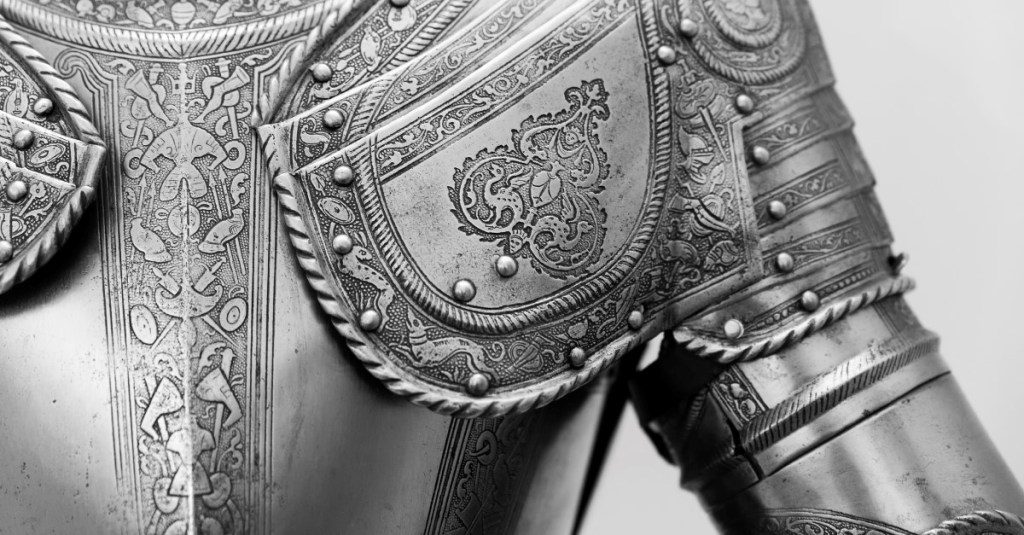
“Therefore take up the whole armor of God, that you may be able to withstand in the evil day and having done all, to stand firm. 14 Stand therefore, having fastened on the belt of truth and having put on the breastplate of righteousness, 15 and, as shoes for your feet, having put on the readiness given by the gospel of peace. 16 In all circumstances take up the shield of faith, with which you can extinguish all the flaming darts of the evil one; 17 and take the helmet of salvation, and the sword of the Spirit, which is the word of God,

Eph. 6:13-17, ESV

You’re called to be armor-plated.

Ephesians is quite clear about this, and we dare not live without spiritual protection, and as a matter of fact, we must wear each piece to survive spiritually. To be ‘naked’ is catastrophic. Neglecting to dress appropriately brings cataclysmic disorder. We dare not minimize our need for wearing our armor.

Each piece listed must be worn. This is a scriptural mandate for every believer in Jesus.

“The whole armor of God” explains the equipment we need to survive spiritually. Here’s a list of the six:

  • The belt of truth–this pulls everything together and holds us and keeps us secure in the truth.
  • The breastplate of righteousness–our spiritual heart is protected by knowing we’re accepted by the Father. Being right with God is not a feeling nor is it a mere hopeful wish. We wear what is real.
  • The shoes of the gospel (of peace)–the idea of standing in place (“to stand”) explain our ability to be fixed on grace. When we wear battle shoes we cannot be pushed back or lose our footing. Wearing gospel shoes brings us spiritual stability. We can stand in place, rooted and strong.
  • The shield of faith–is a vital way of protecting ourselves from the evil arrows shot by the enemy. Satan targets us when he thinks that we aren’t using faith to defend ourselves.
  • The helmet of salvation–this is the realization that our mind is protected. This vital piece brings us wholeness as we understand what Jesus has done. We know we are saved and wearing our helmet is our protection from demonic-inspired lies.
  • The sword of the Holy Spirit–the only offensive weapon we have, and it’s all we need. The Word of God will frighten the enemy and push him back. The Word slices and cuts down every obstacle and every lie.

   Watchman Nee

I must stress that clothing yourself is vital. You dare not live spiritually naked wearing nothing. You will be totally vulnerable to the satanic wickedness that is swirling around you. I’m afraid it’s all very real and sobering and there is no escape clause until you finally arrive in heaven.

“We know [positively] that we are of God, and the whole world [around us] is under the power of the evil one.”

1 John 5:19, Amplified Bible

I’m afraid you haven’t been given an option in all of this. Our battle equipment in Ephesians 6 is not just some theological preference or concept. It’s real.

Over 40 years of following Jesus have taught me that most believers struggle because they won’t arm themselves for battle. They refuse to acknowledge the environment they’re in and don’t realize the spiritual battle they are facing. They like the sentiment behind this particular passage, (it stirs their heart) but the reality of the battle never fully sinks in.

They end up leaving their armor behind.

The good news is that we have already won because of what the Lord has done. Wearing the armor strengthens and stabilizes us. He pours out His grace, and there will be times of rest of that I am certain. “He leads me beside still waters.”

As obedient and faithful believers we need to realize we’re secure in Him. Yes, there is a terrible fight, but “The battle is the Lord’s.”

“For you equipped me with strength for the battle; you made those who rise against me sink under me.”

Psalm 18:39, ESV

Why, God Why?

Job 7:20, 13:24, 9:29, 24:1, 10:18

Job’s profound suffering is one of the most extreme in all of human history. He is essentially a godly man who loses everything (except his faith). Job must pick up the pieces after “catastrophic ” sudden pain and total loss.

Only the brutality of the cross of Jesus eclipsed the suffering of Job.

Job is being tested with dark horrors. Will he “curse God and die” as his wife suggests? Will he cave in to the final four “friends” and accept their twisted theology? (I guess that you have to read chapters 38-39 to find out).

The Book of Job has been regarded as inaccessible and archaic by many.

Unfortunately, many believe this assessment and look elsewhere for comfort. I would agree that Job is a challenging book, but so is Macbeth or Plato. There are plenty of easier books to read; but if we choose to avoid Job, our faith will always be deficient. We will miss something vital.

Job is less an explanation and more a revelation of suffering. “Why” questions go unanswered. “Who” questions matter. I suppose this seems unfair to Job. It certainly seems so to me, but straight answers in a fallen world won’t get any traction at all.

One more thing. The Book of Job is about “twisted” theology. Job’s friends “toe-the-party-line” of theology that is logical. But don’t be mislead by their pronouncements, for they seem reasonable but they are all very much flawed.

I always find it strangely amusing when some quote Eliphaz or one of the other “friends” to encourage or comfort a suffering saint. They totally miss the point of the book. We desperately want to give out good counsel but we really don’t understand.

“If I have the gift of prophecy and can fathom all mysteries and all knowledge, and if I have a faith that can move mountains, but do not have love, I am nothing.” 1 Cor. 13:2

You can’t split your theology from love and get away with it. Something toxic happens if you try.

When you read “Job’s friends” you must remember that. These are lessons it takes a long time to learn. Unless the Holy Spirit tutors you, be very slow to speak. (Job’s friends were at their best at the beginning when they said nothing at all.)

The broken believer, hobbled by chronic illness, has much to learn from Job. He is like “the poster child” for those afflicted. My own illnesses are always an issue of course, but God is fully in control. He brings beauty out of the ashes. He has been more than gracious.

“To bestow on them a crown of beauty
instead of ashes,
the oil of joy
instead of mourning,
and a garment of praise
instead of a spirit of despair.
They will be called oaks of righteousness,
a planting of the Lord
for the display of his splendor.”
Isaiah 61:3

Incarnation Truth

“The central miracle asserted by Christians is the incarnation. They say that God became man.”

C.S. Lewis

Incarnation, the central Christian doctrine that God became flesh, that God assumed a human nature and became a man in the form of Jesus Christ, the Son of God and the second person of the Trinity.

Christ was completely God and fully man at the same time. This teaching is clear and I really can’t wrap my mind around it. Becoming man did not diminish God–if anything it was an addition and not a subtraction.

Now it’s true that Jesus voluntary set aside all of the perogatives of being God; He chose to lay His deity aside. Please think this verse through–let it sink into your hearts.

Have a blessed Christmas. Know deep down that He has come for you, He holds you and cares for you. He will never ever leave you!

We See So Little

Job 26:14

Job’s suffering has led him to this point. He realizes how little he understands God. I guess pain can have a powerful effect on how we see things. Job has learned the immensity of God.

In verse 14 he speaks about the “outskirts” the word in Hebrew means the mere edge, or fringe. One translation of this verse reads like this: “These are only a few of the things that God does. We only know about a few small things. If he used all of his power, we could never understand.

“That being the case, let’s consider God’s capacity for just a moment. He’s not only “high capacity”, He’s “infinite capacity.” He never sleeps or slumbers. He is perfect in all His abilities. There isn’t a single thing that He doesn’t know, and there is no one more powerful than Him. And unlike humans who can only be in one place at one time, He is everywhere at the same time. This is amazing, and just like the Psalmist said in Psalm 113, “Who is like the Lord our God?” The answer, very simply, is no one.”

John Piper

“For now we see in a mirror dimly, but then face to face. Now I know in part; then I shall know fully, even as I have been fully known.” (1 Cor. 13:12)

I’m thinking about Moses who asked to see God’s glory. Moses was called “the friend of God,” but he wanted to see more. God’s response was that He couldn’t because it would kill Moses. But provision was made for him to see the backside of God as Moses was in a cleft of a rock. (Exodus 33.)

The Bible doesn’t reveal it all. But we’re given enough. Job told us that only the outer fringes can be seen by men and women. We see His periphery, but we must understand our limits. We’re told that we will see Him someday–but not yet. But at the moment of death, we will see Him.

The Lord Jesus came to show us the Father. “In [Christ] all the fullness of deity dwells bodily.” When we see Jesus we see the Father. Reading the Gospels we are encountering God, because Jesus reveals Him fully.


“He is the radiance of the glory of God and the exact imprint of his nature, and he upholds the universe by the word of his power.” 

Hebrews 1:3

Romans 11:33

alaskabibleteacher.com

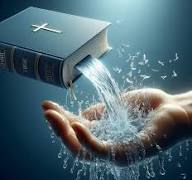
Getting Ready for Water Baptism

water-baptism1

“Those who accepted his message were baptized.”

Acts 2:41 

 “Repent and be baptized.”

Acts 2:38 

 “Having been buried with him in baptism and raised with him through your  faith in the power of God.”

Col. 2:12 

Perhaps the most significant decision we’ll make is to follow Jesus Christ into the waters of baptism.  This is just obedience to the Lord’s command to be baptized. Discipleship begins when we appropriate baptism into our faith. Ideally, it should forever alter your life. At least that is the Father’s intention.

It takes faith to be authentically prepared for baptism.  You will be taking a stand. By faith, you’re making public your allegiance to Christ. It is an important and critical step.

“Baptism was to put a line of demarcation between your past sins when you are buried with Him by Baptism–you are burying your past sins–eradicating them–putting a line in the sand saying that old man is dead and he is no longer alive anymore and I rise up to walk in the newness of life.”

T.D. Jakes

I suggest that you prayerfully attend examine the process listed below.  You’ll find there’s a big difference between truly being baptized, and just getting wet!

The interrogative process can be used to solidify the faith before man and in front of His people. In a sense, it’s much like the vows made by a husband and wife in the vows of marriage.

Here are some suggestions you should consider:

A series of questions are asked, to which the reply is always, “I renounce them.”

  1. Do you renounce Satan and all the spiritual forces of wickedness that rebel against God?
  2. Do you renounce the evil powers of this world that corrupt and destroy the creatures of God?
  3. Do you renounce all sinful desires that draw you from the love of God?

The second half also must be asked, to which the reply is always, “I do.”

  1. Do you turn to Jesus Christ and accept him as your Savior?
  2. Do you put your whole trust in his grace and love?
  3. Do you promise to follow and obey him as your Lord?

The Apostle’s Creed can be recited publicly (or privately in prayer).

This creed is our faith boiled down to its core essence. This declaration helps set us apart from the World, the flesh, and the devil:

“I believe in God, the Father Almighty, maker of heaven and earth. And in Jesus Christ, his only Son, our Lord,

who was conceived by the Holy Spirit, and born of the Virgin Mary, suffered under Pontius Pilate, who was crucified, died and was buried.

He descended into hell. and on the third day, He rose again from the dead. He ascended into heaven and sits at the right hand of the Father. From thence He will come to judge the living and the dead.

I believe in the Holy Spirit, the holy catholic Church,  the communion of saints, the forgiveness of sins, the resurrection of the body, and the life everlasting. Amen.”

We need to develop these into a living discipleship; you’ll see that water baptism is analogous to a master key that opens the door to a special joy. Obeying the command to be baptized pleases Jesus. And that is what we long to do.

“Indeed, baptism is a vow, a sacred vow of the believer to follow Christ. Just as a wedding celebrates the fusion of two hearts, baptism celebrates the union of the sinner with the Savior.”

–Max Lucado

“Baptism is an outward expression of inward faith.”

–Watchman Nee

“Baptism separates the tire kickers from the car buyers.”

    –Max Lucado

A special word to “older” believers:

There may come a time when you feel that you would want to be baptized again.  I believe that this is not only allowable but commendable.  You may have not had a good understanding of the baptismal process, but now it makes more sense to you.  I would encourage you to follow your heart. God will honor your re-dedication.

Ask your pastor or an elder what they think.

1brobry-sig

You may copy and distribute this post in its entirety.

Yirah, Fear/Awe

Hebrew for Awe and Fear

Psalm 33:8, ESV

Whenever I’m in Northern California I simply have to visit the redwoods. Walking through them always directs me to the immense God who created these massive trees. Since I live in Alaska I’m also surrounded by stunning beauty: mountains, glaciers, eagles, forests and fireweed.

To truly see reality is to live in yirah.

I believe that God intentionally created the world to inspire awe in us. The complexity of creation is truly remarkable, with scientists dedicating their lives to understanding it. There is so much about the cosmos that remains beyond our comprehension, which leads us to consider how much more unfathomable its Creator must be.

Often missing from our lives and worship is yirah, or “awe, fear.”

“The fear [yirah] of the Lord is the beginning of wisdom, and the knowledge of the Holy One is insight.”

Proverbs 9:10

Three observations I need to make. These are something to consider:

  1. Believers are to teach our children the yirah of the Lord. It must be learned which implies that it’s not something natural to us. “So that they may learn to fear me all the days that they live on the earth, and that they may teach their children so.” (Deut. 4:10.)
  2. His love for us can’t be diminished by His power and might. I believe that these three are not mutually exclusive–you can’t have one without having the other. They can’t be separated. “But with you there is forgiveness, that you may be feared.” (Psalm 130:4.)
  3. Submitting to God with awe and yirah will lead you to obedience and consistency. Loving Him becomes a joy when we respect and honor in fear of our Father.

“Just as obedience to the Lord is an indication of our love for him, so is it also a proof of our fear of God.”

Jerry Bridges

alaskabibleteacher.com

Our King and Our Master

A Kings Crown and the Crown of Thorns


A Christian is a person who has died with Christ, whose stiff neck has been broken, whose brazen forehead has been shattered, whose stony heart has been crushed, whose pride has been slain, and whose life is now mastered by Jesus Christ.”

–John Piper

No longer do I call you servants, for a servant does not know what his master is doing; but I have called you friends, for all things that I heard from My Father I have made known to you.”

John 15:15

It seems that the purpose of life is not to find our freedom. It’s really meant to find our Master.

Yes, the idea of being a slave to anyone is repugnant. We chafe at this, and yet man was never meant to be separated from the Lordship of Jesus. We’re instructed repeatedly with the New Testament idea that “our life is not our own”  Over and over God proclaims Himself as the King.

That troubles us somewhat.

Not so much when life is fairly good, granted, but in those hard moments when a decision must be made between enjoying the titillating “lusts of the flesh,” or accepting the fruits of the Spirit. This is one of those “lordship moments.” They come and go, and they show us exactly who we are.

If you’re really going to be authentic–a legitimate and real disciple, then you must determine who is going to be in charge, and this isn’t one of those casual decisions. Your decision must become a settled issue.

You must securely fix it in your heart.

The thief on the cross knew salvation, he was promised an eternity with God simply by faith. But I submit to you that he had put himself under the Lordship of Jesus, simply by recognizing the sign, “the King of the Jews.” I believe he saw and understood its implications. Jesus was King! He knew and understood.

This is a very hard word for some, but so many of our personal issues hinge on this.

I know this first-hand. It is a monumental struggle. You must admit to not only having Jesus as your Savior, but you also must put your life under His total Lordship.  You need to pick up your cross daily in order to follow.  You need to learn how to kneel.

I’ve chosen a crown to open up this post–it’s done on purpose.  I simply want you to understand the supreme call He has on your life. Here’s Bob Dylan, and he nails this idea down:

But you’re gonna have to serve somebody, yes indeed
You’re gonna have to serve somebody
Well, it may be the devil or it may be the Lord
But you’re gonna have to serve somebody


You must learn here and now how to kneel before the Sovereign King


alaskabibleteacher.com

A Very Terrible Blindness

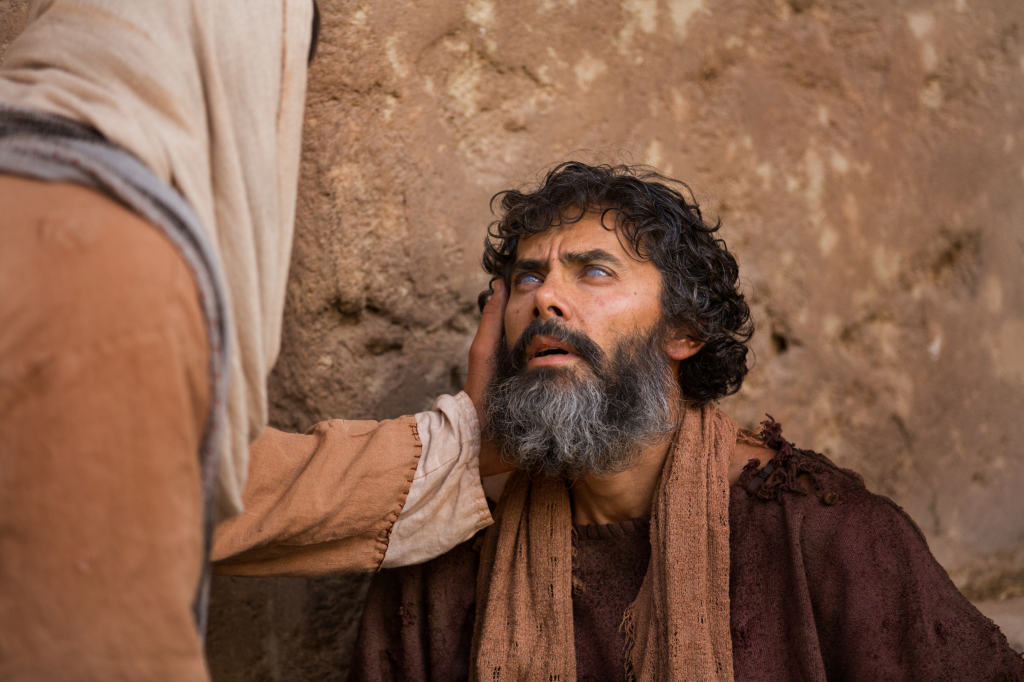
As he was walking along, he saw a man blind from birth.

“Master,” his disciples asked him, “why was this man born blind? Was it a result of his own sins or those of his parents?”

“Neither,” Jesus answered. “But to demonstrate the power of God. All of us must quickly carry out the tasks assigned us by the one who sent me, for there is little time left before the night falls and all work comes to an end. But while I am still here in the world, I give it my light.”

Then he spat on the ground and made mud from the spittle and smoothed the mud over the blind man’s eyes, and told him, “Go and wash in the Pool of Siloam” (the word Siloam means “Sent”). So the man went where he was sent and washed and came back seeing!

John 9:1-7

This man had been blind from birth.

I can’t even imagine what blindness would be like. The blind man probably couldn’t imagine having sight. He probably didn’t have a dream-life either–that requires having seen images (a dog, a tree, a mean person) and this wasn’t available to him. He never saw the color red, or saw a mountain.

I suppose we can only imagine what blindness to this degree would be like.

Somehow I’ve come to an idea that this represents fallen men–we’re spiritually blind to the workings and truths of Jesus’ Kingdom. It seems a pretty good explanation of each of us–“blind from birth.” But when you’re blind spiritually you haven’t the slightest of what is real and taking place around you.

     Andrew Murray

Also notice the response of the disciples who first met this unfortunate man. They don’t see his needs, rather, they want to know the theology behind this. Perhaps that’s how we respond much of the time–we don’t see the needs, we only want to know the reasons. We’re not wise or discerning enough to see what’s really really going on.

Perhaps this is how we operate as immature Christians.

We don’t engage the need, but rather we like having good theology over understanding true passion. It’s easy to philosophize–it’s hard to get down and serve and really love others.

If we really don’t love needy people, we re probably not following Jesus.

It’s funny but Jesus declares Himself to be the light of the world while speaking to the man who is born blind. And it’s also funny that just like there was physical blindness there is a blindness of the Spirit by the disciples–I think it’s even worse.

Third, we discover the gentle mercy that Jesus has when He meets needy people. Now the Lord does accommodate His followers, but not at the expense of engaging the need of the moment. Jesus is full of compassion–most especially when He meets broken people–and as His followers, we must grasp this.

Perhaps good theology isn’t the primary calling of Jesus’ followers.

As I mature in Christ I’m learning (slowly) that people are His real focus. He has come, not to theologise or philosophize, but to meet needs! Sure the reasons why become clearer, but that really isn’t Jesus’ primary goal. I suspect that people will never have impeccable theology.

Classes in systematic theology are really good, but I believe soup kitchens are better.

The blind man is profoundly healed, and Jesus’ love and desire to restore this man is ‘front and center.’ The Lord’s methodology is interesting. Spit and mud, wiped on the blind man’s eyes. In Genesis 1-2 we discover that God made man out of dirt and dust of the ground. Perhaps what He has done here mirrors that work.

And it’s also important to understand that Jesus never performs the exact same healing in the exact same way. For some reason He ‘tailors’ His work to the individuals deepest need. I suppose He doesn’t want us to grab a hold of a formula, as that’s what we want to have.

The story is primarily about a blind man’s healing. It also speaks to the spiritual darkness that afflicts many.

We really must understand this, and we need to understand the tremendous mercy and power of God to both heal and restore. The Lord wants to give you real sight, true spiritual discernment. He really wants this.

There’s a ton more here we can grab, but I suppose there isn’t time. This is merely my take on John 9.

The Spirit of the Lord is upon me; he has appointed me to preach Good News to the poor; he has sent me to heal the brokenhearted and to announce that captives shall be released and the blind shall see, that the downtrodden shall be freed from their oppressors, and that God is ready to give blessings to all who come to him.”

Luke 4:18

alaskabibleteacher.com