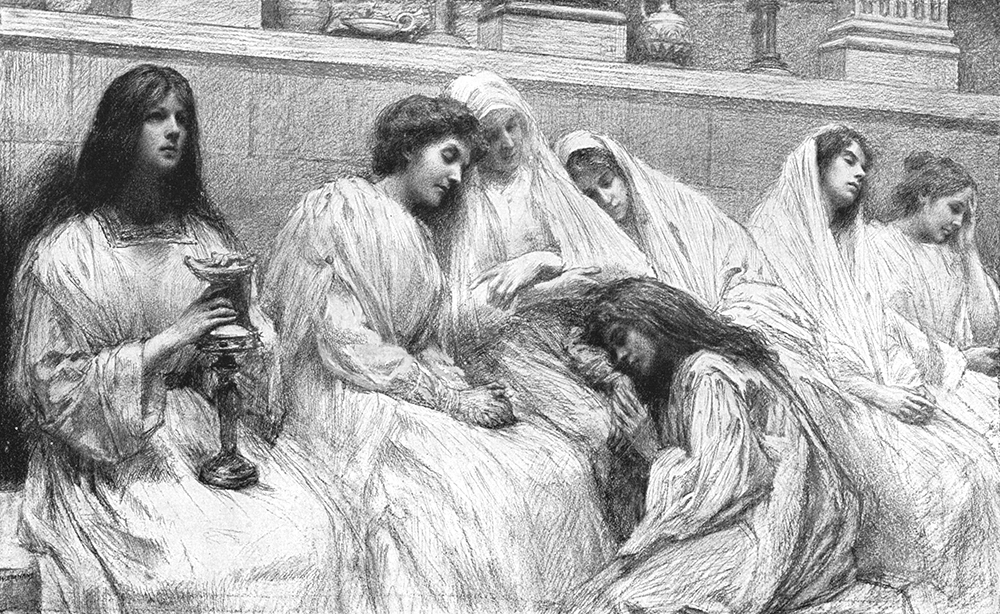
So What Happened to the Church in Ephesus?

God speaks to the Church of Ephesus:

But I have this against you, that you have abandoned the love you had at first. Remember therefore from where you have fallen; repent, and do the works you did at first. If not, I will come to you and remove your lampstand from its place, unless you repent.

“Anyone with ears to hear must listen to the Spirit and understand what he is saying to the churches.

Revelation 2:4-5, 7

I ministered full-time in San Francisco, preaching and teaching in a very difficult place for three years. The sin and degradation of that city were extremely difficult. But I suppose ministering in the city of Ephesus was also quite challenging. Like San Francisco, it was full of false idols, immorality, and much sinfulness. I encountered much of this. I’ve learned firsthand about evil powers in high places.

Paul knows what the Ephesians are up against, there is an organized evil in Ephesus that could very well destroy them. Paul is on his way to Jerusalem, and in order not to miss his boat, he requests that the elders of Ephesus meet him near his port. He has an urgent warning for them. He says “goodbye” with tears, and deep concern.

“So guard yourselves and God’s people. Feed and shepherd God’s flock—his church, purchased with his own blood—over which the Holy Spirit has appointed you as leaders. 29 I know that false teachers, like vicious wolves, will come in among you after I leave, not sparing the flock. 30 Even some men from your own group will rise up and distort the truth in order to draw a following. 

31 Watch out! Remember the three years I was with you—my constant watch and care over you night and day, and my many tears for you.’

Acts 20:28-31

Keep in mind that Paul lived in Ephesus. He taught the church daily and prayed often for them for three years. Also, Apollos (a tremendous evangelist) would become a disciple there. Also, Timothy based his ministry in Ephesus.

There seems to be a slow drift away from the first love for Jesus and slippage into an unacceptable doctrine. During my own time in ministry in San Francisco, there always seemed to be resistance there, constant spiritual pressure on any attempt to stay faithful and live in purity.

In Revelation 2 an angel speaks to the church in Ephesus. His assessment wasn’t kind but yet it was accurate.

A papyrus fragment from the book of Revelation chapter 2 written to the Ephesians by John the Apostle.

Maintaining the first love in this center of wickedness and depravity wasn’t easy.

Paul was in a Roman prison when he wrote to the Ephesians. He put pen to papyrus to write down and to show God’s purpose for them. He taught and preached, he knew that they must know the intentions of God for their lives.

In Acts 20 he states a warning to the elders of the church in Ephesus. They must be aware. And for the most, they stayed true, and yet they were missing a vital and critical truth. In Revelation 2 they are nailed and we must understand. They had somehow down the line they had lost their “first love.” This happens, regularly.

Jesus must be primary to the true walk of the real believer–this isn’t optional.

This is the critical definition of an authentic Christian. We must love Him first. The Ephesians had faithfully protected against heresy. But we discover good theology without real love isn’t acceptable.

We’re called to love Him first of all.

Living in a wicked world demands a love that exceeds the norm that isn’t acceptable to “polite society.” We must go on to love Him first. What we think we know isn’t going to be enough. We must love Him. Him!

Is Jesus our first love? And what does that really mean anyway?

You really must figure this out for yourself. But, the first step is humility.
The Forbidden First Stone

“They kept demanding an answer, so he stood up again and said, “All right, but let the one who has never sinned throw the first stone!”

(John 8:7, NLT)

“None knows the weight of another’s burden.”

-George Herbert

As believers, we must discern motives and false doctrine. We’re to be constantly aware of people and issues that swirl around us–of this, there is no doubt, we mustn’t be ignorant. This is a healthy “discernment.” But we must learn that having discernment isn’t a way that passes out a ‘guilty’ penalty. We are ‘seeing’ things these things–not to pass judgment, but that we might pray clearly and earnestly, and grow into His love for the weak.

But to pass out a guilty sentence is God’s exclusive jurisdiction.

It’s far beyond our ‘pay grade.’ He is the final judge in everything. He judges justly and lovingly. He alone knows and understands everything very clearly. We don’t.

And yet how foolish we are. Do we really have the ability to pronounce a penalty to someone else? Could it be when we decide to throw rocks at certain people we’re in terrible danger of forfeiting our own salvation? “But if you do not forgive others their sins, your Father will not forgive your sins.” (Matt. 6:15.)

We discern, not to pass judgment, but to pray more clearly and effectively. What you see or sense is for the prayer closet, not before a judge’s bench.

(If you have a ‘rock’ in your hand, you are in definite danger.)

“Don’t judge others, or you will be judged. You will be judged in the same way that you judge others, and the amount you give to others will be given to you.

We really don’t have a problem with worldly people. We understand that they are lost in their sins, terribly wrapped up in their own personal darkness, and that should definitely disturb us. We must point to the Blood of Christ that forgives us. We share the good news of true repentance and faith. His Spirit teaches us to be witnesses of His love to everyone we meet.

But in light of this, isn’t strange that almost all of our judgment is somehow directed at other believers! Why?! For some strange reason, it ‘seems,’ we think that we must pronounce guilt and (by doing so) we declare our own “holy” attitude to our place in the Body. In a weird sense, we think we have the supreme calling to condemn someone else’ walk, and by doing so exalt our own!

“The life of faith is a struggle enough in a broken world without us complicating it for other believers.”

–Jake Colsen

It just may come as a shock to some, but it’s extremely difficult to throw stones at someone when we are busy “washing” their feet.

“The nature and end of judgment or sentence must be corrective, never vindictive; it is always for healing, and never for destruction.”

–John Owen

Perhaps when we judge others, we reveal that we don’t understand what ‘real’ discipleship with Jesus is? Somehow it seems, we really aren’t quite grasping the immensity of His grace on guilty people? Do we really understand His profound love for the fallen? “God so loved the World…” Have we had any idea how patient He is with us? Do we doubt His ability to correct others? (These are awfully hard questions.)

“Judge not lest you be judged.” (Jesus’ words really do scare me sometimes.)

Certainly, I intend to confront the darkness. “You are the light, a city set on a hill!” I am His salt and light and I do shine into this dark night. But that is His doing, not mine. I do not generate light on my own. The Bible declares me as ‘self-righteous’ when I try. I am a broken person, who is just starting to understand the scope of my own brokenness and weaknesses. I’m starting to realize I’m not in a position to judge someone else. I’m not quite healed myself yet and I must not think I can point to someone else as being worse than me.

Quite simply, I can’t throw ‘rocks’ at other believers anymore.

I can no longer pass out any condemnation from my own limited understanding. My chief concern right now is to be a humble, earnest Christian who is always ready to forgive those who, in their awful sin and confusion, are hurting others. I’m beginning to see that my calling is to be; a simple servant to my brothers and sisters, nothing more, and nothing less.

Do You Have Dove’s Eyes?

Behold, you are beautiful, my love! Behold, you are beautiful! You have doves’ eyes.

Song of Solomon 1:15

Doves have a single vision. Because of that they can only see one thing at a time, which makes them unique. They are one of a kind. Doves are also the emblem of the Holy Spirit in scripture, and when they are mentioned we should be alerted that something spiritual is happening.

What the Shepherd is proclaiming is “she only has eyes for me, she sees no one else.” For the true believer, there isn’t anything that can take the place of Him. Political involvement, Eastern mysticism, vain philosophy, or stifling materialism should never take the place of the Lord Jesus. Never, ever.

We need “dove’s eyes.” We must see Jesus only.

There are a lot of noble things we can get involved in. Good things, yes, but not the best, we need to fix our eyes on Jesus. I have personally seen brothers, sisters, and whole churches lose their vision, and focus on something other than their “first love.”

Satan detests our intimacy with our Lord.

Every time we move into direct contact with our Savior the enemy goes crazy. He wants to diminish and erode our number one love. He detests that relationship, and he short-circuits our connection with Jesus. The devil diverts believers to take the good, and leave behind the best.

There are many preachers and teachers in the Church who no longer have “dove’s eyes. Satan has blurred their vision, and they have lost the intimacy they once had with Jesus. Most of the time, they don’t even realize it. This saddens me.

I remember a once blazing church in Pacifica, California that once closed down whole blocks in San Francisco. They worshiped Jesus intensely. They took the Church into the streets and brought with them a passion I’ve seldom seen. They were people on fire. It was a pleasure to work with them, they were in love with Jesus.

Within two years they lost it. They adopted a political stance that was quite commendable, but it diminished their first love for Jesus, and Satan was pleased. The church split in a dozen different ways. This isn’t a new thing, the apostle Paul saw it and was afraid for the church in Corinth.

“For I feel a divine jealousy for you, since I betrothed you to one husband, to present you as a pure virgin to Christ. But I am afraid that as the serpent deceived Eve by his cunning, your thoughts will be led astray from a sincere and pure devotion to Christ.”

2 Corinthians 11:2-3 

In the book of Revelation, chapters 2 and 3 emphasize the level of intimacy each Church possesses. “Angels” come and carry the message of repentance and turning to that “first love.” I have to think that “dove’s eyes” come as a result of being filled with God’s Spirit.

We’re finally seeing through the eyes of a dove–the Holy Spirit.

“Return dear one, come back to the Lord Jesus. Let your first love blaze again. Don’t allow Satan to sidetrack you into something that is good, but not the best. Have “dove’s eyes” that only see Jesus.”

alaskabibleteacher.com

God’s Night Shift, Psalm 134:1-3

A song of ascents.

“Now bless the Lord,
all you servants of the Lord
who stand in the Lord’s house at night!
Lift up your hands in the holy place
and bless the Lord!

 May the Lord,
Maker of heaven and earth,
bless you from Zion.

Psalm 134:1-3

Not every Levite labored during the day. The night shift continued their work. Granted, no sacrifices were offered, but the “night priests” stood to protect the Ark, gather wood, and keep the incense burning and cleaned up the blood. But most importantly they must worship and pray for Israel.

“Servants of the Lord” is a phrase that resonates in my heart. Those words are both a comfort and a responsibility and that seems to open this passage up. We’ve got a Master, and we serve Him only. And I know and believe that worship was the main responsibility of the night watch!

“Christians believe that true worship is the highest and noblest activity of which man, by the grace of God, is capable.”

-John Stott

Worship is the central work of the disciple, it’s what we’re called to do. Evangelism, missions, and preaching are fine. But prayer and intercession must be the heartbeat of each believer. It’s the holy calling of the Church. When does the church service end? Never!

The service really gets going Monday through Saturday!

In this short Psalm, (just 3 verses!) we’re introduced to a group of Levites who are working the night shift. What they do is hidden–it’s not seen by others. They keep the fires stoked, gather wood, and patrol the walls. But more importantly, they stand and worship and intercede for Jerusalem.

No real recognition is given, and the spotlight is rarely shined on them.

They serve at night, vitally essential but seldom seen. And yet they intercede for the nation. They “bless” the Lord and the people of God. That’s their place and position. They must do this. Israel must be blessed. These night shift workers insist on it!

The church needs nursery workers and Sunday school teachers. So many are working behind the scenes. Often the deacons and elders of a church are rarely seen and seldom acknowledged. So much is concealed. Their work is a hidden one. But the Father sees.

In a church, someone has to clean the bathrooms and take out the garbage, and others will make coffee or shovel snow. They vacuum and straightened the chairs. They are the ones who collect the mail and prepare the overheads. There’s always something to do. And it’s a hidden work carried out with no one watching. No one, but God.

“It is good to give thanks to the Lord,
    to sing praises to your name, O Most High;
to declare your steadfast love in the morning,
    and your faithfulness by night,

Psalm 92:1-2

Serving at night can be a challenge, not all can lead worship or preach the sermon on Sunday morning. Those called to do those tasks serve in the day. But those who serve the Lord at night also labor, and sometimes that hiddenness behind the scenes has its own special challenges.

This may come as a surprise, but it takes as much of the Spirit to work the night shift as it does to stand behind the podium and preach the Word. I believe that this is true! These hidden ones carry out much of the ministry of the Church. Few notice, but God Himself sees them.

“They [Levites] are exhorted to fill the night with prayer and watchfulness and to let their hearts go up in blessing to Jehovah. The voice of praise should echo through the silent night and float over the sleeping city.”

Alexander MacLaren

alaskabibleteacher.com

Spiritual Sloth

Matthew 25:1-13

“At that time the kingdom of heaven will be like ten virgins who took their lamps and went out to meet the groom. Five of them were foolish and five were wise. When the foolish took their lamps, they didn’t take oil with them; but the wise ones took oil in their flasks with their lamps. When the groom was delayed, they all became drowsy and fell asleep.

“In the middle of the night there was a shout: ‘Here’s the groom! Come out to meet him.’

“Then all the virgins got up and trimmed their lamps. The foolish ones said to the wise ones, ‘Give us some of your oil, because our lamps are going out.’

“The wise ones answered, ‘No, there won’t be enough for us and for you. Go instead to those who sell oil, and buy some for yourselves.’

10 “When they had gone to buy some, the groom arrived, and those who were ready went in with him to the wedding banquet, and the door was shut. 11 Later the rest of the virgins also came and said, ‘Master, master, open up for us!’

12 “He replied, ‘Truly I tell you, I don’t know you!’

13 “Therefore be alert, because you don’t know either the day or the hour.

There were three stages in every ancient Jewish wedding.

  • Engagement–when fathers got together to make sure that it would be a good match.
  • Betrothal—a ceremony in which formal promises were made by the lovers.
  • Marriage—a surprise arrival, usually a year later, by the groom at the home of the woman.

Each was incredibly important. There couldn’t be any short-cuts; one just didn’t jump into this. It wasn’t a Las Vegas approach to just getting hitched. This parable was an extension of the previous verses in Matthew 24:36-51 and had to do with being prepared.

We can extract this from the third step of marriage. The groom would show up at night, and torches were used to light their way, (apparently the flashlight hadn’t been invented yet). Within Jesus’ parable was the idea of suddenness or surprise.

But no one knew exactly when the groom would show up.

Hence there is an emergency feel to this story. The text states in verse 5:

Five of them were foolish and five were wise.”

The story hinges on this sentence. Readiness is the issue here. Everything of any significance must take on the sudden arrival of the groom’s entourage. The virgins, apparently, would go out to meet him—the torches mingling their light, and drive out any darkness. (It seems that 10 was the acceptable number for a proper rabbinical ceremony).

The problem was that only 1/2 of them were ready. It’s interesting to note that everyone was sleeping. Obviously, that didn’t mean anything for it was the availability of “oil” that would make the difference. The idea was a surprise visit.

The oil was the key. And for us, it represents the Holy Spirit.

Sleep is not the whole issue here, but being prepared is. Five girls were foolish, they were simply not ready. They realized their error and tried to finagle oil from the others, but ultimately that would short everyone in their group. There was an idea that a trip to the local oil merchant would work. It was an idea anyway.

But it was already too late!

The door was closed. The five simply missed it. They stood outside knocking and calling, but they didn’t enter in on time. Reading between the lines, I sense they were desperate. Verse 12 is meant to penetrate and reveal the price of tolerating spiritual sloth.

“He replied, ‘Truly I tell you, I don’t know you!’

The purpose of this parable is the ending line that stresses alertness in a society that dulls everything. The temptation is to act like you’re spiritually aware when you’re not. It’s one of our greatest sins. We assume our lamps are lit when the reality is that our oil (the Holy Spirit) is running close to zero. When our sloth gets mixed with hypocrisy it’ll surely destroy us.

We’re snoring our way to spiritual death.

We must resist slumber and slothfulness. Jesus asserts that his virgins must be prepared and ready for his coming. We must be ready, we must—the price of our unreadiness is high indeed.

“Take care of giving up your first zeal; beware of cooling in the least degree. Ye were hot and earnest once; be hot and earnest still, and let the fire which once burnt within you still animate you. Be ye still men of might and vigor, men who serve their God with diligence and zeal.”

    Charles Spurgeon

Art by Eugène Burnan

He’s Much Closer Than You Think

tumblr_static_tumblr_static_1odvenqfc6kkgwo0sg0skgsco_1280

“And He withdrew from them about a stone’s throw, and He knelt down and began to pray,”

Luke 22:41

WHO KNOWS WHAT JESUS IS THINKING AT THIS PRECISE MOMENT as he entered the Garden? His disciples waited for Jesus and scripture states that he proceeded ahead of them to find some needed strength through prayer— this verse tells us he went “a stone’s throw.”

We often share in the sorrows of the people closest to us, and Jesus wants His disciples to follow him. And they do, but not all the way. They came close, but were oblivious to the full nature of the pain that was beginning for Jesus. They slept while he agonized.

He was for the first time perhaps, needing someone close.

Many of us will make the same trip to the garden. Soon every believer makes the trip to ‘Gethsemane,’ but not as mere observers. It is a distinct place of testing and of sorrow. And each will experience it for themselves. “The servant is not above his master.”

But Jesus is close— he completely understands what it means to be alone with sorrow. The believer can lean on Jesus as the pain continues. He sends his “Comforter” to each, as he escorts us through this time. He comes in grace, and is completely kind.

He is truly just a stone’s throw away.

“God is our refuge and strength,
 always ready to help in times of trouble.”

Psalm 46:1

bry-signat (1)

Little Christs

Acts 11:26, ESV

Some have suggested that the word “Christian” (grk. christianos) was meant as a slur or insult. It meant little Christs, or mini-Christs. Perhaps that was the best the unbelievers came up with. They identified believers in Jesus and slapped a label on them that was supposed to mock and demean them.

But guess what? The early Christians loved it!

The disciples very quickly adopted it as a great explanation of their new identity. It became a badge of honor. The early Church of disciples became known as little Christs. This now identified them, and they wholeheartedly embraced this new nickname.

From all that I’ve read I see Antioch as a pretty interesting place. It was a city of almost 300,000 people and it had some major Roman temples, and amphitheatres. The city was fully entrenched in the economy and military of the empire. Antioch was regarded as the eastern capital of Rome.

After heavy persecution in Jerusalem, Christians moved north and made Antioch their home base.

This verse (Acts 11:26) tells us that Paul spent a considerable amount of time there teaching the church. After a generation or two, Ignatius of Antioch took over leadership of the Church. By 390 AD the city had almost 200,000 believers!

I’m not sure why, but the word “Christian” is only used 3x in the N.T. (Go figure?) Just maybe the letters of Paul and Peter predated the new label? IDK.

C.S. Lewis

To be a mini-Christ is a pretty profound calling. I think of the 12 being sent out by Jesus to heal and announce the arrival of His kingdom in a new way. In essence they duplicated Jesus’ ministry. (Matthew 10:5.) The more we know Him, the more like Christ we become. (Matthew 11:29.)

Now don’t get me wrong, we are definitely NOT little gods. No way! We are simply broken people who battle sin and must be filled with the Holy Spirit constantly. (Acts 13:52.) In no way, shape, or form are we anything more than human.

And yet we also are little-Christs!

His Spirit comes when, in our neediness we make room for Him in our hearts and minds, and simply ask in faith. Your faith must be humble, and never ever, be proud or arrogant. We are called to reveal the heart of Jesus to an unbelieving world.

Persecution, in its different intensities, will also be present for mini-Christs. Jesus repeatedly warned us to expect it.

John 16:33, ESV

So where do we go from here? Mother Teresa once said, “Calcuttas are everywhere if only we have eyes to see. Find your Calcutta.” It’s probably closer than you’ve ever imagined. Open your eyes and receive the reality of being a little-Christ sent out into this world.

Just like Him.

Leaders Who Wash Between the Toes

drsunil.com, art by Takla

He came to Simon Peter, who said to him, “Lord, do you wash my feet?” Jesus answered him, “What I am doing you do not understand now, but afterward you will understand.” Peter said to him, “You shall never wash my feet.” Jesus answered him, “If I do not wash you, you have no share with me.”

John 13:6-8 (verses 3-17)

Chapter 13 always rocks my world. I visualize this, like a fly on the wall, watching it happen–and then I replay it over, and over in my mind. It always unravels me. Why does this have to happen? What does this passage tell me about Jesus and his kingdom? (John 13). Why can’t I just walk away from it, and leave it be?

Jesus made himself a slave on purpose.

Or perhaps he was always a slave all along, and we just didn’t realize it? Foot-washers were pretty much regarded as sub-human, mindless drones who mechanically performed a necessary duty. The lowest of the low, the very least of the least. (Today they’re the burger flippers and the pool cleaners.)

But Jesus took that role on himself, he laid aside his garments and his Godhood. (They landed in a pile in the corner of the room). When he knelt down to scrub feet (making sure he got between the toes), it was Deity serving man. This God/rabbi intentionally did this, not reluctantly or halfheartedly–but carefully. Brilliantly.

He was their teacher, and custom demanded he enjoys the prerogatives of that position. But he wouldn’t, and didn’t. He mustn’t. As I stress over this, I must conclude he really was their “teacher,” but not in the way I expect. What he was doing on his knees, was instructing them in the art of loving each other.

He showed us a real leader in action.

And isn’t making disciples all about loving (and washing) someone else more than ourselves?

We get things turned around sometimes–we think that spiritual authority is moving up when it’s all about going down. We elevate our pastors and elders, maybe subconsciously–and human nature lets it happen, and then we’re amazed why our leaders struggle so.

Leaders function best when they wash between the toes.

There was a point in Jewish history when the people actually demanded that God would give them a king, instead of a judge (1 Samuel 8:5-9). God warned them that this wasn’t in his plans–but they insisted.

They had to have one, everyone else did. We still must have celebrities, and then we wonder why they short-circuit on us. Who can resist the privilege, and the limelight of the platform?

The Church was never meant to operate like this.

That’s what Jesus said. Instead, it’s we who’ve turned it upside down. It’s we who insist on turning our pastors into minor celebrities. We assert that they take on the role of a “king” (albeit, a little one maybe). Perhaps leaders who stumble and fall do so because we want them to be front and center? Who can handle the privilege and the adulation? I know I can’t.

Peter was classic Peter.

It seems that whenever he resists, he gets rebuked. He makes it quite clear that Jesus will never wash feet–that Jesus will never use a basin or towel and serve him like this. It was outrageous. Unacceptable. It didn’t fit in Peter’s personal theology. He had no room for Jesus the slave. (Perhaps he knew that to follow meant he would have to do the same thing? IDK).

Jesus still washes His people. He has not changed.

He sits us down and takes off our shoes and socks, and scrubs us clean. And we hate it. But to be washed by him is a condition of our discipleship. Every follower must be clean, and he continues his work to this day. We sin daily, even as his own, and he cleans us up–and somehow that really bothers us.

The gifts of leadership are one way of washing feet. At least that’s what our leaders were designed to do. That’s Jesus’ way of doing things. But it seems we’ve adopted Peter’s attitude, and embraced the ‘pre-king’ thinking of Israel. We need our celebrities, we want our kings. We simply can’t imagine it any other way.

“The very first thing which needs to be said about Christian ministers of all kinds is that they are “under” people as their servants rather than “over” them. Jesus made this absolutely plain. The chief characteristic of Christian leaders, he insisted, is humility not authority, and gentleness not power.”

 John Stott

Praying Authentically

front-prayer

Prayer can often be just a nice religious duty, that makes us feel warm and fuzzy. But such prayer does not suit a disciple who is tired of religion and is seeking authenticity. There are few models who can be our guides.

That is one of the reasons why we need elders in our fellowships; they have been through so much, they can anchor us to all that is real. As elders, they probably had lessons in prayer.

We often will theologically play on the periphery, and cleverly deceive others and ourselves.  My own heart gets pretty creative as I display self-righteousness. (I should win an Academy Award as ‘best actor.’) But Jesus insists on us becoming real. You might say that really is the prayer that touches his heart.

When you talk with Jesus, do you truly talk to Him?

Do you have a real awareness that you are really talking with Him?

Is it the real you that fellowships with the ‘real’ God?

The following is an excerpt from A Diary of Private Prayer, by the Scottish theologian, John Baillie, 1886-1960:

Eternal Father of my soul, let my first thought today be of You, let my first impulse be to worship You, let my first speech be Your name, let my first action be to kneel before You in prayer.

For Your perfect wisdom and perfect goodness:

For the love with which You love mankind:

For the love with which You love me:

For the great and mysterious opportunity of my life:

For the indwelling of your Spirit in my heart:

For the sevenfold gifts of your Spirit:

I praise and worship You, O Lord.

Yet let me not, when this morning prayer is said, think my worship ended and spend the day in forgetfulness of You. Rather from these moments of quietness let light go forth, and joy, and power, that will remain with me through all the hours of the day;

Keeping me chaste in thought:

Keeping me temperate and truthful in speech:

Keeping me faithful and diligent in my work:

Keeping me humble in my estimation of myself:

Keeping me honorable and generous in my dealings with others:

Keeping me loyal to every hallowed memory of the past:

Keeping me mindful of my eternal destiny as a child of Yours.

Through Jesus Christ my Lord, Amen.

(Taken from Richard Foster’s Devotional Classics, pp. 126-127.)

Simeon, In His Own Words

Luke 2:25-35

There was a man in Jerusalem whose name was Simeon. This man was righteous and devout, looking forward to Israel’s consolation, and the Holy Spirit was on him. 26 It had been revealed to him by the Holy Spirit that he would not see death before he saw the Lord’s Messiah. 27 Guided by the Spirit, he entered the temple. When the parents brought in the child Jesus to perform for him what was customary under the law, 28 Simeon took him up in his arms, praised God, and said,

29 Now, Master,
you can dismiss your servant in peace,
as you promised.
30 For my eyes have seen your salvation.
31 You have prepared it
in the presence of all peoples—
32 a light for revelation to the Gentiles
and glory to your people Israel.

His father and mother were amazed at what was being said about him. 34 Then Simeon blessed them and told his mother Mary, “Indeed, this child is destined to cause the fall and rise of many in Israel and to be a sign that will be opposed— 35 and a sword will pierce your own soul—that the thoughts of many hearts may be revealed.”

Yes, there were rumors. The priest Zechariah had declared that his son would become the Messiah’s forerunner. And apparently, angels had visited shepherds in their fields. Each encounter had come exactly how it was foretold.

I’m convinced that the Holy Spirit led me there that day.

I have no doubt that He was guiding me to the Temple. God had promised me that I would see with my own eyes the coming Messiah. This One would be salvation and be a light to the Gentiles which would bring glory and honor to the Jewish nation.

If these were of God, there needed to be collaborating witnesses that would foretell His work. One or two might be a mere coincidence, but three were a definite declaration. Plus I knew that my own eyes would see Him face-to-face.

To be perfectly honest, I really didn’t know what I expected to see. But I knew God’s heart, and I wanted to do His will. Some might say I was a devout believer in Israel’s prophetic purpose. I knew and believed that.

I had God’s promise that I would see Him.

Something or someone was prompting me to the Temple. I guess I had a divine appointment to keep. God had given me His promise, and I knew I was where I was supposed to be. It seemed like I was always on the lookout for that fulfillment.

It was then I saw the Child.

His parents stood out like something fluorescent. It seemed as if they were color in a black-and-white world, and they held the baby who was going to change the world. When I saw them I knew that everything had fallen into place. I saw the promise and He had come to save the world.

I took Jesus and held Him in my arms.

I was holding the Savior! This baby was to save the entire world from their sins. The Law required me to dedicate Him to God. Who can say what that means? I was to devote Him to God’s purpose and plan. Who had this honor, and who can say that this was their privilege? I had been chosen to insert Him into the purposes of God.

Who can say that?

When I laid my hands on Him it was like touching lightning. I spoke the blessing, but I understood that there was something more. I looked at His mother and spoke. It was both a blessing and a warning. I understood what God wanted to say, and it was a word that Israel’s hope would also have a sting that His mother needed to understand.

When I left the three of them in the Temple courts I began to grasp the reality of it all. I spoke God’s heart to His mother Mary. She had to know and understand who this Child really was. For me my task was complete.

I had spoken, and now it was time to leave.

“In the last days the mountain of the Lord’s Temple
    will be the highest of all mountains.
It will be raised higher than the hills.
    There will be a steady stream of people from all nations going there.”

Isaiah 2:2

Art: “Simeon holding Jesus,” by Andrey Shishkin, painted in 2012, Oil on canvas © Andrey Shishkin. Verses used: Christian Standard Bible