Christmas Discipleship

Our walk with Jesus should be strengthened by Christmas. Sometimes we might shelf our discipleship during the holidays. This can be something we’re not even aware that we’re doing. But I definitely believe that our discipleship needs Christmas. This isn’t really an option.

Maybe our faith should actually be intensified by the grandeur and splendor of Christmas?

After all, when we mull over this tremendous mystery of the incarnation our faith and praise can only grow. To think that God Himself came for us like He did is pretty potent stuff. God became a helpless baby, and needed breast milk and a change of diapers. That should rattle us if we really understand.

“The Almighty appeared on earth as a helpless human baby, needing to be fed and changed and taught to talk like any other child. The more you think about it, the more staggering it gets. Nothing in fiction is so fantastic as this truth of the Incarnation.”

J.I. Packer

Prayer is one of the best ways I know to incorporate this. I imagine that the Holy Spirit is pretty active right now as many believers meditate on what really happened in that manger in Bethlehem.

A CHRISTMAS PRAYER

Dear Father, it’s Christmas time again. Help me this year to season the celebration with reason. Teach me to plan with my family. May I avoid the clutter that dims my vision and burdens my time.

Keep me mindful of my budget. and help me to remember that a gift selected with love tugs forever at the heartstrings. Forgive me for past extravagance.

Remind me to decorate in good taste, treasuring all of the past blending it with the new, but holding steadfast to reason. Keep me, dear Father, from strain lest I stray from all thy teachings.

Guide me to the light of Christmas. Help me keep a candle’s flame of that light as a constant reminder of my goal . . . eternity.

I pray for thy love and help, in the name of thy beloved Son whose birthday we are observing.

Amen.


– Author Unknown


Come Out of the Closet

“Therefore take up the whole armor of God, that you may be able to withstand in the evil day and having done all, to stand firm. 14 Stand therefore, having fastened on the belt of truth and having put on the breastplate of righteousness, 15 and, as shoes for your feet, having put on the readiness given by the gospel of peace. 16 In all circumstances take up the shield of faith, with which you can extinguish all the flaming darts of the evil one; 17 and take the helmet of salvation, and the sword of the Spirit, which is the word of God,

Eph. 6:13-17, ESV

You’re called to be armor-plated.

Ephesians is quite clear about this, and we dare not live without spiritual protection, and as a matter of fact, we must wear each piece to survive spiritually. To be ‘naked’ is catastrophic. Neglecting to dress appropriately brings cataclysmic disorder. We dare not minimize our need for wearing our armor.

Each piece listed must be worn. This is a scriptural mandate for every believer in Jesus.

“The whole armor of God” explains the equipment we need to survive spiritually. Here’s a list of the six:

  • The belt of truth–this pulls everything together and holds us and keeps us secure in the truth.
  • The breastplate of righteousness–our spiritual heart is protected by knowing we’re accepted by the Father. Being right with God is not a feeling nor is it a mere hopeful wish. We wear what is real.
  • The shoes of the gospel (of peace)–the idea of standing in place (“to stand”) explain our ability to be fixed on grace. When we wear battle shoes we cannot be pushed back or lose our footing. Wearing gospel shoes brings us spiritual stability. We can stand in place, rooted and strong.
  • The shield of faith–is a vital way of protecting ourselves from the evil arrows shot by the enemy. Satan targets us when he thinks that we aren’t using faith to defend ourselves.
  • The helmet of salvation–this is the realization that our mind is protected. This vital piece brings us wholeness as we understand what Jesus has done. We know we are saved and wearing our helmet is our protection from demonic-inspired lies.
  • The sword of the Holy Spirit–the only offensive weapon we have, and it’s all we need. The Word of God will frighten the enemy and push him back. The Word slices and cuts down every obstacle and every lie.

   Watchman Nee

I must stress that clothing yourself is vital. You dare not live spiritually naked wearing nothing. You will be totally vulnerable to the satanic wickedness that is swirling around you. I’m afraid it’s all very real and sobering and there is no escape clause until you finally arrive in heaven.

“We know [positively] that we are of God, and the whole world [around us] is under the power of the evil one.”

1 John 5:19, Amplified Bible

I’m afraid you haven’t been given an option in all of this. Our battle equipment in Ephesians 6 is not just some theological preference or concept. It’s real.

Over 40 years of following Jesus have taught me that most believers struggle because they won’t arm themselves for battle. They refuse to acknowledge the environment they’re in and don’t realize the spiritual battle they are facing. They like the sentiment behind this particular passage, (it stirs their heart) but the reality of the battle never fully sinks in.

They end up leaving their armor behind.

The good news is that we have already won because of what the Lord has done. Wearing the armor strengthens and stabilizes us. He pours out His grace, and there will be times of rest of that I am certain. “He leads me beside still waters.”

As obedient and faithful believers we need to realize we’re secure in Him. Yes, there is a terrible fight, but “The battle is the Lord’s.”

“For you equipped me with strength for the battle; you made those who rise against me sink under me.”

Psalm 18:39, ESV

His Love Persists, Psalm 136

Psalm 136

“Give thanks to the Lord, for he is good, for his steadfast love endures forever.”

Psalm 136:1, ESV

Repetition is when a single word or phrase is used multiple times in short succession for effect. It can help emphasize a point. This Psalm certainly does that.

Since this post is pretty much about repetition, I’m going to share some different versions that different translators have interpreted the last phrase of all 26 verses. Keep in mind the last phrase is used is repeating itself word for word in each translation.

Now here are seven different English translations of the end of every verse.

AMP: …for His lovingkindness (graciousness, mercy, compassion) endures forever.

NASB: …for His faithfulness is everlasting.

KJV: …for his mercy endureth for ever.

NCV: …His love continues forever.

CJB: …for his grace continues forever.

MSG: …His love never quits.

NET: …for his loyal love endures.

The word, translated in these different ways, is hesed” in Hebrew. It means a forever love, loyalty, faithfulness or kindness. It is something everlasting or eternal that’s based all on covenant. Yes, every translation is different, but the same.

I suppose this repeated phrase (26 times) may seem a bit redundant. I for one am prone to skip Psalms 136 because of that, I mean it seems boring. Just repeating this over and over I start to wonder if there’s something better to read.

But we dare not make this mistake.

If we respectfully dismantle this phrase we find it deals with seeing God as eternally steadfast. We are called to state out loud His love for us that never wavers or ends. A “steady” forever love that will not change, flicker, or diminish. It just goes on and on and on.

The phrase then moves even deeper than that. “Endures forever,” shapes the whole thought. You might say that these two words extend or amplify the complete verse and strengthen the entire Psalm.

O.K. Here’s another bone to chew on.

First, I need to point out that the first part of each verse states the unique circumstance that declares what exactly has been done. For instance notice the wonder and power of each verse. This is verse 15, for example,

“He overthrew Pharaoh and his host in the Red Sea, (the unique phrase)
    
for his steadfast love endures forever.”
(the repeated phrase)

The first part describes a miracle of deliverance from Egypt. The second is that same repeated phrase we find in all 26 verses. First the unique phrase, and but then comes the repeated one. But let’s add even more flavor. We must teach ourselves to remember. You must consider each event He has led you through to be a testimony to others.

You then must tell your children about your own personal experiences with God.

We forget these miracles unless we consciously recall what God has done. Miracles, healings, provisions, and His amazing grace. Never disremember these things. Bring them to mind, over and over again. You should never forget those “God-things.” They’re uniquely yours. He has done distinctive and tremendous things for you alone.

I guess the main point of this post is to emphasize to you to value those unique miracles that you’ve experienced in your own life.

In life it seems we remember what is important to us. What He has done for you is your own unique testimony. It’s yours, and yours alone. What you’ve experienced is completely your own testimony.

When we enter a forever kind of an endless eternity that each of us will have amazing stories to tell each other about God’s special touch, His miracles and all of the grace and forgiveness that He uniquely loved us with. We all will have our own unique and singular stories. What we share will be our evidence of His love.

That’s pretty amazing when you think about it.

“And they have conquered him by the blood of the Lamb and by the word of their testimony,”

Rev. 12:11, ESV

The Pharisee & the Tax Collector

Luke 18:10-14

 “Two men went to the Temple to pray. One was a proud, self-righteous Pharisee, and the other a cheating tax collector. 11 The proud Pharisee ‘prayed’ this prayer: ‘Thank God, I am not a sinner like everyone else, especially like that tax collector over there! For I never cheat, I don’t commit adultery, 12 I go without food twice a week, and I give to God a tenth of everything I earn.’

13 “But the corrupt tax collector stood at a distance and dared not even lift his eyes to heaven as he prayed, but beat upon his chest in sorrow, exclaiming, ‘God, be merciful to me, a sinner.’ 14 I tell you, this sinner, not the Pharisee, returned home forgiven! For the proud shall be humbled, but the humble shall be honored.”

Meet the Pharisee:

I had it all together. I had shaped myself to be the ultimate Pharisee–the Pharisees of the Pharisees. I understood the Law; I could quote whole books, forward and backward. I fasted twice a week, and tithed everything, right down to my herbs and spices. I had it all together.

And I made sure everyone saw my commitment.

I strenuously kept God’s Law. I was consumed by understanding it, I tried to grasp all its nuances and complexity. The 10 commandments were emblazoned on all that I did. I wanted everyone to know that I was one of “the pure ones,” for that was the meaning behind the word Pharisee. I knew that I was pure.

I went to the Temple every day to pray, I stood holy and set apart, standing before a real and holy God. I was always the truest example to the people of Israel. I always stood when I prayed, for I was completely committed to doing all that the Law demanded of me.

One day I saw a wicked man in God’s holy temple. I had to thank God that we were total opposites. He was a tax collector and an evil person. I really was nothing like him. I rejoiced that I had become a true example of a righteous man.

I knew I was righteous, and certainly not at all like that sinful tax collector.

———————-

Meet the Tax Collector:

I didn’t have it all together. I understood this and was horrified that I had become so evil. I came to the Temple, driven by my guilt and shame–no one had to tell me this, for I knew my sin and I was deeply ashamed.

Why I came, I don’t know. I honestly didn’t belong here, and I kept a distance from the front. I guess that’s where I belonged. On the fringes before the Holy One. It seemed now that I was drawn to this place, and I’m still not sure why I came that day.

I knew that I breathed evil and had become evil.

I fell to my knees, and I begged God to forgive me. I saw the Pharisee standing in the presence of God, but I knew I wasn’t at all like him. He was righteous and I knew I was not. Oh, how I wanted God to forgive me for all the sins I had committed.

I must tell you that my spirit was in agony.

“Humble men are very fortunate!” he told them, “for the Kingdom of Heaven is given to them. Those who mourn are fortunate! for they shall be comforted. The meek and lowly are fortunate! for the whole wide world belongs to them.

Matthew 5:3-5, LB

Jesus clearly told us who was truly forgiven that day. When we think we have it all together, we’re deceiving ourselves.

Let’s not pretend otherwise, okay.

alaskabibleteacher.com

Art: Eugene Burnand, 1850-1924, litho; Scripture used here is from the Living Bible.

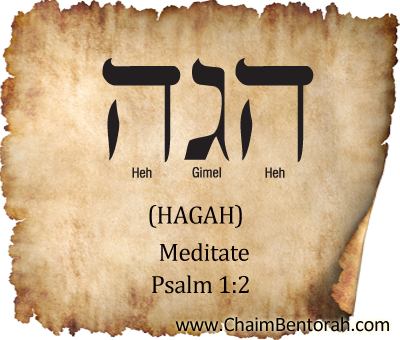
Hagah, To Meditate

Psalm 1:2

Meditation has gotten a bad rap among some Christians, largely due to a connection with Eastern mysticism. This is really unfortunate for it has a critical place in the development of your discipleship. I believe it’s vital (and maybe even mandatory?)

Hagah is the Hebrew word for ‘meditation’ and it fascinates me.

It literally means to “moan, growl, utter, muse, or mutter.” Some have suggested that it contains the idea of ‘rumination,’ like a cow who chews a cud. The grass goes in, and it’s regurgitated several times, extracting every bit of nutrients and vitamins.

Hagah, or to meditate is the way we assimilate God’s Word into our lives. It’s critical that we do this in our walk as disciples that belong to Jesus.

Joshua 1:8, ESV

It’s an interesting command isn’t it? Joshua’s ministry is to lead God’s people and requires his deep connection to God’s promises. He needs to hagah God’s words, to purposefully think about them over and over and over.

It’s interesting to me that when Joshua meditates and carefully responds to the Word then he will receive success in his life and ministry. The word ‘success’ means “wisdom, comprehension, insight with prosperity.” I need that desperately.

And if Joshua needed to do this, might not we?

Start small and simple. There are over 8,000 promises in the Bible–pick one and ruminate on it. Hagah on the Word and try to extract the spiritual nutrients that it contains. You will grow, bless others, and walk in victory, defeating your enemy.

“The amount of time we spend with Jesus – meditating on His Word and His majesty, seeking His face – establishes our fruitfulness in the kingdom.”

    Charles Stanley

Bryan Lowe

alaskabibleteacher.com

God’s Night Shift, Psalm 134:1-3

A song of ascents.

“Now bless the Lord,
all you servants of the Lord
who stand in the Lord’s house at night!
Lift up your hands in the holy place
and bless the Lord!

 May the Lord,
Maker of heaven and earth,
bless you from Zion.

Psalm 134:1-3

Not every Levite labored during the day. The night shift continued their work. Granted, no sacrifices were offered, but the “night priests” stood to protect the Ark, gather wood, and keep the incense burning and cleaned up the blood. But most importantly they must worship and pray for Israel.

“Servants of the Lord” is a phrase that resonates in my heart. Those words are both a comfort and a responsibility and that seems to open this passage up. We’ve got a Master, and we serve Him only. And I know and believe that worship was the main responsibility of the night watch!

“Christians believe that true worship is the highest and noblest activity of which man, by the grace of God, is capable.”

-John Stott

Worship is the central work of the disciple, it’s what we’re called to do. Evangelism, missions, and preaching are fine. But prayer and intercession must be the heartbeat of each believer. It’s the holy calling of the Church. When does the church service end? Never!

The service really gets going Monday through Saturday!

In this short Psalm, (just 3 verses!) we’re introduced to a group of Levites who are working the night shift. What they do is hidden–it’s not seen by others. They keep the fires stoked, gather wood, and patrol the walls. But more importantly, they stand and worship and intercede for Jerusalem.

No real recognition is given, and the spotlight is rarely shined on them.

They serve at night, vitally essential but seldom seen. And yet they intercede for the nation. They “bless” the Lord and the people of God. That’s their place and position. They must do this. Israel must be blessed. These night shift workers insist on it!

The church needs nursery workers and Sunday school teachers. So many are working behind the scenes. Often the deacons and elders of a church are rarely seen and seldom acknowledged. So much is concealed. Their work is a hidden one. But the Father sees.

In a church, someone has to clean the bathrooms and take out the garbage, and others will make coffee or shovel snow. They vacuum and straightened the chairs. They are the ones who collect the mail and prepare the overheads. There’s always something to do. And it’s a hidden work carried out with no one watching. No one, but God.

“It is good to give thanks to the Lord,
    to sing praises to your name, O Most High;
to declare your steadfast love in the morning,
    and your faithfulness by night,

Psalm 92:1-2

Serving at night can be a challenge, not all can lead worship or preach the sermon on Sunday morning. Those called to do those tasks serve in the day. But those who serve the Lord at night also labor, and sometimes that hiddenness behind the scenes has its own special challenges.

This may come as a surprise, but it takes as much of the Spirit to work the night shift as it does to stand behind the podium and preach the Word. I believe that this is true! These hidden ones carry out much of the ministry of the Church. Few notice, but God Himself sees them.

“They [Levites] are exhorted to fill the night with prayer and watchfulness and to let their hearts go up in blessing to Jehovah. The voice of praise should echo through the silent night and float over the sleeping city.”

Alexander MacLaren

alaskabibleteacher.com

Your Shepherd is Speaking

John 10:1-6, The Message

1-5 “Let me set this before you as plainly as I can. If a person climbs over or through the fence of a sheep pen instead of going through the gate, you, know he’s up to no good—a sheep rustler! The shepherd walks right up to the gate. The gatekeeper opens the gate to him and the sheep recognize his voice.”

“He calls his own sheep by name and leads them out. When he gets them all out, he leads them and they follow because they are familiar with his voice. They won’t follow a stranger’s voice but will scatter because they aren’t used to the sound of it.”

6 “Jesus told this simple story, but they had no idea what he was talking about.

For context: 10:7-18

What joy can be found in our Shepherd’s care, and to hear his voice. Nothing really can match this wonder. We follow as he leads. The voice is an integral part of this passage and the foundation of authentic discipleship. You really can’t walk with him unless you hear him. We belong to him. We’re his flock that he keeps and provides for.

He knows our name! That’s the intimacy found in these verses. We’re never forgotten and he will never overlook us. To think otherwise is slander and an attack on his present-day ministry. Jesus is our good shepherd. He always will be.

“Intimacy with God comes in whispers, not shouts.”

     Woodrow Kroll

He sometimes whispers, and this world can’t hear him. To be perfectly honest, my ‘busyness’ silences him. I suppose that the real issue isn’t with him, but with myself.

“And after the earthquake, there was a fire, but the Lord was not in the fire. And after the fire, there was the sound of a gentle whisper.”

1 Kings 19:12

The gentle whisper to a man afraid. This fits the Father’s m.o. He doesn’t speak through a windstorm, earthquake, or fire. He chooses to speak very quietly, and that’s a problem for me. In the original Hebrew, the word for “whisper” can be translated as calm, silence, or something gentle. He speaks this way if only we shut up for a little while.

If we are to recognize God’s voice, we must belong to Him. We hear His voice when we spend time in Bible study and quiet contemplation of His Word. The more time we spend intimately with God and His Word, the easier it is to recognize His voice and His leadership in our lives(.

(Perhaps Psalm 23 should be brought in at this point?)

The flock hears the shepherd, and it’s that voice that breaks through our cluttered-up life. We can hear, and it’s that communication that encourages us to walk through life—one day at a time. Just today. That’s all you must do.

There are so many other voices. You must ignore them.

So many are speaking, and so many want us to hear and follow them. But in reality, they want us to leave the Shepherd and his flock behind.

But we can’t allow this, we must learn to listen to him alone.

(Art by Eugène Burnard)

God, Have Mercy On Me

Luke 18:9-14

“He also told this parable to some who trusted in themselves that they were righteous and looked down on everyone else: 10 “Two men went up to the temple to pray, one a Pharisee and the other a tax collector. 11 The Pharisee was standing and praying like this about himself: ‘God, I thank you that I’m not like other people—greedy, unrighteous, adulterers, or even like this tax collector. 12 I fast twice a week; I give a tenth of everything I get.’”

13 “But the tax collector, standing far off, would not even raise his eyes to heaven but kept striking his chest and saying, ‘God, have mercy on me, a sinner!’ 14 I tell you, this one went down to his house justified rather than the other, because everyone who exalts himself will be humbled, but the one who humbles himself will be exalted.”

He despised others. As a Pharisee he prided himself as a holy person; he stood before God and congratulated himself. I believe that self-righteousness has many levels. You can be blatant and obvious about it, or it can be subtle and hidden. But we must understand that the father sees and knows. Notice the “we all” here in Isaiah 64:6

(Hmm. Is that what He sees? A menstrual rag? You got to be kidding!)

We often advance ourselves by demeaning those who struggle hard with their sin–there are those who see and somehow know that they’re superior. We don’t come out and say so; but we’ve arrived— but guess what— God (and scripture) tell us something radically different.

But we’re not dealing here with a hidden self-righteousness. The Pharisee truly believes that he is special. He stands and doesn’t kneel. He feels comfortable and confident in the holy presence of God Almighty. He’s not like the others. He is sure that he’s holy.

Look though, the tax-collector was being brutally honest.

He didn’t need anyone to tell him how sinful he was—he understood his own wickedness. Jesus’ story reveals God’s love for those who know that they’re twisted inside. Notice the heart of the tax-collector:

  • “He stood afar off” which showed his awareness of his separation from God.
  • “He wouldn’t even raise his eyes to heaven,” which declared his humility in the presence of God.
  • He kept “striking his chest,” which tells us of a deep pain over his sin against God.
  • He prayed, ‘God, have mercy on me, a sinner!’ This describes his desperate heart.

These both came to pray, but that is all they had in common.

The Pharisee came to the temple to show off his righteousness, the tax-collector out of a terrible despair. It strikes me that the text in verse 11 says the Pharisee “began praying to himself.” It seems that his prayer never really met God—he was proud and showy, doing the things God hates (Prov. 29:23).

Things really came obvious in verse 14. That’s the critical point of the entire story—“one went down to his house justified rather than the other.” Wow! What a statement. One professionally religious man, sure of his holiness, the other a sinful sinner, who came humble and broken. One showed off his faith—boasting with a legalistic swagger. The other desperate and desolate, completely undone.

But it was the tax-man who became righteous in the eyes of God.

Humility is the foundation of the kingdom of Jesus. In Matthew 5:3-4 makes a lot of sense—to be “poor in spirit” and to “mourn” are the bedrock of a Christian’s discipleship. To be justified (made right) was a gift. He didn’t try to earn it, and there wasn’t a probationary period. The tax-collector now became righteous; the Pharisee carried his sin.

God wants us to have a broken-heart. He rejects everything else. I suppose that the question is this: Do you mourn over your sin? 

Psalm 34:18

Art by Eugène Burnand

The Stomach Churning Sin of Manasseh

God’s temple was now filled with an evil darkness. King Manasseh made the Lord’s holy place a fountain of sin and filth. Instead of holiness, it was an evil place.

He brought in dark things that were twisted, perverted and clearly forbidden.

“Manasseh led Judah and the inhabitants of Jerusalem astray, to do more evil than the nations whom the Lord destroyed before the people of Israel.”

2 Chronicles 33:9, ESV

His own darkness was now encouraged by others, it became accessible, available and promoted:

  • The high places were rebuilt throughout the land.
  • Altars to Baal rebuilt, using images of wood.
  • In the holy temple, altars to the “starry host,” astrology, plain and simple.
  • Human sacrifice of his own sons to Molech, a false god. Murder.
  • He practiced soothsaying, used witchcraft and sorcery, and consulted mediums and spiritists.

Evil was being encouraged and something wicked was replacing all that was good and true. The analysis of Manasseh’s policies was way beyond disturbing. Of all the kings of Judah, he was the most sinful and the most corrupt. He was at the bottom of the barrel.

The Hebrew word for “led astray” can be translated seduced.

Manasseh was an incredibly immoral man, a king who ruled for 40 years. “He did all he could to pervert the national character, and totally destroy the worship of the true God; and he succeeded.” (Clarke)

It’s believed that he put Isaiah to death by cutting him in two.

Moreover Manasseh shed very much innocent blood, till he had filled Jerusalem from one end to another, besides his sin by which he made Judah sin, in doing evil in the sight of the LORD.

1 Kings 21:16

But then something happened.

And the LORD spoke to Manasseh and his people, but they would not listen. Therefore the LORD brought upon them the captains of the army of the king of Assyria, who took Manasseh with hooks, bound him with bronze fetters, and carried him off to Babylon.

2 Chronicles 33:10-11

Assyria came knocking on Manasseh’s door. I think there was a certain mercy here, but also discipline. Manasseh had “hooks,” inserted through his jaw and out of his mouth. Like a fish he was led to Babylon, a trophy of the power of the army of Babylon.

It was from a dark dungeon that Manasseh cried out to the Lord and repented.

(2 Chronicles 33:12-13.)

There’s a Jewish fable that when Manasseh cried out to God the angels boarded up the windows in heaven. They wanted to block out his prayer so God wouldn’t be able to hear. But God, rich in mercy, bored a hole in front of His throne to hear Manasseh’s desperate cry.

The Lord’s intention was to forever show His kindness and grace given to the most awful repentant sinner.

I believe that Manasseh was the “Prodigal Son” of the Old Testament.

God is not at a loss when He moves to bring us back to Himself. He can woo or whip. He can draw or drive. He can work rapidly or slowly, as He pleases. In other words, He is free to be God! And in His own way, at His own pace, He brings us back.

     Tom Wells

God is wildly in love with you. Yes, the sin you’ve committed is awful, but the Lord wants you to come back. He may discipline you, but He forgives everything if you’ll turn and repent.

No matter how awful your sin, He forgives and restores. Manasseh is proof of that.

Sources:

2 Chronicles 33:1-20

2 Kings 21:1-18

Enduring Word commentary

alaskabibleteacher.com

Repairing Your Nets

“Yet those who wait for the Lord
Will gain new strength;
They will mount up with wings like eagles,
They will run and not get tired,
They will walk and not become weary.”

Isaiah 40:31, NASB

The word “wait” used here is powerful. It’s an awesome word, never used casually in the Hebrew scriptures. It does not mean to be uncaring or idle. Sometimes we wait in line at the grocery store, or maybe we’re waiting for a phone call. We wait all the time, and often, we don’t even realize it.

The Hebrew word for ‘wait’ is special. It’s qāvâ. It means, ‘to bind together by twisting.’ It’s an active word.

It sometimes means to work like a fisherman repairing his nets to get them ready for tomorrow’s catch.

(There are always holes to mend after a long night’s efforts.)

When we wait spiritually, repairing our nets, the following should be used. Much of this can be done in prayer.

  • Calming ourselves, setting aside everything that doesn’t fit
  • Reading His word
  • Seeing His face
  • Hearing His voice
  • Keeping pace with Him, whether He moves (or doesn’t)

Fixing our nets is a cool way to describe our journey, right? Sometimes, when we think about waiting, we usually only think about it in English, and that can be annoying. It often stops us from truly understanding the true meaning of ‘wait’.

I strongly believe that the Holy Spirit wants us to understand the concept of being closely connected to Him. Sadly, we are often held back by our own definitions, rather than embracing the definitions found in God’s Word.

“The LORD is good to those who WAIT for him,
to the soul who seeks him.”

Psalm 27:14

Sometimes we are instructed by someone to “wait on the Lord.” This instruction can be challenging and we are unsure exactly how we should do it. It’s usual for us to simply show agreement through a smile and a nod. We never completely grasp the essence of that word.

He becomes my source of power that comes from waiting.

He is now the sturdy bond that I am intertwined with. (Maybe this is how He gives strength and power to His people?) We must listen to this, and the Lord is very enthusiastic about guiding us into this fresh form of closeness.

The promise in Isaiah 40:31 talks about receiving new strength, like an eagle’s wings, a holy energy. This verse is important for us, especially today; we need this kind of strength right now. We need to repair our nets as often as we can.

“Waiting for God is not laziness. Waiting for God is not going to sleep. Waiting for God is not the abandonment of effort. Waiting for God means, first, activity under command; second, readiness for any new command that may come; third, the ability to do nothing until the command is given.”

    G. Campbell Morgan

alaskabibleteacher.com