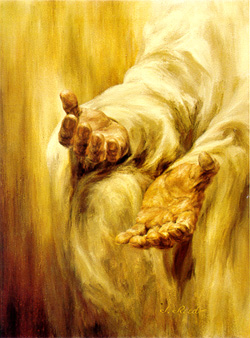
Please Let the Children Come

Luke 18:15-17, ESV

We were wrong. I suppose we were trying to maximize Jesus’ ministry. We were there to give Him some much ‘needed’ organization. We simply felt that Jesus’ time was our concern, and we as His disciples wanted Him to connect with those who really mattered. We kept people out and let others in.

But the parents were bringing their children to be blessed by Jesus.

“It was the custom for mothers to bring their children to some distinguished Rabbi on the first birthday that he might bless them.”

William Barclay

We had far more important stuff that needed to be done.

Jesus’ ministry was for adults. There were lepers, demon-possessed, paralyzed, tax-collectors all waiting for His ministry. Somehow we overlooked the needs of little children. Again, we were wrong, misguided, and ignorant of the walk of the true believer.

Jesus made it clear that these children needed to be the focus of our ministry. Our efforts were not to be centered on adults, rather it was misguided thinking on our part to let this happen. We wanted to focus on Jesus’ ministry on those we thought were important.

These little ones kept getting in the way.

And sure enough, Jesus explained to us what we were missing. Children were to become our focus. They were the ones who we were to emulate and esteem. The radical thing to us was understanding that these ‘little ones’ were that significant. This was a powerful jolt, and not at all what we expected.

“Let these children alone. Don’t get between them and me. These children are the kingdom’s pride and joy. Mark this: Unless you accept God’s kingdom in the simplicity of a child, you’ll never get in.”

Luke 18:16-17, The Message

This rocked our world! It was nothing less than another strange thought from our Teacher. Accepting this wasn’t easy, but Jesus was crystal clear. We dare not think otherwise, and yet it was against all we thought we understood.

Jesus understood that childlikeness was the only way we could enter His Kingdom.

Up to now, we assumed that maturity meant something like sophistication. It was all about right thinking and good theology. That was what God was looking for. We assumed that being simple wasn’t quite what Jesus wanted from us. Rather we believed the opposite.

Children were now to be our examples. Their simpleness was to be our guide–it was the Kingdom of God’s doorway into true discipleship.

Who would have guessed?

Beth Moore

alaskabibleteacher.com

What Does God Want From You?

I plead for you not to skip this post.

“He also told this parable to some who trusted in themselves that they were righteous and looked down on everyone else: 

“Two men went up to the temple to pray, one a Pharisee and the other a tax collector. 11 The Pharisee was standing and praying like this about himself: ‘God, I thank you that I’m not like other people—greedy, unrighteous, adulterers, or even like this tax collector. 12 I fast twice a week; I give a tenth of everything I get.’”

13 “But the tax collector, standing far off, would not even raise his eyes to heaven but kept striking his chest and saying, ‘God, have mercy on me, a sinner!’”

Luke 18:9-13

He despised others. As a Pharisee, he prided himself as a holy person; he thought he stood before God accepted and pure. He congratulated himself over this. I’m starting to see that self-righteousness has many levels. You can be blatant and obvious about it, or perhaps it might be more subtle and hidden. (Many believers like it hidden.)

We have to understand that God sees all and our hearts and minds are continuously inspected by the Holy Spirit. God sees our hearts as we see the faces of our friends. Any presence of pride or the absence of humility is automatically rejected by our heavenly Father.

In the Bible, it’s quite clear that being humble and admitting our sins and flaws are the best way to counteract any kind of puffed up pride. But for some reason, we often don’t realize when our selfishness and ego is getting in the way. It often comes very, very subtle. Tricky maybe.

Humility is a quality that cannot be acquired or maintained permanently.

Humility is not an accomplishment. There are no spiritual medals given for humility and brokenness. It’s not once you’re done. We must find humility every single day. Every morning, when my feet hit the floor, it’s something that requires my daily effort and practice. But it’s scary, because I’m starting to see that God’s precious grace is ultimately nullified by my pride.

The right kind of heart is broken and humble every single morning.

The Pharisee believes he is better than the tax-collector, and he now stands confidently before God. He thinks he is holy and superior to others. He really believes he has spiritually arrived.

But the tax-collector was brutally honest about himself. He understood the presence of God.

He didn’t need anyone to tell him how sinful he was–he knew his own wickedness. Jesus’ story reveals God’s love for those who know that they’re twisted up inside and lost. But let’s look closer at the heart of the tax-collector:

  • “He stood afar off,” which showed his awareness of his separation from God.
  • “He wouldn’t even raise his eyes to heaven,” which declared his humility in the presence of a holy God.
  • He kept “striking his chest,” which tells us of a deep pain over his sin against God.
  • He prayed, ‘God, have mercy on me, a sinner!’ This describes his desperate heart.

Both men came to pray, but to be really honest, that’s all they had in common.

The Pharisee came to the temple to declare his righteousness, the tax-collector came out of a terrible despair. It strikes me that the text in verse 11 says the Pharisee, “began praying to himself.” It seems that his prayer never really met God–all he was proud and showy, and he was only doing those things God hates (Prov. 29:23).

But it was the tax-man who became righteous in the eyes of God.

Humility is the foundation of the kingdom of Jesus. Matthew 5:3-4, makes a lot of sense to me. To be “poor in spirit” and to “mourn” has now become the solid bedrock of a Christian’s discipleship. To be justified (made right) is a gift. No one can earn salvation. The tax-man could only hold out his empty cup and hoped that God would fill it. Maybe that’s our beginning point.

But suddenly the tax collector is now considered righteous, while the Pharisee left the temple unchanged, and unforgiven.

“We had long known the Lord without realizing that meekness and lowliness of heart should be the distinguishing feature of the disciple.”

    Andrew Murray

When I crawl out of bed in the morning I start all over again. I realize I am nothing, I deserve nothing. I can only cling to the grace of my Father.

God wants us to have a broken heart and it’s apparent He rejects everything else. I suppose that there are questions I must ask myself: Am I really poor in spirit? Do I really mourn over my sin? Am I broken or am I subtly proud of myself? I must ask myself these questions.

“This is the Lord’s declaration. I will look favorably on this kind of person: one who is humble, submissive in spirit, and trembles at my word.”

Isaiah 66:2, CSB

Art by Eugène Burnand

alaskabibleteacher.com

Was Judas Forgiven?

And Jesus said, “Father, forgive them, for they know not what they do.”

Luke 23:34

From the cross Jesus spoke this. He was being executed in an extreme way, crucifixion was a terrible way to die. Roman soldiers surrounded the cross, and yet Jesus asked the Father to forgive them. They would not be guilty, but forgiven for what they were doing to Him.

But what about Judas?

How broad was Jesus’ statement? Did Jesus grant Judas absolution from this sin of betrayal when He said this? There’s far too many questions, and it’s good to think these things through. Was there forgiveness for this man of treachery?

“Then Satan entered into Judas called Iscariot, who was of the number of the twelve.” (Luke 22:3, ESV.) Perhaps this verse should become our entry point. It’s apparent that Judas was being controlled by the evil one. Something (or someone) took possession of him at this point. It seems astonishing that this happened at the special moment of the Lord’s Supper.

At this point Judas sought out the chief priests.

Judas offered to turn Jesus in, and it seems that money was given, perhaps to encourage Judas to commit himself to follow through. We read that Jesus was “troubled in His spirit.” It seems that this had to do with the impending betrayal.

So what was the early Judas like? Was he an authentic disciple? It seems he was called like the others. He listened to Jesus’ teaching and saw most of the miracles. Later he was sent out to proclaim the “good news.” Apparently, he teamed up with another disciple, miracles were seen.

“Judas heard all of Christ’s sermons.”

Thomas Goodwin

I can’t verify this yet, but each of the 12 called Jesus “Lord,” but only Judas called Jesus “rabbi.” Perhaps this points to a problem Judas has identifying the ministry of Jesus. There would be a kiss commonly given by a disciple, but was it real?

Judas seemed to have problems with money. Apparently Jesus decided that he was to be the treasurer of His followers. This was a problem for Judas. It’s clear that he stole money from that was entrusted to Jesus’ ministry.

Yet I believe Judas would be forgiven of these things if he only asked.

There are a few other things we really must consider. Did Jesus forgive Judas? The Romans and the Jewish leaders were forgiven by Jesus from the cross. But there was never any indication that Judas was forgiven for his betrayal. It seems that Judas carried his sin which ended up in suicide.

Both Peter and Judas betrayed their Lord.

And yet I have to believe that they were not the same. Somehow Peter’s denial would find a way to be forgiven. And even though it seems very painful, Peter would be restored. But Judas took his own life. It was his choice. Simon Peter felt remorse. Judas was overcome with guilt and chose death instead of seeking forgiveness.

I’m completely convinced that we will not see Judas in heaven.

I say that cautiously. I hardly ever understand the mind and heart of God. His compassion is everlasting. Who am I to decide these things? But it seems to me that when he sold Jesus for 30 pieces of silver, he was really selling himself.

“While I was with them, I kept them in your name, which you have given me. I have guarded them, and not one of them has been lost except the son of destruction, that the Scripture might be fulfilled.”

John 17:12

This verse seems to clarify much about Judas. We understand Jesus’ care and love for each of His disciples; yet we see a pronouncement of judgement against the person who would betray Him. It seems that Judas convinced himself that he could not be forgiven. His awful suicide declared he was beyond grace. Judas decided he would hang himself, committing himself to the rope rather than accepting any kind of forgiveness.

Sobering, isn’t it?

“Judas Iscariot was not a greatly wicked person, just a common money-lover, and like most money-lovers, he did not understand Christ.”

A.W. Tozer

Rooted Firmly and Deeply

“But I am like a green olive tree
    in the house of God.
I trust in the steadfast love of God
    forever and ever.”

Psalm 52:8

In Psalm 52 we read of David’s run-in with Doeg, a very bad man, (a mass murderer actually). But David, hearing about the slaughter of 85 innocent priests doesn’t respond in hatred, rather he sits down and writes this song of contemplation which we know as Psalm 52.

It isn’t something written out of wrath and vengeance rather the word that begins his writing is “maskil” which implies– enlightenment, or something reflective, thoughtful, discerning. He sat down and considered Doeg’s awful evil, and by doing this was able to understand own heart as well.

Psalm 52 has two distinct parts.

The first is Doeg’s vicious atrocity, and the condemnation that it incurs, (v.v. 1-7). The second was David’s own commitment to following God, and understanding his own place in a very evil world, (v.v. 8-9).

Rather than castigate himself for being discovered in Nob–a circumstance which directly led to the mass murder of these priests (and their families). We find that David does not blame himself. He could have, but he didn’t. Rather he thoughtfully, and carefully, detailed his own “observations” of the whole sordid matter.

David could easily have destroyed himself with guilt and grief. He didn’t.

He chose not to play the losing game of ‘what if.’ He instead would be like a green olive tree rooted himself in the holy temple and into the protective presence of God. David knew he would destroy himself if he didn’t place himself there. It was a deliberate decision.

It would keep himself sane.

It seems to me that trees work heavily into David’s own theology and that this is how he sees his relationship with God. He’s planted and therefore able to survive terrible trials. He shows us how to survive and thrive.

His roots would need to go very deep though.

David’s thoughtful imagery is himself as an olive tree planted in God’s presence.

I believe knowing this is the antidote to the poison of guilt. Perhaps we should follow his example?


“They are like trees planted along a riverbank,
    with roots that reach deep into the water.
Such trees are not bothered by the heat
    or worried by long months of drought.
Their leaves stay green,
    and they never stop producing fruit.”

Jeremiah 17:8

Is Jesus Your Best Friend, or a Doctrine?


“A rule I have had for years is: to treat the Lord Jesus Christ as a personal friend. His is not a creed, a mere doctrine, but it is He Himself we have.”

  ~D.L. Moody

Friendship with God is a liberating secret for the believer. It releases us from the terrible bondage of religion and ritual with all its negative connotations. Intimacy with our Lord will carry us beyond creed or doctrine to the place of true communion.

It’s not that the Law is bad, but in the intense light of God’s grace, it’s really a very poor substitute. We value legalism, and that is precisely what we believe when we bypass the relationship. Doctrine is a good servant, but a poor master.

Grace always overcomes legalism. Love truly surpasses rules.

As good evangelicals, we talk big about a “personal relationship.” That is indeed crucial. But few be the believers that walk in a daily friendship with their Savior. That is truly a tragedy. We come oh so close, but we misunderstand the depth of the Gospel.

As a teacher of God’s Word, I mourn over my students when they miss out on what is real and true. I’m afraid for them. I’m also scared that I may just be adding to their confusion. The issue can be seen in Paul’s concern for the church in Corinth.

“I no longer call you slaves, because a master doesn’t confide in his slaves. Now you are my friends since I have told you everything the Father told me.”

John 15:15, NLT

Friendship with Jesus will bring true guidance. He shares secrets and wisdom with his friends. We are brought into a true knowledge of the Kingdom through the relationship of friendship with the King. We are not slaves– or drones, slavishly serving out of slavish fear.

We’re now His friends! (Imagine that.)

Jesus wants to confide in us; sharing wisdom and truth hidden by time and sin. And his kingdom is chock full of great mysteries! He is looking to bring us into a willingness of daily communion. Only through intimacy with Jesus can we handle what He wants to teach us. (see Psalm 25:14; John 15:15.)

He will heal our wounds, and forgive all our darkest sins. He is truly our Savior as well as our friend.

But friendship comes with a price. It means we are now tethered to the Lord. That can get old, especially when I want to do my own thing. I will continually have to lay something down and choose to accept being tethered and follow Him.

But my soul now has a best friend. Or just maybe, Jesus has been my friend all along, and I just didn’t know it.


Listen Closely to the Rich Young Ruler

Mark 10:17-22

As he was starting out on a trip, a man came running to him and knelt down and asked, “Good Teacher, what must I do to get to heaven?”

18 “Why do you call me good?” Jesus asked. “Only God is truly good! 19 But as for your question—you know the commandments: don’t kill, don’t commit adultery, don’t steal, don’t lie, don’t cheat, respect your father and mother.”

20 “Teacher,” the man replied, “I’ve never once broken a single one of those laws.”

21 Jesus felt genuine love for this man as he looked at him. “You lack only one thing,” he told him; “go and sell all you have and give the money to the poor—and you shall have treasure in heaven—and come, follow me.”

22 Then the man’s face fell, and he went sadly away, for he was very rich.

My name is inconsequential. I suppose all you must know of me is I tried to keep God’s Law and that I was very wealthy. Many believed that being rich was evidence that God approved of me. Of that, I wasn’t too sure. I kept the Law out of fear I suppose, and at times I just knew it wasn’t quite enough.

As I studied I began to realize that riches weren’t going to make me righteous. There was enough Scripture in me to let me know that it wasn’t enough. The prophets, especially Isaiah spoke about the deadliness of wealth, but there was one verse in Proverbs that really disturbed me:

“Your riches won’t help you on Judgment Day; only righteousness counts then.”

This verse and all of the others were the cause of many a sleepless night.

I was tormented by the reality of standing before God with nothing but my money to cover me. Coming under God’s righteous judgment haunted me. I thought of it day and night. I was terrified of being damned. My own righteousness wasn’t enough, and I knew it.

I heard about Jesus (and who hasn’t)–some were claiming that he was the Messiah. He was at least a wonderful teacher and many said he worked miracles. Just perhaps he had answers for me. I hoped so, but I needed to know. It was my questions that drove me to find him.

And finding him was easy–I just followed the crowd.

I went ahead of his retinue of followers. I knelt in his path and waited. I must know what he thought. When he stood before me I asked the question that had haunted me my whole life–“Good Teacher, what must I do to get eternal life?”

Being a good Jew he answered my question with a question. It now seems that he wanted me to see what really mattered. I answered him with my “righteous” commitment to the Law of Moses. I did what was important–at least that’s what I thought. But still, in spite of all that, I felt no security and no real peace.

Jesus looked straight at me, and I knew deep down that he loved me.

But oh those words, His words really disturbed me. He told me that I only lacked one thing, that I must sell everything and distribute the money to the poor. Only by doing that would discover riches in heaven. And only then could I truly follow him.

And that was the thing I could never do.

I went away grieved. If he had asked for anything else I would have done it. You see, my wealth was my real obstacle. Deep down I suddenly knew that everything I possessed was now my stumbling block. It was my idol, my golden calf, and it was a sacrifice that I could never make.

I’ve come to realize now, over my many years, that when I do finally stand before God, I will have nothing to save me. Jesus invited me to follow, and I didn’t.

And that my friend meant I would die in my sin.

Tether Me to His Cross

We live in this place.

St. Francis of  Assisi once wrote, “The devil never rejoices more than when he robs a servant of God of the peace of God.” 

Sometimes I think I’ve made the devil dance far too many times.

I confess that peace has never been really high on my list. Love, joy, kindness, and even goodness are clear priorities. Peace… not so much. Until it’s not there. And then I get frantic by its absence and look for it with manic bewilderment.

Sometimes I don’t understand why God still loves me. Anxiety eats at me. I beat myself up by my last failure. The guilt of my latest sin grows until it looms larger than the blood that saved me. Sometimes religious people have the most neurosis.

I’m afraid that we are taking “the present tense’ out of the Gospel. The past tense is far preferable to us as we manage the Christian life. We like to make check marks on our list. Repentance– check. Baptism– check. Bible study– check. I think it gives me a definite feeling of ‘maturity.’

These matter little without intimacy with Jesus.

I certainly haven’t arrived, and it seems I’m still the hideous sinner I always was. I cannot pretend otherwise, even with a truckload of cosmetics at my disposal. I know, I’ve tried. And I’m still ‘ugly.’ I do know forgiveness, and I do walk in its wonderful light (by grace.)

I read Luther 30 years ago. (And Bonhoeffer would say something similar.)

“When our Lord and Master Jesus Christ said, ‘Repent,’ he willed the entire life of believers to be one of repentance.”

Martin Luther

This is the first of his 95 Theses nailed to the door of Wittenburg. There is a present tense here we can’t ignore. I don’t just repent over smoking, beer drinking, fornication, or hypocrisy, once and done. But my entire way of living is to be one of repenting.

Repentance is the key to opening the door of grace.

“All of the Christian life is repentance. Turning from sin and trusting in the good news that Jesus saves sinners aren’t merely a one-time inaugural experience but the daily substance of Christianity. The gospel is for every day and every moment. Repentance is to be the Christian’s continual posture.”

John Piper

Luther’s last words, on his deathbed, written on a scrap of paper words, “We are beggars! This is true.” Thirty years before, he was only echoing his first thesis. It seems dear ones, we are to live at the foot of the cross. Everyday. Because we desperately need to.


“Be quiet!” many of the people yelled at him. But he only shouted louder, “Son of David, have mercy on me!”

Mark 10:48

Enjoy Your Pig Slop

“After he had spent everything, a severe famine struck that country, and he had nothing.”

“So he got a job with one of the citizens there who sent the son into the fields to feed pigs. 16 The son was so hungry that he wanted to eat the pods the pigs were eating, but no one gave him anything.”

“The Prodigal Son,” Luke 15:14-16

God has a definite way of arranging things to get our undivided attention. The prodigal had blown through his inheritance money and now had nothing. And then there was this famine–a really bad one. (The word can be translated, as “violent.”) I think the Father was working.

Flat broke and having a need to eat, he started looking through the want ads for work. All he found was an ad for a “pig feeder.” That was it, there was nothing else to be had. So now began his new career in porcine agriculture! He was desperate and he was hungry.

A Jewish boy feeding pigs. Oh boy, how the mighty have fallen!

Verse 18 in this passage takes it a step further. As he poured out the slop the things he was feeding the pigs looked mighty tasty. His mouth began to water. He thought seriously about reaching into the trough and grabbing some of the good pods for himself. (Several days without food does funny things to a man.)

God does some interesting things to bring this prodigal home. Not all of them are pleasant and self-affirming. His circumstances got pretty brutal. He still allows hard circumstances to bring back the stupid. It’s very likely his soul was so valuable that this kind of intervention was necessary.

“When he realized what he was doing, he thought, ‘All of my father’s servants have plenty of food. But I am here, almost dying of hunger.”

(v. 17)

What happened at that precise moment of real repentance can be seen in the following translations of verse 17:

  • “he came to himself,”(King James Version and ESV)
  • “he came to his senses,” (Christian Standard Bible)
  • “he realized what he was doing,” (New Century Version)
  • “he turned again to himself,” (Wycliffe Translation)

That I suppose is the power of the trough. It’s a hard place to live.

The prodigal son is jolted by a very real revelation of home. And even though he grossly underestimates the love of the father, he leaves the pigs and returns. No longer does he have any desire to eat pig food.

Often the side effects of our own stubborn rebellion debase and shame us. It reduces a man or woman to a place of ruin and failure. We feel worthless and very much defeated. We know we’re a dirty rotten mess and we believe Satan’s infamous lies about our ‘impossible-to-forgive” sin.

The spiritual danger in self-degrading thoughts and feelings is that we will start to believe things such as, “God’s Holy Spirit can’t help someone like me” or “I’m helplessly addicted to sin” or even “I’m damned without any hope.”

These are some of the vicious lies Satan tells people to keep them in their sin and rebellion. (It has worked well for him over many millennia.) The enemy tells us that we’ll always live with the pigs, and eventually, over time, we will come to enjoy eating the pig slop. Sadly many accept that lie as the truth.

It is not.

God’s Holy Spirit is transformative and powerful; therefore, if we continue to think we are failures and worthless after receiving Spirit, what are we really saying? Do we doubt His power, or question His love? I hope not.

It’s time to come home.

“Because you have been down there Neo, you know that road, you know exactly where it ends. And I know that’s not where you want to be.”

(“The Matrix”)

Opting Out of Cynicism

Cynical

sinikəl/adjective

1.  believing that people are motivated by self-interest; distrustful of human sincerity or integrity. Contemptuous; mocking; derisive; sarcastic.

Dictionary.com

I want to speak from my heart. I woke up this morning intensely cynical about the world. I hate to think I’m becoming critical or judgmental, but whatever it is I must take it in prayer to Jesus. I feel like I’ve been bit by a snake– a venomous one at that.

When I think of our Lord’s example, it helps a great deal. He knows every man’s heart and motives and that didn’t discourage him. He knew when he came what each of us had done, and was capable of doing.

There was this incident at the Temple:

23 Because of the miraculous signs Jesus did in Jerusalem at the Passover celebration, many began to trust in him. 24 But Jesus didn’t trust them, because he knew all about people. 25 No one needed to tell him about human nature, for he knew what was in each person’s heart.

John 2:23-25, NIV

People can’t be trusted. Our motives and our desires, although hidden from men, are clear to God. And yet He loves us deeply. And love, “keeps no record of wrongs” (1 Cor. 13:5.) In his humanity, Jesus was tempted in every way. Discouragement and despair over the sin of men were resisted.

We can become cynical and jaded over the repeated wrongs we see or hear– it’s easy to do. There can become a ‘coarsening’ and hardness of our hearts. That is dangerous. It requires a touch from Jesus. It means it’s time we get on our knees.

When Jesus sent out his disciples he encouraged them, ““Behold, I send you out as sheep in the midst of wolves. Therefore be wise as serpents and harmless as doves.” (Matt. 10:16.) He knew the hostile human heart had its own agendas– people would be like wolves. But though they would see first-hand the deceitfulness of many, they were to be wise and be completely harmless.

The Holy Spirit will keep us close as we seek his victory in this matter. We will be transformed into the likeness of Christ. Exchange your attitude with His. He will strengthen you. We can renounce the spirit of judgmentalism that is so pervasive. We will love the way he loves.

I know there is much more to say about this. But now the Spirit is prompting me to pray through this issue myself.

Cynicism and skepticism are the crudest form of quasi-intellectualism… Let the cynic become cynical of his cynicism and the skeptic skeptical of his skepticism and join the battle.

     R.C. Sproul

Will You Deny Him?

deny

“Suddenly Jesus’ words flashed through Peter’s mind: “Before the rooster crows, you will deny three times that you even know me.” And he went away, weeping bitterly.”

Matthew 26:75, NLT

Three denials are followed by three reaffirmations.

A third time he asked him, “Simon son of John, do you love me?” Peter was hurt that Jesus asked the question a third time. He said, “Lord, you know everything. You know that I love you.” Jesus said, “Then feed my sheep.”

John 21:17

The apostle Peter was a fervent disciple. He knew who Jesus was before most. He was always included in special times (e.g.  the transfiguration, Gethsemane). He was favored by Jesus throughout times of ministry. I also believe that he was Jesus’ friend.

Peter is known for:

  • being called on the shores of Galilee, Matt 4:18-19
  • ‘almost’ walking on water, Matt 14:29-30
  • finding the tax money in a fish’s mouth, Matt 17:24-27
  • having his feet washed, John 13:6-7
  • in Gethsemane– cutting off an ear, John 18:10-11
  • his remorse at denying Jesus, Matt 26:75
  • at the empty tomb with John, John 20:3-8

Peter’s own denials were of a serious nature affecting who he was, and who he was to become. Jesus astutely intervenes as they ‘breakfasted’ on the seashore. There would be three affirmations; one for each denial. Peter needed to meet the resurrected Jesus and speak with him about what he had done. Peter needed this.

A denial has different intensities and can be used in many different ways.

Out of our own confusion, we realize that we can also deny Jesus. Perhaps frequently.  And none of us have immunity as of yet. We deny the Lord when we refuse to speak of him to others. We deny the Lord when we fail to do what is right. Sometimes we deny him flagrantly, other times it is a more subtle attitude. At best, we’re still inconsistent, and at worst, we’re apostate.

We’re not punished or abandoned for this behavior.

Human logic would suggest that we should be. But instead, we are gently restored. Given the opportunity, Peter the fisherman would eventually become a wise shepherd to the young Church. I would also suggest that Peter’s personal weakness would serve him well as a gentle, and caring pastor.

Peter, near the end of his life, goes full circle and uses a very precise Greek word found in only two places in the New Testament. It is the specific form of the word “shepherd.” It is only used in John 21:16-17 in Peter’s restoration, and in 1 Peter 5:2. Peter encourages the Church with the exact words Jesus himself spoke to him on the beach so long ago! Peter wrote:

Be shepherds of God’s flock that is under your care, watching over them—not because you must, but because you are willing.”

1 Peter 5:2, NIV