Love Wears Work Gloves

 “But if anyone has the world’s goods and sees his brother in need, yet closes his heart against him, how does God’s love abide in him?”

“Little children, let us not love in words or talk but in deeds and in truth.”

1 John 3:17-18, ESV

Love is a noble idea, it’s admired and extolled by practically everyone–we see it in our music and poetry, ethics and religion. For the most part it’s a word for something decent and virtuous and honorable. It’s a good thing, but I’m afraid it’s not always scriptural.

You see, Bible love wears work gloves.

It labors and sweats. Bible love has chores to do, and it actively looks and sees what needs to be done. 1 John 3 tells us that we shouldn’t deceive ourselves and only see the world’s definition. That love that a believer has is to be different.

Love, in John’s eyes, is most assuredly “doing.” It burns spiritual calories as it labors to serve our brothers and sisters. Love finds things it can do–it doesn’t just talk but it gets busy. Love sees the need and then gets down to serve.

“You must show sincere love to each other as brothers and sisters. Love each other deeply with all your heart.”

1 Peter 1:22

Working (serving) has nothing to do with our salvation, that is a free gift. We’re saved by grace through the blood of Jesus–that’s a given. And this serving love isn’t drudgery, as a matter of fact, working and serving each other is a joy. The deepest kind of joy there is.

Our words, although important, are really an insufficient way of proving our authenticity.  The love we serve another with isn’t “pretty poetry” kind of love. It’s so easy to just shout out truth and never ever show a working, serving kind of love. 

That disconnect is a bit disconcerting. When do we suppose we figure out that His love is actually a verb?


The Snare: Psalm 91

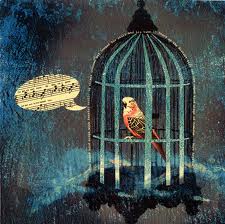
caged-bird

Whoever dwells in the shelter of the Most High
    will rest in the shadow of the Almighty.
I will say of the Lord, “He is my refuge and my fortress,
    my God, in whom I trust.” 

Psalm 91:1-2, NIV

This psalm focuses on being intimate with our heavenly Father.

Throughout the entire chapter, we see personal pronouns used. In contrast to other psalms that are directed to the nation, this one is written to an individual. This personal focus makes this a favorite psalm for many.

Shelter and shadow, refuge and fortress.

These are the opening ‘word pictures’ and they’re used very adeptly.  The psalmist writes what he knows, and it is apparent that he understands deeply the needs of the human spirit, and its protection. Each of these four words creates a common link between believers. Each of us needs a working understanding of all four protections.

I should ‘dwell’ in God’s sheltered care. All too often, I wander out past the security of the Lord (or maybe I’m lured out?) But there is safety in having God so close to us. His proximity is for my protection.

“Surely he will save you
    from the fowler’s snare
    and from the deadly pestilence.
He will cover you with his feathers,
    and under his wings you will find refuge;
    his faithfulness will be your shield and rampart.”

Psalm 91:3-4

silhouette-bird-on-branch-granger

V.v. 3-4, maintains its personal tone. ‘Save you’ (salvation) is far more than a theological term.  The psalmist is not speaking ‘doctrine’ as much as the psalm describes a loving embrace. He is rescued from a deadly trap, and jumping from metaphor to metaphor, he engages our imaginations to ‘see’ God’s salvation. The writer knows his stuff.

The Lord is pictured as a protective bird that covers his chicks.

We have a sure confidence as we gather together in that warm and safe spot under His wing. Whatever is after us has to go through God first. His presence is formidable. In His company is found our only safety.

“What, then, shall we say in response to these things? If God is for us, who can be against us? Who will bring any charge against those whom God has chosen? It is God who justifies.”

Romans 8:31, 33

All of heaven is rallying for your well-being. You are sure of this based on your faith in God’s own word. He has ‘busted us’ out of a dark cage, and now defends you against all your enemies.

And that is a very good thing.


The Church is Collecting Sinners

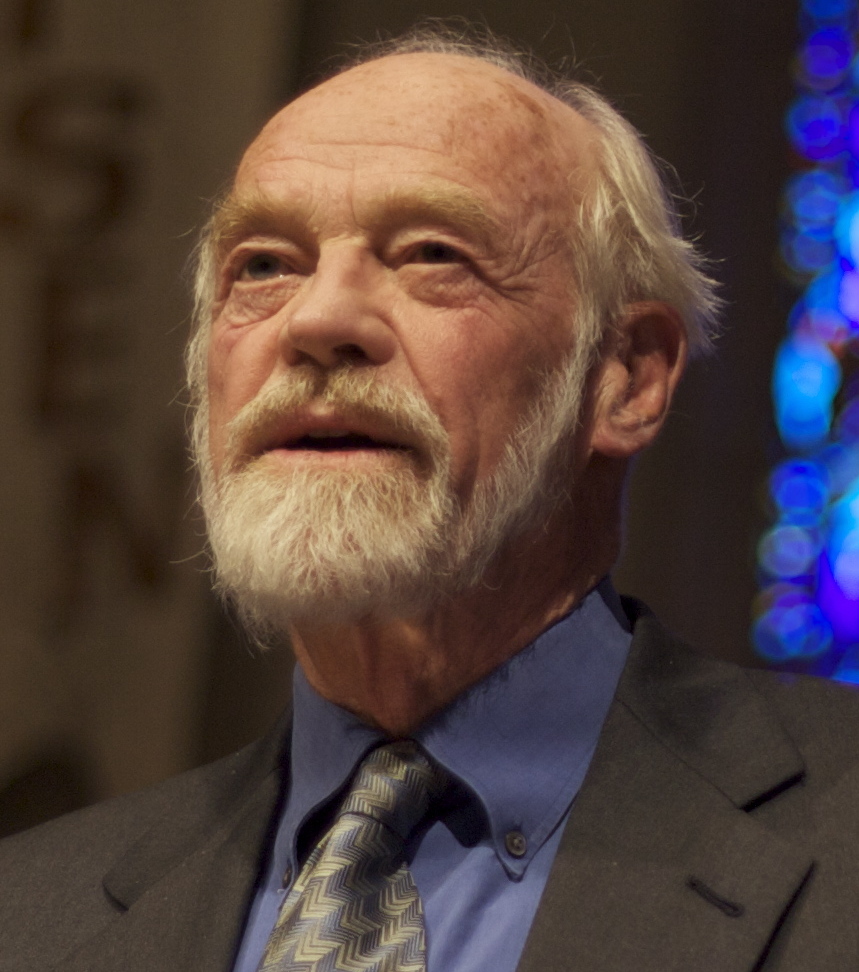
The following excerpt is from the devotional book, “Living the Message,” by Eugene H. Peterson.  This pastor-professor is probably the person I want to grow up to be like; he has a gentleness and eloquence that is seldom seen–and highly respected.
Dr. Peterson died in 2018.

***********

“When Christian believers gather in churches, everything that can go wrong sooner or later does.  Outsiders, on observing this, conclude there is nothing to this religious business, except perhaps, business…and a distant one at that.  Insiders see it much differently.”

“Just as a hospital gathers the sick under one roof and labels them as such, the Church collects sinners.” 

“Many people outside are just as sick as the ones inside, but their illnesses are either undiagnosed or disguised.  It is similar with sinners outside the church.”

“One way to define spiritual life is getting so tired and fed up with yourself you go on to something better, which is following Jesus.”

Some other quotes by Eugene Peterson:

  • “All the persons of faith I know are sinners, doubters, uneven performers. We are secure not because we are sure of ourselves but because we trust that God is sure of us.”
  • “Suffering attracts fixers the way road-kills attract vultures.”
  • “When we sin and mess up our lives, we find that God doesn’t go off and leave us- he enters into our trouble and saves us.”
  • “That’s the whole spiritual life. It’s learning how to die. And as you learn how to die, you start losing all your illusions, and you start being capable now of true intimacy and love.”
  • “American religion is conspicuous for its messianically pretentious energy, its embarrassingly banal prose, and its impatiently hustling ambition.”

More Eugene Peterson Quotes…

Walking With Him in The Garden

This image has an empty alt attribute; its file name is pardes-hebrew-yellow-1.jpg

“When the cool evening breezes were blowing, the man and his wife heard the Lord God walking about in the garden. So they hid from the Lord God among the trees.”

Genesis 3:8

I honestly have never had the wonderful experience of strolling a lush garden with my Father. At least not totally. But when I’m engaging the Word, pressing in to comprehend a passage, it’s as if I’m truly walking in His orchard with Jesus.

But there is something more to this.

This word “pardes” is also an acronym. The rabbis taught that there are four levels of understanding as we peer into a passage.

  • P’shat–the surface or literal meaning of a verse or passage.
  • Remez– the symbolic or applied reason of the Word. How it connects with my daily life.
  • Drash–how it fits into other parts of the Bible, forming a purposeful teaching.
  • Sod–a hidden meaning that resides “underneath” the verse. This seems when the Holy Spirit gets really involved in the way I live. (Some would say “mystical.)

Now I’m not sure that every passage reaches the “sod” level. (Maybe we’re not really aware?)

When we truly study God’s Word it’s as we walk in the garden. He reveals Himself to us. The Genesis story shows us where we can find Him. The important thing I suppose is trying to hide from God’s presence. We can’t.

We must come to our Father, and learn to walk with Him. The Bible is the best way to fellowship with Him.

If You Really Want to Worship, Use a Knife

In Biblical hermeneutics, the ‘Law of First Mention‘ is used. Essentially it means that the first time a word or a concept is mentioned should go on to determine the way it needs to be understood throughout scripture. It is a guiding principle more than anything, but a good one at that. Genesis, being the first book, is a blessed repository for many of these ‘first mentions.’

In Genesis 22, we have the story of Abraham and Isaac on Mt. Moriah.

Abraham has tied up his son on an altar to offer him as a sacrifice in obedience to God’s direction (v. 2). This is faith being tested to the ultimate extreme. And Abraham shows us how to enter in.

“Then on the third day Abraham lifted his eyes and saw the place afar off. And Abraham said to his young men, “Stay here with the donkey; the lad and I will go yonder and worship, and we will come back to you.”

Genesis 22:4-5

This is the first time that  the word “worship” is used in the Bible.

It sets the singular tone for all the scriptures on this subject. I guess what is interesting is there were no musical instruments involved. There was just these needful things:

  • stones,
  • wood,
  • rope,
  • fire,
  • a knife,
  • and Isaac, (the would-be ‘lamb.’)

When the Hebrew word for ‘worship’ was used for the first time; it is interlaced with the idea of an incredible sacrifice. Abraham is the first ‘worship leader’ and he has no guitar. No piano, or drums either. No musical instruments whatsoever. No overhead lyrics to speak of.

Just a handmade altar, and a knife.

In the end, Abraham raises that knife, and then suddenly, to the relief of us all, he is stopped. His faith has withstood the test, and he has truly ‘worshiped.’

But the Angel of the Lord called to him from heaven and said, “Abraham, Abraham!” So he said, “Here I am.” And He said, “Do not lay your hand on the lad, or do anything to him; for now I know that you fear God, since you have not withheld your son, your only son, from Me.”

Gen. 22:11-12

Principle One: There really can’t be worship without sacrifice.

Recovering this truth concerning worship would be beneficial. It seems we delegate ‘worship’ to a select few who are talented and gifted. We probably don’t do this deliberately, but sometimes we feel it makes a better presentation. We all want to look good, even Christians. (Perhaps this is more substantial than we know.)

Principle Two: The first worshiper didn’t use a guitar, but a knife.

This difference keeps the idea of sacrifice in its definition. There isn’t worship without sacrifice. The knife thrust that he was ready to wield wasn’t backed up by drums or piano. Yet Abraham understood worship every step to Moriah with the knife in his belt.

“The Scriptures include or allude to just about every approach to worship there is: organized, spontaneous, public, private, simple, complex, ornate or plain. Yet there is no comment anywhere about any one way being preferred over another. Rather, it is the spiritual condition of the worshiper that determines whether or not God is at work.”  

Harold Best

So, brothers and sisters, because of God’s mercies, I encourage you to present your bodies as a living sacrifice that is holy and pleasing to God. This is your appropriate priestly service.”

Romans 12:1

Ultimately, we must realize our sacrifice is the Lamb of God. It’s His blood on God’s altar for our sins. As believers, our faith firmly rests in this spiritual fact.

We of all people have cause to really worship.

Discovering Grace Again

Some Christians are called to endure. These believers are a spectacle of grace to the church, like flaming bushes unconsumed, and cause us to ask, like Moses:

‘Why is this bush not burned up?’

Exodus 3:2-3

The strength and stability of these believers can be explained only by the miracle of God’s sustaining grace. The God who sustains Christians in unceasing pain is the same God — with the same grace — who sustains me in my smaller sufferings. We marvel at God’s persevering grace and grow in our confidence in Him as He governs our lives.

— John Newton, author of “Amazing Grace”

All of us know a brother or sister who seems to be a target of an undue amount of suffering. It seems like they’re always in the furnace. Perhaps we should give them double honor for their faith in God’s grace and providence. Their hurt is typically inside, and most carry this pain apart from others’ knowledge. They cry when they think no one is looking.

What can we say to those who seem to be in a white-hot furnace? How can we bless those who are in so much pain? They hurt deeply, and honestly, at times we have no idea what they’re having to endure. They’re being challenged in ways we never imagined. We should realize that their burden would probably destroy us.

Ministering to these sufferers can be a real challenge. Even if God is directing you!

Sometimes just a word of simple encouragement is all that is needed. A phone call or an email is good, and it’s the work of a believer to actively lift each other up like this. This is how the Church is meant to be. We watch out for each other, we care for each brother and sister, and it’s a joy to serve each other like this.

But sometimes it might be necessary to speak directly into their awful storm.

In the midst of some awful difficulties in my early walk, I had a dear brother who was so kind. He gently (and carefully) quoted Philippians 1:6 to me over and over. It was wonderful and so encouraging–he blessed me with that promise and it’s now my “life verse” fifty years later!

And I am sure of this, that he who began a good work in you will bring it to completion at the day of Jesus Christ.”

Philippians 1:6, ESV

A good reminder for us is that the pain we feel right now is not the end. Our trials have a finite duration (although it seems far away). There’s coming a day when the difficulty will suddenly cease and we’ll come out on the other side. “We’ll shine like the stars,” scripture promises us. (Daniel 12:3). I really believe we’ll see that.

Much wisdom is needed in our ministry to disproportionate sufferers. We should have a fear of intruding on the work the Lord is doing in their spiritual heart. We must be patient and humble in this matter. There is no rushing God, after all, it’s His work. Most importantly we must be very much ‘present’ for our friend.

“But not only that! We even take pride in our problems, because we know that trouble produces endurance.”

Romans 5:3

But please understand. A “word” spoken out of place can cause even more ‘heartache’ for the sufferer. Let’s be careful. At times it’s better not to say anything, and to be honest, that’s okay. Job’s friends were best sitting in the ash heap saying not a word.  Please dear one, be aware, alert, and very wise about these things.

Just wait on God—-be sensitive, discerning, and pray a whole lot. It’s no small thing to speak to those who are hurting so deeply.

“The Lord GOD hath given me the tongue of the learned, that I should know how to speak a word in season to him that is weary: he wakeneth morning by morning, he wakeneth mine ear to hear as the learned.”

Isaiah 50:4

alaskabibleteacher.com

Straining at Your Oars

“He saw the disciples straining at the oars because the wind was against them.”

Mark 6:48

We must know that Jesus sees our labor and effort.  He understands all that concerns us, and he perceives every issue that we take.  Jesus is attentive and He comes to our little boat.  It’s quite common for us to think that he isn’t really concerned, and we may feel that He’ll pass us by without a word.  But that’s only from our own perspective.

Jesus watches over us, all the time. 

He knows all about our battles, the terrible fight we have with our flesh, the profound  difficulty we have with temptation and trials. He understands these things perfectly. I often struggle to steer my boat, but the winds and waves are hard. Jesus knows when and why I labor like I do.  And He doesn’t condemn me.

The disciples were straining very hard to keep the boat afloat. 

Every oar was being used and every man had his seat. Some were frantically bailing, and a couple tried muscling the tiller. A considerable effort was being expended.  But the wind pushed even harder against them.  This is perplexing.  If you remember, they’re simply trying to obey the command of Jesus to cross the sea. 

Why do things have to be so difficult?

I’m intrigued by preachers who preach sunshine, blue sky, and red roses because they are doing God’s will.  They don’t seem to think through the issues of conflict and challenge–my own boat has been pounded by the storm, and it seems it’s always on the verge of taking water and sinking. Is it because I have no faith?

“It is necessary to go through many hardships to enter the kingdom of God.”

Acts 14:22

Often doing the will of God will mean a headwind blowing directly at us.
 

The seas will become impossible, and we may even be driven back.  But special comfort comes when we realize we’re being watched and cared for.  Jesus is in constant lookout and He sees our toil on the oars. He comes to us, walking on the water. He comes and brings us His peace and special comfort.

Even in our storm, our hearts can rejoice.

This is His fantastic and sure promise:

“Lo, I am with you always, even to the end of the age”

Matthew 28:20

alaskabibleteacher.com

When Pain is All You Can Think About

Sometimes we live in darkness. We suffer and it’s hard. We mentally accept God’s grace and His love for us, but in our heart we remain untouched. Pain saturates everything it seems. We seem to go through the motions, but deep down we’re convinced that we’ll never find the light that so many claim to have.

Are we “cursed?”

Pain fills our life. We live with something that is persistent, and our hope is a day when it’s all over. Psalm 88 is our Psalm. Nothing is sugar-coated. It is raw and unabridged. It’s pain under a microscope. That Psalm is yours.

For my soul is full of troubles,

    and my life draws near to Sheol.

I am counted among those who go down to the pit;

    I am a man who has no strength,

Psalm 88:3-4

20 Quotes for the Believer at Christmas

Some quotes on the meaning of Christmas:

He was created of a mother whom He created. He was carried by hands that He formed. He cried in the manger in wordless infancy, He the Word, without whom all human eloquence is mute.    

–Augustine

There were many who saw the babe, but did not see the salvation.  

–Author Unknown

For the Christ-child who comes is the Master of all; No palace too great, no cottage too small.  

 –Phillips Brooks

Rejoice, that the immortal God is born, so that mortal man may live in eternity.    

–John Hus

His poverty was so great that He was born in another man’s house, and buried in another man’s tomb.    

–John Boys

It is here, in the thing that happened at the first Christmas, that the most profound unfathomable depths of the Christian revelation lie. God became man; Nothing in fiction is so fantastic as this truth of the incarnation.  

–J.I. Packer

Who can add to Christmas? The perfect motive is that God so loved the world. The perfect gift is that He gave His only Son. The only requirement is to believe in Him. The reward of faith is that you shall have everlasting life.  

–Corrie Ten Boom

The Almighty appeared on earth as a helpless human baby, needing to be fed and changed and taught to talk like any other child. The more you think about it, the more staggering it gets. Nothing in fiction is so fantastic as this truth of the Incarnation.  

— J.I. Packer

There were only a few shepherds at the first Bethlehem. The ox and the donkey understood more of the first Christmas than the high priests in Jerusalem. And it is the same today.    

–Thomas Merton

Christmas is based on an exchange of gifts, the gift of God to man – His unspeakable gift of His Son, and the gift of man to God – when we present our bodies a living sacrifice.   

 –Vance Havner

The idea that there’s a force of love and logic behind the universe is overwhelming to start with, if you believe it. Actually, maybe even far-fetched to start with, but the idea that that same love and logic would choose to describe itself as a baby born in shit and straw and poverty is genius, and brings me to my knees, literally. To me, as a poet, I am just in awe of that. It makes some sort of poetic sense. It’s the thing that makes me a believer, though it didn’t dawn on me for many years.    

–Bono

The central miracle asserted by Christians is the incarnation. They say that God became man.   

— C.S. Lewis

Infinite, and an infant. Eternal, and yet born of a woman. Almighty, and yet hanging on a woman’s breast. Supporting a universe, and yet needing to be carried in a mother’s arms. King of angels, and yet the reputed son of Joseph. Heir of all things, and yet the carpenter’s despised son.   

–Charles Spurgeon

Carols stir us. Holy words inspire us. The golden glow from the manger warms us. A little religion at Christmas is fine. But that glow in the manger comes from the Light of the world. It exposes evil and either redeems it or destroys it. The babe in the manger is far more than an object for sentimental sighs. He is the Son of God who must be accepted as ruler – or confronted as rival.  

–John G. Stackhouse, Jr.

It is good to be children sometimes, and never better than at Christmas when its mighty Founder was a child Himself.  

–Charles Dickens

Christmas is for children. But it is for grown-ups too. Even if it is a headache, a chore, and a nightmare, it is a period of necessary defrosting of chilled hidebound hearts.  

–Lenora Mattingly Weber

Hark the herald angels sing,
Glory to the newborn king.”
Peace on earth, and mercy mild,
God and sinners reconciled.

–Charles Wesley

This Gospel anticipates a world far different from C.S. Lewis’s Narnia, where it is “always winter, and never Christmas.” The promise of the Gospel is that it is “always Christmas.”  To be “in Christ” is to enjoy each morning as a Christmas morning with the family of God, celebrating the gift of God around the tree of life.  

–Kevin VanHoozer

The spirit of Christmas needs to be superseded by the Spirit of Christ. The spirit of Christmas is annual; the Spirit of Christ is eternal. The spirit of Christmas is sentimental; the Spirit of Christ is supernatural. The spirit of Christmas is a human product; the Spirit of Christ is a divine person. That makes all the difference in the world.  

–Stuart Briscoe

Here’s a side to the Christmas story that isn’t often told: Those soft little hands, fashioned by the Holy Spirit in Mary’s womb, were made so that nails might be driven through them. Those baby feet, pink and unable to walk, would one day walk up a dusty hill to be nailed to a cross. That sweet infant’s head with sparkling eyes and eager mouth was formed so that someday men might force a crown of thorns onto it. That tender body, warm and soft, wrapped in swaddling clothes, would one day be ripped open by a spear. Jesus was born to die.    

–John MacArthur

Little Christs

Acts 11:26, ESV

Some have suggested that the word “Christian” (grk. christianos) was meant as a slur or insult. It meant little Christs, or mini-Christs. Perhaps that was the best the unbelievers came up with. They identified believers in Jesus and slapped a label on them that was supposed to mock and demean them.

But guess what? The early Christians loved it!

The disciples very quickly adopted it as a great explanation of their new identity. It became a badge of honor. The early Church of disciples became known as little Christs. This now identified them, and they wholeheartedly embraced this new nickname.

From all that I’ve read I see Antioch as a pretty interesting place. It was a city of almost 300,000 people and it had some major Roman temples, and amphitheatres. The city was fully entrenched in the economy and military of the empire. Antioch was regarded as the eastern capital of Rome.

After heavy persecution in Jerusalem, Christians moved north and made Antioch their home base.

This verse (Acts 11:26) tells us that Paul spent a considerable amount of time there teaching the church. After a generation or two, Ignatius of Antioch took over leadership of the Church. By 390 AD the city had almost 200,000 believers!

I’m not sure why, but the word “Christian” is only used 3x in the N.T. (Go figure?) Just maybe the letters of Paul and Peter predated the new label? IDK.

C.S. Lewis

To be a mini-Christ is a pretty profound calling. I think of the 12 being sent out by Jesus to heal and announce the arrival of His kingdom in a new way. In essence they duplicated Jesus’ ministry. (Matthew 10:5.) The more we know Him, the more like Christ we become. (Matthew 11:29.)

Now don’t get me wrong, we are definitely NOT little gods. No way! We are simply broken people who battle sin and must be filled with the Holy Spirit constantly. (Acts 13:52.) In no way, shape, or form are we anything more than human.

And yet we also are little-Christs!

His Spirit comes when, in our neediness we make room for Him in our hearts and minds, and simply ask in faith. Your faith must be humble, and never ever, be proud or arrogant. We are called to reveal the heart of Jesus to an unbelieving world.

Persecution, in its different intensities, will also be present for mini-Christs. Jesus repeatedly warned us to expect it.

John 16:33, ESV

So where do we go from here? Mother Teresa once said, “Calcuttas are everywhere if only we have eyes to see. Find your Calcutta.” It’s probably closer than you’ve ever imagined. Open your eyes and receive the reality of being a little-Christ sent out into this world.

Just like Him.