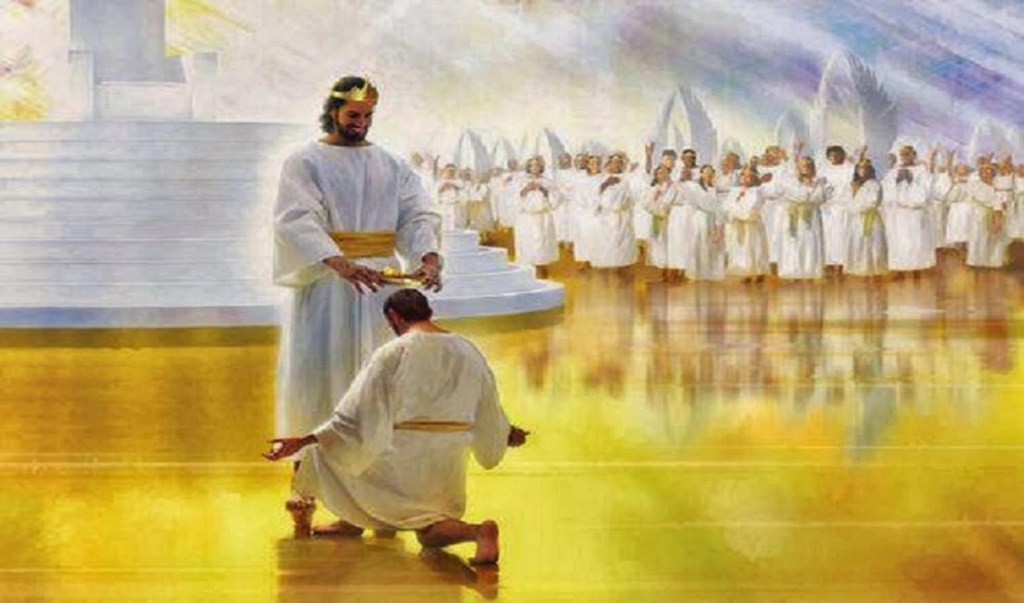
Leaders Who Wash Between the Toes

drsunil.com, art by Takla

He came to Simon Peter, who said to him, “Lord, do you wash my feet?” Jesus answered him, “What I am doing you do not understand now, but afterward you will understand.” Peter said to him, “You shall never wash my feet.” Jesus answered him, “If I do not wash you, you have no share with me.”

John 13:6-8 (verses 3-17)

Chapter 13 always rocks my world. I visualize this, like a fly on the wall, watching it happen–and then I replay it over, and over in my mind. It always unravels me. Why does this have to happen? What does this passage tell me about Jesus and his kingdom? (John 13). Why can’t I just walk away from it, and leave it be?

Jesus made himself a slave on purpose.

Or perhaps he was always a slave all along, and we just didn’t realize it? Foot-washers were pretty much regarded as sub-human, mindless drones who mechanically performed a necessary duty. The lowest of the low, the very least of the least. (Today they’re the burger flippers and the pool cleaners.)

But Jesus took that role on himself, he laid aside his garments and his Godhood. (They landed in a pile in the corner of the room). When he knelt down to scrub feet (making sure he got between the toes), it was Deity serving man. This God/rabbi intentionally did this, not reluctantly or halfheartedly–but carefully. Brilliantly.

He was their teacher, and custom demanded he enjoys the prerogatives of that position. But he wouldn’t, and didn’t. He mustn’t. As I stress over this, I must conclude he really was their “teacher,” but not in the way I expect. What he was doing on his knees, was instructing them in the art of loving each other.

He showed us a real leader in action.

And isn’t making disciples all about loving (and washing) someone else more than ourselves?

We get things turned around sometimes–we think that spiritual authority is moving up when it’s all about going down. We elevate our pastors and elders, maybe subconsciously–and human nature lets it happen, and then we’re amazed why our leaders struggle so.

Leaders function best when they wash between the toes.

There was a point in Jewish history when the people actually demanded that God would give them a king, instead of a judge (1 Samuel 8:5-9). God warned them that this wasn’t in his plans–but they insisted.

They had to have one, everyone else did. We still must have celebrities, and then we wonder why they short-circuit on us. Who can resist the privilege, and the limelight of the platform?

The Church was never meant to operate like this.

That’s what Jesus said. Instead, it’s we who’ve turned it upside down. It’s we who insist on turning our pastors into minor celebrities. We assert that they take on the role of a “king” (albeit, a little one maybe). Perhaps leaders who stumble and fall do so because we want them to be front and center? Who can handle the privilege and the adulation? I know I can’t.

Peter was classic Peter.

It seems that whenever he resists, he gets rebuked. He makes it quite clear that Jesus will never wash feet–that Jesus will never use a basin or towel and serve him like this. It was outrageous. Unacceptable. It didn’t fit in Peter’s personal theology. He had no room for Jesus the slave. (Perhaps he knew that to follow meant he would have to do the same thing? IDK).

Jesus still washes His people. He has not changed.

He sits us down and takes off our shoes and socks, and scrubs us clean. And we hate it. But to be washed by him is a condition of our discipleship. Every follower must be clean, and he continues his work to this day. We sin daily, even as his own, and he cleans us up–and somehow that really bothers us.

The gifts of leadership are one way of washing feet. At least that’s what our leaders were designed to do. That’s Jesus’ way of doing things. But it seems we’ve adopted Peter’s attitude, and embraced the ‘pre-king’ thinking of Israel. We need our celebrities, we want our kings. We simply can’t imagine it any other way.

“The very first thing which needs to be said about Christian ministers of all kinds is that they are “under” people as their servants rather than “over” them. Jesus made this absolutely plain. The chief characteristic of Christian leaders, he insisted, is humility not authority, and gentleness not power.”

 John Stott

The Ministry of Poured Oil

I have to admit, I never really appreciated the depth of Psalm 23:5. I supposed that “He anoints my head with oil” was simply just figurative language for something nice. Poetic. I never knew this definite parallel until recently. But David completely understood and was able to understand the full ministry of the Shepherd.

“You prepare a table before me
    in the presence of my enemies;
you anoint my head with oil;
    my cup overflows.”

Psalm 23:5, ESV

I recently read this and suddenly I understood.

“Sheep can get their head caught in briers and die trying to get untangled. There are horrid little flies that like to torment sheep by laying eggs in their nostrils which turn into worms and drive the sheep to beat their head against a rock, sometimes to death. Their ears and eyes are also susceptible to tormenting insects.”

So the shepherd anoints their whole head with oil.

“Then there is peace. That oil forms a barrier of protection against the evil that tries to destroy the sheep. Do you have times of mental torment? Do the worrisome thoughts invade your mind over and over? Do you beat your head against a wall trying to stop them? Have you ever asked God to anoint your head with oil?”

He has an endless supply!

His oil protects and makes it possible for you to fix your heart, mind, and eyes on Him today and always! There is peace in the valley! May our good good Father anoint your head with oil today so that your cup overflows with blessings! God is good and He is faithful!!”

Posted by Heart Prints

“But you have an anointing from the Holy One, and all of you know the truth.”

1 John 2:20

Oh, How He Loves You!

How Much Do You Love Him?

How much do you love Jesus? This parable looks at the heart of the believer, the person who has been incredibly forgiven of everything–past, present and future. And it’s here we see a woman whose heart is broken by her sin, and she discovers Jesus’ grace, and tremendous mercy.

“A certain moneylender had two debtors. One owed five hundred denarii, and the other fifty. 42 When they could not pay, he cancelled the debt of both. Now which of them will love him more?” 43 Simon answered, “The one, I suppose, for whom he cancelled the larger debt.” And he said to him, “You have judged rightly.” 

44 “Then turning toward the woman he said to Simon, “Do you see this woman? I entered your house; you gave me no water for my feet, but she has wet my feet with her tears and wiped them with her hair. 45 You gave me no kiss, but from the time I came in she has not ceased to kiss my feet. 46 You did not anoint my head with oil, but she has anointed my feet with ointment.” 

47 “Therefore I tell you, her sins, which are many, are forgiven—for she loved much. But he who is forgiven little, loves little.”

Luke 7:40-47

Jesus has been invited to Simon’s home. He’s a Pharisee, and at this point they haven’t quite banded together to attack Jesus, it seems that there were still some Pharisees who were true seekers.

The text jumps right in and we see Jesus reclining at a table (the Jewish people didn’t use chairs–pillows were used instead.) At a feast like this people who weren’t officially invited could come in to stand in the back and listen in on the conversation. (That seems awkward.)

Suddenly a woman enters the room.

She’s described as “a woman of the city,” which is a code word for “a sinner, or a harlot.” (Let your imagination roll that one around.) She comes with a definite purpose, for she brings a jar of quite expensive perfume with her.

The passage reveals that she’s on her knees, weeping on Jesus’ feet, and rubbing her tears with her hair, and pouring out the perfume. She’s kissing his feet. She’s obviously a broken person—someone who knows who Jesus is, and who understands who she is, and how deep sin has destroyed her.

At this point Simon is deeply offended, and probably embarrassed by what’s happening. But he also assumes that Jesus isn’t who he’s saying he is. “How dare does this man let an unclean person even touch Him!” But Jesus understands everything. His parable is short (just two verses) and it’s directed at Simon; and it’s a no-brainer.

The interpretation is obvious: the man who owes the most will love the most.

Jesus accentuates Simon’s breach of protocol. The Lord deftly explains the entire situation and Simon is busted. He’s put on the spot and Jesus has made his point. It’s all so obvious. The essence of the story is clear. How much do you love the Master?

(Or maybe you’re a Simonite?)

Perhaps you’re someone who doesn’t quite accept what’s real? The Bible tells us repeatedly that no one is righteous. No one. Scripture has a very low opinion of the righteousness of men. (That should shatter your thinking.)

“But we are all as an unclean thing, and all our righteousnesses are as filthy rags; and we all do fade as a leaf; and our iniquities, like the wind, have taken us away.”

Isaiah 64:6, KJV

The Hebrew word for “filthy rags” is extremely graphic–literally it means “a menstruating cloth.” It was something that a woman used before Tampax came along. How very descriptive. Do we even have the slightest idea what that means? Are our good deeds that bad?

Yes they are. Isaiah announces that’s exactly how God sees our best attempts to find acceptance apart from grace. It often seems we try to please Him by doing the best we can, but that isn’t sufficient. We always fall short and mess up.

How does understanding this change our discipleship? I’ll let you be the judge on this on this one.

“He loved us not because we are lovable, but because He is love.”

C.S. Lewis

Transformed!

Mark 10:53, ESV

God has touched you in a profound way, (at least I hope so.) Only He could’ve done this. You’re not the same person now. Just like Jesus healed blind Bartimaeus, you too can really see. The beggar becomes a follower. (Mark 10:46-53.)

So what’s next?

There is always another step to take as we follow Jesus. Everyday there is something new. Our salvation is given freely, but we discover that it’s something active–more like a flowing stream and less like a stagnant pool. If we truly have been “healed,” we’ll want to follow. And now each day is a joyous adventure.

After all, we’ve been terribly blind for a long, long time.

Bartimaeus would never be able to truly explain what had happened to him, at least not in a perfect or complete way to the others–but no matter, it really wasn’t necessary. (But I must believe he tried.) He could see!

Notice the sequence of events in verse 53

  • Jesus: “Go your own way.”
  • Bartimaeus: “..followed Him on the way.”

He was now a true follower. No longer a blind beggar, but he was now a true companion of Jesus and the “church.” He now walked with other believers in the Master’s band of disciples. (Having been blind and instantaneously given sight changed him forever.)

So what happened next?

I suspect Bartimaeus followed the Lord all the way. Although scripture doesn’t say what happened, I believe this ‘ex-blind’ man was now a visible witness to any with eyes to see. Bartimaeus became an authentic witness–God’s megaphone to the power and mercy of Jesus Christ.

To follow the One who saved us is the most wonderful adventure. Each of us comes with awful “sicknesses” and sins. Some of us were physically or mentally ill. We might have been thieves, liars and murderers–but no more. Some of us were adulterers, gay, child molesters, “perverts”–twisted and caught in our own sin. Proud, angry, selfish. Drunks and addicts. Sinners, and rebels.

(I could keep it going, after all I don’t want to miss you.) 😁

But we are now forgiven and healed; and now Jesus calls us to follow Him, every day. I believe that there is always another step. So, what happens next? I believe that there is always something.

I can’t say exactly. Each believer has a different story.

But I do know tomorrow’s life episode is going to be something fantastic, and a challenge. The fruit of the Holy Spirit is given to each who are truly being discipled to follow. The road in front of you just might be excruciatingly hard, but truly there is joy in our journey with Jesus.

“You called, You cried, You shattered my deafness, You sparkled, You blazed, You drove away my blindness, You shed Your fragrance, and I drew in my breath, and I pant for You.”

  Augustine

Jesus, My Lord and Master


“A Christian is a person who has died with Christ, whose stiff neck has been broken, whose brazen forehead has been shattered, whose stony heart has been crushed, whose pride has been slain.”

His life is now mastered by Jesus Christ.”

–John Piper

No longer do I call you servants, for a servant does not know what his master is doing; but I have called you friends, for all things that I heard from My Father I have made known to you.”

John 15:15

It seems that the purpose of life is not to find our freedom. It’s really meant for us to find our Master.

Yes, the idea of being a slave to anyone is repugnant. We chafe at this, and yet man was never meant to be separated from the Lordship of Jesus. We’re instructed repeatedly with the New Testament idea that “our life is not our own”  Over and over God proclaims Himself as the King.

That seems to troubles us somewhat.

Not so much when life is fairly good, granted, but in those hard moments when a decision must be made between enjoying the titillating “lusts of the flesh,” or accepting the fruits of the Spirit. This is one of those “lordship moments.” They come and go, and they show us exactly who we are.

If you’re really going to be authentic–a legitimate and real disciple, then you must determine who is going to be in charge, and this isn’t one of those casual decisions. Your decision must become a settled issue.

You must securely fix it in your heart.

The thief on the cross knew salvation, he was promised an eternity with God simply by faith. But I submit to you that he had put himself under the Lordship of Jesus, simply by recognizing the sign, “the King of the Jews.” I believe he saw and understood its implications. Jesus was King! He knew and understood.

This is a very hard word for some, but so many of our personal issues hinge on this.

I know this first-hand. It is a monumental struggle. You must admit to not only having Jesus as your Savior, but you also must put your life under His total Lordship.  You need to pick up your cross daily in order to follow.  You need to learn how to kneel.

“Revelation is the first step to holiness, and consecration is the second. A day must come in our lives, as definite as the day of our conversion, when we give up all right to ourselves.”

“We must submit to the absolute Lordship of Jesus Christ.”

    Watchman Nee

alaskabibleteacher.com

Stone Throwing

” “Let him who is without sin among you be the first to throw a stone at her.””

John 8:7, ESV

“None knows the weight of another’s burden.”

-George Herbert

Definitely, we must discern motives and false doctrine. We’re to be constantly aware of people and issues that swirl around us–of this, there is no doubt, we mustn’t be ignorant. This is a healthy “discernment.”

But we must learn that having discernment isn’t a way that passes out a ‘guilty’ penalty? We are ‘seeing’ things these things–not to pass judgment, but that we might pray clearly and earnestly, and grow into His love for the weak.

But ‘passing a guilty sentence’ is His exclusive jurisdiction.

It’s far beyond our ‘pay grade.’ He is the final judge in everything. He judges justly and lovingly. He alone knows and understands everything very clearly.

It becomes imperative that we understand this; that any real discernment given is only to intensify and escalate the calling of every ‘saint,’ intercessor, or pastor. We discern, not to pass judgment, but to pray more clearly and effectively.

What you see or sense is for the prayer closet, not before a judge’s bench.

Do we really have the ability to ascribe a penalty to someone else? Could it be when we decide to throw rocks at certain people we’re in terrible danger of forfeiting our own salvation?

Do we really have the ability to ascribe a penalty to someone else? Could it be when we decide to throw rocks at certain people we’re in terrible danger of forfeiting our own salvation?

How foolish we become.

But if you do not forgive others their sins, your Father will not forgive your sins.” (Matt. 6:15.)

(If you have a ‘rock’ in your hand, you are in considerable danger. Please consider this–it’s never easy, is it?)

“Don’t judge others, or you will be judged. You will be judged in the same way that you judge others, and the amount you give to others will be given to you.

“Why do you notice the little piece of dust in your friend’s eye, but you don’t notice the big piece of wood in your own eye?

Matthew 7:1-3

We are broken people. We struggle with many different things. Some of us are mentally or physically ill. We are not whole yet. Some of us must take meds to help us be ‘normal.’ We deal with issues that would devastate someone else. And we don’t have it anywhere near together.

And yet out of our ‘hot mess,’ do we think we can penalize someone else? Really?

We really don’t have a problem with worldly people. We understand that they are lost in their sins, terribly wrapped up in their own personal darkness, and that should definitely disturb us. We must point to the Blood of Christ that forgives us. We share the good news of true repentance and faith. His Spirit teaches us to be witnesses of His love to everyone we meet.

“The life of faith is a struggle enough in a broken world without us complicating it for other believers.”

–Jake Colsen

It just may come as a shock to some, but it’s extremely difficult to throw stones at someone when we are busy “washing” their feet.

Granted, “we are to be wise as serpents,” But that same verse instructs us “to be as harmless as doves.” (Matt. 10:16.) A loving meekness and gentleness, need to be combined with intense spiritual power. We must embody “the fruits of the Spirit.” These things are the characteristics of the Spirit-saturated believer.

“The nature and end of judgment or sentence must be corrective, never vindictive; it is always for healing, and never for destruction.”

–John Owen

Perhaps when we judge others, we reveal that we don’t understand what ‘real’ discipleship with Jesus is? Somehow it seems, we really aren’t quite grasping the immensity of His grace on guilty people? Do we really understand His profound love for the fallen? “God so loved the World…” Have we had any idea how patient He is with us? Do we doubt His ability to correct others? (Again, these are awfully hard questions.)

“Judge not lest you be judged.” (Jesus’ words really do scare me sometimes. )

Certainly, I intend to confront the darkness. “You are the light, a city set on a hill!” I am His salt and light and I do shine into this black night. But that is His doing, not mine. I do not generate light on my own. The Bible declares me as ‘self-righteous’ when I try. I am a broken person, who is just starting to understand the scope of my own brokenness and weaknesses. I’m starting to realize I’m not in the position to Judge someone else. I’m not quite healed myself yet and I must not think I can point to someone else as being worse than me.

Quite simply, I can’t throw ‘rocks’ at other believers anymore.

I can no longer pass out any condemnation from my own limited understanding. My chief concern right now is to be a humble, earnest Christian who is always ready to forgive those who, in their awful sin and confusion, are hurting others.

I’m beginning to see that my calling is to be; a simple servant to my brothers and sisters, nothing more, and nothing less.

Daniel, the Lion Tamer

Daniel 6:22-23, ESV

I am rather frustrated with myself. I confess I haven’t read Daniel in years, and I’ve chosen to rectify this. Lately I’ve busted through this book and discovered some wonderful stuff. I guess chapter 6 has become my favorite.

A couple of things stick out.

Daniel was an incredibly faithful man, praying three times a day. He was true-hearted who served each king with the gifts God had given him. I like him a lot.

Daniel became the king’s favorite, the Hebrew word used means “prominent or esteemed.” He was the greatest and best there was to be found. You could say that he was the finest man in the kingdom.

Daniel knew how to lead and direct others. We read that he oversaw 120 chief overseers. I suspect he knew a thing or two about good leadership. Daniel understood his work, and it seems that he instinctively knew what good government required.

But Daniel was a victim of jealousy. A concerted effort, carefully planned and directed was meant to destroy him. Although the leaders of this rebellion could find nothing to accuse him of, they resorted to trap him because he prayed to God. Faithfully and consistently.

Their plot worked. These officials, through their twisting and manipulation of the legal code, were able to sentence Daniel to death. It seems being fed to hungry lions was the penalty for “breaking the law.”

Sometimes we must choose to serve God, even if it means breaking men’s laws.

Acts 5:29

Daniel was over 90 years old when he was thrown to the lions. Even in his advanced years he kept up serving God. The passage declares that he had “an excellent spirit.”

The lions, (several I assume), were not at all interested in devouring Daniel. King Darius however was incredibly distraught over Daniel’s execution, but it seems he was forced into it. The passage tells us that the king was so distressed that he couldn’t sleep that night.

Undoubtedly, Daniel slept far better then Darius.

To be faithful to the Lord God may require us to sleep with lions, but we can be assured of the Holy Spirit’s presence with us even then. A verse in Hebrews suggests “faith” protects us from the strong jaws of the enemy. Daniel understood.

Hebrews 11:33

But yet, sometimes even the faithful will be eaten.

Sometimes the lions will devour believers. But we must trust and believe no matter what happens. Hebrews goes on to show us the extremity of the faithful. Read Hebrews 11:35-38 and you’ll understand what I mean. Being faithful can be very difficult. Bad things often happen.

*****

     Thomas Watson

alaskabibleteacher.com

The Brother and 5080.4 Miles

21 “So that you also may know how I am and what I am doing, Tychicus the beloved brother and faithful minister in the Lord will tell you everything. 

22 I have sent him to you for this very purpose, that you may know how we are, and that he may encourage your hearts.”

Ephesians 5:21-22

There is so much here that communicates Paul’s heart. He’s laid out a ton of theology, and now he ends his heavy letter with this final benediction or blessing. These final verses are not doctrine. Instead they’re more like God’s ‘open window’ directly to the Ephesian’s heart.

Just imagine yourself as a believer living in Ephesus. Reading the letter we should see ourselves there (albeit 2000 years removed). This belongs to you as much as it belonged to the churches in Asia Minor. Please, own it.

You need to see this. It changes our walk from the 1st century to the 21st century.

This letter belongs to you personally. Ephesians is your letter from ‘home.’ So dear one, make it yours, for you are the Holy Spirit’s audience, and you’re very much loved!

Tychicus has been chosen to carry this letter 5,000 miles to the Ephesians.

The journey itself was over 5,000 miles from Rome to Ephesus, walking by Roman roads. (It would be a long trip, longer than walking from San Francisco to Boston!) It was difficult and could be dangerous, but the letter Titus carried was important. It would be painstakingly copied and then sent to all the churches in Asia Minor.

(https://cloudofwitnesses.org.uk/studies/tychicus)

Tychicus is mentioned 6 times in the NT.

He was a gospel ‘veteran’ who ministered with Paul in various places in the Roman empire. It appears he was friends with Timothy, who was the young pastor of the church in Ephesus. Tychicus was someone whom Paul trusted implicitly. After all, he was carrying Paul’s heart in his backpack.

Tychicus was 100% loyal, brave, and completely reliable. I think Paul had confidence that he would do everything necessary to make sure this letter would get through. We find he was able to do this. And you and I, well, we owe a spiritual debt to this faithful man who went the distance for us.

We can skim through this passage and never really see Tychicus at all.

Tychicus seems to have no real preaching ability, but he is called “beloved” and “faithful” in verse 21. In verse 22 he is called a “brother” and a “minister.” That word for minister is διάκονος, deacon and it means “a servant of a king” or a “waiter of tables.” I believe that reveals someone who is a minister to the needy (which is no small thing).

Paul closes his letter with a benediction.

In verses 23-24, we read that the blessing is given to the church. He pronounces “peace, love, and faith.” Paul speaks out of God’s heart to the Ephesians, and as a leader, he is conveying God’s own blessing. A proper benediction that originates from the Lord is hardly just a nicety, something free and easy. You must understand, a pastor’s blessing is powerful.

“Grace be with all who love our Lord Jesus Christ with love incorruptible.”

(verse 24)

alaskabibleteacher.com

The Real Glory of the Real Jesus

Mark 9:2-8, ESV

“And after six days Jesus took with him Peter and James and John, and led them up a high mountain by themselves. And he was transfigured before them, and his clothes became radiant, intensely white, as no one on earth could bleach them. And there appeared to them Elijah with Moses, and they were talking with Jesus. 

“And Peter said to Jesus, “Rabbi, it is good that we are here. Let us make three tents, one for you and one for Moses and one for Elijah.” For he did not know what to say, for they were terrified.” 

And a cloud overshadowed them, and a voice came out of the cloud, “This is my beloved Son; listen to him.” And suddenly, looking around, they no longer saw anyone with them but Jesus only.”

I could go a hundred different ways with this passage. After much thought (disorganized most of the time) I’ve decided to go with the following. I know deep down how deficient it is, and I know you have much to add to it, which is very good.

But what I do understand I give to you.

The more I try to process Mark 9 the more I see things that are wildly significant. What happened there was radical, and I realize that I still don’t have a solid grip on it, and if I did I know deep down it’d change my life.

  • James, John, and Peter. Why these three? Some have suggested that these particular disciples were the ones who desperately needed to see what was going to happen. That’s very possible. Perhaps they were the weakest, and maybe they needed to see the real Jesus in His glory. My personal view is that these three wrote books, epistles. Maybe Jesus understood this, and gave them this earth-shaking experience?
  • The impact on Peter was profound. “”For we did not follow cleverly devised stories when we told you about the coming of our Lord Jesus Christ in power, but we were eyewitnesses of his majesty. 17 He received honor and glory from God the Father when the voice came to him from the Majestic Glory, saying, “This is my Son, whom I love; with Him, I am well pleased.”  We ourselves heard this voice that came from heaven when we were with him on the sacred mountain.” (2 Peter 1:16-18).
  • Toward the end of Peter’s life he couldn’t shake the Transfiguration and what he witnessed there. He recalled the “glory” but it seems it was the voice that was the most profound. It was that voice that completely altered his life and ministry. (Notice that he mentions it twice in verse 18.)
  • The Greek word for “transfigured” is metamorphosis. (Like a butterfly coming out of a cocoon.) Jesus wasn’t put in some spiritual “spotlight,” rather the glory that was seen was coming from inside Him. We see that He was God and Jesus revealed Himself clearly as God. The three disciples who were witnesses seem to struggle with exactly what took place. They use human analogies and images to try to explain to us what they saw.
  • The word “terrified” is the word phobia. Could it be that our encounter with God could go to that extreme? Could we be that we could be terrified in His presence? Does that fit into our theology? You need to decide if it’s significant or not.
  • And what about Moses and Elijah? Most feel that each represented the Law and the Prophets. I must point out that both had ministered from the top of mountains before? But notice, even though Jesus emanated extreme glory, these two did not. Also, the arrival of these two reinforces the real world of life after death. Both Moses and Elijah were very much alive!
  • The “human” part of Jesus was temporarily set aside. We know that Jesus was fully man, but here we see Him as He really is–fully and completely God. What a revelation! The three disciples were profoundly touched. Seeing the power and glory of the Creator of the universe on the top of the mountain altered their lives and changed their ministry.
  • John would write his Gospel and three letters. James wrote the first book in the NT. Peter is credited with the Gospel of Mark and his two books. They “knew” exactly who Jesus was! They had become fully convinced and needed no theological explanation. They finally understood!

So much more should be considered.

What I’ve written today is so incomplete–I feel a little foolish putting this down in this post. But yet I’m actively praying for you that this might add to your understanding. The Transfiguration is profound. It certainly needs to be internally processed by every real believer. And for those who don’t know Jesus yet, I hope you can understand exactly who He is to us who believe.

“In the beginning was the Word, and the Word was with God, and the Word was God.  He was with God in the beginning.  Through him all things were made; without him, nothing was made that has been made.  In him was life, and that life was the light of all mankind.  The light shines in the darkness, and the darkness has not overcome it.”

John 1:1-4, NIV

alaskabibleteacher.com

Our King and Our Master

A Kings Crown and the Crown of Thorns


A Christian is a person who has died with Christ, whose stiff neck has been broken, whose brazen forehead has been shattered, whose stony heart has been crushed, whose pride has been slain, and whose life is now mastered by Jesus Christ.”

–John Piper

No longer do I call you servants, for a servant does not know what his master is doing; but I have called you friends, for all things that I heard from My Father I have made known to you.”

John 15:15

It seems that the purpose of life is not to find our freedom. It’s really meant to find our Master.

Yes, the idea of being a slave to anyone is repugnant. We chafe at this, and yet man was never meant to be separated from the Lordship of Jesus. We’re instructed repeatedly with the New Testament idea that “our life is not our own”  Over and over God proclaims Himself as the King.

That troubles us somewhat.

Not so much when life is fairly good, granted, but in those hard moments when a decision must be made between enjoying the titillating “lusts of the flesh,” or accepting the fruits of the Spirit. This is one of those “lordship moments.” They come and go, and they show us exactly who we are.

If you’re really going to be authentic–a legitimate and real disciple, then you must determine who is going to be in charge, and this isn’t one of those casual decisions. Your decision must become a settled issue.

You must securely fix it in your heart.

The thief on the cross knew salvation, he was promised an eternity with God simply by faith. But I submit to you that he had put himself under the Lordship of Jesus, simply by recognizing the sign, “the King of the Jews.” I believe he saw and understood its implications. Jesus was King! He knew and understood.

This is a very hard word for some, but so many of our personal issues hinge on this.

I know this first-hand. It is a monumental struggle. You must admit to not only having Jesus as your Savior, but you also must put your life under His total Lordship.  You need to pick up your cross daily in order to follow.  You need to learn how to kneel.

I’ve chosen a crown to open up this post–it’s done on purpose.  I simply want you to understand the supreme call He has on your life. Here’s Bob Dylan, and he nails this idea down:

But you’re gonna have to serve somebody, yes indeed
You’re gonna have to serve somebody
Well, it may be the devil or it may be the Lord
But you’re gonna have to serve somebody


You must learn here and now how to kneel before the Sovereign King


alaskabibleteacher.com