Choosing Where to Sit

Luke 14:7-11, ESV

Choose your seat carefully. In Jesus’ day, there was a definite seating order to a wedding feast. It wasn’t first come, first served. There was a strict protocol, where one’s importance mattered. Honored people got honorable seats–close to the front as possible. Average people got average spots; but no one wanted to be at the bottom, having to sit at the “kids table.” 😁

Jesus was watching, and He saw a spiritual truth of his Kingdom.

Often He teaches out of the things we encounter–real life events. Spiritual truth often hits us from those things we actually see. If you want to know what God is doing in your life, all you need to do is look around at the “practical” things, and start to see the spiritual lessons inside them. We learn from real-life. That’s how he often teaches us, he combines the Word with what we’re experiencing.

I suspect that life is a very long lesson in humility.

Our natural inclination is to move higher up. We often think that we’re deserving, and so we take our “rightful” positions. That’s the way humans think. We all want to sit in the best possible place, and so we end up wheedling our way up front. We can fall into the subtle trap of self-promotion. But that’s not how discipleship works.

Humility is totally opposite from the world’s way of thinking.

Jesus corrects, advising us to take the lowest place. I think verse 11 is the key to figuring out this seating arrangement. We’re starting to see a physical situation become a spiritual lesson. There’s much to learn.

“For everyone who exalts himself will be humbled [before others], and he who habitually humbles himself (keeps a realistic self-view) will be exalted.”

Verse 11, Amplified Bible

This translation injects some realism into our lives, especially in how we see ourselves. It’s quite foundational. It lays down a principle that is always true in his Kingdom (1 Peter 5:6). If we don’t accept and implement this, we’ll suffer a definite deficiency in our discipleship. It stunts the growth of many believers. And that is tragic.

The whole scene lays out how life in the spirit really works, and it seems terribly paradoxical.

Our human logic asserts that deliberately choosing the lesser is foolish, things really don’t work that way. We think (falsely) that we’ll only advance by asserting ourselves. But Jesus, quite aptly, clarifies the ways of the Kingdom–true maturity will only come if we decide to take the lowest place.

James 4:10

alaskabibleteacher.com

Am I Ignitable?


“Who makes His angels spirits and His ministers a flame of fire.”

Hebrews 1:7

Jim Elliot was a Christian missionary martyred by the Auca Indians of Ecuador in 1956. He was just 29 years old. This quote was found in a journal he kept, and it was found after his death. There’s much here to process.

He makes His ministers a flame of fire.” Am I ignitable? God deliver me from the dread asbestos of ‘other things.’ Saturate me with the oil of the Spirit that I may be aflame. But flame is transient, often short lived. Canst thou bear this, my soul – short life? … Make me thy fuel, Flame of God.”

Jim Elliot, “Shadow of the Almighty”

A wonderful and intense quote. Passionate. Maybe we should dismantle it and consider what he was trying to say. There are some great insights to be found here.

First, he writes of asking God to be saturated with the oil of the Spirit. Jim Elliot wants to be set on fire with his life, heart, and spirit becoming the fuel.

Second, he writes of “dread asbestos.” Almost 2000 degrees F is needed to melt this down. Now regarded as a carcinogen but because it’s basically fireproof it was used often. For the person walking by faith it illustrates the power of sin.

Third, he writes about the brevity and shortness of his life and his need to live in the bright light of eternity.

O.K. Let’s switch metaphors.

The ponderosa pine needs fire to propagate. Their seeds are fire-activated.

Fire activates the cone that holds the seeds. Looking we see a tight little bundle which is covered in resin. To germinate they must be burned. Fire melts the exterior and the pine cone and releases the seed; and actually they can lay dormant for several years just waiting for the heat.

The believer needs heat to grow.

I don’t think there is any other way. The Word and the Spirit, combined with the heat of the circumstances we face, creates a blaze that is often seen by others. The furnace is God’s way to bring lasting change to His people. I wish it were different.

“They said to each other, “Did not our hearts burn within us while he talked to us on the road, while he opened to us the Scriptures?”’

Walking with Jesus to Emmaus, Luke 24:32

“Who among us shall dwell with the devouring fire? Who among us shall dwell with everlasting burnings?”

Isaiah 33:14

Leave the Spear in the Wall

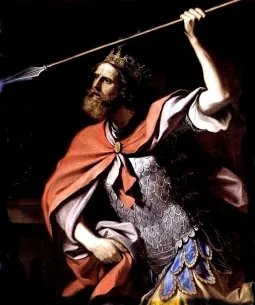
And Saul hurled the spear, for he thought, “I will pin David to the wall.” But David evaded him twice.

1 Samuel 18:11, ESV

And Saul sought to pin David to the wall with the spear, but he eluded Saul so that he struck the spear into the wall. And David fled and escaped that night.

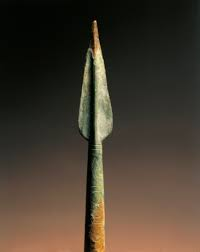
Saul’s spear shows up later in David’s life, and it becomes a vital component in his growth as Israel’s next king.

But David doesn’t know that yet. In 1 Samuel 26 we read about David’s second encounter with the spear of Saul.

The scene is in the wilderness and David’s on the run. Now the badlands are a good place to hide as any Western movie knows. I think David had his scouts and I suppose that there were also men who knew every rock and cave in that wasteland. They were hiding from Saul.

“So David and Abishai entered the encampment by night, and there he was—Saul, stretched out asleep at the center of the camp, his spear stuck in the ground near his head, with Abner and the troops sound asleep on all sides.”

1 Samuel 26:7

Sneaking into Saul’s camp was bold and audacious. Saul was sleeping and scripture says that David’s companion desperately wanted to kill Saul, but David refused, David, looking through the darkness lighted on Saul’s spear. Perhaps he remembered back to when Saul tried very hard to kill him.

He avoided that spear a long time ago, and now he escapes it again.

The tables have completely turned. Given a chance to end King Saul’s life, he refused; he would not kill him. When you think about it, many problems would’ve been solved, and David would take his rightful place as Israel’s new king.

But David spiritually understood God’s heart. He understood the spiritual principle of “turning the other cheek” and “loving your enemies.” He overcame with love and kindness. And lots of grace.

“Do not be overcome by evil, but overcome evil with good.”

Romans 12:21, ESV

The Greek word for “overcome” is νικάω which can be translated as “to conquer or to come forth victorious.” It is also used when someone is arraigned before a court of law but wins the case.

To follow Jesus means you entirely reject using the spear. It’s not for you. Never.

“We win by tenderness. We conquer by forgiveness.”

Frederick W. Robertson

We must leave the spear in the wall. You must not throw it back.

Like David, we are to trust the Father. We’re to be secure in His timing. And yes, we each must use kindness and brokenness to overcome dark things. When you think about it, Jesus also faced evil without defending Himself. The spear showed up again and we see that our Savior allowed it to pierce His side on the cross.

You must leave the spear in the wall.

You mustn’t use the spear when it seems you can wield it at the perfect moment, and like Jesus you need to allow it to save your enemies from their sin.

These three spears are evidence you “have God’s heart.”

Everyone Could See Me

John 8:3-11

Then the scribes and the Pharisees brought a woman caught in adultery, making her stand in the center. “Teacher,” they said to him, “this woman was caught in the act of committing adultery. In the law Moses commanded us to stone such women. So what do you say?” They asked this to trap him, in order that they might have evidence to accuse him.

Jesus stooped down and started writing on the ground with his finger. When they persisted in questioning him, he stood up and said to them, “The one without sin among you should be the first to throw a stone at her.” Then he stooped down again and continued writing on the ground. When they heard this, they left one by one, starting with the older men. Only he was left, with the woman in the center. 10 When Jesus stood up, he said to her, “Woman, where are they? Has no one condemned you?”

11 “No one, Lord,” she answered.

I remember how Jesus defended me. I had been led through the crowds. The temple was filled with people who were there for the festival. It was a time of joy and feasting, but not for me. Definitely not for me.

The temple police escorted me to Jesus. I was now the focus of everyone’s attention. I felt dirty and ashamed. Standing there I could feel the lustful looks from the Pharisees; but there was something else as well, a look from Jesus that I had never seen before. There was compassion there, something quite extraordinary.

I’m ashamed, I committed adultery, I had slept with another man who wasn’t my husband.

I was to be stoned, to have hard rocks thrown at me by “holy” men. The Law had pronounced my guilt, and I knew how I was to be punished. And I deserved it. Yet the man who I slept with was never charged, he escaped and it was I that would be put to death. I didn’t blame him.

My shame was now public knowledge–everyone knew, the Pharisees made sure of that.

They only put me front and center to test Him.

These men who brought me had ulterior motives, they desperately hoped Jesus would stumble. I think they wanted to prove once and all to the crowds that were watching that Jesus really wasn’t the Messiah. They wanted to trap him.

Jesus seemed to understand the implications of this satanic effort.

Only Rome had the power of execution, and yet the Mosaic Law declared that I was to die. I stood waiting, expecting the worst. What else could I do?

It’s funny, but Jesus understood all of this. He seemed to look right through this theological trick, and He responded in a way that really shocked everyone. He never spoke, but bowed low and began to write in the dirt with his finger. Amidst their vicious accusations, they pressed their case.

Jesus bent down again, and he wrote some more.

I never knew what he wrote–but I had to believe it must have been something that revealed the sin in the hidden hearts of the men who were accusing me. In that moment, they quickly dropped the case against me. They all filed out, one by one, in dramatic fashion. I now stood alone with Jesus.

And Jesus looked directly at me.

I was still afraid, but it was strange, I felt a wave of peace as well. I quietly waited, not knowing what He was going to say to me. I suppose I half expected the worst.

Yes, he did confront me. But He wanted me to acknowledge that those accusing men had left. I saw it and understood. Jesus was asking me to believe that I was now really free. But then he wanted me to understand something that seemed quite crucial.

“Neither do I condemn you,” said Jesus. “Go, and from now on do not sin anymore.”

That dear one was a powerful moment. He set me free with the understanding that He did not condemn me. But my freedom from judgement came with a catch–sort of. I knew then that my sin must be renounced. My freedom came with a price. But knowing I was completely released, meant I was now a free woman.

At that moment I understood completely.

“God pardons like a mother, who kisses the offense into everlasting forgiveness.”

    Henry Ward Beecher

God, Have Mercy On Me

Luke 18:9-14

“He also told this parable to some who trusted in themselves that they were righteous and looked down on everyone else: 10 “Two men went up to the temple to pray, one a Pharisee and the other a tax collector. 11 The Pharisee was standing and praying like this about himself: ‘God, I thank you that I’m not like other people—greedy, unrighteous, adulterers, or even like this tax collector. 12 I fast twice a week; I give a tenth of everything I get.’”

13 “But the tax collector, standing far off, would not even raise his eyes to heaven but kept striking his chest and saying, ‘God, have mercy on me, a sinner!’ 14 I tell you, this one went down to his house justified rather than the other, because everyone who exalts himself will be humbled, but the one who humbles himself will be exalted.”

He despised others. As a Pharisee he prided himself as a holy person; he stood before God and congratulated himself. I believe that self-righteousness has many levels. You can be blatant and obvious about it, or it can be subtle and hidden. But we must understand that the father sees and knows. Notice the “we all” here in Isaiah 64:6

(Hmm. Is that what He sees? A menstrual rag? You got to be kidding!)

We often advance ourselves by demeaning those who struggle hard with their sin–there are those who see and somehow know that they’re superior. We don’t come out and say so; but we’ve arrived— but guess what— God (and scripture) tell us something radically different.

But we’re not dealing here with a hidden self-righteousness. The Pharisee truly believes that he is special. He stands and doesn’t kneel. He feels comfortable and confident in the holy presence of God Almighty. He’s not like the others. He is sure that he’s holy.

Look though, the tax-collector was being brutally honest.

He didn’t need anyone to tell him how sinful he was—he understood his own wickedness. Jesus’ story reveals God’s love for those who know that they’re twisted inside. Notice the heart of the tax-collector:

  • “He stood afar off” which showed his awareness of his separation from God.
  • “He wouldn’t even raise his eyes to heaven,” which declared his humility in the presence of God.
  • He kept “striking his chest,” which tells us of a deep pain over his sin against God.
  • He prayed, ‘God, have mercy on me, a sinner!’ This describes his desperate heart.

These both came to pray, but that is all they had in common.

The Pharisee came to the temple to show off his righteousness, the tax-collector out of a terrible despair. It strikes me that the text in verse 11 says the Pharisee “began praying to himself.” It seems that his prayer never really met God—he was proud and showy, doing the things God hates (Prov. 29:23).

Things really came obvious in verse 14. That’s the critical point of the entire story—“one went down to his house justified rather than the other.” Wow! What a statement. One professionally religious man, sure of his holiness, the other a sinful sinner, who came humble and broken. One showed off his faith—boasting with a legalistic swagger. The other desperate and desolate, completely undone.

But it was the tax-man who became righteous in the eyes of God.

Humility is the foundation of the kingdom of Jesus. In Matthew 5:3-4 makes a lot of sense—to be “poor in spirit” and to “mourn” are the bedrock of a Christian’s discipleship. To be justified (made right) was a gift. He didn’t try to earn it, and there wasn’t a probationary period. The tax-collector now became righteous; the Pharisee carried his sin.

God wants us to have a broken-heart. He rejects everything else. I suppose that the question is this: Do you mourn over your sin? 

Psalm 34:18

Art by Eugène Burnand

The Stomach Churning Sin of Manasseh

God’s temple was now filled with an evil darkness. King Manasseh made the Lord’s holy place a fountain of sin and filth. Instead of holiness, it was an evil place.

He brought in dark things that were twisted, perverted and clearly forbidden.

“Manasseh led Judah and the inhabitants of Jerusalem astray, to do more evil than the nations whom the Lord destroyed before the people of Israel.”

2 Chronicles 33:9, ESV

His own darkness was now encouraged by others, it became accessible, available and promoted:

  • The high places were rebuilt throughout the land.
  • Altars to Baal rebuilt, using images of wood.
  • In the holy temple, altars to the “starry host,” astrology, plain and simple.
  • Human sacrifice of his own sons to Molech, a false god. Murder.
  • He practiced soothsaying, used witchcraft and sorcery, and consulted mediums and spiritists.

Evil was being encouraged and something wicked was replacing all that was good and true. The analysis of Manasseh’s policies was way beyond disturbing. Of all the kings of Judah, he was the most sinful and the most corrupt. He was at the bottom of the barrel.

The Hebrew word for “led astray” can be translated seduced.

Manasseh was an incredibly immoral man, a king who ruled for 40 years. “He did all he could to pervert the national character, and totally destroy the worship of the true God; and he succeeded.” (Clarke)

It’s believed that he put Isaiah to death by cutting him in two.

Moreover Manasseh shed very much innocent blood, till he had filled Jerusalem from one end to another, besides his sin by which he made Judah sin, in doing evil in the sight of the LORD.

1 Kings 21:16

But then something happened.

And the LORD spoke to Manasseh and his people, but they would not listen. Therefore the LORD brought upon them the captains of the army of the king of Assyria, who took Manasseh with hooks, bound him with bronze fetters, and carried him off to Babylon.

2 Chronicles 33:10-11

Assyria came knocking on Manasseh’s door. I think there was a certain mercy here, but also discipline. Manasseh had “hooks,” inserted through his jaw and out of his mouth. Like a fish he was led to Babylon, a trophy of the power of the army of Babylon.

It was from a dark dungeon that Manasseh cried out to the Lord and repented.

(2 Chronicles 33:12-13.)

There’s a Jewish fable that when Manasseh cried out to God the angels boarded up the windows in heaven. They wanted to block out his prayer so God wouldn’t be able to hear. But God, rich in mercy, bored a hole in front of His throne to hear Manasseh’s desperate cry.

The Lord’s intention was to forever show His kindness and grace given to the most awful repentant sinner.

I believe that Manasseh was the “Prodigal Son” of the Old Testament.

God is not at a loss when He moves to bring us back to Himself. He can woo or whip. He can draw or drive. He can work rapidly or slowly, as He pleases. In other words, He is free to be God! And in His own way, at His own pace, He brings us back.

     Tom Wells

God is wildly in love with you. Yes, the sin you’ve committed is awful, but the Lord wants you to come back. He may discipline you, but He forgives everything if you’ll turn and repent.

No matter how awful your sin, He forgives and restores. Manasseh is proof of that.

Sources:

2 Chronicles 33:1-20

2 Kings 21:1-18

Enduring Word commentary

alaskabibleteacher.com

Purity in an Impure World

First, let’s start off with a definition. Purity describes something that is not mixed with anything else. It’s not 80% of something, or even 99.9%, rather it’s fully and completely one thing. Purity also means to be solely without any additive, contamination or pollution.

Purity of heart is to be exclusively focused on one thing.

This verse, 5:8, “strikes the very center of the target as he says, not ‘Blessed are the pure in language, or the pure in action,’ much less ‘Blessed are the pure in ceremonies, or in raiment, or in food;’ but ‘Blessed are the pure in heart.’” (C.H. Spurgeon)

We really must see this world as God sees it. 

We find that scripture is not very kind to us. It seems that mankind defiles everything he touches. (I wish it wasn’t so.)

“The human mind is the most deceitful of all things. It is incurable. No one can understand how deceitful it is.” Jeremiah 17:9

Consider the following areas that are affected by out “fallenness:

  • Entertainment, movies, the internet 
  • Politics, local, national and world 
  • Religion, philosophy, theology and spirituality
  • Culture and art, literature and music
  • Education
  • Science and technology, medicine and psychology
  • Economics, wealth and poverty
  • Sexuality

The above list is hardly complete, and as I compiled it I got a little heavy-hearted. I had to ask myself, are we really this bad? Again the Christian must look at the Bible for wisdom and direction.

 “All have sinned and continually fall short of the glory of God.” Romans 3:23

“The heart of the sons of men is full of evil, and madness is in their heart while they live.” Ecclesiates 9:3

As Christians who spiritually understand the work and the love of Jesus Christ. We are called to know and love God, must continually reacquaint ourselves to the absolutely depraved condition of this world. No one, and nothing is exempt.

There is another verse I want to consider, it mentions purity twice!

“Having purified your souls by your obedience to the truth for a sincere brotherly love, love one another earnestly from a pure heart,” 1 Peter 1:22

Notice. The verse stresses that we have to take the initiative. Now I suspect that being pure is our responsibility. “Obedience to the truth” must lead to “brotherly love.” It’s not really a surprise that that’s where we end up. 

To really see God, and to truly love others, requires purity. 

When it comes to being pure we must become humble–that’s our starting point. Humility keeps purity from becoming false. We dare not become “holier-than-thou.” We can easily become hard, religious and judgemental. Becoming a “Pharisee” is easy and always possible.

Lower Seat Christians

Luke 14:7-11

Choose your seat carefully. In Jesus’ day, there was a definite seating order to a wedding feast. It wasn’t first come, first served. There was a strict protocol, where one’s importance mattered. Honored people got honorable seats–close to the front as possible. Average people got average spots; but no one wanted be at the bottom, having to sit at the “kids table.”

Jesus was watching, and what he saw was a spiritual principle of His Kingdom.

Jesus often teaches out of the things we encounter–real life events. Spiritual truth often hits us from those things we actually see. If you want to know what God is doing in your life, all you need to do is look around at the “practical” things, and start to see the spiritual lessons inside them. We learn from real-life. That’s how he often teaches us, he combines the Word with what we’re experiencing.

Our natural inclination is to move higher up.

We often think that we’re deserving, and so we take our “rightful” positions. That’s the way humans think. We all want to sit in the best possible place, and so we end up wheedling our way up front. We can fall into the subtle trap of self-promotion. But that’s not how discipleship works.

Jesus corrects, advising us to take the lowest place. I think verse 11 is the key to figuring out this seating arrangement. We’re starting to see a physical situation become a spiritual lesson. There’s much to learn. Here’s verse 11 in the Amplified version:

“For everyone who exalts himself will be humbled [before others], and he who habitually humbles himself (keeps a realistic self-view) will be exalted.”

Verse 14, Amplified Bible

This translation injects some realism into our lives, especially in how we see ourselves. It’s something quite foundational. It lays down a principle that is always true in his Kingdom (1 Peter 5:6). If we don’t accept and implement this, we’ll suffer a definite deficiency in our discipleship. It stunts the growth of many believers. And that is tragic.

The whole scene lays out how life in the spirit really works, and it seems terribly paradoxical.

Our human logic asserts that deliberately choosing the lesser is foolish, things really don’t work that way. We think (falsely), that we’ll only advance by asserting ourselves. But Jesus, quite aptly, clarifies the ways of the Kingdom–true maturity will only come if we decide to take the lowest place.

“Humble yourselves before the Lord, and he will exalt you.”

James 4:10

A Proper Steward of Your Pain

Some time ago I came across a story that connected. A visiting speaker stood in front of a congregation and shared a painful incident from his childhood. He wanted to bring healing. After he spoke, an elder came and spoke to him–

“You have learned how to become a proper steward of your pain.”

The visiting speaker was profoundly touched by this. Finally, something came together in his heart and soul. Yes, he did learn how to deal scripturally with those ugly things from his past. He was becoming a proper steward of his pain.

The word for steward in the original Greek is oikonomos. It literally means “a keeper of a home.” It describes a manager, a superintendent to whom the head of the house or proprietor has entrusted the management of his affairs, the diligent care of receipts and expenditures.

The issue for us is managing these awful things for the Kingdom of God.

No question about it, we live in a world of darkness. Each of us has been touched by hard things. Scars are part of our lives. When we come to Christ they come with us. All of these grim things are a real piece of us, we have been hurt (or maybe we’ve wounded others?)

Are you a good steward of who you are? Whether it’s a trauma, a physical, sexual, or perhaps a mental illness. It’s a scar you carry from your past, and no one is immune from them it seems. You’ll find freedom if you can use these things for Him and his Kingdom.

We must see and understand that Jesus has taken everything and redeemed it all for His glory.

He understands us fully–our past, present, and future. He ‘knows’ us–the real and hidden us. The challenge I suppose is to take these sad events to the throne. He alone can heal and then use that which has devastated us.

Satan has afflicted you in his dark attempt to destroy you.

Jesus intervenes to save. As we grow to accept this, the Holy Spirit comes as our comforter and guide. He starts to teach us true redemption, and the incredible healing that he brings with him. It really is his work, not ours. We finally understand. It’s then we become broken healers that God can use.

(Read how Joseph handled betrayal: Genesis 50:19-21.)

The light has truly overcome the dark.

We’re being taught (sometimes very slowly) to carry all of these things and plead the blood of Jesus over our past. He covers us completely. He has redeemed us. Luke 1:68 explains much clearer than I can:

“Blessed is the Lord, the God of Israel because he has visited and provided redemption for his people.”

Becoming a steward of our pain is his doing. We’re able to touch others with these things that would cripple and destroy others. He has made us “managers” of these things, and we are taught to teach others, declaring that God has completely saved us. He works miracles!

“Therefore, if anyone is in Christ, he is a new creation; the old has passed away, and see, the new has come!”

2 Corinthians 5:17

We’ll sovereignly meet those who need to hear our story. We’re being transformed into authentic witnesses. Yes, at times these awful things still hurt, and I suppose that’s to be expected. But we’re learning to manage them. We’ve become real-life stewards of our pain.

That’s why we can be so sure that every detail in our lives of love for God is worked into something good.”

Romans 8:28, Message

The Church is Collecting Sinners

The following excerpt is from the devotional book, “Living the Message,” by Eugene H. Peterson.  This pastor-professor is probably the person I want to grow up to be like; he has a gentleness and eloquence that is seldom seen–and highly respected.
Dr. Peterson died in 2018.

***********

“When Christian believers gather in churches, everything that can go wrong sooner or later does.  Outsiders, on observing this, conclude there is nothing to this religious business, except perhaps, business…and a distant one at that.  Insiders see it much differently.”

“Just as a hospital gathers the sick under one roof and labels them as such, the Church collects sinners.” 

“Many people outside are just as sick as the ones inside, but their illnesses are either undiagnosed or disguised.  It is similar with sinners outside the church.”

“One way to define spiritual life is getting so tired and fed up with yourself you go on to something better, which is following Jesus.”

Some other quotes by Eugene Peterson:

  • “All the persons of faith I know are sinners, doubters, uneven performers. We are secure not because we are sure of ourselves but because we trust that God is sure of us.”
  • “Suffering attracts fixers the way road-kills attract vultures.”
  • “When we sin and mess up our lives, we find that God doesn’t go off and leave us- he enters into our trouble and saves us.”
  • “That’s the whole spiritual life. It’s learning how to die. And as you learn how to die, you start losing all your illusions, and you start being capable now of true intimacy and love.”
  • “American religion is conspicuous for its messianically pretentious energy, its embarrassingly banal prose, and its impatiently hustling ambition.”

More Eugene Peterson Quotes…