Come Out of the Closet

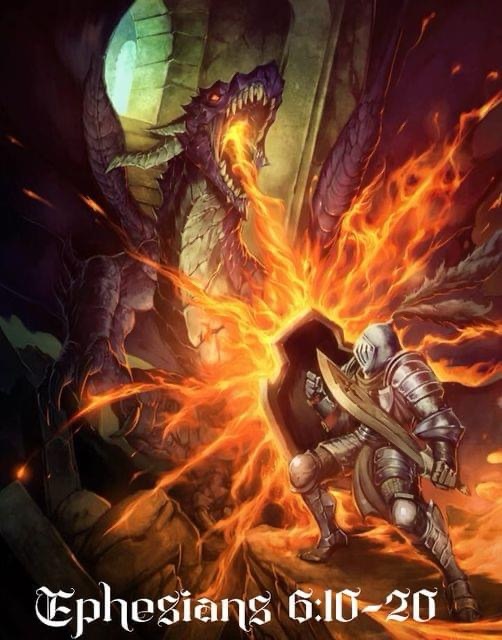
“Therefore take up the whole armor of God, that you may be able to withstand in the evil day and having done all, to stand firm. 14 Stand therefore, having fastened on the belt of truth and having put on the breastplate of righteousness, 15 and, as shoes for your feet, having put on the readiness given by the gospel of peace. 16 In all circumstances take up the shield of faith, with which you can extinguish all the flaming darts of the evil one; 17 and take the helmet of salvation, and the sword of the Spirit, which is the word of God,

Eph. 6:13-17, ESV

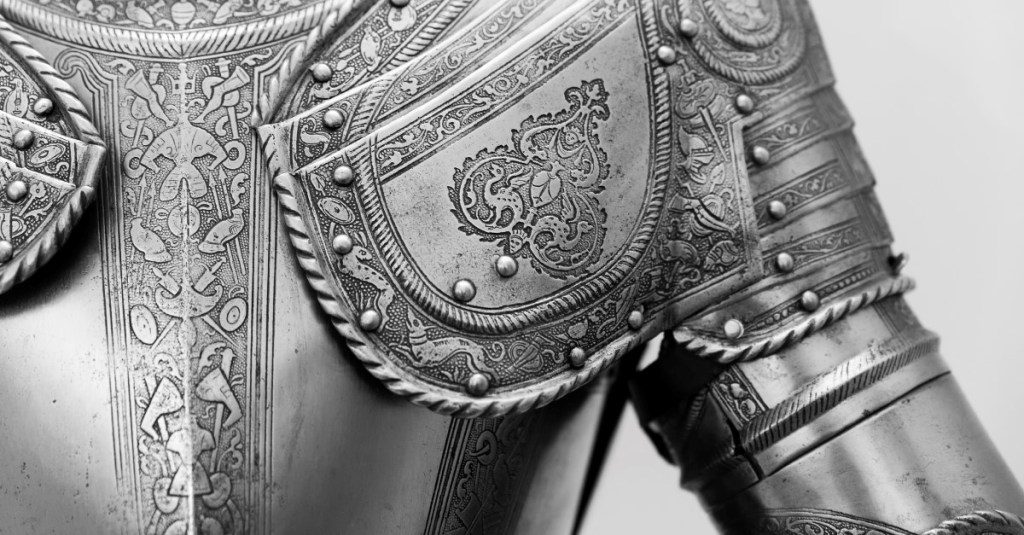
You’re called to be armor-plated.

Ephesians is quite clear about this, and we dare not live without spiritual protection, and as a matter of fact, we must wear each piece to survive spiritually. To be ‘naked’ is catastrophic. Neglecting to dress appropriately brings cataclysmic disorder. We dare not minimize our need for wearing our armor.

Each piece listed must be worn. This is a scriptural mandate for every believer in Jesus.

“The whole armor of God” explains the equipment we need to survive spiritually. Here’s a list of the six:

  • The belt of truth–this pulls everything together and holds us and keeps us secure in the truth.
  • The breastplate of righteousness–our spiritual heart is protected by knowing we’re accepted by the Father. Being right with God is not a feeling nor is it a mere hopeful wish. We wear what is real.
  • The shoes of the gospel (of peace)–the idea of standing in place (“to stand”) explain our ability to be fixed on grace. When we wear battle shoes we cannot be pushed back or lose our footing. Wearing gospel shoes brings us spiritual stability. We can stand in place, rooted and strong.
  • The shield of faith–is a vital way of protecting ourselves from the evil arrows shot by the enemy. Satan targets us when he thinks that we aren’t using faith to defend ourselves.
  • The helmet of salvation–this is the realization that our mind is protected. This vital piece brings us wholeness as we understand what Jesus has done. We know we are saved and wearing our helmet is our protection from demonic-inspired lies.
  • The sword of the Holy Spirit–the only offensive weapon we have, and it’s all we need. The Word of God will frighten the enemy and push him back. The Word slices and cuts down every obstacle and every lie.

   Watchman Nee

I must stress that clothing yourself is vital. You dare not live spiritually naked wearing nothing. You will be totally vulnerable to the satanic wickedness that is swirling around you. I’m afraid it’s all very real and sobering and there is no escape clause until you finally arrive in heaven.

“We know [positively] that we are of God, and the whole world [around us] is under the power of the evil one.”

1 John 5:19, Amplified Bible

I’m afraid you haven’t been given an option in all of this. Our battle equipment in Ephesians 6 is not just some theological preference or concept. It’s real.

Over 40 years of following Jesus have taught me that most believers struggle because they won’t arm themselves for battle. They refuse to acknowledge the environment they’re in and don’t realize the spiritual battle they are facing. They like the sentiment behind this particular passage, (it stirs their heart) but the reality of the battle never fully sinks in.

They end up leaving their armor behind.

The good news is that we have already won because of what the Lord has done. Wearing the armor strengthens and stabilizes us. He pours out His grace, and there will be times of rest of that I am certain. “He leads me beside still waters.”

As obedient and faithful believers we need to realize we’re secure in Him. Yes, there is a terrible fight, but “The battle is the Lord’s.”

“For you equipped me with strength for the battle; you made those who rise against me sink under me.”

Psalm 18:39, ESV

Your Plow is Waiting

“No one who puts his hand to the plow and looks back is fit for the kingdom of God.”

Luke 9:62 (context, vv. 57-62)

Every disciple has his plow. Sometimes it’ll be obvious, everyone sees it; other times it’ll be buried deep inside, and no one knows. A plow is a perfect word to describe exactly what the Holy Spirit is doing–and its descriptive of the determination of a disciple who is slowly learning how to follow.

When you’re trying to grow-up you’ll grasp this foundational lesson. You have to be single-minded and really focused to stay moving ahead. You cannot look behind at what has been done. You can’t turn around to admire your work, rather we look at the tree that is keeping us lined up with Jesus.

You will sweat and get tired. Your full effort is needed to keep the plow in the hard earth. You aren’t pushing, the oxen is pulling, but you’re the one who weighs it down while keeping your furrow relatively straight. It’s harder than it looks. (Thank God for the modern tractor.)

In case the plowman starts to look back, his plow line would become crooked. If that happens, the field he is plowing will not yield a full harvest. A good plowman has learned he must hold on. In following Jesus, we are to keep our eyes on Him, and never let our minds and hearts wander away. (Hebrews 12:1-2.)

“To keep our hand on the plow while wiping away the tears–THAT is Christianity.”

-Watchman Nee

To follow means looking and moving forward. We must understand this–it’s the very essence of walking a path. We’re walking out the journey. Sometimes we feel Jesus’ joy as His follower, but occasionally we won’t. We’re learning to understand it more and more. But no matter what, we keep putting heel-to-toe. We are followers after all.

Jesus lived this; He steadfastly set His face to go to Jerusalem (Luke 9:51).

“To learn strong faith is to endure great trials. I have learned my faith by standing firm amid severe testings.”

-George Mueller

The Coming Train Wreck

Amos 3:7, ESV

We are witnessing something terrible.  Worldwide whole societies are being destroyed.  We’re more or less simple bystanders, there is really nothing we can do that can change the inevitable.  However, the survivors will need our assistance.  So we will wait for the inevitable crash, we pray, and anticipate a chance to bring our Savior’s love into the awful melee.

Things are accelerating far beyond what we think. 

This heightens the tension, which should make us alert and aware.  We make assumptions of the upcoming derailment which may, or may not be accurate.  But we all sense something dreadful and foreboding is approaching.

We are witnessing a train wreck.

Something disturbing is coming down.  It’s said that just before a big thunderstorm, the birds head for safety, they simply disappear.  The birds know this, and yet it seems, and yet we’re still trying to connect the dots.  We look at the skies, but yet we don’t quite understand the signs.

The crisis that is coming will stagger the unbeliever. It will certainly challenge the believer.

We must be ready ourselves.  Our viewpoint of eternity will become a much needed necessity for those who go through the devastation of the train wreck.  It’s what will pull us and others through some black and bleak times. We must prepare ourselves.

We can ask for grace, not just to help us, but to help them.

When the storm gets close, the best we can do is to head for the “storm cellar.”  As a boy, growing up in the Midwest, I have clear and distinct memories of heading for that basement shelter, with my dad and mom.  When a tornado is coming the only thing we can do is find shelter.  To choose to hide, and to take cover is both prudent and wise.

While things are collapsing, we need to find comfort in His shelter. 

His wings shelter us as believers, and we must find refuge in that precious and intimate place.  So much news is grim, and we can so easily slip into depression and despair.  We look around, but we must turn directly to these wings that cover us.  We’re protected and sheltered in that place, but only in that place.

“Those who live in the shelter of the Most High will find rest in the shadow of the Almighty.
This I declare about the Lord:
He alone is my refuge, my place of safety;
he is my God, and I trust him.”

Psalm 91:1-2

We should rest, and consciously put our own souls under His care. 

Some may look at everything and then decide to step into the storm in order to shut it down.  But brother, we can’t stop it, for it’s of the Lord.  Quite a few of the prophets in the Old Testament saw and understood what was going to happen soon, but they couldn’t do anything against Babylon or Assyria.  But with their voices they strengthened and encouraged others against an outrageous brutality.

That is something that’s going to be critically needed. It is a good thing, and it’s what we’re being called to do.

God has brought you to this particular spot. He has put you into this moment in time. You must take your place. Be alert, stay on guard. We’re put into this place by the Father.

Esther 4:14

bry-signat (1)

Cross-Eyed Christians

In the book of Genesis we find the story of Leah and her sister Rachel. Let’s start by saying two daughters of Laban have become Jacob’s wives. We must step into Genesis 29 to see more.

Jacob longs for Rachel. She is his “soul mate” and because he’s in love, but the customs and technicalities of the day somehow get by him. Because of this, he will have to deal with Laban’s subtle trickery, where his daughters get swapped, and we must sort out the customs of that day to really understand.

Let’s just say that Laban’s deception creates a huge crisis for everyone. 

Throughout his life deception has been Jacob’s besetting sin. But now he’s the recipient. When we see a deceiver like Jacob gets deceived, that can’t be all bad. Call it karma, kismet, fate; he deals with it. “As you sow, so will you reap.

Jacob is so in love with Rachel that he works for seven years for the right to marry her. This may be a bit outrageous. But we really must weigh these issues. I believe Jacob really is a monogamist at heart and he has no real love for Leah. 

He can only see that one girl that he is crazy about, his true love, Rachel.

But you know, it’s Leah that I tend to think about. Her own issues are unique. Genesis 29 explains it a bit cryptically,

“Leah’s eyes were weak, but Rachel was beautiful in form and appearance.” 

Genesis 29:17

You need to know that there is some confusion by commentators about the “weak eyes.” Others who look at the original Hebrew find the words to be vague. Some take it as she is very near-sighted, or even cross-eyed. Others think that this is a polite way of saying she really wasn’t pretty. I think I can gain from these different interpretations.

But to be honest, I think I might understand Leah.

She is wounded, and life requires that she live as unwanted. She is a woman of tragedy and broken hopes and dreams. She will always live as a reject. At best, she will always be a distant second, and perhaps scorned and neglected for this.

I conclude that Leah is the champion for the second best, those challenged by weakness.

Her life seems a long tragedy and very full of sadness. For the next 30-40 years she will always be a cast-off, someone who has been broken by life’s bitter vagaries. She’s a fellow struggler and a survivor.

Her sad life is similar to us who have to fight so hard over our own illness or handicaps. For some, addiction is an issue. We never choose this path. I believe darkness has many forms.

But I have no idea what her problem was.

I do know but she must’ve been challenged by this weakness. I understand this. My own life has been topsy turvy and a hard struggle at times. I survived a massive brain tumor and I have a paralyzed right arm. I have no balance and must use a cane. I can no longer drive.

For those who are confined to a wheelchair, or must use a cane, or who deal with a physical or mental illness, Leah should be our hero. For those who have been betrayed by addiction, or who have felt rejected through a bitter divorce, Leah speaks to us.

She is for every loser and for failures of all stripes. But through all of our setbacks and messes, we must realize that God does love us– even as we weep.

Our pain always has a purpose in God’s kingdom. Always.

“One of the main ways we move from abstract knowledge about God to a personal encounter with him as a living reality is through the furnace of affliction.”  


Tim Keeler

That Which is Far Better.

Luke 10:38-41, NCV

“While Jesus and his followers were traveling, Jesus went into a town. A woman named Martha let Jesus stay at her house. 39 Martha had a sister named Mary, who was sitting at Jesus’ feet and listening to him teach. 40 But Martha was busy with all the work to be done. She went in and said, “Lord, don’t you care that my sister has left me alone to do all the work? Tell her to help me.”

41 “But the Lord answered her, “Martha, Martha, you are worried and upset about many things. 

42 Only one thing is important. Mary has chosen the better thing, and it will never be taken away from her.”

My name is Martha and I’m Jesus’ friend. My home was one of His favorite places to stay–a refuge for Him whose life was so busy. I joyfully opened it for Him, and for His disciples. And when Jesus came I went all out, I wanted the best for Him and that meant there were always things to do. Is that really a bad thing?

The kitchen was verging on bedlam–lamb, cucumbers, figs, and so on. Roasting and slicing, and of course I had bread in the oven. All of this was requiring constant attention, and I remember not being able to keep up. To be honest, It was a bit much.

I wanted things to be perfect for Jesus.

I admit I took occasional peeks at Him, He was teaching in my living room after all. I just brought in some bowls of figs and raisins as an appetizer and guess what, I found my sister Mary sitting with the men listening to Jesus and asking questions. It was than I started to get a little ticked off.

I was really, really getting irritated with her.

There was so much to do and I didn’t have her help. The more I thought of Mary the more frustrated I got. I suspect she didn’t understand all that had to be done. All or her priorities were messed up–she simply didn’t understand her role as a hostess, and to sit with the men was terribly wrong.

She really didn’t understand her place.

Yes, I was having issues with my sister. It all came to a head when I had brought out another bowl of figs, and then I tried to graciously interrupt the Lord’s teaching. I wanted Him to tell her the place was with me in the kitchen. “Tell her to help me.”

Instead, it was Jesus who corrected me. I still remember Jesus’ words. And I honestly wasn’t expecting this..

“Martha, Martha, you are worried and upset about many things.”

Was I really that transparent? Of course He understood, but it cut me to the quick. I had become another lesson to everyone present. I realize now that the real issue was with my attitude, and not with the work. Yes, I was bothered and upset but I know now that it’s those things that were the real problem.

Only one thing is important. Mary has chosen the better thing, and it will never be taken away from her.”

I suddenly knew that He was right. Jesus was in my home, and all I could do was to get frustrated and angry. I thought my work would please Him, and after all, wasn’t really all that important? Didn’t He deserve my best efforts? Surely all my work meant something to Him?

My younger sister Mary was being praised. It seems she was becoming my example and I was being gently rebuked. but suddenly all I realized, and that all I was doing, all my work and my effort, really wasn’t what Jesus wanted. The problem wasn’t her problem, it was me all a long!

I only wanted to serve Him, but I guess that wasn’t what He really wanted.

To be sure all I was becoming far too critical and resentful of my sister Mary, and yet I had forgotten that my real place was at Jesus’ feet, listening and learning. That’s what Jesus really wanted, and somehow I had forgotten that. I had lost Him in all my busy-ness.

The work could wait, and now I understand that my true place was with Jesus.

Martha’s frustration is typical of those who diligently serve with good intent, but forget to also sit at Jesus’ feet. “The Martha spirit says, if the work is done, is not that all? The Mary spirit asks whether Jesus is well pleased or not? All must be done in his name and by his Spirit, or nothing is done.”

C.H. Spurgeon