“But his delight is in the law of the Lord, and on his law he meditates day and night.”
Psalm 1:2
Meditation has gotten a bad rap among some Christians, largely due to a connection with Eastern mysticism. This is really unfortunate for it has a critical place in the development of your discipleship. I believe it’s vital (and maybe even mandatory?)
Hagah is the Hebrew word for ‘meditation’ and it fascinates me.
It literally means to “moan, growl, utter, muse, or mutter.” Some have suggested that it contains the idea of ‘rumination,’ like a cow who chews a cud. The grass goes in, and it’s regurgitated several times, extracting every bit of nutrients and vitamins.
Hagah, or to meditate is the way we assimilate God’s Word into our lives. It’s critical that we do this in our walk as disciples that belong to Jesus.
“This Book of the Law shall not depart from your mouth, but you shall meditate [hagah] on it day and night, so that you may be careful to do according to all that is written in it. For then you will make your way prosperous, and then you will have good success.”
Joshua 1:8, ESV
It’s an interesting command isn’t it? Joshua’s ministry is to lead God’s people and requires his deep connection to God’s promises. He needs to hagah God’s words, to purposefully think about them over and over and over.
It’s interesting to me that when Joshua meditates and carefully responds to the Word then he will receive success in his life and ministry. The word ‘success’ means “wisdom, comprehension, insight with prosperity.” I need that desperately.
And if Joshua needed to do this, might not we?
Start small and simple. There are over 8,000 promises in the Bible–pick one and ruminate on it. Hagah on the Word and try to extract the spiritual nutrients that it contains. You will grow, bless others, and walk in victory, defeating your enemy.
“The amount of time we spend with Jesus – meditating on His Word and His majesty, seeking His face – establishes our fruitfulness in the kingdom.”
“Now he told a parable to those who were invited, when he noticed how they chose the places of honor, saying to them,”
8 “When you are invited by someone to a wedding feast, do not sit down in a place of honor, lest someone more distinguished than you be invited by him, 9 and he who invited you both will come and say to you, ‘Give your place to this person,’ and then you will begin with shame to take the lowest place. 10 But when you are invited, go and sit in the lowest place, so that when your host comes he may say to you, ‘Friend, move up higher.’ Then you will be honored in the presence of all who sit at table with you.”
11 “For everyone who exalts himself will be humbled, and he who humbles himself will be exalted.“
Choose your seat carefully. In Jesus’ day, there was a definite seating order to a wedding feast. It wasn’t first come, first served. There was a strict protocol, where one’s importance mattered. Honored people got honorable seats–close to the front as possible. Average people got average spots; but no one wanted to be at the bottom, having to sit at the “kids table.” 😁
Jesus was watching, and He saw a spiritual truth of his Kingdom.
Often He teaches out of the things we encounter–real life events. Spiritual truth often hits us from those things we actually see. If you want to know what God is doing in your life, all you need to do is look around at the “practical” things, and start to see the spiritual lessons inside them. We learn from real-life. That’s how he often teaches us, he combines the Word with what we’re experiencing.
I suspect that life is a very long lesson in humility.
Our natural inclination is to move higher up. We often think that we’re deserving, and so we take our “rightful” positions. That’s the way humans think. We all want to sit in the best possible place, and so we end up wheedling our way up front. We can fall into the subtle trap of self-promotion. But that’s not how discipleship works.
Humility is totally opposite from the world’s way of thinking.
Jesus corrects, advising us to take the lowest place. I think verse 11 is the key to figuring out this seating arrangement. We’re starting to see a physical situation become a spiritual lesson. There’s much to learn.
“For everyone who exalts himself will be humbled [before others], and he who habitually humbles himself (keeps a realistic self-view) will be exalted.”
Verse 11, Amplified Bible
This translation injects some realism into our lives, especially in how we see ourselves. It’s quite foundational. It lays down a principle that is always true in his Kingdom (1 Peter 5:6). If we don’t accept and implement this, we’ll suffer a definite deficiency in our discipleship. It stunts the growth of many believers. And that is tragic.
The whole scene lays out how life in the spirit really works, and it seems terribly paradoxical.
Our human logic asserts that deliberately choosing the lesser is foolish, things really don’t work that way. We think (falsely) that we’ll only advance by asserting ourselves. But Jesus, quite aptly, clarifies the ways of the Kingdom–true maturity will only come if we decide to take the lowest place.
“Humble yourselves before the Lord, and he will exalt you.”
When Jesus saw her weeping, and the Jews who had come with her also weeping, he was deeply moved in his spirit and greatly troubled. 34 And he said, “Where have you laid him?” They said to him, “Lord, come and see.” 35 Jesus wept. 36 So the Jews said, “See how he loved him!”
Jesus Raises Lazarus
38 Then Jesus, deeply moved again, came to the tomb. It was a cave, and a stone lay against it. 39 Jesus said, “Take away the stone.” Martha, the sister of the dead man, said to him, “Lord, by this time there will be an odor, for he has been dead four days.” 40 Jesus said to her, “Did I not tell you that if you believed you would see the glory of God?”
So they took away the stone. And Jesus lifted up his eyes and said, “Father, I thank you that you have heard me. 42 I knew that you always hear me, but I said this on account of the people standing around, that they may believe that you sent me.” 43 When he had said these things, he cried out with a loud voice, “Lazarus, come out.” 44 The man who had died came out, his hands and feet bound with linen strips, and his face wrapped with a cloth.
Jesus said to them, “Unbind him, and let him go.”
My name is Lazarus and I was a special “friend” of Jesus. We liked being with each other, and my sisters Mary and Martha also enjoyed fellowshipping with Him. Whenever He passed through Bethany, Jesus always had an open invitation to visit.
What’s it like to be dead? Many ask me this, and I suppose they want to understand, and I don’t blame them. To me, it seemed like a very deep sleep–but I didn’t dream. Those who look for any special insight, will not find it from me. And yet, I am His witness. He has incredible power over death.
I heard Him call my name.
It pierced through everything with an authority I’d never heard before. I had been laid in my tomb for 4 days and my physical body had begun to putrefy. When they rolled the stone away the terrible smell of death lay heavy in the air.
I was tightly bound in cotton wraps and sticky spices had been applied to my body. Mary and Martha had objected to Jesus’ attempt. As I looked back I realize that their actions were justified. After all, who can give life when one is very much dead. And not only dead but well on the way on to decay. The smell wafted from my tomb.
I had heard His shout, and it was then death was reversed.
My heart and brain began to work again. When I came to I found that I was lying on a stone table and tightly wrapped in the clothes of the dead. I managed to sit up, and I shuffled toward the light that had entered the tomb by the stone that covered the door.
When Jesus saw me I believe that He was laughing. He gave the command to the shocked bystanders, He commanded them to unwrap me. I suppose that then I realized I was now in the land of the living. I can’t explain what had happened, But my grave clothes were unwrapped.
There were many that day that became believers.
Many had attested that I was most certainly dead, after all, they had attended my funeral. Some had observed that I had been slathered in the sticky ointment–fragrant spices. And a few were witnesses to see the stone rolled in place.
There were some who simply didn’t (or wouldn’t) believe.
There were the Pharisees and the Sadducees who wanted me dead hoping to nullify my witness and my resurrection from the dead. I had become an embarrassment to them, a constant reminder that Jesus had defeated death.
Their hatred of Jesus’ ministry was only strengthened. My own resurrection proved His authority and power over even death. I was a walking and breathing miracle that they refused to accept. It got so bad that the religious leaders wanted to kill me because so many believed in my resurrection. I was a living witness to many.
Yes, I know that I’ll die again. But I’m not afraid anymore.
“He alone can believe in immortality who feels the resurrection in him already.“
“Who makes His angels spirits and His ministers a flame of fire.”
Hebrews 1:7
Jim Elliot was a Christian missionary martyred by the Auca Indians of Ecuador in 1956. He was just 29 years old. This quote was found in a journal he kept, and it was found after his death. There’s much here to process.
“He makes His ministers a flame of fire.” Am I ignitable? God deliver me from the dread asbestos of ‘other things.’ Saturate me with the oil of the Spirit that I may be aflame. But flame is transient, often short lived. Canst thou bear this, my soul – short life? … Make me thy fuel, Flame of God.”
A wonderful and intense quote. Passionate. Maybe we should dismantle it and consider what he was trying to say. There are some great insights to be found here.
First, he writes of asking God to be saturated with the oil of the Spirit. Jim Elliot wants to be set on fire with his life, heart, and spirit becoming the fuel.
Second, he writes of “dread asbestos.” Almost 2000 degrees F is needed to melt this down. Now regarded as a carcinogen but because it’s basically fireproof it was used often. For the person walking by faith it illustrates the power of sin.
Third, he writes about the brevity and shortness of his life and his need to live in the bright light of eternity.
O.K. Let’s switch metaphors.
The ponderosa pine needs fire to propagate. Their seeds are fire-activated.
Fire activates the cone that holds the seeds. Looking we see a tight little bundle which is covered in resin. To germinate they must be burned. Fire melts the exterior and the pine cone and releases the seed; and actually they can lay dormant for several years just waiting for the heat.
The believer needs heat to grow.
I don’t think there is any other way. The Word and the Spirit, combined with the heat of the circumstances we face, creates a blaze that is often seen by others. The furnace is God’s way to bring lasting change to His people. I wish it were different.
“They said to each other, “Did not our hearts burn within us while he talked to us on the road, while he opened to us the Scriptures?”’
Walking with Jesus to Emmaus, Luke 24:32
“Who among us shall dwell with the devouring fire? Who among us shall dwell with everlasting burnings?”
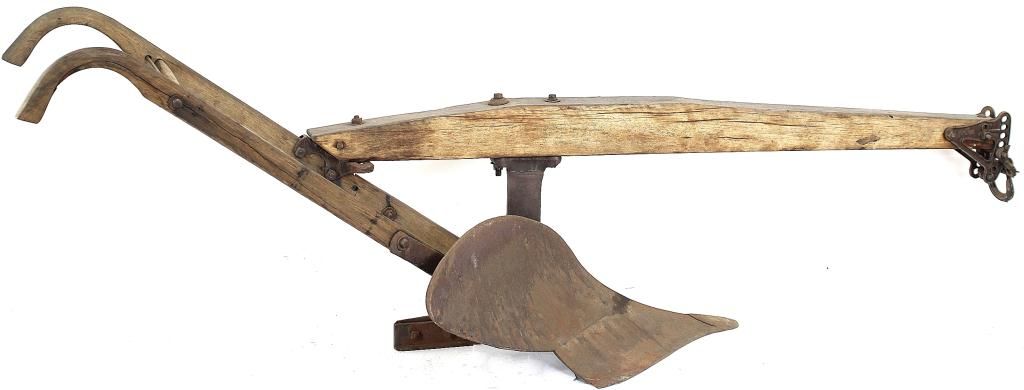
“No one who puts his hand to the plow and looks back is fit for the kingdom of God.”
Luke 9:62 (context, vv. 57-62)
Every disciple has his plow. Sometimes it’ll be obvious, everyone sees it; other times it’ll be buried deep inside, and no one knows. A plow is a perfect word to describe exactly what the Holy Spirit is doing–and its descriptive of the determination of a disciple who is slowly learning how to follow.
When you’re trying to grow-up you’ll grasp this foundational lesson. You have to be single-minded and really focused to stay moving ahead. You cannot look behind at what has been done. You can’t turn around to admire your work, rather we look at the tree that is keeping us lined up with Jesus.
You will sweat and get tired. Your full effort is needed to keep the plow in the hard earth. You aren’t pushing, the oxen is pulling, but you’re the one who weighs it down while keeping your furrow relatively straight. It’s harder than it looks. (Thank God for the modern tractor.)
In case the plowman starts to look back, his plow line would become crooked. If that happens, the field he is plowing will not yield a full harvest. A good plowman has learned he must hold on. In following Jesus, we are to keep our eyes on Him, and never let our minds and hearts wander away. (Hebrews 12:1-2.)
“To keep our hand on the plow while wiping away the tears–THAT is Christianity.”
-Watchman Nee
To follow means looking and moving forward. We must understand this–it’s the very essence of walking a path. We’re walking out the journey. Sometimes we feel Jesus’ joy as His follower, but occasionally we won’t. We’re learning to understand it more and more. But no matter what, we keep putting heel-to-toe. We are followers after all.
Jesus lived this; He steadfastly set His face to go to Jerusalem (Luke 9:51).
“To learn strong faith is to endure great trials. I have learned my faith by standing firm amid severe testings.”
When Jesus had entered Capernaum, a centurion came to him, asking for help. 6 “Lord,” he said, “my servant lies at home paralyzed, suffering terribly.”
7 Jesus said to him, “Shall I come and heal him?”
8 The centurion replied, “Lord, I do not deserve to have you come under my roof. But just say the word, and my servant will be healed. 9 For I myself am a man under authority, with soldiers under me. I tell this one, ‘Go,’ and he goes; and that one, ‘Come,’ and he comes. I say to my servant, ‘Do this,’ and he does it.”
13 Then Jesus said to the centurion, “Go! Let it be done just as you believed it would.” And his servant was healed at that moment.
Obedience was how we would survive. I understood authority and submission to my superior officers. It’s known as “the chain of command” and it’s the reason why armies function well. I blended my will to my superior, and I knew he was also under authority to his own superior.
It wasn’t easy duty as a Roman soldier among the Jews.We were hated everywhere.
But my servant was paralyzed, and I knew that he was suffering greatly, but I had run out of options. My servant was the only family I was allowed to have. Since I served as a centurion I was not allowed to have a wife for the duration of my service. Over the years I’ve kept close and trustworthy servants with me–these men were very dear to me. They were my family.
I certainly was aware that we lived in constant danger from radical Jews, especially the Zealots. They had already assassinated some of my men.
I had exhausted all efforts to bring some relief and healing to my servant, he seemed to be getting worse, not better. I had information that there was an itinerant teacher who had a reputation as a healer of diseases. This man, Jesus from Nazareth, had a large following and I realized that He was now my only possible solution.
So I went to Him for help.
He wanted to return with me to my home. His willingness to come encouraged me, but I simply couldn’t allow that. Jesus’ visit would’ve made Him ceremonially unclean–I was a Gentile, a “dog.” Returning with Him would only sow doubt among my men.
I understood that my home was officially off-limits to Him.
But yet I did understand something. I was under authority as a centurion in the Roman army, and my men followed my orders. Obedience meant survival in a very angry and hostile environment like Judea. Our entire unit was constantly drilled in this, and each man understood the need for following authority. We had to obey our superiors.
So I simply asked Jesus to heal my servant, with just His word of command.
As a Roman centurion I knew I deserved nothing. Simply, Jesus spoke a command and when I returned home my servant was healed. I came and found him completely healthy.
“As the authority of the Caesars flowed through his own yielded life, so the authority of God over diseases, demons, and all else would flow through Christ’s.”
“Now bless the Lord, all you servants of the Lord who stand in the Lord’s house at night! 2 Lift up your hands in the holy place and bless the Lord!
May the Lord, Maker of heaven and earth, bless you from Zion.“
Psalm 134:1-3
Not every Levite labored during the day. The night shift continued their work. Granted, no sacrifices were offered, but the “night priests” stood to protect the Ark, gather wood, and keep the incense burning and cleaned up the blood. But most importantly they must worship and pray for Israel.
“Servants of the Lord” is a phrase that resonates in my heart. Those words are both a comfort and a responsibility and that seems to open this passage up. We’ve got a Master, and we serve Him only. And I know and believe that worship was the main responsibility of the night watch!
“Christians believe that true worship is the highest and noblest activity of which man, by the grace of God, is capable.”
Worship is the central work of the disciple, it’s what we’re called to do. Evangelism, missions, and preaching are fine. But prayer and intercession must be the heartbeat of each believer. It’s the holy calling of the Church. When does the church service end? Never!
The service really gets going Monday through Saturday!
In this short Psalm, (just 3 verses!) we’re introduced to a group of Levites who are working the night shift. What they do is hidden–it’s not seen by others. They keep the fires stoked, gather wood, and patrol the walls. But more importantly, they stand and worship and intercede for Jerusalem.
No real recognition is given, and the spotlight is rarely shined on them.
They serve at night, vitally essential but seldom seen. And yet they intercede for the nation. They “bless” the Lord and the people of God. That’s their place and position. They must do this. Israel must be blessed. These night shift workers insist on it!
The church needs nursery workers and Sunday school teachers. So many are working behind the scenes. Often the deacons and elders of a church are rarely seen and seldom acknowledged. So much is concealed. Their work is a hidden one. But the Father sees.
In a church, someone has to clean the bathrooms and take out the garbage, and others will make coffee or shovel snow. They vacuum and straightened the chairs. They are the ones who collect the mail and prepare the overheads. There’s always something to do. And it’s a hidden work carried out with no one watching. No one, but God.
“It is good to give thanks to the Lord, to sing praises to your name, O Most High; 2 to declare your steadfast love in the morning, and your faithfulness by night,“
Psalm 92:1-2
Serving at night can be a challenge, not all can lead worship or preach the sermon on Sunday morning. Those called to do those tasks serve in the day. But those who serve the Lord at night also labor, and sometimes that hiddenness behind the scenes has its own special challenges.
This may come as a surprise, but it takes as much of the Spirit to work the night shift as it does to stand behind the podium and preach the Word. I believe that this is true! These hidden ones carry out much of the ministry of the Church. Few notice, but God Himself sees them.
“They [Levites] are exhorted to fill the night with prayer and watchfulness and to let their hearts go up in blessing to Jehovah. The voice of praise should echo through the silent night and float over the sleeping city.”
The subject of “the pool at Bethesda” alludes to the Thorton Wilder play, “The Angel that Troubled the Waters.”
The play tells of a physician who comes to the pool of Bethesda, hoping to see the stir, and then be the first in the water, and healed of his debilitating depression. An angel appears and troubles the water. Everybody at the pool hopes to be the first one in and to be healed of their disability.
An angel appears and blocks a physician at the very moment he is about to step into the pool and be healed.
Angel: “Drawback, physician, this moment is not for you.”
Physician: “Angelic visitor, I pray thee, listen to my prayer.
Angel: “This healing dear physician, is not for you.”
Physician: “Surely, surely, the angels are wise. Surely, O Prince, you are not deceived by my apparent wholeness. Your eyes can see the nets in which my wings are caught; the sin into which all my endeavors sink half-performed, cannot be concealed from you.”
Angel: “I know.”
Physician: “Oh, in such an hour was I born, and doubly fearful to me is the flaw in my heart. Must I drag my shame, Prince and Singer, all my days more bowed than my neighbor?”
“It is your very sadness that makes your low voice tremble into the hearts of men. The very angels themselves, cannot persuade the wretched, and blundering children on earth, as can one human being broken on the wheels of living.
“In Love’s service, only the wounded soldiers can serve. Drawback.”
Later, the person who enters the pool first, and was healed rejoices in his good fortune, then turns to the physician before leaving and says:
“But come with me first, an hour only, to my home. My son is lost in dark thoughts. I — I do not understand him, and only you have ever lifted his mood.”
“Only an hour… my daughter… since her child has died, sits in the shadow. She will not listen to us, but she will listen to you.”
The play pierces me with this line— “Without your wound where would your power be?“ That thought causes me to look at my many weaknesses with an entirely different perspective.
Paul’s teachings offer us a powerful revelation: it is through our weaknesses that we can authentically minister to others, just as Jesus did by going to the cross. This priniple slowly permeates my understanding, and emphasizes the reasons behind my weaknesses.
Paul boldly declares that it is the very things we perceive as weak that have the potential to cultivate strength and truth within us and to others. It is my sincere hope that the ministry of alaskabibleteacher.com will impact lives by declaring this.
I hope so anyway. Please pray for me. I desperately need it.
I first encountered this excerpt in the book, “Abba’s Child: The Cry of the Heart for Intimate Belonging,” by Brennan Manning. The book is a worthy read, and worth finding if you can. The play is based on the biblical verses of John 5:1-4, however, it changes the end of the parable. The play is fictitious.
“And Saul hurled the spear, for he thought, “I will pin David to the wall.” But David evaded him twice.“
1 Samuel 18:11, ESV
“And Saul sought to pin David to the wall with the spear, but he eluded Saul so that he struck the spear into the wall. And David fled and escaped that night.“
1 Samuel 19:10
King Saul has gone mad.
We need to understand that David is completely different. He would leave Saul’s spear in the wall. Remember that David was the giant killer, the boy who faced Goliath. I don’t really think that David was really afraid, he knew God’s protective hand was on him and this made the difference.
Saul’s spear shows up later in David’s life, and it becomes a vital component in his growth as Israel’s next king.
But David doesn’t know that yet. In 1 Samuel 26 we read about David’s second encounter with the spear of Saul.
The scene is in the wilderness and David’s on the run. Now the badlands are a good place to hide as any Western movie knows. I think David had his scouts and I suppose that there were also men who knew every rock and cave in that wasteland. They were hiding from Saul.
“So David and Abishai entered the encampment by night, and there he was—Saul, stretched out asleep at the center of the camp, his spear stuck in the ground near his head, with Abner and the troops sound asleep on all sides.”
1 Samuel 26:7
Sneaking into Saul’s camp was bold and audacious. Saul was sleeping and scripture says that David’s companion desperately wanted to kill Saul, but David refused, David, looking through the darkness lighted on Saul’s spear. Perhaps he remembered back to when Saul tried very hard to kill him.
He avoided that spear a long time ago, and now he escapes it again.
The tables have completely turned. Given a chance to end King Saul’s life, he refused; he would not kill him. When you think about it, many problems would’ve been solved, and David would take his rightful place as Israel’s new king.
But David spiritually understood God’s heart. He understood the spiritual principle of “turning the other cheek” and “loving your enemies.” He overcame with love and kindness. And lots of grace.
“Do not be overcome by evil, but overcome evil with good.”
Romans 12:21, ESV
The Greek word for “overcome” is νικάω which can be translated as “to conquer or to come forth victorious.” It is also used when someone is arraigned before a court of law but wins the case.
To follow Jesus means you entirely reject using the spear. It’s not for you. Never.
“We win by tenderness. We conquer by forgiveness.”
Frederick W. Robertson
We must leave the spear in the wall. You must not throw it back.
Like David, we are to trust the Father. We’re to be secure in His timing. And yes, we each must use kindness and brokenness to overcome dark things. When you think about it, Jesus also faced evil without defending Himself. The spear showed up again and we see that our Savior allowed it to pierce His side on the cross.
You must leave the spear in the wall.
You mustn’t use the spear when it seems you can wield it at the perfect moment, and like Jesus you need to allow it to save your enemies from their sin.
These three spears are evidence you “have God’s heart.”
37 Peter said to him, “Lord, why can I not follow you now? I will lay down my life for you.”
38 Jesus answered, “Will you lay down your life for me? Truly, truly, I say to you, the rooster will not crow till you have denied me three times.
John 13:37-38, ESV
Jesus had full knowledge of him, and yet, His love for him remained unwavering. Can one truly fathom the magnitude of this? In verse 37, Peter boldly declared his unwavering commitment to follow Jesus, even if it meant laying down his very life. I firmly believe in Peter’s sincerity and his readiness to follow through on his words, even if he had to die.
But Jesus bought none of it, He knew all about Peter.
He poses a question to Peter–the type of question that had to have penetrated Peter’s interior bravado. It’s said someplace that “the spirit is willing, but the flesh is weak.” Perhaps this is true here. But Jesus knew.
In contemplating the depth of understanding that someone truly possesses about us, it becomes a fascinating journey of knowing ourselves. How well does he truly know us? Is He aware of the moments of doubt that creep into our minds, the fears that grip our hearts, and the dreams we cherish in the depths of our souls?
It is as though he sees straight through our facades and masks, peering into the deepest recesses of our being, unearthing our vulnerabilities and laying them bare.
When he casts his gaze upon us, it is not merely a superficial glance. It’s a penetrating look that delves into the very essence of our existence. In those moments, it’s as though Jesus knows our every flaw and imperfection. We cannot hide from Him, for he perceives the intricate details of our lives with a clarity that surpasses even our own self-awareness.
He knows us.
Yet, in the midst of this profound understanding, Jesus’ love remains unwavering and unconditional. It’s a love that transcends our frailties and shortcomings. It extends beyond our misplaced zeal and faltering commitments. His love for us is not based on our performance or achievements but on the simple fact that we are his creation – flawed and imperfect, yet filled with potential and worth.
In His presence, we find solace and acceptance. We are reminded that we don’t have to strive to earn his love, for it is freely given. Our weaknesses do not diminish His heart, but rather, they provide an opportunity for his grace to shine through. It is in our moments of weakness that Jesus’ strength is made perfect, and His love becomes all the more real.
So, let us embrace the reality that we are known – truly known – by Someone who cares deeply for us. Let’s cast aside the illusion of perfection and allow ourselves to be seen in our sins and flaws. For it is in this authentic state that we can fully experience the depth of His love and find true healing and restoration.
As we journey through life, let’s grab a hold of the assurance that we are known by name, understood beyond measure, and loved unconditionally. And in that love, may we find the courage to embrace our true selves and live out our purpose with confidence and joy.
That both comforts and disturbs me, and I don’t really understand how or why He does it.
Have you heard the rooster?
Maybe that’s the way He’s going to teach you the depths of his love?
“God has paid us the intolerable compliment of loving us, in the deepest, most tragic, and most inexorable sense.”