“And He withdrew from them about a stone’s throw, and He knelt down and began to pray,”
Luke 22:41
WHO KNOWS WHAT JESUS IS THINKING as he entered the Garden? His disciples followed Jesus but scripture states that he proceeded ahead of them. He knew He must find some much-needed strength through prayer— this verse tells us he went “a stone’s throw.”
Often we share in the sorrows of the people closest to us, and Jesus wants His disciples to follow him. And they do, but not all the way. They came very close but didn’t really understand the full nature of the pain that was beginning for Jesus. They slept while he agonized. He was for the first time perhaps, needing someone close.
Some who are reading this will make the same trip to the garden.
Perhaps every believer makes the trip to ‘Gethsemane,’ but not as mere observer or tourist. The garden is a distinct place of testing and of sorrow. And each disciple will experience it for themselves. “The servant is not above his master.”We must follow the Lord Jesus, and it’s not going to be easy.
I’ve gone to the Garden myself, sitting in the dark, waiting for Him to come. And He does. And He is my light.
Jesus is very close. He stands by us. He listens and watches.
He completely understands what it means to be alone with sorrow. The believer can lean on Jesus as the pain continues. He sends his “Comforter” to each, as He personally escorts us through this time in the “garden.” He comes in grace and is completely kind. He truly is just a stone’s throw away.
“God is our refuge and strength, always ready to help in times of trouble.”
Psalm 46:1
“No physician ever weighed out medicine to his patients with half so much care and exactness as God weighs out to us every trial. Not one grain too much does He ever permit to be put in the scale.”
One of my favorite places to fish in Alaska is Kodiak Island, where I tried to catch silver salmon with some friends. Just as we were setting up camp, the sun disappeared, and the temperature dropped quickly. While we struggled with our tents, the wind joined in. Then, it started pouring rain—like someone dumped a bucket of water on us! I woke up at midnight to strong winds flattening my tent, making me wonder if fishing Kodiak was really worth it. 😁
But in the morning, the storm had moved on. The sky transformed into something gold! The sun shone brightly, making the world come alive. The night gracefully stepped aside, allowing the darkness to fade away and make room for a new, vibrant day.
I realized then that’s the way of Christmas.
We have an Advent hope. The light doesn’t negotiate with darkness; there’s no struggle. The darkness retreats when the light arrives. Plain and simple.
Advent hope seems slow, but honestly, it’s unstoppable.
When Jesus came into the world, nothing could stop Him. His birth is recognized during Advent. His arrival was predicted in the scriptures. Jesus came to take away our sins and offer us eternal life.
The Bible teaches us that Jesus is God in the flesh, fully divine and fully man, who came to save us from our sin. This is basic Christianity.
“In the beginning” reminds us of Genesis, where God created everything (Genesis 1:1). Through the Spirit, he shows that he has taken an important step towards us with the arrival of Jesus. He is dedicated to saving us.
God created us to know and enjoy him (Gen 3:8). We must understand that sin entered the world and screwed everything up. Jesus came to sacrifice Himself to secure our salvation, restoring his image in those who trust him.
Jesus Christ restores all that we lost because of our sin.
In the beginning was the Word. The Word did not come into existence in Mary’s womb but He always was. The Word is eternal. Before it all began, he was there, and he was coming for us.
The phrase “the word was also with God” indicates that the Word is from God but is closely connected to Him (Mk 6:3; 11:4; 2 Cor 5:8; 1 John 1:2). The Word is also God and represents the eternal Son of God, who is both with God and is God. He is the Word and the Son, distinct yet unified with God.
Everything we see was made through Jesus, and nothing exists without him (see Col 1:16-17). The Old Testament says that God created the heavens and the earth, while the New Testament shows that the Word is the true Creator. This highlights Christ’s key role in creation and his divine nature. Both Testaments emphasize the relationship between God the Father and Jesus, confirming that all existence is intentional and meaningful.
Recognizing Jesus as the Creator enhances our understanding of his authority, showing us that all things were created through him and find their purpose in him.
We must understand that we’re born spiritually dead and blind. But that can change.
Jesus is the light and every one of us is spiritually blind to truth and beauty and glory (John 17:24). Jesus overcomes our darkness and now gives life. Jesus does for us what we cannot do for ourselves. His love is seeking us.
The word, the gospel, brings forth life and light so that we are born again, literally born from above, and so we see (John 3:3). The light shines into our darkness and the darkness leaves us.
From a sermon given at Community Christian Church, December 7, 2025
David Taylor has been a follower of Christ since 1983 and a pastor since 1988. He moved from Los Angeles to Homer, Alaska in 2004.
“The heavens declare the glory of God, and the sky above proclaims his handiwork.”
Psalm 19:1
“Earth’s crammed with heaven, And every common bush afire with God; But only he who sees, takes off his shoes, The rest sit round it and pluck blackberries.”
Elizabeth Barrett Browning
In some odd way, our lives seem to be always getting interrupted by God, and if we’re alert, it can happen a lot. We have a built in need to see the invisible, and the work of the Creator. Our night sky here in Alaska is pretty much unreal. I see stars that others can’t, and the northern lights here are remarkable.
But probably the most incredible night skies were in Mexico while camping. I remember laying on the beach seeing the Milky Way on full display. It seemed there were more stars than ever before. It was the work of God’s hands.
It was completely overwhelming.
I started to tremble and shake. I got up and ran to our tent. I simply couldn’t handle the incredible universe without some kind of a buffer. I was completely undone and reduced to a quivering speck of dust. I tried to tell my wife what had just happened but I couldn’t. I was too scrambled inside. I couldn’t speak. I couldn’t explain what just happened.
Years later I came to understand that I experienced was called awe.
It was something much more common a few generations ago. There’s a kind of existential crisis which we side-step in these more modern times. We rarely contemplate the night sky, mostly because we can’t see it. It’s called light pollution. Our man-made lights make it impossible to see God’s stars.
We seldom, if ever, have seen “fire in a bush.”
It seems we have traded our awareness of an authentically Almighty God, and in turn, we get to pick all blackberries we can haul. We reason it out and feel we have made a better bargain. But when we diminish the created world, we shouldn’t be surprised if we find that we have become spiritual paupers.
Maybe we should start to see those things that are invisible to our naked eye?
Each of us has the opportunity right now to see the spiritual world that swirls around us. Why should we wait for heaven to see these things? Ask our Father to reveal His glory now in this present moment. Learn to see that which can’t be seen, but by faith.
“When I look at your heavens, the work of your fingers, the moon and the stars, which you have set in place, 4 what is man that you are mindful of him, and the son of man that you care for him?”
When Jesus had entered Capernaum, a centurion came to him, asking for help. 6 “Lord,” he said, “my servant lies at home paralyzed, suffering terribly.”
7 Jesus said to him, “Shall I come and heal him?”
8 The centurion replied, “Lord, I do not deserve to have you come under my roof. But just say the word, and my servant will be healed. 9 For I myself am a man under authority, with soldiers under me. I tell this one, ‘Go,’ and he goes; and that one, ‘Come,’ and he comes. I say to my servant, ‘Do this,’ and he does it.”
13 Then Jesus said to the centurion, “Go! Let it be done just as you believed it would.” And his servant was healed at that moment.
Obedience was how we would survive. I understood authority and submission to my superior officers. It’s known as “the chain of command” and it’s the reason why armies function well. I blended my will to my superior, and I knew he was also under authority to his own superior.
It wasn’t easy duty as a Roman soldier among the Jews.We were hated everywhere.
But my servant was paralyzed, and I knew that he was suffering greatly, but I had run out of options. My servant was the only family I was allowed to have. Since I served as a centurion I was not allowed to have a wife for the duration of my service. Over the years I’ve kept close and trustworthy servants with me–these men were very dear to me. They were my family.
I certainly was aware that we lived in constant danger from radical Jews, especially the Zealots. They had already assassinated some of my men.
I had exhausted all efforts to bring some relief and healing to my servant, he seemed to be getting worse, not better. I had information that there was an itinerant teacher who had a reputation as a healer of diseases. This man, Jesus from Nazareth, had a large following and I realized that He was now my only possible solution.
So I went to Him for help.
He wanted to return with me to my home. His willingness to come encouraged me, but I simply couldn’t allow that. Jesus’ visit would’ve made Him ceremonially unclean–I was a Gentile, a “dog.” Returning with Him would only sow doubt among my men.
I understood that my home was officially off-limits to Him.
But yet I did understand something. I was under authority as a centurion in the Roman army, and my men followed my orders. Obedience meant survival in a very angry and hostile environment like Judea. Our entire unit was constantly drilled in this, and each man understood the need for following authority. We had to obey our superiors.
So I simply asked Jesus to heal my servant, with just His word of command.
As a Roman centurion I knew I deserved nothing. Simply, Jesus spoke a command and when I returned home my servant was healed. I came and found him completely healthy.
“As the authority of the Caesars flowed through his own yielded life, so the authority of God over diseases, demons, and all else would flow through Christ’s.”
Now Jesus called together the twelve [disciples] and gave them [the right to exercise] power and authority over all the demons and to heal diseases.
Then He sent them out [on a brief journey] to preach the kingdom of God and to perform healing. And He said to them, “Take nothing for your journey [that might encumber you]—neither a walking stick, nor bag, nor bread, nor money; and do not even have two tunics apiece. 4 Whatever house you enter, stay there until you leave that city [to go to another]. 5 And as for all those who do not welcome you, when you leave that city, shake the dust off your feet [breaking all ties with them] as a testimony against them [that they rejected My message].”
So they began going from village to village, preaching the gospel and healing the sick everywhere.
A disciple’s perspective:
Jesus called the twelve of us together that day for a reason–He wanted us to start doing His work, which, I admit wasn’t really in my thinking. But this was His plan, and He knew exactly what He was doing. I didn’t feel remotely competent, and the thought of doing what Jesus did seemed a bit sacrilegious.
I was intimidated by all of this.
But now I can see that was what He intended all along, to push us into the supernatural–preaching, healing, and exorcising demons. He wanted us to touch people, to meet the needs of the desperate, and by doing so, extend the kingdom of God.
We were all skeptical, obviously. We weren’t Jesus, not by a long shot, and we had no right or ability to do miracles. On our own, I we were still fishermen and tax collectors. And honestly, what Jesus was asking (or commanding?) was for us to leave what we felt was comfortable and to step into His sandals. He wanted us to be just like Him.
He gave us His authority and power–it was His to give.
I suppose that this was the key to it all. We had witnessed fantastic miracles, stunning things that pretty much undid us. Jesus repeatedly defied the laws of nature—with just a word. And we’re His disciples, so I suppose that meant we needed to step out and touch people just like He taught. I guess that was Jesus’ plan for us all along. We just thought it wouldn’t happened this quick.
So the power and authority was given and we became “little Christs.”
Two by two we went in different directions to discover for ourselves what would happen. The needs we encountered were substantial. The world was a needy place that made its home in the pain and darkness of the demonized and the desperate. It seemed overwhelming. I think we all felt weak and very inadequate.
It’s funny, but we suddenly saw all these people through His eyes–it’s like we never had seen them before. We were now cloaked in Jesus’ very own power. When we laid hands on people astonishing miracles began to happen. All at once there were needs all around us. And the people kept coming.
I began to understand what it really meant to love people. We had left the relative safety of learners and had now became doers. I suppose we realized that there was an incredible difference between the two. We were all astonished by what we saw, at that moment we had few doubts about what was happening inside of us.
It changed us like nothing else could!
Being made into “little Christs” now made perfect sense. We saw fantastic miracles and dramatic victories over dark demons. The things we had seen Jesus do were now the things we were doing! Suddenly everything came together and we understood many of the words that He had tried to drill into our thick skulls.
From village to village we went–we stayed with whoever wanted us. The needs we saw were staggering, from sunrise to sunset people came. Wherever we turned there seemed to be somebody else, but Jesus’ own authority was always present, it never diminished or weakened. It was like a bubbling spring that never once ran dry.
I suppose what happened inside me was just as much a miracle as we had seen Him do for others.
I was astonished–up to now I never realized how exciting it was to follow the Lord Jesus. What a joy to see the face of a man or woman who was set free. It was such a thrill to touch a little boy’s dead eyes and suddenly realize that he could see!
So this is what it honestly means to be His disciple!
“Truly I tell you, the one who believes in me will also do the works that I do. And he will do even greater works than these, because I am going to the Father.”
“On the next day, when they had come down from the mountain, a great crowd met him. 38 And behold, a man from the crowd cried out, “Teacher, I beg you to look at my son, for he is my only child. 39 And behold, a spirit seizes him, and he suddenly cries out. It convulses him so that he foams at the mouth, and shatters him, and will hardly leave him. 40 And I begged your disciples to cast it out, but they could not.”
41 Jesus answered, “O faithless and twisted generation, how long am I to be with you and bear with you? Bring your son here.” 42 While he was coming, the demon threw him to the ground and convulsed him. But Jesus rebuked the unclean spirit and healed the boy, and gave him back to his father.
43 And all were astonished at the majesty of God.”
Luke 9:37-43
All of this takes place immediately after Jesus’ transfiguration. He has shown Himself to be God, wrapped tightly into manhood–He’s fully and completely the Word made flesh. He is the Creator, and He is holding the universe together. Who really can fathom this?
Overflowing with immense strength, yet also enveloped in unfathomable kindness.
He meets this desperate man, a man who is carrying incredible weight, a burden that had taken over his life. Jesus steps into a theological circus, after all, the scribes had shown up, and the disciples were disputing with them. The terrible need of the demonized boy had been forgotten.
The disciples had tried to free him, they really had.
Let’s face it, between the gathering crowd and the arguing scribes, they were overwhelmed–completely out of their element. Defeated, they didn’t know what to do. (Isn’t this a description of much of today’s church?)
The father of the demonized boy was desperate. He watched the bizarre scene unfold with tears in his eyes, yet he knew he had no other answers. He despaired but continued to wait. What else could he do?
Sometimes we as the Church stress theological niceties, and look beyond the awful needs around us. We would rather debate than serve. We prefer to assert rather than meet the incredible pain around us. How sad is this? We constantly meet terrible pain, and we choose to reside in some strange theological bubble of our own making.
When Jesus comes down from glory on the mountain, He immediately faces off with a desperate man and a demonized son. This father is terribly overwhelmed–the disciples had made a try (or two or three) and yet couldn’t free the boy. The demons had ignored their efforts and laughed at attempts to free him. These particular demons decided to stay inside this boy. The disciples could do nothing about it.
But when Jesus shows up, all hell breaks loose. Literally.
There is amazing power here. Jesus, already shown to be God on the mountain top, now declares His authority over the ugliness of the darkness. He absolutely demolishes the works of Satan. He steps forward and they must retreat.
Jesus dismantles the evil and decisively frees the boy.
The passage ends with this, “And everyone was amazed by the greatness of God.” We can connect this power to what we observed on the mountain peak–His Words are strong enough to keep the world in its position! He is the All-Powerful One, full of intense mercy who has decided to walk by our side. He fights against darkness and liberates us. He loves us.
“But have we Holy Spirit power – power that restricts the devil’s power, pulls down strongholds and obtains promises? Daring delinquents will be damned if they are not delivered from the devil’s dominion. What has hell to fear other than a God-anointed, prayer-powered church?”
“And Jesus said to him, “Go your way; your faith has made you well.” And immediately he recovered his sight and followed him on the way.”
Mark 10:53, ESV
God has touched you in a profound way, (at least I hope so.) Only He could’ve done this. You’re not the same person now. Just like Jesus healed blind Bartimaeus, you too can really see. The beggar becomes a follower. (Mark 10:46-53.)
So what’s next?
There is always another step to take as we follow Jesus. Everyday there is something new. Our salvation is given freely, but we discover that it’s something active–more like a flowing stream and less like a stagnant pool. If we truly have been “healed,” we’ll want to follow. And now each day is a joyous adventure.
After all, we’ve been terribly blind for a long, long time.
Bartimaeus would never be able to truly explain what had happened to him, at least not in a perfect or complete way to the others–but no matter, it really wasn’t necessary. (But I must believe he tried.) He could see!
Notice the sequence of events in verse 53—
Jesus: “Go your own way.”
Bartimaeus: “..followed Him on the way.”
He was now a true follower. No longer a blind beggar, but he was now a true companion of Jesus and the “church.” He now walked with other believers in the Master’s band of disciples. (Having been blind and instantaneously given sight changed him forever.)
So what happened next?
I suspect Bartimaeus followed the Lord all the way. Although scripture doesn’t say what happened, I believe this ‘ex-blind’ man was now a visible witness to any with eyes to see. Bartimaeus became an authentic witness–God’s megaphone to the power and mercy of Jesus Christ.
To follow the One who saved us is the most wonderful adventure. Each of us comes with awful “sicknesses” and sins. Some of us were physically or mentally ill. We might have been thieves, liars and murderers–but no more. Some of us were adulterers, gay, child molesters, “perverts”–twisted and caught in our own sin. Proud, angry, selfish. Drunks and addicts. Sinners, and rebels.
(I could keep it going, after all I don’t want to miss you.) 😁
But we are now forgiven and healed; and now Jesus calls us to follow Him, every day. I believe that there is always another step. So, what happens next? I believe that there is always something.
I can’t say exactly. Each believer has a different story.
But I do know tomorrow’s life episode is going to be something fantastic, and a challenge. The fruit of the Holy Spirit is given to each who are truly being discipled to follow. The road in front of you just might be excruciatingly hard, but truly there is joy in our journey with Jesus.
“You called, You cried, You shattered my deafness, You sparkled, You blazed, You drove away my blindness, You shed Your fragrance, and I drew in my breath, and I pant for You.”
Then he told them many things in parables, saying, “Consider the sower who went out to sow. 4 As he sowed, some seed fell along the path, and the birds came and devoured them. 5 Other seed fell on rocky ground where it didn’t have much soil, and it grew up quickly since the soil wasn’t deep. 6 But when the sun came up, it was scorched, and since it had no root, it withered away. Other seed fell among thorns, and the thorns came up and choked it.
8 Still other seed fell on good ground and produced fruit: some a hundred, some sixty, and some thirty times what was sown. 9 Let anyone who has ears listen.”
Luke 8:5-9
Jesus loved to tell stories. Each of them was packed with truth, and the people loved them. In verse 2, we see the popularity of Jesus–the people were entranced by our Lord. They followed him throughout his earthly ministry. Just imagine a preacher doing this today.
If you were his disciple back then, you had better get used to crowds.
This is all about receptivity to the Kingdom of God. It’s all about seed that is sown indiscriminately–the work of the sower isn’t assessing the ground conditions. He just throws out the insignificant seed. That’s his job, and he seems to do a bang-up job of it. He “broadcasts” the seed, reaching in his bag and spreading it evenly, and quickly.
This parable, believed to be one of his first, begins with the word, “Consider,” and really, isn’t that the needed quality one must have? In the original language it simply means, “to see.” But it’s also in the imperative–a command. Seeing isn’t really an option–may be a good word today would be, “Look!” (And using an exclamation mark!)
In some places the ground had been packed down, things were too hard. Others landed on soil, but it was only the slightest skim of dirt, which wasn’t enough to support any growth. And yet the third scattering made it into the thorns. So there was three different possibilities, which none were ideal.
But wait! There was a fourth.
Seed that landed right where it should–good soil, fertile, tilled, and ready. The first three were all wrong, but the parable isn’t given to find fault–no one was to blame. And certainly not the sower, he was merely doing what was necessary.
The parable is clearly meant to explain how the Kingdom enters our hearts.
Our lives are the soil, and we all react to the seed differently. Sometimes, there’s no response at all, and “birds” get their breakfast. Sometimes, it’s all rocky, and nothing can grow there. Some tried to grow, but thorns and thistles essentially got in the way.
There are always four responses to the words of Jesus.
There was a lot of people sitting on the beach, and all were listening. But Jesus knew deep down that his words would only touch 1 out of 4, and yet he kept sowing. He hoped for good soil, but that wasn’t a given.
In verses 9-15, Jesus had to explain this story to his disciples, who always did seem out-of-touch with these sorts of things. But I’m glad he did–Jesus, by interpreting this parable, gave us the keys that would unlock every one of his others. The seed represents God’s words. The soil is the condition of our hearts. My own heart listens and when the Word comes my heart responds in different ways. At any given time, the soil can be hard as a rock, or thorny
Jesus was never mystical or otherworldly, he didn’t cloak his words in imponderable mysteries like every other teacher longs to do. (Ego, mainly.) He didn’t want things to be an enigma, rather he wanted people to understand the ways and nature of God’s kingdom.
He wanted even the little children to get it–there were to be no secrets, only receptive hearts.
“The Bible is shallow enough for a child not to drown, yet deep enough for an elephant to swim.”
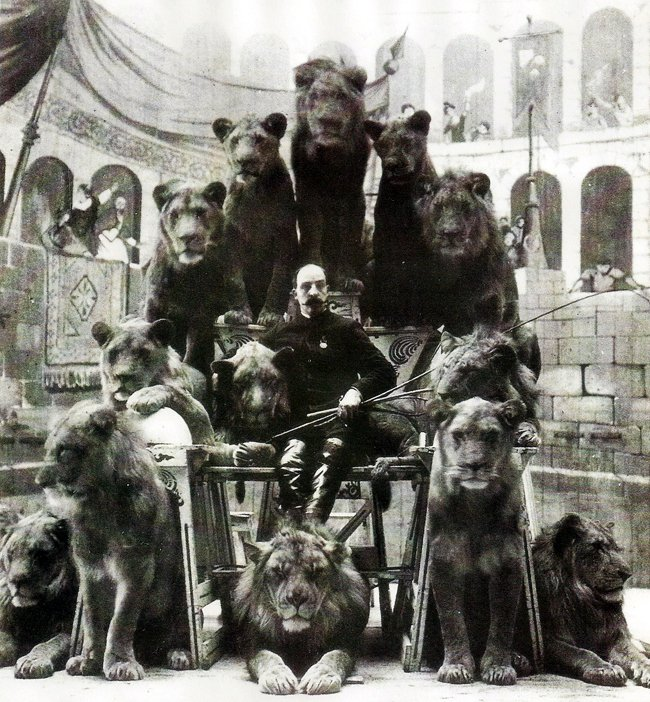
“My God sent his angel and shut the lions’ mouths, and they have not harmed me, because I was found blameless before him; and also before you, O king, I have done no harm.” 23 Then the king was exceedingly glad, and commanded that Daniel be taken up out of the den.”
Daniel 6:22-23, ESV
I am rather frustrated with myself. I confess I haven’t read Daniel in years, and I’ve chosen to rectify this. Lately I’ve busted through this book and discovered some wonderful stuff. I guess chapter 6 has become my favorite.
A couple of things stick out.
Daniel was an incredibly faithful man, praying three times a day. He was true-hearted who served each king with the gifts God had given him. I like him a lot.
Daniel became the king’s favorite, the Hebrew word used means “prominent or esteemed.” He was the greatest and best there was to be found. You could say that he was the finest man in the kingdom.
“Then this Daniel became distinguished above all the other high officials and satraps, because an excellent spirit was in him. And the king planned to set him over the whole kingdom.”
Daniel knew how to lead and direct others. We read that he oversaw 120 chief overseers. I suspect he knew a thing or two about good leadership. Daniel understood his work, and it seems that he instinctively knew what good government required.
But Daniel was a victim of jealousy. A concerted effort, carefully planned and directed was meant to destroy him. Although the leaders of this rebellion could find nothing to accuse him of, they resorted to trap him because he prayed to God. Faithfully and consistently.
Their plot worked. These officials, through their twisting and manipulation of the legal code, were able to sentence Daniel to death. It seems being fed to hungry lions was the penalty for “breaking the law.”
Sometimes we must choose to serve God, even if it means breaking men’s laws.
“But Peter and the apostles answered, “We must obey God rather than men.”
Acts 5:29
Daniel was over 90 years old when he was thrown to the lions. Even in his advanced years he kept up serving God. The passage declares that he had “an excellent spirit.”
The lions, (several I assume), were not at all interested in devouring Daniel. King Darius however was incredibly distraught over Daniel’s execution, but it seems he was forced into it. The passage tells us that the king was so distressed that he couldn’t sleep that night.
Undoubtedly, Daniel slept far better then Darius.
To be faithful to the Lord God may require us to sleep with lions, but we can be assured of the Holy Spirit’s presence with us even then. A verse in Hebrews suggests “faith” protects us from the strong jaws of the enemy. Daniel understood.
“Who through faith conquered kingdoms, enforced justice, obtained promises, stopped the mouths of lions,”
Hebrews 11:33
But yet, sometimes even the faithful will be eaten.
Sometimes the lions will devour believers. But we must trust and believe no matter what happens. Hebrews goes on to show us the extremity of the faithful. Read Hebrews 11:35-38 and you’ll understand what I mean. Being faithful can be very difficult. Bad things often happen.
*****
Some side thoughts. Prayer is intensely powerful. Daniel’s strength became the enemy’s focus and attack. That should give us understanding into the power we wield. But, do we use it?
Also, 1 Peter 5:8 explains much for the believer–
“Be sober-minded; be watchful. Your adversary the devil prowls around like a roaring lion, seeking someone to devour.”
It’s been said that the “blood of the martyrs is the seed of the Church.” We really must understand this, especially now.
“The apostles went away rejoicing that they were counted worthy to suffer shame for the name of Christ, that they were graced so far as to be disgraced for the name of Christ!”
“Count it all joy, my brothers, when you meet trials of various kinds, 3 for you know that the testing of your faith produces steadfastness.”
James 1:2-3, ESV
“There is no circumstance, no trouble, no testing, that can ever touch me until, first of all, it has gone past God and past Christ, right through to me. If it has come that far, it has come with a great purpose.”
“All joy,” (verse 2) is a fantastic thought. It stresses a joy that becomes militant, something powerful and significant. “All joy,” surpasses “some joy” or even “occasional joy.” Instead it’s a joy that remains joy even when tired and weak. It will only shine brighter in the darkness.
Jewels, diamonds, and pearls are typically displayed on a black background.
This reveals their brilliance and value. In the same way darkness should only encourage us to be deliberately brighter than our surroundings. We must understand that we shine only because He makes us shine. There is a divine incandescence that awaits every believer who feels the need or desire for more of God.
God’s special nearness is available to each believer, especially those in the heat of the furnace. He is close to those who want Him, and there is nothing will stand in His way. The Lord cherishes and treasures the seeking heart. There is nothing that can detour the believer’s yearning after their Father. Your faith must be purified, and this is never optional.
Name your trial, then turn it to God in prayer.
Leave it alone and refuse to carry it no further. It’s now the Lord’s concern. Simply watch for the deliverance to come. When God sees your heart, He will lavish Himself out on you. He delights to see your faith becoming solid and real.
We never choose to suffer, rather we choose His will. We must do so whether we suffer or not.
Trust Him.
“God, who foresaw your tribulation, has specially armed you to go through it, not without pain but without stain.”

















 Alaska Bible Teacher