Do You Belong in the Fellowship of Pain?

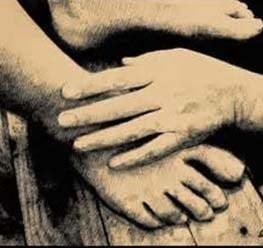
The hands of a leper

“In one of the villages, Jesus met a man with an advanced case of leprosy. When the man saw Jesus, he bowed with his face to the ground, begging to be healed. “Lord,” he said, “if you are willing, you can heal me and make me clean.”

Luke 5:12, NLT

The Bible text reveals a man who is desperate.  His leprosy has advanced; he is covered with it from ‘head-to-toe.’ He’s an outcast now, completely infected by something he never asked for; he is ‘unclean’ and completely without hope. There is no treatment, the doctors can do nothing.

The leper knows that without the touch of Jesus, he’ll never be healed. 

He knows it; he doesn’t need to be convinced by anyone over the complete hopelessness of his condition. He is lost. And yet he has heard that Jesus can do incredible miracles. Could it be that Jesus can heal his sickness? The leper comes and falls on his knees before the Lord, with his face in the dirt. This man is completely broken; he has no hope, except for Jesus. What else can he do?

Our diseases differ, but our lives have been completely changed by our pain. We all have this in common. 

Our pain and darkness vary. Some hurt more, some less. But we’ve all come to the place where we no longer have illusions of somehow being made whole. Whenever we meet, I think there should be a secret handshake or a password. We all share a comradeship— we’re all part of the same community.  We’re a broken club of tired and decidedly unclean misfits.

We belong to the fellowship of pain.

Lying in the dirt, we start to believe the unbelievable.  Our faith doesn’t activate our healing, as much as it simply guides us to Jesus. We can kneel, and perhaps that’s all we need to do. His presence drives away the fear, the doubt, and the pain. He’s come, and somehow we begin to hope for mercy. Only he can carry us through this.

In times past I’ve struggled with deep dark depression. I’ve had to take meds.  But when I come into Jesus’ presence, all my melancholy is driven out. He comes and I start to hope again.  Am I a stellar example of perfect discipleship?  I think not. But isn’t about us becoming “angels,” perhaps it’s more about us learning how to kneel, and to allow Jesus to touch our hearts.

You must do this, repeatedly.

“The power of the Church is not a parade of flawless people, but of a flawless Christ who embraces our flaws.”

“The Church is not made up of whole people, rather of the broken people who find wholeness in a Christ who was broken for us.”   

–Mike Yaconelli

alaskabibleteacher.com

Modern Idolatry, Plain and Simple

“The human heart is an idol factory.”

John Calvin

The definition of idolatry, according to Webster, is “the worship of idols or excessive devotion to, or reverence for some person or thing.” Idolatry is real, and it’s really a challenge to the believer, and it’s seldom mentioned today. In almost 40 years of following Jesus, I honestly can’t remember one real sermon on idolatry. That’s sad.

In fact, one of the first commandments given by God is in Exodus 20:3, “You shall have no other gods before me.” This has never been rescinded. It’s not obsolete or old-fashioned. The unredeemed human heart remains a factory of idolatry. Nothing has changed.

“An idol is anything that replaces the one, true God. The most prevalent form of idolatry in Bible times was the worship of images that were thought to embody the various pagan deities.”

So what is modern idolatry –what does a modern idol look like?

To help clear that up, Nicholas McDonald wrote a letter to you from the perspective of your very own, personal idol. (The last line is definitely a whopper.)

Hello. I am an idol.

Don’t be afraid, it’s just me. I notice you’re turned off by my name: “Idol.”

It’s okay. I get that a lot.

Allow me to rename myself.

I’m your family.

Your bank account.

Your sex life.

The people who accept you.

Your career.

Your self-image.

Your ideal spouse.

Your law-keeping.

I’m whatever you want me to be.

I’m what you think about while you drive on the freeway.

I’m your anxiety when you lay your head on the pillow.

I’m where you turn when you need comfort.

I’m what your future cannot live without.

When you lose me, you’re nothing.

When you have me, you’re the center of existence.

You look up to those who have me.

You look down on those who don’t.

You’re controlled by those who offer me.

You’re furious at those who keep you from me.

When I make a suggestion to you, you’re compelled.

When you cannot gratify me, I consume you.

No—I cannot see you, or hear you, or speak back to you.

But that’s what you like about me.

No—I am never quite what you think I am.

But that’s why you keep coming back.

And no—I don’t love you.

But I’m there for you, whenever you need me.

What am I?

I think you know by now.

You tell me.

I hope this helps. And I hope God gives you understanding.

alaskabibleteacher.com

Deer Feet for the Believer

“He made my feet like the feet of a deer
    and set me secure on the heights.
35 He trains my hands for war,
    so that my arms can bend a bow of bronze.”

2 Samuel 22:34-35

David’s Song of Deliverance

This entire psalm was written after David was delivered from the hand of Saul. David had been a fugitive for years and had experienced extreme difficulties. He had been pushed to the brink many times, yet maintained a close walk with God.

This verse in 2 Samuel has always blessed me. The image of a deer who has been put on a mountaintop through the direct action of the Lord–it’s a place of safety, a position of victory. It comes as a decisive maneuver of the Holy Spirit.

Psalm 18:33

David had learned things in the wilderness that he would never have otherwise. At times life got pretty extreme for him. When he struggled it was understandable. He followed the path that God laid out. It wasn’t easy for David, but he walked in faith and not by sight.

Danger surrounded David on every side – physically, spiritually, emotionally, socially. It would come from enemies, and even from his dearest friends.

God’s people are not immune from trials. It’s good to know that these are now orchestrated by our Father, and they’re purposeful and planned.

The prophet Isaiah extends the imagery of a deer in his prophetic ministry, but adds other ideas as well. The lame, mute and the desperately thirsty are descriptive of people who are given a special grace and touch. They’re promised something. They receive the promise of the Lord Jesus Christ.

“Then shall the lame man leap like a deer,
    and the tongue of the mute sing for joy.
For waters break forth in the wilderness,
    and streams in the desert;”

Isaiah 35:6

“David thought of how deer seem to skip from place to place and never lose their footing. God gave him the same kind of skill in working through the challenges brought by his enemies.”

David Guzak

alaskabibleteacher.com

He’s Inside of You

Ephesians 3:14-18

Prayer often does what preaching can’t. Some need a reminder. This idea of being “rooted and grounded in love” is crucial to growing up Christians. And it most often happens when the preacher is driven to his knees by a sticky situation.

After over 30 years I’m starting to see that my teaching has certain limits, but prayer on the other hand, always drives discipleship home.

You must settle on this spiritual fact, only a disciple can make a disciple. Too many preachers are believers themselves who don’t have a real prayer life. They end up using the pulpit (and the worship) as their sole ‘means of support.’ I can guess you can see how tragic this becomes.

A prayer meeting is almost unheard of lately, but I still believe that there are small groups of Christians who believe that both doctrine and prayer are God’s way of growing us up into His image. These two must be blended before real growth can begin.

“Strengthened with power through his Spirit in your inner being.”

Prayer is Paul’s way of building up the Ephesian church. In my personal opinion, he was locked up in a Roman prison for a couple of good reasons–the first is that he would discover he could disciple at a distance. And second that his prayer was an exceptional way to build the Church. Paul starts to understand this, and he rediscovers a new way to pray.

Paul’s prayer becomes a tool of considerable force.

Ephesians 3 papyrus from c. 275 A.D.

from wikipedia.org

The “inner being” is what he’s aiming at, and it’s Paul’s way of touching the heart of anyone the Holy Spirit is dealing with. Mr. Dry Eyes will never reach  the hearts that the Father is working in. Rather Mr. Crying Tears does the Father’s work. It’s not impeccable logic or great theology that completes the work, but the deep, deep cry of the heart.

So that Christ may dwell in your hearts through faith—that you, being rooted and grounded in love,

The immense power is Jesus living inside of us. Faith is God’s own key that He gives. Love is our root; it helps us grow. It gives us stability which is critical living in a confused and fallen world.

 Sadhu Sundar Singh

How to Die Well

“Even though I walk through the valley of the shadow of death, I will fear no evil, for you are with me; your rod and your staff, they comfort me.”

Psalm 23:4, ESV

“Precious in the sight of the Lord is the death of his saints.”

Psalm 116:15

“Death is like my car. It takes me where I want to go.” 

Pastor John Piper

Our generation simply doesn’t know how to die well.  There are many conflicting messages and attitudes which have steered us away from the reality of dying.  Much of it is the natural development of unbelief.  Our pop culture develops this and gives it momentum.  We are trying to convince ourselves that “death is impossible, my life will not end.”  But we’re escaping into a delusion. And it only intensifies as we age. 

We are running from what is real.

There is a Latin phrase,  Ars moriendi  (“The Art of Dying”) which the Church practiced in past generations.  In the past, Christians would be buried as close as possible to a Church building.  Many would be interred within the very walls of the Church.  The understanding was that the dead were part of the congregation.  That there was only a thin veil that stood between the living and the dead.  

The dead didn’t just vanish. They still live. We just don’t see them.

Our generation is confused.  We have forced death to wear a mask.  We insist on a significant camouflage to hide the reality of sickness and death.  No one really ever talks about it, and so no instructions are given on how to die well. So we don’t, and we die poorly–often in ICUs. We die sedated, separated and unable to process dying. We never help our families process it. 

For many, the fear of dying is intense and paralyzing.  

It’s time for the Church to step up and guide us to our next step.  Our pastors and elders have got to prepare us to die well.  It is a part of being a disciple.  It is discipleship, and dying is inclusive.  We need somebody to prepare us for the inevitable and the certainty that is approaching us.  I need someone that will help me face my own death.

You know what?  No one escapes.  

And the reality of that drives some of us mad, or addicted, or psychotic.  The idea of filling a casket up for forever is incomprehensible.  We cannot live with this sick idea of dying.  It disturbs us on the deepest level possible.  It is completely evil.

Psalm 23 has been pure comfort and healing for generations.  And it is an excellent starting point for us.  Verse 4 develops the idea of traversing death.  The writer has incredible insight of passing through death.  This verse alone is worth billions of dollars in gold.

Psalm 23 has been pure comfort and healing for generations.  And it is an excellent starting point for us.  Verse 4 develops the idea of traversing death.  The writer has incredible insight of passing through death. Psalm 23 has made me a very wealthy man.  His Word has become my rich treasure.

“Some day you will read in the papers that D.L. Moody of East Northfield, is dead. Don’t you believe a word of it! At that moment I shall be more alive than I am now; I shall have gone up higher, that is all, out of this old clay tenement into a house that is immortal- a body that death cannot touch, that sin cannot taint; a body fashioned like unto His glorious body.”

    D.L. Moody

But God…

But God, being rich in mercy, because of the great love with which he loved us, even when we were dead in our trespasses, made us alive together with Christ — by grace you have been saved.”

(Ephesians 2:4–5)

But God. Short words with a powerful meaning, used over 4100 times in the Bible (every 7 verses). It’s used to imply intervention and change, typically a holy interruption of some kind. This verse in Ephesians 2 describes the Father getting involved in a tangible way.

We were terribly lost–actually the Bible says, “dead.”

But He is rich in love and mercy, and it’s grace (and only grace] that makes us alive. Now we’re not reformed or rehabilitated. These are good words, but the verse describes a resurrection–a revivification. The dead live!

Jesus actually resurrects each believer.

“But God.” Joseph learned that “all things work together for good.” His brothers cruelty sold him into slavery and even though he endured prison, he would become the prime minister of Egypt. After many years his wicked brothers come before him. Revenge? Not on your life.

“As for you, you meant evil against me, but God meant it for good in order to bring about this present result, to preserve many people alive.

Genesis 50:20

Let God have His way with you. Acknowledge His sovereignty by allowing Him to interrupt when He wants to. He is active in our lives. Having resurrected us from the dead, the Holy Spirit becomes actively involved in our lives (and He brings us grace and beauty).

If you do this, I expect great things for you.

“My flesh and my heart may fail, But God is the strength of my heart and my portion forever.”

Psalm 73:26


The Leper Meets Jesus

Matthew 8:1-4 

It was a wild scene, we can’t forget this. But it’s funny, Jesus through all this sees and hears this leper. He doesn’t respond to the crowd but to the diseased man. The text tells us that the leperous man was on his knees and he was “praying.” His pleas were directed at Jesus.

But remember, the end of the previous verses explains exactly what’s happening. Matthew 7:28-29, (MSG) explains their excitement–

When Jesus concluded his address, the crowd burst into applause. They had never heard teaching like this. It was apparent that he was living everything he was saying—quite a contrast to their religion teachers! This was the best teaching they had ever heard.

The crowds responded wildly to the marvelous teaching of Jesus, and that was awesome. We really shouldn’t minimize that. However, in the Gospels, the “crowd” is pretty much a bad term, or at least a neutral one.

I suppose that Jesus seems to ignore the multitude’s extremely positive reaction. He knows it won’t last. The fickle crowd will soon cry out and demand His crucifixion.

But I understand, I’m that leper and He sees me.

Scripture tells me that Jesus now sits in heaven and makes intercession for me. He focuses on just me, I’m the center of His care–but I also know that attention is also on you, and others, and yet I’m assured that He sees me and each of His sheep. This should be a comfort. He concentrates and ministers to the person, and never to the multitude. 

Jesus loves you, and He loves me too.

“So he told them this parable: “What man among you, who has a hundred sheep and loses one of them, does not leave the ninety-nine in the open field and go after the lost one until he finds it? When he has found it, he joyfully puts it on his shoulders, and coming home, he calls his friends and neighbors together, saying to them, ‘Rejoice with me, because I have found my lost sheep!’”

Luke 15:3-6

Purity in an Impure World

First, let’s start off with a definition. Purity describes something that is not mixed with anything else. It’s not 80% of something, or even 99.9%, rather it’s fully and completely one thing. Purity also means to be solely without any additive, contamination or pollution.

Purity of heart is to be exclusively focused on one thing.

This verse, 5:8, “strikes the very center of the target as he says, not ‘Blessed are the pure in language, or the pure in action,’ much less ‘Blessed are the pure in ceremonies, or in raiment, or in food;’ but ‘Blessed are the pure in heart.’” (C.H. Spurgeon)

We really must see this world as God sees it. 

We find that scripture is not very kind to us. It seems that mankind defiles everything he touches. (I wish it wasn’t so.)

“The human mind is the most deceitful of all things. It is incurable. No one can understand how deceitful it is.” Jeremiah 17:9

Consider the following areas that are affected by out “fallenness:

  • Entertainment, movies, the internet 
  • Politics, local, national and world 
  • Religion, philosophy, theology and spirituality
  • Culture and art, literature and music
  • Education
  • Science and technology, medicine and psychology
  • Economics, wealth and poverty
  • Sexuality

The above list is hardly complete, and as I compiled it I got a little heavy-hearted. I had to ask myself, are we really this bad? Again the Christian must look at the Bible for wisdom and direction.

 “All have sinned and continually fall short of the glory of God.” Romans 3:23

“The heart of the sons of men is full of evil, and madness is in their heart while they live.” Ecclesiates 9:3

As Christians who spiritually understand the work and the love of Jesus Christ. We are called to know and love God, must continually reacquaint ourselves to the absolutely depraved condition of this world. No one, and nothing is exempt.

There is another verse I want to consider, it mentions purity twice!

“Having purified your souls by your obedience to the truth for a sincere brotherly love, love one another earnestly from a pure heart,” 1 Peter 1:22

Notice. The verse stresses that we have to take the initiative. Now I suspect that being pure is our responsibility. “Obedience to the truth” must lead to “brotherly love.” It’s not really a surprise that that’s where we end up. 

To really see God, and to truly love others, requires purity. 

When it comes to being pure we must become humble–that’s our starting point. Humility keeps purity from becoming false. We dare not become “holier-than-thou.” We can easily become hard, religious and judgemental. Becoming a “Pharisee” is easy and always possible.

Lower Seat Christians

Luke 14:7-11

Choose your seat carefully. In Jesus’ day, there was a definite seating order to a wedding feast. It wasn’t first come, first served. There was a strict protocol, where one’s importance mattered. Honored people got honorable seats–close to the front as possible. Average people got average spots; but no one wanted be at the bottom, having to sit at the “kids table.”

Jesus was watching, and what he saw was a spiritual principle of His Kingdom.

Jesus often teaches out of the things we encounter–real life events. Spiritual truth often hits us from those things we actually see. If you want to know what God is doing in your life, all you need to do is look around at the “practical” things, and start to see the spiritual lessons inside them. We learn from real-life. That’s how he often teaches us, he combines the Word with what we’re experiencing.

Our natural inclination is to move higher up.

We often think that we’re deserving, and so we take our “rightful” positions. That’s the way humans think. We all want to sit in the best possible place, and so we end up wheedling our way up front. We can fall into the subtle trap of self-promotion. But that’s not how discipleship works.

Jesus corrects, advising us to take the lowest place. I think verse 11 is the key to figuring out this seating arrangement. We’re starting to see a physical situation become a spiritual lesson. There’s much to learn. Here’s verse 11 in the Amplified version:

“For everyone who exalts himself will be humbled [before others], and he who habitually humbles himself (keeps a realistic self-view) will be exalted.”

Verse 14, Amplified Bible

This translation injects some realism into our lives, especially in how we see ourselves. It’s something quite foundational. It lays down a principle that is always true in his Kingdom (1 Peter 5:6). If we don’t accept and implement this, we’ll suffer a definite deficiency in our discipleship. It stunts the growth of many believers. And that is tragic.

The whole scene lays out how life in the spirit really works, and it seems terribly paradoxical.

Our human logic asserts that deliberately choosing the lesser is foolish, things really don’t work that way. We think (falsely), that we’ll only advance by asserting ourselves. But Jesus, quite aptly, clarifies the ways of the Kingdom–true maturity will only come if we decide to take the lowest place.

“Humble yourselves before the Lord, and he will exalt you.”

James 4:10

Walking With Him in The Garden

This image has an empty alt attribute; its file name is pardes-hebrew-yellow-1.jpg

“When the cool evening breezes were blowing, the man and his wife heard the Lord God walking about in the garden. So they hid from the Lord God among the trees.”

Genesis 3:8

I honestly have never had the wonderful experience of strolling a lush garden with my Father. At least not totally. But when I’m engaging the Word, pressing in to comprehend a passage, it’s as if I’m truly walking in His orchard with Jesus.

But there is something more to this.

This word “pardes” is also an acronym. The rabbis taught that there are four levels of understanding as we peer into a passage.

  • P’shat–the surface or literal meaning of a verse or passage.
  • Remez– the symbolic or applied reason of the Word. How it connects with my daily life.
  • Drash–how it fits into other parts of the Bible, forming a purposeful teaching.
  • Sod–a hidden meaning that resides “underneath” the verse. This seems when the Holy Spirit gets really involved in the way I live. (Some would say “mystical.)

Now I’m not sure that every passage reaches the “sod” level. (Maybe we’re not really aware?)

When we truly study God’s Word it’s as we walk in the garden. He reveals Himself to us. The Genesis story shows us where we can find Him. The important thing I suppose is trying to hide from God’s presence. We can’t.

We must come to our Father, and learn to walk with Him. The Bible is the best way to fellowship with Him.