Our Miracle in Mexico

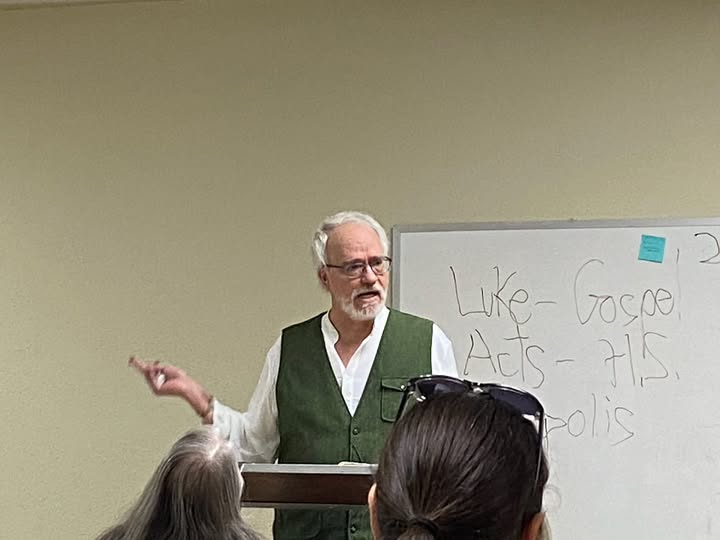
What happened was nothing less than a miracle. Let me explain and let you be the judge. Over the years of ministry I’ve heard the Lord speak clearly at different times. He has this tendency to overcome confusion and doubt to make His will super clear.

In 1995 we were sent by our church to Mexico to assist a church/mission station. We would be their first missionaries in Baja California. We knew we were called, and we also understood that it would definitely be challenging (and it was). We made a three year commitment.

We took Spanish at King’s Way Missionary Institute in McAllen, Texas. It was there we met another couple who would be working 40 miles south of where we were going. We agreed that once school was done we would travel together.

Now this is where it gets interesting.

We left south Texas and convoyed to San Diego. When we hit New Mexico the heat got terrible and my car didn’t have AC. The couple we were travelling with was pulling a trailer and couldn’t travel over 45 mph. It was over 100 F., I remember looking at our kids in the backseat and they were sprawled out, they were on the verge of heat stroke.

Now please bear with me.

Then something quite amazing happened!

There are several lanes available at the border crossing–they’re always backed up with 20 cars in each lane. So I pulled into one waiting for my turn to be inspected. Suddenly I heard honking behind me. I looked in my rear view to see what the deal was. It was our friends we had left back in New Mexico. They were in the car directly behind me!

My brain immediately started to calculate the odds.

It was then I heard Him speak to me.

Our three years were very difficult. We lived in a very old and very small “burned out” trailer, with no electricity or running water. We had a 55 gallon drum that was filled occasionally by a water truck. We had to boil it to kill the mosquito larva.

I killed rattlesnakes and battled with black widow spiders, and hundreds of tarantulas that wanted to nest on the property.

To know that God was taking care of us, had led us, and was using us was comforting. When things got very hard that experience at the border would comfort us repeatedly. It gave us confidence in His purposes for us being there. He put us there, and would not leave us.

When we left Mexico I was a little bit discouraged. “Where is the fruit?” About 6 months after returning to the Bay Area, I was in church when one of the elders came up to inform me that one of the leaders in our Mexico church had named their newborn son after me–Bryan Allen Rodriquez!

That news staggered me, it was like a 2×4 up the side of my head. They saw our steadfastness and wanted to name their son after me. That pretty much undid me. I admit that since then, I’ve struggled with this. I guess you can never fully understand your impact on others.

Psalm 40:5, ESV

alaskabibleteacher.com

Ponder the Word

“But his delight is in the law of the Lord, and on his law he meditates day and night.”

Psalm 1:2

In Psalm 1:2 the Hebrew word for meditation is hagah. In this Psalm we have a contrast between the blessed and the “not-so-blessed,” and it commands that as Jesus’ followers that we process the reality of this to become blessed by our Father.

In Psalm 1:1 the word blessed is used, and actually just in the book is Psalms alone blessed is used 51 times. The word has a very simple and concise meaning: “to be happy.” I really don’t think we can minimize how important it is to be happy.

In 1:2 we read hagah or meditate. That Hebrew word is a little bit more complicated and it seems more nuanced than “blessed.”

Hagah, or meditate means:

  • to chew a cud like a cow
  • to growl like a lion who is eating an antelope
  • to moan or groan
  • to talk to oneself, or mutter or whisper
  • finally, it can mean to muse or imagine

Yeah, it’s an interesting word and I suppose all of these meanings are to be factored into meditation [hagah]. It seems that these five definitions shape the different meanings that go into our understanding.

Using the above definitions, this is how it might look:

  1. sometimes I regurgitate the word like a cow chewing its cud
  2. at times I attack it like a lion
  3. I moan and groan as I wrestle with it, seeking for a handhold
  4. thinking about the passage I talk to myself about its meaning
  5. I imagine being there, sometimes it’s like I’m a “fly-on-the-wall”

When we come to God’s words, the Bible, we are required to assimilate all that the Holy Spirit graciously gives. When He gives us something from the Word we must apply it to ourselves. You can do this through any of the 5 definitions I’ve given.

The Holy Spirit is the One who ignites His Word into our hearts. He makes us glow for His glory.

Joshua 1:8, ESV

alaskabibleteacher.com

The Parable of the Unmerciful

God is generous. We owe him an outrageous kind of debt. But what happens when we refuse to forgive another person? Jesus now teaches what happens–it’s frightening.

Matthew 18:22-34

God is generous. All that he does is grace. It’s also grace when we really meet another. He loves us, and we need to siphon that love to everyone we meet. When we come before the Lord, we don’t get the justice we deserve. He has forgiven us—the ten thousand ones.

God is generous. We owe him an outrageous kind of debt. Commentators list the modern value of 10,000 talents would be $1 billion USD. Granted this is figurative, but that doesn’t mean it’s untrue. Grace is God’s extravagant for scandalous sinners.

That is an insane amount of money. To settle our debt would far, far more than we can repay; but isn’t that the point. God’s grace on us, is a precious thing.

When he gets off his knees, we realize that he really hasn’t changed by grace. His heart is teflon, and the mercy the father gave him doesn’t stick. His heart hasn’t really grasped his lesson in forgiveness. God forgave, the servant didn’t understand. His treatment of another proclaims this.

The parable directly speaks of grace, and ungrace.

The $10,000 guy meets the $100 talent guy and we see our own inability to forgive. We shake down our brother and sister for just small things. Notice verse 28, the text tells us that he actually assaulted him, “he started to choke him.” How bizarre and how disturbing. And yet, God sees, and responds.

Was the $10,000 guy really forgiven? Did he understand the spiritual transaction of what just happened? I don’t think so—and it scares me.

The other servants have seen the issue.

The key word is “distressed,” or lypeō in Greek, the word means “to throw into sorrow, to grieve or offend., to make heavy.” All that the forgiven servant did, was recognizable by others, and they reported what they saw to the master.

His behavior is clearly meant to disturbs us.

He’s called “wicked” in verse 32. What he did was awful, and again he’s brought in. Because of his mistreatment of the other who owed, he was now thrown into prison, owing a billion bucks. He gets what he now deserves. He gets justice instead of mercy. He is turned over the torturers.

Matthew 6:15

What does all of this mean?

I’m pretty sure that God isn’t hammering us over our unforgiveness of others. I suspect it’s our sin that does that. When we consider our sin, how can we understand others who sin against us? We have been forgiven much (very much!) how can we not forgive others for sinning against us?

J. Meyer

alaskabibleteacher.com

Are You Wearing White?

Rev. 7:9, ESV 

We fail to grasp the essence of grace and its significance.

When we speak about grace, we must define it. First, grace is a free gift and kindness from God that people do not earn or deserve. When we appropriate grace as believers we understand that it gives us the power and gifts to live biblically and faithfully. We see that grace is given for both salvation and service. 

Sometimes we forget this. I wonder sometimes if we’re ‘allergic’ to God’s grace.

We fall into the trap of work and legalism! I often lose sight of my true identity before a holy God, as unmerited favor tragically tries to become merited favor. This is not biblical; it is a distortion of the truth!

OK. What about repentance? We must understand that we’re called to renounce our sin and utterly turn from it. You are called to live holy and free. When Jesus met the adulteress who was about to be stoned, He forgave her, but He also commanded her: 

“Jesus stood up and said to her, “Woman, where are they? Has no one condemned you?” 11 She said, “No one, Lord.” And Jesus said, “Neither do I condemn you; go, and from now on sin no more.” 

John 8:10-11

The whole incident was grace, and this woman was receiving the unmerited favor of Jesus. She deserved death, she should have been stoned. But the first thing after her salvation was to live differently. This was a command to turn away from the sin which was going to destroy her. 

I’m amazed by this grace. 

Remember the thief hanging on the cross, consider the prodigal son, or the tax man Zaccheus. All three intrigue me as they found favor without meeting our own definition of repentance. Salvation seems to come by grace through faith alone. 

Perhaps grace includes both faith and repentance? I must think about this more.

Brennan Manning compassionately comments on God’s grace:

“Because salvation is by grace through faith, I believe that among the countless number of people standing in front of the throne and in front of the Lamb, dressed in white robes and holding palms in their hands.  

I shall see the prostitute from the Kit-Kat Ranch in Carson City, Nevada, who tearfully told me that she could find no other employment to support her two-year-old son.  

I shall see the woman who had an abortion and is haunted by guilt and remorse but did the best she could faced with grueling alternatives; the businessman besieged with debt who sold his integrity in a series of desperate transactions; the insecure clergyman addicted to being liked, who never challenged his people from the pulpit and longed for unconditional love. 

The sexually abused teen molested by his father and now selling his body on the street, who, as he falls asleep each night after his last ‘trick’, whispers the name of the unknown God he learned about in Sunday school. 
 
‘But how?’ We should ask. 
 
Then the voice says, ‘They have washed their robes and have made them white in the blood of the Lamb.’ 
 
There they are. There we are – the multitude who so wanted to be faithful, who at times got defeated, soiled by life, and bested by trials, wearing the bloodied garments of life’s tribulations, but through it all clung to faith. 
 
My friends, if this is not good news to you, you have never understood the gospel of grace.” 

The Four Alls of Prayer

“Praying at all times in the Spirit, with all prayer and supplication. To that end, keep alert with all perseverance, making supplication for all the saints, 

19 and also for me, that words may be given to me in opening my mouth boldly to proclaim the mystery of the gospel, 20 for which I am an ambassador in chains, that I may declare it boldly, as I ought to speak.”

Eph. 6:18-20, ESV

I am convinced that our most challenging work is learning to pray. Whenever we experience revival, whenever we rediscover our true calling and purpose for living, we do so by prayer. Prayer isn’t the way to get things, it’s how we change.

Satan’s primary focus is to destroy our prayer lives, he works to eliminate our communion with our Father. He detests that, and he and his demons (and the world system) work overtime to tear down our walk. The enemy concentrates everything on our prayer life.

This passage (v.v. 18-20) emphasizes several truths about prayer. If you take apart these you’ll discover how to shape and direct your ‘time on your knees.’ Notice the following.

  • All times
  • All prayer
  • All perseverance
  • All the saints

If we go further we see that the word “all” in Greek, (although it’s a simple adjective), gets used 1245 times in the Bible. It can mean:

  • all manner of
  • the whole or entirety
  • everything, or the totality of
  • completely

With this in mind we see that Paul stresses the complete effort of prayer and its focus. All the time, every kind, no matter what and for your brother and sisters in Christ need. It’s work, spiritual work. It seems that once we put the armor on (verses 10-17) we can stand in God’s own strength. It’s from that we start to learn prayer.

It’s not enough to wear your armor. There’s something you must do wearing it.

If we’re clothed in armor it’s pretty much for the exclusive purpose of prayer. Yes we must dress for war and protection, true, but its ultimate purpose is prayer and intercession. Don’t just wear it but pray out of it. It’ll be work, but you must do this, even if you sweat. You must strive in prayer, so much is counting on you.

You can make a difference.

The Church is counting on you. “Paul,” (symbolizing all pastors and elders, teachers and leaders), absolutely need your prayers. We need boldness, and we need grace and love, and only God can give it, if you’ll only intercede for us.

It will not be easy. The enemy wants to suppress your prayer life. He absolutely hates it. Satan wants to see you passive and dull and you cannot let him do this. You have a very critical part and place in God’s kingdom. Perhaps others are waiting for you, and perhaps you’re the only one who can step in the gap for them.

You’ve been given a part of God’s field to care for, you have your own sphere of influence. No one else has it, but you.

There many different ways to pray:

  • On your knees
  • walking
  • standing or sitting
  • vocally, or in your focused thoughts
  • with others, a group
  • using a prayer list, (very helpful).
  • “arrow” prayers, (those with 1-2 sentences that end up in His throne room).
  • using the Psalms or reading the many prayers in the Bible

(I know there are many more, but these are what comes to mind right now.)

There’s a “school” of prayer and the Holy Spirit intends to teach you.

Don’t play hooky. You’ll make mistakes or perhaps lose focus. The Spirit will teach you holy stamina. You might pray for one or two minutes at first, but it’ll grow and you’ll learn endurance. Remember though–you’re most like Jesus when you start to intercede for others.

Just maybe your sanctification will come when you start to pray?

-Brother Lawrence

alaskabibleteacher.com

He’s Much Closer Than You Think

tumblr_static_tumblr_static_1odvenqfc6kkgwo0sg0skgsco_1280

Luke 22:41

WHO KNOWS WHAT JESUS IS THINKING AT THIS PRECISE MOMENT as he entered the Garden? His disciples waited for Jesus and scripture states that he proceeded ahead of them to find some needed strength through prayer— this verse tells us he went “a stone’s throw.”

We often share in the sorrows of the people closest to us, and Jesus wants His disciples to follow him. And they do, but not all the way. They came close, but were oblivious to the full nature of the pain that was beginning for Jesus. They slept while he agonized.

He was for the first time perhaps, needing someone close.

Many of us will make the same trip to the garden. Soon every believer makes the trip to ‘Gethsemane,’ but not as mere observers. It is a distinct place of testing and of sorrow. And each will experience it for themselves. “The servant is not above his master.”

But Jesus is close— he completely understands what it means to be alone with sorrow. The believer can lean on Jesus as the pain continues. He sends his “Comforter” to each, as he escorts us through this time. He comes in grace, and is completely kind.

He is truly just a stone’s throw away.

“God is our refuge and strength,
 always ready to help in times of trouble.”

Psalm 46:1

bry-signat (1)

Have You Learned to Rest Yet?

Life can get out of hand sometimes, becoming hectic and frantic. It seems like we’ve got 1000 ‘irons in the fire.’ The anxiety of doing everything creates fear and worry. We cannot possibly keep up. There isn’t enough hours in the day.

We are not at rest with ourselves, or with the Lord.

And oh my, the news, the internet, and our cell phones create awful issues if we can’t manage them with the Holy Spirit’s direction and purposes. Our computers seem like a pipeline for darkness. Unless they’re “given” to God, they can destroy you.

What causes me anxiety? I’m quite sure you can add your own issues. But here’s a partial list:

  • ambition, self-promotion, pride, jockeying for position
  • family issues, marriage and children
  • my job and career, “keeping up with the Joneses”
  • religious ‘duties’
  • finances, bills
  • politics, media
  • unrepented sin, separation from God, peace is missing

But I assure you, there is rest.

The Old Testament uses a word, נוח or ‘nuach.’ It’s a Hebrew word. Both Moses and Jesus understood the implications. It means calming, to become quiet or still. To rest quietly.

This promise is given to Moses; frankly, he’s overwhelmed by his burden. In the “tent of the meeting” he battles with God, and it’s in that place Moses insists on the Lord’s active presence on him and on the people. He will not take another step unless God does this.

The Lord Jesus calls each of us to rest in Him. It seems we work hard and we carry awful heavy burdens. Jesus uses the word, “Come” which is typically a command or an imperative. (It can be used with an explanation mark!)

Jesus understands our hearts and our effort and “labor.” He fully grasps that we’re “heavy laden” much of the time. His invitation is to come and find the peace of a resting disciple. It is His gift to us, and only Jesus can give it to us.

 “‘Come’; he drives none away; he calls them to himself. His favorite word is ‘Come.’ Not, go to Moses – ‘Come unto me.’ To Jesus himself we must come, by a personal trust. Not to doctrine, ordinance, nor ministry are we to come first; but to the personal Saviour.”

CH Spurgeon

A Quick Discipleship

John 9:4, NLT 

To be quick means that we move very fast; being slow often implies a reluctance or a mental delay.  To hesitate while doing God’s will for us suggests a degree of ignorance or stubbornness.  Our quickness is to be seen while doing “the tasks assigned to us.” 

Urgency should be woven into our hearts.  We need to have wings on our feet, fleet, and alacrity.  A “double eagerness” as we carry out His work.  It should be of no surprise that God sets before us an itinerary of work He wants us to do. We have a schedule to keep work that needs us to be diligent and sure. 

So many brothers and sisters sleepwalk through their salvation. They snooze when Jesus desires they “watch and pray” with Him. 

Jesus was on a timetable. He communicated with the need to do it.  He is in tune with the work of God and is involved in the urgency of his present moment.  Jesus knows this, and he clearly communicates the need to do.  We are not called to be manic for Jesus; we are expected to be alert and aware. And busy. 

“The night is coming.”  It is getting late.  In response Jesus issues an order.  Work at what the Father has assigned you.  It is almost dark now.  There is a “principle of spiritual velocity” calling us to an alertness and an awareness of needful things to do before “the time is up.” 

In Acts 9 the disciples show a holy zeal in their day’s work.  “We can’t stop speaking what we have seen and heard.”  The Old Testament prophets carried this urgency–Jeremiah and Amos both declared to us this avidity placed on the believer.  Jesus desires that we factor in this intense awareness of the approaching night. 

“We should be holy people eager to greet our Lord when He returns, ready at any moment for the trumpet’s call, people of optimism, busy in evangelism, hands to the plow, eyes on the prize.” 

David Jeremiah 

I recently read about an evangelist in the last century.  He had a watch made, and on the dial, he had a picture of a setting sun.  And over it, the words, “the night comes.”  Every time he looked at his watch, he would be reminded of the shortness of life and the need for the performance of his duty.  That lesson should be transmitted to each zealous believer. 

The key word I guess, in all of this, is zeal.  Often the older we get the more this word becomes diminished, and distant.  (I believe our Father understands this about us.) No matter what we do, He focuses His love on us.  There will never be condemnation for us.  But we can still waste our lives in a tragic way, which we will later regret.  

But we have to ask ourselves this, will I just be an admirer, or can I become a zealous disciple of Christ? 

The secret of the Christian’s passion is simple: Everything we do in life we do it as to the Lord and not to men.

alaskabibleteacher.com

Is Jesus Your Friend, or Just a Doctrine?

“A rule I have had for years is: to treat the Lord Jesus Christ as a personal friend. His is not a creed, a mere doctrine, but it is He Himself we have.”

  ~D.L. Moody

Friendship with God can be quite liberating for the believer. It releases us from the terrible bondage of religion and ritual with all its negative connotations. Intimacy with our Lord will carry us beyond creed or doctrine to the place of true communion. We fellowship with Him directly in person.

It’s not that the Law is bad, but in the intense light of God’s love, it’s a poor substitute for real discipleship. We often put an undue value on rules and religious effort, but that misses out on grace completely. Doctrine is a good servant, but it’s a poor master.

God’s grace always trumps our legalism. Love truly surpasses rules, without breaking them.

As good evangelicals, we can talk big about “a personal relationship.” That is indeed crucial. But few are the believers that walk in a daily friendship with their Savior, and that is truly a tragedy.

As a teacher of God’s Word, I mourn over my students when they miss out on what is real and true. I’m afraid for them. They haven’t come to the place of being a friend of Jesus.

John 15:15, ESV

Friendship with Jesus will bring true guidance. He shares secrets and wisdom with his friends. We are brought into a true knowledge of the Kingdom through companionship with the King. We are not slaves– or drones, slavishly serving out of fear. We are His confidantes.

We’re His friends!

Jesus wants to confide in us; sharing wisdom and truth hidden by time and sin. And his kingdom is chock full of great mysteries! He is looking to bring us into the willingness of daily communion. I believe its only through intimacy with Jesus can we handle what He wants to teach us. (see Psalm 25:14; John 15:15.) We will simply short-circuit if we’re not intimate with Him.

He will heal our wounds, and forgive all our sins. He is truly our Savior as well as our friend.

But that friendship comes with a price. It means we are now tethered to the Lord. That can get old, especially when I want to do my own thing. It seems I will continually have to lay something down and choose to accept being bonded with Him, and to always follow.

But my soul now has a best friend. Or just maybe, Jesus has been my friend all along, and I just didn’t know it.

alaskabibleteacher.com

Without Your Wound? (John 5)

angel6

The subject of “the pool at Bethesda” alludes to the Thorton Wilder play, “The Angel that Troubled the Waters.” 

The play tells of a physician who comes to the pool of Bethesda, hoping to see the stir, and then be the first in the water, and healed of his debilitating depression.  An angel appears and troubles the water. Everybody at the pool hopes to be the first one in and to be healed of their disability.

An angel appears and blocks a physician at the very moment he is about to step into the pool and be healed.

angel1

Angel: “Drawback, physician, this moment is not for you.”

Physician: “Angelic visitor, I pray thee, listen to my prayer.

Angel: “This healing dear physician, is not for you.”

Physician: “Surely, surely, the angels are wise. Surely, O Prince, you are not deceived by my apparent wholeness. Your eyes can see the nets in which my wings are caught; the sin into which all my endeavors sink half-performed, cannot be concealed from you.”

Angel: “I know.”

Later, the person who enters the pool first, and was healed rejoices in his good fortune, then turns to the physician before leaving and says:

“But come with me first, an hour only, to my home. My son is lost in dark thoughts. I — I do not understand him, and only you have ever lifted his mood.”

“Only an hour… my daughter… since her child has died, sits in the shadow. She will not listen to us, but she will listen to you.”

The play pierces me with this line— “Without your wound where would your power be?“ That thought causes me to look at my many weaknesses with an entirely different perspective.

Paul’s teachings offer us a powerful revelation: it is through our weaknesses that we can authentically minister to others, just as Jesus did by going to the cross. This priniple slowly permeates my understanding, and emphasizes the reasons behind my weaknesses.

Paul boldly declares that it is the very things we perceive as weak that have the potential to cultivate strength and truth within us and to others. It is my sincere hope that the ministry of alaskabibleteacher.com will impact lives by declaring this.

I hope so anyway. Please pray for me. I desperately need it.

I first encountered this excerpt in the book, “Abba’s Child: The Cry of the Heart for Intimate Belonging,” by Brennan Manning. The book is a worthy read, and worth finding if you can. The play is based on the biblical verses of John 5:1-4, however, it changes the end of the parable. The play is fictitious.


alaskabibleteacher.com