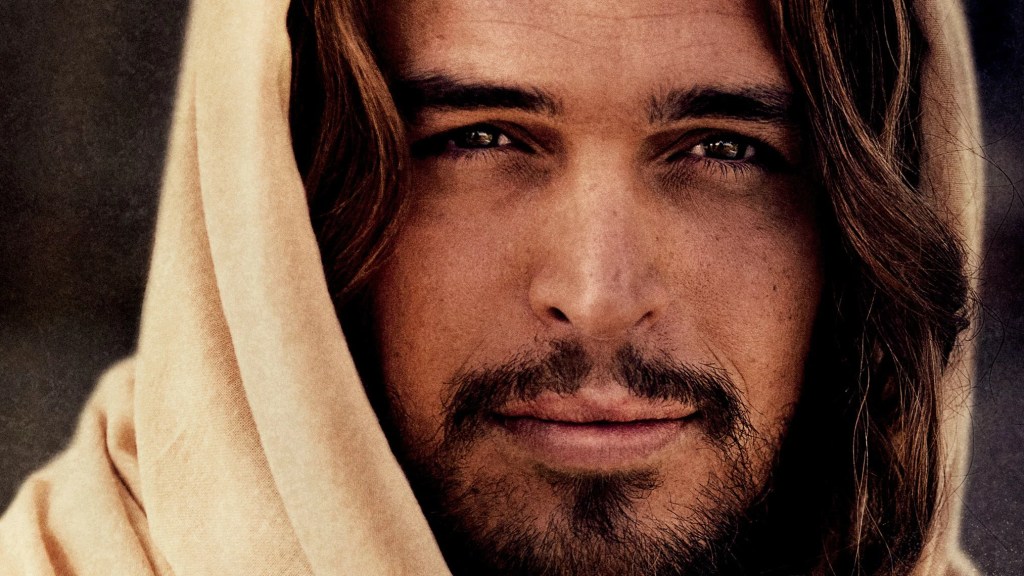
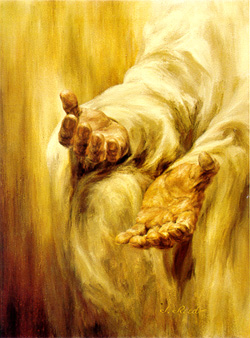
A Legion of Demons

Mark 5:1-15

They came to the other side of the sea, to the region of the Gerasenes. As soon as he got out of the boat, a man with an unclean spirit came out of the tombs and met him. He lived in the tombs, and no one was able to restrain him anymore—not even with a chain— because he often had been bound with shackles and chains, but had torn the chains apart and smashed the shackles. No one was strong enough to subdue him. Night and day among the tombs and on the mountains, he was always crying out and cutting himself with stones.

6 When he saw Jesus from a distance, he ran and knelt down before him. And he cried out with a loud voice, “What do you have to do with me, Jesus, Son of the Most High God? I beg you before God, don’t torment me!” For he had told him, “Come out of the man, you unclean spirit!”

“What is your name?” he asked him.

“My name is Legion,” he answered him, “because we are many.” 10 And he begged him earnestly not to send them out of the region.

11 A large herd of pigs was there, feeding on the hillside. 12 The demons begged him, “Send us to the pigs, so that we may enter them.” 13 So he gave them permission, and the unclean spirits came out and entered the pigs. The herd of about two thousand rushed down the steep bank into the sea and drowned there.

14 The men who tended them ran off and reported it in the town and the countryside, and people went to see what had happened. 15 They came to Jesus and saw the man who had been demon-possessed, sitting there, dressed and in his right mind; and they were afraid.

I had so many demons inside me, people called me Legion. I ruled the spiritual world of the Garasenes. People were afraid of me, of what I would do to them. Believe me, they knew. I was a living nightmare, their boogeyman. My days was filled with awful confusion and terror.

And I was completely insane.

I can recall little through my darkness, and I suppose that was for the best. My madness permeated everything. My life had become completely saturated with evil. What little I know I will tell you.

Try to imagine the condensed insanity of a mental hospital crammed into one’s little brain.

That day, I was on the Gerasenes’ “welcoming committee.” I ran to greet Jesus before he even got out of the boat. I remember falling at His feet. I knew instinctively who He was. He was the Lord over my darkness. I suppose that deep down I knew that only He could free me.

The authority of Jesus enabled him to speak directly to my demons. I remember how they tried to negotiate their way out, but with His total authority over darkness, He calmly sent them into a herd of swine nearby.

There were about 2,000 pigs, and when my evil spirits left me, they entered them. The pigs went berserk, squealing and running. I was told later that they destroyed themselves. They couldn’t handle all the evil that I had ‘bottled up’ inside me.

With Jesus’ firm and decisive command, the darkness immediately left me alone.

Suddenly, I could no longer hear the demon’s vile words. I knew that I would no longer have to carry out their disgusting will. There were no longer voices in my head. I stood up as a free man, now walking in the light. Jesus Christ had decisively intervened.

Someone gave me a robe to cover up my nakedness. I sat at Jesus’ feet in a wonderful daze at what had just happened, and it didn’t take long for the townspeople to arrive. They came and found me clothed and completely sane. I suppose it was out of fear that they asked Jesus to leave the region immediately.

I only wish they understood who He really was.

When Jesus was getting into the boat I wanted to join Him. I simply had to be close to Him. But Jesus told me no. He told me that I needed to go home to my family, and I must tell them everything. “Tell them all of the power and mercy I have had on you.” As I watched them sail away I knew that I wanted to do what He asked.

I would now be Jesus’ ambassador to the Ten Towns.

I explained to them everything that had happened to me and all that Jesus could do. I was now His very visible witness. I shared about the power and authority of the Lord Jesus Christ over my incredible darkness. I was now a source of His light to my people.

I had to witness to the others, and it would be my joy to do so.

Lord Jesus, You completely rule the spiritual forces of darkness. Help me to remember this and assist me with my own dark issues. I want to be free from all that opposes You. I must tell others of what you’ve done for me. Amen.

alaskabibleteacher.com

Instant Breakfast

“The message of the cross is foolish to those who are headed for destruction! But we who are being saved know it is the very power of God.”

1 Corinthians 1:18, NLT

Our salvation often comes like a sudden bolt of lightning. It happens very fast, a flash of true faith, and we move from darkness to glorious light in an instant. I am absolutely confident about this.

When someone genuinely believes in Jesus and in repentance seeks forgiveness, they receive everlasting life. It never ends. Our salvation occurs in the blink of an eye. It’s like a switch that gets flipped on.

But Peter and Paul clearly write that we are “being saved.” I believe that our salvation has three tenses:

I believe that our faith and transformation are also continuous processes, a lifetime of dedication and progress. It is important to see that following Christ is an ongoing journey. Additionally, it is essential to understand that accepting Christ as our Savior does not automatically result in an immediate ascent to heaven. We must “work out our salvation with fear and trembling.”

We prefer convenience. Microwaves, K-Mart shops, fast food, ATM machines, credit cards, and so on. We quickly grab our protein shake (or coffee?) and rush out the door to keep up with our day. Things become faster and more convenient. We practically demand it.

We want patience and we want it now!

Most people don’t like the idea of a daily (and slow) commitment. We want quick and easy solutions, but having faith doesn’t work like that. Even though we want to make progress quickly, becoming a follower of Jesus takes time. It’s called “discipleship.”

I’m sorry to be the bearer of bad news, but if you’re a true believer, you have a challenging journey ahead of you.

Here are Philippians 2:12 in four different translations.

  • Work out your own salvation with fear and trembling. (KJV, ESV)
  • Work hard to show the results of your salvation, obeying God with deep reverence and fear. (NLT)
  • Keep on working to complete your salvation with fear and trembling. (NCV)
  • Keep on working with fear and trembling to complete your salvation. (GNT)

Some believers will find a deeper understanding of a “discipleship effort” that’s necessary. Others may not be ready to accept it. But the writers of the New Testament epistles effectively communicate this idea of being on a journey.

“Instant Christianity tends to make the faith act deadly and so smothers the desire for spiritual advance. It fails to understand the true nature of the Christian life, which is not static but dynamic and expanding.

A.W. Tozer

alaskabibleteacher.com

Will You Give It Up?

Today I’m thinking about the rich young ruler in Matthew 19:16-26. The passage is tragic and disturbing. These verses detail an encounter with Jesus by a man who couldn’t give up his wealth. He could not become a disciple.

“When the young man heard this he went away sorrowful, for he had great possessions.”

I would like to suggest something.

Perhaps riches aren’t the real point? Yes, I definitely believe that having wealth is inherently dangerous to wannabe disciples; it’s what this passage is all about. And it’s obvious that this man couldn’t give up his money to follow Jesus. But what if the issue for us isn’t about personal wealth; what if it’s envy, lust, selfishness or pride?

Sinful behavior of any kind effectively blocks the call and purpose of our lives.

No matter what it is. No matter what sin that stands in the way of true discipleship. Yes, it could be wealth. But it may be 1000 other sins (take your pick, there’s plenty). Hebrews 12 tells us that there is “the sin that so easily ensnares us.” Perhaps there is that one particular sin is one that traps us, over and over?

Jesus puts His hand on our lives, He calls us to love Him supremely. I like to think that loving Jesus is our energy source–He’s the nuclear core of our discipleship. His presence gives us the power to live and love. A sustained first love for Jesus propels us into the true reason of a disciple’s existence.

Perhaps it’s a daily surrender? Sin must be renounced every day. Jesus must always be the disciple’s first choice.

My most cherished sin would destroy me if it wasn’t for His grace and kindness.

Wealth, of course was this rich, young ruler’s sin. But don’t forget that there are many issues we could add. Lots of different sins that are getting in the way of being an actual follower. It’s a choice, and God’s power is always ready for you.

So who or what do we love most?

Whoever loves father or mother more than me is not worthy of me, and whoever loves son or daughter more than me is not worthy of me.”

Matthew 10:37, ESV

Tether Me to His Cross

We live in this place.

St. Francis of  Assisi once wrote, “The devil never rejoices more than when he robs a servant of God of the peace of God.” 

Sometimes I think I’ve made the devil dance far too many times.

I confess that peace has never been really high on my list. Love, joy, kindness, and even goodness are clear priorities. Peace… not so much. Until it’s not there. And then I get frantic by its absence and look for it with manic bewilderment.

Sometimes I don’t understand why God still loves me. Anxiety eats at me. I beat myself up by my last failure. The guilt of my latest sin grows until it looms larger than the blood that saved me. Sometimes religious people have the most neurosis.

I’m afraid that we are taking “the present tense’ out of the Gospel. The past tense is far preferable to us as we manage the Christian life. We like to make check marks on our list. Repentance– check. Baptism– check. Bible study– check. I think it gives me a definite feeling of ‘maturity.’

These matter little without intimacy with Jesus.

I certainly haven’t arrived, and it seems I’m still the hideous sinner I always was. I cannot pretend otherwise, even with a truckload of cosmetics at my disposal. I know, I’ve tried. And I’m still ‘ugly.’ I do know forgiveness, and I do walk in its wonderful light (by grace.)

I read Luther 30 years ago. (And Bonhoeffer would say something similar.)

“When our Lord and Master Jesus Christ said, ‘Repent,’ he willed the entire life of believers to be one of repentance.”

Martin Luther

This is the first of his 95 Theses nailed to the door of Wittenburg. There is a present tense here we can’t ignore. I don’t just repent over smoking, beer drinking, fornication, or hypocrisy, once and done. But my entire way of living is to be one of repenting.

Repentance is the key to opening the door of grace.

“All of the Christian life is repentance. Turning from sin and trusting in the good news that Jesus saves sinners aren’t merely a one-time inaugural experience but the daily substance of Christianity. The gospel is for every day and every moment. Repentance is to be the Christian’s continual posture.”

John Piper

Luther’s last words, on his deathbed, written on a scrap of paper words, “We are beggars! This is true.” Thirty years before, he was only echoing his first thesis. It seems dear ones, we are to live at the foot of the cross. Everyday. Because we desperately need to.


“Be quiet!” many of the people yelled at him. But he only shouted louder, “Son of David, have mercy on me!”

Mark 10:48

His Breath

“Jesus said to them again, “Peace be with you. As the Father has sent me, I also send you.” 22 After saying this, he breathed on them and said, “Receive the Holy Spirit. 23 If you forgive the sins of any, they are forgiven them; if you retain the sins of any, they are retained.”

John 20:21-23 (19-23)

This is the second “peace be with you” in this passage. Why the duplication of this peace proclamation? The disciples are sequestered and scared in the upper room (v. 19; and Luke 24:36. Having peace is being emphasized–the disciples were afraid of the Pharisees, but they also were undone by Jesus’ surprise visit.

Peace was definitely precious and necessary.

Jesus gives his disciples a mission to do, and they must be as ‘familiar’ with Jesus just as Jesus is with God. The disciples had followed him for three years–seeing incredible miracles, and hearing profound teaching, they’re ready, but they need power.

In track and field, there’s a relay race where a baton is passed from runner to runner, and maybe that’s how it’s working here? We see the same idea in John 17:18.

The baton has now been passed to the disciples.

The breath of the risen Jesus is necessary (and yes, he’s still breathing.) What went down here, I don’t know exactly. But Jesus recognizes that his 12 followers will need this to do his work. Also, we might consider Adam in Genesis 2:7 where God’s breath brought him to life, which is pretty awesome when you think of the parallels.

The Holy Spirit is the energizing factor to do this new work.

The disciples were pretty much observers, but now they are to take up the ‘mantle’ of Jesus’ work. This is a definite duplication, which connects with the idea of one seed producing many others (John 12:24.) That’s how the Kingdom comes to people.

Verse 23 intrigues me. It seems that our life comes from the breath of Jesus. And it’s the Holy Spirit that gives both power and the authority that’s needed to function like Jesus. We also now have the ability to pronounce forgiveness to the new believer, and yet that doesn’t seem a function of the Church today.

I wonder why this is so?

This entire passage is a doozy. It clearly declares the church’s new role as we follow in his footsteps. Disciples are to do exactly what Jesus does–with his breath and authority–filled with the Holy Spirit. If we neglect these things (it seems anyway) we’re going to fall flat on our faces.

“The work of Jesus for His disciples on resurrection Sunday gives an ongoing pattern for His work among His people. Jesus wants to continue this fourfold ministry of assurancemission, the Holy Spirit and authority to His people today.”

From David Guzik’s website

A Member of Faithful Bloggers

Looking Backwards

Luke 9:57-62

57 As they were going along the road, someone said to him, “I will follow you wherever you go.” 58 And Jesus said to him, “Foxes have holes, and birds of the air have nests, but the Son of Man has nowhere to lay his head.” 59 To another he said, “Follow me.” But he said, “Lord, let me first go and bury my father.” 60 And Jesus[g] said to him, “Leave the dead to bury their own dead. But as for you, go and proclaim the kingdom of God.”

61 Still another said, “I will follow you, Lord; but first let me go back and say goodbye to my family.”

62 Jesus replied, “No one who puts a hand to the plow and looks back is fit for service in the kingdom of God.”

There’s to be no whitewashing the way of discipleship–there’s no glamour, no special recognition–no acclaim in it. I guess this is the “real” way of being His follower. The path Jesus has for me demands I give Him my whole heart. Heart enough to turn it all to Him. Heart enough to give Him total commitment.

Jesus seems to make it hard–we can see this in His responses to each prospective disciple. His statements to these possible followers seem harsh, difficult, and a bit “unreasonable,” but He doesn’t receive these men unless they do what He says.

Discipleship demands that we give up what we hold dearest.

What happened to these three “would-be” followers? Did they return home dejected and frustrated? To follow in Jesus’ footprints means we have to give up our personal agendas and turn our backs on what is closest and dearest. We must renounce everything, and give Him preeminence over all.

He must be our Lord, or we can’t follow Him.

These are hard verses with profound implications. But this passage is given to us for a reason. We dare not minimize what it means to be a disciple. We must grasp the plow with both hands, and we can’t look back. The plowman can never look back if he wants to make a straight furrow, and that’s the way the Kingdom works.

Those who follow Jesus realize that they fall woefully short. They start to realize that this path is going to take the grace of God. Every day we must take up the cross, and we must embrace that we’re loved. To be a disciple we need to become intimate friends with the Holy Spirit; He is both our ‘fuel’ and our guide.

“Anyone who claims to be intimate with God ought to live the same kind of life Jesus lived.”

1 John 2:6, MSG

We must obey our Lord. We’re to be intimately close to Him.

“Christianity without discipleship is always Christianity without Christ. Unless he obeys, a man cannot believe.”

    Dietrich Bonhoeffer


The Authority of the Lord Jesus Christ

“My teaching is not mine, but his who sent me. 17 If anyone’s will is to do God’s will, he will know whether the teaching is from God or whether I am speaking on my own authority.”

John 7:16 (context, Vv. 14-24)

Spiritually, Jesus is superior to everything and everyone. All that he did in the Gospels revealed that salient fact–whether he was healing the sick, walking on water, or teaching the Sermon on the Mount, he had total command. An authority soaked all that he did, just like water saturates a sponge. (See Matthew 28:18.)

The Greek word most often translated as “authority” (exousia) in the New Testament basically means: “right, permission, freedom.” Jesus was completely free to do whatever he knew was the Father’s will–he had full and total authorization to do whatever he wanted. (That seems to be what his baptism was all about. See Luke 3:21-22.)

Kittel’s Theological Dictionary of the New Testament

The Greek word “teach” (didaskō) in the NT means “give instruction, impart doctrine, to explain.” Jesus’ teaching was a marvel, he explained God’s kingdom to us crisply, succinctly, and precisely. All we need to understand was freely given to us in red letters. Everything necessary to us was taught with confidence and freedom. (See Matthew 7:29.)

Since Jesus perfectly combined the two words, both teaching, and authority, He could dictate to us everything we need, everything we must have, in straightforward terms. This can’t be stressed enough, the scripture we read–when ignited with the Holy Spirit, seems to be the only thing that can change the human heart.

The preceding verses in this passage reveal the setting for this statement.

  • Jesus stays out of Jerusalem because of the murderous hatred of the Pharisees.
  • There was a deep concern in his family who doubted Jesus’ timing and direction.
  • The origin of his teaching was questioned. He was speaking with the authority of the Messiah. Jesus completely understood the trustworthy source of his teaching.
  • There was a general consensus among the people of Jesus’ authority. Many were finally arriving at a decision in favor of him. Many would reject him.

We have never seen anyone of his impressive caliber, and we can only imagine the impact he was having on everyone he met. Under the Spirit’s direction, his disciples would retain all that Jesus did and taught. (The author of this passage was the Apostle John, and when you read his letters to us, we see that his memories were quite vivid.)

The Lord’s authority soaked all that he did, just like water saturates a sponge.

So what do we do now? What kind of “lordship” does he have over us? First of all, we learn (slowly) that we MUST teach ourselves to submit to our lord, constantly. He carries the authority we need, the authority human beings require. The Holy Spirit knows exactly how to pierce our pride and independence. Our teacher, comforter (and coach) understands us perfectly.

“His authority on earth allows us to dare to go to all the nations. His authority in heaven gives us our only hope of success. And His presence with us leaves us no other choice.”

-John Stott

Her Gorgeous Eyes

“You are as beautiful as Tirzah, my darling,
    as lovely as Jerusalem,
    as majestic as troops with banners.
Turn your eyes from me;
    they overwhelm me.

Your hair is like a flock of goats
    descending from Gilead.
Your teeth are like a flock of sheep
    coming up from the washing.
Each has its twin,
    not one of them is missing.

Song of Solomon 6:4-6. NIV

Her beauty stuns him.

He’s completely overwhelmed and totally undone, he’s looking for words to describe her. He chooses metaphors that we really don’t get and descriptions that seem a little odd. But the emotions of the human heart haven’t changed.

Love is still love, and beauty is still beautiful. Even if our words have changed.

He chooses concepts that we understand–words like beautiful, darling, lovely and majestic. But we really don’t understand the nouns–Tirzah, Jerusalem, and troops carrying banners (and that’s just verse 4!) And yet that’s how he communicates his love to her.

But we do get verse 5, at least in the first half.

“Turn your eyes on me; they overwhelm me.” Love still does funny things to each one of us–but “eyes” still convey love. When we’re really in love we obviously see the outward, but true love sees the inward too.

I think that love can pierce the heart like nothing else.

Again, the descriptions are funny, and believe me–they get stranger–goats, smelly sheep, and having a mouthful of teeth!? And yet he carefully weaves these ideas that still have concepts that are vaguely relatable, but still, I have to admit, they are hysterical. If I tell my wife that her hair is like a “flock of goats” she is liable to punch me.

The metaphors may be outdated, but the ideas behind them are not. We still understand real-life concepts like beauty, love, and true sight. These are concrete–they still ring true today. Time has not diminished them. They are bedrock solid.

But notice, it’s the eyes that get him.

He sees her eyes, and that’s all it takes–they overwhelm him. A person’s eyes can often reveal the person that’s really inside, which is something we can’t really hide.

Can Jesus see your loving gaze?

The Song of Solomon lover sees her love, and I really believe that Jesus does see the love that a believer has for him. Often we make love a one-way deal. God loves me (John 3:16). That is true–I know that God loves me, that is indisputable. But, do we really ever return his love?! maybe, he’s overcome by my gaze at him? Is that heretical?

His descriptions are funny, and believe me–they do get stranger–goats, sheep, and a mouthful of teeth!? And yet he carefully weaves these ideas that still have concepts that are vaguely relatable, but still, I have to admit, they are hysterical. (If I tell my wife that her hair is like a “flock of goats” she is liable to punch me).

But notice, it’s the eyes that get him.

He sees her eyes, and that’s all it takes–they overwhelm him. A person’s eyes still reveal love and kindness, they can reveal the person that’s really inside, which is something we can’t really hide.

Can Jesus see your loving gaze?

(I want to change. Help me Lord Jesus!)

He sees her love, and I really believe that Jesus does see the love that a believer has for him. Often preachers make love a one-way deal. God loves me (John 3:16). That is true–I know that God loves me, that is indisputable. But, do we really ever return his love? Just maybe, he’s overcome by my gaze at him? Is that heretical?

Enjoy Your Pig Slop

“After he had spent everything, a severe famine struck that country, and he had nothing.”

“So he got a job with one of the citizens there who sent the son into the fields to feed pigs. 16 The son was so hungry that he wanted to eat the pods the pigs were eating, but no one gave him anything.”

“The Prodigal Son,” Luke 15:14-16

God has a definite way of arranging things to get our undivided attention. The prodigal had blown through his inheritance money and now had nothing. And then there was this famine–a really bad one. (The word can be translated, as “violent.”) I think the Father was working.

Flat broke and having a need to eat, he started looking through the want ads for work. All he found was an ad for a “pig feeder.” That was it, there was nothing else to be had. So now began his new career in porcine agriculture! He was desperate and he was hungry.

A Jewish boy feeding pigs. Oh boy, how the mighty have fallen!

Verse 18 in this passage takes it a step further. As he poured out the slop the things he was feeding the pigs looked mighty tasty. His mouth began to water. He thought seriously about reaching into the trough and grabbing some of the good pods for himself. (Several days without food does funny things to a man.)

God does some interesting things to bring this prodigal home. Not all of them are pleasant and self-affirming. His circumstances got pretty brutal. He still allows hard circumstances to bring back the stupid. It’s very likely his soul was so valuable that this kind of intervention was necessary.

“When he realized what he was doing, he thought, ‘All of my father’s servants have plenty of food. But I am here, almost dying of hunger.”

(v. 17)

What happened at that precise moment of real repentance can be seen in the following translations of verse 17:

  • “he came to himself,”(King James Version and ESV)
  • “he came to his senses,” (Christian Standard Bible)
  • “he realized what he was doing,” (New Century Version)
  • “he turned again to himself,” (Wycliffe Translation)

That I suppose is the power of the trough. It’s a hard place to live.

The prodigal son is jolted by a very real revelation of home. And even though he grossly underestimates the love of the father, he leaves the pigs and returns. No longer does he have any desire to eat pig food.

Often the side effects of our own stubborn rebellion debase and shame us. It reduces a man or woman to a place of ruin and failure. We feel worthless and very much defeated. We know we’re a dirty rotten mess and we believe Satan’s infamous lies about our ‘impossible-to-forgive” sin.

The spiritual danger in self-degrading thoughts and feelings is that we will start to believe things such as, “God’s Holy Spirit can’t help someone like me” or “I’m helplessly addicted to sin” or even “I’m damned without any hope.”

These are some of the vicious lies Satan tells people to keep them in their sin and rebellion. (It has worked well for him over many millennia.) The enemy tells us that we’ll always live with the pigs, and eventually, over time, we will come to enjoy eating the pig slop. Sadly many accept that lie as the truth.

It is not.

God’s Holy Spirit is transformative and powerful; therefore, if we continue to think we are failures and worthless after receiving Spirit, what are we really saying? Do we doubt His power, or question His love? I hope not.

It’s time to come home.

“Because you have been down there Neo, you know that road, you know exactly where it ends. And I know that’s not where you want to be.”

(“The Matrix”)

Simeon, In His Own Words

Luke 2:25-35

There was a man in Jerusalem whose name was Simeon. This man was righteous and devout, looking forward to Israel’s consolation, and the Holy Spirit was on him. 26 It had been revealed to him by the Holy Spirit that he would not see death before he saw the Lord’s Messiah. 27 Guided by the Spirit, he entered the temple. When the parents brought in the child Jesus to perform for him what was customary under the law, 28 Simeon took him up in his arms, praised God, and said,

29 Now, Master,
you can dismiss your servant in peace,
as you promised.
30 For my eyes have seen your salvation.
31 You have prepared it
in the presence of all peoples—
32 a light for revelation to the Gentiles
and glory to your people Israel.

His father and mother were amazed at what was being said about him. 34 Then Simeon blessed them and told his mother Mary, “Indeed, this child is destined to cause the fall and rise of many in Israel and to be a sign that will be opposed— 35 and a sword will pierce your own soul—that the thoughts of many hearts may be revealed.”

Yes, there were rumors. The priest Zechariah had declared that his son would become the Messiah’s forerunner. And apparently, angels had visited shepherds in their fields. Each encounter had come exactly how it was foretold.

I’m convinced that the Holy Spirit led me there that day.

I have no doubt that He was guiding me to the Temple. God had promised me that I would see with my own eyes the coming Messiah. This One would be salvation and be a light to the Gentiles which would bring glory and honor to the Jewish nation.

If these were of God, there needed to be collaborating witnesses that would foretell His work. One or two might be a mere coincidence, but three were a definite declaration. Plus I knew that my own eyes would see Him face-to-face.

To be perfectly honest, I really didn’t know what I expected to see. But I knew God’s heart, and I wanted to do His will. Some might say I was a devout believer in Israel’s prophetic purpose. I knew and believed that.

I had God’s promise that I would see Him.

Something or someone was prompting me to the Temple. I guess I had a divine appointment to keep. God had given me His promise, and I knew I was where I was supposed to be. It seemed like I was always on the lookout for that fulfillment.

It was then I saw the Child.

His parents stood out like something fluorescent. It seemed as if they were color in a black-and-white world, and they held the baby who was going to change the world. When I saw them I knew that everything had fallen into place. I saw the promise and He had come to save the world.

I took Jesus and held Him in my arms.

I was holding the Savior! This baby was to save the entire world from their sins. The Law required me to dedicate Him to God. Who can say what that means? I was to devote Him to God’s purpose and plan. Who had this honor, and who can say that this was their privilege? I had been chosen to insert Him into the purposes of God.

Who can say that?

When I laid my hands on Him it was like touching lightning. I spoke the blessing, but I understood that there was something more. I looked at His mother and spoke. It was both a blessing and a warning. I understood what God wanted to say, and it was a word that Israel’s hope would also have a sting that His mother needed to understand.

When I left the three of them in the Temple courts I began to grasp the reality of it all. I spoke God’s heart to His mother Mary. She had to know and understand who this Child really was. For me my task was complete.

I had spoken, and now it was time to leave.

“In the last days the mountain of the Lord’s Temple
    will be the highest of all mountains.
It will be raised higher than the hills.
    There will be a steady stream of people from all nations going there.”

Isaiah 2:2

Art: “Simeon holding Jesus,” by Andrey Shishkin, painted in 2012, Oil on canvas © Andrey Shishkin. Verses used: Christian Standard Bible